-
70%
Sports fans who watch via streaming
-
90%
Sports fans using at least one streaming service for games
-
45%
Increased sports streaming viewership YoY
Approximately 70% of U.S. sports viewers now watch via streaming platforms, with 40% watching sports exclusively through streaming and 30% using both streaming and traditional TV, according to a Parks Associates and InterDigital survey released in August 2025. A separate Performance Research study found that 90% of sports fans use at least one streaming service to watch live games, with 45% reporting increased streaming sports viewership compared to the prior year. For advertisers, sports streaming represents a rapidly growing audience segment with higher engagement and spending power than the general population.
What the data shows
The migration of sports viewing from cable to streaming has accelerated dramatically, driven by younger audiences but increasingly spanning all demographics.
According to Performance Research and Full Circle Research data from July 2025, nine in ten sports viewers now use at least one streaming service to watch live games. This represents a fundamental shift from the cable-dominated sports viewing of previous decades. The study found that 45% of respondents watch live sports more often on streaming than they did a year ago, indicating continued momentum in the transition.
The demographic breakdown reveals generational patterns in this shift. Gen Z leads at 63% increasing their sports streaming time year over year, followed by Millennials at 56%. Even older generations are joining the trend, with 35% of Gen X and 21% of Boomers reporting increased sports streaming. These numbers suggest that while younger viewers drove initial adoption, the streaming shift has become mainstream across age groups.
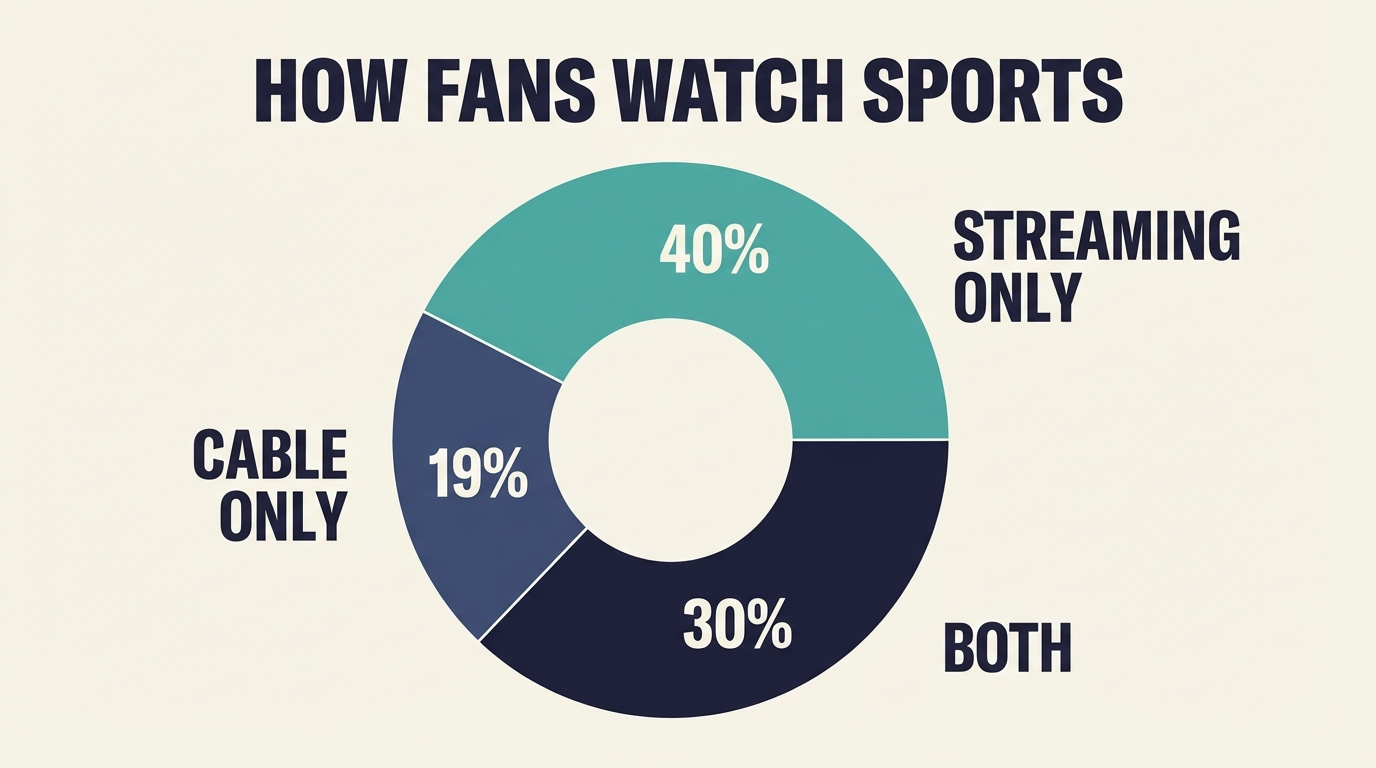
Parks Associates research quantifies the current viewing landscape more precisely. Among the 43% of U.S. internet households that identify as sports viewers, 70% use streaming services to watch sports. Breaking this down further: 40% watch sports exclusively via streaming platforms, 30% use both streaming and traditional TV, and only 19% remain "sports traditionalists" who watch exclusively through traditional broadcast, cable, or satellite.
That 19% traditionalist segment continues shrinking. Parks Associates notes that "the sports traditionalist will continue to account for a smaller share of the sports viewing segment" as sports rights increasingly migrate to streaming platforms. The trend appears irreversible as major leagues and networks double down on streaming distribution.
The engagement levels among streaming sports viewers are substantial. According to Parks Associates, 84% of sports viewers watch at least one live sports event per week, demonstrating the habitual nature of sports consumption. This regular engagement makes sports viewers especially valuable for advertisers seeking consistent reach.
AP-NORC polling provides additional context on super fans. About six in ten people who follow sports "extremely" or "very" closely use sports-only streaming platforms like ESPN+, MLB TV, NFL Sunday Ticket, or NBA League Pass. This dedicated segment drives much of the sports streaming ecosystem's growth.
Nielsen data on age-specific viewing patterns reinforces the generational divide. Among viewers 18-34, 67% watch sports primarily via streaming or social clips. The 35-49 age group shows 52% preferring streaming over cable. These numbers suggest streaming will become the dominant sports viewing method as younger cohorts age while maintaining their streaming preferences.
Breaking down the numbers
Understanding which platforms sports fans use, how much they spend, and what challenges they face provides important context for advertising strategy.
By platform usage
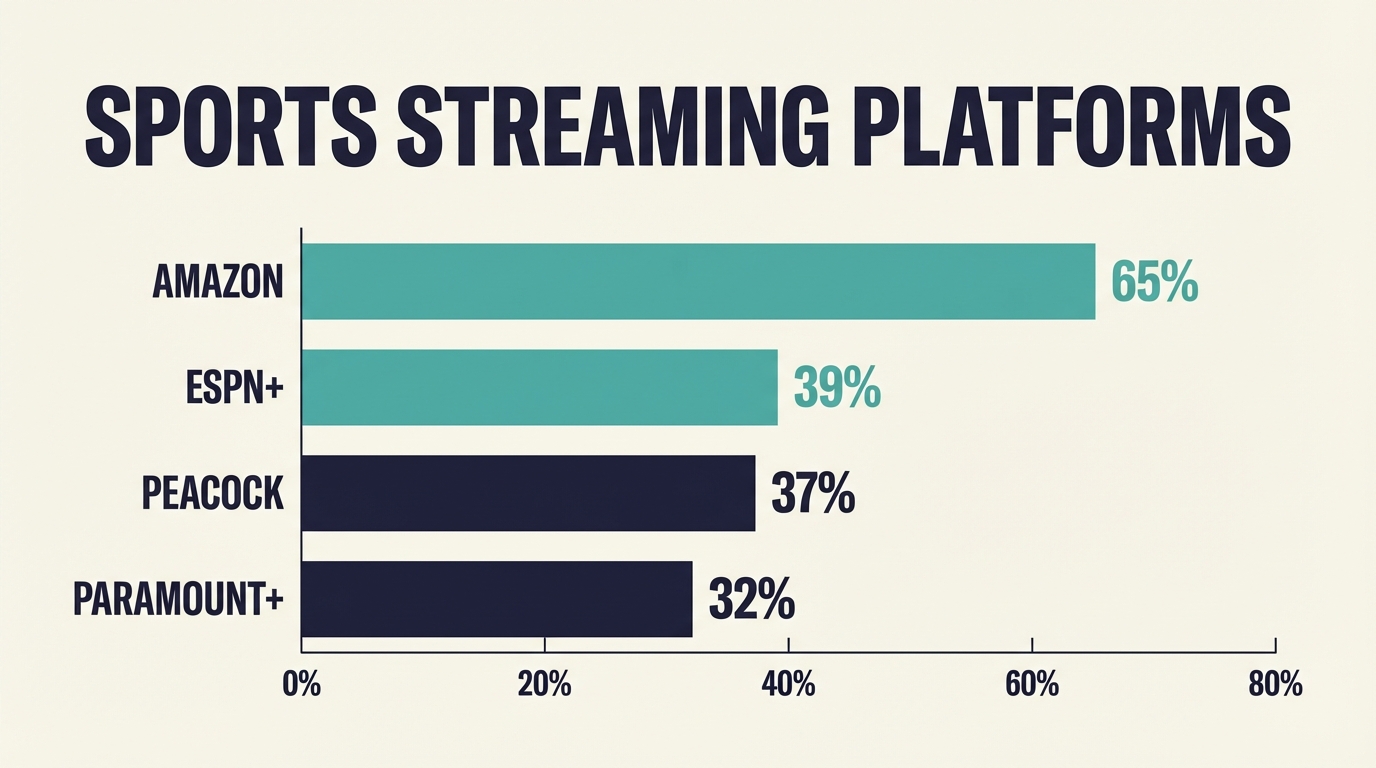
Amazon Prime Video leads sports streaming at 65% usage among sports streaming viewers, according to Performance Research. This dominance reflects Amazon's Thursday Night Football package, WNBA rights, and NASCAR coverage. The combination of sports content with Prime's broader value proposition drives adoption.
ESPN+ follows at 39%, establishing it as the leading sports-specific streaming service. With rights across UFC, NHL, MLB, La Liga, and other properties, ESPN+ has become essential for avid sports fans. Disney's bundling strategy with Hulu and Disney+ further drives ESPN+ adoption.
Peacock captures 37% of sports streaming viewers, powered by NBC's Sunday Night Football, Premier League, Notre Dame football, and Olympic coverage. Paramount+ reaches 32%, with NFL, Champions League, and other CBS Sports properties.
Virtual MVPDs (YouTube TV, Hulu + Live TV, FuboTV) serve fans seeking cable-like channel bundles through streaming infrastructure. Apple TV+ has carved out niche position at 17% through MLB rights and MLS Season Pass exclusivity.
Sports-only direct-to-consumer services show strong adoption among dedicated fans. About 40% of sports fans use platforms like ESPN+, MLB TV, NFL Sunday Ticket, or NBA League Pass, with that figure rising to 60% among super fans who follow sports extremely closely.
By spending patterns
Sports viewers demonstrate substantially higher streaming spending than general consumers. According to Parks Associates, direct-to-consumer sports service viewers spend an average of $111 per month on all streaming subscriptions, making them among the heaviest streaming spenders in the market.
This higher spending reflects the combination of general entertainment streaming (Netflix, Hulu, etc.) plus sports-specific services (ESPN+, league passes) plus often a virtual MVPD for live channel access. The fragmentation of sports rights across platforms forces fans to subscribe to multiple services to follow their teams and leagues.
Cost concerns are rising despite continued adoption. Performance Research found 68% of sports fans report concern over streaming costs, and 73% say they are looking to reduce streaming expenses within the next six months. This tension between wanting sports access and managing subscription costs creates opportunity for ad-supported streaming tiers.
By content engagement
Streaming can enhance the sports fan experience beyond simple access to games. Performance Research found 48% of streaming sports fans feel more connected to their favorite teams and sports through streaming. This connection is highest for fans of sports with streaming-first distribution: MLS (75%), professional tennis (66%), and UFC (64%).
Social media plays an increasingly important role in sports consumption, especially among younger viewers. InterDigital research found 40% of sports viewers under 35 watch sports on social media platforms, compared to just 13% of those 55 and older. This includes highlights, clips, and some live streaming through platforms like YouTube, TikTok, and X.
Live viewing remains dominant within streaming. The weekly live sports consumption (84% watching at least one event per week) demonstrates that sports fans aren't just catching up on highlights; they're watching games live through streaming platforms just as they would through cable.
Challenges and friction
The streaming sports experience isn't without frustration. InterDigital research reveals that a majority of sports viewers face challenges watching streamed sports, including:
Fragmentation across platforms
Technical issues like buffering during important moments
Rising costs from multiple subscriptions
Blackout restrictions limiting access to local teams
Interface complexity navigating multiple apps
These pain points explain why some fans remain with traditional cable despite streaming's growth. However, the trend clearly points toward streaming dominance as platforms improve reliability and sports rights increasingly favor streaming distribution. The 19% traditionalist segment shrinks each year as cable costs rise, contracts expire, and streaming quality improves. Advertisers should plan for a future where nearly all sports viewers access content through streaming platforms.
Why it matters for your business
The massive shift of sports viewership to streaming creates significant opportunities for advertisers who understand how to reach this valuable audience segment.

Sports streaming viewers represent a premium advertising audience. Their higher streaming spending ($111/month average) indicates disposable income and willingness to pay for entertainment. Their engaged, regular viewing (84% watching weekly) provides consistent reach opportunities. Their growing numbers (45% increased viewing year over year) expand available inventory.
For businesses advertising on connected TV, sports streaming offers access to highly engaged viewers in premium content environments. Sports content commands attention in ways that passive entertainment viewing doesn't, and advertisers benefit from this heightened engagement.
The demographic reach is especially valuable. With 67% of 18-34 year olds and 52% of 35-49 year olds preferring streaming for sports, advertisers targeting these demographics must prioritize streaming over traditional TV. Relying solely on cable sports advertising means missing the majority of younger sports fans.
Geographic targeting capabilities through streaming exceed what traditional cable sports advertising offered. Businesses can target specific markets precisely, reaching sports fans in their service areas without paying for impressions in irrelevant markets. This is especially valuable for local TV advertising around local sports content.
The emotional engagement of sports creates powerful advertising contexts. Fans watching their favorite teams are highly attentive and emotionally invested. Brands appearing in these moments benefit from positive association when timed around exciting game moments and memorable wins.
Cost efficiency often favors streaming sports advertising. While premium live sports inventory can command high CPMs, the targeting precision and measurement capabilities mean less wasted spend compared to broad cable sports buys. Advertisers can focus budgets on reaching their specific target audiences rather than paying for mass reach that includes many non-targets.
The trend trajectory suggests early movers gain advantage. As sports viewing continues shifting to streaming, advertisers who build expertise now will be better positioned than those who wait. Understanding the platform landscape, creative requirements, and audience dynamics takes time that provides competitive advantage. Building relationships with sports streaming audiences now creates brand familiarity that compounds over time as these viewers become the dominant sports audience.
How to take advantage of this trend
Reaching sports streaming audiences requires understanding the platforms, timing, and creative approaches that work best in this environment.
Platform strategy for sports advertising
The fragmented nature of sports streaming means advertisers must consider multiple platforms to achieve meaningful reach:
Amazon Prime Video reaches the most sports streaming viewers (65%) through Thursday Night Football and other programming. Amazon's advertising platform offers targeting capabilities tied to Prime membership data and shopping behavior, creating unique audience opportunities.
ESPN+ and other Disney properties provide access to dedicated sports fans across multiple sports. The Disney bundle (Disney+, Hulu, ESPN+) creates advertising opportunities across entertainment and sports contexts reaching overlapping audiences.
Peacock combines Sunday Night Football with Premier League and other premium sports, reaching fans who prioritize specific leagues and events. NBC's Olympics coverage provides concentrated reach during multi-week events.
Virtual MVPDs like YouTube TV and Hulu + Live TV offer cable-like advertising experiences through streaming infrastructure, reaching cord-cutters who still want traditional channel bundles. These platforms often provide the broadest sports content access.
Programmatic streaming platforms like Adwave aggregate inventory across multiple streaming services, allowing advertisers to reach sports fans wherever they watch without managing multiple platform relationships. This approach simplifies execution while maximizing reach across the fragmented landscape.
Timing considerations
Sports advertising effectiveness depends heavily on timing relative to games and seasons:
Pre-game windows build anticipation when fans are actively watching and engaged. Advertising in the hours before major games reaches viewers primed for sports content.
In-game advertising during commercial breaks captures the most attentive audiences but commands premium pricing. The emotional engagement during games can create powerful brand moments.
Post-game content maintains engagement as fans process results and seek analysis. Advertising during post-game shows reaches satisfied (or frustrated) fans still in sports mode.
Seasonal timing aligns campaigns with relevant sports calendars. Football season (September through January) provides the highest sports viewing volumes. March Madness, MLB playoffs, and NBA playoffs create concentrated audiences around specific events.
Creative approaches for sports contexts
Sports streaming environments require creative that matches the energy and engagement of sports content:
High energy execution fits the sports viewing context better than subtle brand messaging. Sports fans expect excitement and respond to advertising that delivers it.
Clear branding throughout ensures recognition when viewers are highly engaged with content. Don't save the brand reveal for the end when sports fans are anticipating return to action.
Relevant messaging that connects to sports themes without requiring specific game outcomes works across variable contexts. Avoid creative that only makes sense if a particular team wins.
Concise formats respect viewers' desire to return to the game. 15-second spots often perform well in sports environments where attention is divided between ads and game anticipation.
The bigger picture
Sports streaming represents a broader transformation in how premium content reaches audiences and how advertisers can access them.
The end of cable's sports advantage
Traditional cable's most powerful retention tool was live sports. Fans couldn't cut the cord without losing access to their teams and leagues. This dynamic preserved cable subscriptions even as entertainment viewing shifted entirely to streaming.
That advantage is eroding rapidly. Major sports rights increasingly include streaming components or go streaming-exclusive. Thursday Night Football on Amazon, Apple's MLB and MLS rights, and the expansion of league direct-to-consumer services all reduce cable's sports monopoly.
The 19% of sports viewers who remain cable-exclusive will continue declining as options expand and cable costs rise. Advertisers who built sports reach strategies around cable must adapt as this audience shrinks and streaming audiences grow.
Sports as streaming system driver
Sports content drives streaming adoption and spending in ways that entertainment content alone might not. The must-watch, time-sensitive nature of live sports motivates subscriptions that might otherwise be avoided or canceled.
This dynamic explains why streaming platforms pay billions for sports rights despite uncertain economics. Sports content creates platform stickiness, drives bundle adoption, and attracts the high-spending viewers that advertisers covet.
For advertisers, this means sports streaming inventory will continue expanding as platforms invest. The combination of growing audiences and expanding rights creates more opportunities to reach sports fans through streaming.
The fragmentation challenge
Sports rights fragmentation across platforms creates challenges for both viewers and advertisers. Fans must subscribe to multiple services to follow their sports, driving the $111/month average spending among heavy sports streamers.
For advertisers, fragmentation means no single platform provides complete sports reach. Effective sports advertising requires multi-platform strategies or aggregated programmatic approaches that span the ecosystem.
The industry may eventually consolidate, with streaming bundles recreating aspects of the cable bundle model. Disney's bundle, Warner Bros Discovery and Disney's ESPN joint venture discussions, and other consolidation moves suggest movement toward simplification. Until then, advertisers must navigate the fragmented landscape strategically.
Cost pressures and ad-supported growth
The high cost of detailed sports streaming access (multiple subscriptions, virtual MVPDs, league passes) creates pressure that favors ad-supported models. With 73% of sports fans looking to reduce streaming expenses, ad-supported tiers become attractive alternatives to premium subscriptions.
This trend expands advertising inventory reaching sports audiences. As major platforms introduce or expand ad-supported options, the addressable audience for streaming sports advertising grows. Advertisers benefit from viewers choosing ads over premium prices.
What experts are saying
Industry analysts have extensively documented the sports streaming transformation and its advertising implications.
Performance Research's July 2025 study concluded that "nine in 10 sports viewers now use at least one streaming service to watch live games," with Amazon Prime Video leading at 65% usage among sports streaming viewers.
Parks Associates and InterDigital found that "70% of sports viewers use streaming," with "40% watching sports exclusively using streaming platforms." Their research noted that sports traditionalists "will continue to account for a smaller share of the sports viewing segment."
The Current reported that "sports viewers tend to spend more on streaming video platforms than consumers who avoid sports," with direct-to-consumer sports service viewers "spending an average of $111 per month on all streaming subscriptions."
AP-NORC polling found that "about 6 in 10 people who follow sports extremely or very closely use sports-only streaming platforms," demonstrating how sports enthusiasm drives streaming adoption among dedicated fans.
Common questions answered
How many sports fans watch streaming vs. cable?
Approximately 70% of U.S. sports viewers use streaming, with 40% watching sports exclusively on streaming and 30% using both streaming and traditional TV. Only 19% remain sports traditionalists who watch only through cable, satellite, or broadcast. The streaming percentage continues growing as rights shift to streaming platforms.
Which streaming platforms are most popular for sports?
Amazon Prime Video leads at 65% usage among sports streaming viewers, followed by ESPN+ (39%), Peacock (37%), and Paramount+ (32%). Virtual MVPDs like YouTube TV and Hulu + Live TV provide cable-like channel access through streaming. About 40% of sports fans use sports-specific services like ESPN+, MLB TV, NFL Sunday Ticket, or NBA League Pass.
Do younger viewers stream sports more than older viewers?
Yes, significantly. Among 18-34 year olds, 67% watch sports primarily via streaming or social clips. Gen Z (63%) and Millennials (56%) are most likely to have increased sports streaming year over year. However, older generations are also increasing streaming: 35% of Gen X and 21% of Boomers increased their sports streaming compared to last year. Social media plays a growing role for younger sports fans, with 40% of under-35 sports viewers watching sports content on social platforms compared to just 13% of those 55 and older. This generational divide will continue shifting overall sports viewing toward streaming as younger cohorts age while maintaining their preferences.
How much do sports fans spend on streaming?
Sports streaming viewers are among the heaviest streaming spenders. Direct-to-consumer sports service viewers spend an average of $111 per month on streaming subscriptions. This high spending reflects subscriptions to general entertainment services plus sports-specific platforms plus often a virtual MVPD for live channel access.
Are sports fans concerned about streaming costs?
Yes. Performance Research found 68% of sports fans report concern over streaming costs, and 73% say they are looking to reduce expenses within six months. This cost pressure drives interest in ad-supported streaming tiers, expanding advertising inventory reaching sports audiences.
Can advertisers reach sports fans effectively through streaming?
Absolutely. Sports streaming provides access to highly engaged audiences (84% watch weekly), with better targeting than traditional cable sports advertising. Advertisers can reach specific demographics, geographic areas, and interest segments precisely. The premium content environment and emotional engagement create powerful advertising contexts. Measurement capabilities exceed what cable sports advertising offered, with impression-level data and attribution tracking. Platforms like Adwave make streaming sports advertising accessible for businesses of all sizes, starting at just $50 to reach fans across premium streaming channels.
Supporting data
Key statistics on sports streaming viewership:
70% of sports viewers use streaming to watch sports (Parks Associates)
90% of sports fans use at least one streaming service for live games (Performance Research)
40% streaming-only sports viewers, 30% use both streaming and TV (Parks Associates)
45% increased sports streaming viewership year over year (Performance Research)
19% traditionalists who watch sports only via cable/broadcast (Parks Associates)
65% use Amazon Prime Video for sports streaming (Performance Research)
39% use ESPN+ for sports streaming (Performance Research)
67% of 18-34 watch sports primarily via streaming (Nielsen)
$111/month average streaming spending among sports D2C viewers (Parks Associates)
84% watch weekly live sports among sports viewers (Parks Associates)
68% cost concern among sports fans about streaming costs (Performance Research)
60% of super fans use sports-only streaming platforms (AP-NORC)
All sources linked above. Data current as of Q4 2025.
Get started with TV advertising
Sports streaming audiences represent some of the most engaged, high-value viewers available to advertisers. Connected TV advertising reaches these fans across platforms with targeting precision impossible through traditional cable sports advertising.
Adwave makes streaming TV advertising accessible starting at just $50, with AI-generated commercials and targeting across 100+ premium channels including sports programming.