-
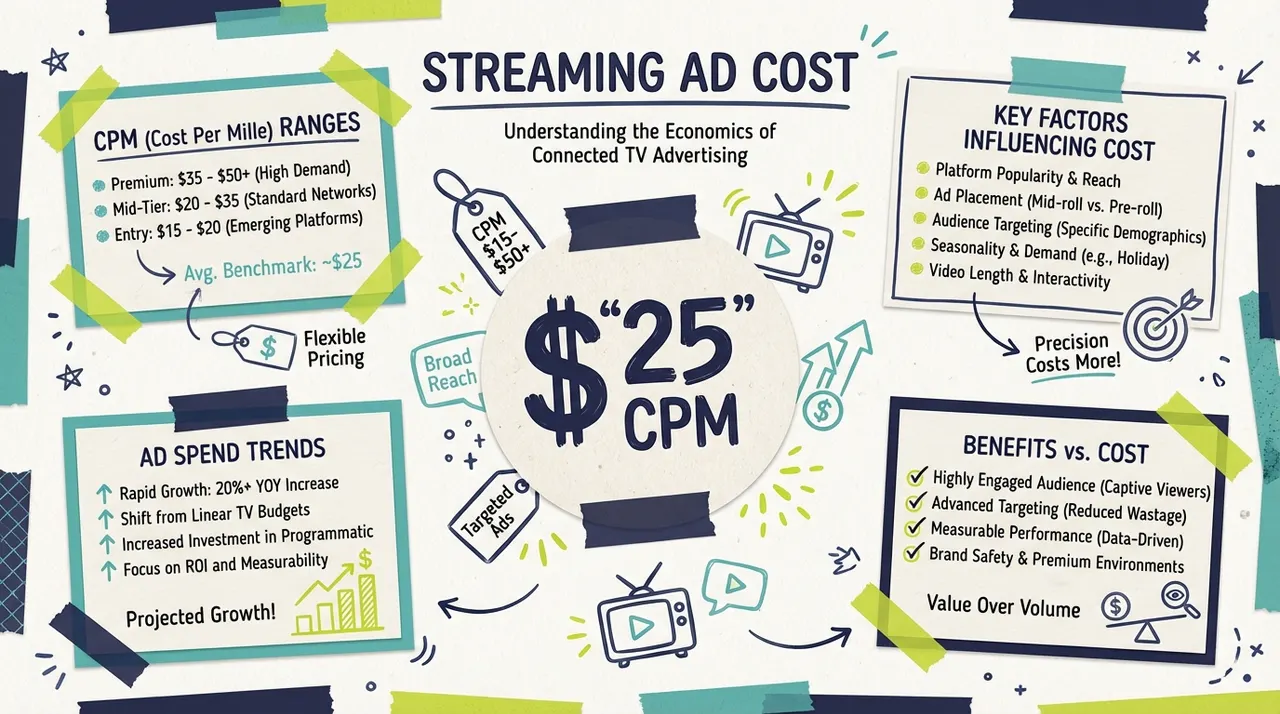
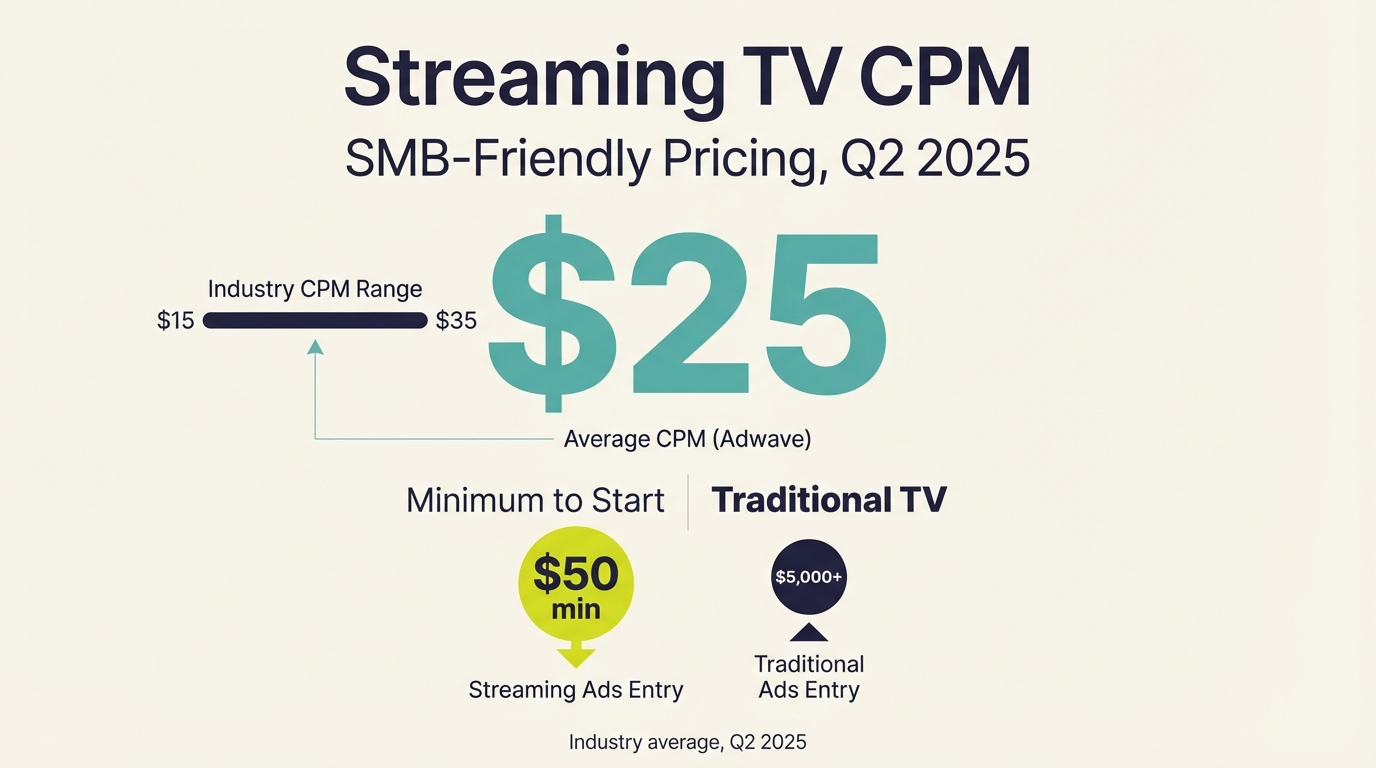
$25
Average CTV CPM for small businesses
-
$15-35
CPM range for streaming TV ads
-
$50
Minimum budget to start (Adwave)
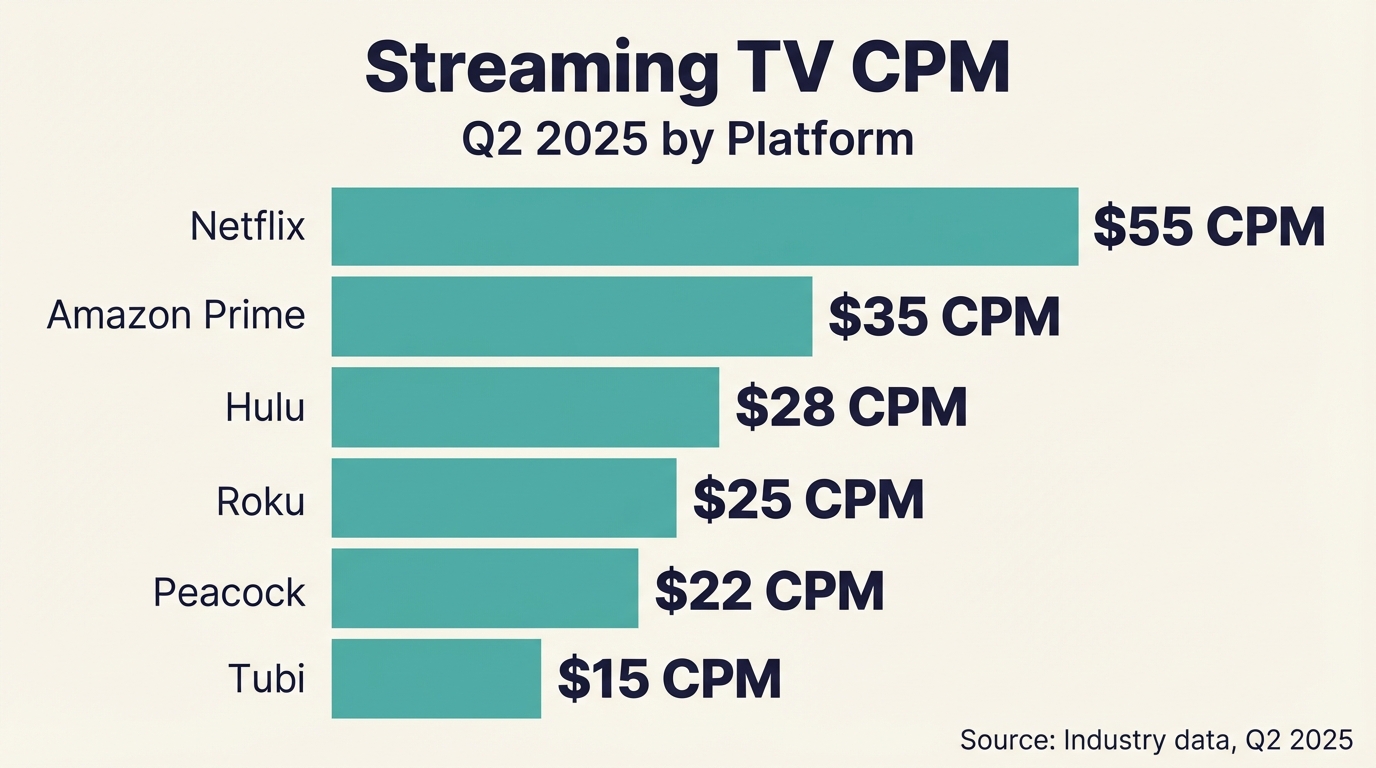
Streaming TV advertising costs typically range from $15-35 CPM (cost per thousand impressions), with small businesses averaging around $25 CPM through platforms like Adwave. According to Simulmedia's cost guide, premium platforms like Netflix charge $25-45 CPM, while Hulu ranges $20-30 CPM. The entry point for streaming TV advertising has become remarkably accessible, with platforms offering minimum budgets as low as $50, making television advertising practical for businesses of all sizes.
Understanding streaming TV ad costs requires moving beyond simple CPM numbers to consider total campaign costs, production expenses, and how to maximize advertising budgets. Traditional TV advertising required significant upfront investment in commercial production and large minimum media buys. Streaming TV has fundamentally changed this equation, with AI-powered creative tools eliminating production costs and aggregated platforms lowering minimum investments. For businesses considering TV advertising, these cost changes make streaming an accessible option.
What the data shows
Streaming TV advertising costs vary significantly based on platform, targeting, and buying approach.
CPM ranges by platform
Different streaming platforms command different CPMs based on content quality, audience, and demand:
Netflix: $25-45 CPM (premium content, limited ad inventory)
Hulu: $20-30 CPM (established ad-supported tier)
Prime Video: $20-35 CPM (large scale, recent ad introduction)
Disney+: $25-40 CPM (premium family content)
YouTube CTV: $15-30 CPM (broad inventory, variable quality)
Free services (Tubi, Pluto): $10-20 CPM (ad-supported only, larger ad loads)
Aggregated platforms (Adwave): $15-35 CPM, averaging $25
These ranges represent typical CPMs; actual costs vary based on targeting, timing, and specific buying arrangements.
Total campaign cost factors
Beyond CPM, total streaming TV advertising costs include:
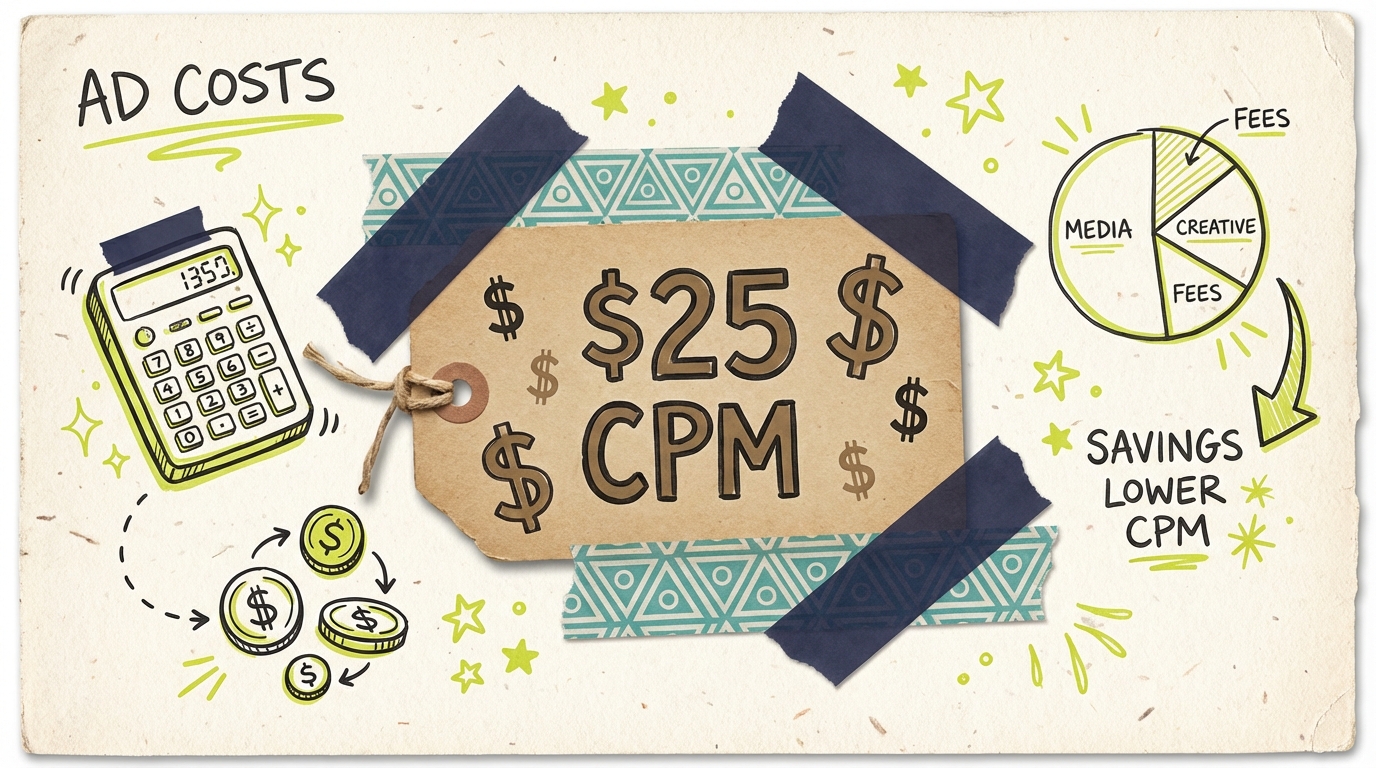
Media spend: Your campaign budget (CPM x impressions / 1,000)
Creative production: $0 with AI tools (Adwave), $5,000-$50,000+ traditional
Platform fees: Often included in CPM, sometimes separate
Agency fees: 0% with self-serve, 15-25% with agency management
Measurement: Often included, premium measurement may cost extra
For small businesses using self-serve platforms with AI creative, total cost can equal media spend alone, dramatically reducing the all-in cost of TV advertising.
Minimum budget requirements
Minimum budgets vary significantly by platform and buying approach:
Direct Netflix: $500,000+ (estimated, Netflix targets major brands)
Direct Hulu/Disney: $10,000-$50,000 (typical agency minimums)
Programmatic DSPs: $5,000-$10,000 (typical minimum commitments)
Aggregated platforms (Adwave): $50 minimum
The emergence of low-minimum platforms has democratized streaming TV advertising, allowing small businesses to test and learn without significant financial risk.
Cost comparison to other channels
Streaming TV CPMs compare favorably to other advertising channels:
Traditional TV: $10-30 CPM but with high minimums and production costs
Meta/Facebook: $10-20 CPM but declining organic reach and ad fatigue
Google Display: $3-10 CPM but lower attention and engagement
YouTube (mobile/desktop): $10-25 CPM
Streaming TV: $15-35 CPM with premium engagement
When accounting for attention quality and engagement, streaming TV often delivers strong value despite seemingly higher CPMs.
Breaking down the numbers
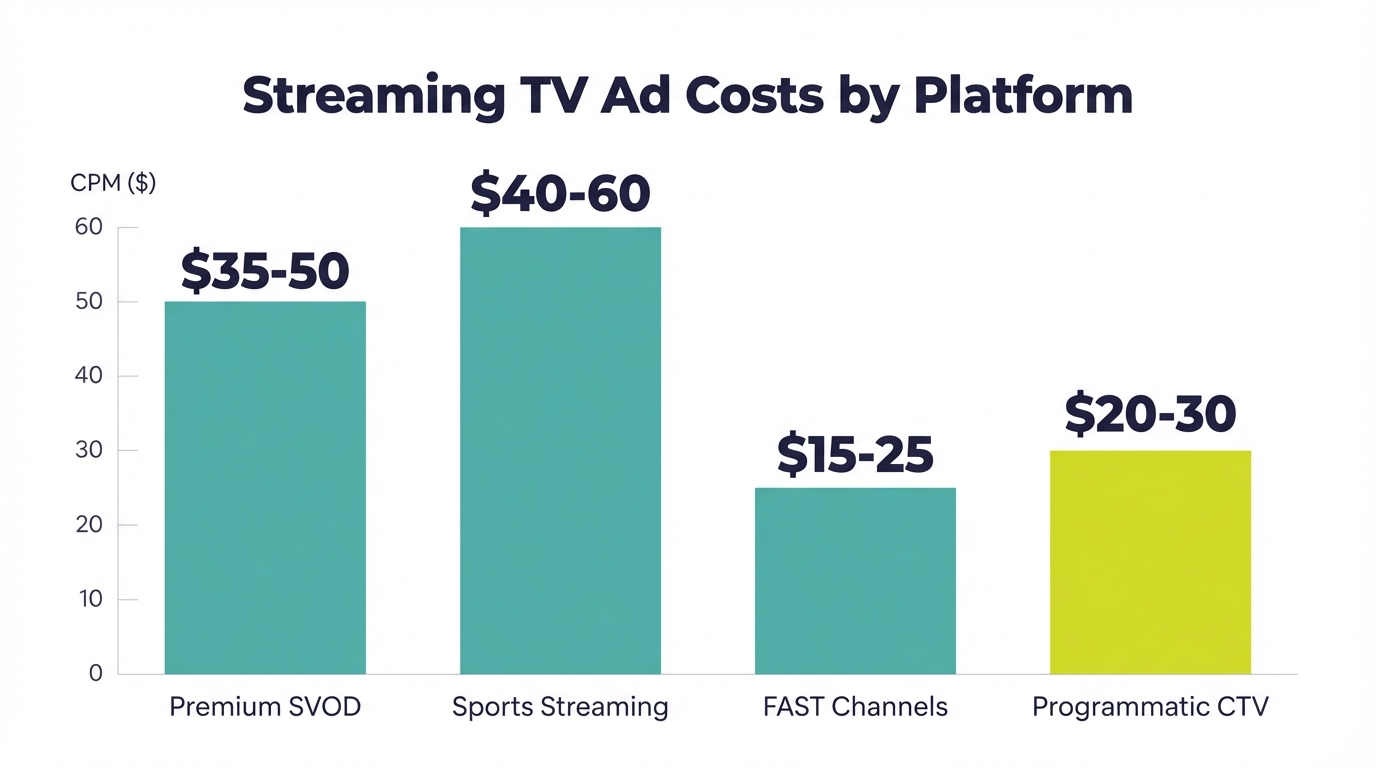
Understanding what drives streaming TV ad costs helps optimize advertising investments.
Why CPMs vary by platform
Several factors explain CPM variation across streaming platforms:
Content quality: Premium original content (Netflix, HBO Max) commands higher CPMs than licensed or free content (Tubi, Pluto TV).
Ad load: Services with lighter ad loads (Netflix with ~4 minutes per hour) can charge higher CPMs than services with heavier loads (free services with 10+ minutes per hour).
Audience demographics: Platforms skewing toward higher-income, desirable demographics command premium CPMs.
Inventory scarcity: New ad tiers with limited inventory (Netflix, Disney+) can set higher prices; established services with ample inventory price more competitively.
Measurement capabilities: Platforms offering superior measurement and attribution may command higher CPMs.
How targeting affects costs
Targeting choices impact CPM:
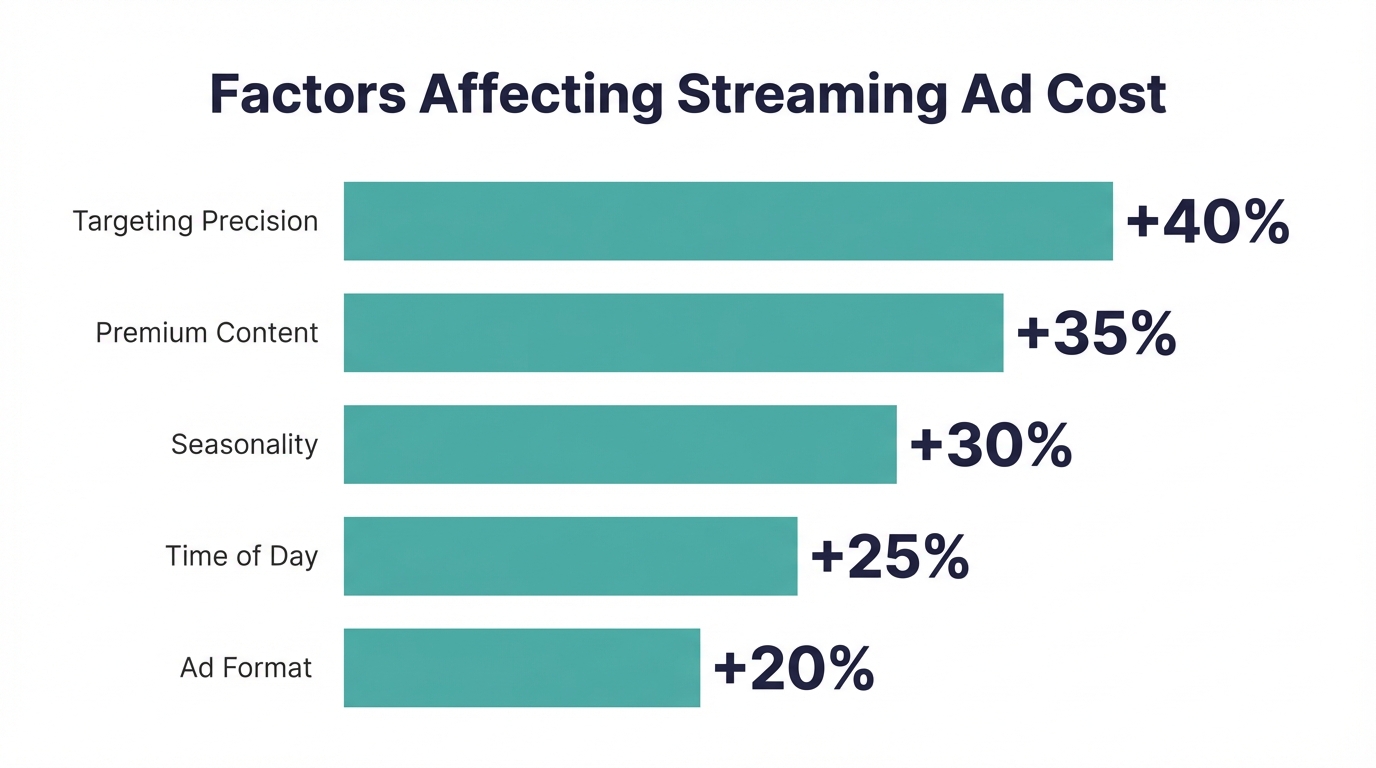
Geographic targeting: Local targeting may be slightly more expensive than national due to reduced scale, though this varies by platform.
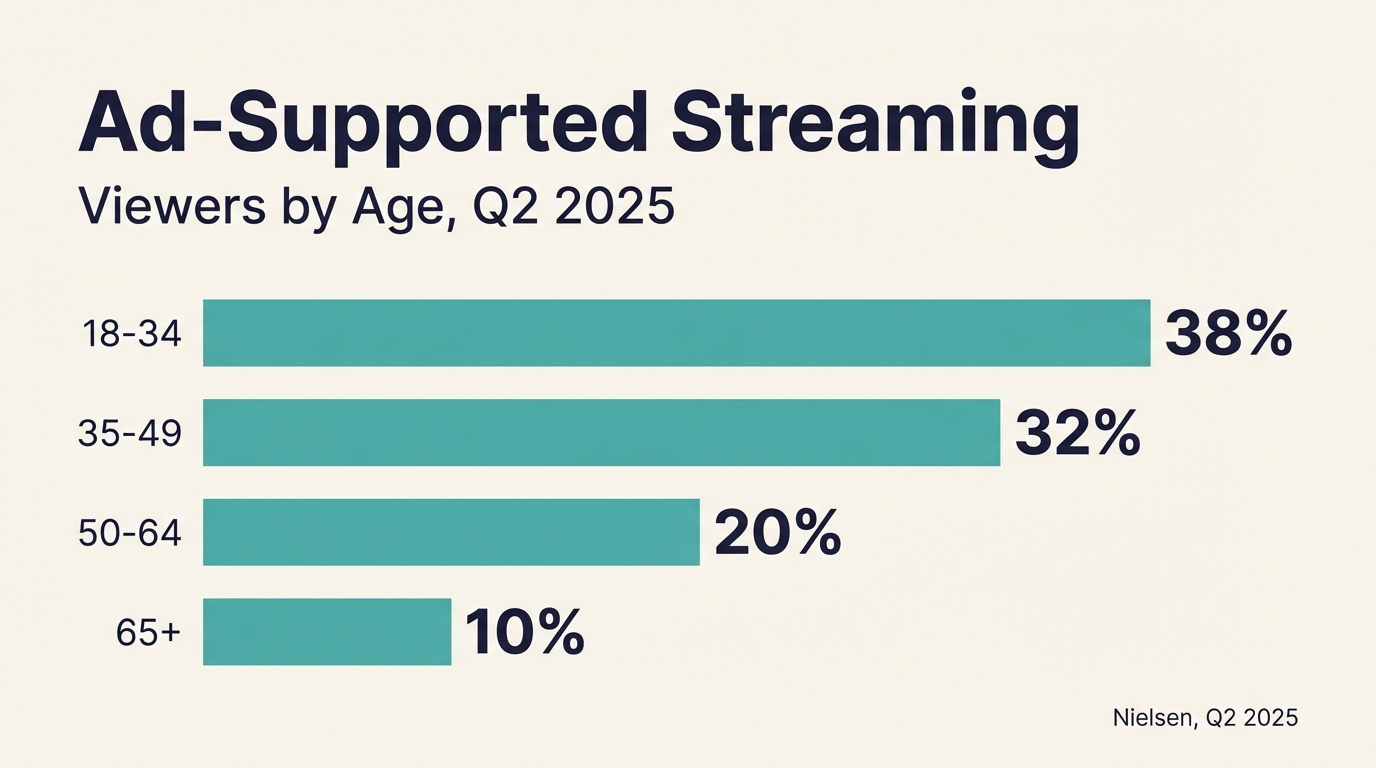
Demographic targeting: Narrow age or income targeting can increase CPM as inventory becomes more constrained.
Content targeting: Placing ads around specific content types or programming may affect pricing.
Dayparting: Prime time (evening hours) typically costs more than daytime inventory.
Through aggregated platforms, targeting impact on CPM is often smoothed as inventory is combined across sources.
The production cost revolution
Traditional TV advertising required significant production investment:
Traditional commercial production: $5,000-$500,000+
Professional video editing: $1,000-$10,000+
Voiceover and music: $500-$5,000+
Total traditional minimum: $10,000+ before any media spend
AI-powered creative tools have eliminated this barrier:
AI commercial generation: $0 (included with platforms like Adwave)
Uses existing assets: Website images, social content, logo
Professional quality: Broadcast-ready output
Production time: Minutes, not weeks
This production cost elimination is arguably more significant than CPM differences in making streaming TV accessible to small businesses.
Calculating total campaign costs
To estimate total streaming TV campaign costs:
Simple formula: Media Budget ÷ CPM × 1,000 = Impressions
Example at $25 CPM:
$100 budget = 4,000 impressions
$500 budget = 20,000 impressions
$1,000 budget = 40,000 impressions
$5,000 budget = 200,000 impressions
With free AI creative and no agency fees, these media budgets represent total campaign costs through platforms like Adwave.
Why it matters for your business
Streaming TV advertising costs have reached levels accessible to businesses of all sizes.
TV advertising is no longer just for big brands
The combination of low CPMs, zero production costs, and low minimum budgets means:
Local businesses can advertise on premium streaming content
Small businesses can test TV advertising without major financial risk
Startups can build brand awareness alongside digital performance marketing
Solo operators (realtors, dentists, attorneys) can reach local streaming audiences
The historical barrier where TV advertising required five-figure minimum investments no longer exists.
Cost comparison to familiar channels
For businesses comfortable with digital advertising costs, streaming TV compares favorably:
Meta ads at $15 CPM vs. Streaming at $25 CPM:
Meta: Phone-sized screens, divided attention, skip-prone
Streaming: 50+ inch screens, engaged viewing, completion-focused
Premium per impression, but potentially stronger impact
The "biggest screen in the house" premium: Higher CPMs for streaming may be justified by the engagement environment of living room viewing versus phone scrolling.
Budget allocation guidance
For businesses considering streaming TV advertising budget allocation:
Testing budgets: $100-$500 for initial learning and creative testing
Meaningful campaigns: $500-$2,000 for statistically significant results
Sustained presence: $2,000-$10,000/month for ongoing awareness building
Scale budgets: $10,000+/month for significant reach and frequency
Start with testing budgets to learn what works before committing to larger investments.
ROI considerations
Evaluating streaming TV advertising ROI requires appropriate measurement:
Brand awareness: Survey or recall studies before and after
Website attribution: Tracking visitors from streaming ad exposure
Direct response: Phone calls, form fills, store visits during campaigns
Incrementality: A/B testing with streaming in/out of media mix
Streaming TV typically performs best as a brand-building complement to direct response channels, with attribution measured over longer timeframes than performance digital.
How to take advantage of these costs
Maximizing streaming TV advertising value requires strategic approach to budget allocation and execution.
Start with accessible platforms
For small businesses, aggregated platforms offer the best entry point:
Low minimums: Start with $50-$200 for initial testing
Included creative: AI generates commercials from existing assets
Aggregated inventory: Access 100+ channels without managing relationships
Simple targeting: Geographic and demographic targeting without complexity
Platforms like Adwave enable immediate streaming TV advertising without traditional barriers.
Test before scaling
Approach streaming TV with a testing mindset:
Start small: $100-$500 initial campaign
Measure response: Track website visits, calls, mentions
Iterate creative: Test different messages and approaches
Scale what works: Increase budget on successful campaigns
Optimize targeting: Refine geographic and demographic focus
This approach limits risk while building understanding of what works for your business.
Optimize creative for cost efficiency
Creative quality affects campaign performance and effective cost per result:
Good creative drives:
Higher completion rates (better cost efficiency)
Stronger recall (better brand building per dollar)
Better response rates (lower cost per action)
Creative best practices:
Lead with your value proposition
Include clear branding throughout
End with memorable call to action
Design for big-screen viewing
AI tools handle technical quality; focus on messaging clarity for best results.
Time campaigns strategically
Timing affects both CPM and campaign effectiveness:
Lower CPM periods: January, mid-summer, non-election years
Higher CPM periods: Q4 holidays, major sporting events, election seasons
Business timing: Align with your seasonal demand patterns
Testing timing: Off-peak periods for lower-cost learning
Seasonal factors can create 20-30% CPM variation; timing campaigns appropriately can improve cost efficiency.
The bigger picture
Streaming TV ad costs reflect broader industry changes making television advertising accessible.
The democratization of TV advertising
Streaming TV has democratized television advertising:
Before streaming:
$50,000+ minimum media buys
$10,000+ commercial production
Agencies required for media buying
Only major brands could participate
With streaming:
$50 minimum campaigns
$0 AI-generated creative
Self-serve platforms for direct buying
Businesses of all sizes can participate
This democratization represents one of the most significant changes in advertising accessibility in decades.
Cost trends and projections
Streaming TV ad costs have several competing pressures:
Downward pressure:
Increasing inventory (more ad-supported content)
Competition among platforms
Efficiency improvements
Upward pressure:
Growing advertiser demand
Premium content expansion
Measurement improvements validating value
Net expectation: CPMs remain relatively stable, with minor fluctuations based on supply/demand balance.
Traditional TV's continued decline
As streaming costs become more accessible, traditional TV becomes less attractive:
Traditional TV audiences declining 5-10% annually
Traditional TV CPMs relatively stable despite declining reach
Effective cost per reached viewer increasing on traditional TV
Budget reallocation to streaming accelerates
For businesses still advertising on traditional TV, streaming often provides better value and growing audiences.
Common questions answered
What is the average CPM for streaming TV advertising?
CPMs typically range from $15-35, with small businesses averaging around $25 through aggregated platforms like Adwave. Premium services like Netflix may charge $25-45 CPM, while free ad-supported services like Tubi charge $10-20 CPM. The specific CPM depends on platform, targeting, and buying approach.
What is the minimum budget to start streaming TV advertising?
Through aggregated platforms like Adwave, you can start streaming TV advertising with as little as $50. Direct platform advertising typically requires much higher minimums ($10,000-$500,000+ depending on platform). Self-serve platforms have made TV advertising accessible at budgets previously impossible.
Is commercial production included in these costs?
With platforms like Adwave that include AI-powered creative generation, commercial production is included at no additional cost. The AI creates professional, broadcast-quality commercials from your existing website and business assets. Traditional commercial production can cost $5,000-$50,000+, but this barrier has been eliminated by AI tools.
How do streaming TV costs compare to social media advertising?
Streaming TV CPMs ($15-35) are typically higher than Meta/Facebook CPMs ($10-20), but the advertising environments differ significantly. Streaming TV provides big-screen, engaged viewing with high completion rates. Social media provides phone-sized, scroll-prone environments with lower attention. The CPM premium for streaming may be justified by engagement quality.
What factors affect streaming TV advertising costs?
Key factors affecting cost include: platform selection (premium vs. free services), geographic targeting (local may cost slightly more), demographic targeting (narrow targeting increases cost), timing (Q4 and events increase CPMs), and buying approach (direct vs. aggregated). Through aggregated platforms, many of these factors are smoothed.
Supporting data
Additional statistics that contextualize streaming TV advertising costs:
$25: Average CPM for small businesses on aggregated platforms
$15-35: Typical CPM range for streaming TV advertising
$50: Minimum budget to start on platforms like Adwave
$0: Production cost with AI creative tools
$25-45: Netflix CPM range
$20-30: Hulu CPM range
$10-20: Free ad-supported service CPM range
$5,000-$50,000+: Traditional commercial production cost
4,000: Impressions delivered at $100 spend and $25 CPM
Data sources:
Adwave platform pricing data
Industry CPM benchmarks
Start streaming ads with accessible pricing
Ready to advertise on streaming TV without breaking the bank? Streaming TV advertising is now accessible to businesses of all sizes with CPMs comparable to premium digital and no production costs.
Adwave offers streaming TV ads starting at just $50. AI generates your commercial for free from your existing assets. Your ads run on 100+ premium channels including YouTube, Netflix, Hulu, and more.
No production budget needed. No agency fees. No massive minimum spend.