
When you think of TV advertising, what comes to mind? Is it the multi-million dollar spectacle of a Super Bowl commercial, complete with celebrity cameos and blockbuster special effects? For most small and medium-sized businesses, that level of production feels completely out of reach. But the truth is, the core principles that make those iconic campaigns successful are more accessible than you think. An effective TV ad isn't about the budget; it's about the strategy. It's about a clear message, a compelling story, and a direct connection with your target audience.
This article isn't just a highlight reel of famous commercials. It's a strategic playbook designed for local businesses like yours. We will break down some of the most effective tv ad examples to uncover the specific, replicable tactics that made them work. Before diving into specific examples, it's important for any small business to develop a clear understanding of its foundational branding strategy and market positioning. This groundwork ensures your ad's message is consistent and resonant.
You'll discover how to apply high-level creative concepts on a realistic budget, turning inspiration into action. We’ll explore how companies have used everything from disruptive humor to simple, problem-solution storytelling to capture attention and drive results. More importantly, we'll show you how platforms like Adwave are making it possible for any business to launch a targeted, professional TV campaign without the traditional high costs and complexity. Forget the idea that TV is only for mega-brands. Let's explore how you can use these proven strategies to get your business on screen and in front of the right customers.
1. Dollar Shave Club's Disruptive Launch Campaign (2012)
The 2012 Dollar Shave Club launch video is one of the most iconic tv ad examples of the modern era, fundamentally altering how direct-to-consumer (DTC) brands approach marketing. Founder Michael Dubin starred in a scrappy, hilarious 90-second video that directly addressed a major consumer pain point: the high cost of brand-name razors. The spot went viral, proving that a massive production budget isn't a prerequisite for market disruption.

The ad’s wild success on digital platforms, generating 12,000 orders in its first 48 hours, gave the company the momentum and capital to expand into traditional TV advertising. This digital-first strategy validated their message before they invested in broader, more expensive media buys, a model many startups now follow.
Why This Ad Worked
The genius of the campaign was its authenticity and laser-focus on the customer’s problem. It used humor and a charismatic founder to build an immediate connection with viewers.
Personality-Driven: Michael Dubin’s deadpan delivery and unapologetic script made the brand feel human and trustworthy, unlike its faceless corporate rivals.
Shareability: People shared the ad because they found it funny.
Actionable Tips for Your Business
Small businesses can replicate this strategy by focusing on authenticity rather than polish. You don't need a Hollywood budget; you need a clear, compelling message that resonates.
Key Takeaway: Identify a common frustration your customers have with your industry. Then, use authentic, personality-driven creative to show how your business solves it simply and directly.
With a platform like Adwave, you can test this approach efficiently. Start by creating a simple, personality-forward video ad and launch it in a targeted local market. Adwave's streamlined process allows you to get your message on real TV networks without the high cost and complexity of traditional campaigns, letting you validate your creative just like Dollar Shave Club did.
2. Geico's Consistent Character-Driven Approach (20+ Years)
For over two decades, Geico has dominated the insurance advertising space with a masterclass in brand consistency, making its campaigns some of the most recognizable tv ad examples ever created. Instead of relying on fleeting trends or celebrity endorsements, Geico invested in a universe of memorable, humorous characters like the Geico Gecko, the Cavemen, and Maxwell the Pig. This long-term strategy built an unmistakable brand identity that is both entertaining and enduring.

The brilliance of this approach, developed with The Martin Agency, is its adaptability. Characters like the Gecko became trusted brand ambassadors who could be placed in endless scenarios across TV, radio, and digital media. This allowed Geico to keep its core message fresh and engaging year after year, proving that a sustained investment in a strong creative concept can yield incredible brand equity and familiar awareness.
Why This Ad Worked
Geico’s success lies in its commitment to a simple formula: pair a straightforward value proposition ("15 minutes could save you 15% or more on car insurance") with charming, humorous, and endlessly repeatable characters.
Brand Recall: The consistent use of the same characters creates a powerful mental shortcut for consumers. Seeing the Gecko instantly brings Geico to mind.
Relatability and Humor: The characters are designed to be likable and amusing, creating a positive emotional association with what is otherwise a dry product category.
Campaign Flexibility: Having a stable of characters allows for immense creative freedom. The brand can produce countless ad variations set in the same universe, preventing audience fatigue.
Actionable Tips for Your Business
You don’t need an animated gecko to build a consistent brand personality. A local business can create its own "character," whether it's the owner, a friendly employee, or even a recurring theme.
Key Takeaway: Develop a central, recognizable brand character or creative theme and commit to it for the long haul. Consistency builds trust and recall far more effectively than one-off campaign ideas.
With a platform like Adwave, you can build your brand’s personality over time without a massive budget. Start by creating a few simple ads featuring a consistent "character" or theme. Adwave lets you run these ads in your local market affordably, allowing you to build the same kind of long-term recognition that has made Geico a household name.
3. FedEx's Problem-Solution Storytelling Format (1990s-Present)
FedEx mastered a timeless advertising formula that many of the best tv ad examples still use today: the problem-solution narrative. Instead of just listing features like speed or reliability, their classic commercials tell a complete story. Each ad introduces a relatable character facing a high-stakes business problem that can only be solved with FedEx's critical, time-sensitive delivery service. This format built immense credibility and brand trust.
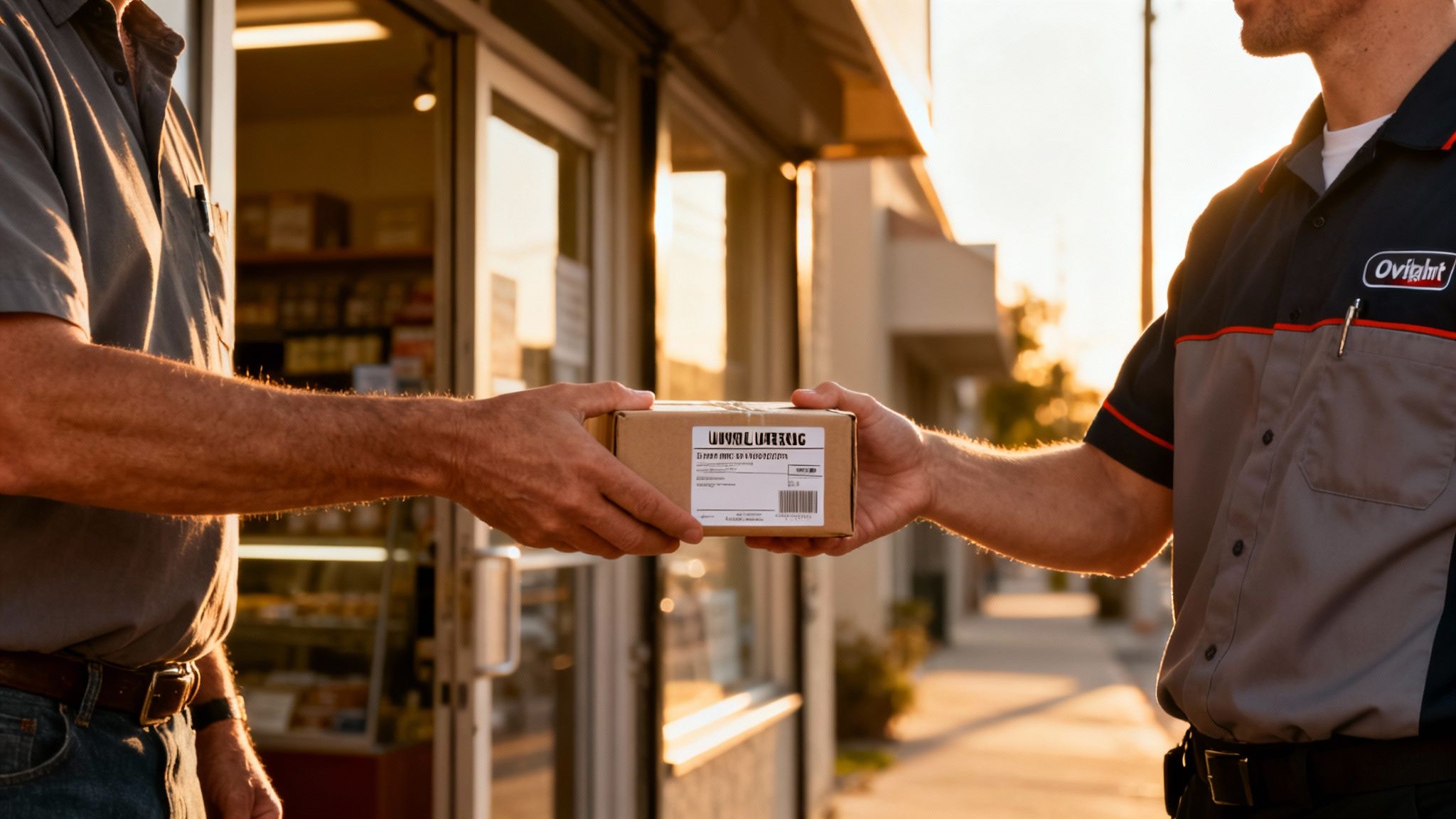
This format shows how a service helps a customer solve a problem. It has appeared in the company's campaigns since the 1981 spot.
Why This Ad Worked
The success of this format lies in its simplicity and emotional resonance. By creating a mini-story with a clear beginning, middle, and end, FedEx makes its service feel indispensable.
Relatable Stakes: The ads present genuine business challenges, like a small business owner needing a part overnight to avoid shutting down or an executive needing a contract delivered to close a deal. Viewers see their own professional anxieties reflected.
Heroic Resolution: FedEx is consistently positioned as the hero that saves the day. The service isn't just a delivery; it's the solution that prevents disaster and enables success, creating a strong positive association.
Emotional Connection: The format focuses on the feeling of relief and triumph when the problem is solved. This emotional payoff is far more memorable than any statistic about on-time delivery rates.
Actionable Tips for Your Business
Any service-based business can adopt this storytelling model. Focus on the real-world problems your customers face and show how you provide the resolution. You can learn more about how to structure these narratives by understanding what makes a good TV commercial.
Key Takeaway: Don't just sell your service; sell the solution. Frame your ad around a clear customer problem, build tension by explaining the stakes, and then present your business as the reliable hero that delivers the happy ending.
With Adwave, you can easily produce a TV spot based on this proven format. Use a real customer testimonial or a common scenario to create a 30-second problem-solution story. Adwave's platform allows you to launch this compelling narrative on major TV networks in your local area, connecting with customers on an emotional level without the high costs of a traditional agency.
4. Apple's Minimalist Aesthetic Approach (Think Different Campaign and Beyond)
Apple campaigns such as “Think Different” and the “1984” Super Bowl ad associated the brand with creativity and independence. Their imagery and ideas received more attention than technical specifications.
These tv ad examples rarely showed the product in action in a conventional way. Instead, they sold an idea, an identity. Whether using black-and-white footage of historical figures or a single, dramatic Super Bowl ad, Apple established a powerful emotional connection, making customers feel like part of a movement.
Why This Ad Worked
The success of Apple's advertising lies in its unwavering confidence and its focus on "why" rather than "what." It appealed to the viewer's identity and aspirations, creating a brand that people wanted to be associated with.
Brand as an Idea: Apple sold a philosophy of creativity and challenging the status quo. Buying an Apple product meant buying into that idea.
Visual Simplicity: Clean, uncluttered visuals with a strong focus on the product (or the idea behind it) made their ads instantly recognizable and premium.
Emotional Connection: By celebrating "the crazy ones," the "Think Different" campaign forged a deep emotional bond with its audience, creating a loyal tribe of followers.
Actionable Tips for Your Business
You don't need a massive budget to adopt a minimalist, philosophy-driven approach. It’s about clarity and confidence in your brand's core message and what it enables for your customers.
Key Takeaway: Define your brand’s core belief or philosophy. Build your creative around that single, powerful idea, using clean visuals and confident messaging to communicate what you stand for, not just what you sell.
With a platform like Adwave, you can create a high-quality, visually distinct commercial that reflects your brand’s premium philosophy. You can learn more about how to make a commercial that stands out. Adwave makes it possible to air a polished, professional-looking ad on major TV networks in your local area, allowing you to build an aspirational brand identity without the traditional high costs.
5. Old Spice's 'The Man Your Man Could Smell Like' (2010)
In 2010, Old Spice completely revitalized its brand with "The Man Your Man Could Smell Like," a campaign that is one of the most memorable tv ad examples of all time. The ad features actor Isaiah Mustafa speaking directly to the camera in a single, connected take, moving from a bathroom to a boat to riding a horse. Its blend of surreal humor, charm, and confident absurdity was a massive departure from traditional men's grooming ads.
The campaign became a cultural phenomenon, going viral online and leading to a significant spike in sales for a brand previously seen as dated. Its genius was in targeting women, who often purchase body wash for their male partners, while still appealing to men. This dual-audience approach, combined with a groundbreaking real-time social media response campaign, redefined how brands could interact with their audiences.
Why This Ad Worked
The success of this campaign was rooted in its bold creative choices and its understanding of how modern media works. It didn't just sell a product; it created an unforgettable character and an entertaining universe.
Subverting Conventions: It completely ignored the standard tropes of men's fragrance ads (moody, serious, and hyper-masculine) in favor of fast-paced, surreal comedy.
Charismatic Central Character: Isaiah Mustafa's confident, smooth delivery made the "Old Spice Guy" an instant icon. His direct address to the camera created a personal and engaging connection.
Viral-Ready Humor: The ad was absurd, quotable, and visually impressive ("I'm on a horse"). This made it shareable on social media, amplifying its reach far beyond the initial TV spend.
Actionable Tips for Your Business
You don't need a man on a horse to capture attention. The core lesson is to break category norms with a strong, confident personality that connects directly with your audience.
Key Takeaway: Create a charismatic central character or brand personality that can speak directly to your audience's desires. Use humor and unexpected creative to make your message memorable and shareable, turning viewers into advocates.
With Adwave, you can introduce your own unique brand personality to a local TV audience. Develop a short, character-driven spot that subverts expectations in your industry. Adwave's platform makes it simple to launch and test this creative in specific markets, allowing you to build brand recognition and create a memorable connection with customers without a massive production budget.
6. Squarespace's Celebrity Hosting Model (2016-Present)
Squarespace has mastered the art of celebrity partnership by moving beyond simple endorsements to a more authentic, integrated model. Instead of just paying a famous face to hold a product, the company features creators, artists, and entrepreneurs like John Malkovich and Karlie Kloss who use the platform. This approach makes their campaigns feel less like traditional ads and more like authentic case studies, serving as powerful tv ad examples of brand alignment.
This strategy allows Squarespace to maintain a consistent brand message-that it's the ultimate platform for turning your passion into a reality-while tailoring the creative to each celebrity's unique personality and audience. The result is a series of compelling, story-driven ads that resonate on a personal level and showcase the platform's versatility across different creative fields.
Why This Ad Worked
The campaign's success is rooted in its authenticity and strategic alignment. By partnering with celebrities who are actual customers, Squarespace builds credibility and trust that a standard endorsement could never achieve.
Authentic Alignment: Featuring creators who use the product (like John Malkovich for his fashion line) provides a powerful, believable testimonial that connects with aspiring entrepreneurs.
Consistent Brand Message: While the faces change, the core message remains the same: "A website makes it real." This consistency reinforces brand identity across diverse campaigns.
Targeted Audience Reach: Each celebrity partner brings their own engaged and relevant audience, allowing Squarespace to tap into new, highly-targeted demographics with each campaign.
Actionable Tips for Your Business
You don't need a-list celebrities to replicate this strategy. Partner with local influencers, respected community figures, or even passionate customers who have a strong local following and authentically use your product or service.
Key Takeaway: Focus on partnership over sponsorship. Find credible local voices who align with your brand's values and let their genuine stories become your advertisement.
With a platform like Adwave, you can easily bring this local influencer strategy to television. Create a simple ad featuring a well-known local business owner or artist who loves your brand. Adwave makes it affordable to run these hyper-targeted campaigns on major networks and streaming services, helping you build trust and credibility in your community. To understand how to reach these audiences on modern platforms, you can learn more about what connected TV advertising is and how it works.
7. Warby Parker's Direct-to-Consumer Video Strategy (2010-Present)
Warby Parker pioneered a video strategy that helped define the direct-to-consumer (DTC) playbook, positioning itself as an authentic, mission-driven alternative in a market dominated by a few large corporations. Instead of focusing solely on product features, their commercials tell a compelling brand story about accessibility, style, and social good. This narrative-first approach made them one of the most successful tv ad examples for building a brand from the ground up.
Their TV ads often feel more like mini-documentaries than traditional sales pitches, featuring real founders, employees, and customers. By focusing on their "Buy a Pair, Give a Pair" program and the problem they solve (overpriced eyewear), they built a loyal community that identified with their mission. This strategy proved that consumers don't just buy what you do; they buy why you do it.
Why This Ad Worked
The campaign’s success came from its ability to build a deep, emotional connection with viewers by prioritizing purpose over product. It made purchasing glasses an act of both self-expression and social contribution.
Mission-Driven Messaging: Integrating their "Buy a Pair, Give a Pair" program into their core advertising gave the brand a soul, differentiating them from profit-focused competitors.
Authentic Storytelling: Featuring founders and real customer stories made the brand feel transparent and relatable, building trust and a sense of community.
Clear Value Proposition: They simplified a confusing and expensive process, communicating a clear benefit: stylish, affordable eyewear delivered directly to you.
Actionable Tips for Your Business
You can adopt Warby Parker's approach by defining your brand’s "why" and weaving it into your advertising. Your story is your most powerful asset.
Key Takeaway: Build your advertising around your brand's core mission and values. Tell authentic stories that showcase your purpose and the positive impact you have on your customers and community.
With a platform like Adwave, you can easily bring this strategy to life on TV. Create a short video that tells your founder's story or highlights a local cause your business supports. Adwave's affordable, targeted TV advertising lets you share your mission with your community, building the same kind of brand loyalty that powered Warby Parker's growth.
8. Wendy's Twitter-Driven Creative Approach (2017-Present)
Wendy's revolutionized modern advertising by successfully translating its famously sassy and viral social media personality to television. Instead of treating TV and social as separate channels, Wendy's created a connected brand voice, turning Twitter roasts and real-time commentary into broadcast content. This approach proved that a strong, authentic digital personality could be a powerful foundation for some of the most memorable tv ad examples in recent history.
Campaigns like 'We Beefin'?' directly brought their competitive social media jabs against rivals like McDonald's to the TV screen. By integrating screenshots of their own viral tweets into commercials, they used their digital credibility and humor to build a cohesive and highly entertaining brand identity that resonated with a younger, digitally native audience.
Why This Ad Worked
The brilliance of Wendy's strategy was its authenticity and consistency. They didn't just create ads for TV; they created Wendy's content that happened to air on TV, making the brand feel current, clever, and culturally relevant.
Authentic Brand Voice: The ads felt like a natural extension of their Twitter feed, not a sanitized corporate version. This consistency built trust and brand loyalty.
Entertaining and Shareable: The commercials were funny and tapped into existing online conversations, making people want to talk about them both online and off.
Competitive Differentiation: By directly and humorously calling out competitors, Wendy's positioned itself as a confident, high-quality alternative, making rivals appear outdated.
Actionable Tips for Your Business
Even small businesses can adopt a voice-first marketing approach. Develop a distinct personality for your brand on your strongest channel, whether it's social media, email, or local events, and let that voice guide your advertising creative.
Key Takeaway: Don't be afraid to let your brand's personality shine. A strong, consistent voice that entertains and engages is more memorable than a generic, safe message.
With a platform like Adwave, you can test this strategy without a massive budget. Create a short, personality-driven ad that reflects your unique brand voice and run it in a specific local TV market. Adwave’s platform makes it simple to get your authentic message on real TV, helping you build a loyal following just like the big brands do.
9. Allstate's 'Mayhem' Campaign (2010-Present)
The Allstate 'Mayhem' campaign is one of the most enduring tv ad examples from the insurance industry, brilliantly personifying the unpredictable risks of everyday life. Launched in 2010, the campaign features actor Dean Winters as 'Mayhem,' a charmingly destructive character who embodies everything from a distracted teen driver to a faulty GPS. This creative approach transformed a typically dry product category into compelling entertainment.
By giving a face to abstract risk, Allstate made the need for insurance tangible and memorable. The campaign's long-running success across TV, digital, and social media demonstrates the power of a strong, consistent brand character in building long-term recognition and connecting with audiences on an emotional level.
Why This Ad Worked
The genius of 'Mayhem' lies in its ability to make viewers laugh at relatable, often stressful, situations. The campaign uses dark humor to highlight a serious topic without fear-mongering, creating a powerful and distinctive brand identity.
Personification of a Problem: Instead of just talking about risk, Allstate showed it. Mayhem is a physical manifestation of the customer’s core problem, making the abstract concept of 'needing insurance' concrete and urgent.
Relatability and Humor: The scenarios, from a rogue raccoon in the attic to a blind spot on the highway, are instantly recognizable. The humor makes the message sticky and the character likable, despite his destructive nature.
Campaign Consistency: For over a decade, Mayhem has been a constant presence. This long-term commitment has built incredible brand equity and made the character synonymous with Allstate.
Actionable Tips for Your Business
Even service-based businesses in "boring" industries can create memorable advertising by personifying the problems they solve. You don't need a celebrity; you need a concept that makes your customers' challenges feel real.
Key Takeaway: Create a recurring character or concept that embodies the core problem your business solves. Use relatable scenarios and a consistent tone to build brand recognition and make your solution the obvious choice.
With a platform like Adwave, you can introduce your own brand character to a local audience. Develop a series of short, simple video ads featuring your character in different problem-solving scenarios. Adwave’s platform makes it easy to affordably run these spots on major TV networks, allowing you to build brand memory and association over time, just like Allstate did with Mayhem.
10. Bonobos/Blue Apron Direct Response Model (2010-Present)
Direct-to-consumer (DTC) brands like Bonobos and Blue Apron mastered a hybrid TV advertising model that blends brand awareness with immediate, trackable sales. Instead of just building a brand image, their tv ad examples were designed as direct response engines, using strong calls-to-action (CTAs), specific landing pages, and promo codes to drive and measure digital conversion directly from a TV spot. This strategy turned television from a passive branding tool into an active customer acquisition channel.
These companies proved that TV ads could deliver measurable ROI in the short term. By running a commercial featuring a unique code like "TV25," they could directly attribute website visits and new sign-ups to that specific ad campaign. This approach allowed them to calculate Customer Acquisition Cost (CAC) from TV with a level of precision previously associated only with digital marketing, validating TV's role in a modern growth strategy.
Why This Ad Worked
The success of this model lies in its fusion of broad-reach media with performance marketing discipline. It gives viewers a clear, compelling reason to act immediately while simultaneously building brand recognition.
Measurable Impact: Unique promo codes and dedicated landing pages (e.g., website.com/tv) made it possible to directly link sales to TV ad spend, justifying the investment.
Clear Call-to-Action: The ads leave no ambiguity. Viewers are told exactly where to go and what to do: "Visit BlueApron.com and use code 'FRESH' to get your first three meals free."
Low-Friction Conversion: The offer creates a sense of urgency and reduces the barrier to entry, encouraging viewers to pull out their phones and make a purchase on the spot.
Actionable Tips for Your Business
Any business wanting to generate leads or sales directly from TV can adopt this model. The key is to make your ad a direct pathway to a transaction, not just an announcement.
Key Takeaway: Treat your TV ad like a digital ad. Create a specific, compelling offer, give viewers a clear action to take, and build a system to track the results from screen to sale. To learn more, you can read about effective advertising measurement techniques.
Use a campaign-specific landing page or promo code to help track responses. Compare visits and sales with your ad spend.
Top 10 TV Ad Campaigns Comparison
How to Launch Your Own Iconic TV Ad in Minutes with Adwave
We've journeyed through a decade of iconic tv ad examples, from Dollar Shave Club’s viral disruption to Apple's minimalist elegance and Geico's unwavering brand consistency. Across all ten case studies, a clear pattern emerges. The most successful television ads, regardless of their budget or industry, are built on a foundation of timeless strategic principles.
These campaigns didn't succeed merely because they were funny or featured a celebrity. They worked because they mastered the fundamentals: they told a clear story, solved a specific customer problem, established a memorable brand identity, and drove viewers toward a single, measurable action. They proved that a powerful idea, executed with focus, can outperform a million-dollar production budget every time.
Synthesizing the Winning Formula
Let's distill the core lessons from the giants. What are the common threads connecting a disruptive startup like Warby Parker to a legacy brand like FedEx?
Authenticity Over Polish: The raw, unfiltered humor of Dollar Shave Club and the relatable chaos of Allstate's "Mayhem" show that authenticity resonates more deeply than a perfectly polished, corporate message.
Simplicity is Power: Apple’s “Think Different” and Squarespace’s focused celebrity spots prove that a single, powerful message is more effective than trying to say everything at once. They don't list features; they sell a feeling or a solution.
Consistency Creates Icons: Geico’s Gecko and FedEx’s fast-talking problem-solver weren't one-hit wonders. They became cultural mainstays through relentless consistency, making their brands instantly recognizable and familiar.
A Clear Call to Action (CTA) is Non-Negotiable: Brands like Bonobos and Blue Apron built their empires on direct-response advertising. They didn't just build awareness; they explicitly told viewers what to do next, creating a direct line from ad view to customer acquisition.
For a small business owner, these takeaways can seem both inspiring and intimidating. How can a local home services company or a real estate agent possibly replicate these strategies without a national ad agency and a blockbuster budget? The answer lies in using technology that democratizes the entire process.
From Inspiration to Action with Adwave
For decades, the barriers to entry for TV advertising were immense: prohibitive costs, complex production, and opaque media buying. Adwave was built to demolish those barriers. Our platform takes the core principles from the best tv ad examples you’ve seen and makes them accessible to everyone, powered by intelligent AI.
Instead of spending weeks and thousands of dollars on production, you can generate a broadcast-ready TV commercial in minutes. The process is designed for simplicity and speed:
Input Your Website: Simply enter your business's URL.
AI-Powered Creation: Our AI scans your site, identifies your key value propositions, pulls your branding elements, and generates a compelling 30-second video script and ad creative.
Choose a target area that matches where your customers live.
Track Real-Time Results: Monitor your campaign's performance through a simple dashboard. See exactly when your ad airs and track the lift in website traffic, giving you the data to optimize your strategy.
Platforms like Adwave are revolutionizing how businesses approach video. While there are many creative suites available, and some excellent dedicated video maker tools can help with social content, Adwave is the only platform that combines AI ad creation with direct access to broadcast and streaming TV inventory, starting at just $50 per spot.
The lessons from the world's most successful brands are no longer out of reach. You don’t need a massive budget to tell a great story or a famous actor to connect with your community. You just need a clear message and the right tool to bring it to life. Now, you can take inspiration from these legendary tv ad examples and launch your own campaign before you even finish your coffee.


