
-
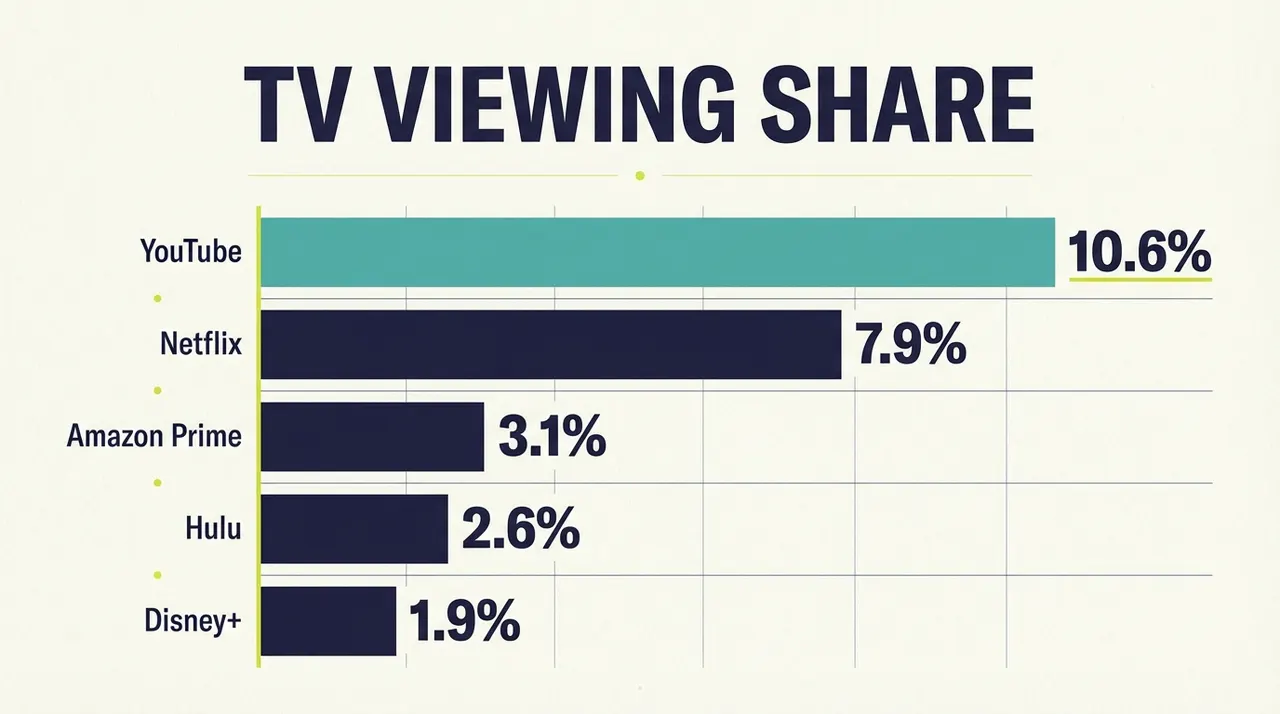
12.7%
YouTube's share of total U.S. TV viewing
-
#1
Largest streaming platform by viewing share
-
+2.1pts
Year-over-year growth in TV viewing share
YouTube now commands 12.7% of all U.S. TV viewing time, making it the single largest streaming destination and the dominant force in living room entertainment, according to Nielsen's The Gauge data for December 2025. That share has grown more than 2 percentage points since early 2025, cementing YouTube's position as the platform that's fundamentally reshaping how Americans watch television. For small businesses, this shift represents something unprecedented: the ability to reach millions of TV viewers through the same platform where they've been building audiences for years. Here's what the latest data reveals and how to put it to work for your business.
What the data shows
YouTube's dominance of TV viewing isn't just a trend anymore. It's the new reality of American television. The platform's 12.7% share of total TV viewing in December 2025 represents more than just a number. It represents a fundamental shift in where and how people spend their evening entertainment hours.
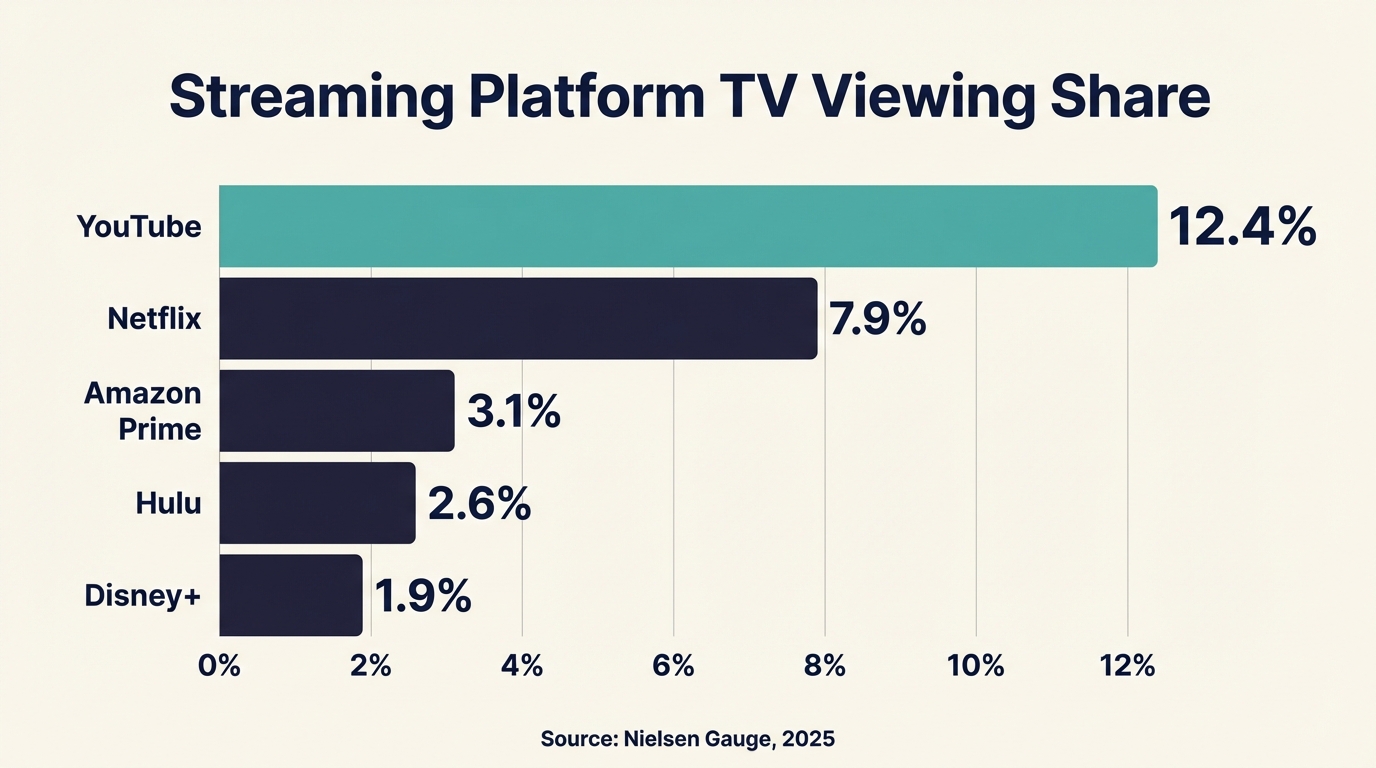
To put this in perspective, YouTube now captures more TV viewing time than any other single streaming service. Netflix, long considered the streaming giant, finished December 2025 with a 9% share of TV viewing. Disney's combined properties (Disney+, Hulu, and ESPN+) reached 10.7% collectively, but as individual services, none comes close to YouTube's singular dominance. Amazon Prime Video, despite strong growth driven by Thursday Night Football, captured 4.3% of TV viewing.
What makes YouTube's position particularly striking is the trajectory. The platform held roughly 10.6% of TV viewing in early 2025. That 2+ percentage point gain over roughly eight months represents massive growth in an industry where fractions of a point typically make headlines. YouTube isn't just maintaining its lead. It's actively extending it.
The viewing patterns tell their own story about how Americans now use their televisions. YouTube viewership peaks during prime time hours from 7 to 10 PM, directly competing with scripted television and appointment viewing for household attention. This isn't background content or quick clips between other activities. This is deliberate, lean-back entertainment consumption on the biggest screen in the house.
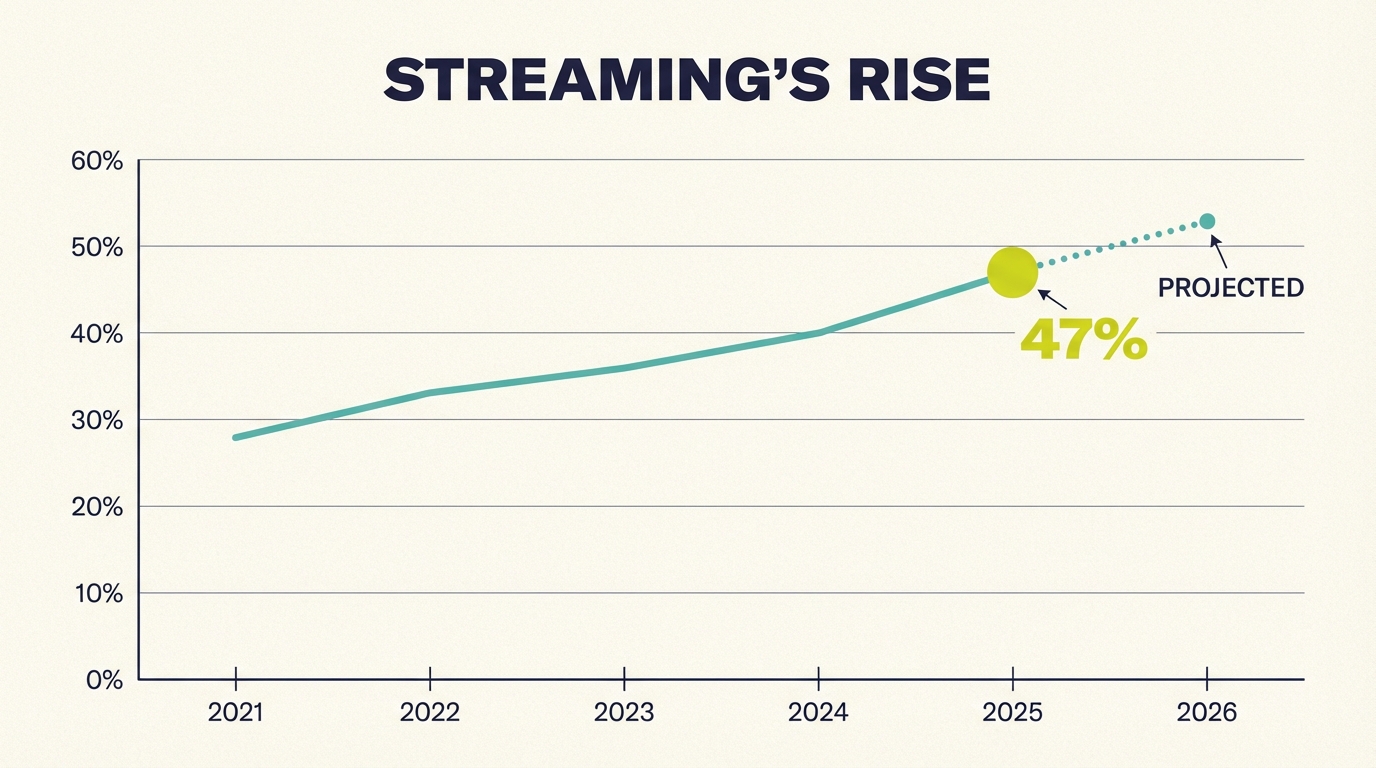
December 2025 proved particularly instructive. Streaming overall captured a record 47.5% of all TV viewing for the month, eclipsing the previous record set in July 2025. Within that streaming surge, YouTube led the pack while nearly every major platform set records. Netflix grew 10% month over month. Amazon Prime Video surged 12%. The Roku Channel hit an all-time high of 3% share. But through it all, YouTube maintained its commanding lead.
The data also reveals something important about the nature of connected TV advertising. Unlike mobile YouTube viewing, which often happens in fragmented, distracted moments, TV-based YouTube viewing involves a different kind of attention. Viewers are typically relaxed, often watching with household members, and engaged in lean-back entertainment mode. For advertisers, that distinction matters enormously.
Breaking down the numbers
Understanding the full picture requires looking beyond the headline 12.7% figure. YouTube's dominance varies significantly across different demographics, time periods, and viewing contexts, and those variations matter for how you think about reaching your customers.
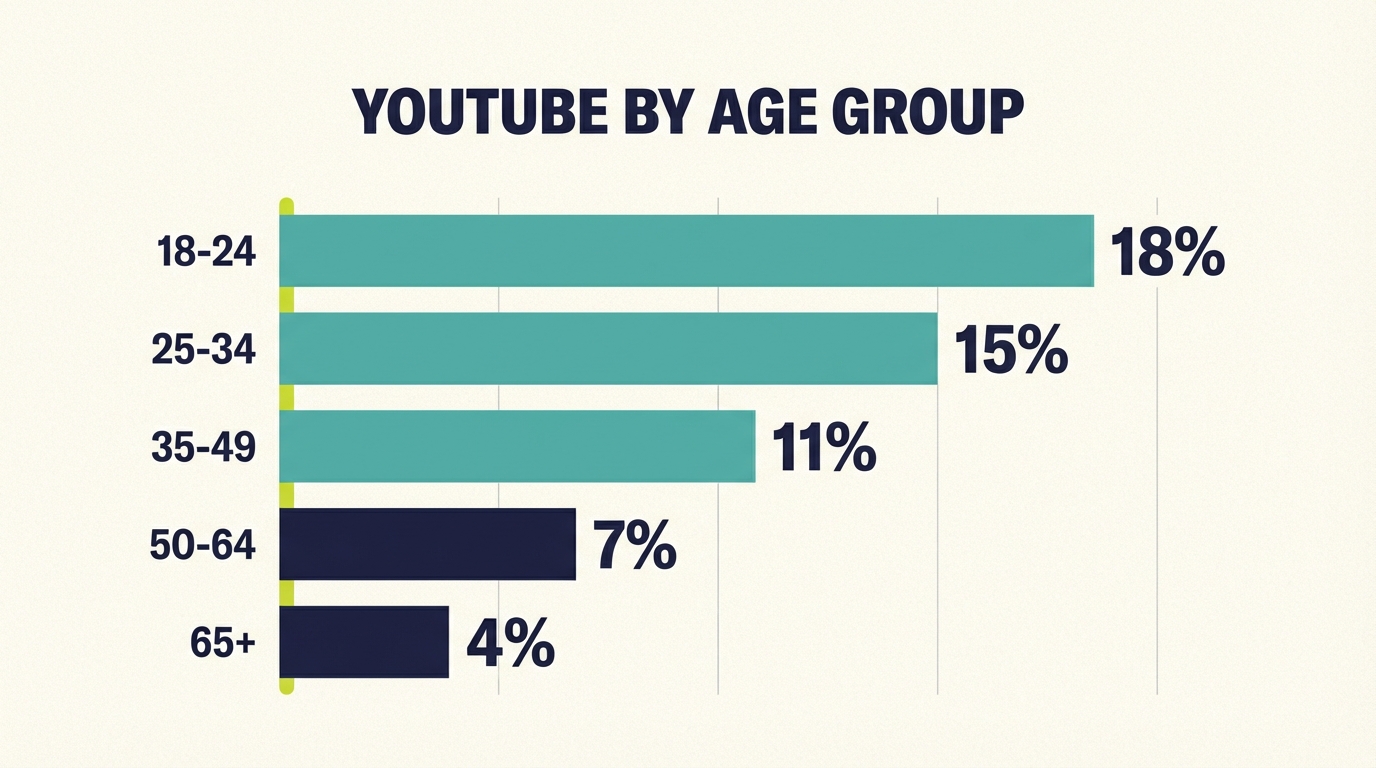
By age group
The generational divide in YouTube TV viewing remains stark, though the platform's growth spans all ages. Among viewers aged 18 to 34, YouTube captures an estimated 16 to 18% of all TV viewing time, making it the dominant streaming destination for this cohort by a wide margin. That share drops to around 13% for viewers aged 35 to 49, and falls further to approximately 9% for those 50 to 64. Among viewers 65 and older, YouTube represents roughly 5 to 6% of TV time.
This pattern reflects viewing habits that formed over decades. Younger audiences grew up with YouTube as a primary entertainment source and naturally gravitate toward it on every screen. Older viewers, while increasingly adopting streaming, still maintain stronger connections to traditional television and services that replicate the broadcast experience.
The business implication is clear: if your target customers skew under 50, YouTube is increasingly where they spend their evening entertainment hours. But even for businesses targeting older demographics, YouTube's presence on TV is growing faster than most other platforms.
By time of day
YouTube's viewing patterns diverge from traditional TV in revealing ways. During daytime hours from 6 AM to 4 PM, YouTube viewing indexes higher than its overall share would suggest. Research indicates that YouTube averages around 6.3 million viewers during daytime hours on TV sets, driven partly by work-from-home flexibility and the platform's utility for background content, tutorials, and informational viewing.
The real competitive story unfolds during prime time. From 8 to 11 PM, YouTube competes directly with scripted television for household attention, particularly among cord-cutting households who've abandoned cable entirely. During this window, YouTube often serves as the default destination for households deciding what to watch together.
After 11 PM, YouTube dominates as the platform of choice for late-night viewing. When traditional programming winds down and streaming libraries feel too demanding for tired viewers, YouTube's endless variety of content meets the moment perfectly.
Compared to traditional TV
The broader viewing landscape reveals just how dramatically television has changed:
Streaming overall: 47.5% of total TV viewing (December 2025 record)
Broadcast: 21.4% of total TV viewing
Cable: 20.2% of total TV viewing
For the first time, streaming now captures nearly half of all TV watching in America. Cable and broadcast combined account for less than 42% of viewing, down from dominant positions just five years ago. Within streaming, YouTube's 12.7% share means it alone captures more viewing time than entire cable categories that once seemed invincible.
Platform comparison
For advertisers evaluating where to spend, here's how the major streaming platforms compare:
What makes YouTube's position particularly valuable for advertisers is the ad model. YouTube is ad-supported by default, which means virtually all of that 12.7% viewing share represents addressable advertising inventory. Compare that to Netflix, where a significant portion of subscribers still pay for ad-free tiers, or Disney+, where premium subscribers skip ads entirely. YouTube's dominance translates more directly into advertising opportunity.
Why it matters for your business
If your customers are spending their evenings watching YouTube on their TV, you can reach them there. And you don't need a Fortune 500 budget to make it happen.
YouTube's TV viewing surge means small businesses now have access to audiences on the biggest screen in the house through the same platform they've used for years. Unlike mobile YouTube ads, which compete with notifications, text messages, and the constant pull of the next scroll, TV-delivered YouTube ads command something different: full-screen, undivided attention. Viewers are engaged, often watching with household members, and in a receptive mindset for brand messages.
The applications vary by business type. Local service businesses like plumbers, HVAC technicians, and contractors can target homeowners within a specific radius during evening hours, when people are thinking about home projects and services they need. Restaurants can reach hungry viewers during dinner decision-making hours or promote weekend specials to households in their delivery zone. Medical practices can build awareness with local families watching together.
For small business advertising, this moment is genuinely different from even five years ago. Traditional TV advertising required $50,000 or more for production costs alone, plus five-figure media buys for any meaningful reach. The gatekeepers, the agencies, the minimums, and the complexity made TV advertising effectively off-limits for most small businesses.
That world is over. With platforms like Adwave, you can run TV advertising campaigns across YouTube and 100+ other premium channels starting at just $50. No production budget required because AI generates your commercial from your website. No agency needed. Your ad can be live in minutes, reaching the same audiences that major brands target, on the same screens where they advertise.
The practical implication is straightforward. If you've built an audience on YouTube through organic content, you already understand the platform. Now you can extend that presence to the TV screen, reaching viewers in their living rooms with professional advertising that matches the premium environment.
How to take advantage of this trend
Understanding that YouTube dominates TV viewing is useful. Knowing how to act on that information is what actually moves your business forward.
The smartest approach for most small businesses is to start with a test campaign. Don't overthink it or try to optimize everything from day one. Set aside $100 to $200, run for two weeks, and treat it as a learning exercise. You're gathering data about what resonates with your audience, not trying to hit a home run immediately.
For local businesses, geographic targeting should be your foundation. Start with a 15 to 25 mile radius around your location. This ensures you're reaching people who can actually become customers rather than wasting budget on viewers who will never visit. Most platforms, including CTV aggregators like Adwave, make this radius targeting straightforward.
Timing your campaigns strategically amplifies your impact. YouTube's TV viewing peaks during evening hours, particularly 7 to 10 PM when households gather for entertainment. If you're a restaurant, targeting the 5 to 7 PM window catches viewers during dinner decision time. If you're a home services business, evening hours reach homeowners when they're relaxed and thinking about household projects.
Creative matters, but not in the way most small businesses assume. You don't need expensive production to succeed on TV. AI-generated video from your website or social profiles can create broadcast-quality 30-second spots that match the professionalism of major brand advertising. Focus on a clear message, a compelling offer, and a memorable call to action rather than production values that exceed your budget.
Here's a practical starting framework:
Budget: $100 to $500 for initial two-week test
Targeting: 15 to 25 mile radius around your business
Timing: Evening hours (6 to 10 PM) when households are watching together
Creative: AI-generated from your website or existing content
Measurement: Track brand search volume, website traffic, and customer mentions
Measuring success requires different thinking than performance marketing. TV advertising builds awareness and consideration, not immediate clicks. Watch for increases in brand searches on Google (are more people searching your business name?), overall website traffic during and after campaigns, and new customers mentioning they saw you on TV.
When you find something that works, scale deliberately. Increase budget on winning creative rather than spreading thin across variations. Consider expanding to additional streaming platforms beyond YouTube. Layer in retargeting to capture viewers who've shown interest.
The bigger picture
YouTube's TV dominance is part of a larger streaming revolution that's fundamentally reshaping American television. December 2025 marked a milestone: streaming captured 47.5% of all TV viewing, the highest share ever recorded. Christmas Day 2025 shattered records, with streaming generating 55.1 billion viewing minutes, only the second time daily streaming volume exceeded 50 billion minutes.
Cable and broadcast continue their steady decline as viewers shift to on-demand content. Broadcast finished December at 21.4% of viewing. Cable dropped to 20.2%. Together, traditional TV accounts for less than 42% of what Americans watch, down from dominant positions just years ago. The trajectory is unmistakable.
The ad-supported shift
What makes this moment particularly significant for advertisers is where the growth is happening. While subscription streaming services dominate headlines, ad-supported platforms are driving much of the actual expansion. YouTube leads this charge, but the broader FAST (Free Ad-Supported Streaming TV) category is exploding. The Roku Channel grew 45% year over year and has nearly tripled since December 2023. Tubi, Pluto TV, and other free streaming services continue adding viewers.
This ad-supported growth creates more advertising inventory at accessible price points. When Netflix or Disney+ adds subscribers, many choose ad-free tiers that don't help advertisers. When YouTube or FAST services grow, virtually all that viewing becomes addressable advertising opportunity.
What's next
Industry projections suggest streaming will capture 50% or more of all TV viewing by late 2026. Within that:
YouTube is expected to maintain or extend its lead as the largest single platform
Ad-supported tiers on premium services will continue expanding reach
Local advertising options will become more sophisticated and accessible
AI-generated creative will further reduce barriers to entry
The democratization of TV advertising
For small businesses, this trend is unambiguously positive. Every percentage point that shifts from linear TV to streaming represents inventory that's more targetable, more measurable, and more accessible to smaller budgets. The days when TV advertising required six-figure budgets are definitively over.
The competitive implications are significant. Businesses that embrace TV advertising now, while costs remain accessible and competition is still developing, will build brand awareness advantages that compound over time. Those who wait may find themselves competing against entrenched local competitors who've already established TV presence.
What experts are saying
Industry analysts have noted YouTube's TV growth as one of the most significant developments in media consumption.
Nielsen's latest Gauge report highlighted streaming's record December, noting that "streaming viewership captured 47.5% of television in December 2025, eclipsing its previous record set in July 2025 to achieve the largest share of TV ever reported." Within that streaming surge, YouTube's consistent leadership demonstrates the platform's unique position bridging digital video and traditional television.
Media observers point to the structural advantages driving YouTube's growth. The platform offers an endless variety of content, from professional productions to creator-driven entertainment, that no other single service can match. Viewers who might exhaust a streaming library in weeks can spend years exploring YouTube's catalog.
The advertising industry has taken notice of what this means for marketers. With YouTube representing such a large share of ad-supported TV viewing, the platform offers reach that approaches or exceeds traditional broadcast networks, but with targeting capabilities that traditional TV never offered. Advertisers can reach specific demographics, interests, and geographic areas rather than buying broad audiences and hoping their customers are watching.
Trade publications have emphasized the opportunity for smaller advertisers. Marketing researchers note that YouTube's TV presence combined with accessible buying platforms means businesses of all sizes can now participate in television advertising. The barriers that once made TV the exclusive domain of large brands have largely dissolved.
For local business marketing, this expert consensus points to a clear opportunity. YouTube's TV dominance isn't a temporary blip but a structural shift that's reshaping how Americans consume content and how advertisers can reach them.
Common questions answered
How much of YouTube viewing happens on TV screens versus mobile?
YouTube's TV viewing has grown significantly, with television now representing a substantial portion of total YouTube watch time. While YouTube doesn't disclose exact splits, Nielsen data showing 12.7% of all TV viewing going to YouTube suggests tens of billions of monthly viewing minutes on television sets alone. The platform's growth on TV has outpaced its mobile growth in recent years as smart TVs and streaming devices make YouTube a natural part of the living room experience.
Is YouTube TV viewing the same as YouTube TV the subscription service?
No, these are different products. YouTube TV viewing refers to people watching regular YouTube content on their television screens through smart TV apps, streaming devices like Roku or Fire TV, or gaming consoles. YouTube TV is a separate subscription service that offers live cable channels for around $73 per month. The viewing share data discussed here covers regular YouTube viewing on televisions, not the YouTube TV subscription service.
Can small businesses actually afford to advertise on YouTube TV?
Yes, and this is one of the most significant changes in advertising over the past few years. Platforms like Adwave allow small businesses to run TV advertising campaigns, including on YouTube, starting at just $50. You don't need expensive video production because AI can generate broadcast-quality commercials from your website. The barriers that once made TV advertising exclusive to large brands have largely disappeared.
How does YouTube's TV viewing compare to Netflix?
YouTube leads Netflix significantly in TV viewing share. As of December 2025, YouTube captured 12.7% of all TV viewing compared to Netflix's 9%. This gap has widened over the past year as YouTube's share has grown while Netflix's has increased more modestly. For advertisers, YouTube's lead is even more significant because virtually all YouTube viewing is ad-supported, while a portion of Netflix viewers pay for ad-free tiers.
What's driving YouTube's growth on TV?
Several factors contribute to YouTube's TV dominance. First, the platform offers an unmatched variety of content spanning every interest and genre. Second, smart TV adoption has made YouTube easily accessible in living rooms. Third, cord-cutting has pushed viewers away from cable toward streaming options they already know. Fourth, YouTube's free, ad-supported model means no subscription barrier to entry. Finally, younger viewers who grew up with YouTube naturally bring those habits to the TV screen as they establish households.
How do I target local customers with YouTube TV ads?
Most TV advertising platforms, including aggregators like Adwave, offer geographic targeting that lets you specify a radius around your business or select specific zip codes. You can typically target viewers within 10, 15, 25, or more miles of your location. Combined with demographic and interest targeting, this allows local businesses to reach relevant households in their service area rather than paying for broad audiences they can't serve.
Supporting data
Key statistics referenced in this analysis, with sources:
YouTube TV viewing share (Dec 2025): 12.7% of total U.S. TV viewing, Nielsen's The Gauge via TheWrap
Streaming record (Dec 2025): 47.5% of total TV viewing, highest ever recorded, Nielsen
Netflix TV viewing share: 9.0% with 10% month-over-month growth, Nielsen December 2025
Disney combined share: 10.7% across Disney+, Hulu, and ESPN+, Nielsen December 2025
Amazon Prime Video share: 4.3% with 12% monthly growth, Nielsen December 2025
The Roku Channel growth: 45% year-over-year, 190% since December 2023, Nielsen
Christmas Day streaming: 55.1 billion viewing minutes, second time exceeding 50B daily, Nielsen
Christmas Day streaming share: 54% of daily TV usage, highest single-day share ever, Nielsen
Broadcast TV share: 21.4% of total viewing, December 2025, Nielsen
Cable TV share: 20.2% of total viewing, December 2025, Nielsen
Adwave minimum campaign: $50 starting budget, 100+ premium channels, Adwave
Get started with TV advertising
YouTube's dominance of TV viewing creates an unprecedented opportunity for small businesses. The same screens where major brands advertise are now accessible at budgets that make sense for local businesses.
With Adwave, you can create a professional TV commercial from your website in minutes and start running on YouTube and 100+ premium channels for as little as $50. No production costs, no agency fees, no minimum commitments beyond what you choose to spend.
Your customers are already watching YouTube on their TVs. The question is whether they'll see your business there alongside the national brands, or whether your competitors will reach them first.
Create your free TV ad and see how easy it is to reach your community on the biggest screen in their home.


