Cruise vacations sell a feeling. The open ocean, a sunset cocktail on the upper deck, waking up in a new port city. That kind of experience is hard to capture in a text ad or a static banner. But a 30-second TV spot on a streaming platform? That's where the magic happens.
TV advertising has always been a natural fit for travel brands, and cruise lines are no exception. The difference now is that you don't need a Super Bowl budget to get your message in front of the right audience. Connected TV (CTV) advertising lets cruise operators of every size, from major ocean liners to boutique river cruise companies, reach highly targeted viewers on the biggest screen in their home.
Why TV advertising works for cruise lines
Cruising is an aspirational purchase. People don't just buy a cabin. They buy the idea of exploration, relaxation, and adventure. That emotional hook is exactly what video advertising does best.
Banner ads and search campaigns can tell someone about your cruise. But a TV commercial can make them feel what it's like to be on one. Research from the Video Advertising Bureau found that travel ads on TV drive 2.5x higher brand recall compared to digital display (VAB, 2024). When your product is an experience, recall matters.
CTV takes the emotional power of traditional TV and adds something linear broadcasts never had: precision targeting. Instead of buying a time slot and hoping the right people are watching, you can target viewers based on demographics, interests, geography, and even past travel behavior. If you're new to the concept, here's a solid primer on what connected TV advertising is and how it works.
A few reasons CTV stands out for cruise marketing:
Visual storytelling at scale. Show turquoise water, onboard entertainment, and destination highlights in full HD on a big screen.
Lean-back attention. Streaming viewers are engaged. They're not scrolling past your ad. They're watching it the way they watch their favorite show.
Measurable results. Unlike traditional TV, CTV gives you data on impressions, completion rates, and downstream actions. You can learn more about tracking performance in this CTV measurement and attribution guide.
The cruise industry is booming (and competition is heating up)
The cruise industry has made a remarkable comeback. The Cruise Lines International Association (CLIA) reported that 35.7 million passengers sailed in 2024, surpassing the pre-pandemic high of 29.7 million set in 2019 (CLIA, 2024 State of the Cruise Industry). CLIA projects 39.4 million passengers globally in 2025.
That growth means more competition for every booking. Major operators like Royal Caribbean, Carnival, and Norwegian are spending heavily on marketing. Smaller and mid-size cruise lines, think river cruises, expedition operators, and regional coastal trips, need a way to stand out without matching those massive budgets.
This is where CTV makes advertising more accessible. A boutique river cruise company can run targeted ads on Hulu, Peacock, and Tubi in specific markets where their ideal customers live. You're not competing for the same national broadcast slots as the big players. You're showing up on the same premium streaming content, but only in the zip codes and demographics that matter to your business.
Targeting strategies that put your ads in front of future passengers
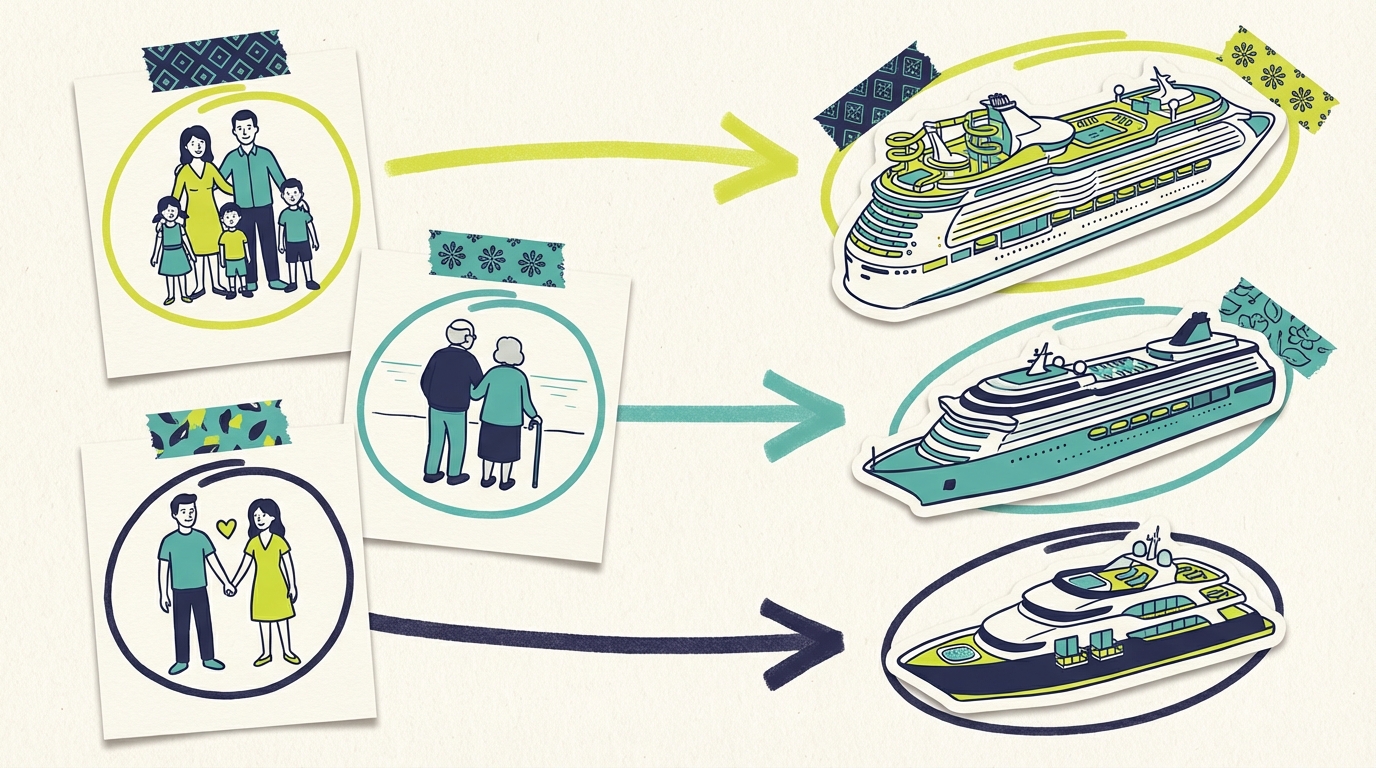
One of the biggest advantages of CTV advertising for cruise lines is how specific you can get with your audience. Here are the targeting strategies that matter most:
Demographics. The average cruise passenger is between 47 and 49 years old, with a household income above $100,000 (CLIA, 2024 Cruise Industry Outlook). But that's shifting. Millennial and Gen Z travelers now represent a growing share of bookings. You can target by age, income, and household composition to match your ship's passenger profile.
Geography. Drive-to-port markets are gold. If your ship departs from Miami, Galveston, or Seattle, you can concentrate your ad spend in those metro areas and feeder markets close enough to drive from. This keeps your cost per thousand impressions (CPM) efficient. For a breakdown of what to expect on costs, check out this TV advertising CPM guide by platform.
Interest-based targeting. Reach viewers who've shown interest in travel, luxury goods, outdoor recreation, or competing vacation types like resort stays and all-inclusive packages. Many CTV platforms allow you to target based on browsing and purchase behavior, so you can find people who are actively researching vacations.
Retargeting. If someone visits your website and browses itineraries but doesn't book, you can serve them a follow-up TV ad on their streaming device. That big-screen reminder is far more impactful than a standard retargeting banner.
Seasonal booking patterns: when to run your cruise ads
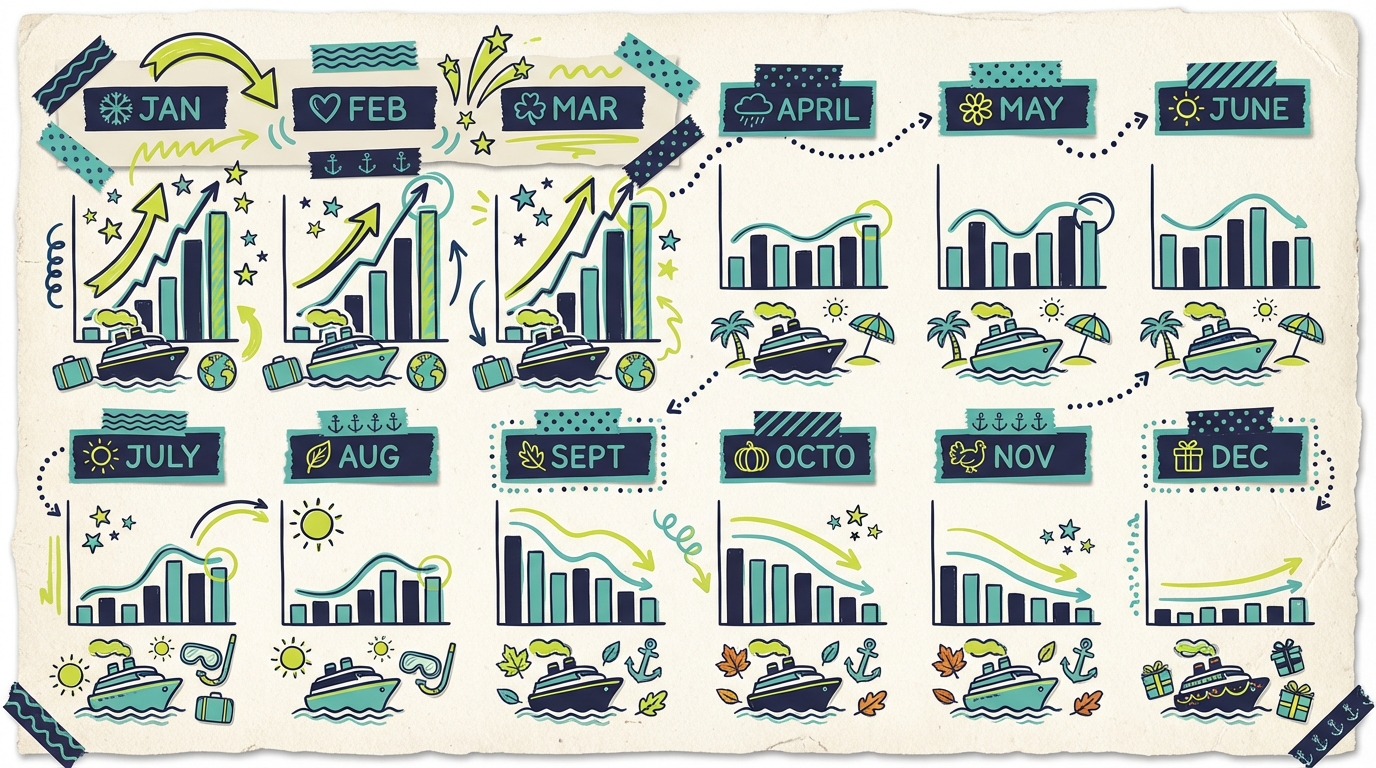
Timing your ad campaigns around cruise booking patterns can dramatically improve your return on ad spend. The cruise industry follows a well-known seasonal rhythm:
Wave Season (January through March). This is the biggest booking period of the year. Cruise lines release deals, and consumers are motivated by post-holiday wanderlust. Your heaviest ad spend should align with wave season. Start running ads in late December to build awareness heading into January.
Spring shoulder season (April through May). Bookings slow slightly after wave season, but last-minute summer cruise deals can still drive conversions. Reduce spend but keep campaigns active for urgency-driven messaging.
Summer (June through August). Family bookings peak. If you offer family-friendly itineraries, this is your window. Target households with children and emphasize kid-friendly amenities.
Fall planning season (September through November). Consumers start planning holiday and New Year's cruises, plus next year's vacations. Ramp up spend in September and October to capture early planners.
Holiday close (December). Gift-a-cruise promotions and New Year's Eve sailings create a short but intense booking spike. Pair your TV ads with holiday-themed creative.
The key is to stay visible year-round but shift your budget toward the periods when booking intent is highest.
Ad creative tips for cruise lines
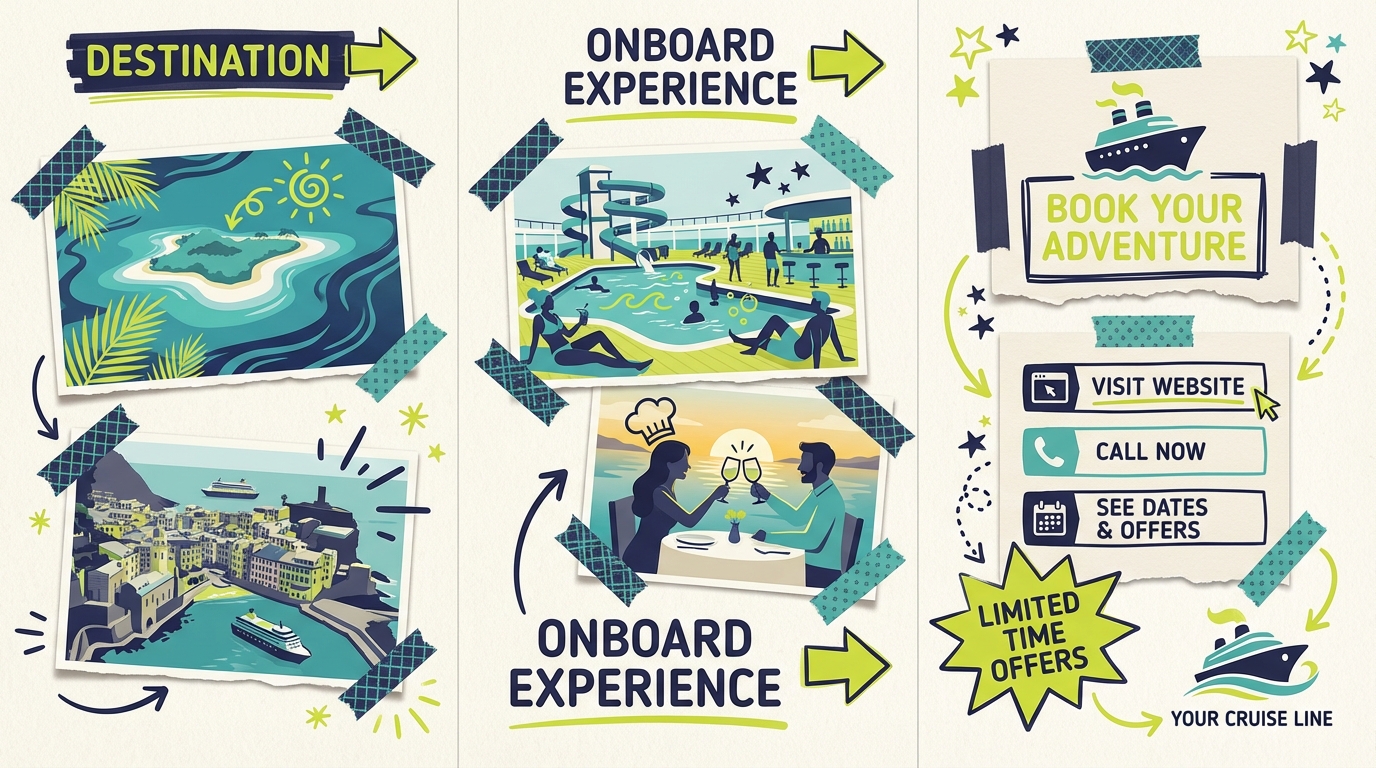
Your 30-second spot needs to do two things: make viewers feel something and give them a clear next step. Here's how to nail the creative:
Lead with the destination, not the ship. People book cruises for where they're going, not the vessel specifications. Open with stunning footage of ports of call, whether that's the Greek islands, Alaskan glaciers, or the Rhine Valley.
Show the onboard experience. After the destination hook, give a quick taste of life onboard. Dining, entertainment, the pool deck at golden hour. Keep it aspirational but authentic.
Include real people. Couples, families, friend groups. Your target audience needs to see themselves in the ad. A couple in their 50s watching a sunset from a balcony cabin hits differently than a drone shot of the ship alone.
End with a specific offer and CTA. "Cabins from $799 per person" or "Book by March 31 and save 30%" gives viewers a reason to act now. Include a QR code or a memorable URL so they can move from the TV screen to your booking page.
Keep the pacing relaxed. Cruise ads aren't car commercials. Let the shots breathe. The goal is to transport the viewer, even for 30 seconds.
With a platform like Adwave, you can create a broadcast-quality cruise ad in about two minutes using your existing website or social content, then launch it across 100+ premium streaming channels from $30/day.
Budget recommendations for cruise line TV advertising
What should you spend? That depends on your operation's size and goals, but here are some practical benchmarks:
Boutique and river cruise operators. Start with $2,000 to $5,000 per month targeting your top two or three feeder markets. This gets you meaningful reach in specific metro areas during wave season. Scale up if you're seeing strong website traffic and booking inquiries.
Mid-size cruise lines. Budget $5,000 to $15,000 per month across five to eight markets. Mix geographic targeting (port cities and feeder markets) with interest-based targeting for broader awareness.
Large operators with regional focus. $15,000 to $50,000+ per month with national or multi-market campaigns. At this level, you can run always-on campaigns with seasonal spikes during wave season and summer.
At average streaming CPMs of $15 to $35, a $5,000 monthly budget delivers roughly 140,000 to 330,000 impressions. That's a lot of living rooms seeing your ship, your destinations, and your offer.
CTV doesn't require a long-term commitment. You can test a campaign during wave season, measure the results, and adjust from there. Adwave makes this especially easy for smaller operators who want to test TV advertising without a six-figure media buy.
How smaller cruise operators compete with the big lines
If you run a river cruise company, an expedition outfit, or a regional coastal cruise, you might think TV advertising is only for the Carnivals and Royal Caribbeans of the world. It's not.
Here's what gives smaller operators an edge on CTV:
Niche appeal. A luxury Danube river cruise and a seven-day Caribbean party cruise attract completely different people. CTV targeting lets you reach your specific audience without wasting impressions on the wrong travelers.
Local market focus. Big cruise lines run national campaigns. You can dominate specific metro areas, like targeting affluent 50-plus households in Chicago for your Great Lakes cruise.
Speed and flexibility. With Adwave, you can go from concept to live TV ad in under 10 minutes. If a competitor drops prices or you have last-minute cabin inventory, you can launch a new campaign the same day.
Lower risk. Start from $30/day and scale up as you see results. There's no minimum contract or agency retainer required.
For more on how travel businesses are using TV advertising, explore our travel and hospitality industry page and our guide to TV advertising for travel agencies.
Common questions answered
How much does TV advertising cost for a cruise line? CTV advertising typically runs between $15 and $35 per thousand impressions (CPM). A small cruise operator can start with as little as $2,000 per month targeting key feeder markets, while larger lines may invest $15,000 or more for multi-market campaigns. The flexibility of CTV means you can scale up or down based on booking demand and seasonal patterns.
Can a small river cruise company really afford TV advertising? Yes. Connected TV has removed the traditional barriers that kept smaller operators off television. You don't need a massive production budget or a national media buy. Platforms like Adwave let you create a professional 30-second ad from your existing website content and launch it on premium streaming channels from $30/day. That makes TV accessible even for single-ship operators.
What's the best time of year to run cruise TV ads? Wave season, January through March, is the single most important window for cruise advertising. This is when consumers are most motivated to book, and cruise lines traditionally offer their best deals. However, maintaining some level of visibility year-round helps build brand recognition. Increase spend during wave season and summer family booking periods, then dial back (but don't go dark) during shoulder months.
How do I measure whether my cruise TV ads are working? CTV provides much more measurement capability than traditional TV. You can track ad completion rates, website visit lift, and booking page conversions. Many platforms offer attribution reporting that connects a TV ad impression to a subsequent website visit or booking action. Pair your CTV campaigns with unique landing pages or promo codes for even cleaner tracking.
What should a cruise line TV ad look like? Focus on emotional storytelling. Lead with stunning destination footage, show the onboard experience with real people enjoying it, and close with a specific offer and clear call to action. Keep the pacing relaxed and aspirational. A 30-second cruise ad should make the viewer feel like they're already on vacation, then give them a reason to book right now.
Should cruise lines target nationally or focus on specific markets? For most cruise operators, geographic targeting around port cities and feeder markets delivers the best return. Concentrate your budget where potential passengers live and where they can easily access your departure ports. National campaigns make sense for large operators with multiple embarkation cities, but even then, weighting spend toward top-performing markets improves efficiency.