Travel is an emotional purchase. People don't book a trip because of a bullet-point list of features. They book because they can picture themselves on that beach, walking through that European village, or watching their kids meet a cartoon character for the first time. That's what makes TV advertising so powerful for travel agencies: it sells the feeling.
Most travel agencies are competing for the same customers on the same digital channels. Google Ads, Meta, email blasts. Everyone's bidding on "all-inclusive vacation deals" and hoping the algorithm delivers. But TV puts your agency in front of travelers before they even start searching, when they're relaxed on their couch and open to dreaming about their next trip.
And thanks to Connected TV (CTV), you don't need a national brand's budget to make it happen. Local and boutique travel agencies can now run professional TV ads on streaming platforms from $30/day per month. Let's break down exactly how.
Why TV Works for Travel Agencies
Travel advertising has always been visual. Magazine spreads of turquoise water, billboard photos of ski slopes, Instagram reels of rooftop infinity pools. TV takes that visual storytelling and adds motion, sound, and emotion in a way no other medium matches.
According to the U.S. Travel Association, leisure travel spending in the U.S. reached $1.2 trillion in 2024. That's a massive market, and travelers are making decisions weeks or months before they book. A 2024 Expedia Group study found that 73% of travelers say they're influenced by visual content when choosing a destination. TV delivers that visual content at scale, on the biggest screen in the household.
There's also a trust factor that matters for travel agencies specifically. Booking a vacation through an agency requires handing over thousands of dollars and trusting someone else to handle the details. According to a 2024 TVB/Harris Poll study, 62% of consumers say they trust TV advertisements more than ads on social media. When your agency appears on premium networks like Hulu, NBC, or ESPN alongside major brands, you inherit that credibility.
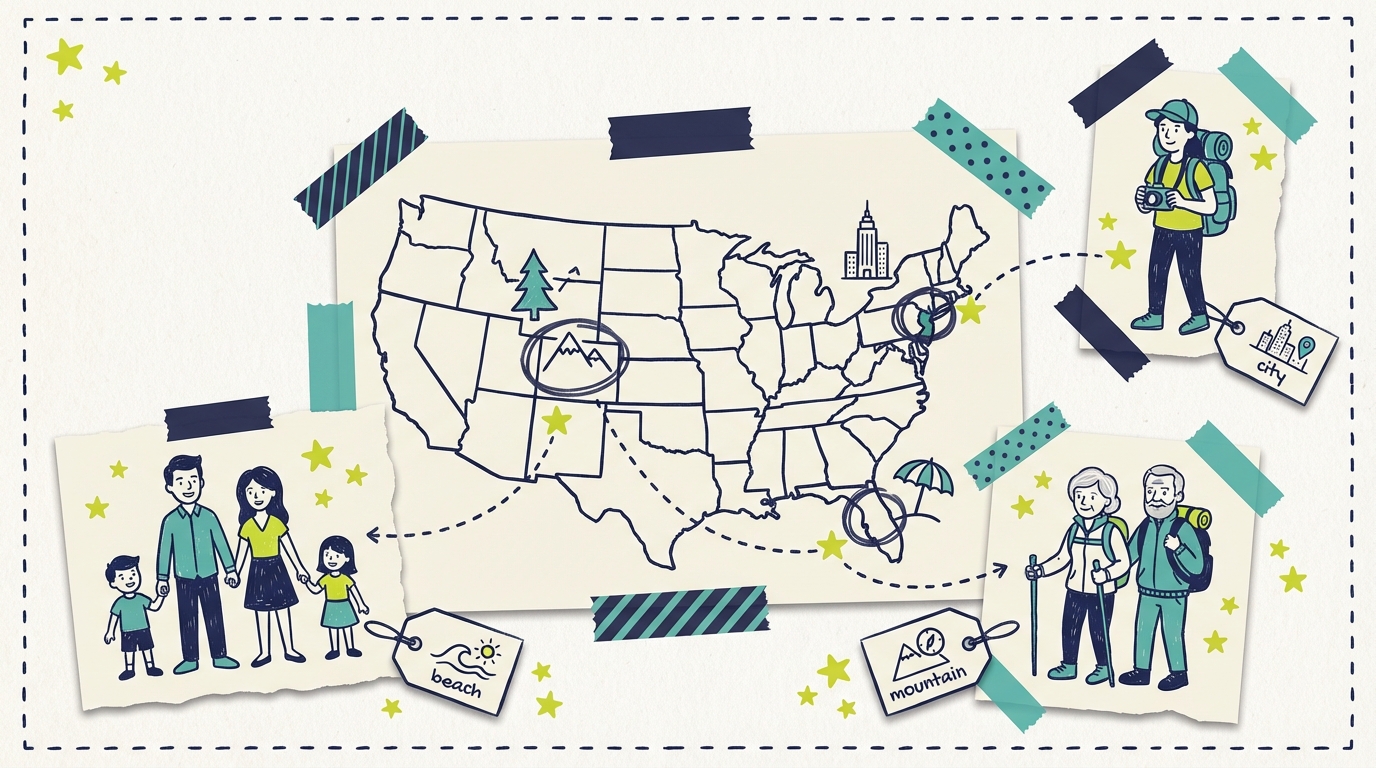
CTV adds precision to that reach. Instead of buying a 30-second spot during the evening news and hoping travelers are watching, you can target specific demographics, zip codes, and even household income levels. That means your ad for luxury Caribbean cruises reaches affluent households, while your family vacation packages reach parents with school-age kids.
Targeting Strategies That Work for Travel
The beauty of CTV advertising for travel agencies is the ability to reach the right travelers at the right time. Here are the targeting approaches that deliver the best results.
Geographic targeting is your foundation. If your agency serves a specific metro area, you can confine your ads to households in that region. No wasted impressions on viewers three states away who'll never walk through your door. For agencies with a national online presence, you can target high-income zip codes across multiple markets.
Demographic layering takes it further. Target by household income to match your offering, whether that's budget-friendly group tours or luxury private travel. Age targeting matters too. According to AARP's 2024 Travel Trends report, travelers aged 50 and older account for 41% of all leisure travel spending, and they tend to use travel agents at higher rates than younger demographics.
Seasonal timing is critical in travel. Your advertising calendar should map to booking windows, not travel dates. Travelers typically book summer vacations in February through April, winter holidays in September through October, and spring break trips in November through January. Run your CTV campaigns during these booking windows when intent is highest.
Interest-based targeting lets you reach viewers based on their content consumption. People watching travel shows, food and culture programming, or adventure content are signaling an interest in experiences. CTV platforms can serve your ads specifically to these viewers.
What Your Travel Agency TV Ad Should Look Like
A great travel agency TV ad does one thing above all else: it makes the viewer feel something. You have 30 seconds to transport someone from their living room to a destination they didn't know they wanted to visit.
Lead with destination footage. Open with the most visually striking shots you have. Crystal water, golden sunsets, cobblestone streets, bustling markets. The first three seconds determine whether someone keeps watching or checks their phone.
Tell a micro-story. Don't just show a slideshow of pretty places. Show a couple clinking glasses at a rooftop bar. A family building sandcastles. A solo traveler standing in awe at a mountain vista. Stories are more memorable than scenery alone.
Position your agency as the guide. After the emotional hook, introduce your agency as the one who makes it happen. "We handle everything so you just pack your bags" is a more compelling message than listing your services. According to the American Society of Travel Advisors (ASTA), the number one reason travelers use an agent is to save time and reduce stress. Lean into that.
Include a clear call to action. End with something specific: "Call us for a free trip consultation" or "Visit [website] to start planning your 2026 getaway." A QR code on screen works well for CTV since viewers are typically holding their phones while watching.
With Adwave, you can create a broadcast-quality 30-second spot from your website or social media content in about two minutes, with no film crew or production budget needed. The AI pulls your best destination imagery, branding, and messaging to assemble a professional ad ready for 100+ premium streaming channels.
Budget Planning for Travel Agency TV Ads
One of the biggest misconceptions about TV advertising is that it requires a massive budget. That was true for traditional broadcast. CTV has changed the math completely.
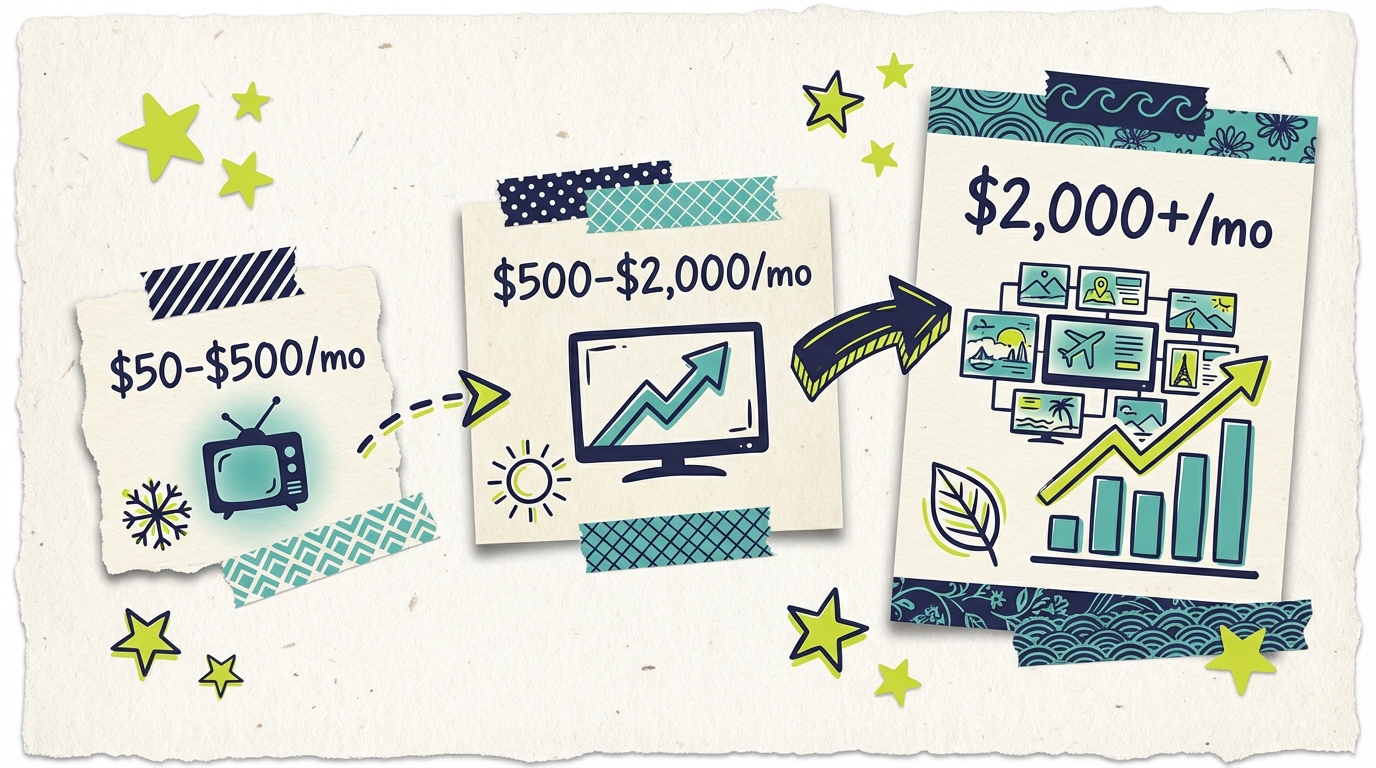
Entry-level campaigns (from $30/day): Test the waters with a focused campaign targeting your core metro area. At CPMs of $15 to $35, a $500 monthly budget delivers roughly 14,000 to 33,000 impressions. That's enough to build initial awareness among your local audience and measure whether TV drives website visits and phone calls.
Growth campaigns ($500 to $2,000/month): Expand your targeting to include multiple demographics and seasonal pushes. Run different creative for different trip types, like a Caribbean ad during winter months and a European tour ad in early spring. This budget level lets you sustain consistent visibility throughout your booking seasons.
Established campaigns ($2,000 to $5,000+/month): Layer CTV with retargeting across digital channels. Someone who sees your TV ad and then visits your website gets followed up with display and social ads featuring specific trip packages. This awareness and conversion approach maximizes your conversion rate.
For context, the average travel agency spends 7% to 10% of gross revenue on marketing, according to Travel Weekly's 2024 Industry Survey. If your agency generates $500,000 in annual revenue, that translates to $35,000 to $50,000 in annual marketing budget. Allocating 15% to 25% of that toward CTV puts you at $5,000 to $12,000 per year, or roughly $400 to $1,000 per month, which sits well inside the growth campaign range.
Seasonal Campaign Calendar for Travel Agencies
Timing your TV campaigns to match booking windows is one of the biggest advantages CTV offers travel agencies. Unlike traditional TV buys that lock you into long-term commitments, CTV lets you activate and pause campaigns with full flexibility.
January through March (Peak booking season): This is your highest-spend period. Travelers are planning summer vacations, spring break trips, and honeymoons. Run your broadest campaigns during this window. Showcase beach destinations, European tours, and family resorts.
April through May (Late-spring push): Target last-minute summer planners and fall getaway seekers. Shift creative toward "there's still time" messaging for summer and early promotions for fall foliage, wine country, and shoulder-season Europe.
June through August (Off-peak for bookings, peak for inspiration): Booking volume dips as people are actively traveling, but this is a great time to run lower-budget awareness campaigns. Travelers returning from trips often start dreaming about the next one. Plant seeds for winter holiday travel and early 2027 planning.
September through November (Holiday and winter booking season): Ramp up spending for holiday travel, ski season, and New Year's trips. Families start planning winter breaks, and couples book romantic getaways. This is also when cruise bookings spike for the following year.
December (Year-end inspiration): Gift travel. "Give the gift of a vacation" messaging performs well. Target households buying holiday gifts with ads for travel gift certificates and 2027 trip planning.
Measuring Your Travel Agency TV Campaign
TV advertising works differently than search ads. You won't see a direct click-to-conversion path because TV ads aren't clickable. But the results are very measurable when you know what to track.
Website traffic lifts: Compare your website sessions during and after a TV campaign to your baseline. Tools like Google Analytics can show you spikes that correlate with your ad flights. Many travel agencies report 15% to 30% traffic increases during active CTV campaigns.
Branded search volume: Monitor Google Search Console for increases in searches for your agency name. When people see your ad on TV, they google you. A rise in branded search is one of the clearest signals that your TV campaign is working.
Phone call tracking: Use a dedicated phone number in your TV ads that routes to your main line. This lets you attribute calls directly to your campaign. For travel agencies, phone consultations are often the first step in a booking, so this metric is especially valuable.
QR code scans: Including a QR code in your ad gives viewers an immediate way to engage. Track scans to measure direct response.
Booking attribution: Ask new clients how they heard about you. "I saw your ad on TV" is a common response from CTV campaigns. Over time, you can track the percentage of new bookings that originated from TV exposure.
For more on connecting TV ad views to business results, explore our guide to TV advertising for small businesses.

How Travel Agencies Are Standing Out with TV
The travel agency industry is going through a resurgence. According to ASTA, the number of Americans using travel advisors increased 26% between 2021 and 2024, driven by post-pandemic complexity and the desire for expert guidance. But more agencies means more competition for the same travelers.
TV gives your agency a visibility advantage that digital-only competitors can't match. While other agencies are fighting for clicks on Google, you're building brand recognition on the biggest screen in the house. When a traveler is ready to book and they've seen your agency on Hulu alongside major brands, you're no longer "some agency they found online." You're a recognized name they already trust.
This works especially well for niche travel agencies. If you specialize in adventure travel, luxury cruises, destination weddings, or group tours, you can craft TV creative that speaks directly to your ideal client. A 30-second spot showing exactly the type of experience you deliver is more persuasive than any Google ad headline.
The hospitality industry is already investing in CTV. Hotels and resorts are advertising on streaming platforms to drive direct bookings, as outlined in our TV advertising for hotels and lodging guide. Travel agencies can partner with or complement these campaigns by positioning themselves as the easiest way to access those experiences.
For inspiration on building effective destination-focused ad creative, check out our collection of TV advertisement examples that showcase travel and tourism approaches.
Getting Started with Your First Campaign
Launching your first TV campaign as a travel agency is simpler than you might think. Here's a practical path forward.
Step 1: Choose your strongest offer. Start with the trip type or destination that generates the most revenue for your agency. Don't try to advertise everything at once. A focused ad for "Luxury Caribbean All-Inclusives" will outperform a generic "We book all kinds of trips" message.
Step 2: Create your ad. With Adwave, you can generate a professional 30-second commercial from your website or social media pages in about two minutes. The AI pulls your best imagery and builds a spot optimized for streaming TV. No production crew, no five-figure production budget.
Step 3: Set your targeting. Define your geographic area, household demographics, and any interest-based targeting. For a local agency, start with your metro area and a 50-mile radius. For an online agency, target high-income zip codes in your top-performing markets.
Step 4: Launch and monitor. Start with a test budget of $500 to $1,000 for the first month. Monitor website traffic, phone calls, and branded searches. Adjust targeting and creative based on what you learn.
Step 5: Scale what works. Once you've identified your best-performing audience and creative, increase your budget during peak booking seasons. Layer in digital retargeting to capture viewers who engage after seeing your TV ad.
The travel agencies winning in 2026 aren't just fighting over the same digital scraps. They're building brands that travelers recognize and trust before they open a browser. TV advertising, made accessible through CTV platforms like Adwave, is how they're doing it.
Common Questions Answered
How much does TV advertising cost for a travel agency? With CTV platforms, travel agencies can start advertising on streaming TV from $30/day per month. A meaningful campaign targeting a local metro area typically runs $500 to $2,000 per month, with CPMs ranging from $15 to $35. That's comparable to what many agencies spend on a single Google Ads campaign, but with the added benefit of premium TV brand credibility.
Can a small, independent travel agency really advertise on TV? Absolutely. CTV has removed the barriers that once limited TV advertising to large brands. Platforms like Adwave let any travel agency create a professional commercial and run it on 100+ premium networks including Hulu, NBC, ESPN, and Roku. There are no minimum commitments beyond $50, and you can target your ads to specific zip codes so you only reach relevant households.
What should a travel agency TV ad include? The most effective travel agency ads lead with stunning destination visuals, tell a brief emotional story (a couple on a beach, a family exploring a new city), and position the agency as the stress-free way to book. Always end with a clear call to action and your website or phone number. Keep the focus on one trip type or destination per ad rather than trying to showcase everything.
When should travel agencies run TV campaigns? Align your campaigns with booking windows, not travel dates. The biggest booking season is January through March for summer travel. September through November is peak for holiday and winter trips. Run awareness campaigns year-round at lower budgets and increase spending four to six weeks before each major booking window.
How do I measure if my travel agency TV ads are working? Track four key metrics: website traffic lifts during your campaign, increases in branded Google searches for your agency name, phone calls to a dedicated tracking number used in your ad, and direct client feedback when new bookings come in. Most travel agencies see measurable increases in all four in the first 30 to 60 days of a CTV campaign.