
TV ads used to feel off-limits for small businesses. If you didn't have agency help, a production budget, and patience for a slow buying process, you stayed in search, social, direct mail, or local sponsorships. TV was where bigger brands went.
That's changed. A newer wave of TV advertising and Best Tools has pushed the channel much closer to how small businesses buy media today. You can test quickly, launch on streaming inventory without a production crew, and judge performance without waiting on a long campaign recap.
The challenge now isn't access. It's picking the right stack. Some tools are built for speed, some for tighter buying control, and some for managed local reach across linear and streaming. If you want the shortest path from business website to live campaign, start with the platform that removes the most friction. That's where Adwave stands out.
1. Adwave
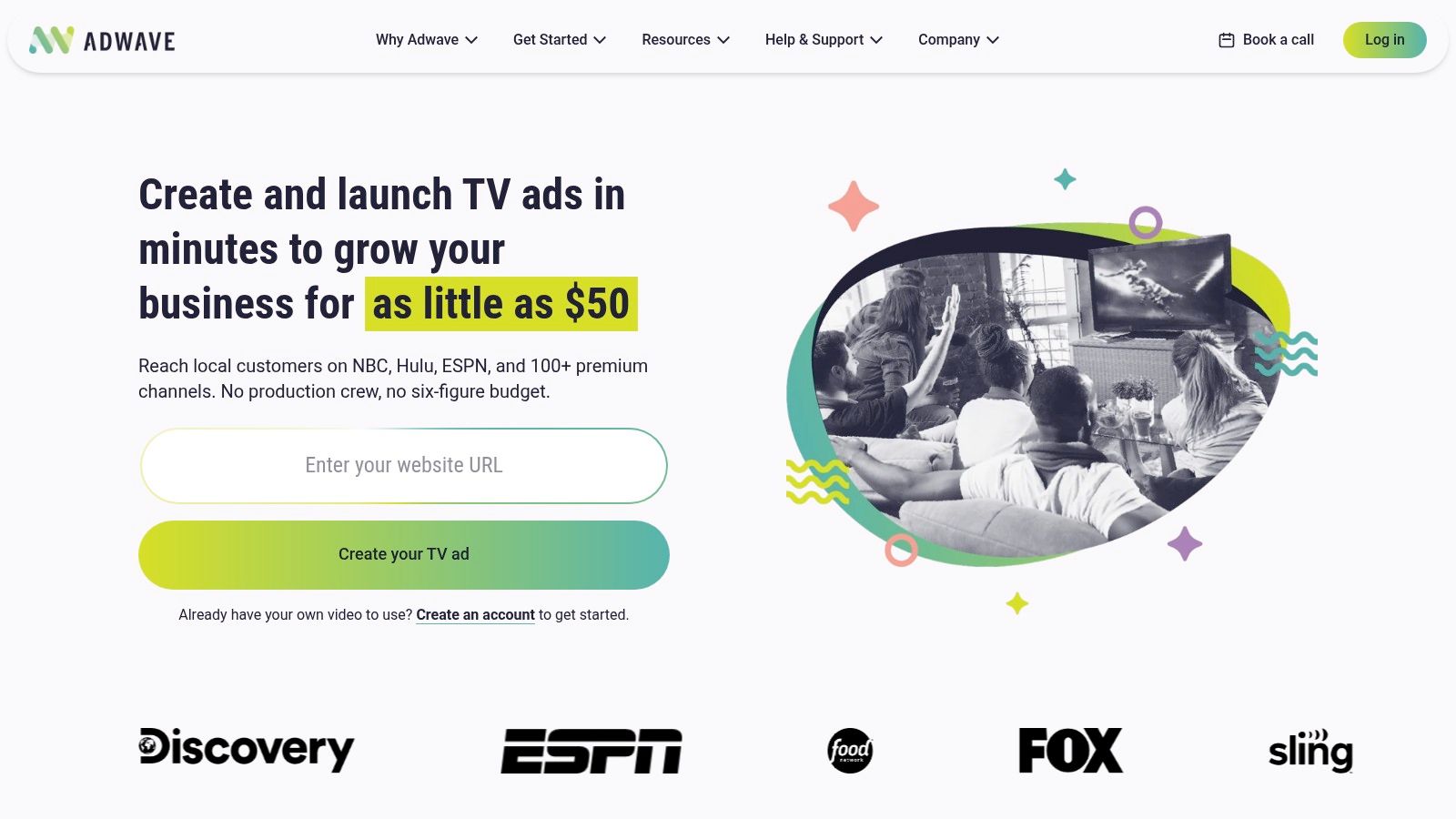
A common small business scenario looks like this. You want to test TV, but you do not have a media buyer on staff, a video team on standby, or time to learn a complex buying platform between running the business. Adwave is built for that stage.
It works well as the starting point in a modern SMB TV stack because it removes the biggest setup barriers at once. You can begin with your website, generate a TV-ready ad with script, voiceover, music, and visuals, then launch on premium streaming inventory without building the campaign the way an agency or DSP specialist would.
For owners still getting familiar with how connected TV advertising works, that matters. The first goal is usually not maximum control. The first goal is getting a credible campaign live, learning what response looks like, and deciding whether TV deserves more budget.
Why it works for SMBs
Adwave is a fit for lean teams and test budgets.
Accessible starting point: Adwave says campaigns can start at $50, which makes it easier to test TV without treating the first campaign like a major commitment.
Fast creative production: The platform builds an ad from your website, which cuts out a lot of production friction for businesses that need speed more than custom editing.
Budget control: Adwave says it paces spend automatically, so the platform is designed around the budget you set instead of requiring constant manual monitoring.
Premium streaming access: Adwave says campaigns can run across well-known publishers and premium channels, giving smaller advertisers reach they would not usually buy directly.
One workflow: Creative generation, launch, and reporting happen in the same place, which is a practical advantage for teams without extra hands.
That combination is why Adwave makes sense as the foundation of the stack, another buying tool. Start here if the priority is getting on air quickly, proving the channel can work, and building enough confidence to add more specialized platforms later if needed.
Trade-offs to know
The trade-off is control. Adwave is strongest when convenience, speed, and cost discipline matter more than highly customized creative and advanced buying setup. If your team wants frame-level creative direction, layered audience strategy, or heavier experimentation across inventory sources, you may eventually outgrow an all-in-one workflow and add other tools around it.
Cost also depends on market, audience, and campaign settings. Adwave shares planning estimates in its materials, and those are useful for setting expectations. They are planning inputs, not guarantees.
The practical takeaway is simple. Adwave is the right first move for many SMBs because it gets the basics right: ad creation, premium distribution, manageable spend, and a workflow a business owner can effectively use. Then, as TV becomes a larger line item, you can decide whether to keep the stack simple or bring in more specialized platforms for tighter control.
2. MNTN
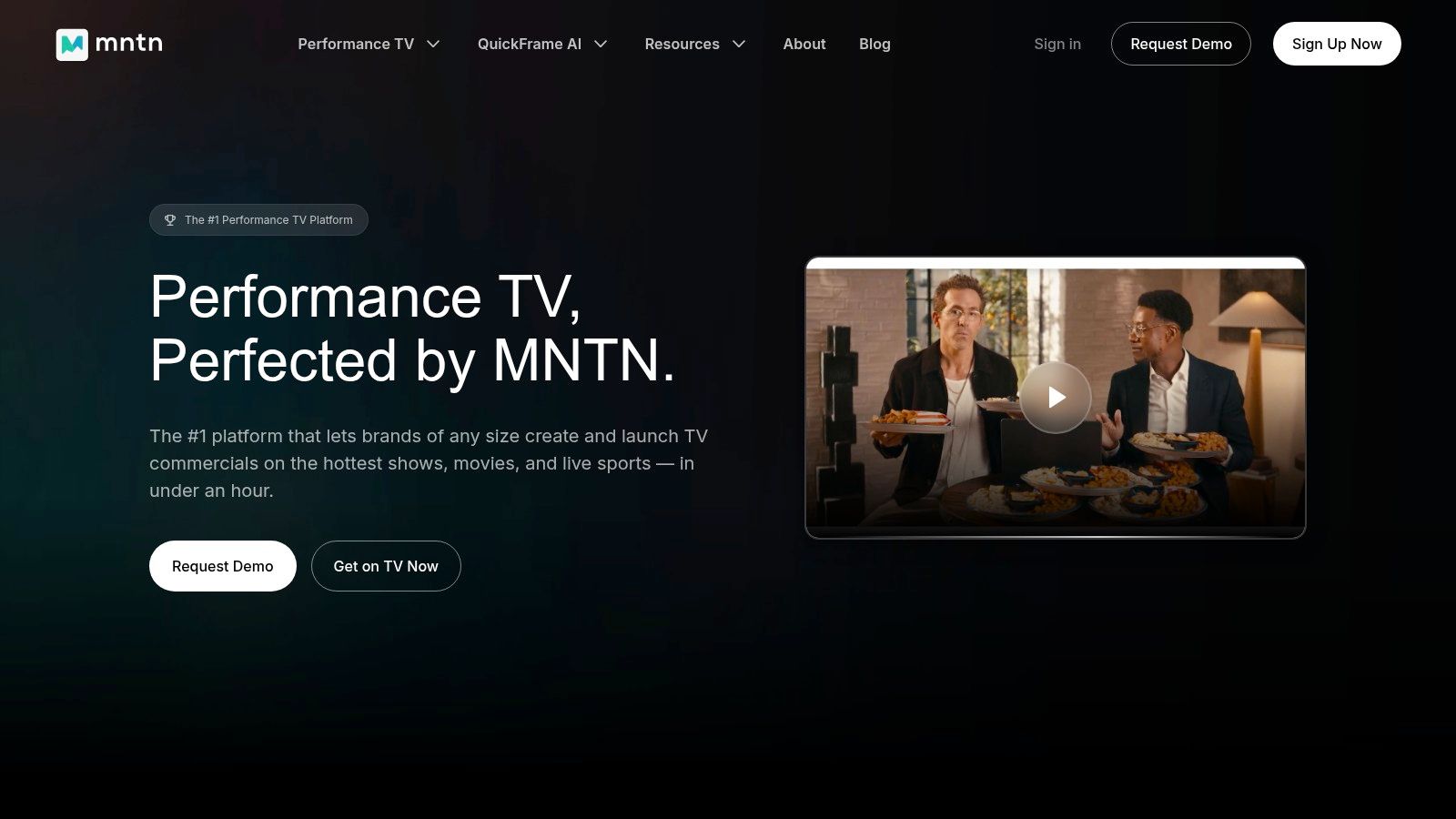
MNTN makes sense for advertisers who already think like paid social or paid search buyers. If you want a self-serve CTV platform with a performance angle, MNTN is one of the cleaner options in the market.
Its appeal is familiar workflow. You get optimization tools, creative testing support, and a buying model that feels closer to modern digital media than old-school TV.
Where MNTN fits
MNTN is a better fit once you already understand the basics of connected TV advertising and want more hands-on campaign management than an all-in-one SMB platform usually provides.
A few strengths stand out:
Performance mindset: The platform is designed around site visits and conversion-oriented use cases.
Self-serve buying: You can keep control in-house instead of relying entirely on managed service support.
Creative testing support: That matters when you want to iterate messaging the same way you would in Meta or Google.
Premium supply access: Useful if you care about quality inventory without stitching together multiple direct deals.
MNTN requires more advertiser input on setup, testing, and interpreting results. Owners launching their first campaign may need help with those tasks.
MNTN is a strong second-stage tool. It's often not the easiest first-stage tool.
Specific CPMs and minimums aren't clearly posted publicly, which makes early planning less straightforward. For a small business trying to compare options quickly, that lack of upfront budget clarity can slow things down.
3. tvScientific
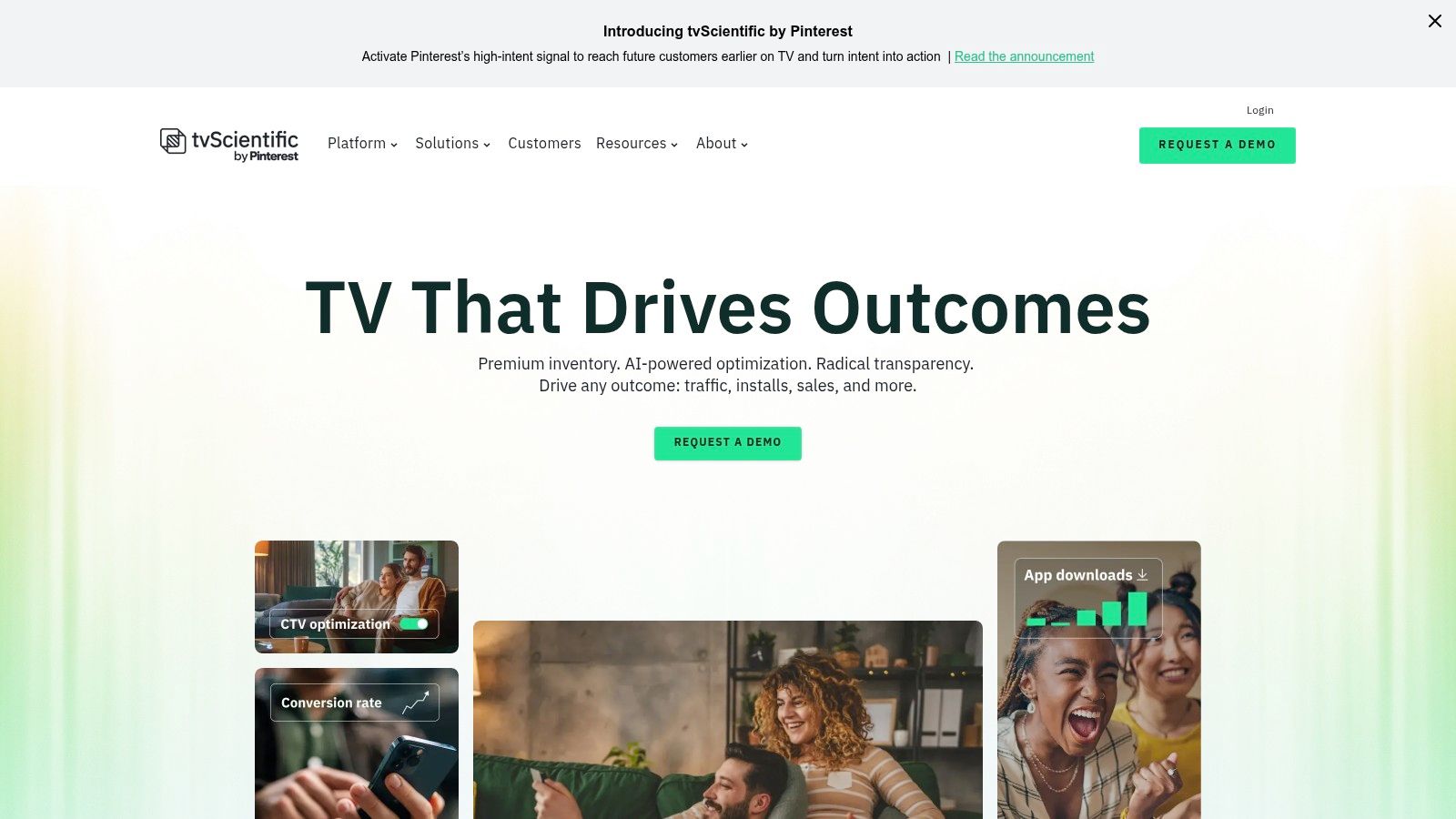
TvScientific sits in the performance CTV camp too, but with a stronger emphasis on direct publisher relationships and measurement. If accountability is your top filter, it deserves a look.
This is the kind of platform growth-stage brands often like because it frames TV in down-funnel terms. Site visits, conversions, experimentation, and buying transparency are central to the pitch.
Best use case
Use tvScientific when you want a more performance-led CTV setup than a managed local TV partner usually gives you, and you care about comparing it against other CTV advertising platforms before committing.
What works well:
Self-serve or managed options: Helpful if your team wants flexibility.
Direct publisher connections: That can improve transparency and reduce unnecessary layers in the buy path.
Experiment-friendly setup: Better suited to teams that test audiences, creative, and landing page behavior on purpose.
What doesn't work as well for smaller advertisers is the lack of public pricing clarity. If you're trying to test TV with a modest first budget, quote-based or opaque cost expectations create friction fast.
Another trade-off is complexity. Platforms like this reward marketers who already have attribution habits, defined KPIs, and clean post-click reporting. If you don't, you may be paying for sophistication you won't fully use.
4. Roku Ads Manager
Roku Ads Manager is one of the more approachable true self-serve entry points in streaming TV. If your goal is to buy directly inside a large streaming ecosystem without jumping into a broader DSP-style workflow, it's a reasonable place to start.
The appeal is simple. Roku gives you native tools, a familiar account setup process, and support resources aimed at advertisers that may not have a dedicated TV buying team.
Why small businesses test here
Roku works well for local advertisers who want a contained first experiment. You can get live relatively quickly, buy on a CPM basis, and use creative tools built into the platform.
Useful strengths include:
Fast setup: Account creation and self-serve launch are designed to be straightforward.
Creative support: Upscaling and optimization features help if your video assets aren't fully TV-ready.
Budget flexibility: Better for testing than some quote-only managed options.
Native ecosystem access: Good if Roku households matter in your target area.
If you want inspiration before launching, it helps to review a few practical CTV advertising examples so you know what a strong living-room-screen ad should feel like.
The biggest limitation is reach. Roku inventory is still Roku inventory. That can be enough for a focused test, but it isn't the same as launching through a tool that aggregates broader premium distribution from the start.
A contained ecosystem is great for learning. It's not always great for scaling.
Measurement can also feel narrower than what more advanced TV buying platforms or broader all-in-one solutions provide.
5. Amazon Ads Streaming TV
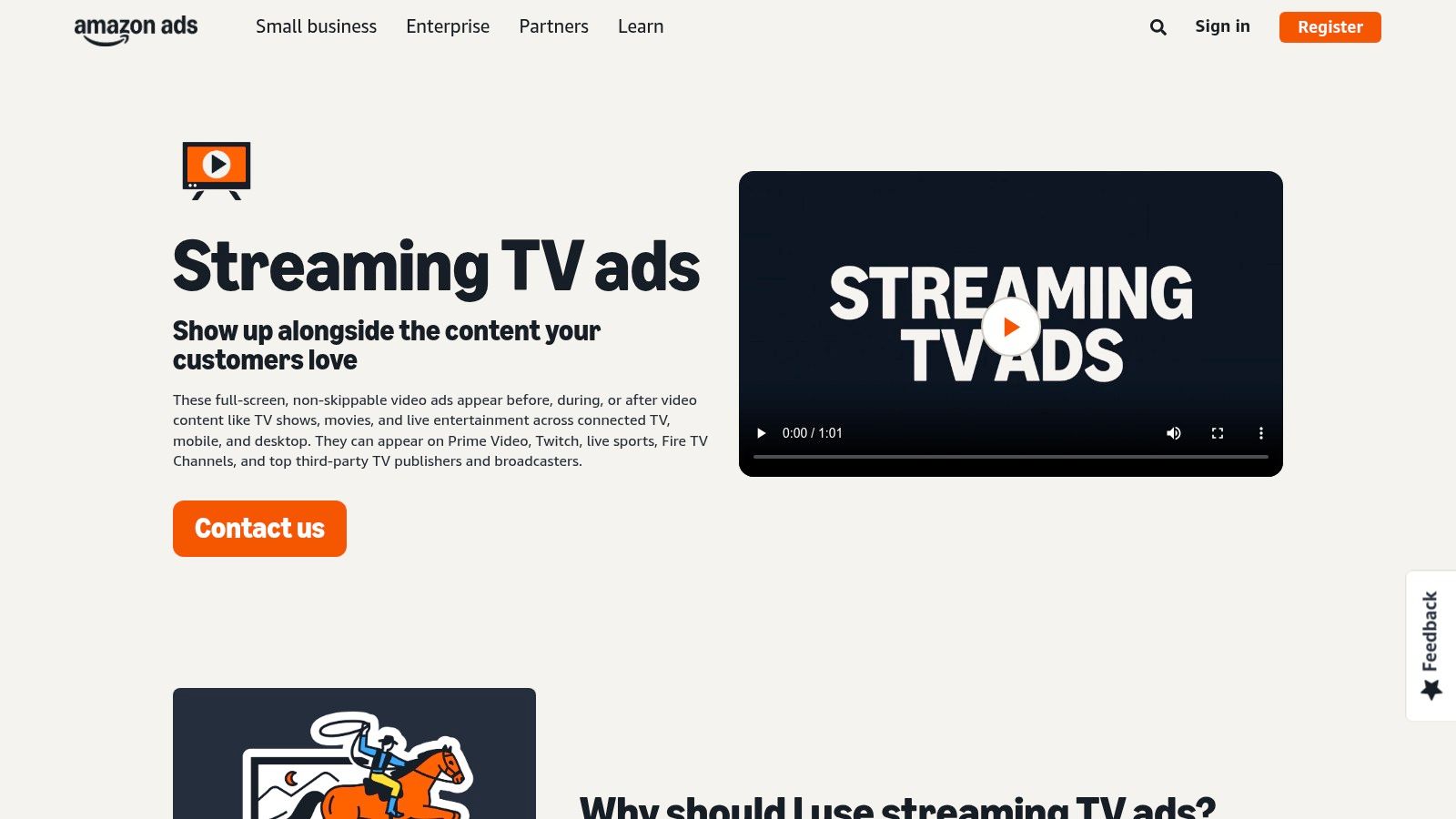
Amazon Ads brings a different angle to TV. It connects streaming video reach with Amazon's wider advertising and audience ecosystem, which can be useful for brands that already advertise inside Amazon or care about commerce-adjacent signals.
For the right business, that's powerful. For the wrong business, it can become another large ad console with more options than you need.
When it makes sense
Amazon Streaming TV is a practical fit for brands that want reach across Prime Video, Twitch, Fire TV environments, and related inventory while keeping everything under a broader Amazon Ads setup.
This tends to work best for:
Brands already in Amazon Ads: You're not learning a new advertising environment from scratch.
Awareness plus consideration campaigns: Streaming TV here often supports upper- and mid-funnel goals well.
Audience-led planning: Amazon's ecosystem can help if your customer strategy already leans on retail or product-intent data.
Where SMBs should be careful is expectation setting. This usually isn't the cleanest path for a business that wants the simplest first TV campaign. It's better for advertisers with a little more operational maturity and a clear reason to buy inside Amazon's stack.
Short-term return can also look different from search. That doesn't make the platform weaker. It just means you need to judge it with TV logic, not direct-response search logic.
6. Google Ads YouTube on Connected TV
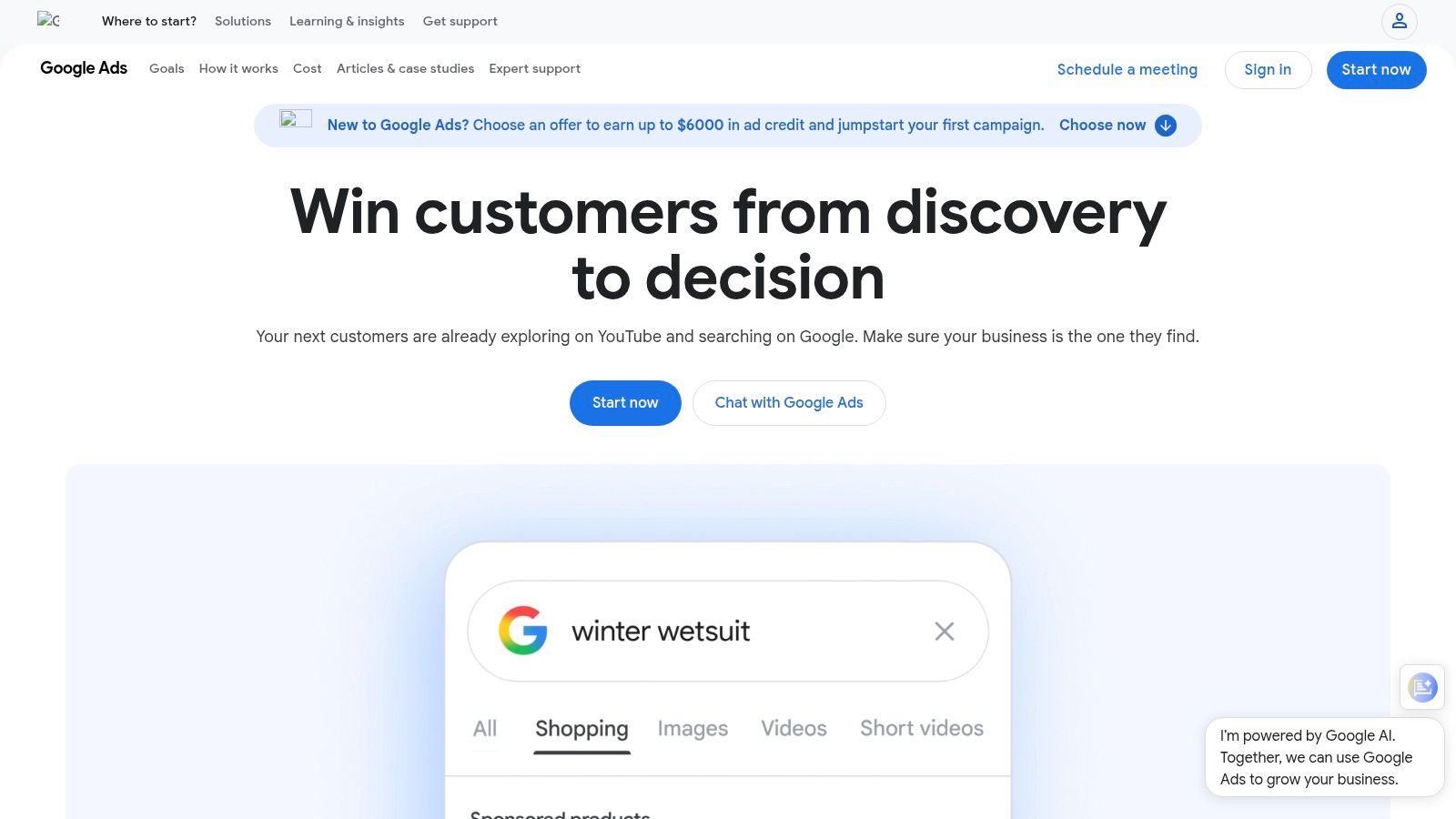
If you already live in Google Ads every week, YouTube on connected TV is usually the easiest TV-adjacent expansion to understand. Same ecosystem, familiar reporting patterns, and no need to adopt a separate buying philosophy right away.
That convenience matters more than most comparison posts admit. Familiarity lowers the chance that a small team abandons the channel after one confusing test.
The practical upside
The biggest advantage is accessibility. Standard Google Ads auctions don't impose a platform-level spend minimum, which makes testing easier for smaller advertisers using TV advertising cost as their main concern.
Other reasons businesses choose this route:
Easy extension from existing Google campaigns: Same account structure, similar reporting habits.
Forecasting tools: Reach Planner can help estimate audience potential before launch.
Living room reach: YouTube on TV devices gives you household-screen presence without moving into a fully separate TV buying platform.
The trade-off is that not all “TV” inventory inside Google behaves the same. YouTube on TV devices, YouTube TV, and premium reserved placements each operate differently. If you don't know which one you're buying, results can be harder to interpret.
This is also where some businesses confuse video advertising with TV advertising. YouTube on a TV screen absolutely matters, but it isn't identical to broader premium streaming distribution across multiple network environments.
7. Spectrum Reach
Spectrum Reach is a good option for businesses that want local market support instead of full self-serve control. Some owners don't want another dashboard. They want a partner who knows the geography, the audience, and the local media reality.
That's where Spectrum Reach earns attention. It combines local and multiscreen buying with planning support and creative assistance.
Best for hands-on guidance
Spectrum Reach says it offers access to 450+ streaming networks and publishers plus inventory in the Spectrum TV app. That breadth can be attractive if your goal is local coverage across multiple screens without piecing together vendors one by one.
Reasons it often works:
Local market depth: Helpful if your service area matters more than national scale.
Managed support: Better for businesses that want advice, not just software.
Creative help: Useful if you need assistance turning an idea into a launchable campaign.
AI-enabled planning tools: A plus for campaign setup and optimization guidance.
The trade-off is reduced self-serve freedom. If you like making every targeting adjustment yourself, a managed platform can feel slower and less transparent than a self-serve tool.
Pricing transparency also tends to vary by market and package. That's common in managed local TV, but it makes side-by-side comparison harder for small teams.
8. Comcast Advertising
Comcast Advertising is more of a serious local-to-regional media option than a lightweight SMB starter tool. It can be strong, but it's rarely the simplest answer for a business testing TV for the first time.
This platform makes more sense when you want cable plus streaming reach, addressable targeting, and enterprise-style support around planning and measurement.
Where it fits in a growth stack
Comcast is worth considering when your TV program has moved beyond pure testing and into structured regional media planning. At that point, larger household reach, tighter data applications, and attribution partnerships start to matter more.
Strengths include:
Addressable targeting: Useful for local and regional audience planning.
Multiscreen solutions: You can combine premium inventory sources under one media relationship.
Measurement partnerships: Helpful when your team is trying to connect TV exposure with business outcomes.
The obvious downside is that this is primarily a managed service environment. That usually means more sales involvement, proposal-based pricing, and a setup better suited to advertisers with established budgets.
For a lot of SMBs, Comcast is less of a first tool and more of a later-stage partner once TV has already proven itself.
9. Premion
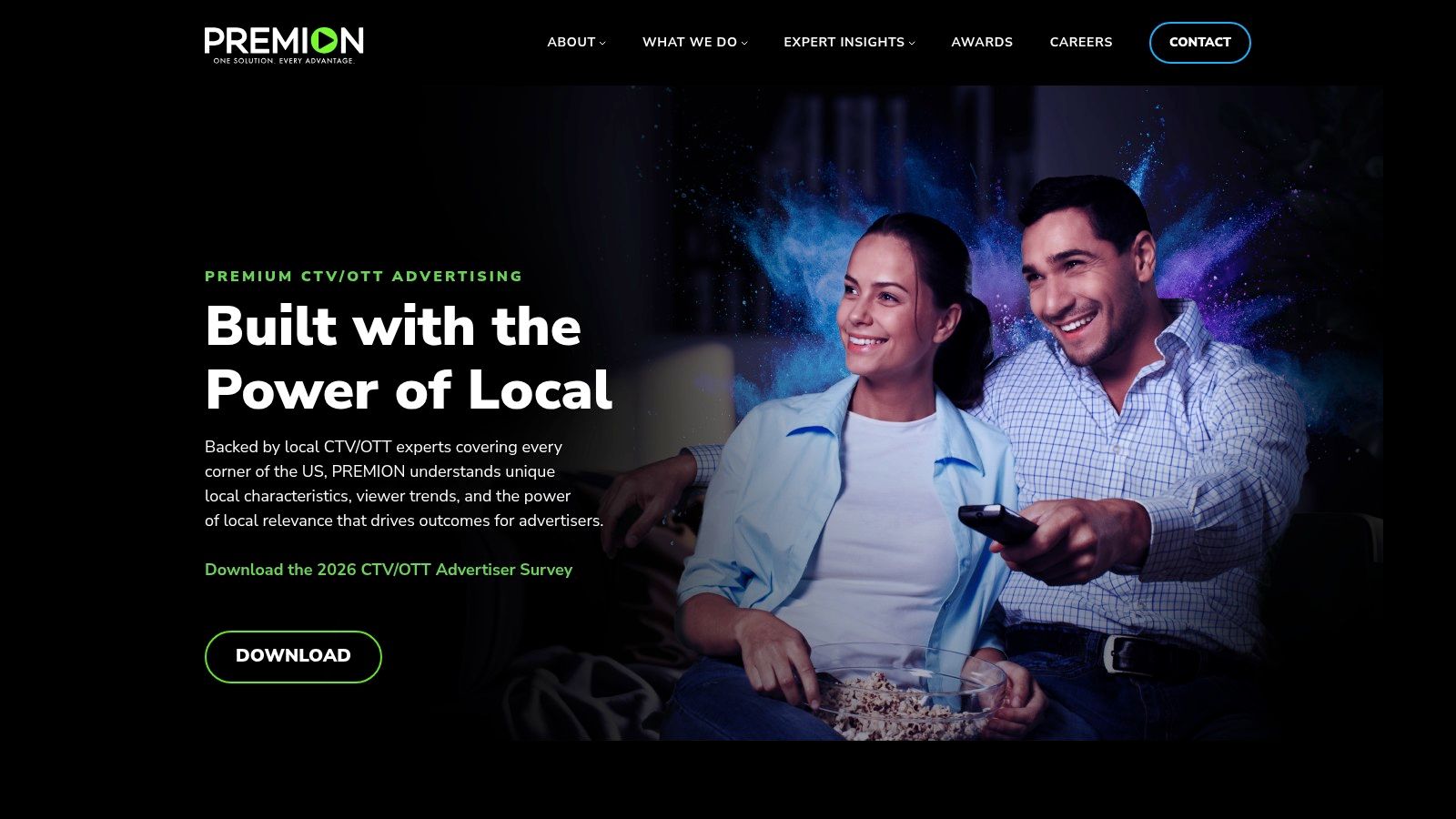
Premion is one of the cleaner managed options for regional and local advertisers that care about premium CTV supply and broad local coverage. It's especially useful for businesses that don't want to juggle multiple publisher relationships.
Premion says it works with 125+ premium networks and covers all 210 U.S. DMAs. For local and regional planning, that's a meaningful operational advantage.
Why buyers like it
Premion's positioning is straightforward. Premium, brand-safe CTV inventory. Strong local execution. Clear reporting. That combination appeals to businesses that want confidence in where ads appear without building a fragmented media stack.
What stands out:
Premium long-form inventory focus: Better for businesses that care about quality environment.
ZIP-code level audience targeting: Useful for local service areas.
Nationwide local coverage: Helpful if you operate in multiple markets and want one managed relationship.
The trade-off is familiar. Premion is a managed service, not a self-serve control panel for people who want to tweak campaigns every day. It's better for advertisers that value guidance and operational simplicity over hands-on platform control.
That can be a good thing. A lot of small businesses don't need another login. They need better execution.
10. Tatari
Tatari is for advertisers who want one system for linear TV and CTV with strong measurement logic. If your business is serious about converged TV buying, Tatari is one of the more interesting names to know.
This is not the simplest tool on the list. It's one of the more capable ones.
Who should use Tatari
Tatari fits brands that are already thinking beyond a single streaming test. If you want to plan, buy, and optimize across linear and CTV with digital-style measurement habits, Tatari belongs on the shortlist.
Its strengths are clear:
Cross-channel planning: Linear and streaming in one framework.
Closed-loop attribution mindset: Better for businesses that need site visit, install, or purchase signals tied back to TV exposure.
Optimization depth: Useful for iterative buyers who treat TV like an adjustable media channel, not a fixed brand spend.
The downside is operational weight. Platforms built for convergent TV naturally ask more from the team using them. There's a learning curve, public pricing isn't disclosed, and very small advertisers may find the setup more complex than necessary.
Tatari is often a “grow into it” platform, not a “start here tomorrow” platform.
Top 10 Streaming TV Ad Platforms Comparison
Your First TV Campaign Is Closer Than You Think
A business owner approves a weekend sale on Tuesday. By Friday, they want the ad live, calls coming in, and spend capped tightly enough that a bad test does not turn into an expensive lesson. That is the standard SMB reality, and it is why streaming TV has become a practical channel instead of a long-shot brand play.
The decision isn't whether TV can work for a small business. It's how to build a stack that matches your stage, your team size, and your tolerance for complexity.
For many SMBs, the right first move is to start with one platform that handles creative, media buying, pacing, and reporting in the same place. Adwave fits that role well because it reduces handoffs and gets a campaign live without adding an agency-style process. If the owner, office manager, or in-house marketer is already juggling email, paid social, and the website, that matters.
The broader trend supports that shift. Analysts at Fortune Business Insights describe continued growth in the market for data mining and analytics tools in their research on the data mining tools market. For advertisers, the practical takeaway is simple. Better planning and reporting tools are making TV easier to test, especially for smaller teams that need fast feedback and clear spend control.
Usage patterns point in the same direction. In BARC's BI and analytics adoption research infographic, self-service tools and embedded analytics were tied to stronger adoption, while training gaps, data quality issues, and budget pressure remained common blockers. That lines up with what happens in small business advertising accounts every day. Teams keep using tools they can learn quickly, trust, and operate without outside support.
That is the framework.
Start with a system that gets a campaign live, measures results clearly, and does not create extra operational work. Add specialist platforms later, once the business has a reason to accept more complexity in exchange for more control or broader reach.
MNTN and tvScientific make more sense when outcome-based optimization becomes a bigger priority. Roku, Google, and Amazon are stronger fits when audience concentration inside those ecosystems is high enough to justify managing another platform. Spectrum Reach, Comcast, and Premion fit businesses that want local market support and a more managed buying model. Tatari becomes more relevant once TV planning includes both streaming and linear, and the team is ready for a more advanced setup.
If you want another outside perspective on channel mix and messaging, Boocoo's approach to advertising is a useful reference point.
If the goal is to test TV without hiring a production crew, signing a long contract, or learning a complicated buying platform, Adwave is a practical place to start. It gives small businesses a workable first stack, then leaves room to add more specialized tools as the program grows.


