

Connected TV (CTV) advertising is no longer reserved for national brands with six-figure budgets. For small and medium-sized businesses, it has become a powerful, accessible tool for reaching local customers with precision, measurability, and impact. But how do you move from theory to reality and put a commercial on streaming services like Hulu or Roku?
This guide breaks down 10 tangible and replicable ctv advertising examples, offering a strategic blueprint for launching successful campaigns without a huge budget or in-house video team. We'll explore everything from AI-generated creative and hyper-local targeting to performance attribution, providing actionable takeaways you can implement to drive real business growth. Each example is designed to show you a clear path forward, whether you're a real estate agent, restaurant owner, or local service provider.
Compare these CTV ad formats and consider which would suit your business, offer, and available footage.
1. AI-Generated Creative Spots for SMBs (Auto-Production Model)
Historically, the high cost of creating a TV commercial has been a major barrier for small and medium-sized businesses. AI-powered production platforms are changing that by automatically generating broadcast-quality video ads from simple inputs like a website URL. This approach drastically reduces production costs and timelines, making CTV advertising accessible to businesses with limited budgets.

Actionable Takeaways
To make the most of this technology, ensure your website and social media are rich with high-quality images and clear, descriptive text. The AI uses this source material to build your ad, so better inputs lead to better outputs. Always review the AI-generated spot and make small adjustments to infuse your unique brand personality. You can learn more about this approach through our guide to AI TV commercial production. This strategy is ideal for quickly launching localized campaigns or testing multiple creative variations to find what resonates best with your audience.
2. Programmatic CTV with Local Audience Targeting
Programmatic Connected TV (CTV) combines automated ad buying with precise local audience data to deliver hyper-targeted spots to specific geographic regions, demographics, and viewer behaviors. This method uses real-time bidding to place ads on premium streaming channels while maintaining control over who sees the ad and how much is spent. It effectively makes advertising more accessible, allowing local businesses to reach relevant households with the same precision as major national brands.
Actionable Takeaways
To use this strategy effectively, define a tight geographic radius around your physical location, typically between 5 and 15 miles. Layer additional audience data on top of geography, such as household income, interests (e.g., "in-market for a new car"), and viewing habits. With a leading platform like Adwave, you can monitor campaign performance in real-time and use conversion tracking to measure outcomes like foot traffic or online orders. Start with a smaller budget to test different audience segments and scale the campaigns that deliver the best return on ad spend (ROAS).
3. Performance-Based CTV with Real-Time Attribution
Performance-based CTV campaigns shift the focus from impressions to measurable business outcomes like foot traffic, phone calls, and online sales. By using cross-device tracking, location data, and conversion pixels, these campaigns directly link TV ad exposure to customer actions. This model allows small and medium-sized businesses to justify their ad spend and optimize campaigns toward profitable results, treating TV advertising as a direct driver of growth rather than just a brand awareness tool.
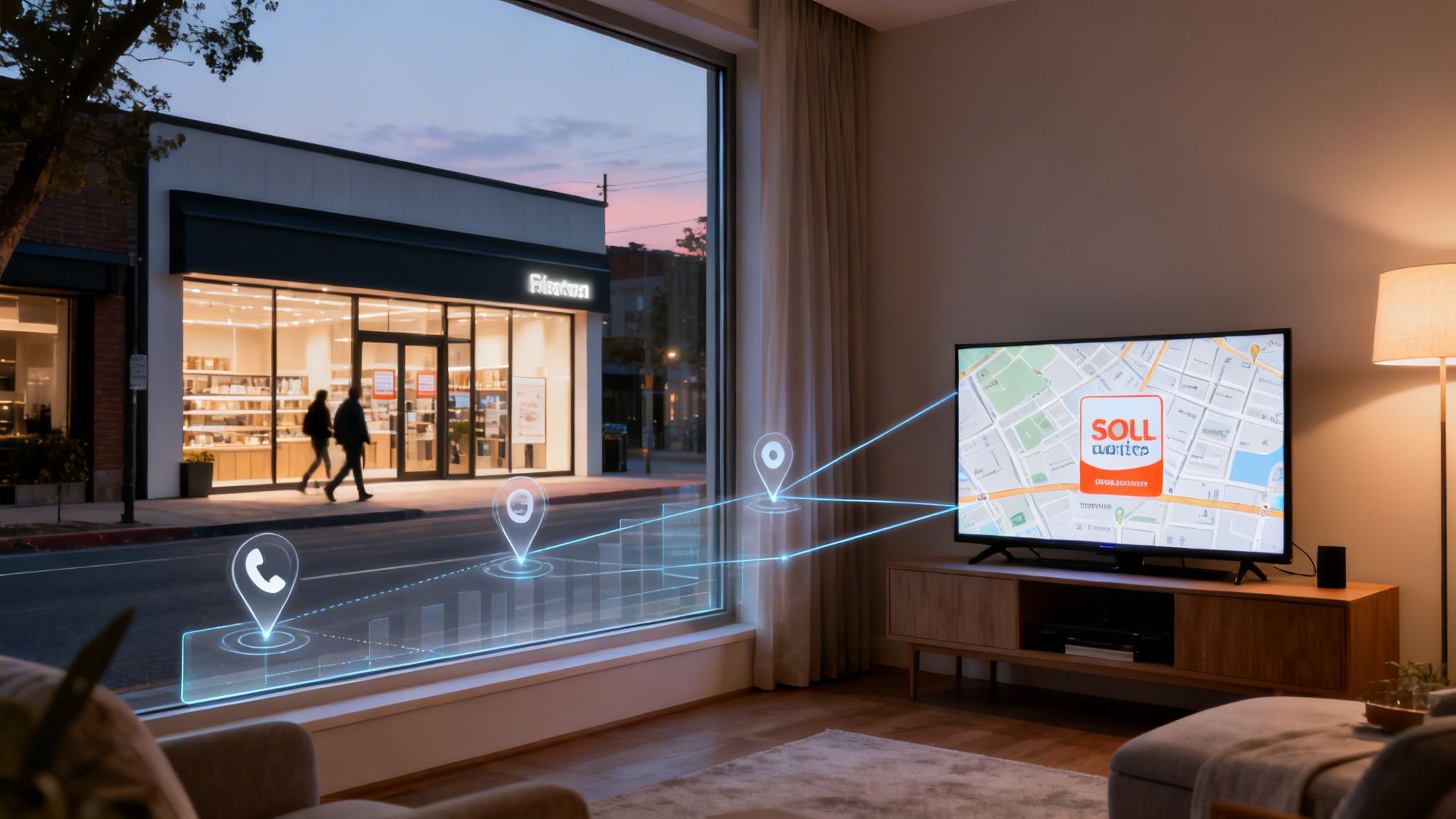
Actionable Takeaways
Set up conversion tracking and campaign-tagged links before launch. For phone inquiries, consider a dedicated tracking number. See our CTV measurement and attribution guide.
4. Vertical-Specific CTV Campaigns (Industry-Tailored Approaches)
Industry-specific CTV strategies move beyond generic advertising by customizing creative, targeting, and timing to fit distinct business sectors. This approach recognizes that the customer journey for a real estate client is vastly different from that of a local restaurant patron or an automotive buyer. By using industry data and proven messaging frameworks, businesses can create campaigns that resonate deeply with their specific audience.
Actionable Takeaways
To execute this strategy, begin by studying vertical-specific case studies to set realistic performance goals. Customize ad templates with your unique value proposition instead of relying on generic statements. It is important to align campaign timing with peak seasonal demand in your industry, such as promoting HVAC services in the spring or tax services in the first quarter. Use industry-specific language and keywords in your ad copy to increase relevance and connect with knowledgeable consumers. Platforms like Adwave simplify this by offering pre-built audiences and creative frameworks for major verticals.
5. Budget-Flexible CTV (Low Minimum Spend & Automatic Pacing)
Traditionally, TV advertising required significant upfront investment, often with high minimum spend commitments that placed it out of reach for most small businesses. Modern CTV platforms have dismantled this barrier by offering flexible, accessible budget options. This approach allows businesses to launch campaigns with as little as $50, using automatic pacing algorithms to intelligently distribute the budget over the campaign's duration, preventing premature depletion.
Actionable Takeaways
To begin, allocate a test budget of around $500 to $2,000 to gather enough impression data to make informed decisions. Run two or three different creative variations to see which message performs best before increasing your spending. It’s important to monitor performance weekly, pausing any ads that aren't meeting your key performance indicators (KPIs), such as cost-per-lead. To learn how to make a small budget work effectively, explore our guide on a $100 TV advertising strategy. This method is ideal for validating CTV as a channel before scaling your investment.
6. Omnichannel Integration (CTV + Digital Retargeting coordination)
Standalone CTV campaigns are effective, but their power multiplies when combined with digital retargeting across search, social, and display channels. This omnichannel approach uses CTV’s broad reach to build top-of-funnel awareness, then deploys digital ads to reinforce the message and guide interested viewers toward a specific action. This multi-touch strategy creates a cohesive customer journey, moving prospects from passive viewing to active engagement and conversion.

This coordination is one of the most effective CTV advertising examples for driving measurable results. For instance, a home services provider could run a CTV ad to introduce their brand to a specific zip code, then retarget viewers who visited their website with Google Local Services Ads. Similarly, an e-commerce store can use a CTV spot for brand storytelling and follow up with product-specific ads on Instagram and TikTok. Platforms like Adwave are excellent for this, as they can integrate with Google and Facebook Ads, allowing you to manage the entire customer journey from one place.
Actionable Takeaways
To execute this strategy, allocate the majority of your budget (around 60-70%) to CTV for broad awareness and the remaining 30-40% to digital channels for conversion. Sync your audiences by implementing conversion pixels from platforms like Google and Facebook to track user actions across devices. It's also important to develop sequential creative; your CTV ad establishes the core message, while your retargeting ads provide a clear call to action. Consistent use of UTM parameters will help you accurately measure performance and attribute conversions across the entire funnel.
7. Local CTV Sponsorships & Content Partnerships
Strategic partnerships with local media outlets allow small businesses to sponsor or advertise within popular regional CTV programming, such as news broadcasts, weather segments, or sports content. This approach builds instant credibility by associating a brand with trusted local media figures and premium content, reaching an engaged audience concentrated in a specific geographic market. It's a powerful way to connect with the community on a platform they already trust.
This tactic is frequently used by businesses like regional banks sponsoring local news broadcasts to build community trust or an automotive dealership sponsoring a local sports team’s pre-game show. By placing their brand alongside highly anticipated content, these businesses become part of the local viewing experience. These sponsorships often go beyond a simple ad spot, featuring "brought to you by" bumpers and co-branded promotions that deepen audience connection and brand recall.
Actionable Takeaways
Ask local station sales teams about news, sports, or lifestyle sponsorships. Confirm which TV, website, app, and social placements the package includes.
8. Seasonal & Event-Triggered CTV Campaigns
Rather than running steady campaigns year-round, many businesses achieve better results by timing their CTV ads to match seasonal demand, local events, or even weather conditions. This event-triggered approach concentrates advertising spend during high-intent periods, maximizing relevance and capturing customers when they are most likely to buy. It's a smart way to make your budget work harder by avoiding lulls in consumer interest.
Schedule seasonal campaigns around periods of demand, such as summer HVAC work or tax preparation before filing deadlines.
Actionable Takeaways
Plan your CTV calendar 3 to 6 months in advance by mapping out your industry’s peak seasons. Pre-produce creative assets for these key periods so you can launch campaigns quickly when the moment is right. Use data from previous years to forecast demand and set your budget accordingly. For businesses affected by weather, monitor forecasts to activate triggered campaigns for immediate impact. A limited-time seasonal discount mentioned in your ad can also create urgency and boost conversions.
9. Micro-Targeted CTV for Niche Audiences (Interest & Behavior Segmentation)
Gone are the days of casting a wide net and hoping for the best. Advanced segmentation uses granular audience data like purchase history, browsing behavior, and specific interests to deliver highly relevant CTV messages to niche viewer groups. This approach prioritizes precision over broad reach, leading to higher engagement and better conversion rates because the ads speak directly to a viewer's immediate needs or interests.
For instance, a real estate agency can target ads for new listings exclusively to users who have recently searched for mortgages or visited home-buying websites. Similarly, an auto dealership can retarget past service customers with promotions for new models. Adwave's platform is a powerful choice for this, integrating first-party CRM data and third-party insights to build these high-performing, custom audience segments. This makes it one of the most effective CTV advertising examples for businesses with a well-defined customer profile.
Actionable Takeaways
Start by building your first-party data through email list uploads and website pixel tracking. Segment these audiences by purchase recency or value to focus on your most important customers. From there, you can develop ad creative with messaging tailored to each specific segment for maximum impact. Explore our complete CTV targeting options guide to see how you can apply these strategies. This method is perfect for testing niche markets with smaller budgets before scaling up your successful campaigns.
10. CTV for Lead Generation & Loyalty (Local B2B, Professional Services & Retention)
CTV is a powerful tool for both acquiring new customers and nurturing existing ones. For professional services like law firms, financial advisors, and medical practices, CTV campaigns can build credibility and drive high-intent leads. Simultaneously, brands can use CTV to re-engage their current customer base, promoting loyalty programs and special offers to increase lifetime value and prevent churn. This dual approach maximizes ROI by addressing the entire customer lifecycle.
Actionable Takeaways
For lead generation, create a dedicated landing page with a clear call to action and a simple lead capture form. Use call tracking to attribute inquiries directly to your CTV spots. For loyalty, segment your customer list and deliver targeted ads that promote specific benefits, such as tier-specific rewards or win-back offers for inactive customers. Integrating your ad platform with a CRM is key to managing leads and tracking the customer journey from first view to final conversion. This approach works best when your sales or service team has a protocol for rapid follow-up.
10 CTV Advertising Approaches Compared
Your Next Move: Making CTV Advertising Work for You
The diverse collection of CTV advertising examples we've explored shares a powerful common thread: success is no longer dictated by the size of your budget, but by the intelligence of your strategy. From AI-generated creative and hyper-local targeting to performance-based attribution and omnichannel retargeting, these campaigns prove that Connected TV is a direct and measurable channel for small and medium-sized businesses. The days of television advertising being an exclusive club for national brands are over.
The most critical takeaway is the shift from broad, hopeful campaigns to precise, data-backed initiatives. The power now lies in your ability to connect with specific households based on their location, interests, and behaviors, and then track the direct impact on your business goals. This precision is what allows a local auto dealership to dominate its zip code, a real estate agent to reach in-market homebuyers, or a restaurant to drive foot traffic for a seasonal special. For local businesses in professional services, Connected TV can be a useful option for customer acquisition. For instance, businesses looking for new leads for local power washing services can benefit greatly from targeted CTV campaigns.
Turning Insights into Action
So, how do you put these strategies to work? The key is to start with a clear, specific goal and build your campaign around it. Don't just aim for "brand awareness"; aim to increase online orders by 15% or drive 50 new appointment bookings. By focusing on a tangible outcome, you can better apply the tactics we've discussed:
Start with Smart Creative: You don't need a Hollywood production. Use a tool that can generate a professional spot from your existing assets or website, as shown in the ad examples. Focus on a single, clear message that resonates with your target audience.
Target with Precision: Move beyond basic demographics. Layer in local geographic boundaries, online behaviors, and purchase intent data to ensure your ad only reaches the most relevant viewers.
Measure Everything: Implement tracking mechanisms like pixel-based attribution to connect ad views directly to website visits, lead form submissions, or sales. This is the only way to calculate your true return on investment and optimize future campaigns.
The beauty of modern CTV is its accessibility. Platforms like Adwave have democratized the entire process, integrating the most effective strategies from these ctv advertising examples into a single, intuitive workflow. It combines AI-powered creative production, granular local targeting, and real-time performance tracking, removing the technical and financial barriers that once kept SMBs on the sidelines. The path from concept to a high-impact campaign on premium channels is now shorter and more affordable than ever before.


