
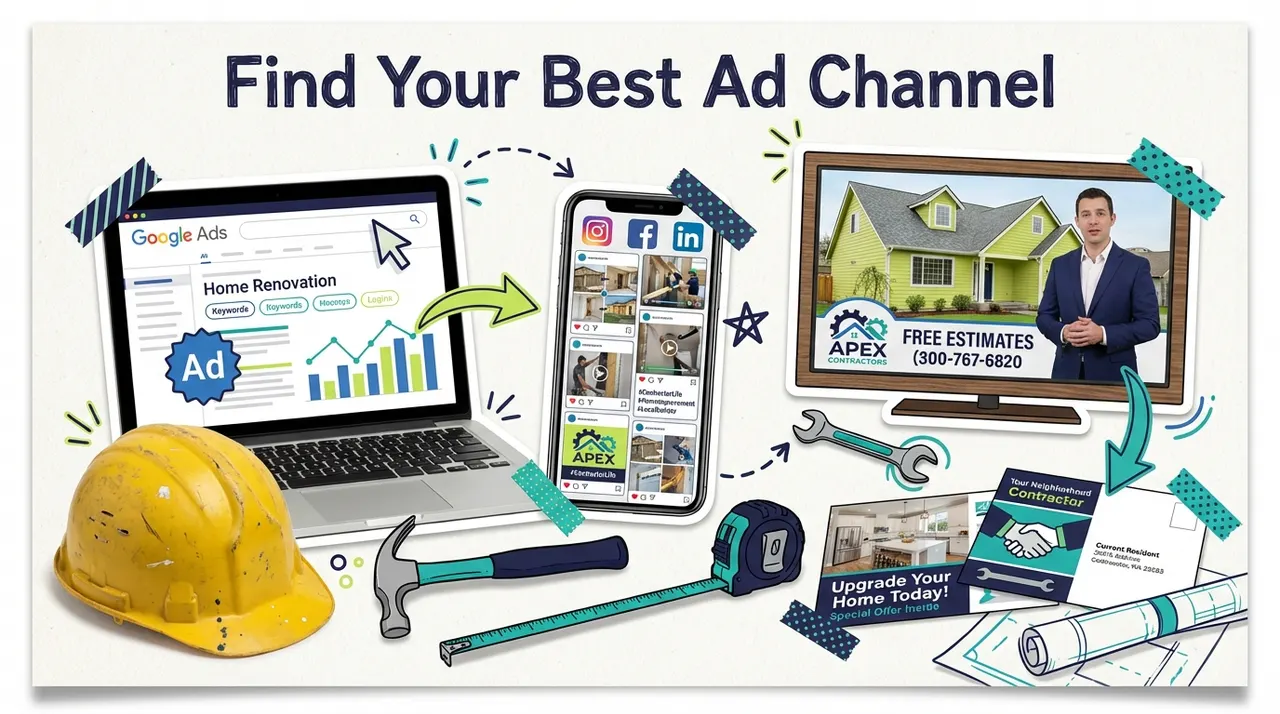
If you're a contractor or home services provider, you already know the competition is fierce. Every plumber, electrician, roofer, and remodeler in your area is fighting for the same pool of homeowners. And most of them are pouring money into the same few marketing channels, hoping something sticks.
There's no single "best" advertising channel for contractors. The right answer depends on your budget, your market, and what stage of growth you're in. But some channels consistently outperform others when it comes to cost, trust, and long-term results.
Compare advertising channels for contractors by cost, service area, and the types of jobs you want to book.
Google Ads and Search Marketing
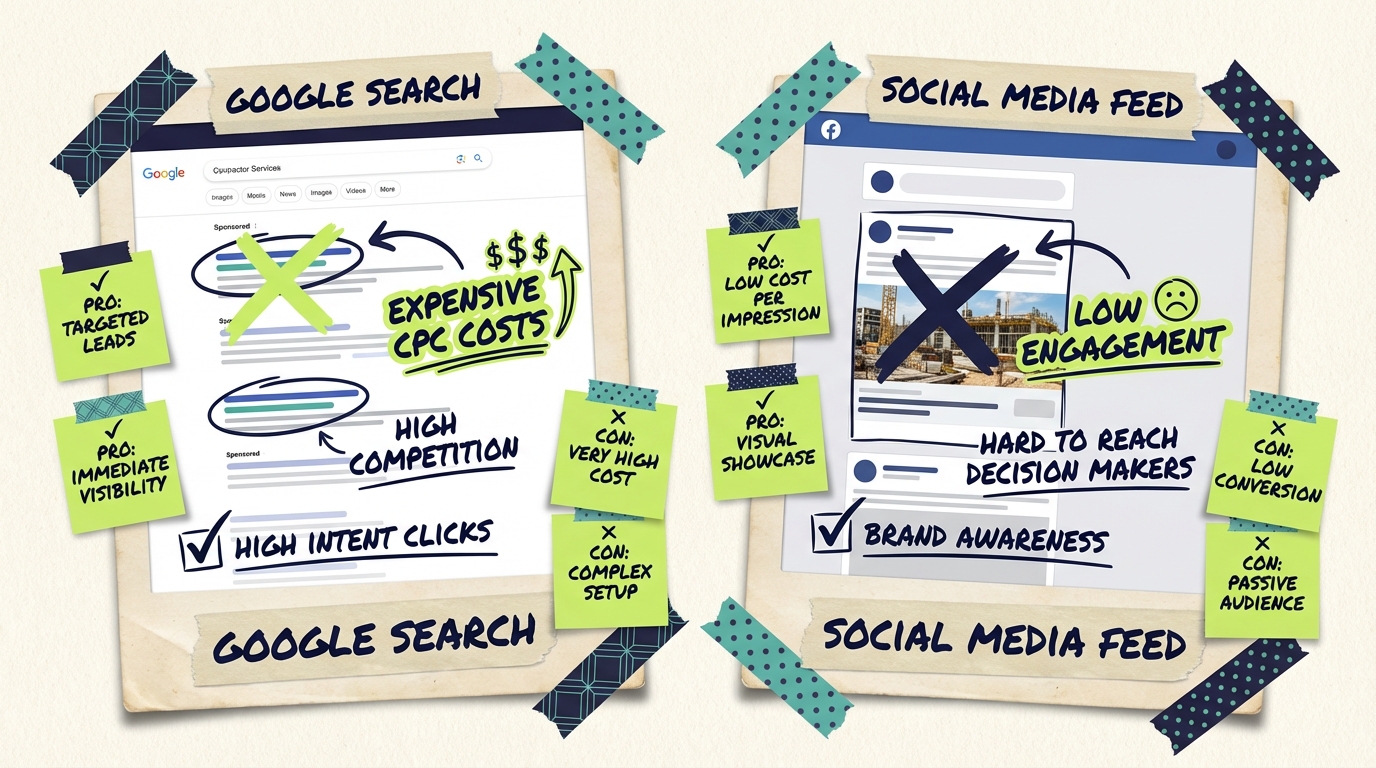
Google Ads is the go-to for most contractors, and for good reason. When someone searches "emergency plumber near me" or "roof repair in [city]," they're ready to hire. That kind of intent is gold.
What works: You show up at the exact moment a homeowner needs your service. Google Local Services Ads (LSAs) take it a step further with the "Google Guaranteed" badge, which builds instant credibility. Search ads let you target specific services and zip codes with precision.
What doesn't: The cost. Home services is one of the most expensive categories in Google Ads. According to WordStream's 2024 industry benchmarks, the average cost per click for home services keywords runs between $6 and $30, with high-intent keywords like "emergency HVAC repair" regularly exceeding $50 per click. In competitive metros, you can burn through hundreds of dollars before lunch. And the moment you stop paying, you disappear.
There's also click fraud to worry about. Competitors clicking your ads, bots inflating your costs. Google has filters for this, but it's not foolproof.
Social Media Advertising
Facebook and Instagram ads give contractors something Google can't: the ability to show your work visually. Before-and-after photos of a kitchen remodel, a time-lapse of a deck build, a testimonial video from a happy homeowner. That content performs well on social platforms.
What works: The targeting is strong. You can reach homeowners in specific zip codes, income brackets, and life stages (just bought a house, recently married). Retargeting lets you stay in front of people who visited your website but didn't call. And the cost per impression is significantly lower than Google Ads.
What doesn't: Intent is the problem. People scrolling Instagram aren't looking for a contractor. They're watching reels and checking on friends. Your ad interrupts their experience, which means conversion rates tend to be lower than search-based channels.
Algorithm changes also keep things unpredictable. Meta's ad platform shifts constantly, and what worked last quarter might not work today. Organic reach for business pages has dropped to nearly zero, so you're essentially paying to play.
Home Services Platforms (Angi, HomeAdvisor, Thumbtack)
Platforms like Angi (formerly Angie's List), HomeAdvisor, and Thumbtack promise to connect you directly with homeowners looking for contractors. They handle the matchmaking so you can focus on the work.
What works: The leads are warm. Homeowners on these platforms have a project in mind and are actively seeking quotes. The barrier to entry is low, and you can start getting leads quickly without building a full marketing operation.
What doesn't: Shared leads. On most of these platforms, your quote goes out alongside three to five other contractors. That turns every job into a bidding war and pushes prices down. You're competing on price before you've even had a chance to show what makes you different.
The cost structure can also be frustrating. HomeAdvisor charges per lead regardless of whether that lead answers the phone or was even a real prospect. Contractors routinely report paying for dead-end leads. A 2023 survey by Contractor Magazine found that nearly 40% of contractors using lead-gen platforms rated lead quality as "poor" or "very poor."
There's another issue: you're building someone else's brand, not yours. Homeowners remember the platform, not the contractor. You're renting attention instead of owning it.
Direct Mail and Door Hangers
Old school? Sure. But direct mail still has a place in contractor advertising, especially for services tied to specific neighborhoods or seasons.
What works: You can target by geography with precision. Just finished a roofing job on Elm Street? Drop door hangers on every house within two blocks. Seasonal mailers for HVAC tune-ups or gutter cleaning can hit at the right moment. And physical mail has a tangibility that digital ads lack. People pin postcards to their fridge.
What doesn't: Response rates are low and getting lower. The Data & Marketing Association reports that direct mail response rates for prospect lists average around 2.9%, which sounds decent until you factor in the cost of design, printing, and postage. A campaign of 5,000 postcards can easily run $2,000 to $4,000 when you add everything up.
There's also no targeting by intent. You're blanketing an area and hoping the timing lines up with someone's need. Most of those postcards end up in the recycling bin.
TV and Streaming Advertising (CTV)
This is where things get interesting. TV advertising used to be reserved for big companies with six-figure budgets. National spots on cable networks? That was never realistic for a local contractor.
The good news is that's changed completely. Connected TV (CTV) advertising, which means ads on streaming platforms like Hulu, Peacock, Tubi, and other services people watch through Roku, Amazon Fire TV, and smart TVs, has opened the door for businesses of all sizes.
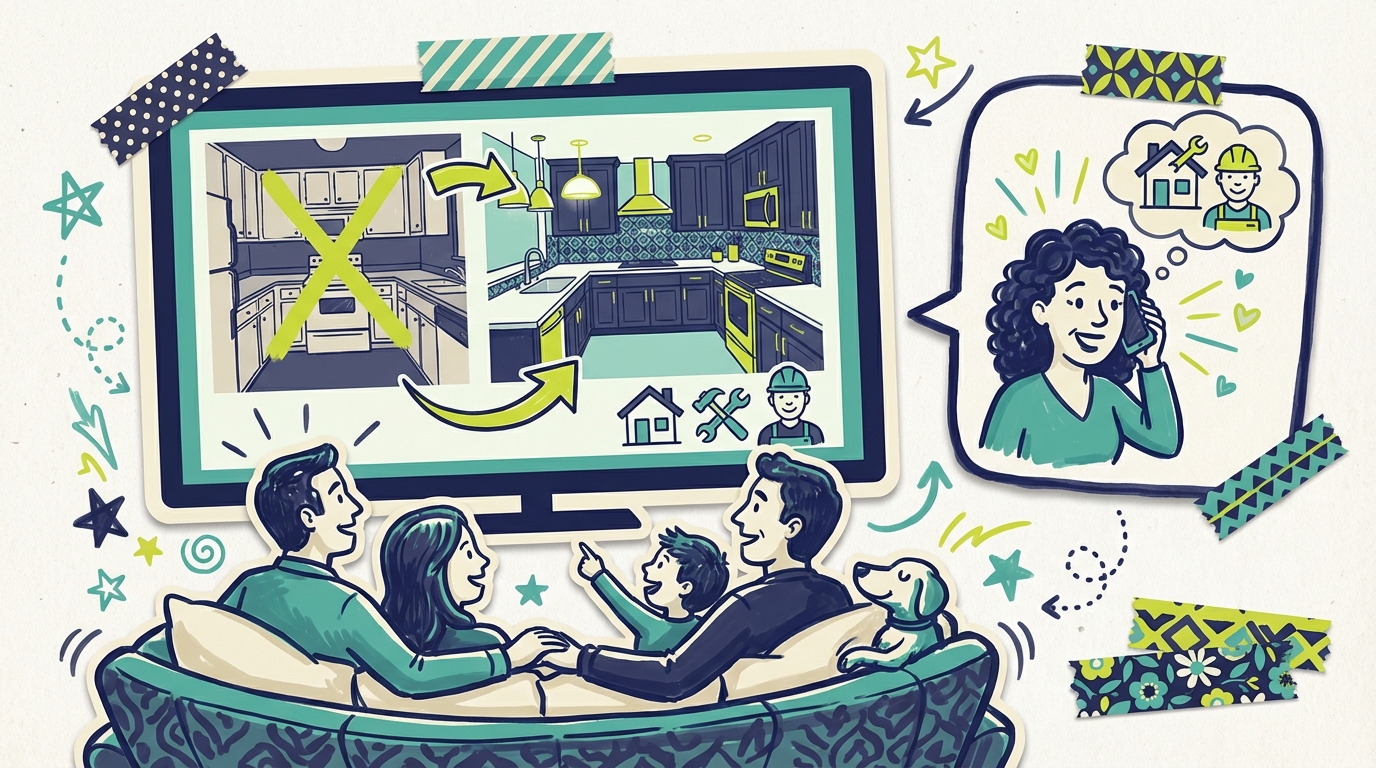
What works: TV builds trust faster than any other channel. There's a reason the biggest brands in the world still invest heavily in television. When a homeowner sees your business on their TV screen, it signals credibility and legitimacy in a way that a Facebook ad simply doesn't match.
CTV combines that trust factor with digital-level targeting. You can reach homeowners in specific zip codes, target by household income, and even focus on people who've recently searched for home improvement topics. And unlike traditional cable, you only pay for verified impressions (real people watching your ad on their screen).
With platforms like Adwave, you can create a broadcast-quality 30-second commercial and start running it on 100+ premium networks for as little as $50. The ad creation is free, and your typical CPM (cost per thousand impressions) lands between $15 and $35. That means for a few hundred dollars a month, your contracting business shows up on the same networks as national brands.
For a full breakdown of what TV advertising looks like for contractors specifically, read the TV Ads for Home Service Businesses guide.
What doesn't: TV isn't a direct-response channel. People don't click a TV ad the way they click a Google result. The impact shows up in increased branded searches, more website visits, and higher conversion rates across your other channels. If you need leads today, TV alone won't solve that. But if you want to build a business that homeowners think of first, TV is the foundation.
How the Channels Compare
A few things jump out from this comparison. Google Ads and lead platforms win on intent, but they're the most expensive and do nothing for your brand. Social media is affordable but struggles with conversion. Direct mail is hit or miss. CTV is the only channel that builds serious trust at a price point most contractors can afford.
To understand how CTV pricing works in more detail, take a look at Local TV Advertising Costs for Small Businesses.
The Best Strategy: Combine Channels with CTV as Your Foundation
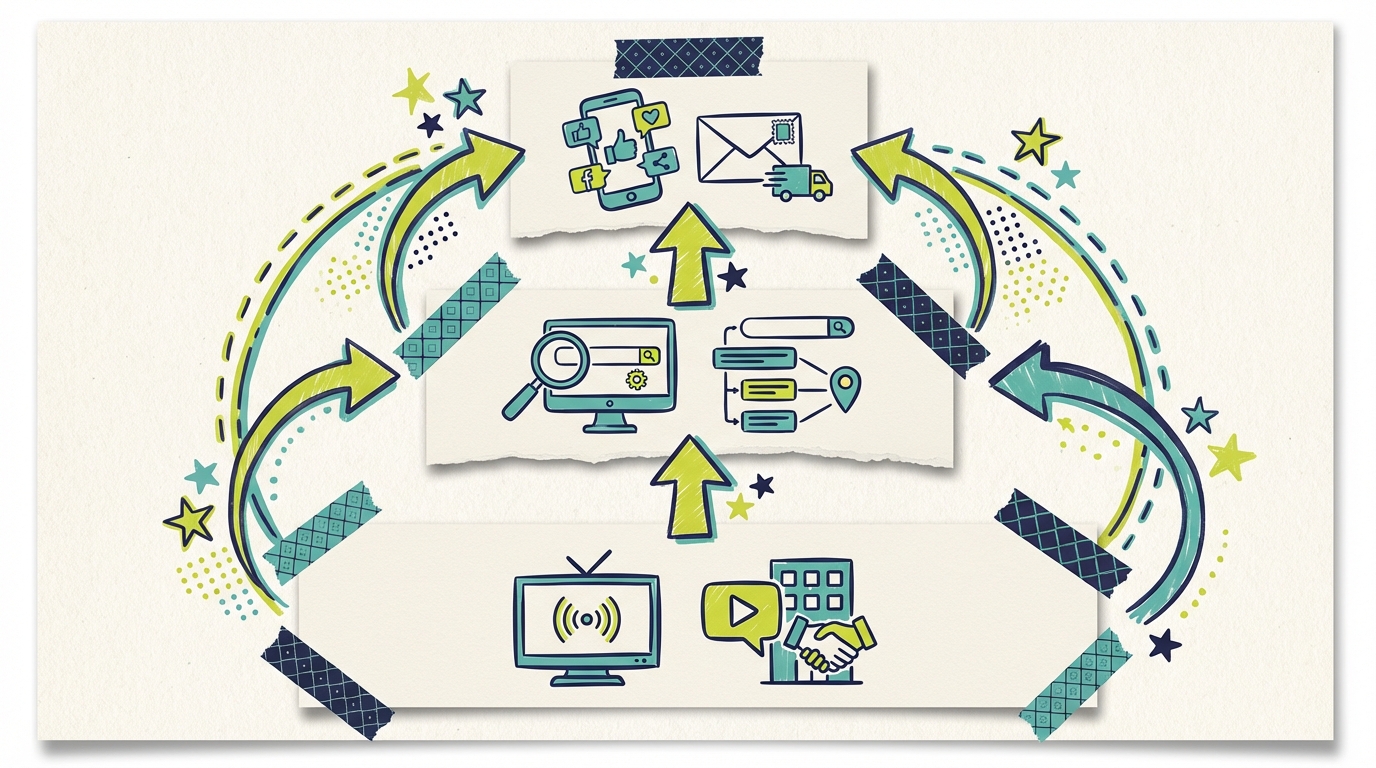
The contractors who grow the fastest aren't relying on a single channel. They're running a mix. But the order matters.
Start with brand trust. Run CTV ads to establish your business as a legitimate, professional operation in your market. When homeowners see you on TV, everything else works better. Your Google Ads get higher click-through rates because people recognize your name. Your social media content gets more engagement because there's already familiarity. Even your truck wraps and yard signs carry more weight when someone's already seen your commercial.
Layer on search. Once your brand has some recognition, Google Ads and SEO become more efficient. You're no longer an unknown name competing purely on bid price. Branded searches increase, and your cost per acquisition drops.
Use social for reinforcement. Post your best project photos, share customer testimonials, and run retargeting ads to people who've visited your site. Social works best when it's part of a larger system, not the whole system.
Fill gaps strategically. Lead platforms and direct mail can supplement during slow seasons, but don't let them become your lifeline. The goal is to build enough brand equity that homeowners come to you directly.
This multi-channel approach works because each channel covers a different weakness. CTV builds the trust and awareness that make every other channel perform better. Google captures people actively searching. Social keeps you visible between projects. Together, they create a lead generation system that doesn't collapse when one channel underperforms.
Common questions answered
How much should a contractor spend on advertising? Most successful contractors allocate between 5% and 10% of their gross revenue to marketing. If your business brings in $500,000 a year, that means a marketing budget of $25,000 to $50,000 annually. The key is distributing that across channels strategically rather than dumping it all into one place. Starting with a smaller CTV budget (even $200 to $500 per month) alongside your existing channels is a smart way to test the impact.
Is TV advertising worth it for a small contracting business? Yes, especially with CTV. Traditional cable TV required huge budgets and broad geographic targeting that wasted most of your spend. CTV lets you target specific zip codes and demographics, so your ad only runs in front of homeowners in your service area. With entry points as low as $50, it's now one of the most accessible channels for contractors. The trust signal alone, appearing on the same networks as national brands, sets you apart from competitors.
What's the fastest way to get contractor leads? Google Ads and home services platforms (Angi, Thumbtack) typically generate leads the fastest because they reach people with immediate intent. You can see leads within days of launching. However, these are also the most expensive channels per lead and don't build long-term brand equity. For sustainable growth, pair a fast lead channel with CTV advertising to build the brand recognition that lowers your cost per acquisition over time.
Do Facebook Ads work for contractors? They can, especially for visually compelling services like remodeling, landscaping, and custom builds. Before-and-after content performs especially well. The challenge is that Facebook users aren't actively looking for a contractor, so conversion rates tend to be lower than search-based channels. Facebook works best as a retargeting and nurturing tool within a broader marketing strategy.
Lead platforms can fill gaps in the schedule. Compare their acquisition costs with your own advertising and listings before changing the budget.
How long does it take to see results from contractor advertising? It depends on the channel. Google Ads and lead platforms can produce leads within the first week. Social media advertising typically takes two to four weeks to optimize. CTV and brand-building efforts usually show measurable impact within 30 to 90 days through increased website traffic, more branded searches, and higher conversion rates on your other channels. The contractors who see the best results commit to a multi-channel approach for at least three to six months.


