
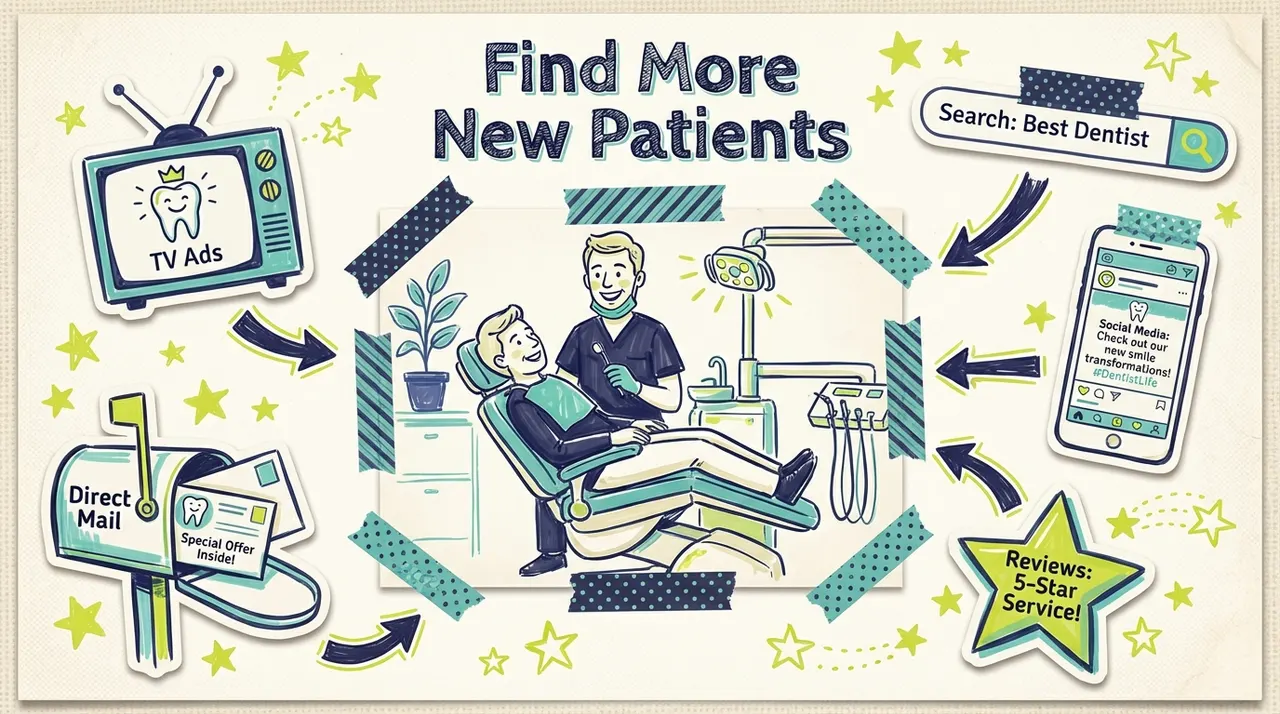
Every dental practice needs a steady flow of new patients. Existing patients age out, move away, or simply stop showing up. Without consistent marketing that brings fresh faces through the door, your practice shrinks over time.
Dentists have more advertising options than ever. The challenge is figuring out which channels deliver patients at a cost that makes sense for your practice. Some options are great for capturing people already searching for a dentist. Others build the kind of name recognition that keeps your schedule full year-round.
This guide compares the most effective advertising channels for dental practices in 2026, with honest cost breakdowns, strengths, limitations, and recommendations based on your goals.
What Makes Dental Advertising Unique
Before comparing channels, understand the dynamics that shape dental marketing.
Patients are local. Your patient base comes from a defined geographic radius, typically 10-15 miles in suburban areas and even tighter in cities. Any advertising that reaches people outside this radius is wasted money.
Trust drives decisions. Choosing a dentist is personal. Patients are literally putting their health (and face) in your hands. Advertising that builds trust and credibility outperforms advertising that just promotes discounts.
Lifetime value is high. A new patient who stays for years of cleanings, X-rays, and procedures represents $5,000-10,000+ in lifetime revenue, according to the American Dental Association's practice economics research. This means you can afford meaningful acquisition costs.
New patient acquisition peaks seasonally. Insurance plan changes in January, back-to-school check-ups in August, and the year-end "use it or lose it" benefits rush in November and December create predictable demand patterns.
Fear is a real barrier. Dental anxiety affects roughly 36% of the population, according to research published in the British Dental Journal. Your advertising needs to communicate comfort and approachability, not just clinical excellence.
Streaming TV Advertising
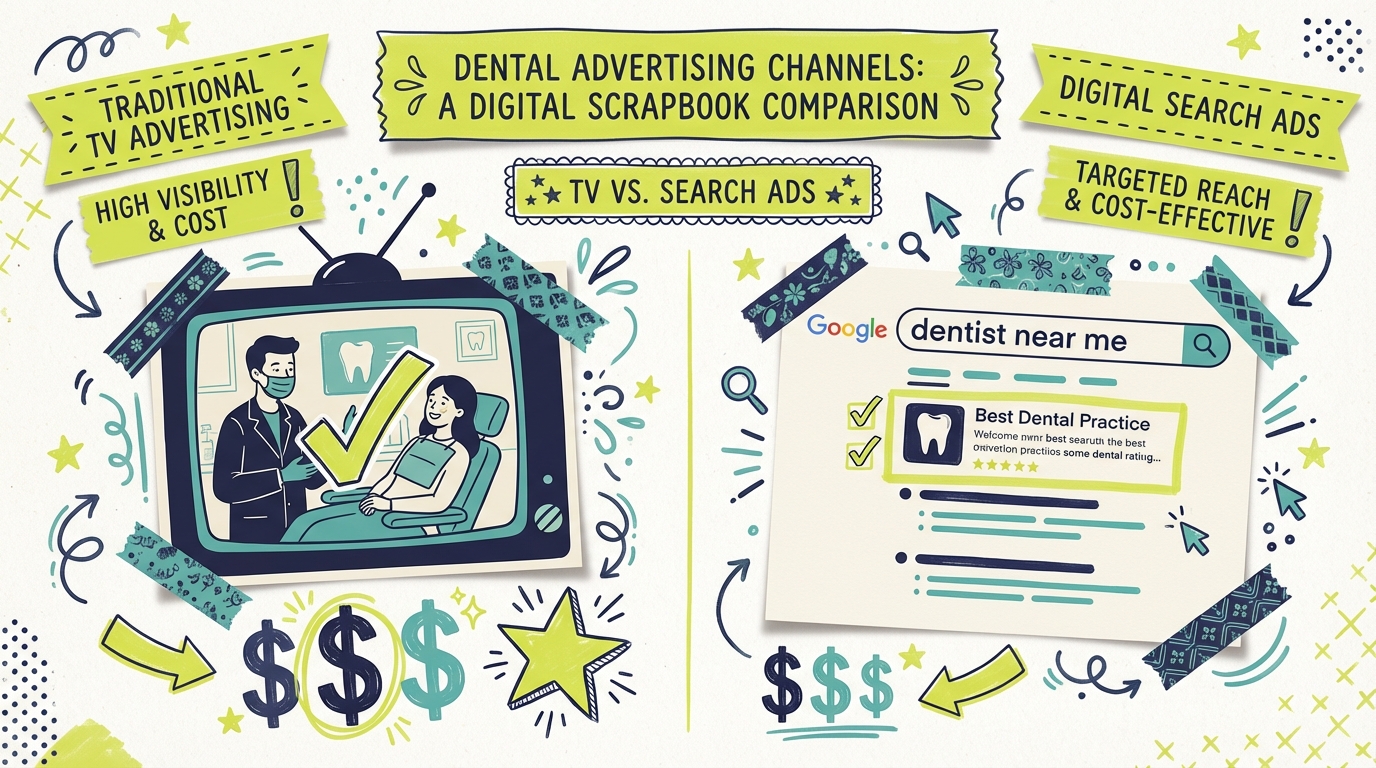
Connected TV advertising has become a surprisingly accessible channel for dental practices looking to build name recognition and trust in their community.
How it works: Your commercial airs on streaming platforms like Hulu, Peacock, Tubi, and more, reaching viewers in your local area on their smart TVs. Geographic targeting ensures you only reach potential patients near your practice.
Costs: CPMs average $15-35, meaning you reach 1,000 local viewers for $15-35. With Adwave, you can create a professional TV commercial and launch a campaign starting at just $50.
Best for: Building name recognition, establishing trust, differentiating from competing practices, promoting new locations or services.
Strengths:
Full-screen, sound-on format shows your practice at its best
Premium network placement builds instant credibility
Geographic targeting reaches only your service area
Reaches patients who aren't actively searching yet (demand creation)
Visual format lets you showcase your office, team, and technology
Limitations:
Not direct-response like search advertising
Results build over time rather than producing instant leads
Requires visual content (office photos, team shots)
Verdict: Streaming TV is the channel most dental practices overlook. The combination of trust-building, local targeting, and accessible pricing makes it increasingly the best option for practices that want to become "the dentist" in their community. Dental practices using TV advertising see measurable gains in new patient calls when they maintain consistent campaigns.
Google Advertising
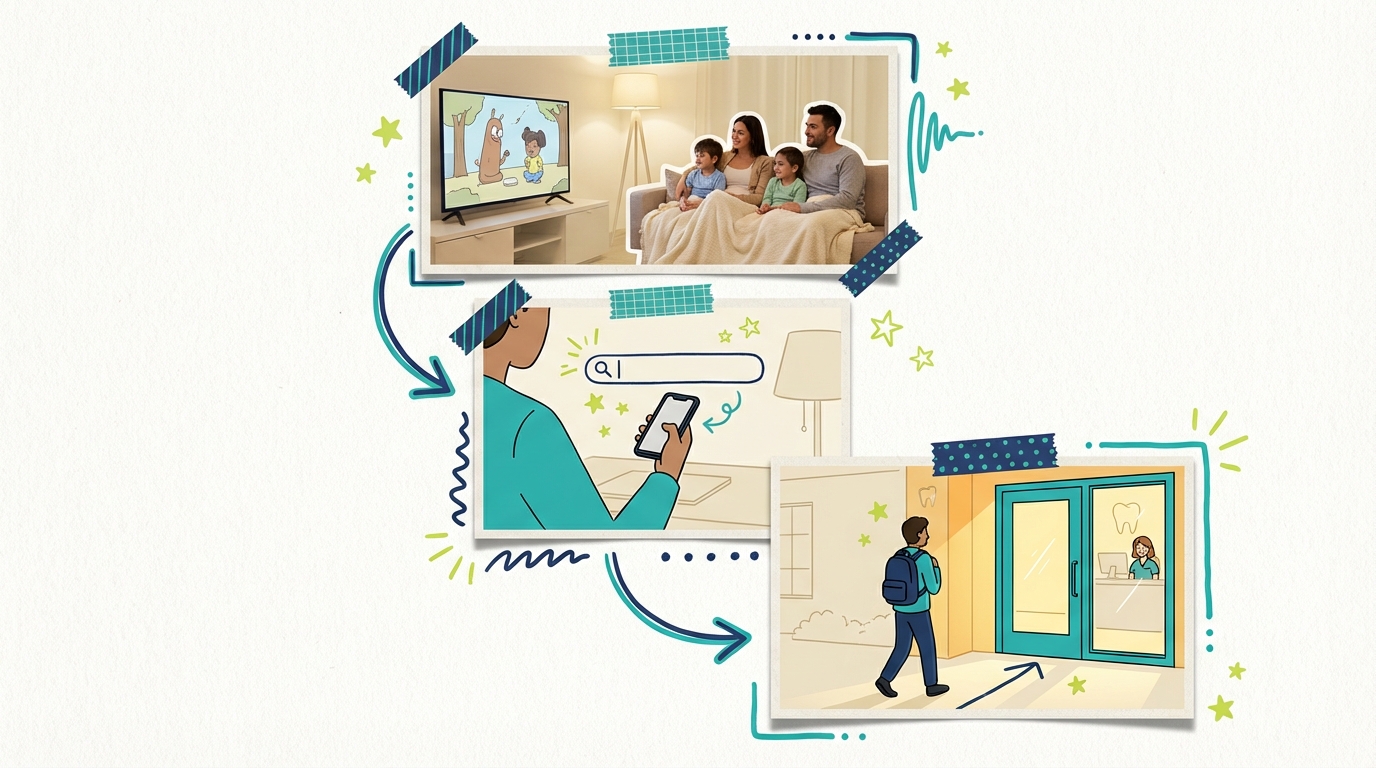
Google is where people go when they need a dentist right now. It captures existing demand rather than creating it.
Google Business Profile: Free and essential. Your listing shows up in Google Maps when someone searches "dentist near me." Include high-quality photos of your office, respond to every review, and keep your hours and services updated. This is non-negotiable for every practice.
Google Search Ads: Pay to appear at the top when someone searches "dentist near me," "emergency dentist," or "teeth whitening [your city]." You pay per click, typically $5-15 depending on your market.
Costs: Business Profile is free. Search ads typically cost $1,000-3,000/month for meaningful visibility in most dental markets. Competitive urban markets can run higher.
Best for: Capturing patients actively searching for a dentist, emergency dental cases, specific procedure searches.
Strengths:
Captures high-intent patients who need a dentist now
Only pay when someone clicks
Measurable cost per lead
Direct path to appointment booking
Limitations:
Expensive in competitive markets (dental is one of the priciest search categories)
Only reaches people already searching
Doesn't build brand preference or loyalty
Click fraud can inflate costs
Verdict: Every dental practice needs an optimized Google Business Profile. Paid search ads make sense for practices that need patients quickly or want to capture emergency and procedure-specific searches. But relying solely on Google means you're constantly paying to rent attention rather than building recognition.
Social Media Advertising
Facebook and Instagram offer visual, targetable advertising that works well for dental practices, especially for cosmetic procedures.
How it works: Create ads targeting people in your area by age, interests, and behaviors. Show before-and-after photos, introduce your team, or promote special offers.
Costs: CPMs run $8-15. Monthly budgets of $500-1,500 produce meaningful results for most practices.
Best for: Cosmetic dentistry promotion, introducing new team members, community engagement, special offers.
Strengths:
Visual format showcases before-and-after transformations
Precise demographic and geographic targeting
Good for building community and personality
Relatively affordable per impression
Limitations:
Declining organic reach means you must pay to be seen
Users aren't in "looking for a dentist" mode
Ad fatigue sets in quickly
Privacy changes have reduced targeting precision
Verdict: Social media works best as a complement to other channels. It's excellent for cosmetic dentistry marketing and building practice personality, but shouldn't be your only advertising channel. The best results come from combining social media with awareness channels like TV.
Direct Mail

Traditional but still effective for dental practices, especially in established neighborhoods.
How it works: Send postcards, letters, or brochures to households in your service area. Common formats include new patient offers, new practice announcements, and seasonal reminders.
Costs: $0.50-1.50 per piece including design, printing, and postage. A campaign of 5,000 pieces runs $2,500-7,500.
Best for: New practice openings, reaching established neighborhoods, new mover campaigns, seasonal promotions.
Strengths:
Physical presence in homes
Can target specific neighborhoods and demographics
Works well for new mover programs
No ad blocker can stop mail
Limitations:
High cost per impression compared to digital
Response rates typically 1-3%
No immediate measurement
Environmental concerns for some audiences
Verdict: Direct mail still works for dental practices, especially for new mover campaigns and new practice openings. It's most effective when combined with digital channels so recipients see your practice across multiple touchpoints.
Yelp and Review Platforms
For dentists, review platforms function as both advertising and reputation management.
How it works: Claim your Yelp profile, encourage reviews, and optionally pay for enhanced listings or ads that appear when people search for dentists.
Costs: Free for basic profile. Enhanced listings and ads run $300-1,000/month depending on your market.
Best for: Capturing research-phase patients comparing options, building social proof.
Strengths:
Patients actively use Yelp to compare dentists
Reviews build powerful social proof
Strong intent signal (people searching here want a dentist)
Limitations:
Yelp's review filter can hide legitimate positive reviews
Paid listings feel aggressive to some users
Limited control over your narrative
Dependent on Yelp's algorithm changes
Verdict: Claim and optimize your profile on Yelp, Healthgrades, and Zocdoc. Encourage satisfied patients to leave reviews. Consider paid promotion in competitive markets, but don't over-invest in a platform you don't control.
Referral Programs
Word-of-mouth remains the most powerful source of new dental patients.
How it works: Create formal programs that incentivize existing patients to refer friends and family. Offer credits toward services, gift cards, or other rewards for successful referrals.
Costs: Reward cost per referral, typically $25-75 in credits or gifts. Administrative costs are minimal.
Best for: Generating high-quality leads from trusted personal recommendations.
Strengths:
Highest conversion rate of any channel
Referred patients tend to stay longer
Very low cost per acquisition
Builds community around your practice
Limitations:
Not scalable for rapid growth
Depends on patient satisfaction
Inconsistent volume
Some patients feel awkward making referrals
Verdict: Every practice should have a referral program. It won't replace other advertising, but referred patients are typically your best patients. Make it easy and rewarding.
Community Sponsorships and Events
Local involvement builds relationships that advertising alone cannot.
How it works: Sponsor local sports teams, school events, charity runs, or community festivals. Set up free screening booths at health fairs. Participate in chamber of commerce events.
Costs: $500-5,000 per sponsorship depending on scale and visibility.
Best for: Long-term brand building, community integration, pediatric practice marketing.
Strengths:
Builds genuine community connections
Creates positive brand associations
Generates goodwill and word-of-mouth
Good PR and social media content
Limitations:
Difficult to measure direct ROI
Time-intensive
Results are long-term, not immediate
Limited reach compared to advertising
Verdict: Valuable for practices committed to their community for the long haul. Don't expect immediate ROI, but the cumulative brand effect compounds over years. Pairs well with TV advertising that reinforces community presence.
Local SEO and Content Marketing
Organic search visibility complements paid advertising by capturing patients who research before choosing.
How it works: Optimize your website for dental-related searches in your area. Create helpful content (blog posts about common dental questions, procedure guides, oral health tips) that ranks in Google and builds authority.
Costs: DIY is free but time-intensive. Hiring an SEO agency runs $1,000-3,000/month. Content creation costs $200-500 per blog post if outsourced.
Best for: Long-term patient pipeline, establishing expertise, capturing informational searches that lead to appointments.
Strengths:
Compounds over time (content keeps working)
Builds authority and expertise perception
Captures patients researching procedures
No per-click costs once ranking
Limitations:
Takes 6-12 months to see meaningful organic results
Requires ongoing investment in content
Algorithm changes can disrupt rankings
Competitive for high-value keywords
Verdict: A solid long-term investment, but too slow to be your only strategy. Build your SEO foundation while using faster channels (Google Ads, TV) to drive patients now.
Local Radio Advertising
Radio remains a common choice for dental practices, though its effectiveness has evolved.
How it works: Purchase airtime on local AM/FM stations. Ads typically run 30 or 60 seconds during specific dayparts (morning drive, afternoon drive, midday). Some stations offer sponsorship packages that include mentions during programming.
Costs: Production costs range from free (station-produced) to $500+ for professional production. Airtime in small to mid-size markets runs $200-1,500/week depending on frequency and station popularity.
Best for: Reaching older demographics, building familiarity through repetition, local market saturation.
Strengths:
Strong reach among older demographics (40+)
Builds familiarity through repeated exposure
Local stations have loyal, engaged audiences
Can target specific dayparts for commuters
Limitations:
No visual component (can't show your office or team)
Younger audiences have migrated to streaming audio and podcasts
Difficult to target precisely by geography
Hard to measure direct response
Background medium with lower attention than video
Verdict: Radio can supplement other channels for practices targeting older demographics. But the inability to show your office visually is a significant limitation for dentistry, where seeing a clean, modern, welcoming environment helps overcome anxiety. Streaming TV offers similar reach with the added benefit of visual storytelling at comparable costs.
Choosing the Right Channel Mix
No single channel does everything. The best dental marketing strategies combine multiple channels that work together.
For New Practices
Starting from zero requires both immediate patient flow and long-term brand building:
Google Ads for immediate patient capture
Streaming TV for building local awareness quickly
Direct mail to surrounding neighborhoods with a new patient offer
Google Business Profile optimized from day one
For Established Practices Looking to Grow
Practices with a solid base but room for growth should focus on expanding reach:
Streaming TV for broader community awareness
Referral program to capitalize on existing patient satisfaction
Social media for cosmetic and elective procedure promotion
Google Ads for specific high-value procedure searches
For Practices Facing New Competition
When a corporate dental chain opens nearby, you need to reinforce what makes you different:
Streaming TV to maintain visibility and build trust advantage
Google Ads to defend your search position
Review platform optimization to highlight your reputation
Community involvement to reinforce local roots
Common Questions Answered
What's the most cost-effective advertising for a dental practice? Google Business Profile is free and essential. Beyond that, streaming TV advertising offers the best value for building broad awareness, with campaigns starting at $50. Google Search Ads capture high-intent patients but cost more per lead ($5-15 per click in most dental markets). The most cost-effective overall strategy combines awareness channels (TV) with capture channels (Google) so you're creating demand and converting it.
How much should a dental practice spend on advertising? Industry benchmarks suggest 3-8% of revenue for dental marketing, according to the ADA Health Policy Institute. For a practice generating $800,000 annually, that's $24,000-64,000 per year. New practices and those in competitive markets should invest toward the higher end, while established practices with strong referral bases can invest less.
Does TV advertising work for dental practices? Yes. Dental practices report increased new patient calls during streaming TV campaigns, especially for building awareness beyond the patients already searching on Google. TV is especially effective for overcoming dental anxiety since video lets you showcase a welcoming office environment and friendly staff in ways that text and photos cannot.
What advertising channels should dentists avoid? Be cautious with coupon-style discount sites (like Groupon) that attract price-shoppers who rarely become long-term patients. Avoid broad radio buys that reach far beyond your service area. Be skeptical of dental-specific lead generation services that charge premium prices for leads they're also selling to competitors.
Search ads can produce inquiries quickly; local SEO and brand advertising usually need more time to assess. Track calls and appointments over several months before judging the overall mix.
Build a Practice That Patients Choose First
The best dental advertising strategy puts your practice in front of future patients at every stage: when they're not yet looking, when they start researching, and when they're ready to book. No single channel does all three.
Streaming TV builds the awareness and trust that make patients think of you first. Google captures them when they search. Reviews confirm their choice. And your exceptional care turns them into lifelong patients who refer their friends.
Ready to put your dental practice on TV? Create your first commercial free and start reaching local patients on premium streaming channels, starting at just $50.


