
You're already juggling food costs that swing 10% month to month, a kitchen that's perpetually short-staffed, and the daily chaos of running a restaurant. Now you're supposed to figure out advertising too?
Here's the problem: everyone wants your marketing dollars. Google says you need search ads. Instagram insists on Reels. Yelp keeps calling about their "enhanced" profiles. Your food distributor rep mentioned something about direct mail. And you probably dismissed TV advertising years ago as something only Olive Garden could afford.
With limited marketing budgets of 3-6% of revenue for most restaurants, you can't afford to waste money on channels that don't work. This guide breaks down every advertising option available to restaurants in 2025, with real costs, honest assessments, and specific tactics you can use this week.
Quick Comparison: Restaurant Advertising Channels at a Glance
Before we dig into each channel, here's how they stack up:
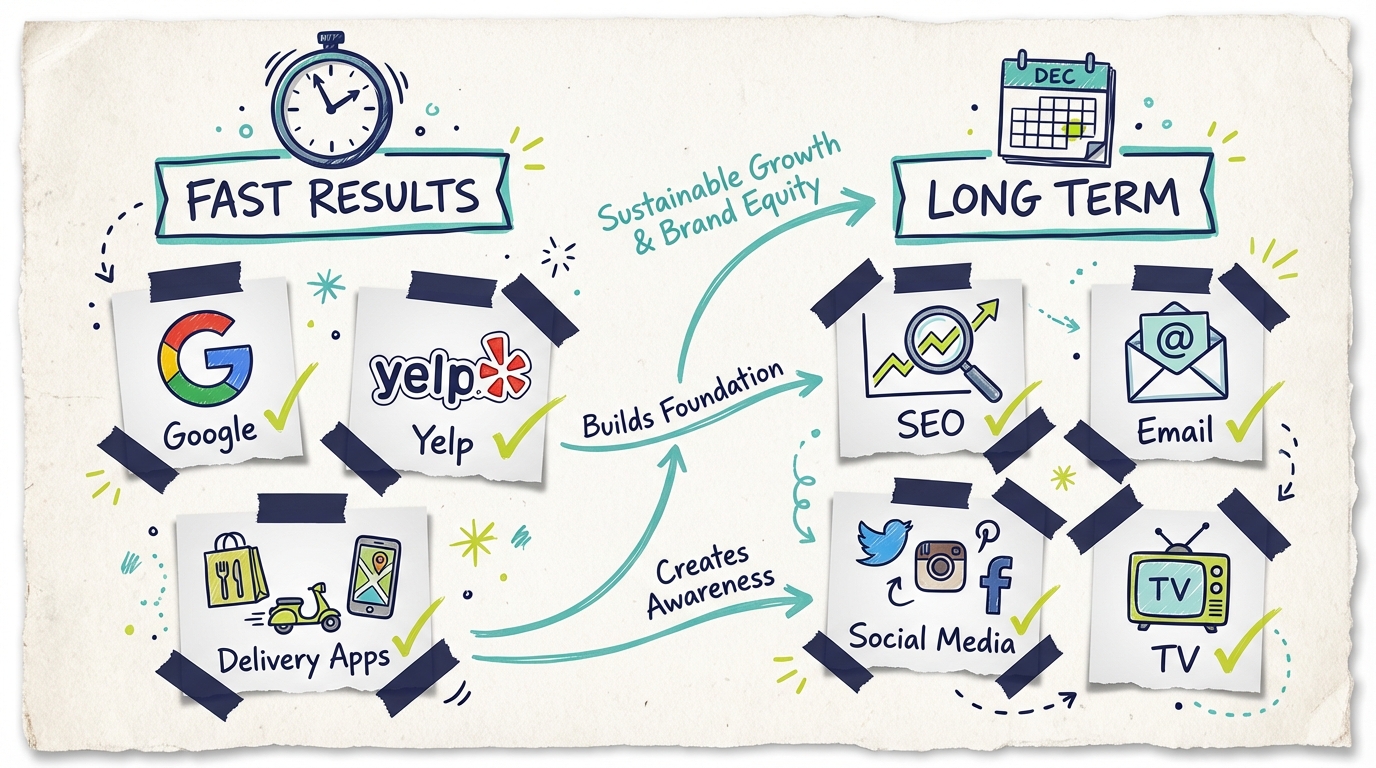
Now let's break down each channel in detail, starting with the ones that deliver immediate results.
Part 1: Channels for Immediate Results
If you need customers this week, these are your best bets.
Google Ads
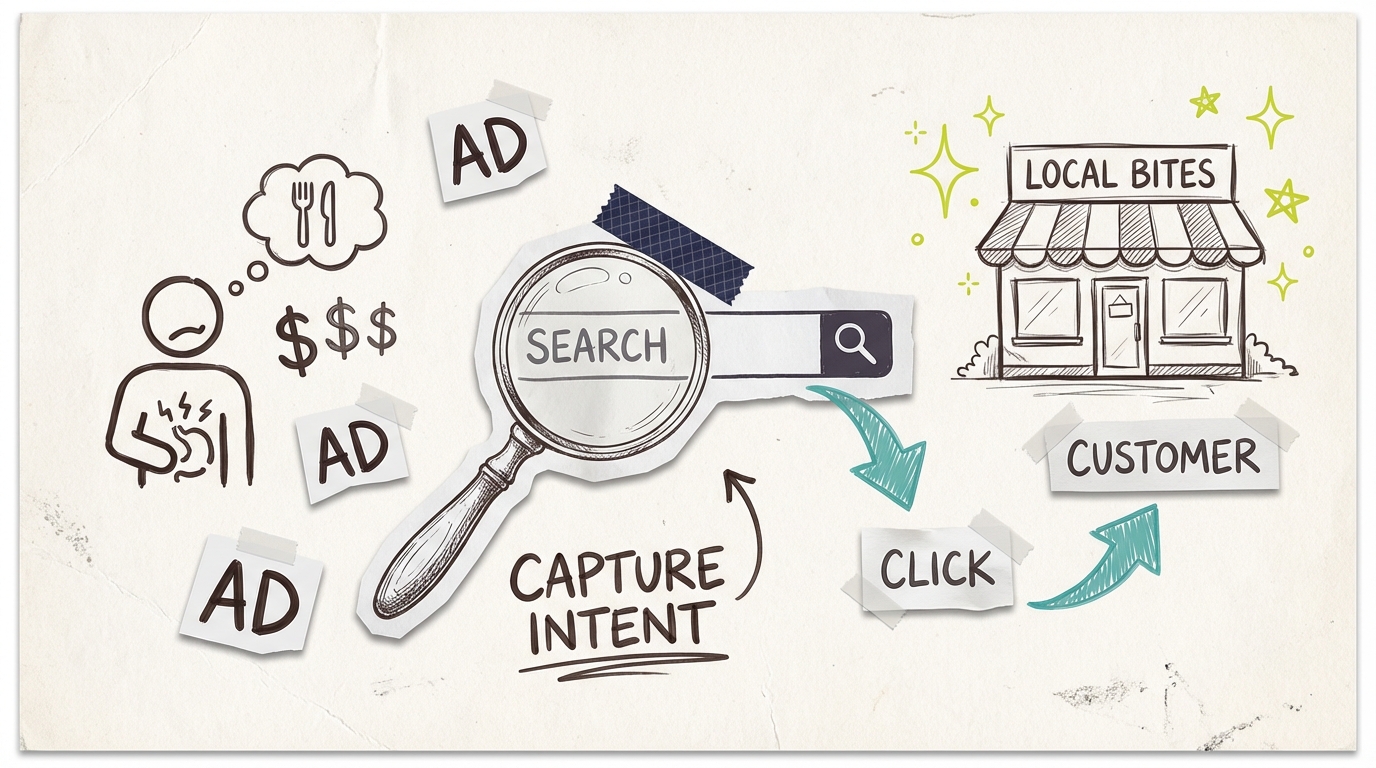
When someone searches "Italian restaurant near me" or "best brunch downtown," they're not browsing. They're hungry, often with a decision timeline of hours. Google Ads puts you at the top of those searches, capturing intent at the exact moment someone is deciding where to eat. Unlike social media, where you're interrupting someone's scroll, search ads reach people actively looking for what you offer.
A Chicago pizza restaurant ran Google Ads targeting "deep dish pizza delivery" within a 5-mile radius. At $2.05 average cost per click for restaurants, they spent $400/month and tracked 180+ direct calls and online orders. That's the power of reaching people who are actively looking for what you offer. According to Google's own data, searches for "restaurants near me" have grown over 150% in the past five years.
The most effective tactics start with competitive conquesting: bid on your competitors' names so when someone searches "Olive Garden near me," your ad appears above their result. It's aggressive but legal. Use location extensions to show your address, hours, and "directions" link directly in the ad, which increases clicks by up to 10%. Create separate campaigns for each goal since reservations, delivery, and catering searches have different intent. Schedule your bids higher during lunch (11am-1pm) and dinner (5pm-8pm) when purchase intent peaks. And add call extensions because many hungry searchers will call instead of click.
Quick Tip: Track everything with unique phone numbers. Services like CallRail let you know exactly which keywords generate reservations, so you can stop wasting money on terms that don't convert.
Google Ads excels at capturing high-intent searchers and offers precise geographic targeting down to zip codes. You can launch campaigns same-day and measure ROI clearly. The downside? Competitive keywords get expensive ($2-8+ per click in metro areas), and you'll need ongoing optimization to stay profitable. It also doesn't build long-term brand awareness, and clicks don't guarantee customers.
Expect to spend $500-2,000/month for meaningful results, with most restaurants seeing $7-15 cost per lead (source). This channel is essential for restaurants with strong online ordering or reservation systems in competitive markets.
Yelp
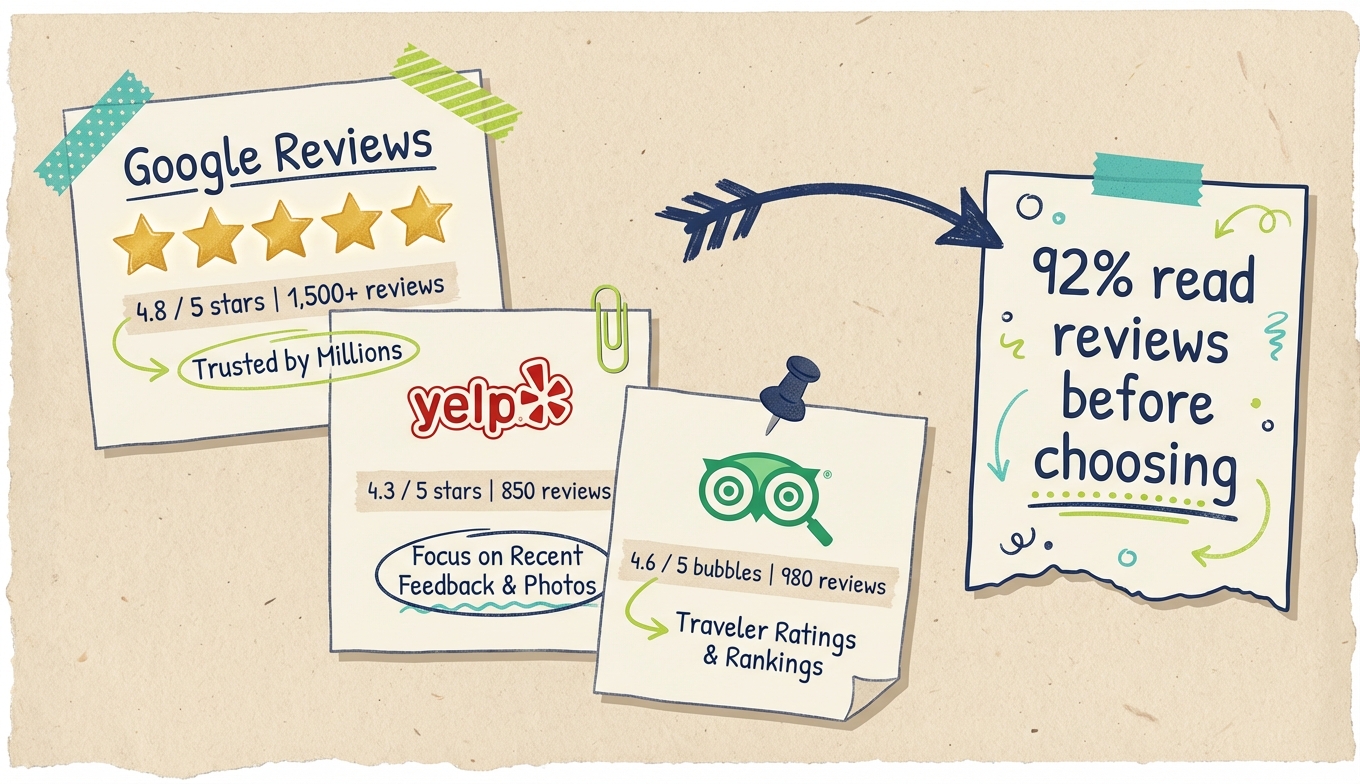
Love it or hate it, 92% of consumers read reviews before choosing a restaurant. Yelp users aren't casually browsing; they're comparing options and ready to choose. A strong Yelp presence directly influences where people eat. Research shows that a one-star increase on Yelp can lead to a 5-9% increase in revenue for independent restaurants.
Sweetgreen built much of their early growth through Yelp by obsessively responding to every review, keeping photos updated weekly, and using Yelp's analytics to understand what customers valued most. You don't need to be a fast-growing chain to follow this playbook.
Focus on responding to every review within 24 hours (positive or negative), updating your photos monthly (restaurants with recent photos get 35% more clicks), and completing every profile field including amenities, parking, noise level, and dietary options. More data means better search matches. Use Yelp's "Request a Quote" feature for catering if you do events, and claim your "Highlights" to feature specific dishes, ideally your highest-margin items.
Quick Tip: Don't just respond to reviews, implement feedback. Then mention it: "Thanks for the note about wait times, Sarah. We've added a hostess on weekends." This shows future customers you listen.
Yelp's strength is reaching people actively deciding where to eat, and reviews build trust better than any ad. The platform is free to optimize, and analytics show you what customers care about. However, it has a "pay to play" perception, paid ads can be expensive for the reach you get ($300-1,000+/month depending on market), and your success depends heavily on your existing review quality. If you're below 4 stars, focus on earning better reviews before paying for ads.
Food Delivery Apps
The delivery market hit $350 billion globally in 2024. DoorDash alone has 37% market share with 32 million monthly active users in the U.S. You're reaching people who have already decided to order delivery and have their credit card ready, so the friction from discovery to purchase is essentially zero.
A Thai restaurant in Austin added DoorDash Storefront (their white-label ordering system) alongside the marketplace, reducing commission costs from 30% to 6% on direct orders while keeping the discovery benefits of the marketplace. Smart operators use both.
The key moves: optimize your menu photos because items with photos get 65% more orders. Price strategically by adding 15-20% to delivery prices to offset commissions, and be transparent about it. Run platform promotions during slow periods since they often subsidize much of the discount. Create delivery-only "virtual brands" so your kitchen can power multiple storefronts (a wings brand, a salad brand) without new overhead. And push direct ordering by including flyers in every delivery bag offering 10% off next order through your website.
Quick Tip: Don't make delivery an afterthought. Package food properly for travel (vented containers, separate sauces, insulated bags) and your reviews will improve dramatically. Bad delivery reviews tank your entire profile.
Delivery apps offer massive built-in audiences, zero-friction purchasing, and discovery by new customers. The data on what sells is valuable for menu optimization. But they come with 15-30% commission costs, no customer relationship ownership, race-to-bottom pricing pressure, and delivery quality that's partially out of your control. They work best for restaurants where delivery is strategic (not just an afterthought), especially quick-service and fast-casual formats that travel well.
Now that we've covered channels for immediate results, let's look at the ones that build sustainable competitive advantages over time.
Part 2: Channels for Long-Term Brand Building
These channels take longer to pay off but create lasting value.
Local SEO
46% of all Google searches have local intent. When someone searches "brunch near me," you want to appear in the map pack, not buried on page two. 76% of people who search for something nearby visit a business within a day. Local SEO is essentially free advertising that works 24/7, and once you rank, every search is a potential customer with zero ongoing ad spend.
Flour Bakery in Boston dominates "best bakery Boston" organic searches. They've invested in reviews (2,000+ on Google), consistent NAP (name, address, phone) across directories, and local content. The result? A line out the door every morning without paid ads.
Start by claiming and fully completing your Google Business Profile and add menus, photos, hours, attributes, and Q&An answers. Post weekly "updates" on Google about specials, events, and new dishes because activity signals relevance to the algorithm. Pursue local citations by getting listed on TripAdvisor, OpenTable, Yelp, local food blogs, and chamber of commerce sites. Encourage reviews systematically by training staff to mention them and adding QR codes to receipts. Create neighborhood content by blogging about local events, partnering with nearby businesses, and becoming part of the community story.
Quick Tip: Answer every question in Google's Q&A section yourself before customers ask. "Do you have vegetarian options?" "Is there parking?" Preemptively answering builds trust and helps SEO.
Local SEO builds credibility through organic visibility and compounds over time. It works continuously without ongoing spend, and rankings build authority that extends beyond search. The tradeoff is patience, with 3-6+ months needed to see significant results. Algorithm changes can affect rankings, and it's competitive in restaurant-dense areas. But it's free to DIY (or $300-500/month for professional help), and every restaurant should treat this as table stakes before spending on paid channels.
Email Marketing
Email marketing generates $36 for every $1 spent on average, making it one of the highest-ROI channels available. Your email list is people who already like you since they've eaten at your restaurant and opted in. Converting a past customer costs 5-25x less than acquiring a new one.
Chipotle's email program drives repeat visits and app downloads at scale. But even a neighborhood pizza shop sending weekly "behind the kitchen" emails with a discount code sees 15%+ open rates and consistent redemptions. You don't need sophisticated automation to win here.
Capture emails at every touchpoint: WiFi login, reservation confirmation, online ordering, receipt signup. Send consistently but not excessively with weekly as the ideal frequency, and more than twice weekly kills engagement. Segment by behavior so frequent diners get loyalty perks and lapsed customers get "we miss you" offers. Make emails visual because food is emotional, so lead with beautiful dish photos, not walls of text. Include one clear CTA per email, either "Book a table" or "Order online," but not both.
Quick Tip: Your subject line is everything. "This week's special" gets ignored. "The secret's out: our new short rib is available tonight" gets opened. Create curiosity.
Email offers extremely high ROI and you own the relationship completely. It's highly measurable and drives repeat visits directly. The limitation? It only reaches existing customers and won't bring in new one, plus it requires consistent content creation and deliverability issues can hurt you if done poorly. Think of it as retention, not acquisition. Platforms like Mailchimp or Constant Contact cost $20-100/month.
Organic Social Media
93% of restaurant marketers use social media. But most do it wrong, posting food photos into the void. The restaurants winning on social build communities, turning customers into advocates who advertise to their entire network for free.
Bad Roman in NYC built a cult following through Instagram by creating highly "Instagrammable" moments. Their decor, plating, and signature dishes are designed to be shared. The result? User-generated content that reaches millions organically without a dollar spent on ads.
Create a photo-worthy moment: a neon sign, dramatic dessert presentation, or unique serving vessel people want to photograph. Run user-generated content campaigns like "Tag us for a chance to win dinner" to generate authentic content and extend reach. Show behind the scenes with chefs prepping, suppliers arriving, the morning coffee run, and humanize your brand. Respond to every comment and DM because social is social, so don't just broadcast. Post consistently at the same times since the algorithm favors reliability.
Quick Tip: Don't try to be everywhere. Pick two platforms max (Instagram + one other) and do them well. Half-hearted presence on five platforms accomplishes nothing.
Social media is free and builds authentic community, with user-generated content extending your reach and enabling direct customer communication. But algorithms limit organic reach (expect 3-5% of followers to see your posts), it's time-intensive requiring 5-10 hours per week for meaningful presence, and it's hard to directly attribute sales. It works best for restaurants with visual appeal and staff bandwidth for consistent creative.
With the foundation in place, let's look at channels that build the name recognition that makes everything else work better.
Part 3: Channels for Brand Awareness
These channels build the name recognition that amplifies all your other marketing.
Streaming TV (CTV)
Here's where most restaurant owners tune out. TV advertising? That's for Applebee's and Olive Garden. You'd need a $50,000 production budget and a media buy that costs even more.
Except that's not true anymore.
Streaming TV advertising lets you run commercials on Hulu, Peacock, Roku, and 100+ networks, but only to viewers in your specific area. You can target by zip code, household income, even dining preferences. And 66% of consumers trust TV ads more than any other medium.
A farm-to-table restaurant in Charlotte ran streaming TV ads through Adwave targeting foodies within a 10-mile radius. With a $300/month budget, they reached 50,000+ local households. Six months later, they'd built enough name recognition that walk-ins mentioned seeing them "on TV."
Start with brand awareness, not direct response (TV builds familiar awareness, so measure branded search lift rather than immediate bookings. Target by geography first, focusing on zip codes within your realistic draw area. Show your food in motion: sizzling pans, cheese pulls, happy diners. And run during meal decision windows) afternoons capture dinner planners, late morning captures lunch.
Quick Tip: You don't need a production crew. Platforms like Adwave use AI to create professional commercials from your photos and basic information. You can go from idea to live campaign in under 10 minutes.
Streaming TV offers premium brand placement alongside major networks, unmatched trust and credibility, and precise targeting. Viewers can't skip your ad, so completion rates are high. With self-serve platforms, there's no minimum spend, you can start at $50 with Adwave. The average CTV CPM of $25-35 means you can reach 2,000-3,000 local households for $50-100.
The tradeoff? TV is an awareness channel, not direct response. It requires video creative, conversions are harder to track directly, and best results come from consistent presence over time. It's ideal for building brand awareness, announcing grand openings, promoting events, or competing with chains already on TV.
Direct Mail
Everyone thought email killed direct mail. They were wrong. Response rates for direct mail average 4.4%, compared to 0.12% for email. Direct mail is tangible, it sits on kitchen counters and refrigerators, reaching everyone in a neighborhood, including people who aren't on Instagram or searching Google.
When &pizza opens new locations, they blanket surrounding neighborhoods with oversized postcards featuring bold photography and first-order discounts. The combination of visual impact and geographic precision drives immediate trial.
Use Every Door Direct Mail (EDDM) to reach every address in selected postal routes without buying a list. Design for refrigerator real estate, if it looks like a coupon, it might get posted. Include expiration dates to create urgency, and track redemptions with unique offer codes.
Quick Tip: Oversized postcards (6x9 or larger) cost more to mail but have dramatically higher response rates than standard sizes. The few cents extra is worth it.
Direct mail is highly geographic (perfect for neighborhood restaurants), tangible and memorable, and reaches people not online. Expect to spend $500-2,000+ for design, printing, and postage. It's best for new openings, major promotions, and restaurants in residential neighborhoods.
Radio
Local radio still has listeners, especially during commute times. Culver's built regional dominance partly through consistent local radio, their "Welcome to Delicious" tagline became synonymous with fast-casual dining in the Midwest.
Audio is memorable; jingles stick. And you're reaching people in cars who might be deciding where to eat. Target drive-time slots (6-9am and 4-7pm), negotiate package deals that bundle ads with live reads and event sponsorships, and track with unique offers like "Mention this ad for free appetizer."
Quick Tip: If traditional radio doesn't fit your budget, try Spotify's ad platform. You can target by location and music preferences, reaching people with earbuds in while they decide where to eat.
Radio's audience is declining and skewing older, targeting options are limited to station demographics, and it's hard to measure effectiveness directly. Production quality matters here since cheap-sounding ads hurt your brand. But for restaurants near major commute routes or in markets with strong local stations and loyal audiences, it can still work. Expect $500-2,000+/month for meaningful frequency.
Part 4: Choosing the Right Mix
The best advertising strategy isn't choosing one channel. It's building a system where channels work together.
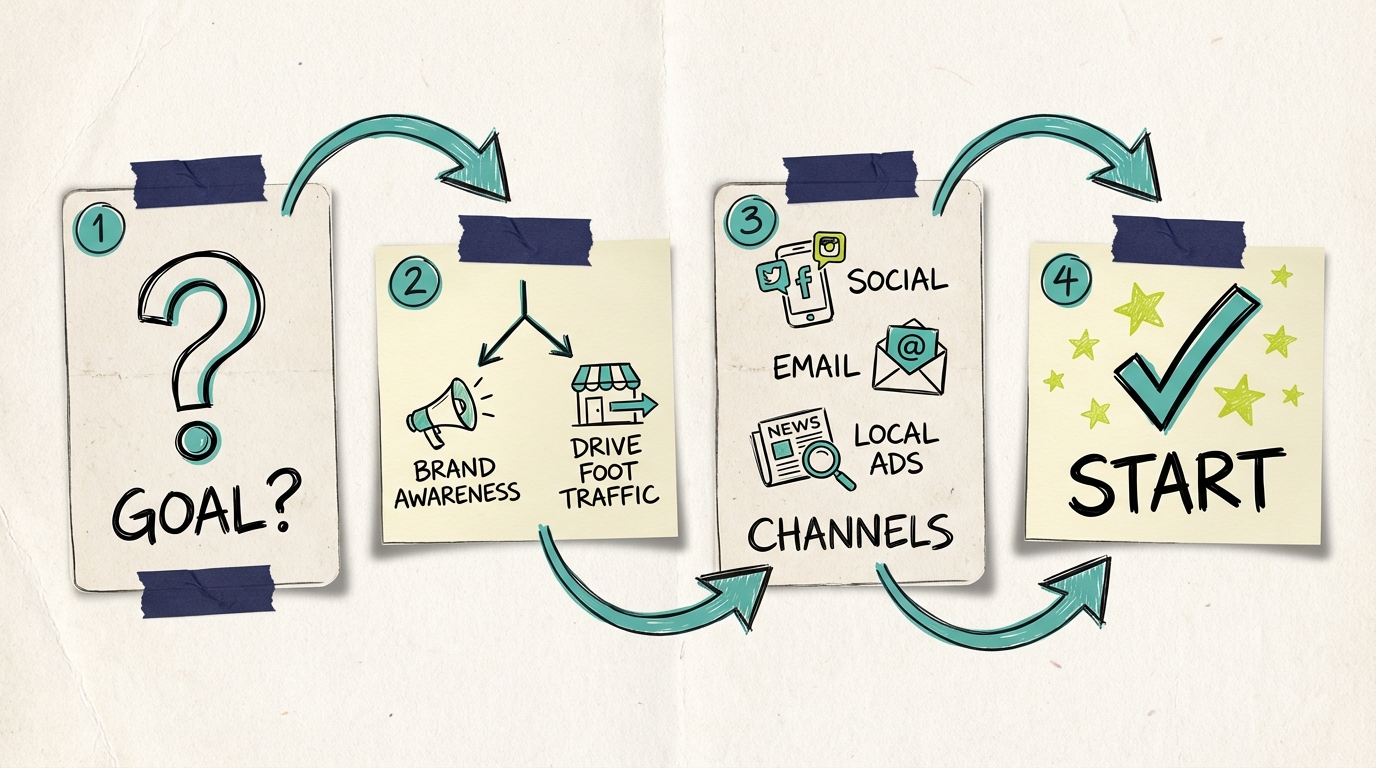
What to Do Based on Your Goal
Need customers this week? Start with Google Ads to capture active searchers, optimize your Yelp profile to convert researchers, run delivery app promotions, and send an email blast to your existing list.
Building for the long term? Get your local SEO right first, it's free and foundational. Build your email list from day one. Add streaming TV to build brand awareness, and invest in organic social to create community.
Opening a new location? Blanket the neighborhood with direct mail, use streaming TV to build name recognition fast, run Google Ads capturing "new restaurant near me" searches, and plan grand opening events with local PR.
Want to fill slow nights? Use email marketing for targeted offers, promote events on social media, run delivery app promotions (Tuesday discounts), and build habit around your slow days with streaming TV.
Competing with chains? Use streaming TV for the same premium placement they use (starting at $50), capture branded searches with Google Ads, differentiate in local results with strong SEO, and position yourself as the "local" option through community building.
Common Questions Answered
What's the most cost-effective advertising for a new restaurant?
Start with the free foundations: optimize your Google Business Profile, claim Yelp and build reviews, and start building your email list from day one. Once you have traction, add streaming TV to accelerate brand awareness. The combination of word-of-mouth, strong search presence, and TV advertising builds recognition faster than any single channel.
How much should a restaurant spend on advertising?
Most successful restaurants allocate 3-6% of revenue to marketing. For a restaurant doing $800,000 annually, that's $24,000-48,000 per year, or roughly $2,000-4,000 per month across all channels. Start smaller when testing new channels (even $50-200/month for TV or digital), then scale what works.
Is TV advertising really affordable for independent restaurants?
Yes. Platforms like Adwave offer streaming TV campaigns starting at $50. Local targeting lets restaurants reach households near their location.
How do I know which advertising channel is working?
Use unique tracking wherever possible: dedicated phone numbers from CallRail, promo codes for each channel, Google Analytics UTM parameters for digital. For brand-building channels like TV, track lift in branded searches (people searching your restaurant name), direct website traffic, and simply ask new customers how they heard about you. Most will tell you.
Should I prioritize digital or traditional advertising?
Both. The restaurants winning in 2025 use digital for targeting and measurement while using traditional channels (TV, direct mail, radio) for credibility and reach. Digital captures intent; traditional builds awareness. They're not competitors, they're complements.
The Bottom Line
There's no single "best" advertising channel for restaurants. The right answer depends on your goals, budget, timeline, and what you're already doing well.
But here's a framework that works for most restaurants:
Get your local SEO right first. It's free and foundational.
Build your email list from day one. These are people who already like you.
Use Google Ads for immediate needs. When you need reservations this weekend, search ads deliver.
Add brand-building channels strategically. This is where streaming TV comes in, building the awareness that makes all your other advertising work better.
The restaurants that win aren't necessarily spending the most. They're spending strategically across channels that work together.


