
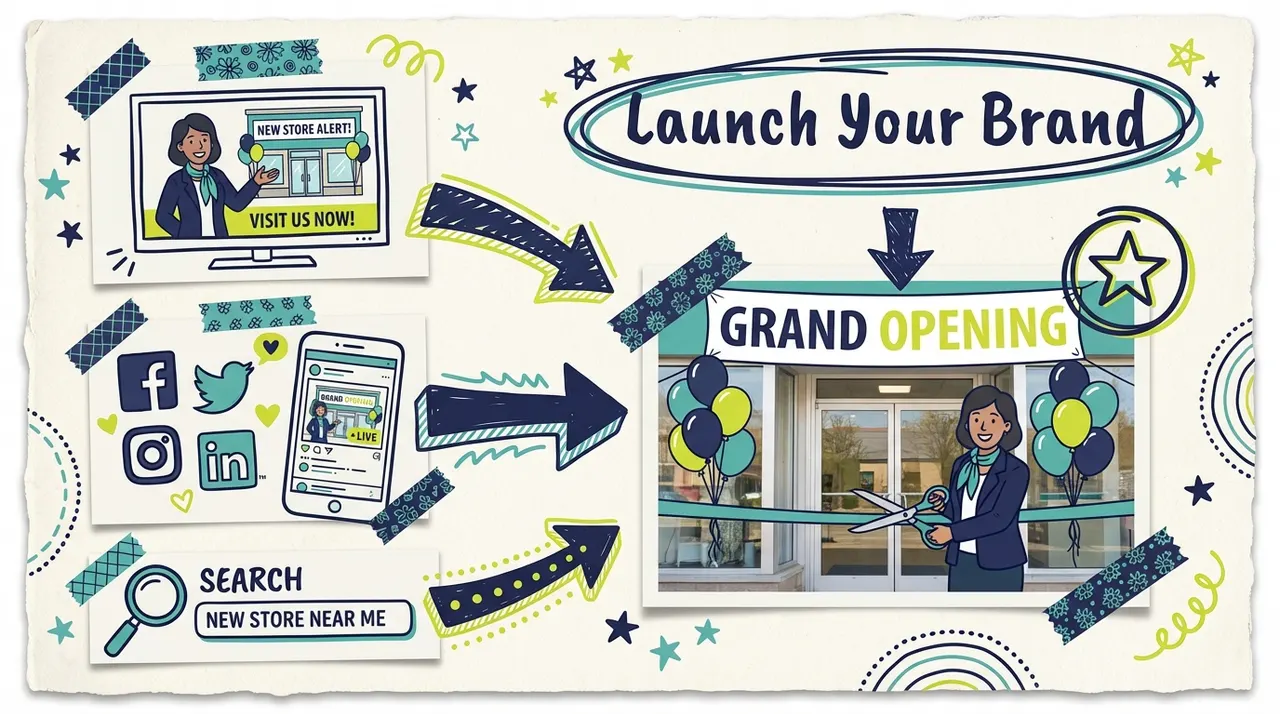
You've built something worth buying. Now you need people to know it exists.
This is the challenge every new business faces. You have a great product or service, but potential customers don't know you yet. They can't buy from you if they've never heard of you, and they won't trust you until you've built some credibility.
Advertising a new business is more accessible than ever. You don't need a massive budget or a marketing team. You need a smart approach that builds awareness efficiently while establishing trust with potential customers.
This guide covers the best advertising strategies for new businesses, from free tactics that build foundations to paid channels that accelerate growth. We'll focus on what works, not what sounds impressive in theory.
The New Business Advertising Challenge

Before diving into tactics, understand what makes advertising a new business different from advertising an established one.
You're starting from zero awareness. Established businesses have name recognition, customer bases, and referral networks. You have none of that yet. Every customer must be earned from scratch, which means your advertising must work harder to create initial awareness.
Trust doesn't exist yet. Customers are naturally skeptical of businesses they've never heard of. They worry about quality, reliability, and whether you'll be around next year. Your advertising must build trust while generating interest.
Budget constraints are real. Most new businesses operate with limited marketing budgets. You can't afford to waste money on channels that don't work or campaigns that don't convert. Every dollar must pull its weight.
Time pressure compounds everything. New businesses need customers quickly to survive. You can't spend years building brand awareness before generating revenue. Your advertising strategy must balance long-term brand building with short-term lead generation.
Start With Your Foundation
Before spending money on advertising, build the foundation that makes advertising effective.
Create a professional website. Your website is where advertising sends people. If it looks unprofessional, loads slowly, or doesn't clearly explain what you offer, your advertising will fail regardless of how good it is. Invest in a clean, fast, mobile-friendly website before investing in ads.
Claim your Google Business Profile. For local businesses, Google Business Profile is essential. It's free, and it determines whether you appear when people search for businesses like yours nearby. Complete every field, add photos, and keep information current.
Set up basic analytics. You need to know what's working. Install Google Analytics on your website. Set up conversion tracking. Create a simple system for asking customers how they found you. Without measurement, you're guessing.
Define your target customer. Who specifically are you trying to reach? The more precisely you can define your ideal customer, the more effectively you can target your advertising. Generic "everyone" targeting wastes money reaching people who will never buy.
Free Advertising Tactics That Work
Start with tactics that cost nothing but time. These build foundations that make paid advertising more effective later.
Optimize for local search. When people search for what you offer in your area, you want to appear. Beyond Google Business Profile, ensure your website includes location-specific content. Get listed in local directories. Encourage reviews from early customers.
Build social media presence. Choose one or two platforms where your target customers spend time. Post consistently with content that provides value, not just promotional messages. Engage authentically with your community. This builds familiarity over time.
Ask for referrals systematically. Every satisfied customer can introduce you to others. Create a simple referral program. Ask happy customers directly. Make it easy for people to recommend you. Referrals convert better than any other source because they come with built-in trust.
Partner with complementary businesses. Find non-competing businesses that serve your same customers. A new bakery might partner with a coffee shop. A new gym might partner with a physical therapist. Cross-promotion exposes you to established customer bases.
Create helpful content. Blog posts, videos, or guides that answer questions your customers have attract organic traffic over time. This content also demonstrates expertise and builds trust. One helpful piece of content can generate leads for years.
Paid Advertising Options for New Businesses
When you're ready to invest money in advertising, multiple options exist. Each has strengths and weaknesses for new businesses.
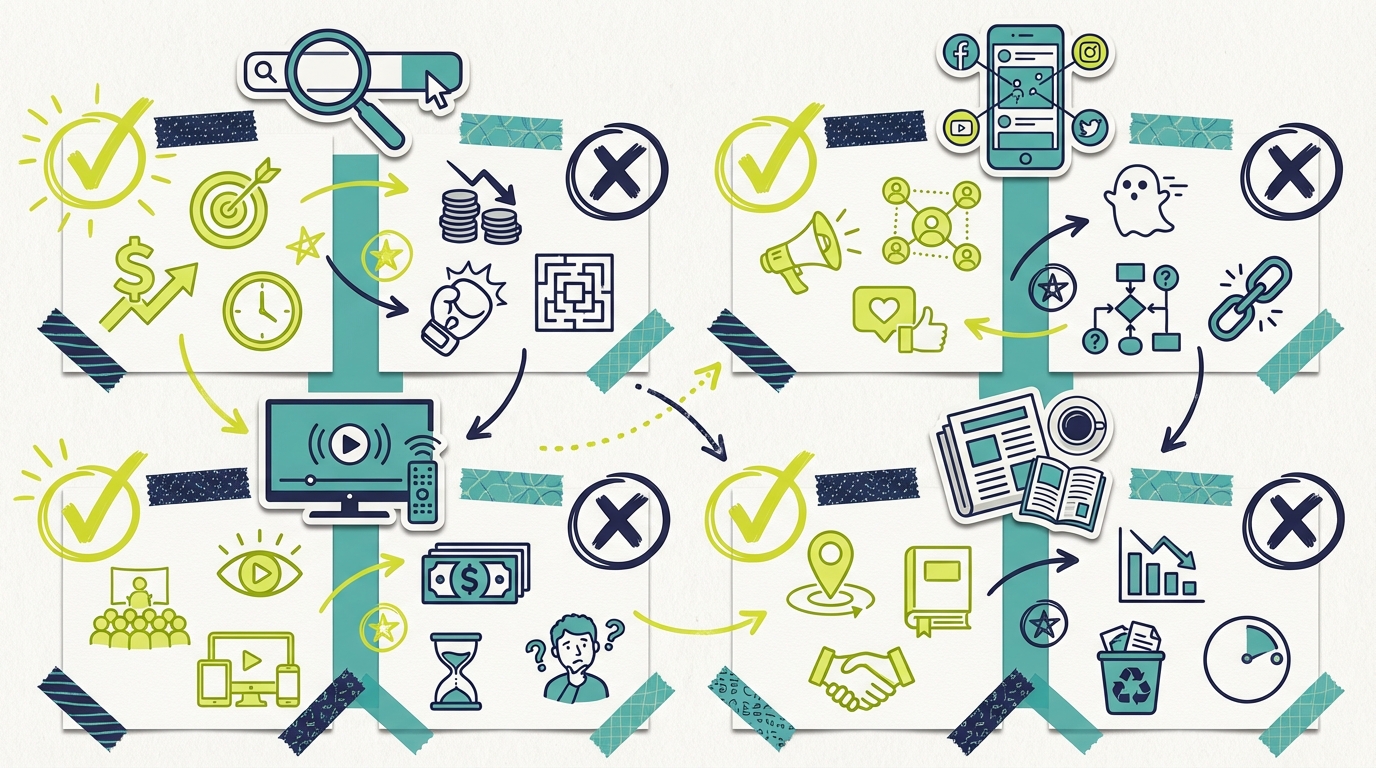
Search Advertising (Google Ads)
Search advertising puts you in front of people actively looking for what you offer. Someone searching "plumber near me" has immediate intent. This makes search ads powerful for capturing existing demand.
Strengths for new businesses:
Reaches people with immediate intent to buy
Pay only when someone clicks
Start with any budget
Results appear quickly
Weaknesses for new businesses:
Competitive keywords are expensive
Only captures people already searching
Doesn't build brand awareness
Requires ongoing optimization
Best for: Service businesses where customers search when they need help. Businesses with clear, searchable offerings.
Social Media Advertising (Facebook, Instagram)
Social advertising reaches people based on demographics, interests, and behaviors rather than search intent. You can target specific audiences even if they're not actively searching.
Strengths for new businesses:
Highly specific audience targeting
Visual formats showcase your business
Start with small budgets
Build awareness among target customers
Weaknesses for new businesses:
Lower intent than search
Ad fatigue requires constant creative refresh
Algorithm changes affect performance
Competition for attention is intense
Best for: Businesses with visually appealing products or services. Businesses targeting specific demographics.
Streaming TV Advertising
Streaming TV advertising puts your business on premium networks like NBC, Hulu, and ESPN. Geographic targeting reaches local audiences, while the medium builds credibility that digital ads struggle to create.
Strengths for new businesses:
Builds trust and credibility that new businesses desperately need
Creates broad awareness efficiently
Premium environment enhances your brand
Local targeting reaches your actual market
Weaknesses for new businesses:
Less direct response than search
Requires consistent presence for impact
Results take time to compound
Best for: Local businesses needing brand awareness and trust. Businesses where credibility influences purchase decisions. Any business wanting to seem established quickly.
Local Print and Radio
Traditional local media still reaches certain audiences effectively, especially older demographics and specific geographic areas.
Strengths for new businesses:
Reaches audiences less active online
Local focus matches local business needs
Established credibility of local media
Weaknesses for new businesses:
Expensive relative to reach
Difficult to track results
Declining audiences for most formats
Long lead times for placement
Best for: Businesses targeting older demographics. Businesses in markets where local media remains strong.
The Best Advertising Strategy for Most New Businesses
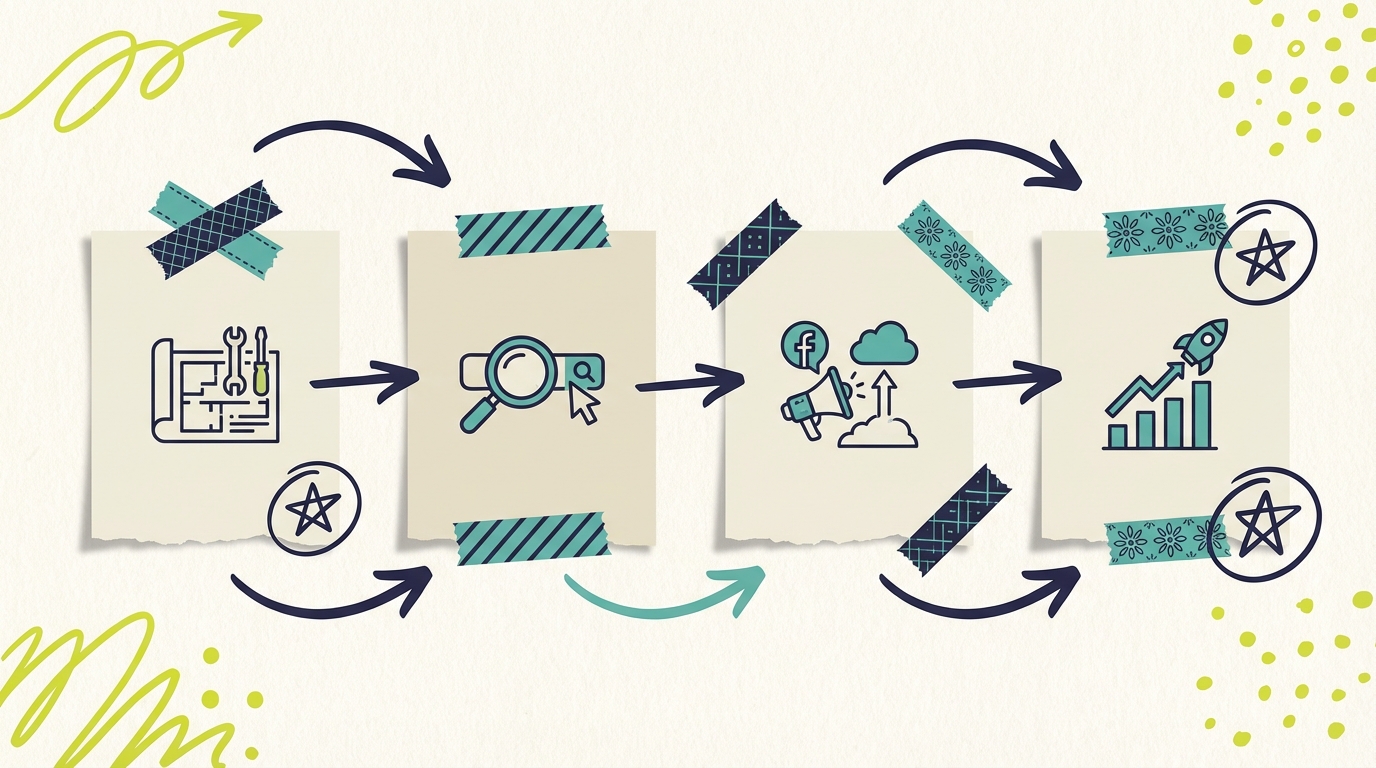
After analyzing options, here's what works best for most new businesses with limited budgets.
Phase 1: Build Your Foundation (Month 1)
Focus on free tactics that create infrastructure for later advertising.
Complete and optimize your Google Business Profile
Ensure your website is professional and mobile-friendly
Set up analytics and tracking
Establish social media presence on one or two platforms
Ask early customers for reviews and referrals
Cost: Time only. No advertising spend yet.
Phase 2: Capture Existing Demand (Months 2-3)
Start with advertising that reaches people already looking for what you offer.
Launch Google Ads targeting high-intent keywords
Start small ($10-20/day) and optimize based on results
Focus on your specific service area
Track every lead and conversion
Budget: $300-600/month on search ads.
Phase 3: Build Brand Awareness (Month 4+)
Once you're capturing search demand efficiently, expand to awareness advertising.
Add streaming TV advertising to build local brand recognition
Start with just $50 to test the channel
Continue search advertising for direct response
Use social media advertising to reinforce awareness
Budget: $500-1,000/month total across channels.
Phase 4: Scale What Works (Month 6+)
By now you have data on what generates customers. Scale the winners.
Increase budget on channels delivering positive ROI
Cut or reduce spending on underperforming channels
Test new audiences and creative approaches
Build referral systems to compound advertising impact
Budget: Whatever you can invest while maintaining positive returns.
Advertising Mistakes New Businesses Make
Avoid these common errors that waste money and slow growth.
Spreading too thin. It's better to do one or two channels well than five channels poorly. New businesses often try to be everywhere and end up being effective nowhere. Focus on mastering channels before expanding.
Expecting instant results. Some advertising works immediately. Brand building takes time. Most new businesses give up on effective strategies before they've had time to work. Commit to reasonable timeframes before judging results.
Ignoring measurement. If you don't know which advertising generates customers, you can't optimize. Track everything. Ask every customer how they found you. Let data guide your decisions.
Competing only on price. New businesses often think low prices will attract customers. This attracts price shoppers who leave when someone offers less. Compete on value, quality, and service instead.
Neglecting existing customers. It costs far less to retain a customer than acquire a new one. While advertising for new customers, don't forget to delight current ones. Happy customers refer others and reduce your advertising costs over time.
Copying competitors blindly. What works for established competitors may not work for you. They have brand recognition you don't. Develop strategies appropriate for your stage, not theirs.
Special Considerations by Business Type
Different types of new businesses face different advertising challenges.
Local Service Businesses
Plumbers, electricians, landscapers, cleaners, and similar businesses serve geographic areas and often respond to immediate needs.
Focus on:
Google Business Profile optimization
Search ads for emergency and planned service needs
TV advertising to build local recognition
Truck wraps and yard signs for local visibility
Referral programs with existing customers
Retail Businesses
Stores selling physical products need foot traffic and local awareness.
Focus on:
Local TV advertising to drive store awareness
Social media showing products
Google Business Profile with photos
Community involvement and local events
Email marketing to build repeat visits
Professional Services
Accountants, attorneys, consultants, and similar professionals sell expertise and trust.
Focus on:
Content marketing demonstrating expertise
LinkedIn presence and networking
Referral relationships with complementary professionals
TV advertising to build credibility
Speaking engagements and local visibility
E-commerce Businesses
Online-only businesses need to drive website traffic and conversions.
Focus on:
Search ads for product-specific keywords
Social media advertising with strong creative
Email marketing for abandoned carts and retention
Influencer partnerships for awareness
Retargeting to bring visitors back
Measuring Advertising Success
Track these metrics to understand whether your advertising is working.
Customer acquisition cost (CAC). How much do you spend in advertising to acquire one customer? Divide total advertising spend by number of new customers acquired. Compare this to customer lifetime value.
Return on ad spend (ROAS). For every dollar you spend on advertising, how much revenue do you generate? This varies by industry, but generally you want at least $3-4 in revenue for every $1 spent.
Track which lead sources produce paying customers.
Brand awareness. Harder to measure, but track how many customers mention seeing your advertising, searching for you by name, or recognizing your business when they see it.
Channel attribution. Understand which channels contribute to each sale. Many customers see multiple touchpoints before buying. Track the full journey when possible.
Common Questions Answered
What's the best advertising for a new business with a small budget? Start with free tactics: Google Business Profile, social media presence, referral requests, and local partnerships. When ready to spend, Google Ads captures high-intent searches efficiently. Add streaming TV advertising when you can invest $150-300/month to build brand awareness and credibility that makes all your other marketing more effective.
How much should a new business spend on advertising? A common guideline is 7-12% of revenue for new businesses, higher than established businesses because you're building from zero. But more important than percentage is ROI: spend what you can afford while generating positive returns. Start small, measure results, and scale what works.
How long before advertising starts working? Search advertising can generate leads immediately if your keywords and targeting are right. Brand-building advertising like TV typically shows meaningful results after 2-3 months of consistent presence. Most businesses see compounding returns as awareness builds and multiple channels reinforce each other.
Should new businesses advertise on social media? Social media advertising works well for visually appealing products and specific demographic targeting. But it requires strong creative that gets refreshed regularly. For many local businesses, the combination of search ads and TV advertising delivers better results than social alone.
What's the single most important thing for new business advertising? Consistency and patience. Many new businesses jump between strategies, never giving any approach enough time to work. Pick a reasonable strategy, execute it well, measure results over appropriate timeframes, and adjust based on data rather than impatience.
The Bottom Line
Advertising a new business requires balancing immediate lead generation with long-term brand building. You need customers now to survive, but you also need to build the recognition and trust that reduces customer acquisition costs over time.
Start with free tactics that build foundations. Add search advertising to capture existing demand. Layer in TV advertising to build the brand awareness and credibility that makes everything else work better. Scale what generates positive returns.
The best advertising strategy isn't the most sophisticated or expensive one. It's the one you can execute consistently while measuring results and improving over time. Start where you are, with what you have, and build from there.
Ready to build brand awareness for your new business? Create your first TV ad in minutes and reach local customers on streaming platforms, starting at just $50.


