
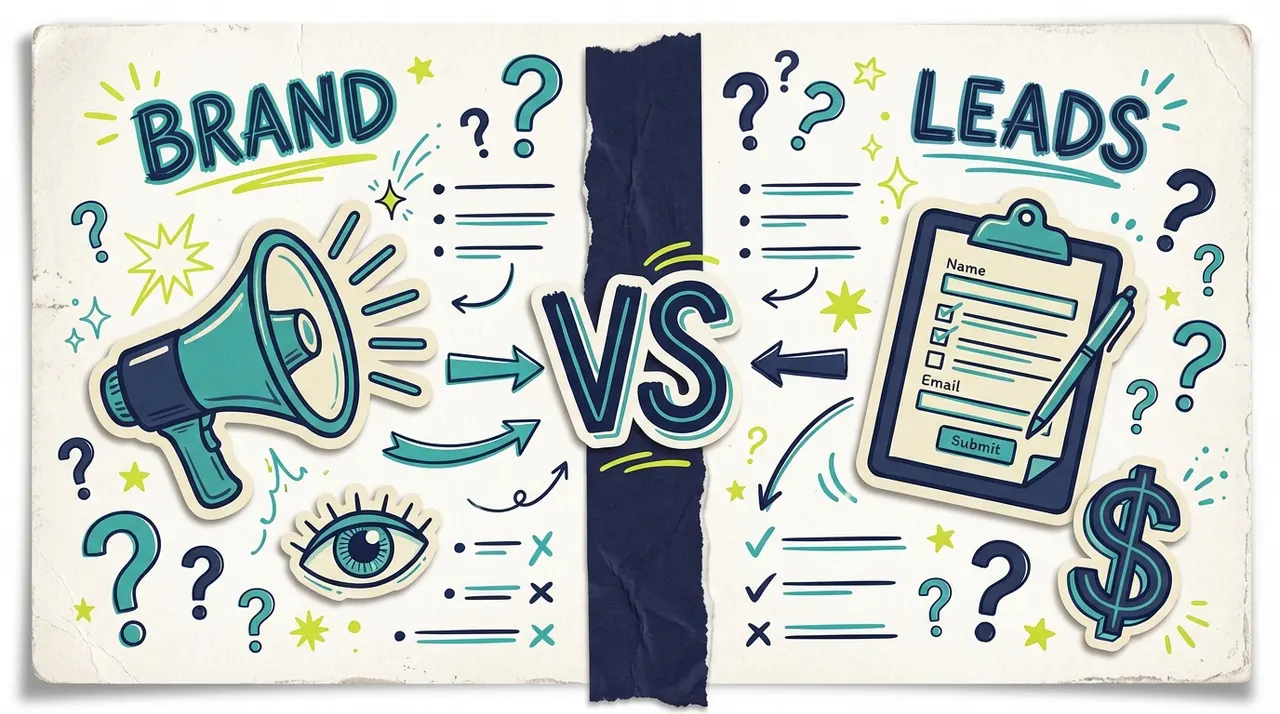
Every small business owner faces the same marketing dilemma: should you spend money getting your name out there, or focus on driving immediate sales? It's the classic tension between playing the long game and paying this month's bills.
Framing brand awareness and lead generation as opposites misses the point entirely. They work together, and understanding when to emphasize each can transform your marketing results. Let's break down what matters for small businesses trying to grow.
What's the Difference Between Brand Awareness and Lead Generation?
Before diving into strategy, let's get clear on definitions.
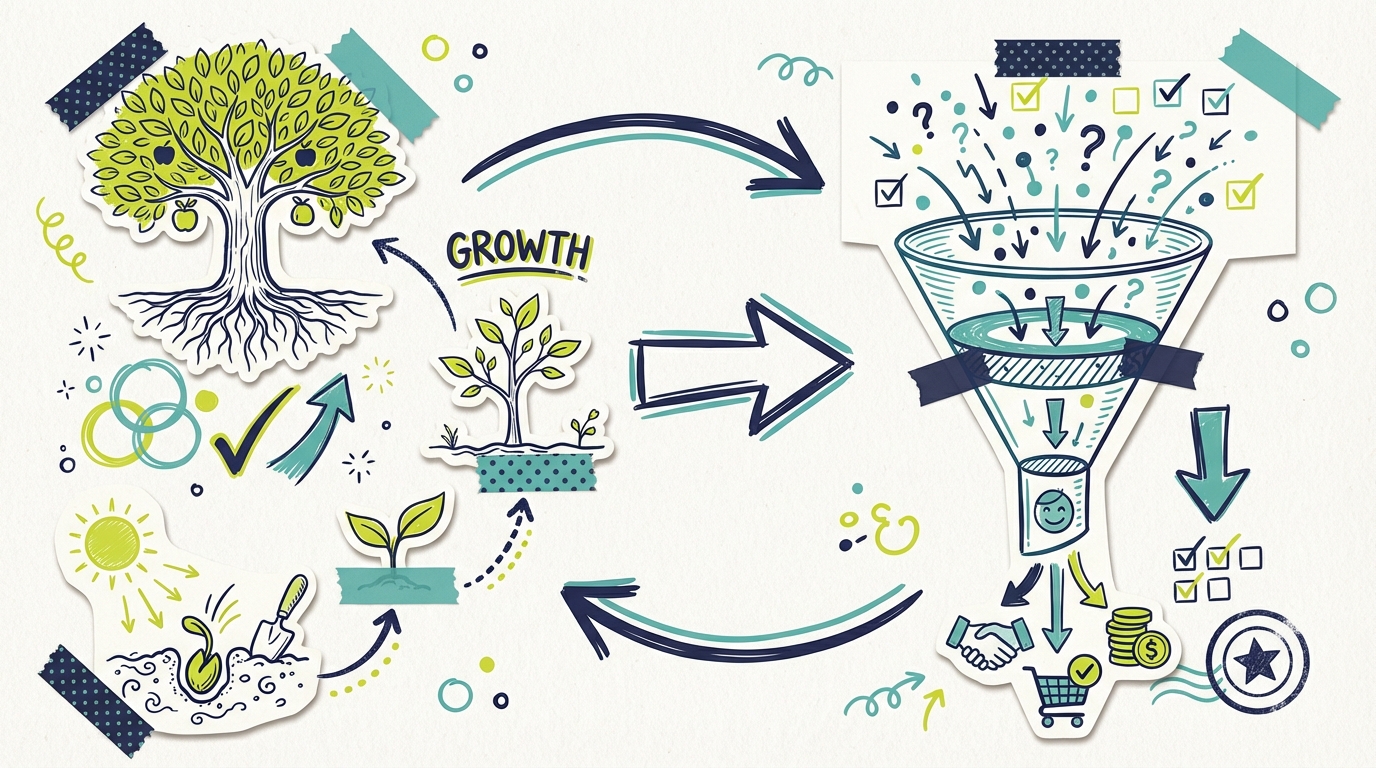
Brand awareness is about making people know you exist. It's the work you do so that when someone needs what you sell, your business comes to mind. You're not asking for a sale yet. You're planting seeds.
Lead generation is about capturing interest from people ready to buy. You're asking for contact information, scheduling consultations, or driving direct purchases. It's harvest time.
Here's a simple way to think about it:
Brand Awareness:
"Have you heard of us?"
Building familiarity
Long-term investment
Hard to measure directly
Makes future marketing cheaper
Lead Generation:
"Ready to talk?"
Capturing intent
Short-term revenue
Easy to track
Provides immediate ROI
The metrics differ too. Brand awareness shows up in things like direct website traffic, branded search volume, and social mentions. Lead generation shows up in form submissions, phone calls, and sales.
The Case for Lead Generation First
There's a strong argument for prioritizing lead generation, especially for newer businesses or those with tight cash flow.
You need revenue to survive. A beautiful brand means nothing if you can't make payroll. Lead generation puts money in the register now, which keeps the lights on while you build for the future.
It's easier to measure. When you run a lead gen campaign, you know exactly what you got for your money. Ten leads for $500? That's $50 per lead. This clarity helps you make better decisions faster.
You learn what works. Lead generation campaigns teach you which messages resonate, which audiences convert, and which offers drive action. This intelligence informs everything else you do.
For a business that's struggling to find customers or facing a slow season, focusing on lead generation makes sense. You need wins on the board before you can think about the bigger picture.
The Case for Brand Awareness First
But here's where many small businesses go wrong: they focus exclusively on lead generation and wonder why it gets harder and more expensive over time.
Cold audiences are expensive. When nobody knows who you are, every lead costs more. You're asking strangers to trust you with their contact information (or their money). That's a big ask.
Recognition builds trust. Research from the Ehrenberg-Bass Institute shows that brand awareness is the single biggest driver of market share. People buy from businesses they recognize. It's that simple.
The "I've seen them before" effect. When someone sees your ad on TV, then notices your truck in the neighborhood, then gets a recommendation from a friend, you're no longer a stranger. By the time they need your services, you're already on their mental shortlist.
It compounds over time. Every dollar you spend on awareness makes your future marketing more effective. A study by the Institute of Practitioners in Advertising found that campaigns balancing brand building with activation delivered 3x better ROI over three years compared to activation-only approaches.
Why the Best Strategy Uses Both
The real answer isn't "either/or." It's "both, but in the right proportion."
Think of it like farming. You need to plant seeds (brand awareness) and harvest crops (lead generation). If you only harvest, eventually there's nothing left to pick. If you only plant, you'll starve waiting for the harvest.
Here's how they work together:
Awareness warms up your audience. Someone sees your TV commercial. They don't need you right now, but they file you away mentally.
Recognition improves response rates. Two weeks later, that same person sees your search ad. Because they recognize your name, they're more likely to click.
Familiarity increases conversion. When they land on your website, they already feel like they know you. They're more likely to fill out the form or call.
Trust reduces price sensitivity. Known brands can often charge more because customers perceive less risk.
This is why businesses that invest in brand awareness typically see their lead generation costs drop over time, while those focused purely on lead gen often see costs rise.
How to Allocate Your Budget
So how much should go to each? There's no universal answer, but here are guidelines based on your situation:
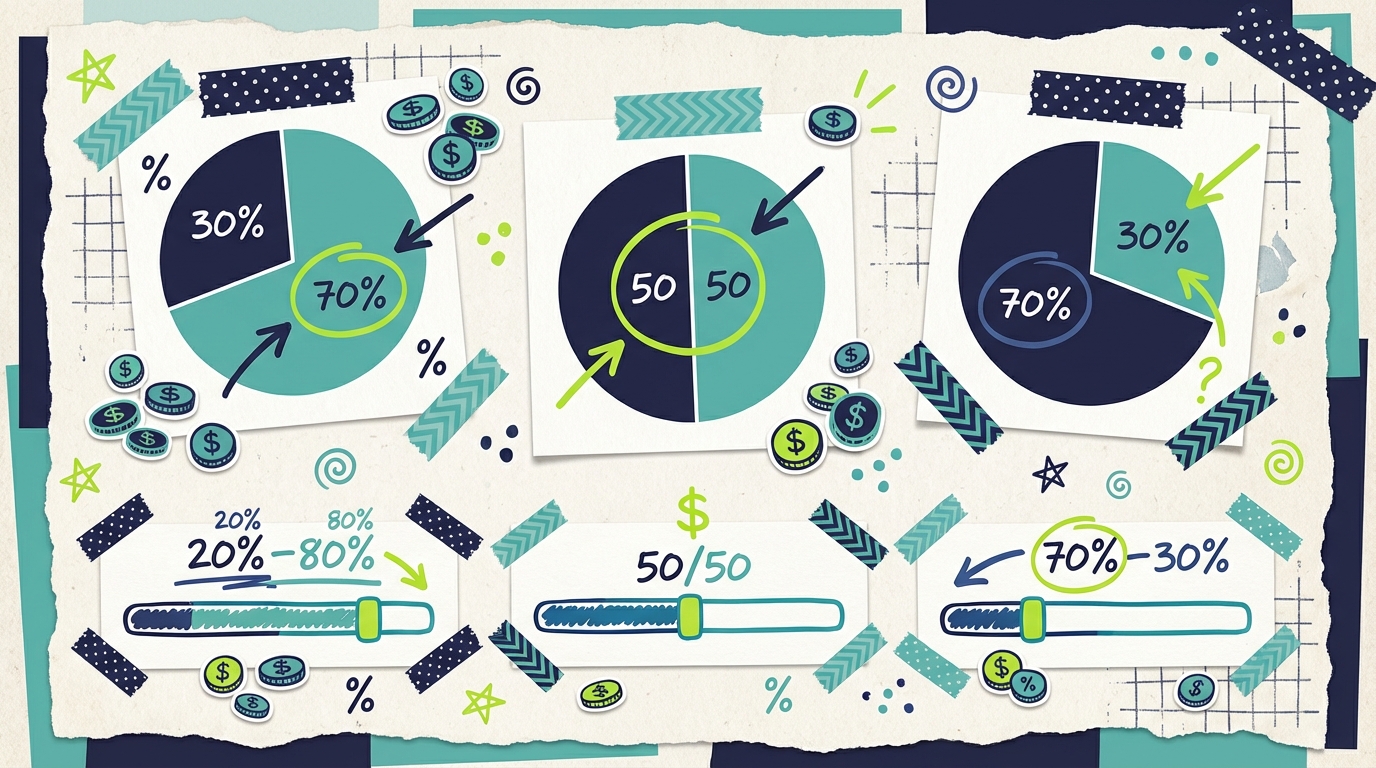
For established businesses with steady cash flow: Consider a 60/40 split favoring brand awareness. You have the runway to invest in long-term growth, and your lead generation is probably already working. Building awareness will make everything else more efficient.
For newer businesses or those needing quick wins: Consider a 70/30 split favoring lead generation. You need to prove the model works and generate revenue. But don't skip awareness entirely. Even 30% invested in getting your name out there will pay dividends.
For seasonal businesses: Shift toward lead generation during your peak season and toward brand awareness during the off-season. Use slow periods to plant seeds you'll harvest when demand returns.
For businesses launching something new: Lead with awareness to create buzz, then shift to lead generation once people know what you're offering. Nobody can buy something they've never heard of.
The key is intentionality. Know why you're spending each marketing dollar and what you expect it to accomplish.
Brand Awareness Channels That Work for SMBs
Not every awareness channel requires a massive budget. Here are options that work at small business scale:
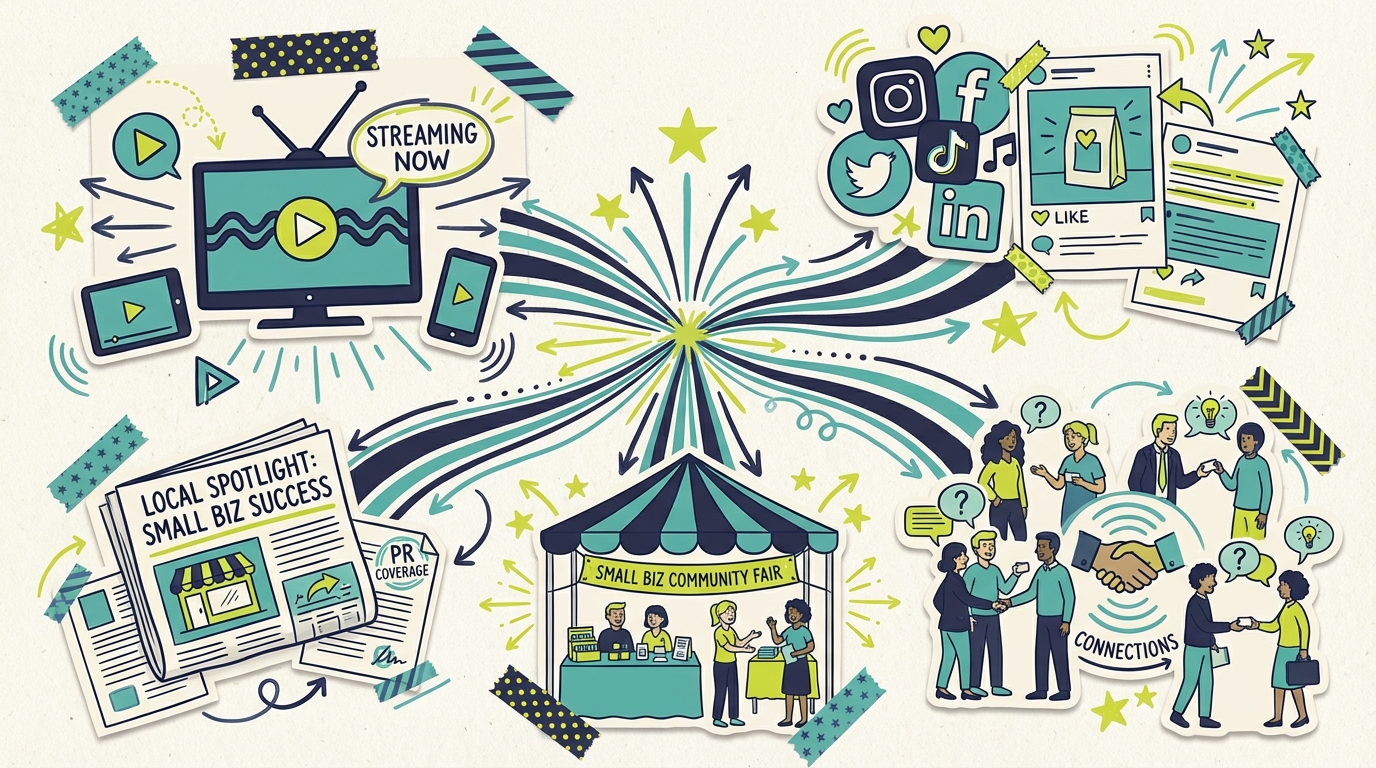
TV and streaming advertising might surprise you. Thanks to connected TV, you can now run ads on networks like NBC, Hulu, and ESPN starting at just $50. TV advertising builds trust faster than digital because viewers perceive TV advertisers as more established and credible. When a customer sees you on the same screen as national brands, you gain instant legitimacy.
Consistent social media presence costs nothing but time. You don't need to go viral. Just show up regularly so people in your community see your name. Share helpful content, respond to comments, and let your personality show through.
Community involvement builds awareness and goodwill simultaneously. Sponsor a little league team. Set up a booth at the local festival. Partner with neighboring businesses on joint promotions. These activities put your name in front of local audiences who are likely to need your services.
Local PR can generate significant exposure for free. Local news outlets constantly need stories. Position yourself as an expert source, share interesting business milestones, or tie your business to community events.
Lead Generation Channels That Work for SMBs
When you're ready to capture demand, these channels deliver:
Search advertising catches people actively looking for what you sell. When someone searches "plumber near me" or "best pizza in [your city]," they're ready to buy. Google Ads and similar platforms let you show up exactly when intent is highest.
Email marketing to your existing list is one of the highest-ROI channels available. These people already know you. Regular communication keeps you familiar and drives repeat business.
Referral programs turn happy customers into salespeople. Make it easy and rewarding for customers to recommend you. A simple "refer a friend, you both get $20 off" can generate qualified leads at a fraction of the cost of advertising.
Direct mail still works, especially for local businesses. A well-timed postcard to households in your service area can drive immediate response. The trick is targeting: send to areas where you have satisfied customers who can provide social proof.
Retargeting follows up with people who've already shown interest. Someone visited your website but didn't convert? Show them ads as they browse other sites. This bridges the gap between awareness and action.
Finding Your Balance: A Practical Approach
If you're not sure where to start, try this 90-day experiment:
Month 1: Audit your current marketing. What's working? Where are your customers coming from? What's your cost per lead? Get a baseline.
Month 2: If you've been all lead gen, add a brand awareness component. Try a small TV campaign targeting your local area. Track whether your lead costs start to drop.
Month 3: If you've been all awareness, add a direct response element. Test search ads or a targeted email campaign. Measure how awareness activities are impacting conversion rates.
The data will tell you what balance works for your specific business. Markets differ. Audiences differ. What works for a law firm won't match what works for a pizza shop.
Common Questions Answered
Can I measure brand awareness for a small business? Yes, though not as precisely as lead generation. Track direct website traffic (people typing your URL), branded search volume (people Googling your business name), "how did you hear about us" responses, and social mentions. Over time, these metrics reveal whether awareness is growing.
How long before brand awareness pays off? Typically 3-6 months before you see measurable impact on other marketing metrics. That's why businesses with cash flow pressure often prioritize lead gen first. But even small, consistent awareness investments compound over time.
Is TV advertising really affordable for small businesses? Connected TV has changed the game. Platforms like Adwave let you run professionally produced commercials on premium networks starting at $50. You're reaching the same audiences as national brands, just at local scale.
What if I can only afford one or the other? If you can only afford lead generation, do that. Revenue keeps you in business. But as soon as you have breathing room, start allocating something to awareness. Even 20% of your budget will help reduce lead costs over time.
Should B2B businesses prioritize differently than B2C? B2B typically has longer sales cycles and more considered purchases, which often means awareness matters even more. Decision-makers need to see your name multiple times before they're ready to engage. The ratio might be similar, but the timeline for seeing results is usually longer.
The Bottom Line
Brand awareness and lead generation aren't competing strategies. They're complementary pieces of a complete marketing approach. Awareness makes lead generation more effective. Lead generation provides the revenue that funds awareness building.
For most small businesses, the answer isn't to choose one over the other. It's to be intentional about both, adjusting the balance based on your current situation, cash flow, and growth stage.
Start where you need to. If you need customers now, focus on lead generation. But don't forget to plant seeds for the future. And if you've been grinding on lead gen for years and watching costs climb, it might be time to invest in building brand awareness through channels that build real trust.
The businesses that thrive long-term are the ones that figure out how to do both.
Ready to build brand awareness on the biggest screen in your customers' homes? Create your first TV ad in minutes and start running on premium streaming networks for just $50.


