Most dental practices rely on the same playbook: a Google listing, maybe some postcards, and hoping referrals keep the schedule full. That works until it doesn't. New practices open down the street, insurance networks shift, and suddenly the phone isn't ringing like it used to.
Dental advertising doesn't need to be complicated or expensive. But it does need to be intentional. The practices filling their chairs consistently in 2026 are the ones showing up across multiple channels, not just one.
Let's break down the advertising options that work for dental practices, what they cost, and how to prioritize your budget whether you're a solo practitioner or running multiple locations.
Google Ads and Local Search
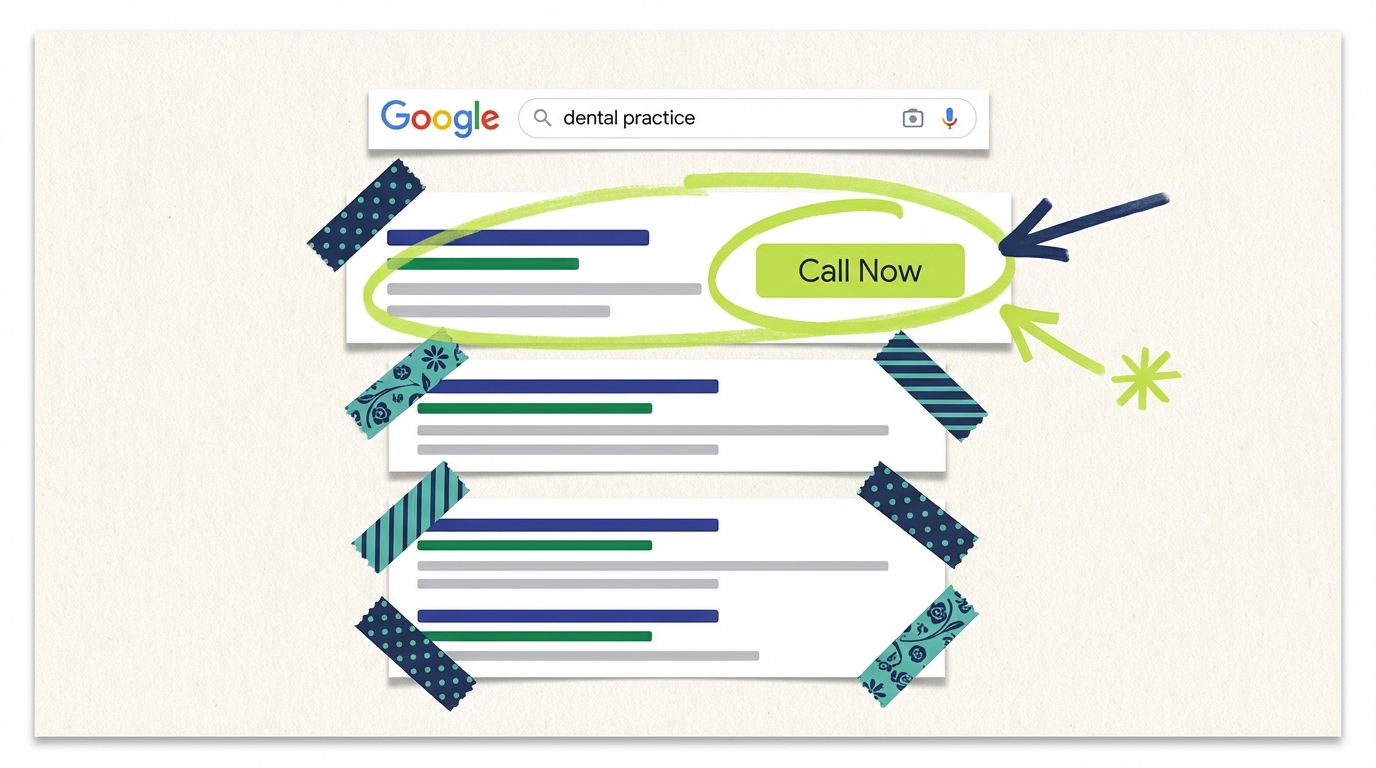
When someone searches "dentist near me" or "emergency tooth extraction [city]," they need a dentist now. Google Ads puts your practice at the top of those results before organic listings and Maps.
For dental practices, the highest-converting Google Ads campaigns target service-specific keywords rather than generic terms. "Dental implants [city]," "Invisalign consultation near me," and "emergency dentist open Saturday" all signal high intent and match patients to services with strong revenue per appointment.
According to WordStream, the average CPC for dental keywords is $6.69, higher than many industries because each new patient is worth $500 to $1,000+ in first-year revenue. That math makes even expensive clicks profitable when your landing pages convert.
Google Local Services Ads (LSAs) are another option worth considering. These "Google Guaranteed" listings appear above standard ads and charge per lead rather than per click, which reduces wasted spend on people who click but never call.
Your Google Business Profile is the foundation underneath all of this. Complete profiles with photos of your office, team, and before/after results (with patient consent) get significantly more engagement. Posting weekly updates about services, promotions, or dental tips keeps your profile active in Google's eyes.
What it costs: $1,000 to $3,000/month for Google Ads. LSAs charge $25 to $75 per lead. Google Business Profile optimization is free.
Best for: Capturing patients actively searching for dental services, promoting high-value procedures like implants and cosmetic work.
Limitations: High CPCs in competitive metro areas. Requires ongoing management and optimization. Click fraud can inflate costs.
Meta Advertising (Facebook and Instagram)
Social media advertising for dental practices is less about capturing immediate demand and more about planting seeds. Most people don't wake up thinking about scheduling a dental appointment, but a well-timed ad showing off a smile transformation or a new-patient special can move someone from "I should probably go to the dentist" to booking.
Facebook and Instagram ads work best for dental practices when they focus on specific offers: new patient specials ($99 exam, X-ray, and cleaning), teeth whitening promotions, Invisalign consultations, or seasonal campaigns. The offer gives people a reason to act now rather than adding "find a dentist" to their endless to-do list.
Video content performs exceptionally well for dental practices. Short clips of the office environment, team introductions, or patient testimonial videos (with consent) build trust before someone ever walks through the door. People choose dentists partly based on whether they feel comfortable, and video communicates that faster than any text ad.
Meta's local targeting lets you reach people within a specific radius of your practice. You can layer on demographics like household income (useful for cosmetic and elective procedures), age ranges, and interests related to health and wellness.
What it costs: $500 to $2,000/month for most single-location practices. New patient acquisition costs through Meta typically run $50 to $150 per booked appointment.
Best for: Promoting new patient specials, building brand awareness in your community, reaching patients for elective and cosmetic procedures.
Limitations: Less effective for emergency services. Requires creative refresh every 4 to 6 weeks. Privacy regulations limit some targeting in healthcare.
TV and Streaming (CTV) Advertising
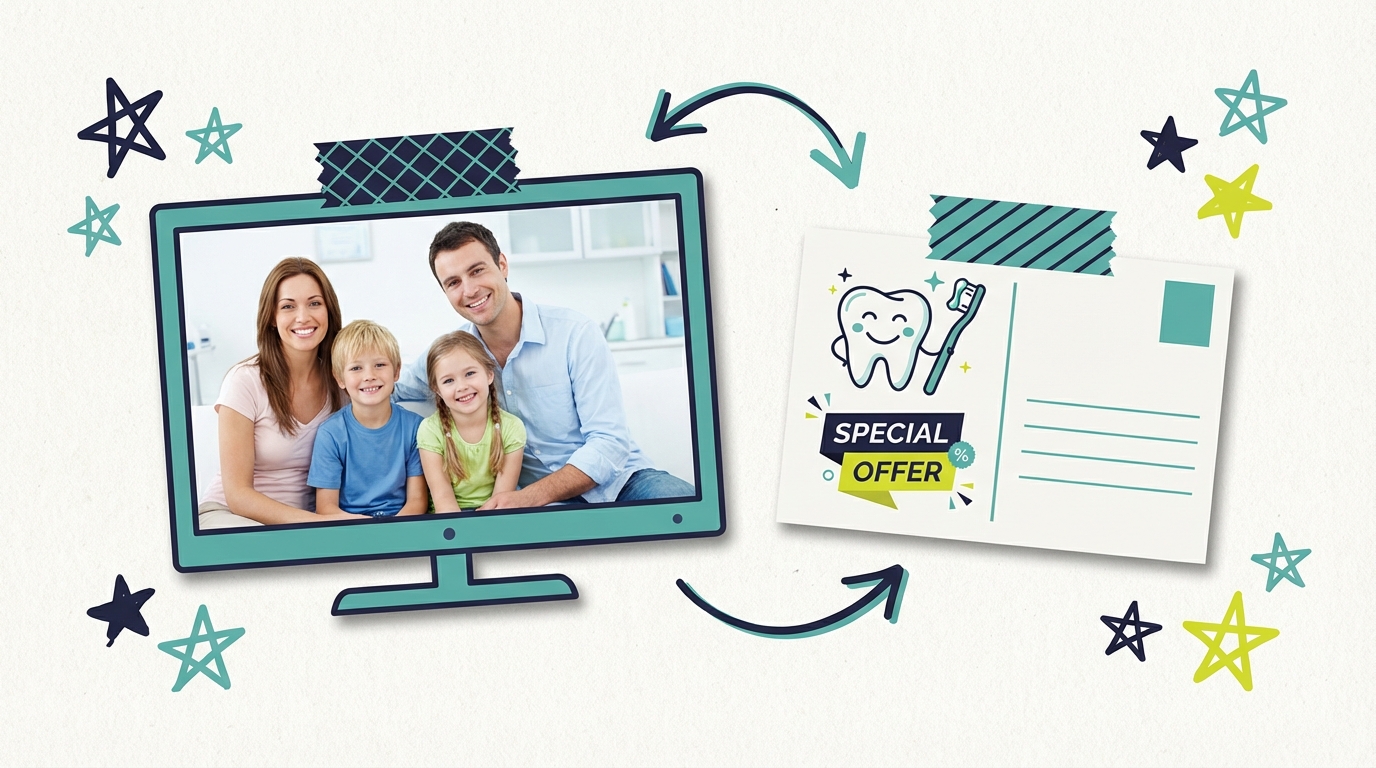
There's a reason dental chains invest heavily in TV. Seeing a dental practice on the big screen creates instant credibility. It says "this is a real, established practice" in a way that a social media ad simply can't replicate.
You don't need a chain's budget to run TV ads anymore. Connected TV advertising through platforms like Adwave lets independent dental practices create professional 30-second commercials and run them on streaming services like Hulu, Peacock, and Tubi, targeting viewers in your specific zip codes.
TV advertising generates 2.2 times more trust than digital display, and trust is everything in healthcare. Patients are choosing someone to work inside their mouth. They want to feel confident in that choice before they pick up the phone. A TV presence helps build that confidence.
The targeting is precise enough to make this practical for local practices. You can reach households within your service area, filter by demographics, and even target health-conscious audiences who are more likely to prioritize preventive care. For a deeper look at TV strategies for dental practices, see our dental practice marketing guide.
What it costs: CTV CPMs range from $15 to $35. Adwave campaigns start at just $50. A monthly budget of $200 to $800 gives a single-location practice meaningful local reach.
Best for: Building local brand recognition, establishing trust and credibility, reaching patients who haven't started searching yet.
Limitations: Brand-building channel rather than direct response. Results show up as increased branded search, phone calls, and walk-ins over weeks rather than instantly.
Local SEO and Review Management
For dental practices, local SEO is arguably the highest-ROI long-term investment. When your practice ranks in the Google Map Pack for "dentist [neighborhood]," you're getting free patient leads every day without paying for a single click.
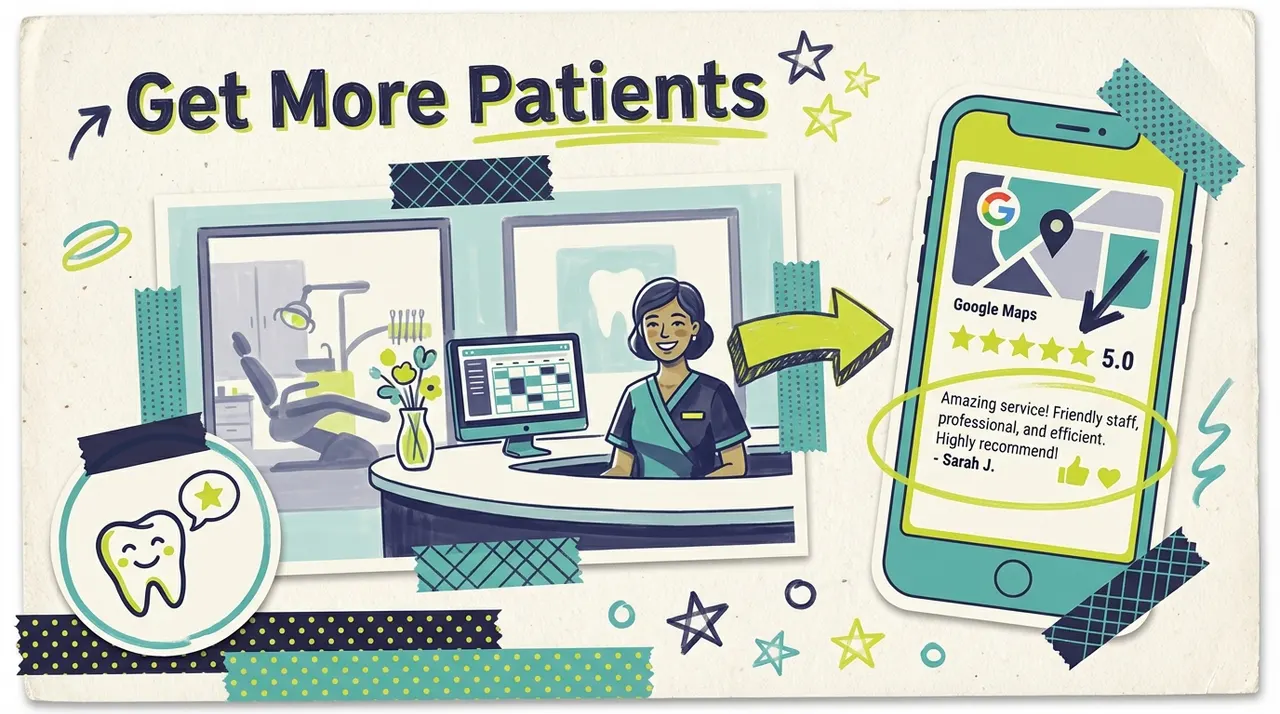
Reviews are the engine of dental local SEO. According to BrightLocal, 87% of consumers read online reviews for local businesses, and healthcare is one of the categories where reviews carry the most weight. A practice with 200 five-star reviews will always outperform one with 15 reviews, regardless of how good the actual dentistry is.
Building a review generation system is straightforward. Train your front desk team to ask patients after positive appointments: "We're glad you had a great experience. Would you mind leaving us a Google review? It really helps other patients find us." Follow up with a text or email containing a direct link to your Google review page. Services like Birdeye or Podium automate this process and can generate 20 to 50 new reviews per month.
Beyond reviews, make sure your practice information is consistent across every directory: Healthgrades, Zocdoc, Vitals, Yelp, and your state dental association's listing. Inconsistent information (wrong phone number on Yelp, old address on Healthgrades) confuses Google and hurts your rankings.
What it costs: Free for DIY basics. Review management platforms run $100 to $300/month. Dental SEO specialists charge $1,000 to $2,500/month.
Best for: Sustainable organic visibility, building trust through social proof, capturing "near me" searches.
Limitations: Takes 3 to 6 months to see significant results. Requires consistent ongoing effort.
Direct Mail and Community Marketing
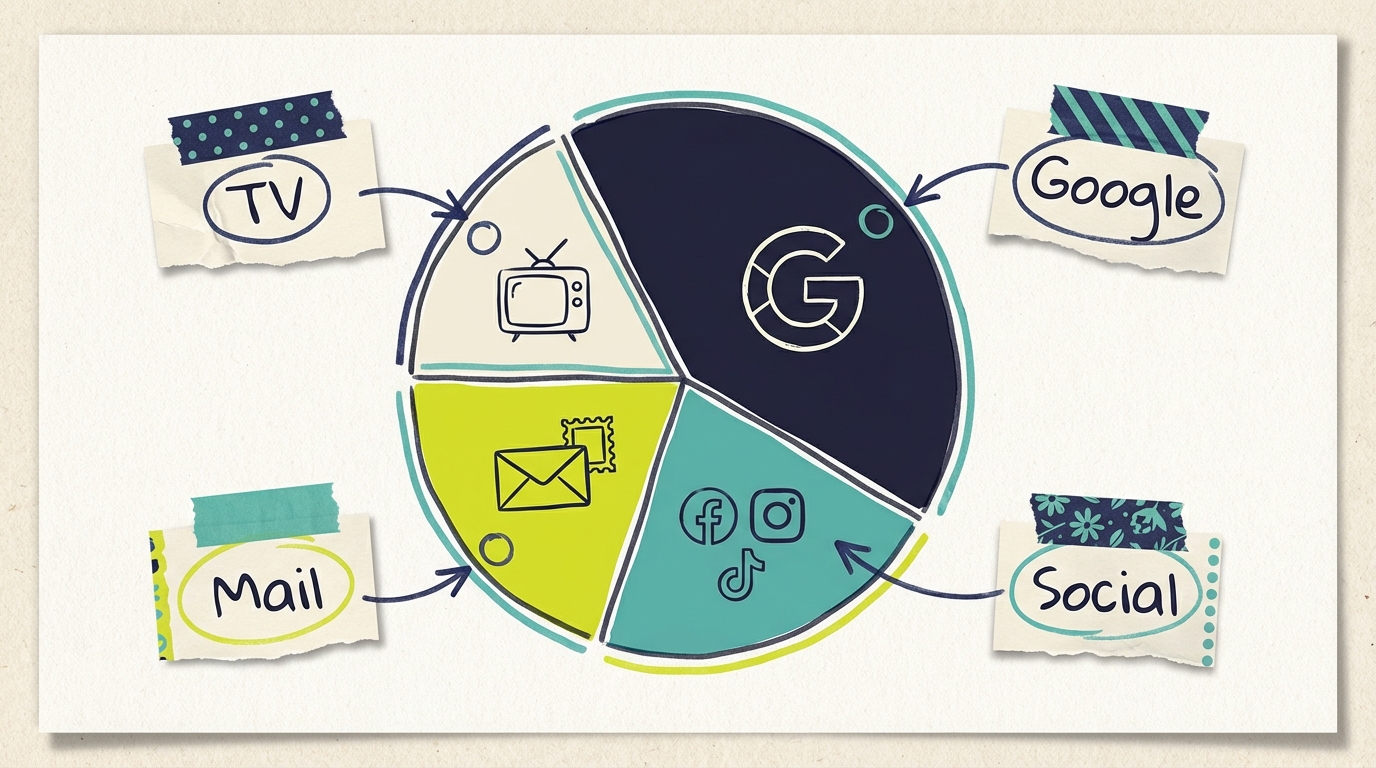
Direct mail continues to work for dental practices, especially for reaching new movers who haven't chosen a local dentist yet. Services like USPS EDDM and new-mover lists from companies like Welcome Wagon or Our Town America let you target households that recently moved to your area.
The most effective dental mailers include a compelling new patient offer, your team's photo (not a stock image), and your Google review count as social proof. Keep the design clean and the offer specific: "$79 New Patient Exam, X-Ray & Cleaning" performs better than "We're accepting new patients."
Community marketing also fits naturally for dental practices. Sponsoring a local youth sports team, setting up a booth at a community health fair, or partnering with schools for dental health month all put your practice name in front of families in a positive context.
What it costs: EDDM mailers run $0.20 to $0.50 per piece. A 5,000-piece targeted mailing costs $1,000 to $2,500. Community sponsorships range from $200 to $1,000.
Best for: Reaching new movers, hyper-local targeting, building community presence.
Limitations: Lower response rates (1% to 3%). Harder to track ROI precisely. Requires consistent repetition for best results.
Referral Programs
Word-of-mouth remains the most trusted form of advertising for dental practices. Formalizing a referral program turns this organic behavior into a reliable patient acquisition channel.
The most common structure: existing patients receive a credit ($25 to $50 toward their next visit) for each new patient they refer. Some practices offer both the referrer and the new patient an incentive, which increases participation. The key is making the program easy. Give patients referral cards they can hand to friends, and follow up with a thank-you when a referral books.
Referral programs cost almost nothing to run and produce patients who tend to stay longer and accept more treatment, because they were pre-sold by someone they trust.
What it costs: $25 to $50 per successful referral in patient credits. Minimal overhead.
Best for: Acquiring high-quality patients with strong lifetime value. Low cost, high trust.
Limitations: Unpredictable volume. Can't scale as quickly as paid channels.
Email Marketing for Patient Retention
Acquiring a new patient costs 5 to 10 times more than retaining an existing one. Email marketing helps dental practices stay familiar with current patients and bring them back for recall appointments, elective procedures, and seasonal promotions.
The most important emails for dental practices:
Appointment reminders (automated, 48 hours and 24 hours before): Reduces no-shows by 30% to 50%.
Recall reminders (automated, when patients are due for cleanings): The single highest-value email for most practices. Patients who fall off their 6-month recall schedule often don't come back for years unless prompted.
Treatment follow-up (sent after consultations for elective work): Patients who were quoted for implants, veneers, or Invisalign often need 2 to 3 touches before committing. A follow-up email with FAQ answers and financing options keeps the conversation going.
Seasonal promotions (monthly or quarterly): Whitening specials before wedding season, back-to-school checkups in August, end-of-year "use your insurance benefits" campaigns.
Most dental practice management software (Dentrix, Eaglesoft, Open Dental) integrates with email platforms or has built-in communication tools. If yours doesn't, Mailchimp or Patient Prism can fill the gap.
What it costs: $20 to $200/month depending on platform and list size. Many practice management systems include basic email at no extra cost.
Best for: Reducing no-shows, reactivating lapsed patients, promoting elective procedures.
Limitations: Only reaches existing patients. Requires clean, maintained patient email lists.
Channel Comparison for Dental Practices
Building Your Dental Advertising Budget
New practice (first 1-2 years): Prioritize Google Ads and local SEO from day one. These capture patients who are already looking. Set aside $1,500 to $2,500/month for Google, invest in review generation, and start a CTV campaign to build local awareness faster. Direct mail to new movers in your area fills the gap while organic rankings build.
Established practice (steady but wants growth): Add Meta advertising to promote specific services (whitening, Invisalign, implants) and test CTV for broader brand awareness. At this stage, your reviews and local SEO should be generating a baseline of patients. Paid channels accelerate growth on top of that foundation.
Multi-location practice: Run location-specific campaigns across Google, Meta, and CTV. Each location should have its own Google Business Profile, review strategy, and targeted ad campaigns. CTV's geographic targeting is especially valuable here because you can run different ads in different markets.
Common questions answered
What's the best advertising channel for a new dental practice? Google Ads targeting service-specific keywords gives you the fastest path to new patients. Combine that with an optimized Google Business Profile and an aggressive review generation strategy. These three things together will generate patient flow within the first month while you build longer-term channels.
How much should a dental practice spend on advertising? Most dental marketing experts recommend 5% to 8% of revenue for established practices and 10% to 15% for new practices in their first two years. For a practice collecting $75,000/month, that's $3,750 to $6,000/month across all channels.
Is TV advertising worth it for a solo dental practice? Yes, especially with CTV. For as little as $200/month, you can run a professional TV ad targeting households in your zip code. The credibility boost from being "on TV" is disproportionate to the cost. Patients mention it at check-in, and it differentiates you from competitors who only advertise on Google and Facebook.
How do I get more patient reviews? Build asking into your workflow. The best time is right after a positive appointment, when the patient is still in a good mood. Use a follow-up text or email with a direct Google review link within 2 hours of their visit. Review management platforms automate this and can increase your monthly review volume 5x to 10x.
Should I advertise on Yelp as a dentist? Claim your free profile and keep it updated, but be cautious with Yelp's paid advertising. Results vary widely by market. In some cities, Yelp is a significant discovery platform for dentists; in others, Google and Healthgrades dominate. Test with a small budget before committing.