
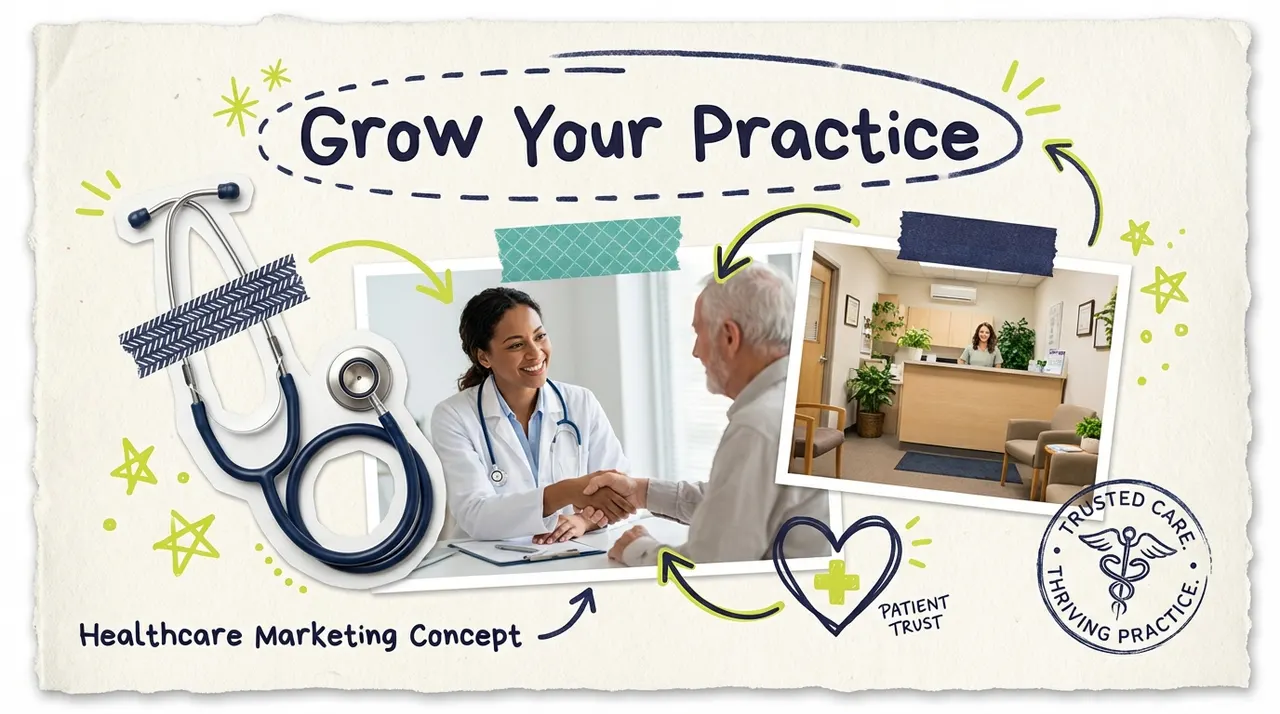
Small healthcare practices face a unique marketing challenge. You need to attract new patients while maintaining the trust and professionalism that medical services demand. Flashy tactics that work for retail or restaurants can feel inappropriate for a doctor's office, dental practice, or therapy clinic.
Effective healthcare marketing doesn't require compromising your professional image. It requires understanding what drives patient decisions and meeting potential patients where they already are.
This guide covers proven marketing strategies for small healthcare practices, from building your online presence to advertising approaches that generate new patient appointments while maintaining the credibility your profession requires.
Understanding Healthcare Patient Acquisition

Before diving into tactics, understand how people choose healthcare providers.
The Patient Decision Journey
Trust is everything. Healthcare decisions involve vulnerability. Patients share personal information, allow physical examinations, and follow treatment recommendations. They need to trust you before they'll book that first appointment.
Research happens online first. Even patients who ultimately choose based on referrals verify their choices online. They read reviews, check credentials, and evaluate your website before calling.
Insurance and convenience matter. Practical factors like insurance acceptance, location, and availability often determine the final decision between otherwise similar providers.
Relationships drive retention. Once patients trust you, they stay. Healthcare marketing is heavily weighted toward acquisition because retention happens naturally through good care.
What Makes Healthcare Marketing Different
Regulatory constraints. HIPAA limits how you can use patient information for marketing. Advertising claims must be carefully worded to avoid inappropriate promises.
Professional expectations. Patients expect healthcare providers to seem professional, not salesy. Marketing that feels too aggressive can hurt credibility.
High lifetime value. A single new patient relationship can generate thousands in revenue over years. This justifies significant acquisition investment.
Word of mouth amplification. Happy patients refer friends and family. Your marketing doesn't just acquire patients directly; it seeds referral networks.
Building Your Online Foundation
Before spending on advertising, ensure your online presence converts the visitors you'll attract.
Website Essentials
Mobile optimization is mandatory. Most healthcare searches happen on phones. If your site doesn't work well on mobile, you're losing patients before they even consider you.
Clear service descriptions. Explain what you treat, what procedures you offer, and what makes your approach different. Patients need to understand if you can help them.
Provider profiles build trust. Show your credentials, experience, and personality. Patients want to know who they'll be seeing before they book.
Easy appointment booking. Online scheduling has become expected. If patients have to call during business hours to book, you're creating unnecessary friction.
Insurance information upfront. List accepted insurance plans prominently. This practical information determines whether many patients will consider you at all.
Google Business Profile Optimization
Your Google Business Profile often appears before your website in local searches. Optimize it thoroughly.
Complete every field. Business hours, services, insurance accepted, accessibility features. Google rewards completeness with better visibility.
Add photos regularly. Show your office, staff, and equipment. Visual content helps patients imagine visiting your practice.
Respond to all reviews. Thank positive reviewers. Address negative reviews professionally and offer to resolve concerns offline.
Post updates weekly. Google Business posts keep your profile fresh and give you another channel to communicate with potential patients.
Review Generation Strategy
Reviews heavily influence healthcare decisions. Patients trust other patients' experiences.
Ask systematically. Request reviews from satisfied patients after positive interactions. Most happy patients will review if asked directly.
Make it easy. Provide direct links to your Google review page. The fewer steps required, the more reviews you'll receive.
Respond to everything. Responding shows you care about patient feedback. It also gives you opportunity to address concerns publicly.
Don't incentivize. Offering rewards for reviews violates most platform policies and can backfire if discovered.
Search Engine Optimization for Healthcare

When someone searches "dentist near me" or "back pain doctor," you want to appear in results.
Local SEO Fundamentals
Location pages matter. If you serve multiple areas, create pages optimized for each. "Pediatric dentist in [neighborhood]" captures local searches.
Consistent NAP information. Your name, address, and phone number should be identical everywhere online. Inconsistencies hurt local rankings.
Local directory listings. Claim and optimize profiles on Healthgrades, Zocdoc, Vitals, and other healthcare directories. These often rank well for healthcare searches.
Schema markup. Technical markup helps search engines understand your practice details. Implement medical practice schema on your website.
Content That Attracts Patients
Answer common questions. What conditions do you treat? What should patients expect during procedures? What insurance do you accept? Create content addressing these questions.
Symptom-based content. People search symptoms before they search for providers. Content addressing common symptoms can capture patients early in their journey.
Procedure explanations. Detailed information about procedures you offer helps patients understand their options and positions you as an expert.
Avoid medical advice liability. Include appropriate disclaimers. Content should educate and encourage appointments, not replace professional consultation.
Paid Advertising for Healthcare Practices
Organic strategies take time. Paid advertising delivers faster results when you need new patients now.
Google Ads for Healthcare
Search ads capture intent. When someone searches "emergency dentist near me," they need help now. Search ads put you in front of high-intent patients.
Location targeting is essential. Focus ads on your realistic service area. Healthcare is local; don't pay for clicks from people who won't travel to your practice.
Ad extensions add value. Use location extensions, call extensions, and sitelinks to provide more information and ways to connect.
Landing pages matter. Don't send ad traffic to your homepage. Create specific landing pages that match search intent and make booking easy.
Social Media Advertising
Facebook and Instagram reach local audiences. Demographic and geographic targeting lets you reach potential patients in your area.
Educational content performs well. Ads that provide value rather than just promoting your practice generate better engagement and perception.
Retargeting keeps you visible. Show ads to people who visited your website but didn't book. Stay familiar as they continue considering options.
Platform policies restrict some healthcare advertising. Review platform guidelines carefully. Some health-related claims and targeting options are restricted.
Television Advertising
TV advertising builds credibility that digital advertising struggles to match. For healthcare practices, this credibility translates directly to patient trust.
Streaming TV reaches local audiences precisely. Connected TV advertising lets you target specific geographic areas and demographics without wasting budget on viewers outside your service area.
Video showcases your practice. Show your facility, introduce your providers, and communicate your approach to care. Patients can see what to expect before they visit.
Premium environment enhances perception. Appearing on trusted networks like NBC, ESPN, and Hulu positions your practice alongside established brands.
Adwave makes TV accessible for practices of any size, with campaigns starting at just $50. AI generates professional commercials from your existing website and photos, eliminating traditional production costs.
Referral Marketing Strategies

Referrals remain the most trusted source of new patients. Amplify this channel strategically.
Patient Referral Programs
Ask for referrals directly. Satisfied patients often don't think to refer unless prompted. A simple ask can significantly increase referral volume.
Make referring easy. Provide referral cards, shareable links, or simple instructions. Remove friction from the referral process.
Thank referrers personally. Acknowledgment encourages future referrals. A personal note carries more weight than automated responses.
Be careful with incentives. Some jurisdictions restrict patient referral incentives. Check regulations before offering rewards.
Professional Referral Networks
Build relationships with complementary providers. Primary care doctors refer to specialists. Specialists refer to other specialists. Dentists refer to orthodontists. Identify providers who serve the same patients but don't compete with you.
Make referrals reciprocal. Refer patients to other providers when appropriate. Referral relationships work best when they flow both directions.
Provide excellent communication. When you receive referrals, keep referring providers informed about outcomes. Good communication encourages continued referrals.
Consider formal referral agreements. Some practices establish formal relationships with referral partners, though these must comply with anti-kickback regulations.
Community Engagement and Events
Local presence builds awareness and trust within your community.
Health Education Events
Host educational seminars. Topics relevant to your specialty attract interested community members. A sleep apnea seminar attracts people with sleep problems; a nutrition workshop attracts people concerned about diet.
Partner with community organizations. Schools, senior centers, employers, and community groups often welcome health education. These partnerships expand your reach.
Offer free screenings. Blood pressure checks, dental screenings, or posture assessments provide value while introducing your practice to potential patients.
Local Sponsorships
Support community events. Youth sports teams, charity runs, and local festivals offer sponsorship opportunities that build name recognition.
Choose relevant causes. Sponsorships aligned with your specialty resonate more strongly. A pediatric dentist sponsoring youth sports makes sense; a cardiologist sponsoring a heart health walk connects naturally.
Maximize visibility. Ensure sponsorships include meaningful exposure. Logo placement, booth presence, or speaking opportunities increase value.
Email Marketing for Patient Engagement
Email maintains relationships with existing patients and nurtures prospects who aren't ready to book.
Patient Newsletter Best Practices
Provide genuine value. Health tips, practice updates, and seasonal reminders give patients reasons to read your emails.
Maintain appropriate frequency. Monthly or quarterly newsletters keep you familiar without overwhelming inboxes.
Segment when possible. Different content resonates with different patients. Families with children care about different topics than seniors.
Include clear calls to action. Every email should make it easy to book appointments, ask questions, or take other desired actions.
Appointment Reminders and Follow-ups
Reduce no-shows with reminders. Automated reminders via email and text significantly reduce missed appointments.
Follow up after visits. Post-appointment emails can gather feedback, encourage reviews, and schedule follow-up care.
Reactivation campaigns. Reach out to patients who haven't visited in a while. Many simply forgot to schedule their next appointment.
Measuring Healthcare Marketing Results
Track what matters to optimize your marketing investment.
Key Metrics
New patient appointments. The ultimate measure of marketing success. Track new patients by source when possible.
Cost per new patient. Total marketing spend divided by new patients acquired. Compare across channels to optimize allocation.
Patient lifetime value. Understanding long-term patient value justifies appropriate acquisition investment.
Review volume and rating. Online reputation directly affects new patient acquisition. Monitor trends over time.
Attribution Challenges
Ask every new patient. "How did you hear about us?" provides directional information, though patients often credit only one touchpoint.
Track phone calls. Call tracking numbers for different marketing channels reveal which efforts generate calls.
Monitor website analytics. Traffic sources, popular pages, and conversion paths reveal how patients find and evaluate you.
Common Questions Answered
What is the best marketing for small healthcare practices? The most effective healthcare marketing combines a strong online presence (website, Google Business Profile, reviews) with targeted advertising. For practices ready to grow faster, TV advertising builds credibility that accelerates patient acquisition. The best mix depends on your specialty, competition, and growth goals.
How much should a medical practice spend on marketing? Industry benchmarks suggest 2-5% of revenue for established practices, with newer practices or those in competitive markets potentially investing more. A practice generating $500,000 annually might allocate $10,000-25,000 to marketing. Start conservatively and scale based on results.
Does TV advertising work for doctors and dentists? Yes. Healthcare practices benefit significantly from TV's credibility-building effect. Patients choosing providers want to trust who they'll see, and TV advertising builds that trust effectively. Streaming TV makes television accessible at budgets starting as low as $50, eliminating the barrier that previously limited TV to large practices.
How can healthcare practices get more patient reviews? Ask systematically. Train staff to request reviews from satisfied patients, especially after positive interactions. Make the process easy by providing direct links. Respond to all reviews to show you value feedback. Most patients will review when asked directly by someone they trust.
What marketing restrictions apply to healthcare? HIPAA limits use of patient information for marketing. You cannot use protected health information without explicit authorization. Advertising claims must be accurate and avoid inappropriate promises about outcomes. Some platforms restrict health-related advertising. Consult with a healthcare attorney if you're uncertain about compliance.
The Bottom Line
Effective healthcare marketing builds trust while attracting new patients. The combination of strong online presence, strategic advertising, and community engagement creates sustainable growth for practices of any size.
Start with fundamentals: ensure your website works well, your Google Business Profile is complete, and you're actively generating reviews. Layer advertising on top once your foundation converts the visitors you'll attract.
Television advertising deserves particular consideration for healthcare practices. The credibility boost that comes from TV presence directly addresses patients' need to trust their providers. Streaming TV makes this accessible at budgets that work for small practices.
The practices that grow steadily are those that invest consistently in marketing while delivering excellent patient care. Marketing brings patients in; great care keeps them coming back and referring others.
Ready to build trust with potential patients through TV advertising? Create your first TV ad in minutes and start reaching local patients on premium streaming channels, starting at just $50.


