


February 02, 2026
How to Promote Your Small Business Without Breaking the Bank: A Complete Guide
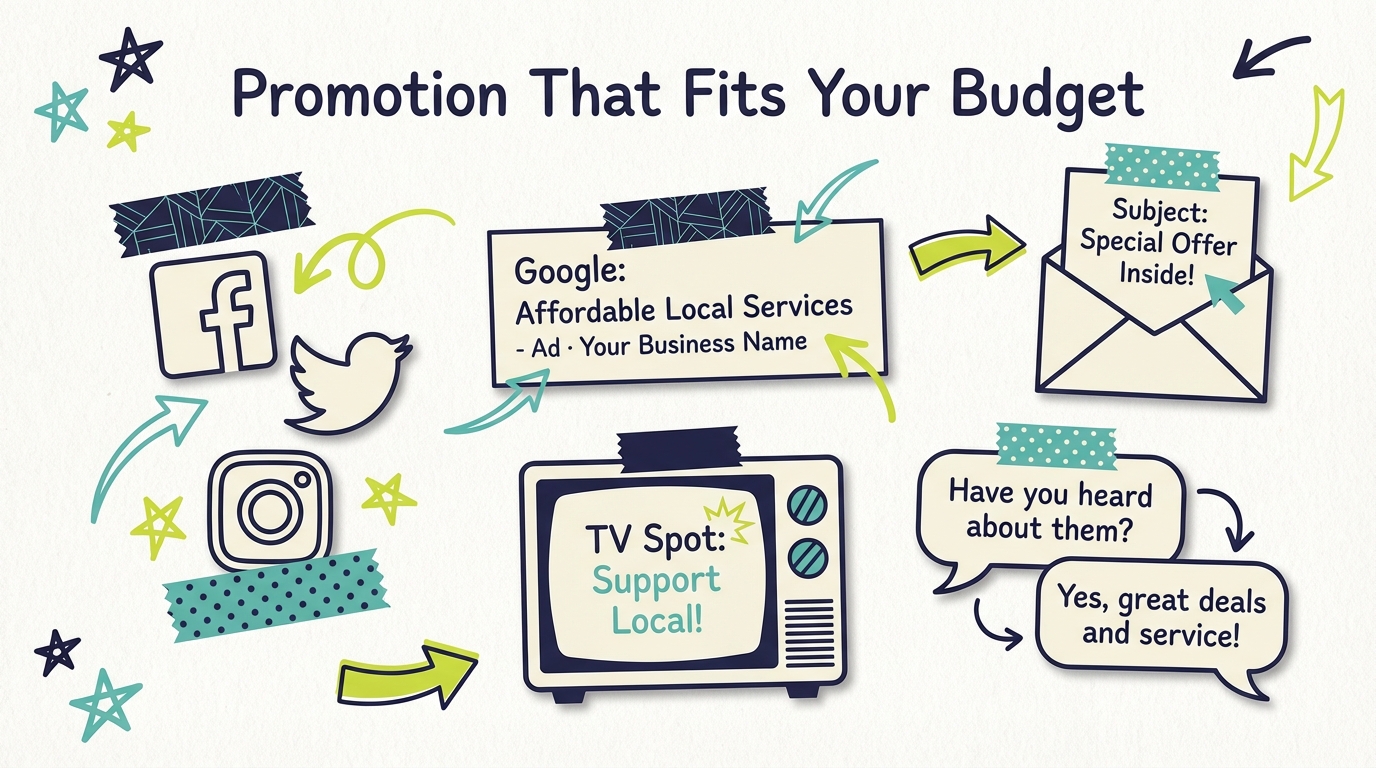
Table of Contents
You started your business because you're great at what you do. But being great isn't enough if nobody knows you exist. The challenge every small business owner faces is simple: how do you get the word out without spending money you don't have?
The good news is that effective promotion doesn't require a massive budget. Some of the most successful small businesses built their customer base through smart, strategic efforts that cost more in time than money. The key is knowing which tactics actually work and which ones waste your limited resources.
This guide covers proven promotion strategies organized by budget level, from completely free tactics to affordable paid options that deliver real results. You'll find specific, actionable steps you can implement this week, not vague advice about "building your brand."
Start with the Free Fundamentals
Before spending a dollar on promotion, make sure you've maximized every free opportunity available. These foundational tactics cost nothing but deliver ongoing returns.
Claim and Optimize Your Google Business Profile
Your Google Business Profile is the single most important free marketing asset for any local business. When someone searches for businesses like yours nearby, this is what determines whether you appear in local results and on Google Maps.
Set up your profile completely. Add your business name, address, phone number, website, and hours. Choose the most accurate primary category and add relevant secondary categories. Write a compelling business description that includes what you do and who you serve. Upload high-quality photos of your location, products, team, and work.
Keep it current. Update hours for holidays. Post weekly updates about specials, events, or news. Respond to every review, positive or negative, within 24-48 hours. Add new photos regularly. Google rewards active profiles with better visibility.
Encourage reviews strategically. Ask satisfied customers to leave reviews. Make it easy by sending a direct link to your review page. Time your requests after positive interactions when customers are most likely to follow through. Aim for a steady stream of reviews rather than sudden bursts that can look suspicious.
A well-optimized Google Business Profile can drive significant traffic without any advertising spend. Many local businesses report that their profile generates more leads than their website.
Build Your Presence on Review Sites
Beyond Google, claim your business on industry-relevant review platforms. For most local businesses, this includes Yelp, Facebook, and any industry-specific directories.
Complete every profile thoroughly. Consistency matters. Use the same business name, address, and phone number across all platforms. Inconsistent information confuses both customers and search engines.
Respond to all reviews. Thank positive reviewers specifically for what they mentioned. Address negative reviews professionally, acknowledge concerns, and offer to make things right. Your responses show potential customers how you handle problems.
Don't ignore niche platforms. Depending on your industry, platforms like Angi, Thumbtack, Houzz, TripAdvisor, or industry-specific directories may be where your customers look first. Prioritize the platforms where your target customers actually search.
Leverage Social Media Strategically
Social media can be a powerful free promotion tool, but only if you approach it strategically. The mistake most small businesses make is trying to be everywhere instead of being excellent somewhere.
Choose one or two platforms and do them well. Where do your customers spend time? B2B services often find LinkedIn most valuable. Visual businesses thrive on Instagram. Local services can build community on Facebook. Younger audiences engage on TikTok. Pick based on where your customers are, not where you personally prefer to spend time.
Post consistently, not constantly. Three quality posts per week beats daily mediocre content. Create a sustainable rhythm you can maintain long-term. Inconsistent posting hurts more than posting less frequently.
Focus on value, not promotion. Share tips, answer common questions, show behind-the-scenes content, and highlight customer successes. The 80/20 rule works well: 80% valuable content, 20% promotional. People follow accounts that help them, not accounts that constantly sell.
Engage authentically. Respond to comments and messages promptly. Comment on posts from local businesses and community members. Join relevant local groups and contribute helpfully without being salesy. Social media rewards genuine interaction.
Create Referral Systems
Word of mouth remains the most trusted form of promotion. Rather than hoping referrals happen naturally, create systems that encourage and reward them.
Ask at the right moment. The best time to ask for referrals is right after a successful transaction when satisfaction is highest. Train yourself and your team to make the ask a natural part of your process.
Make referrals easy. Give customers something to share: business cards, a simple referral link, or a memorable way to describe what you do. Remove friction from the referral process.
Consider referral incentives. Discounts for both the referrer and the new customer, small gifts, or account credits can motivate referrals. Even modest incentives acknowledge the value of word-of-mouth and keep your business top of mind.
Follow up and thank referrers. When someone sends you business, acknowledge it. A handwritten note, a small gift, or even a sincere phone call builds relationships that generate ongoing referrals.
Network in Your Community
Local networking remains one of the most effective free promotion strategies, especially for service businesses.
Join your local chamber of commerce. Membership often costs a modest annual fee but provides access to networking events, directory listings, and referral opportunities. Many chambers offer discounts that offset the membership cost.
Attend industry and community events. Local business mixers, industry meetups, and community gatherings put you in front of potential customers and referral partners. Focus on building relationships rather than making immediate sales.
Form strategic partnerships. Identify complementary businesses that serve your target customers. A wedding photographer can partner with venues, florists, and caterers. A home inspector can partner with real estate agents. These relationships generate mutual referrals without competition.
Volunteer visibly. Supporting local causes you care about builds community goodwill and puts your business name in front of community members. Sponsor a little league team, volunteer at community events, or donate services to local nonprofits.
Low-Cost Digital Marketing Tactics
Once you've maximized free opportunities, these low-cost digital tactics can expand your reach significantly.
Email Marketing
Email remains one of the highest-ROI marketing channels available. With costs starting around $20-50 monthly for basic email platforms, it's accessible for nearly any budget.
Build your list legitimately. Collect emails at point of sale, through your website, and at events. Offer something valuable in exchange for signup: a discount, helpful guide, or exclusive access. Never buy email lists, as purchased lists deliver poor results and can damage your reputation.
Provide value in every email. Share tips, updates, special offers, and content your subscribers actually want. The goal is to make people look forward to your emails, not dread them.
Stay consistent. Whether weekly, bi-weekly, or monthly, maintain a regular schedule. Sporadic emails get forgotten, while consistent communication builds relationships.
Segment and personalize. As your list grows, segment subscribers based on their interests, purchase history, or engagement level. Targeted emails significantly outperform generic blasts.
Content Marketing
Creating helpful content establishes expertise and attracts customers searching for information related to your business.
Start a blog on your website. Answer the questions your customers frequently ask. Write about topics related to your industry that potential customers search for. Each blog post is an opportunity to appear in search results.
Focus on quality over quantity. One excellent, comprehensive article per month outperforms weekly thin content. Write the best resource available on topics relevant to your business.
Optimize for search. Research what terms your potential customers search for. Include relevant keywords naturally in your content. Write compelling titles and meta descriptions. Build internal links between related content.
Repurpose across channels. Turn a blog post into social media content, an email newsletter, a video script, or an infographic. One piece of quality content can fuel multiple channels.
Local SEO
Local search engine optimization helps your business appear when nearby customers search for what you offer.
Optimize your website for local searches. Include your city and service area in page titles, headings, and content. Create separate pages for each location or service area if relevant. Add your address and phone number to your website footer.
Build local citations. List your business in local directories, industry directories, and data aggregators. Ensure your name, address, and phone number are consistent everywhere.
Earn local backlinks. Links from local news sites, business directories, partner businesses, and community organizations signal local relevance to search engines. Sponsor local events, contribute to local publications, or participate in community initiatives that generate links.
Create locally relevant content. Write about local events, news, or topics. Create resources specific to your service area. This signals to search engines that your business serves the local community.
Video Content
Video has become essential for many businesses, and creating basic video content is more accessible than ever.
Start simple. Your smartphone can capture quality video for social media and your website. Good lighting and clear audio matter more than expensive equipment.
Answer common questions. Create short videos addressing frequently asked questions. These work well on social media and can be embedded on your website.
Show your work. Behind-the-scenes content, project showcases, and day-in-the-life videos help customers understand and trust your business.
Go live occasionally. Live video on Facebook, Instagram, or LinkedIn creates urgency and authentic connection. Host Q&A sessions, give tours, or share expertise in real-time.
Affordable Paid Promotion Options
When you're ready to invest in paid promotion, these options deliver the best results for limited budgets.
Google Ads for Immediate Visibility
Google Ads puts your business in front of people actively searching for what you offer. While costs vary by industry, you can start with modest budgets and scale based on results.
Start with high-intent keywords. Focus on searches that indicate someone is ready to buy or hire. "Emergency plumber near me" shows more intent than "how to fix a leaky faucet."
Set geographic limits. Target only the areas you actually serve. There's no point paying for clicks from customers you can't help.
Track conversions carefully. Set up conversion tracking to know which clicks turn into customers. Without this data, you're flying blind.
Start small and test. Begin with a modest daily budget and let campaigns run long enough to gather meaningful data. Adjust based on what's working before increasing spend.
Social Media Advertising
Paid social media can extend your reach beyond your existing followers to reach specific audiences.
Use targeting strategically. Social platforms let you target by location, demographics, interests, and behaviors. The more specific your targeting, the more efficient your spend.
Boost your best organic content. If a post performs well organically, a small boost can extend its reach significantly. This is often more effective than creating ads from scratch.
Focus on one platform. Rather than spreading a small budget across multiple platforms, concentrate your spend where your audience is most active.
Test different formats. Image ads, video ads, carousel ads, and story ads perform differently depending on your business and audience. Test various formats to find what works.
Streaming TV Advertising
Streaming TV advertising has become accessible for small businesses, with budgets starting as low as $50. Your ads appear on premium streaming platforms alongside major brand commercials.
Build credibility through association. Appearing on the same screen as major brands elevates perception of your business. Customers trust businesses they see on TV.
Reach cord-cutters. Traditional cable viewership continues declining while streaming grows. TV advertising through streaming platforms reaches audiences that cable no longer does.
Target locally. Unlike traditional TV, streaming TV advertising allows precise geographic targeting. Focus your budget on the areas you serve without paying to reach irrelevant viewers.
Start small and measure. Platforms like Adwave let you launch campaigns starting at $50 with AI-generated commercials. Test the channel without major commitment.
Local Sponsorships and Events
Modest sponsorship investments can generate significant local visibility.
Sponsor community events. Local festivals, charity runs, school events, and sports leagues often have affordable sponsorship tiers that include signage, program ads, and mentions.
Support youth sports. Sponsoring a little league team or local youth organization provides ongoing visibility throughout the season and builds community goodwill.
Host or co-host events. Partner with complementary businesses to host workshops, open houses, or community events. Shared costs make events more affordable while combined audiences expand reach.
Provide prizes or giveaways. Donating products or services as prizes for local raffles, contests, or charity auctions gets your business name in front of community members at minimal cost.
Direct Mail in Targeted Areas
While seemingly old-fashioned, direct mail can be highly effective, especially for local services targeting specific neighborhoods.
Target strategically. Rather than blanketing a large area, focus on neighborhoods where your ideal customers live. New homeowners, specific income levels, or particular home characteristics can help you narrow your targeting.
Include a clear offer. Direct mail needs a compelling reason to respond. Limited-time discounts, free consultations, or special introductory offers drive action.
Track response. Use unique phone numbers, specific URLs, or coupon codes to measure which mailings generate business.
Follow up consistently. One mailing rarely drives significant results. Plan for multiple touches to build recognition and response over time.
Promotion Strategies by Business Type
Different businesses benefit from different promotion approaches. Here's how to prioritize based on your business type.
Service Businesses (Plumbers, Electricians, Contractors)
Focus on local SEO, Google Business Profile optimization, and review generation. These customers search for services when they need them, so appearing in local search results is critical. Consider Google Ads for high-intent emergency searches. Streaming TV builds credibility that helps close jobs at higher prices.
Retail and E-commerce
Social media, particularly visual platforms like Instagram and Pinterest, showcase products effectively. Email marketing drives repeat purchases from existing customers. Google Shopping ads put products in front of active shoppers. Content marketing around product use cases attracts organic traffic.
Restaurants and Food Service
Google Business Profile and Yelp are essential, as hungry customers often search "restaurants near me" and make quick decisions. Social media with appetizing food photos drives awareness. Email and text marketing to existing customers fills slow nights with special offers.
Professional Services (Lawyers, Accountants, Consultants)
LinkedIn provides the most relevant professional audience. Content marketing establishing expertise builds trust in fields where credentials matter. Referral programs leverage satisfied client relationships. Speaking at events and contributing to publications builds authority.
Health and Wellness
Google Business Profile and reviews are crucial, as people research healthcare providers carefully. Content marketing addressing health concerns attracts patients searching for information. Social media can humanize practice and build community. Streaming TV builds the credibility that healthcare decisions require.
Creating a Promotion Plan That Fits Your Budget

The best promotion plan is one you can actually execute consistently. Here's how to build yours.
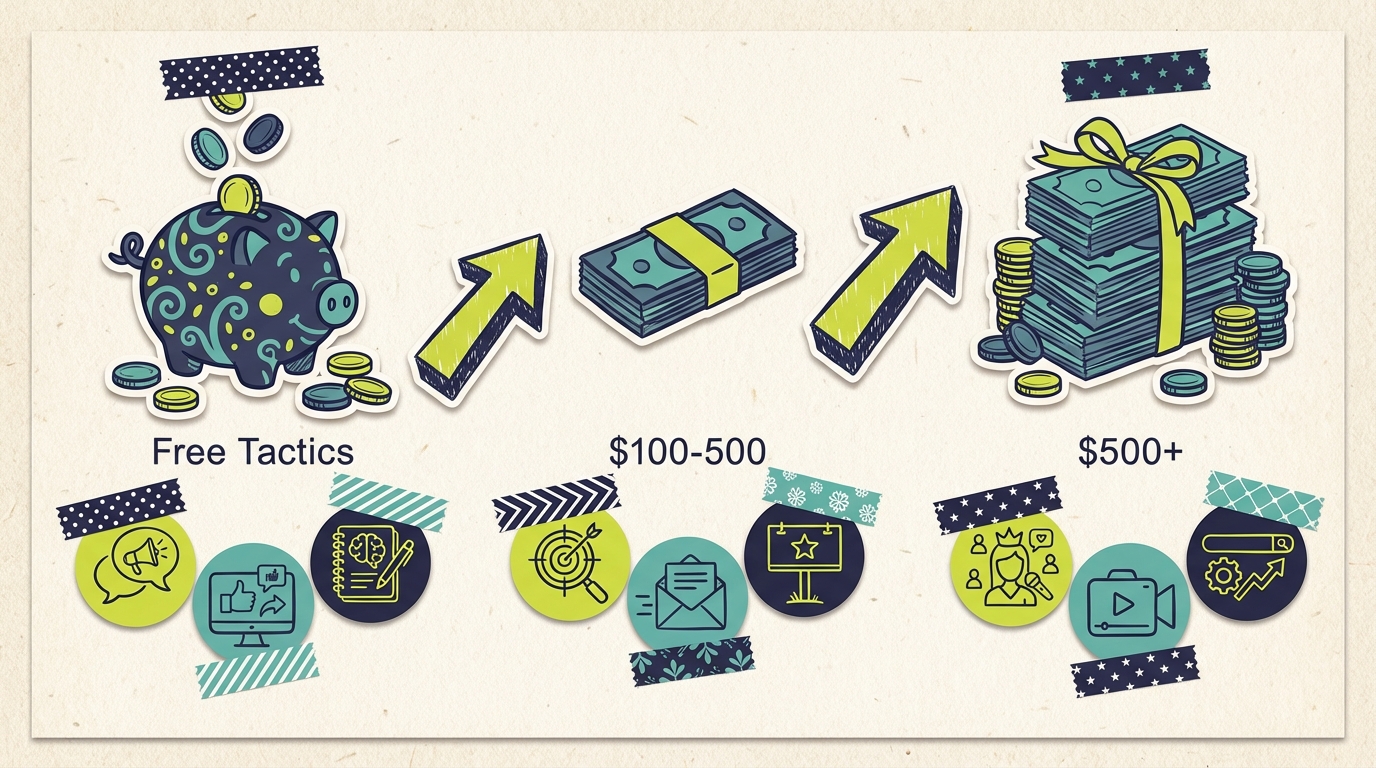
Under $100 Monthly
Focus entirely on free tactics. Optimize your Google Business Profile thoroughly. Choose one social media platform and post consistently. Build your email list and send regular newsletters. Ask every satisfied customer for reviews and referrals. Network actively in your community.
$100-500 Monthly
Add one paid channel to your free foundation. Email marketing software enables more sophisticated campaigns. A small Google Ads budget targets high-intent searches. Social media advertising extends your reach. Streaming TV starting at $50 builds credibility.
$500-1,000 Monthly
Layer multiple paid channels strategically. Run consistent Google Ads campaigns. Add streaming TV for brand building. Invest in content creation or local SEO help. Test different channels and double down on what works.
$1,000+ Monthly
Build an integrated multi-channel strategy. Professional help with SEO, content, or advertising may become worthwhile. Multiple paid channels working together amplify results. Consistent testing and optimization improve performance over time.
Measuring What Works
Promotion without measurement is just spending money. Track results to understand what's working.
Track where customers come from. Ask every new customer how they found you. Use unique phone numbers or URLs for different campaigns. Review website analytics to understand traffic sources.
Calculate customer acquisition cost. Divide your total promotion spend by the number of new customers acquired. Compare this across channels to understand where your money works hardest.
Measure lifetime value. A customer acquired for $50 who spends $500 once is less valuable than one acquired for $100 who becomes a repeat customer spending $2,000 over time. Factor this into your promotion decisions.
Test systematically. Change one variable at a time so you understand what drives results. Give campaigns enough time to generate meaningful data before making changes.
Common Promotion Mistakes to Avoid
Trying to do everything. Spreading yourself thin across too many channels means doing none of them well. Focus on fewer tactics executed consistently rather than many tactics done sporadically.
Expecting immediate results. Most promotion builds over time. SEO takes months. Brand awareness accumulates gradually. Social media audiences grow slowly. Set realistic expectations and commit for the long term.
Copying competitors blindly. What works for one business may not work for yours. Test tactics based on your specific situation rather than assuming competitor strategies are effective.
Ignoring existing customers. Acquiring new customers costs more than retaining existing ones. Don't neglect promotion to your current customer base in pursuit of new business.
Skipping the fundamentals. Paid advertising can't compensate for a poor Google Business Profile, missing reviews, or an outdated website. Ensure your foundation is solid before investing in reach.
Common Questions Answered
What is the cheapest way to promote a small business? The cheapest promotion methods are free: optimizing your Google Business Profile, asking for reviews and referrals, being active on one social media platform, and networking in your community. These tactics require time investment but no direct costs, and they build a foundation that amplifies any paid promotion you add later.
How much should a small business spend on promotion? Most small businesses allocate 5-10% of revenue to marketing, with promotion being a portion of that. For new businesses or those in growth mode, 10-15% isn't unusual. Start with what you can sustain for at least 3-6 months, as consistency matters more than brief bursts of heavy spending. Even $100-200 monthly can drive results if focused strategically.
What is the most effective form of promotion for small businesses? The most effective promotion varies by business type, but word-of-mouth referrals consistently rank highest for trust and conversion. After that, Google search presence (both organic and paid) captures customers actively looking to buy. For local businesses, a strong Google Business Profile often delivers more leads than any other single tactic.
How do I promote my small business with no money? Focus on free digital presence: claim and optimize your Google Business Profile, get active on one social media platform, start collecting customer emails, and ask satisfied customers for reviews and referrals. Network in your community, form partnerships with complementary businesses, and create helpful content that attracts organic search traffic. These tactics cost time but not money.
How long does it take for promotion to work? Results vary dramatically by tactic. Google Ads and social media ads can drive traffic within days. Email marketing to existing subscribers gets quick response. However, SEO typically takes 3-6 months to show significant improvement, social media audience building is gradual, and brand awareness compounds over time. Set expectations appropriately for each channel.
Should I hire someone to promote my business? Consider hiring help when your time is worth more than the cost of help, when you lack specific skills (like Google Ads management or SEO), or when your promotion needs exceed what you can handle alone. Start by learning the basics yourself so you can evaluate help effectively. Many small businesses manage promotion themselves until they reach a scale where professional help makes sense.
The Bottom Line
Promoting your small business doesn't require a massive budget. It requires strategic focus on the right tactics for your specific situation, consistent execution over time, and willingness to measure and adjust based on results.
Start with the free fundamentals: Google Business Profile, reviews, social media presence, and referral systems. Add low-cost digital tactics as resources allow. Layer in paid promotion strategically, testing channels before committing significant budget.
The businesses that succeed at promotion aren't necessarily the ones spending the most. They're the ones executing consistently on tactics that match their customers, their budget, and their capacity to sustain effort over time.
Ready to add TV advertising to your promotion mix? Create your first streaming TV ad in minutes with Adwave, starting at just $50.