-
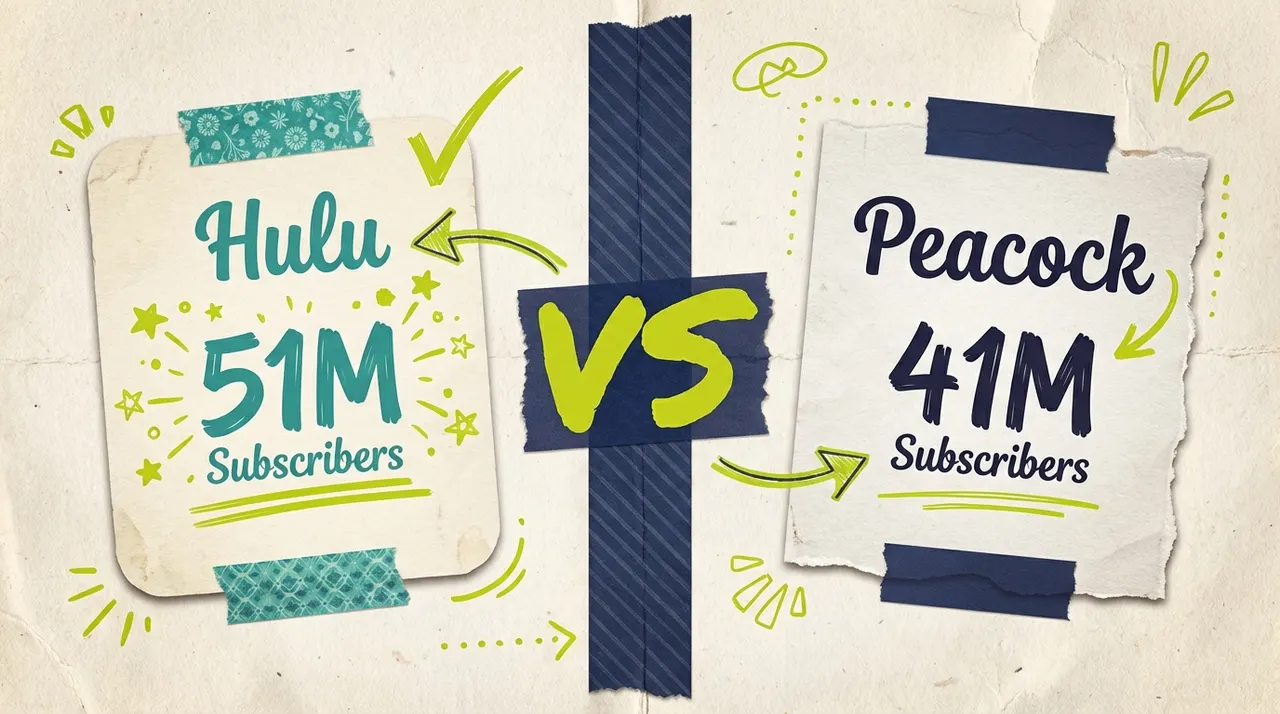
51M
Hulu U.S. subscribers
-
41M
Peacock paid subscribers
-
2.1%
Hulu's share of total TV viewing
Hulu has more viewers than Peacock, both in terms of total subscribers and TV viewing share. Hulu reaches approximately 51 million US subscribers and commands 2.1% of total TV viewing, while Peacock has 41 million paid subscribers and captures 1.6% of total TV viewing, according to Nielsen Gauge data. The gap between these two platforms reflects their different content strategies, ownership structures, and paths to market. For advertisers, both platforms offer substantial reach into streaming audiences, but understanding their distinct viewer profiles helps inform where to allocate ad dollars.
What the data shows
The comparison between Hulu and Peacock reveals meaningful differences across multiple metrics that matter to advertisers.
Subscriber counts
Hulu maintains a clear lead in total US subscribers:
Hulu: 51 million US subscribers across all tiers
Peacock: 41 million paid subscribers
Hulu's subscriber count includes both its streaming-only service (45.8 million) and Hulu + Live TV subscribers (4.6 million). Hulu has grown steadily since launch, adding subscribers each year through 2024, according to Business of Apps.
Peacock reached 41 million paid subscribers in early 2025 but has remained stuck at that level through three consecutive quarters, according to Hollywood Reporter. Monthly churn rates between 5-8% have offset new subscriber acquisition, creating a plateau effect that NBCUniversal executives characterize as "consistency" rather than stalled growth.
TV viewing share
Nielsen's Gauge report tracks each platform's share of total TV viewing time:
Hulu: 2.1% of total TV viewing
Peacock: 1.6% of total TV viewing (rising to 2.0% on NFL Sundays)
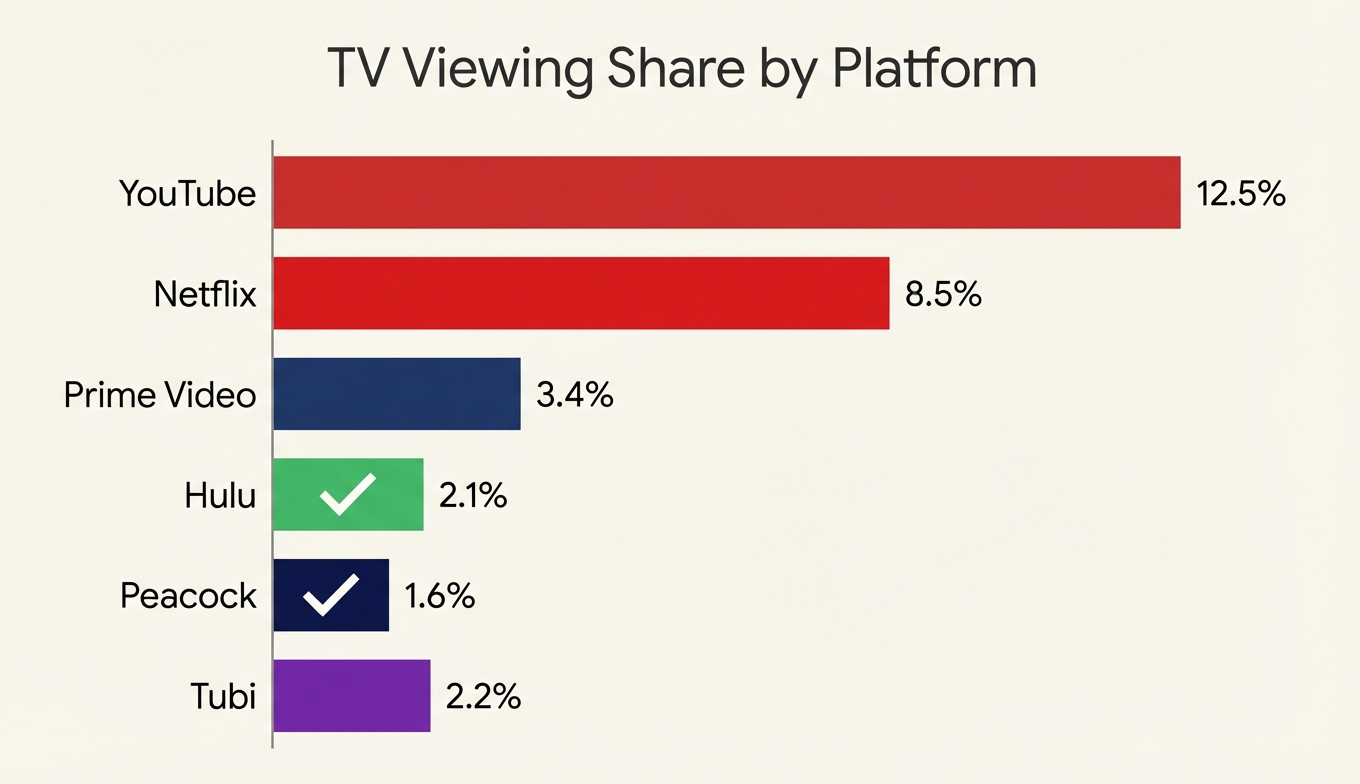
Hulu's 2.1% share ranks it fourth among streaming platforms, behind YouTube (12.5%), Netflix (8.5%), and Amazon Prime Video (3.4%). When combined with Disney+ (1.8%), Disney's streaming properties represent approximately 3.9% of total TV viewing.
Peacock's 1.6% share reflects its smaller subscriber base and sports-focused content strategy. The Sunday spike to 2.0% demonstrates how NFL exclusive games drive concentrated viewing windows.
Revenue comparison
The revenue gap between platforms is substantial:
Hulu: $12 billion in 2024 revenue
Peacock: Still operating at a loss ($217 million in Q3 2025)
Hulu generates revenue from both subscriptions and advertising, with streaming revenue reaching $6.8 billion in 2024. Disney acquired full control of Hulu from Comcast in 2024, integrating it into the broader Disney streaming ecosystem.
Peacock continues losing money as NBCUniversal invests in content and sports rights. However, losses have narrowed from earlier quarters as the platform scales, and executives expect the path to profitability will accelerate with new content deals, including Taylor Sheridan programming starting in 2029.
Historical growth trajectories
Examining subscriber growth over time reveals contrasting trajectories:
Hulu subscriber growth:
2019: 25 million subscribers
2020: 32 million subscribers
2021: 41 million subscribers
2022: 45 million subscribers
2023: 48.2 million subscribers
2024: 50.2 million subscribers
Hulu has added subscribers every year since launch, though growth has slowed as the market matures. The platform added approximately 2 million net new subscribers in 2024, representing modest but consistent expansion.
Peacock subscriber growth:
2021: 9 million paid subscribers (launch year)
2022: 15 million paid subscribers
2023: 28 million paid subscribers
2024: 36 million paid subscribers
2025: 41 million paid subscribers (plateaued)
Peacock grew rapidly from its 2020 launch through 2024, propelled by exclusive content, bundling strategies with Comcast/Xfinity customers, and sports programming. The 2025 plateau raises questions about whether the platform has reached its natural ceiling or simply needs new content catalysts to resume growth.
Engagement metrics
Beyond raw subscriber counts, engagement metrics reveal viewing depth:
Average viewing time per subscriber: Hulu subscribers spend approximately 2-3 hours per week on the platform, distributed across multiple content types. The presence of next-day broadcast content creates regular return visits.
Peacock viewing concentrates around specific events. During NFL Sundays, engaged viewers may spend 3-4 hours on the platform, but midweek engagement drops significantly for users without interest in non-sports content.
Content completion rates: Both platforms report strong completion rates for original content, though methodologies differ. Hulu benefits from serialized content that drives binge viewing, while Peacock's sports content naturally drives live completion but lacks the ongoing episodic engagement of scripted series.
Breaking down the numbers
Understanding why Hulu leads requires examining content strategy, platform maturity, and corporate ownership.
Content differentiation
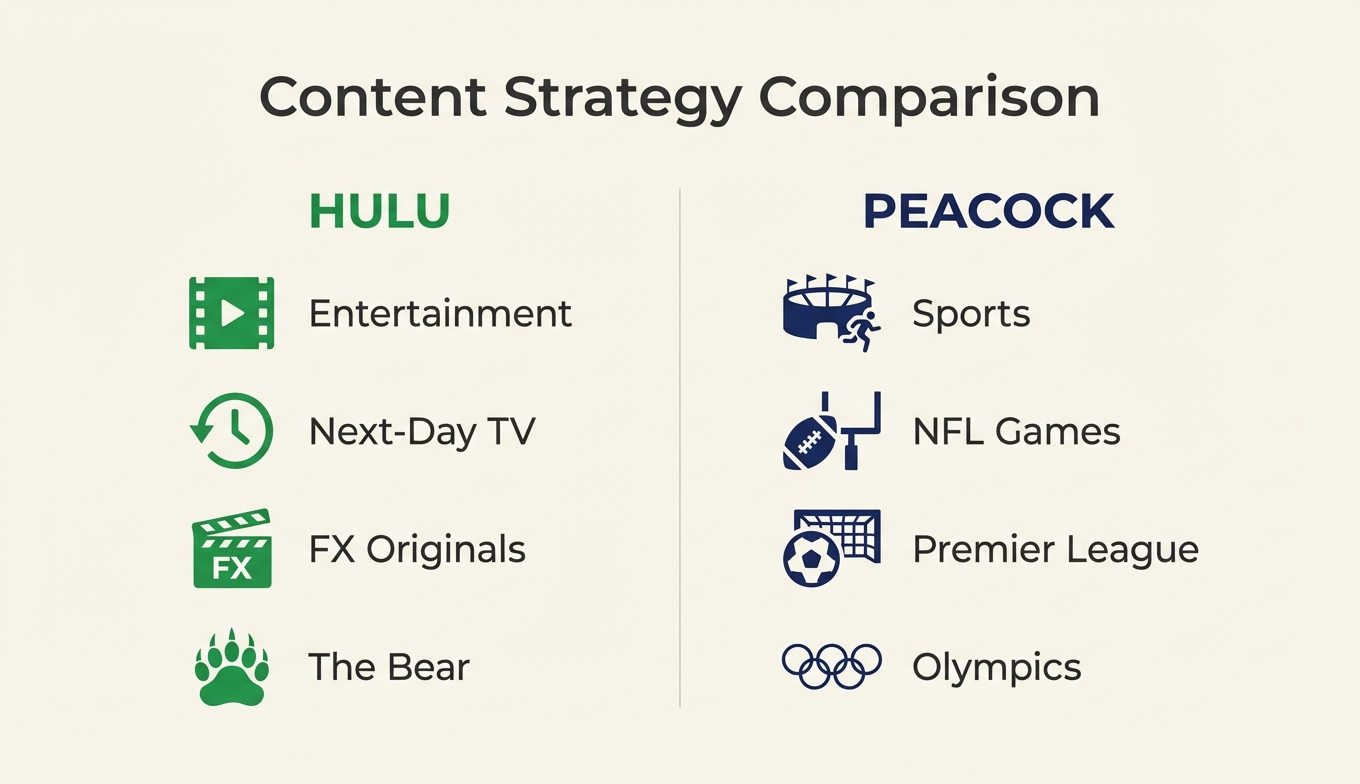
Hulu and Peacock pursue distinct content strategies that attract different viewer segments.
Hulu content approach:
Hulu launched in 2007 as a joint venture among broadcast networks (NBC, Fox, ABC), giving it unique access to next-day broadcast programming. No other streaming service offers current-season broadcast content the day after it airs. This attracts cord-cutters who want to follow current shows without cable.
Hulu Originals like "The Handmaid's Tale," "Only Murders in the Building," and "The Bear" have generated Emmy recognition and cultural attention. FX content became exclusive to Hulu after Disney's acquisition, adding prestige programming depth.
Peacock content approach:
Peacock launched in 2020, a full 13 years after Hulu. Its content strategy centers on sports, specifically exclusive NFL games, detailed Premier League coverage, and Olympic streaming rights.
Next-day NBC content provides entertainment programming, while Bravo reality shows attract dedicated audiences. The sports emphasis creates high-engagement viewing windows but limits overall daily viewing compared to entertainment-focused platforms.
Platform maturity
Hulu's 17-year head start provides significant advantages:
Advertising infrastructure: Hulu has offered ad-supported streaming since launch, giving it nearly two decades of advertising experience with robust ad formats, targeting capabilities, and measurement solutions.
Brand recognition: Hulu has established itself as a household name among streamers.
Content relationships: Long-standing partnerships with broadcast networks provide reliable content flow.
Peacock launched during the COVID-19 pandemic and spent its first years building content library, subscriber base, and advertising capabilities. The platform has improved rapidly but lacks Hulu's accumulated infrastructure and relationships.
Ownership impact
Corporate ownership shapes each platform's strategic priorities.
Disney (Hulu): Disney's full ownership, completed in 2024, integrates Hulu into the largest streaming portfolio alongside Disney+ and ESPN+. Advertisers can reach audiences across all three platforms through unified buying. The planned integration of Hulu and Disney+ into a single app (with separate content brands) will create an even more powerful combined platform.
Comcast/NBCUniversal (Peacock): Peacock benefits from NBCUniversal's broadcast content and sports rights but operates as a smaller player in the streaming landscape. Comcast's cable business creates some strategic tension, though the company has committed to Peacock's growth through major sports investments including the NBA starting in 2025.
Why it matters for your business
For advertisers evaluating streaming TV advertising, both platforms offer valuable but different audience access.
Ad-supported audience size
Both platforms have substantial ad-supported viewer bases:
Hulu ad tier: The majority of Hulu's 51 million subscribers use ad-supported plans. Hulu pioneered premium ad-supported streaming, and its lower-priced ad tier continues attracting price-sensitive viewers.
Peacock ad tier: According to industry reports, 79% of Peacock subscribers choose ad-supported tiers. With 41 million total subscribers, this means approximately 32 million viewers see ads on Peacock.
Both platforms provide significant addressable audiences for advertisers, though Hulu's larger overall base translates to more total ad-supported viewers.
Audience composition
The platforms attract different viewer profiles:
Hulu audience characteristics:
Cord-cutters seeking current broadcast content
Younger demographics (skews below traditional TV median age)
Entertainment-focused viewers
FX and prestige TV enthusiasts
Disney bundle subscribers accessing multiple services
Peacock audience characteristics:
Sports fans, especially NFL and Premier League followers
NBC content enthusiasts
Value-seeking streamers (free tier available)
Live TV viewers transitioning to streaming
Comcast/Xfinity bundled subscribers
Understanding these profiles helps advertisers align platform selection with target audience characteristics.
Viewing context differences
Where and when viewers watch affects advertising effectiveness:
Hulu viewing context: Hulu viewing distributes across the week with consistent daily engagement. Content includes dramas, comedies, and reality shows that viewers often watch individually or in small groups. The next-day broadcast content creates some appointment viewing, but most engagement happens on-demand.
Peacock viewing context: Peacock viewing spikes dramatically around live sports. NFL Sundays drive the platform's highest viewership, with Premier League creating weekend morning engagement. Sports viewing often happens in social settings with higher attention and emotional engagement. However, non-sports content viewing is more modest.
For advertisers, Hulu offers broader, more consistent reach while Peacock provides concentrated sports-adjacent exposure.
Accessing both platforms
Small businesses can reach both Hulu and Peacock audiences through aggregated CTV platforms:
Platforms like Adwave include both Hulu and Peacock in their 100+ channel mix
Low minimums ($50) remove budget barriers
Combined targeting across platforms simplifies campaign management
Automated optimization balances inventory across sources
This approach provides access to both platforms without separate direct relationships or large minimum commitments.
How to take advantage of this trend
The Hulu-Peacock comparison informs practical streaming advertising decisions.
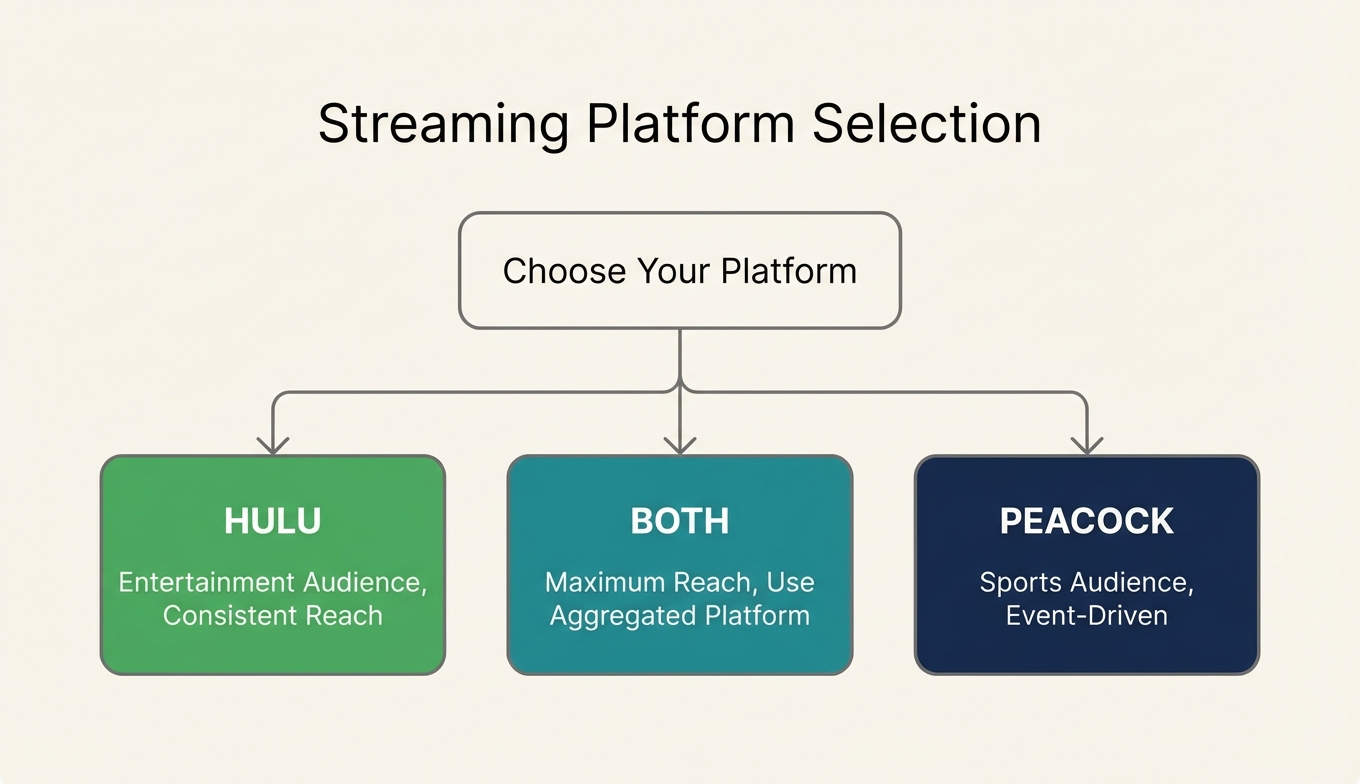
Choose based on audience alignment
Match platform selection to your target customer:
Prioritize Hulu if:
Your target audience includes cord-cutters and younger demographics
Entertainment content aligns with your brand
You want consistent daily reach
Disney's broader ecosystem offers cross-platform opportunities
Prioritize Peacock if:
Sports fans align with your target customer
You want high-engagement viewing contexts
Weekend and Sunday campaigns fit your strategy
NBC content adjacency benefits your brand
Use both through aggregated platforms if:
You want maximum streaming reach
Your audience spans multiple demographics
Budget flexibility matters
You prefer automated optimization across sources
Time campaigns strategically
Platform viewing patterns should inform campaign timing:
Hulu timing considerations:
Consistent viewing throughout the week
Evening prime time strongest
New content drops drive spikes
Year-round engagement without major seasonal swings
Peacock timing considerations:
NFL season (September-February) drives peak viewing
Sunday afternoons highest for sports
Premier League creates weekend morning opportunities
Olympics years generate massive temporary spikes
Matching campaign timing with platform viewing patterns maximizes exposure.
Optimize creative for context
Different platforms warrant adjusted creative approaches:
For Hulu:
Entertainment-adjacent tone works well
Longer-form storytelling possible
Premium production values expected
Clear calls to action for on-demand viewers
For Peacock:
Sports-adjacent energy and pacing
Consider social viewing context
High-impact creative for attention-competitive environment
Timely messaging around live events
AI creative tools can generate platform-appropriate commercials from existing assets, reducing production barriers.
Monitor platform evolution
Both platforms continue evolving:
Hulu changes to watch:
Disney+/Hulu app integration timeline
Content strategy shifts under full Disney ownership
Advertising technology improvements
Pricing and tier changes
Peacock changes to watch:
NBA content impact starting 2025-26 season
Taylor Sheridan content arriving 2029
Subscriber growth (or continued plateau)
Path to profitability timeline
Staying informed about platform changes helps optimize ongoing campaigns.
The bigger picture
The Hulu-Peacock comparison reflects broader streaming industry dynamics affecting all advertisers.
Streaming fragmentation continues
The streaming market has fragmented into specialized players:
Entertainment-focused: Netflix, Hulu, Max
Sports-focused: Peacock, ESPN+
Free/FAST: Tubi, Pluto TV, The Roku Channel
E-commerce integrated: Prime Video
For advertisers, this fragmentation means no single platform provides complete reach. Multi-platform strategies become necessary, either through direct relationships with multiple services or aggregated platforms that combine inventory.
Sports rights migration accelerates
Sports content increasingly moves to streaming:
NFL games on Peacock, Amazon Prime Video, and YouTube
NBA adding streaming components
Premier League, MLS, and other soccer on streaming
MLB and NHL expanding streaming access
Peacock's sports strategy positions it for this migration, but competition for sports rights drives costs higher. For advertisers, following sports audiences across platforms requires flexibility and multi-platform presence.
Ad-supported streaming becomes standard
The ad-supported tier expansion validates advertising-funded streaming:
Netflix launched ads in 2022
Disney+ added ads in 2022
Amazon added ads to Prime Video in 2024
Max and Paramount+ offer ad tiers
This expansion increases total premium streaming ad inventory, creating more competition for ad dollars but also more reach potential. Both Hulu and Peacock benefit as ad-supported viewing normalizes across the industry.
Consolidation pressures mount
Streaming economics pressure smaller players:
Peacock's continued losses raise questions about standalone viability
Warner Bros. Discovery explored merging with Paramount
Disney's integration of Hulu into Disney+ signals consolidation
Advertisers should prepare for potential platform changes, maintaining flexibility in media strategies rather than over-relying on any single platform.
Supporting data
Key statistics comparing Hulu and Peacock for quick reference:
Subscriber metrics:
Hulu: 51 million total US subscribers
Peacock: 41 million paid subscribers
Hulu streaming-only: 45.8 million subscribers
Hulu + Live TV: 4.6 million subscribers
Peacock ad-supported tier: 79% of subscribers (approximately 32 million)
TV viewing share (Nielsen Gauge):
Hulu: 2.1% of total TV viewing
Peacock: 1.6% of total TV viewing
Peacock Sunday (NFL): 2.0% of total TV viewing
Disney streaming total (Hulu + Disney+): 3.9%
Revenue and financials:
Hulu 2024 revenue: $12 billion
Hulu streaming revenue: $6.8 billion
Peacock Q3 2025 loss: $217 million
Peacock monthly churn rate: 5-8%
Platform details:
Hulu launch year: 2007
Peacock launch year: 2020
Hulu owner: The Walt Disney Company
Peacock owner: Comcast/NBCUniversal
Competitive context:
Netflix TV viewing share: 8.5%
YouTube TV viewing share: 12.5%
Amazon Prime Video TV viewing share: 3.4%
Total streaming share of TV: 45%+
Advertising metrics:
Average CTV CPM range: $15-35 through aggregated platforms
Minimum campaign budget (Adwave): $50
Channels available through Adwave: 100+
Data sources:
Common questions answered
Which streaming service has more viewers: Hulu or Peacock?
Hulu has more viewers than Peacock. Hulu reaches approximately 51 million US subscribers and commands 2.1% of total TV viewing time. Peacock has 41 million paid subscribers and captures 1.6% of total TV viewing (rising to 2.0% on NFL Sundays). Hulu's 17-year head start and entertainment-focused content strategy contribute to its larger audience.
Can small businesses advertise on both Hulu and Peacock?
Yes, small businesses can access both Hulu and Peacock inventory through aggregated CTV platforms like Adwave. These platforms include both services in their 100+ channel mix, offering low minimums ($50) and simplified campaign management. Direct advertising on either platform typically requires larger budgets and platform-specific relationships.
Why is Peacock stuck at 41 million subscribers?
Peacock reached 41 million paid subscribers in early 2025 and has remained at that level through three consecutive quarters. Monthly churn rates of 5-8% offset new subscriber acquisition. The platform's sports-focused strategy creates viewing spikes but may limit appeal to non-sports viewers. Price increases in summer 2025 and the loss of some WWE programming contributed to elevated churn.
Which platform is better for advertising: Hulu or Peacock?
Neither platform is universally better. Hulu offers larger overall reach, more consistent daily viewing, and mature advertising infrastructure. Peacock provides access to sports-engaged audiences and high-attention viewing contexts around live events. The best choice depends on your target audience and campaign goals. Many advertisers use aggregated platforms to access both without choosing.
How do Hulu and Peacock ad rates compare?
Through aggregated CTV platforms, average CPMs typically range from $15-35 for premium streaming inventory including both Hulu and Peacock. Direct platform rates vary based on targeting, ad format, and campaign size. Sports-adjacent inventory on Peacock may command premiums during NFL games, while Hulu's scale provides broader reach at competitive rates.
Does Hulu have live TV?
Yes, Hulu + Live TV provides access to 90+ live channels including sports, news, and entertainment for approximately 4.6 million subscribers. This tier competes with YouTube TV and other virtual MVPDs. The live TV package includes Disney+ and ESPN+ bundled together. For advertisers, Hulu + Live TV inventory provides live streaming ad opportunities alongside on-demand content.
What content is exclusive to each platform?
Hulu exclusive content includes original series like "The Bear," "Only Murders in the Building," and "The Handmaid's Tale," plus all FX original programming and next-day access to most ABC, NBC, and Fox broadcast shows. Peacock exclusive content includes select NFL games, detailed Premier League soccer, Olympic coverage, Bravo reality shows, and original series like "Bel-Air" and "Poker Face." Sports rights represent Peacock's primary differentiator.
Which platform has better targeting for advertisers?
Both platforms offer sophisticated targeting through their parent companies' advertising infrastructure. Hulu benefits from Disney's advertising technology spanning Hulu, Disney+, and ESPN+, enabling cross-platform reach and frequency management. Peacock uses NBCUniversal's advertising capabilities across linear and streaming. Through aggregated platforms like Adwave, advertisers can target both platforms using geographic, demographic, and behavioral parameters without needing separate platform relationships.
Are Hulu and Peacock available internationally?
Hulu is US-only with no international availability. Peacock is primarily US-focused but has limited international presence through distribution deals. For advertisers, both platforms represent domestic US reach only, unlike Netflix or Amazon Prime Video which offer global streaming advertising opportunities.
Get started with streaming TV advertising
Understanding platform differences helps, but getting started matters more. Both Hulu and Peacock represent valuable components of a detailed streaming TV strategy.
Adwave provides access to Hulu, Peacock, and 100+ other streaming channels with campaigns starting at just $50. AI-powered creative tools generate professional TV commercials from your existing assets, removing production barriers.