
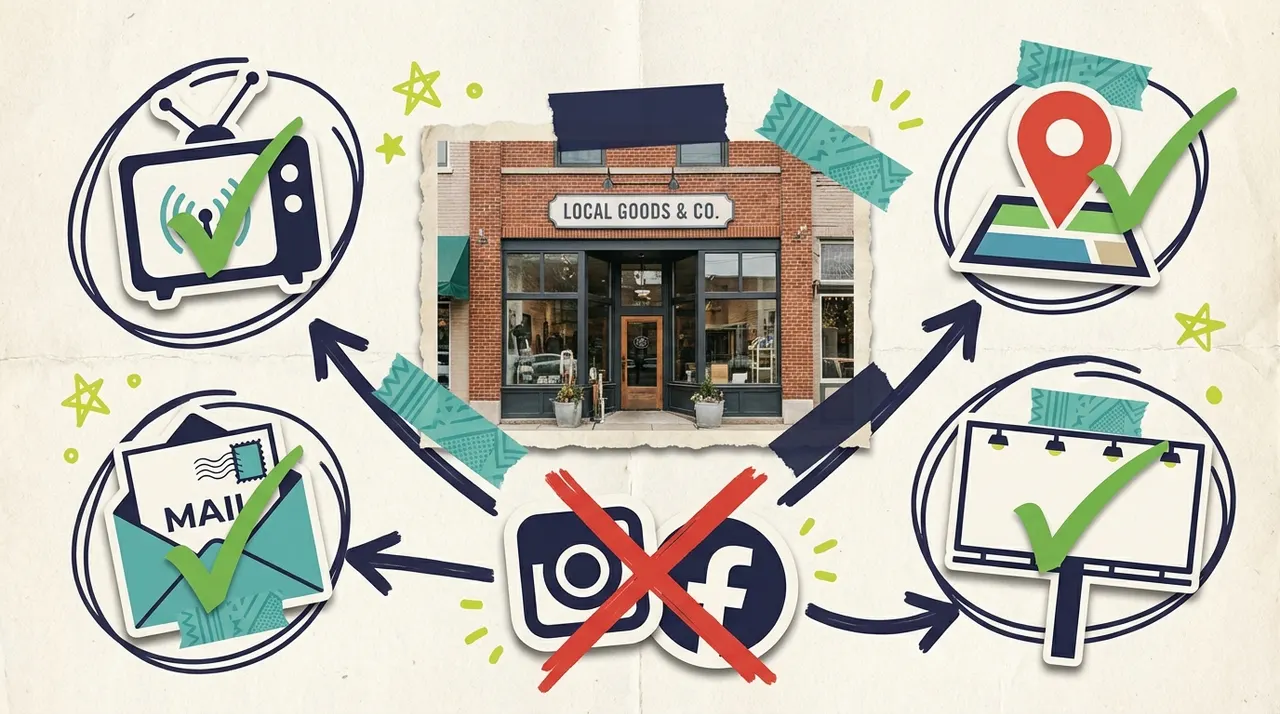
Beyond the Instagram grind: advertising channels that reach your local customers.
You've been posting consistently. Reels, Stories, behind-the-scenes content, engagement posts. You've done everything the social media gurus told you to do. And yet, when a new customer walks through your door, they almost never say "I found you on Instagram."
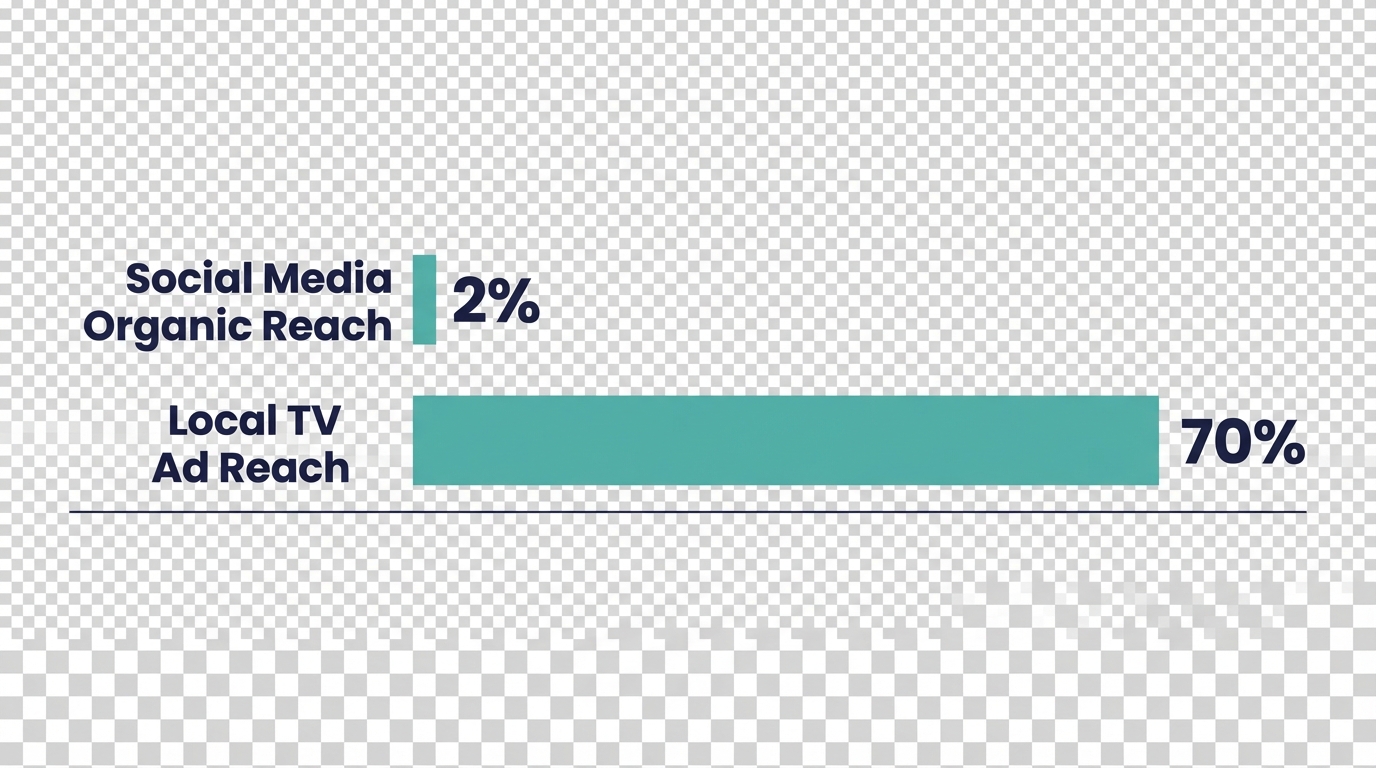
You're not alone. Small business owners across the country are discovering the same frustrating truth: organic social media reach has collapsed, and the algorithm doesn't care about your local business. The platforms that promised to connect you with customers now show your posts to roughly 2-5% of your followers, and most of those people aren't anywhere near your service area.
Here's the good news: there are advertising channels that work for local businesses. Channels where your message reaches the people most likely to become customers, not just random scrollers half a country away. Let's explore the local advertising ideas that are delivering real results while social media leaves small businesses behind.
Why social media fails local businesses
The fundamental problem with social media for local businesses isn't your content. It's the math. When Facebook and Instagram prioritize content that keeps users scrolling longest, your post about today's lunch special competes against viral videos, celebrity drama, and algorithm-optimized content from accounts with millions of followers. Your loyal customers might follow you, but the platform rarely shows them your posts.
Geographic targeting makes this worse. Your Instagram followers might be scattered across the country, former residents who moved away, tourists who visited once, or people who just liked a photo of your food. When you post about a sale happening this weekend, the vast majority of your "audience" can't possibly show up. You're broadcasting to people who will never become customers.
The time investment compounds the problem. Creating quality social content takes hours. You're shooting photos, writing captions, responding to comments, staying on top of trends. For a local business owner already working 60-hour weeks, that time investment rarely translates into measurable foot traffic or phone calls. Meanwhile, every algorithm update seems to further reduce your reach, making you run faster just to stay in place.
This doesn't mean social media has zero value. It can help with customer retention and community building. But as a primary customer acquisition strategy for local businesses? The numbers simply don't support it anymore. Many business owners are finding better results when they move beyond social media for their primary marketing.
Local advertising that works
When you shift your focus from social media to channels designed for local reach, the results often surprise business owners who've been grinding away on Instagram for years. Here are the advertising approaches that consistently deliver for local businesses.
Google Business Profile and local SEO remain foundational for any local business. When someone searches "plumber near me" or "best pizza in [your city]," Google Business Profile determines which businesses appear in that coveted map pack at the top of results. Unlike social media, these searchers have immediate intent. They're looking for exactly what you offer, right now. Optimizing your profile with accurate information, photos, and regular posts costs nothing but time, and the traffic comes from people actively seeking your services.
Google Local Services Ads take this further by putting you at the very top of search results for service businesses. You only pay when someone contacts you, not for impressions or clicks that go nowhere. For home service providers, these ads often deliver the best return on investment of any digital channel because they capture people at the exact moment they need help. If you're wondering whether TV advertising is worth it compared to these digital options, the answer often depends on whether you need immediate leads or long-term brand building.
Direct mail sounds old-fashioned until you look at response rates. While email open rates have dropped below 20% for most businesses, direct mail still achieves 4-5% response rates. More importantly, you can target precisely the households you want: every home within 5 miles of your location, residents in certain zip codes, or homeowners in neighborhoods where your services fit. A well-designed postcard landing in the right mailboxes often outperforms weeks of social media posting.
Community sponsorships and local events build the kind of recognition that algorithms can't replicate. When your business sponsors the little league team, supports the school fundraiser, or sets up a booth at the farmers market, you're building genuine community connections. These relationships compound over time as residents come to see your business as part of the neighborhood fabric.
Streaming TV platforms offer location and audience targeting. Choose the area your business serves, then compare reach and response with your other channels.
The "see them everywhere" strategy
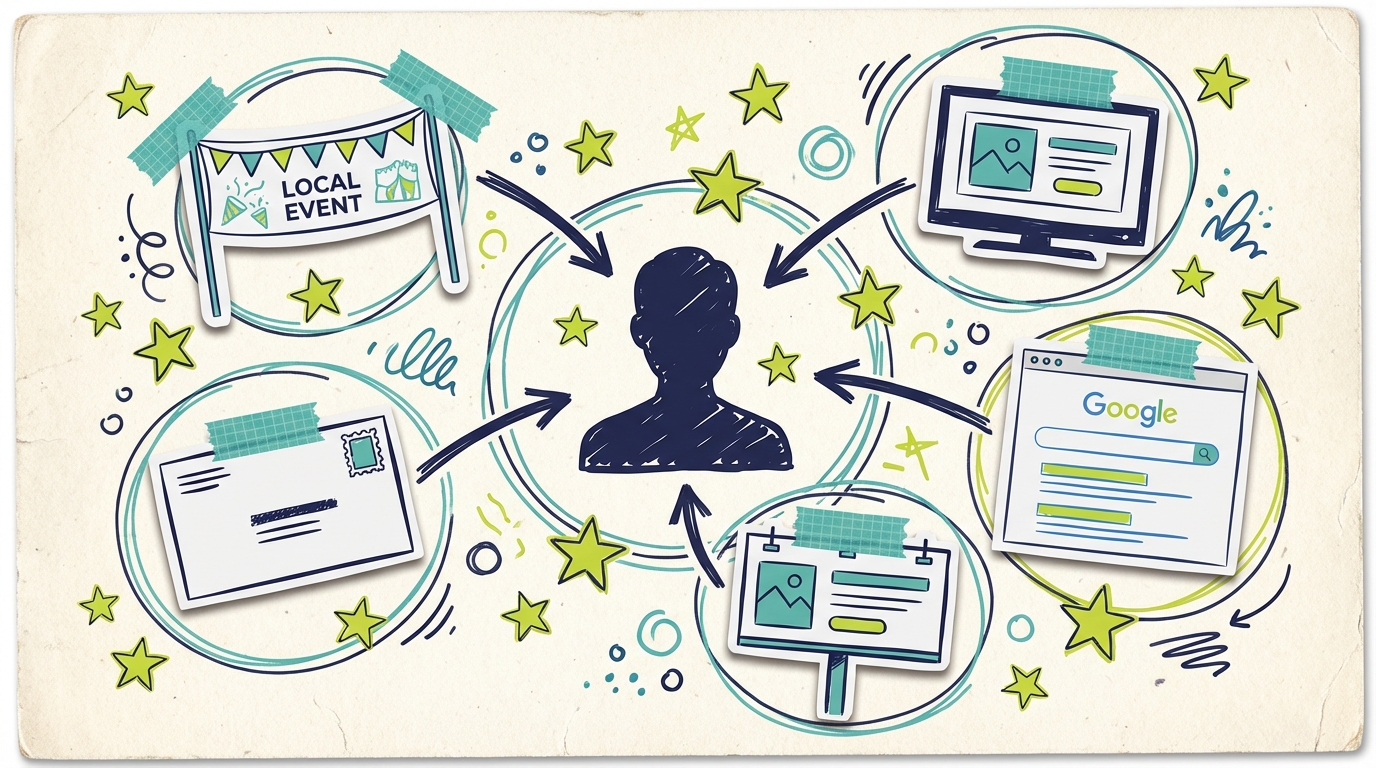
The most effective local advertising doesn't rely on any single channel. Instead, it creates the feeling that your business is everywhere in your community. This omnipresence builds trust and recognition that no amount of social media posting can match.
Think about the businesses you trust most in your own neighborhood. They're probably the ones you've encountered multiple times in different contexts. You've seen their truck driving around. You got their postcard in the mail. Your neighbor mentioned using them. You saw their ad while watching TV last night. Each touchpoint reinforces the others, creating a cumulative effect that makes you think of them first when you need what they offer.
This multi-channel approach works because consumers typically need seven or more exposures to a brand before taking action. Social media might provide one or two of those touches, but it rarely delivers the variety and frequency needed to build true familiar awareness in your local market.
A practical example: consider a local HVAC company that combines Google Business Profile optimization (capturing searches), direct mail to homeowners (reaching everyone in target neighborhoods), and streaming TV ads (building broad awareness). Each channel reinforces the others. When someone searches for AC repair, they recognize the company name because they've seen the TV commercial. When the postcard arrives, it triggers the memory of that same company. This layered approach consistently outperforms putting all your marketing eggs in the social media basket.
How to allocate your local ad budget
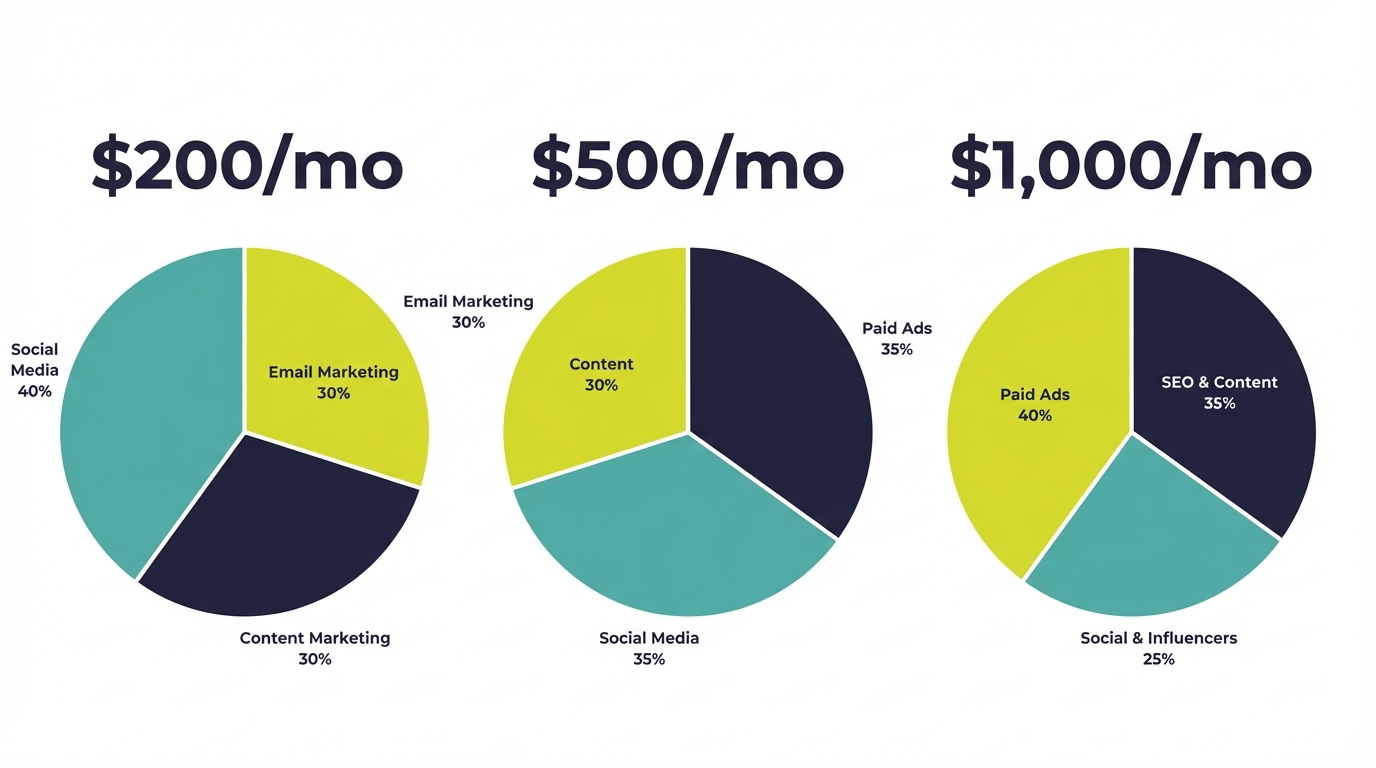
Your optimal marketing mix depends on your budget, but here are frameworks that work for local businesses at different spending levels.
With $200 per month, focus on foundational presence and one paid channel. Invest your time in Google Business Profile optimization and review generation since these cost nothing but effort and deliver consistent results. Allocate your budget to either direct mail (one targeted postcard campaign per month) or streaming TV advertising (building awareness across your target area). At this level, consistency matters more than variety. Pick one channel and commit to it rather than spreading yourself too thin.
With $500 per month, you can build a two-channel strategy. Maintain your Google presence while splitting budget between direct mail and streaming TV. The mail drives immediate response from specific neighborhoods while TV builds broader awareness. Consider seasonal adjustments where you increase TV spending before your busiest seasons and mail spending during slower periods when you need to stimulate demand.
With $1,000 per month, true omnipresence becomes achievable. You can maintain consistent streaming TV advertising ($400-500), run monthly direct mail campaigns ($300-400), and add Google Local Services Ads or paid search ($200-300). This combination creates multiple touchpoints with your target audience every month. Supplement with community sponsorships and events when opportunities arise, knowing your paid advertising maintains baseline visibility even when you can't attend every local event.
At every budget level, track your results. Ask new customers how they found you. Use unique phone numbers or offer codes for different channels. This data helps you shift budget toward what's working and away from what isn't. The businesses that win at local advertising aren't necessarily spending the most. They're measuring results and optimizing continuously.
Measuring local advertising success
Unlike social media with its abundance of vanity metrics, local advertising success comes down to a simple question: are you getting more customers? Here's how to track what matters.
Ask every customer how they found you. This sounds basic, but most businesses don't do it consistently. Train your staff to ask, add the question to your intake forms, and record the answers somewhere you'll review. Over a few months, patterns emerge. You'll discover which channels are driving business, often with surprising results.
Use dedicated phone numbers for different advertising channels. Services like CallRail let you create unique numbers for your TV ads, direct mail, and online advertising. When someone calls the number from your TV commercial, you know exactly which channel drove that call. This simple tracking reveals true return on investment rather than guessing.
Create channel-specific offers to track response. Your direct mail might offer "mention this card for 10% off" while your TV ad promotes a different special. When customers redeem these offers, you know precisely which advertising prompted them to act.
Track results over several months as well as by campaign. Compare branded searches, inquiries, and sales with your advertising activity.
Survey new customers periodically to understand their journey. You might discover that someone saw your TV ad, then Googled you to read reviews, then got your direct mail piece which finally prompted them to call. Multiple touchpoints often work together, with each channel deserving partial credit for the conversion.
Common questions answered
How long does it take to see results from local advertising compared to social media?
Most local businesses see measurable results from direct mail within the first campaign cycle, typically 2-4 weeks. Streaming TV advertising often shows initial results within 30 days, with compounding effects over 90 days as brand awareness builds. Google advertising can drive leads within days. Social media organic growth, by contrast, typically requires 6-12 months of consistent effort before generating meaningful traffic, and that effort must continue indefinitely to maintain results.
Can I completely stop using social media for my business?
You don't have to abandon social media entirely, but you can stop treating it as your primary marketing channel. Maintain a basic presence for customers who want to find you there, share occasional updates, and respond to messages and reviews. What you can stop is the exhausting content creation treadmill of daily posts, constant engagement, and chasing algorithm trends. Put that time and energy into advertising channels that reach local customers.
What's the minimum effective budget for streaming TV advertising?
Platforms like Adwave allow you to start TV advertising with as little as $50. At this entry level, you can test geographic targeting and creative approaches without significant risk. Most local businesses find $200-500 monthly provides meaningful reach across their target area, with larger budgets enabling broader coverage or higher frequency.
How do I know which advertising channels will work best for my specific business?
Start with your customer's journey. How do people typically find businesses like yours? Home services companies benefit heavily from Google search because customers often need help urgently. Restaurants and retail stores benefit from awareness channels like TV because customers need to think of you when they're deciding where to go. Professional services often rely on referrals and reputation, making community involvement and local PR valuable. The best approach is testing multiple channels for 90 days and measuring actual customer acquisition from each.
Is direct mail still effective in 2025?
Direct mail has become more effective as digital channels have become more crowded. Mailboxes are less cluttered than they were 20 years ago because many businesses abandoned mail for digital. Response rates for well-targeted direct mail campaigns average 4-5%, significantly higher than email or social media. The key is precision: targeting the right households with relevant offers rather than blanketing entire regions with generic messages.
Start reaching local customers where they are
Social media promised small businesses the ability to reach customers directly. Instead, it delivered an algorithm that buries your content and an audience scattered across the country. The businesses thriving in local markets today have stopped playing that game.
They're investing in advertising that reaches their actual service area. They're building presence across multiple channels where local customers already spend time. They're measuring results based on customers through the door, not likes on a post. And they're discovering that reaching local customers has never been more accessible, now that streaming TV, targeted mail, and local search advertising put powerful tools in the hands of businesses with modest budgets.
Ready to reach local customers where they are? Stream your TV ad to households in your area starting at $50.


