-
1.2%
Max's share of total U.S. TV viewing time
-
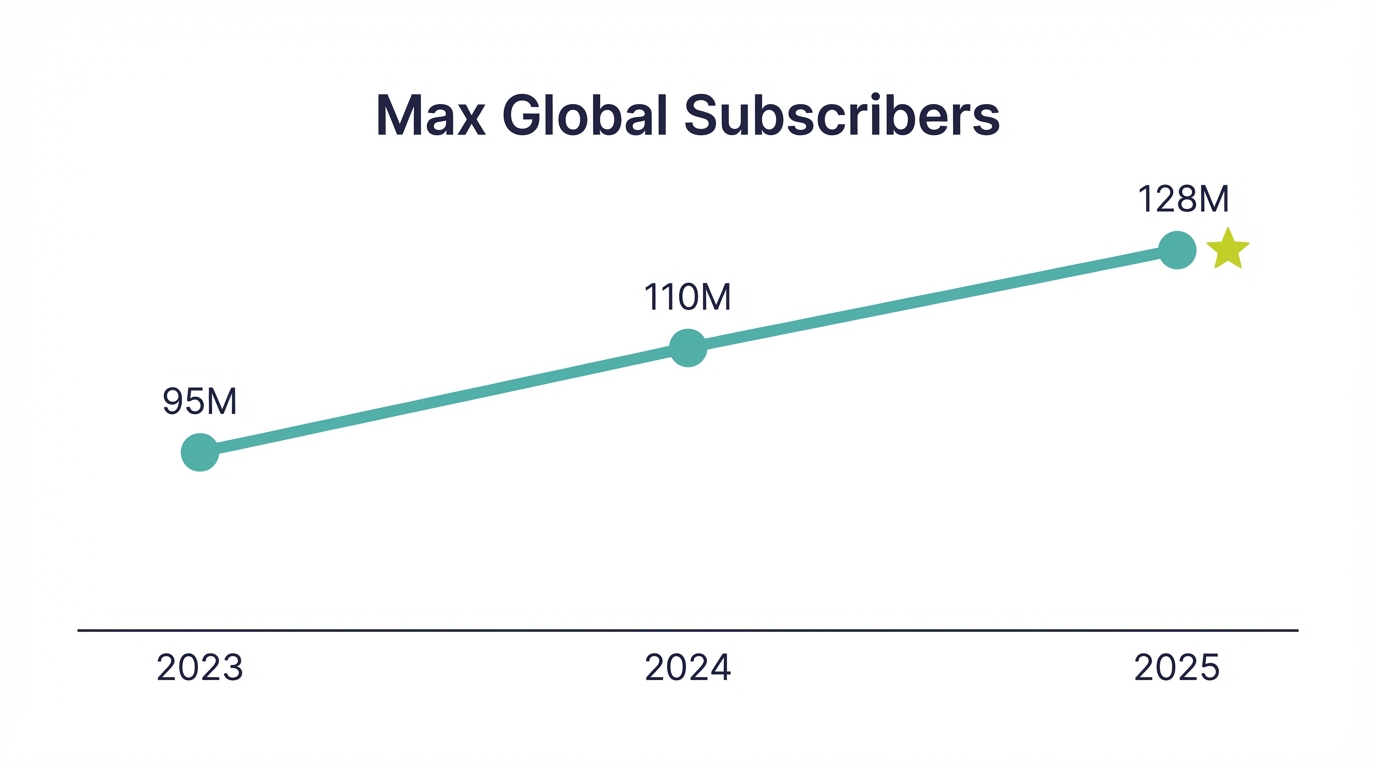
128M
Global Max subscribers (Q3 2025)
-
+16%
Year-over-year subscriber growth
Max, the streaming service from Warner Bros. Discovery (formerly HBO Max), captures approximately 1.2% of total U.S. television viewing time, according to Nielsen's Gauge data from late 2025. While that percentage might seem modest compared to streaming giants like YouTube (10.6%) or Netflix (7.9%), Max's position reflects its strategy as a premium, prestige content destination rather than a mass-market platform. With 128 million global subscribers and year-over-year growth of 16%, Max represents a significant and growing slice of the streaming TV landscape that advertisers should understand.
What the data shows
Max's 1.2% share of total U.S. TV viewing time positions it as a mid-tier streaming platform in terms of raw viewership, but that number tells only part of the story. The platform has carved out a distinct niche in the streaming landscape: premium, prestige content that attracts engaged, affluent viewers who are willing to pay for quality over quantity.
The streaming hierarchy according to Nielsen's October 2025 data:
YouTube: 10.6% of total TV viewing (largest streaming platform)
Netflix: 7.9%
Amazon Prime Video: 3.1%
Hulu: 2.6%
Disney+: 1.9%
Max: 1.2%
Tubi: 1.8%
Peacock: 1.1%
Pluto TV: 1.0%
Max occupies a middle position, outpacing most ad-supported services while trailing the big three streamers. But raw market share understates its value. Max competes on quality and prestige, not volume.
What's especially noteworthy is Max's growth trajectory. In March 2025, the platform experienced a 6% month-over-month increase in viewership, driven by highly anticipated content including the third season of "The White Lotus" and the medical drama "The Pitt." This content-driven growth demonstrates a pattern that distinguishes Max from broader streaming services: specific prestige releases can move the needle significantly on platform viewership.
The subscriber base tells an equally compelling story. Warner Bros. Discovery added 2.3 million streaming subscribers in Q3 2025, bringing global Max subscribers to 128 million. This represents 16% year-over-year growth, a healthy expansion rate that puts the platform on track toward its stated goal of 150 million subscribers by the end of 2026. The growth has been supported by international expansion into Southeast Asia, Taiwan, Hong Kong, and Australia, with rollouts planned for Germany, Italy, the UK, and Ireland through 2026.
From a financial perspective, Warner Bros. Discovery's direct-to-consumer segment, which includes Max, achieved profitability in 2024 with $103 million in EBITDA. The company projects this figure to double in 2025, with an ambitious target of $1 billion in streaming EBITDA. This financial trajectory matters for advertisers because it signals a platform that's investing in sustainable growth rather than burning cash for market share.

Breaking down the numbers
Understanding Max's viewing share requires examining the demographics, content patterns, and competitive positioning that shape its audience. The 1.2% figure represents aggregate viewing, but the composition of that viewership makes Max especially attractive for certain advertising objectives.
By content category
Max's viewership concentrates heavily around prestige content releases. Unlike platforms such as YouTube or Netflix, where viewing spreads across enormous libraries of diverse content, Max's audience often surges around specific flagship releases. "The White Lotus," "Succession," "House of the Dragon," and "The Last of Us" have all driven significant viewership spikes when new seasons debut. This pattern creates both opportunities and challenges: advertisers can align campaigns with known content tentpoles, but the platform's baseline viewership between major releases tends to be lower than competitors.
The HBO legacy content library contributes steady baseline viewing. Classic series like "The Sopranos," "The Wire," "Game of Thrones," and "Sex and the City" continue attracting viewers years after their original runs. This library viewing tends to skew toward older demographics who remember these shows from their original HBO runs and younger viewers discovering them for the first time.
Sports content has become an increasingly important component of Max's viewing mix. Warner Bros. Discovery's ownership of rights to MLB, NHL, and college basketball means live sports programming appears on Max, differentiating it from pure entertainment streamers. For advertisers, this live sports inventory offers something increasingly rare in streaming: appointment viewing with engaged audiences who watch in real-time.
By demographic profile
Max's audience skews toward higher income and education levels compared to mass-market streaming services. The platform's premium positioning, both in content and pricing, naturally selects for viewers who value prestige content and can afford higher subscription costs. This demographic profile makes Max attractive for luxury brands, financial services, automotive advertisers, and other categories targeting affluent consumers.
Age distribution on Max tends toward the 25-54 range, the core demographic that advertisers most often seek to reach. The platform's content mix of prestige drama, comedy specials, and documentary programming appeals especially to viewers in this age bracket who remember HBO's cultural dominance and associate the brand with quality.
Geographic distribution follows typical streaming patterns, with stronger penetration in urban and suburban markets than rural areas. This mirrors the demographics of cord-cutters generally, who tend to be younger, more urban, and more affluent than traditional cable subscribers.
Compared to sister platforms
Warner Bros. Discovery operates multiple streaming services, and understanding Max's position relative to Discovery+ provides useful context. Discovery+ focuses on reality, lifestyle, and documentary content from networks like HGTV, Food Network, and Discovery Channel. In some markets, the company has combined these services into a unified Max platform, while in others they remain separate. For advertisers working with Warner Bros. Discovery inventory, this consolidated approach means campaigns can potentially span both prestige and lifestyle content depending on targeting objectives.
Why it matters for your business
Max's 1.2% viewing share represents a specific type of advertising opportunity: reaching affluent, engaged viewers in premium content environments. For certain businesses, this makes Max inventory especially valuable despite the platform's smaller overall reach compared to streaming leaders.
The platform's audience demographics align well with businesses offering premium products and services. A financial advisor targeting high-net-worth clients will find Max's audience composition more aligned with their ideal customer profile than a mass-market platform. A luxury real estate agent promoting high-end listings benefits from reaching viewers with the income and sophistication to appreciate premium properties. Law firms focused on corporate or estate work can find their target demographics watching prestige legal dramas that attract exactly the viewers they want to reach.
The content environment on Max also provides brand safety and quality association that matters for premium positioning. When your ad appears alongside "The White Lotus" or "Succession," it benefits from the halo effect of premium programming. Viewers in lean-back, entertainment-focused mindsets are more receptive to brand messages than those scrolling social media or skimming news sites.
For local businesses, Max's inclusion in broader streaming ad platforms means you can reach Max viewers as part of multi-platform campaigns without needing direct relationships with Warner Bros. Discovery. Platforms like Adwave aggregate inventory across streaming services, allowing businesses starting at just $50 to access premium environments including Max alongside 100+ other channels.
The growth trajectory matters too. With subscriber numbers increasing 16% year-over-year and aggressive international expansion underway, Max's advertising reach will continue growing. Businesses that develop expertise in reaching Max audiences now will be better positioned as the platform's footprint expands.
How to take advantage of this trend
Reaching Max viewers doesn't require a direct advertising relationship with Warner Bros. Discovery or a massive budget. Modern streaming advertising infrastructure allows businesses of all sizes to access premium inventory, including Max, through aggregated platforms.
Strategic approach for Max advertising:
Audience fit first: Prioritize Max if your customers skew affluent, educated, and quality-focused
Geographic precision: Target viewers within your service radius (1.2% still means millions of local viewers)
Content timing: Align campaigns with major premieres when viewership spikes
Budget for premium: Expect higher CPMs than FAST services, but accept the quality trade-off
Measure brand metrics: Track search lift and new customer surveys, not just immediate clicks
Let's break down the strategic thinking.
Audience alignment matters most. If your target customers skew toward higher income levels, value quality over quantity, and appreciate prestige content, Max should be a priority platform in your mix. If you're targeting broader demographics or value-conscious consumers, Max might be a secondary consideration behind higher-reach platforms.
Geographic targeting makes it local. Even though Max reaches a smaller percentage of total TV viewing, that 1.2% represents millions of viewer hours in any given market. A dental practice in a suburban market can target Max viewers within their service radius, reaching exactly the affluent families who might pay premium prices for cosmetic dentistry or family dental care.
Content timing amplifies impact. Max's viewing spikes around major content releases, so matching campaigns with anticipated premieres can maximize impact. When a new season of "The White Lotus" or "House of the Dragon" launches, Max viewership surges, and advertising during those windows reaches larger, more engaged audiences.
Test and measure appropriately. The premium environment on Max may deliver softer, brand-building results that don't show up in immediate conversion data but build value over time. Track brand search volume, website traffic patterns, and survey new customers about how they found you.
The bigger picture
Max's position in the streaming landscape reflects broader dynamics reshaping television advertising. The platform demonstrates that streaming isn't a single market but rather a collection of distinct segments with different audiences, content strategies, and advertising opportunities.
The prestige streaming segment, where Max competes primarily with Apple TV+ and certain Netflix content, represents a premium positioning that advertisers increasingly value as digital advertising faces challenges with viewability, fraud, and brand safety. Television advertising on premium streamers offers what digital advertising often cannot: full-screen, unskippable ads in brand-safe environments with engaged viewers. This value proposition supports premium pricing and attracts advertisers willing to pay for quality over quantity.
Warner Bros. Discovery's path to profitability with Max signals maturation in the streaming industry. The era of growth-at-all-costs streaming is ending, replaced by sustainable business models that balance subscriber growth with financial discipline. For advertisers, this means platforms like Max will increasingly need advertising revenue to support their business models, potentially expanding ad-supported tiers and advertising inventory over time.
The corporate drama surrounding Warner Bros. Discovery, including recent acquisition interest from Netflix and Paramount, adds uncertainty but also signals the strategic value of premium content libraries. Whatever corporate structure ultimately owns Max, the content library and subscriber base represent significant assets that will continue attracting viewers and, by extension, advertising interest.
For small businesses, the democratization of streaming advertising means Max viewership is accessible without enterprise budgets. The same programmatic infrastructure that lets Fortune 500 brands buy Max inventory allows local restaurants, home service companies, and retail stores to reach the same premium audiences at appropriate scale and budget levels.
What experts are saying
Industry analysts have noted Max's distinct position in the streaming hierarchy. Unlike platforms competing primarily on library breadth or price, Max competes on content quality and brand prestige, a strategy that attracts different viewers and supports different advertising use cases.
Media researchers emphasize that Max's viewing share understates its cultural impact. Shows like "Succession" and "The White Lotus" generate disproportionate social conversation and cultural influence relative to their raw viewership numbers. For advertisers, this means reaching Max viewers often means reaching cultural influencers and early adopters who shape broader consumer trends.
Advertising industry commentary has highlighted the value of prestige streaming environments as digital advertising faces increasing skepticism. Max and similar platforms offer what programmatic display advertising often cannot: verified human viewers, brand-safe environments, and full attention on premium content. These qualities command premium pricing but deliver advertising impact that justifies the cost for appropriate use cases.
Warner Bros. Discovery leadership has emphasized the advertising opportunity in their streaming strategy. The company has expanded ad-supported options and signaled commitment to building advertising capabilities alongside subscription revenue. This dual-revenue approach suggests continued investment in making Max accessible to advertisers of all sizes.

Common questions answered
How does Max's viewing share compare to HBO's cable peak?
At its peak, HBO as a cable network reached approximately 2-3% of total TV viewing time, roughly double Max's current streaming share. However, this comparison requires context: the television landscape has fragmented dramatically since HBO's cable peak. A 1.2% share today competes against far more options than a 3% share did in 2010. Max's global reach of 128 million subscribers exceeds HBO's historical cable subscriber base, meaning the platform reaches more total viewers even if its share of domestic TV viewing is smaller.
Is Max ad-supported or subscription only?
Max offers both ad-supported and ad-free subscription tiers. The ad-supported tier, launched in 2023, provides access to most content at a lower price point with advertising. Premium subscribers pay more for ad-free viewing. For advertisers, the ad-supported tier creates inventory that can be purchased through various programmatic platforms. The ad-supported audience tends to be more price-sensitive but still values Max's premium content, creating a distinct demographic subset within the broader Max viewer base.
What types of businesses should prioritize Max in their streaming strategy?
Businesses targeting affluent, educated consumers benefit most from Max inventory. Financial services, luxury goods, premium healthcare services, high-end real estate, and professional services align well with Max's audience demographics. Local businesses in affluent communities can also benefit from Max targeting, reaching neighborhood residents who appreciate premium content and likely have higher discretionary spending. Mass-market retailers or value-focused brands may find better efficiency on broader-reach platforms.
How does Max's growth compare to other streamers?
Max's 16% year-over-year subscriber growth outpaces the industry average for established streaming services. Netflix, the market leader, has grown at single-digit percentages in recent years as it approaches market saturation. Amazon Prime Video growth is difficult to isolate from Amazon Prime membership generally. Among comparable services, Max's growth rate positions it as one of the faster-growing platforms, though from a smaller base than the market leaders.
Can small businesses advertise on Max?
Yes, small businesses can reach Max viewers through programmatic advertising platforms that aggregate streaming inventory. You don't need a direct relationship with Warner Bros. Discovery or a massive budget. Platforms like Adwave allow businesses to launch streaming TV campaigns starting at just $50, with Max included in the available inventory alongside other premium and ad-supported services. Geographic and demographic targeting ensures your budget reaches relevant audiences rather than being spread across national viewership.
What content drives the most viewing on Max?
Prestige drama series drive the largest viewership spikes on Max. Recent examples include "The White Lotus," "The Last of Us," "House of the Dragon," and "The Pitt." HBO comedy specials, documentaries, and the extensive back catalog of HBO classics also contribute significant viewing. Live sports programming, including MLB, NHL, and college basketball, has become an increasingly important driver as Warner Bros. Discovery uses its sports rights across streaming platforms.
Supporting data
The following statistics provide additional context for understanding Max's position in the streaming landscape:
Max captures 1.2% of total U.S. TV viewing time (Nielsen Gauge, October 2025)
Warner Bros. Discovery reports 128 million global Max subscribers (WBD Q3 2025 Earnings)
Subscriber base grew 16% year-over-year through Q3 2025 (WBD Investor Relations)
Max added 2.3 million subscribers in Q3 2025 alone (Advanced Television)
March 2025 saw 6% month-over-month viewership growth driven by "The White Lotus" (Nielsen)
WBD's direct-to-consumer segment reached $103 million EBITDA in 2024 (S&P Global)
Company targets 150 million subscribers by end of 2026 (WBD Investor Relations)
Streaming now accounts for 47% of all TV viewing in the U.S. (Nielsen)
Max international expansion includes Southeast Asia, Australia, and planned European launches (Stream TV Insider)
Ad-supported streaming reaches growing majority of American viewers (Nielsen)
Get started with TV advertising
Max's 1.2% of total TV viewing represents millions of premium viewer hours from exactly the affluent, engaged audience that premium brands and services want to reach. Whether you're targeting high-net-worth individuals, educated professionals, or simply consumers who appreciate quality content, Max viewers align with those objectives.
The best part: you don't need a Fortune 500 budget to reach them. Modern streaming advertising infrastructure makes premium inventory accessible to businesses of all sizes. Platforms like Adwave aggregate inventory across Max and 100+ other premium channels, letting you launch targeted streaming TV campaigns starting at just $50.