-
46%
Streaming share of primetime TV viewing
-
7-10 PM
Peak streaming hours
-
+71%
Streaming growth since 2021
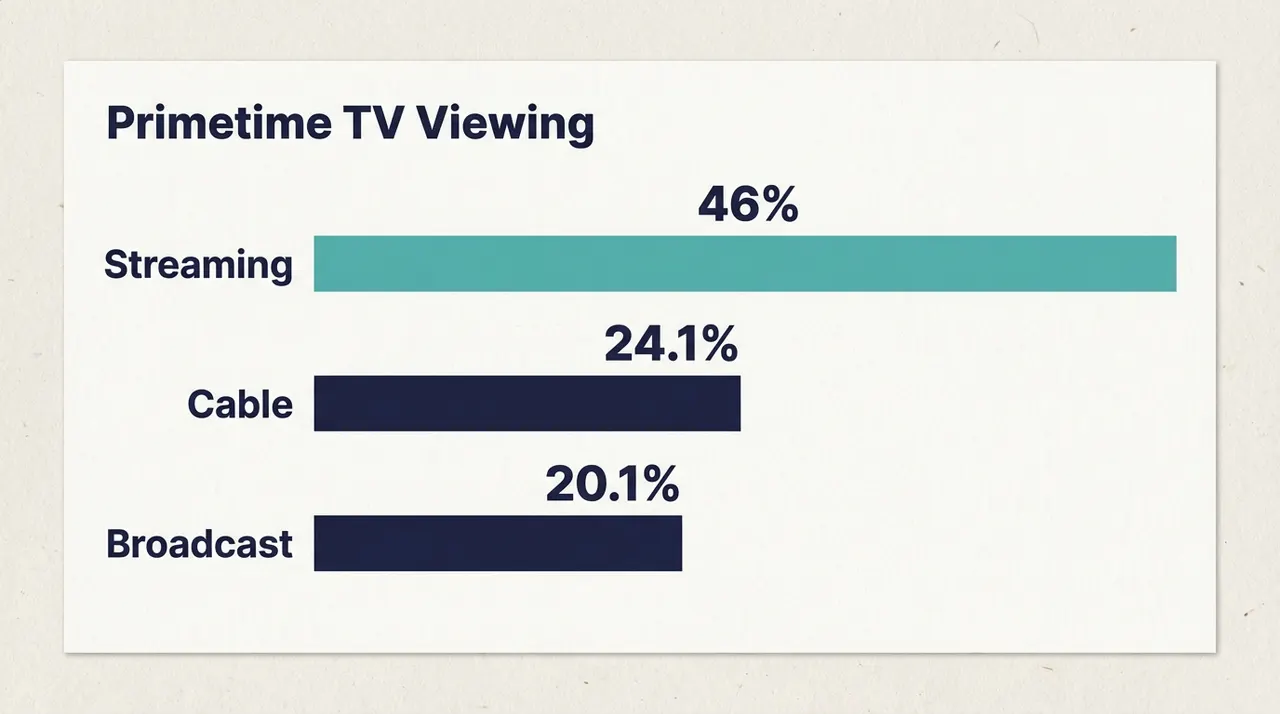
Streaming services now capture approximately 46% of all primetime television viewing in the United States, according to Nielsen's Gauge data from June 2025. This represents a fundamental shift in how Americans spend their evening entertainment hours, with streaming for the first time exceeding the combined viewership of traditional broadcast and cable television during the most valuable advertising hours of the day.
What the data shows
The primetime hours between 7 PM and 10 PM have traditionally represented the most coveted advertising inventory in television. According to Nielsen, streaming services reached a record 46% share of total TV viewing in June 2025. This represented a historic milestone: the first time streaming exceeded the combined share of broadcast (20.1%) and cable (24.1%) television.
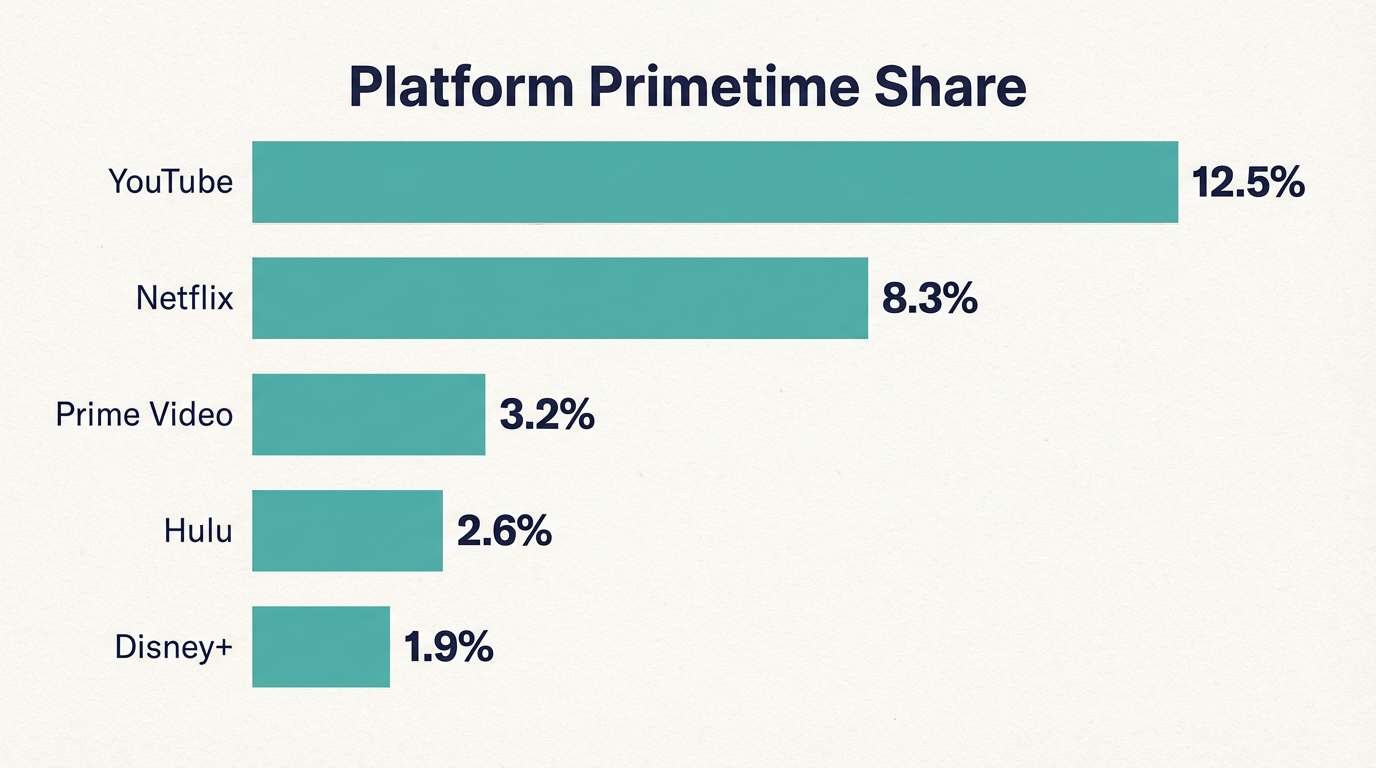
Over the four-year period from May 2021 to May 2025, streaming usage increased by 71%, while broadcast viewing declined by 21% and cable viewing dropped by 39%. YouTube leads all streaming platforms during primetime hours, capturing 12.5% of total TV viewing as reported by CNBC.
Netflix showed the strongest month-over-month growth in primetime viewing during June 2025, increasing its usage by 13.5% to reach 8.3% share according to TV Technology. Understanding the connected TV advertising landscape helps contextualize these primetime viewing shifts.
Breaking down the numbers
The 46% streaming share during primetime conceals important variations by platform, content type, day of week, and demographic group.
By platform
YouTube: 12.5% of total TV viewing (largest single platform)
Netflix: 8.3% of total TV viewing
Amazon Prime Video: 3.2% of total TV viewing
Hulu: 2.6% of total TV viewing
Disney+: 1.9% of total TV viewing
By demographic
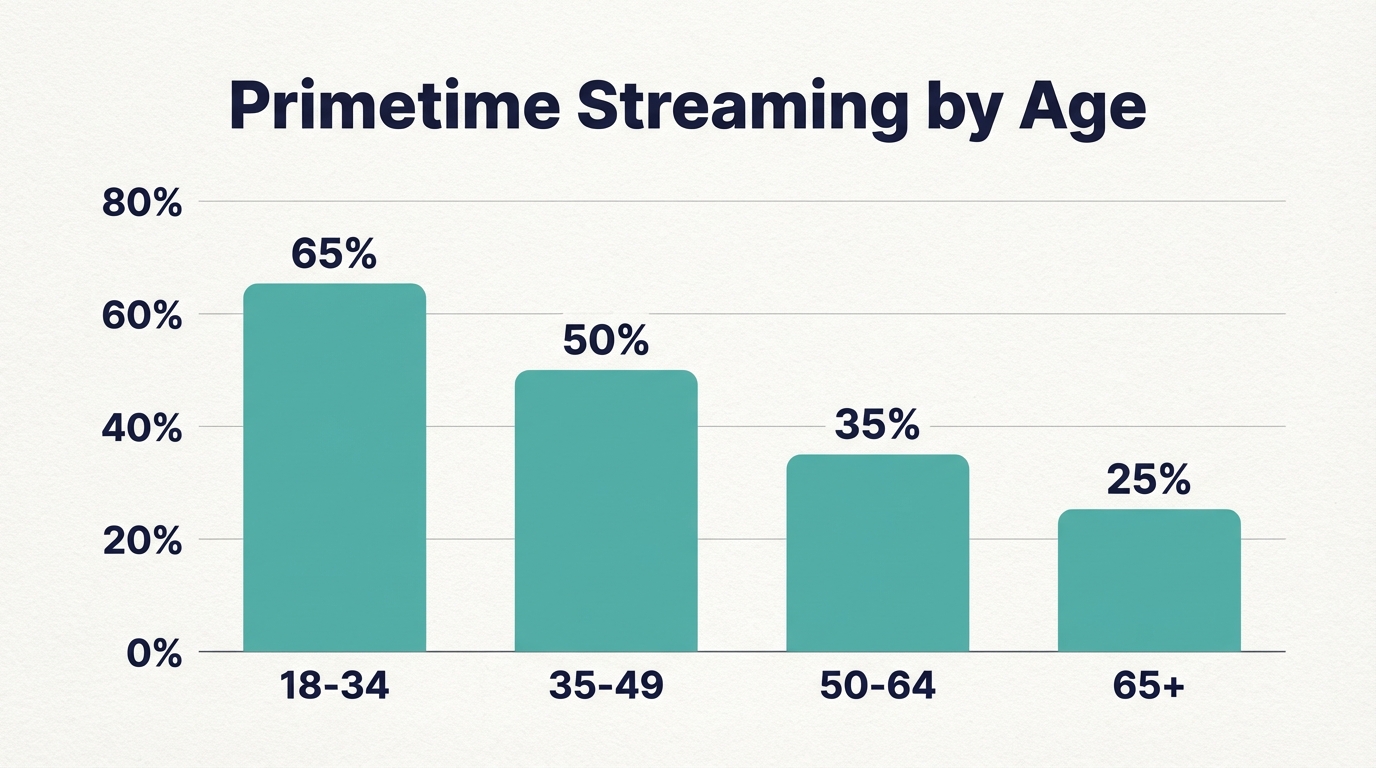
Viewers aged 18-34 stream during roughly 65% of their primetime viewing hours. Viewers aged 35-49 show more balanced patterns at approximately 50%. Viewers aged 50-64 maintain stronger traditional TV habits at about 35% streaming. Viewers 65 and older show streaming at approximately 25% of evening viewing.
This connects to the broader trend of streaming TV viewing transforming American television habits.
Why it matters for your business
For local businesses, primetime streaming offers something that traditional primetime TV never could: geographic precision at accessible price points. The cost structure has democratized access. While traditional television required substantial minimums, TV advertising through platforms like Adwave allows businesses to start with budgets as low as $50.
Local businesses like dental practices, restaurants, and real estate agents can now reach primetime audiences in their service areas.
How to take advantage of this trend
Budget for frequency during primetime hours. For most local businesses, allocating $300-500 specifically to primetime hours over a two-week campaign provides enough impressions to build recognition. Dayparting controls available on streaming platforms let you specify exact hours for your ads.
Consider day-of-week patterns for your specific business. A restaurant might focus Friday and Saturday primetime when dining-out decisions are being made. A home services company might target Wednesday and Thursday evenings when homeowners have time to research projects.
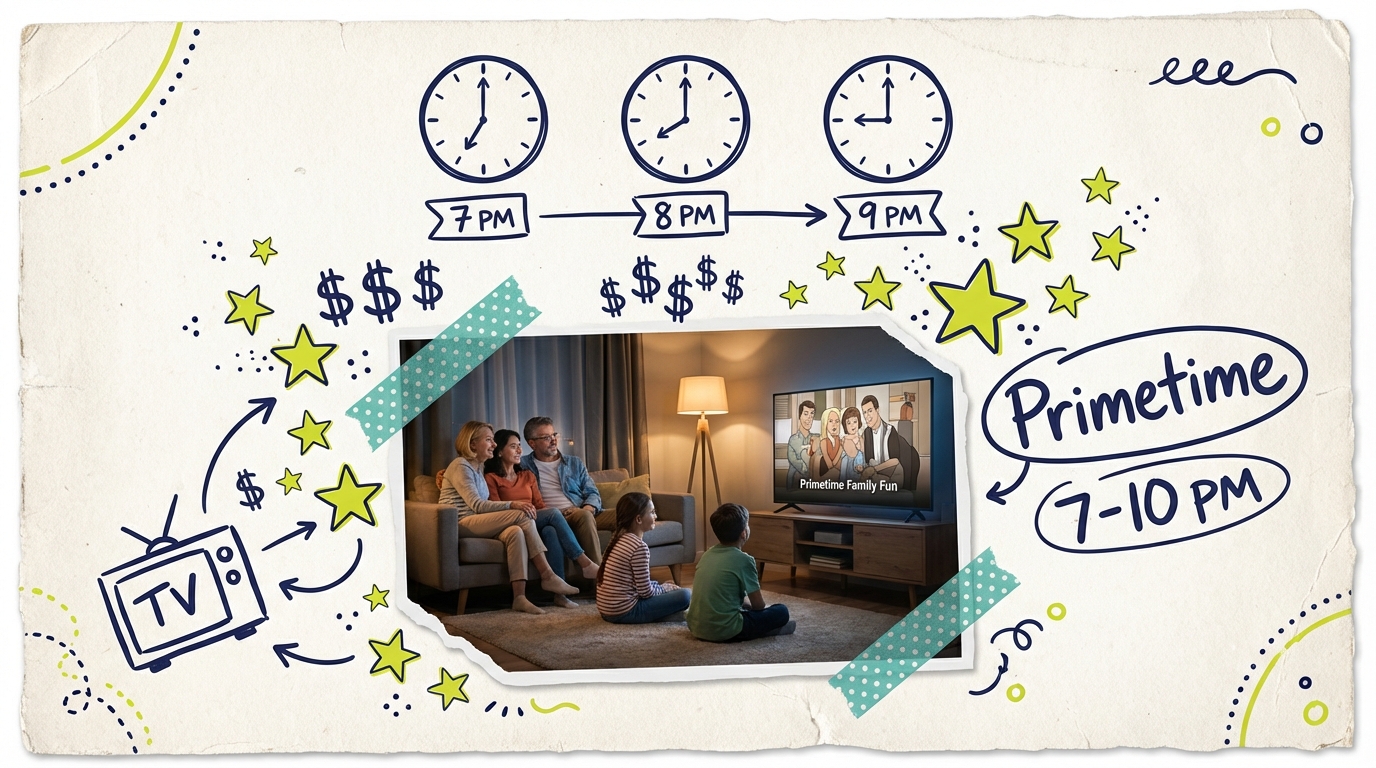
Target primetime hours: Schedule campaigns for 7-10 PM when streaming peaks
Household reach: Primetime means co-viewing with multiple family members
Premium attention: Lean-back viewing during primetime drives higher engagement
Compete with broadcast: Streaming primetime now rivals traditional TV audience sizes
The bigger picture
Streaming's primetime dominance represents a permanent structural shift in American television. According to Nielsen, streaming now accounts for 44.8% of all U.S. TV viewing, with the majority happening on ad-supported services.
Young adults establishing their first households are overwhelmingly choosing streaming-only setups. As this generation ages into peak advertising demographics, streaming primetime share will only increase.
What experts are saying
Nielsen's analysis characterized streaming exceeding combined broadcast and cable viewing as a "historic" shift. Trade publications have noted that small business advertisers are the unexpected beneficiaries of this shift, gaining access to primetime television audiences that were previously unaffordable.
Common questions answered
When exactly is primetime for streaming?
Traditional broadcast primetime runs 8-11 PM Eastern. Streaming primetime effectively starts earlier (7 PM) and extends later (past 11 PM). The 7-10 PM window shows the highest absolute viewing volumes.
Is streaming primetime cheaper than traditional TV primetime?
Yes, substantially. Traditional broadcast network primetime commands CPMs of $30-50+. Streaming primetime CPMs average $20-30, with many FAST channels and programmatic options running $15-25.
Can I target specific primetime hours on streaming?
Absolutely. Most streaming advertising platforms offer dayparting controls that let you specify exactly when your ads run.
Supporting data
Streaming primetime share: 46% of TV viewing during evening hours (Nielsen, June 2025)
YouTube primetime lead: 12.5% of total TV viewing (CNBC, June 2025)
Streaming growth rate: 71% increase since 2021 (Nielsen)
Ad-supported majority: Over 73% of TV viewing is ad-supported (TV Technology)