
You’ve probably had this thought before. Your business could look great on TV. A short, polished commercial could put you in front of local customers who already know your area, need your service, and are ready to buy.
Then reality hits. Traditional TV buying sounds expensive, slow, and built for bigger brands with bigger teams.
That’s why programmatic video advertising matters so much right now. It gives small businesses a way to buy video ad placements through software instead of long manual negotiations. The result is simpler access to streaming TV, online video, and other premium placements that used to feel out of reach.
The New Era of TV Ads for Your Local Business
For a long time, TV advertising felt like a closed door. A local business owner could want the reach and credibility of TV, but the process often came with media reps, rigid schedules, large commitments, and limited flexibility once a campaign was live.
Programmatic video advertising changes that. It turns video ad buying into a more accessible system, where software helps match your ad with the right audience and placement in real time. That matters because small businesses usually don’t have room for waste. Every dollar needs to go toward relevant viewers, not broad guesses.
This isn’t a niche tactic anymore. Global programmatic ad spend reached $595 billion in 2024 and is forecasted to hit nearly $800 billion by 2028. U.S. programmatic video spend is projected to surpass $110 billion in 2025 according to Blasto’s 2025 programmatic advertising trends and stats. Those numbers tell a simple story. Automated video buying has moved from an advanced option to a mainstream way to advertise.
Why this shift matters to local brands
A neighborhood dental office, a real estate agent, or a regional auto shop doesn’t need to buy “TV” the old way anymore. They need a way to reach local viewers on the screens people watch today. That can mean streaming content, connected TV, and digital video placements targeted by location and audience signals.
The big advantage is control. You can set a budget, define who should see the ad, and let the system handle the buying process at speed. That’s a very different model from committing to broad airtime and hoping enough of the right people happen to be watching.
Programmatic video is less like renting a billboard for everyone to see and more like choosing exactly which neighborhoods, households, and viewing moments matter most.
For many small businesses, this is also the first realistic path to TV-style visibility. If you’re still deciding whether television belongs in your marketing mix, Adwave has a useful explainer on why TV works for growing local businesses.
What Is Programmatic Video Advertising Anyway?
The simplest definition is this. Programmatic video advertising is the automated buying of video ad placements using software and data.
If that sounds abstract, consider it an automated stock market for ad space. Instead of a person calling a station, negotiating a rate, and booking a block manually, software evaluates each available ad opportunity and decides whether it matches your campaign. If it does, the system places a bid.
That all happens very quickly, often before the viewer even notices anything loading.
The stock market analogy that makes it easier
In a stock market, buyers and sellers meet through a system that processes offers fast. Programmatic video works in a similar way. Publishers make video ad inventory available. Advertisers define what they want. The system compares the opportunity to the advertiser’s rules and budget, then makes a decision.
What makes this useful for a small business is precision. You’re not just buying “a TV ad.” You’re buying access to specific viewers, locations, devices, and contexts that fit your goals.
If you're curious about the wider role automation plays in content and campaigns, this piece on how AI empowers video for marketers gives helpful context without getting too technical.
Traditional buying compared with programmatic
Why the difference matters
Traditional buying can still make sense in some cases, especially for broad awareness campaigns. But many local businesses don’t need broad awareness everywhere. They need relevant awareness nearby.
That’s where programmatic shines. It removes much of the friction that used to make video buying feel intimidating. It also makes testing easier. A business can launch, watch performance, and refine instead of locking everything in upfront.
Plain-English takeaway: programmatic video advertising means software does the hard work of finding and buying the right video ad placements for your goals.
If you want a foundational overview from a small-business angle, Adwave’s guide to what programmatic advertising is breaks down the core idea in straightforward language.
How the Digital Ad Auction Works
It is common to get stuck here because the phrase real-time bidding sounds more technical than it is. In practice, it’s just a very fast digital auction.
A viewer opens a video on a website, app, or streaming platform. That creates an ad opportunity. Systems on the publisher side and advertiser side communicate almost instantly to decide which ad should appear.
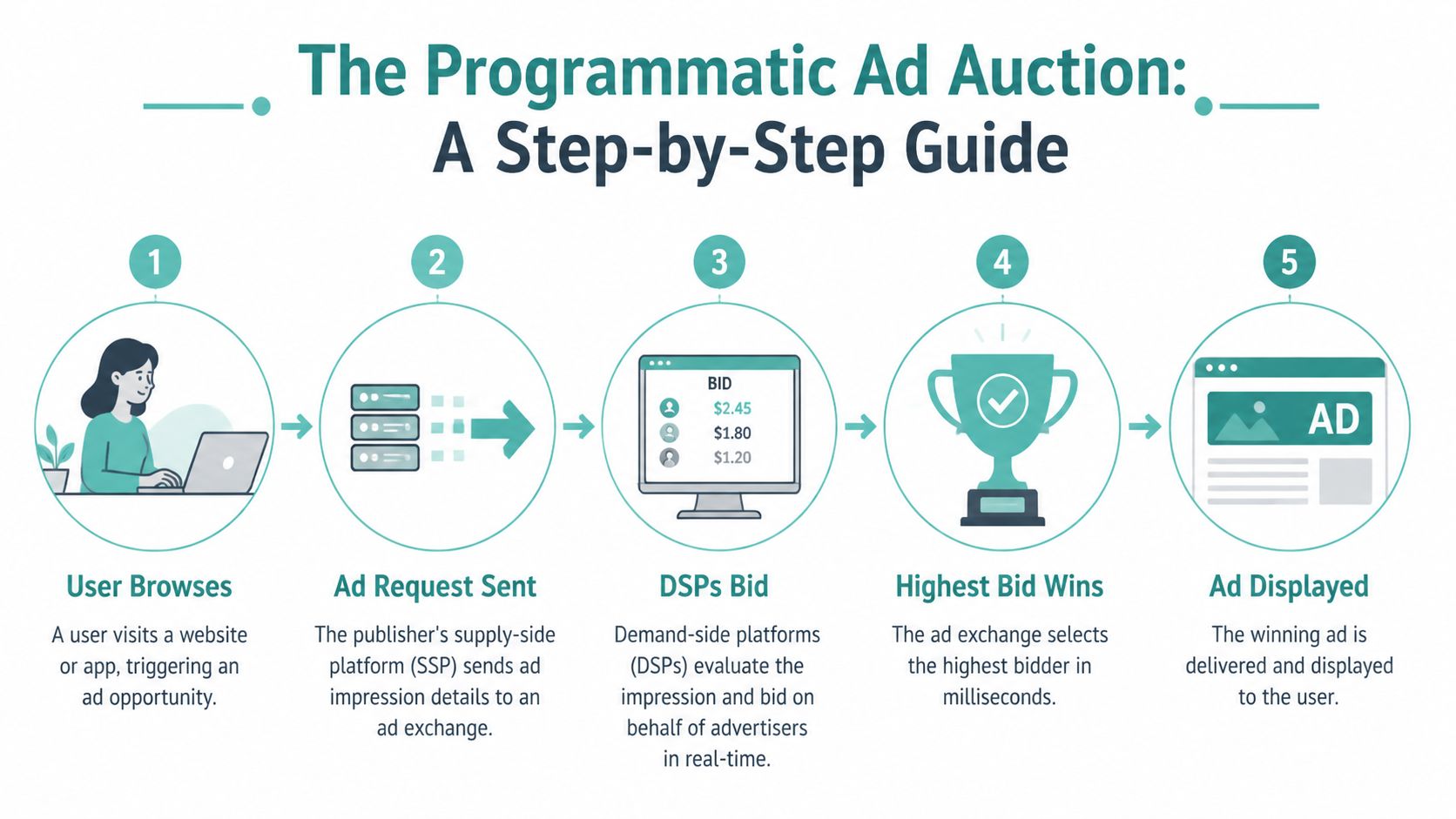
This visual helps make that process concrete.
The five moving parts
A viewer starts browsing or watching Someone visits a page or opens a video stream. That creates an available impression.
The publisher offers that impression The publisher uses a tool called an SSP, or supply-side platform. Its job is to make ad inventory available.
Advertisers evaluate the opportunity A DSP, or demand-side platform, checks whether the impression fits an advertiser’s settings like audience, geography, and budget.
A bid is placed If the impression looks like a good match, the DSP bids.
The winning ad gets shown The highest compliant bid wins, and the ad appears.
Why this system is useful
According to Amazon Ads’ guide to programmatic video, real-time bidding operates within milliseconds, and when a user interacts with video content, an ad impression auction is triggered. Amazon also notes that the DSP evaluates the bid request against targeting parameters, the highest compliant bid wins, and this process reduces wasted impressions by 20-30% compared to traditional buys.
That last part matters most to a small business owner. The auction isn’t just about speed. It’s about filtering. Your campaign can skip impressions that don’t fit your audience rules instead of paying for everyone equally.
A simple local example
Say you own a roofing company. You don’t want your ad shown broadly across the whole country. You want relevant viewers in your service area, on devices and content types that fit your goals.
The DSP handles that logic automatically. If an impression doesn’t match, it passes. If it does, it bids.
A good way to think about RTB is this. Your campaign shops for attention the way a careful buyer shops for inventory. It doesn't buy everything. It buys what fits.
That’s why the system feels complex from the outside but logical once you break it down. The software isn’t guessing. It’s following the rules you set.
Targeting Inventory and Pricing Models Explained
Once you understand the auction, the next question is practical. What can you control?
In programmatic video advertising, three levers shape the campaign more than anything else. Targeting, inventory, and pricing. If you understand those, the rest starts to feel much less mysterious.
Targeting means choosing who should see your ad
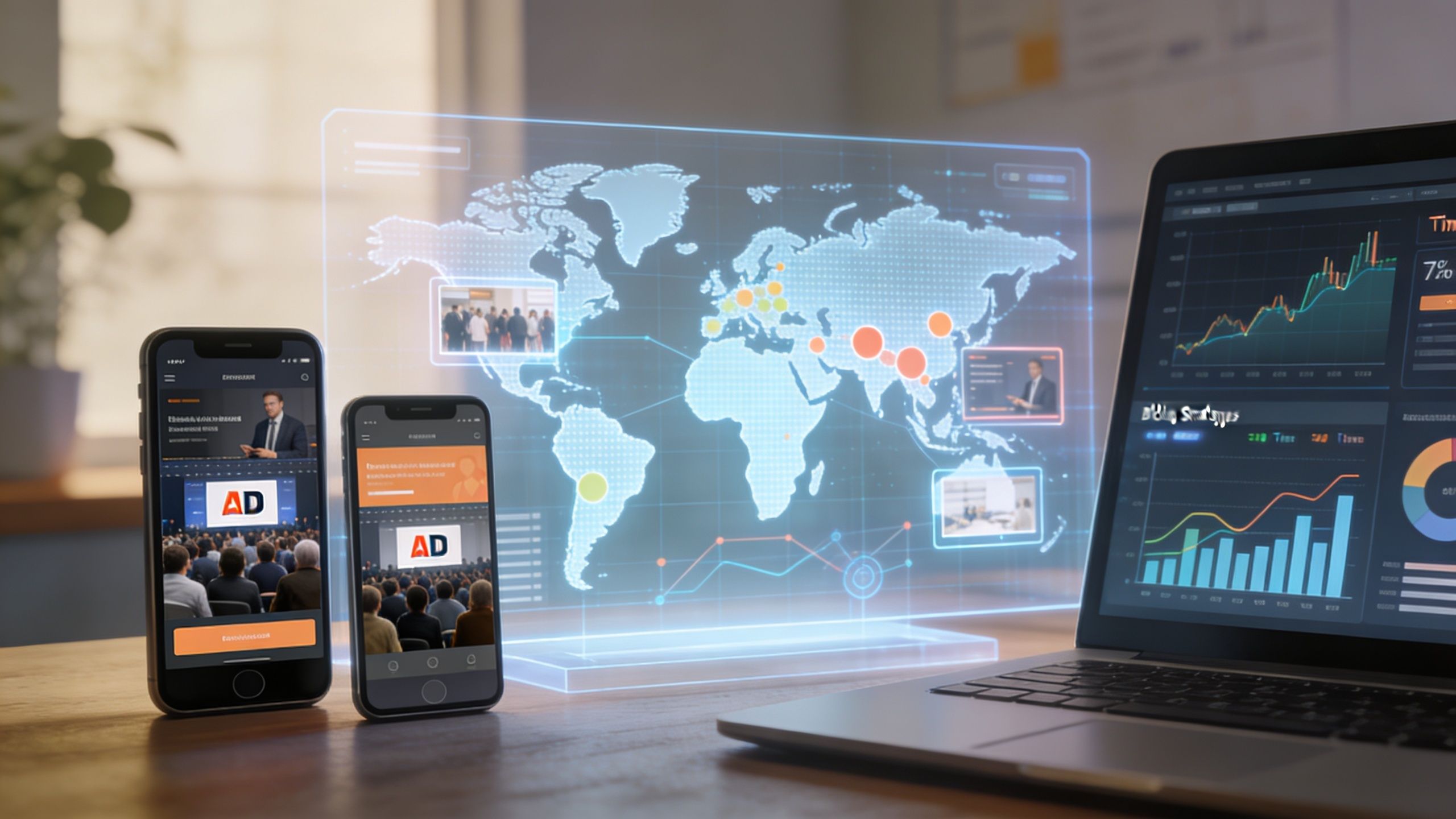
Targeting tells the system which viewers matter most. That can include location, age range, media habits, device type, and prior behavior.
Local businesses especially benefit. A law office doesn’t need statewide exposure if most of its clients come from a smaller service area. A restaurant doesn’t need national reach if its goal is nearby foot traffic.
StackAdapt notes in its programmatic video advertising guide that data-driven optimization uses signals like age, media patterns, and device usage, and that retargeting website visitors can boost engagement by 25-40% over manual buys. The same source says optimization can reduce effective CPM by 15-20% by eliminating waste.
If local reach is part of your plan, this overview of geo-targeting for advertising campaigns is useful because it shows how location settings translate into actual audience selection.
Inventory means where the ad can appear
Not all video placements are the same. A few common categories matter most:
Connected TV Ads shown on streaming TV environments. This is often where businesses get that “real TV commercial” feeling.
In-stream video Ads that play before, during, or after video content.
Out-stream video Video placements that appear within articles or other non-video page content.
The right choice depends on your goal. Connected TV often supports awareness well. In-stream can work when you want stronger attention in a video environment. Out-stream can add reach in editorial settings.
Pricing means how you pay for access
The pricing term many small businesses see first is CPM, which means cost per thousand impressions. In plain language, it’s what you pay to show your ad a thousand times.
That doesn’t mean every campaign should chase the cheapest CPM. Cheap inventory can be poor inventory. What matters is whether you’re paying for the right audience in the right environment.
Practical rule: lower cost isn't the same as better value. Better value comes from relevant reach and less waste.
If you're working through how much to allocate across channels, this guide to ad budgets for growing businesses can help frame budget choices in a more grounded way.
Why Programmatic Is a Perfect Fit for Small Budgets
A lot of small business owners hear “advanced ad technology” and assume it’s built for large brands. In practice, programmatic video advertising often solves the exact problems smaller advertisers have: limited time, limited budget, and very little room for wasted spend.
The biggest reason is efficiency. Instead of buying broad exposure and hoping some of it lands with the right audience, programmatic lets you narrow the campaign to the viewers most likely to matter.
Why smaller advertisers benefit so much
A local business usually needs three things from advertising:
Clear control You need to know what you're spending and where it’s going.
Local precision You want to reach nearby customers, not random viewers outside your market.
Feedback you can use You need reporting that helps you improve, not just a vague sense that the campaign ran.
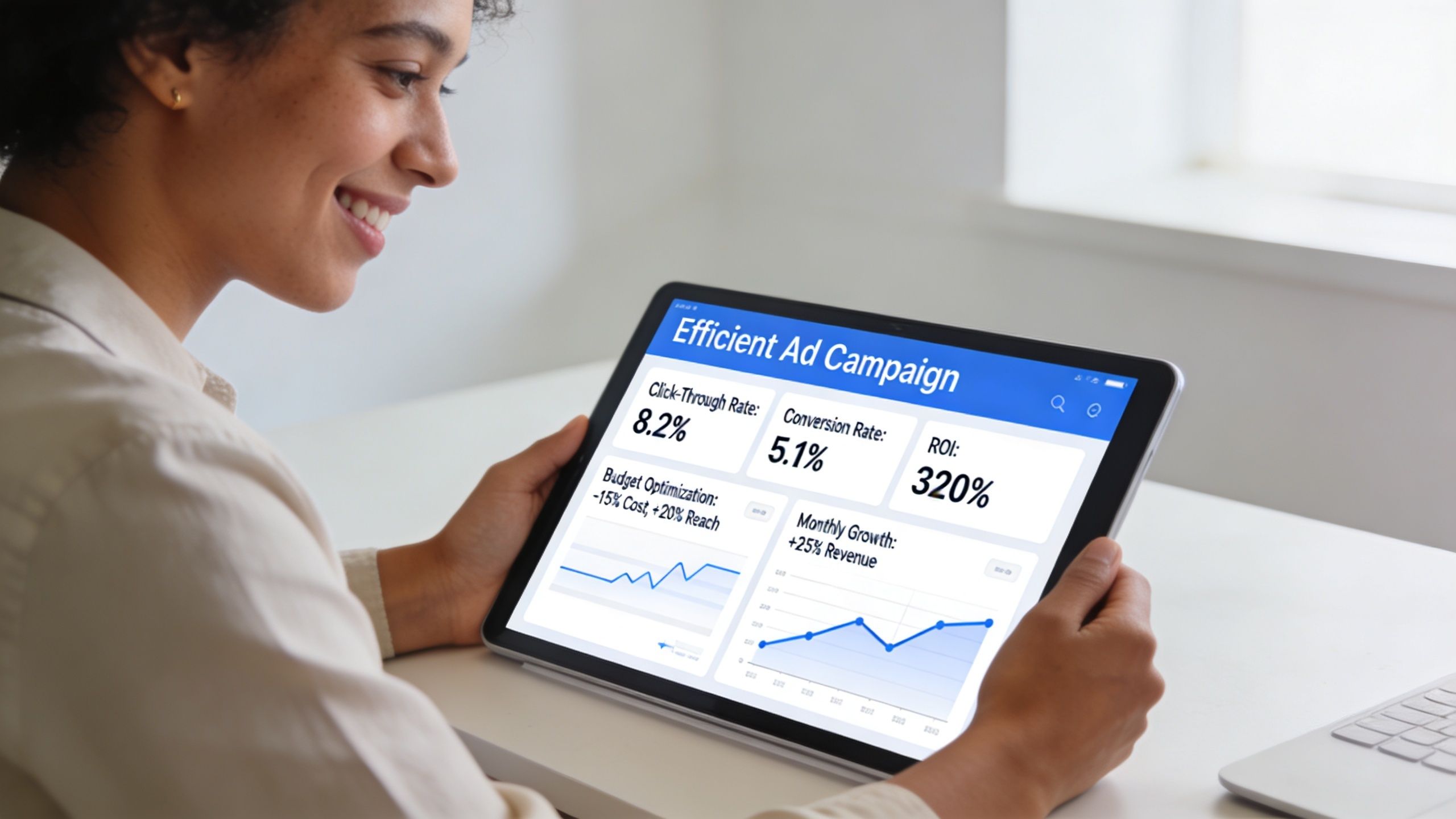
Custom Market Insights reports in its programmatic advertising market analysis that the market is projected to reach $5,182 billion by 2034, with CTV as its fastest-growing segment. The same source states that programmatic ads can achieve 200% higher click-through rates than non-targeted ads, and retargeting often delivers 10x better performance.
For a small business, those figures support a practical idea. Relevance beats broadness. If your budget is modest, showing the ad to a smaller, better-matched audience can outperform a wider but looser buy.
It also fits how people buy
Many local businesses don’t need one ad to do everything. They need awareness first, then follow-up through search, website visits, or offers. Programmatic video works well in that role because it can build recognition before a person searches your business name or clicks later through another channel.
That’s why it pairs well with broader digital tactics. If you're also trying to convert traffic after people discover you, these practical online sales strategies can help connect awareness campaigns with on-site action.
Small budgets usually fail when they spread too wide. Programmatic helps by narrowing the campaign before the money goes out the door.
The strongest benefit isn’t just automation. It’s selective automation. The system helps spend money where it has a stronger chance of mattering.
Navigating Common Pitfalls Like Ad Fraud
Programmatic video advertising is powerful, but it isn’t automatically clean or efficient. That surprises many first-time advertisers.
The system is large, fast, and heavily automated. Those strengths also create openings for bad inventory, low-quality placements, and invalid traffic if you’re not careful about where your campaign runs.
Where waste happens
Some ad impressions are never meaningfully seen. Some appear in poor environments. Some come from traffic that isn’t useful to a real advertiser.
Campaign Asia highlights the scale of that problem in its reporting on inefficient programmatic advertising and wasted ad revenue. The article cites that 35% of programmatic ad spend is wasted on non-viewable impressions, invalid traffic, and made-for-advertising sites, that only 36 cents of every dollar effectively reaches consumers, and that this leads to $22 billion in untapped ad revenue.
Those numbers don’t mean programmatic is a bad channel. They mean buying cheaply without safeguards can be costly.
What small businesses should look for
You don’t need to become an ad-tech auditor. You do need a process that protects your budget.
Focus on these questions:
Inventory quality Are your ads appearing in credible, premium environments?
Transparency Can you understand where spending is going at a high level?
Brand safety Are there controls to avoid low-quality placements?
Waste reduction Is the system designed to filter poor impressions instead of chasing volume for its own sake?
The real risk isn't automation itself. It's automation without guardrails.
That’s why many small businesses do better with a managed, simpler platform rather than trying to assemble several tools on their own.
Launch Your First TV Ad in Minutes with Adwave
At this point, the appeal of programmatic video advertising is usually clear. The hard part is execution. Most small businesses don’t want to learn DSP interfaces, source inventory, build creative from scratch, and troubleshoot campaign setup.
That’s where an efficient platform helps. Adwave is an AI-powered TV advertising platform that lets small businesses create, launch, and measure TV-style ads without managing the underlying ad-tech stack directly.
What the workflow looks like
The setup is built to be simple:
Start with your business information You enter your website URL so the platform can generate a broadcast-ready ad.
Set your audience and market You choose who you want to reach, including local targeting that matches your service area.
Choose your budget Campaigns start at $50, and pacing is designed not to exceed the amount you set.
Launch across premium channels Adwave places ads across 100+ premium channels, including NBC, Hulu, and ESPN.
Track performance in one place You get a dashboard that shows delivery and campaign results in real time.
Why this matters for a local advertiser
This model removes several common barriers at once. You don’t need a production crew to make a professional-looking video. You don’t need to negotiate manually with media sellers. You don’t need a huge upfront commitment to test whether TV-style advertising can work for your business.
The platform also uses audience data and viewing patterns to place ads in a more relevant way, with estimated CPMs of $15 to $35 and access to premium inventory that would traditionally be harder for a small business to buy directly.
If you want the step-by-step version, Adwave has a practical guide on how to create your first Adwave TV ad.
For local businesses, that’s the important shift. Programmatic video advertising no longer has to feel like a complicated system reserved for large brands. With the right workflow, it becomes a manageable way to test TV, refine your targeting, and grow visibility in your market.
If you want to put programmatic video advertising into action without wrestling with ad-tech complexity, Adwave offers a straightforward path. You can generate a TV-ready ad from your website, set a local audience, choose a budget starting at $50, and launch across premium channels with real-time reporting.


