-
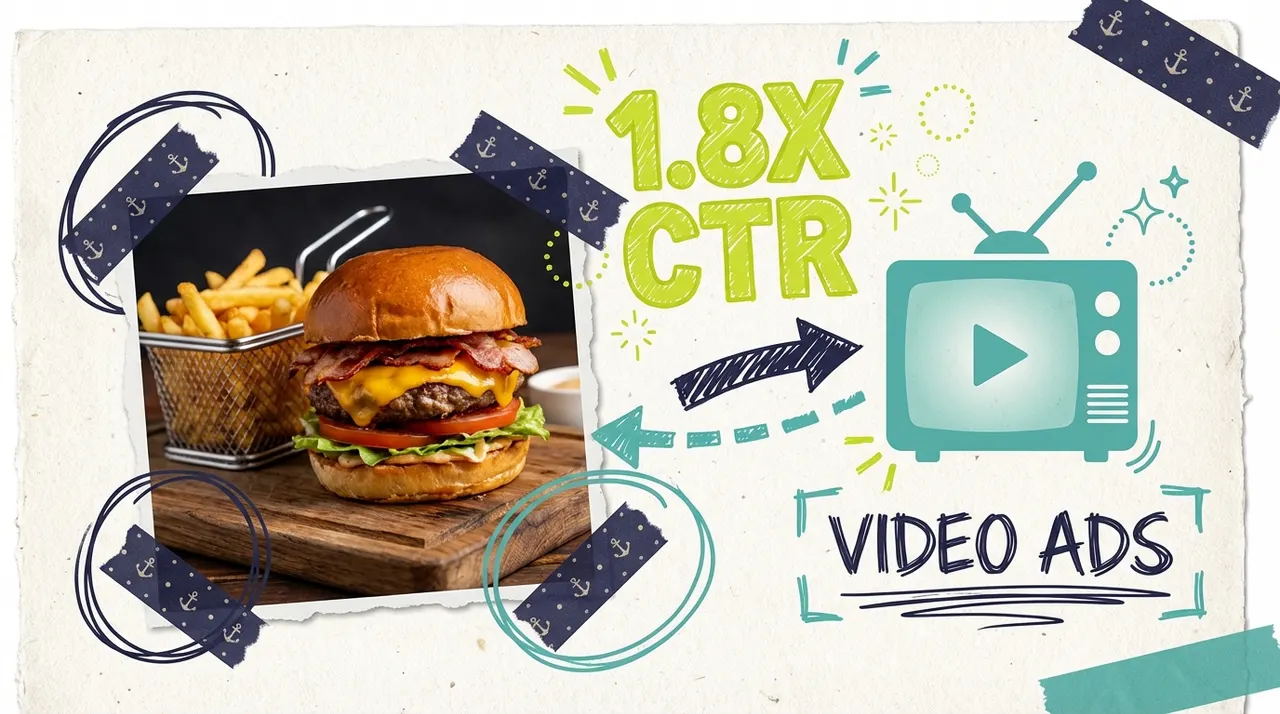
1.8x
Video ad CTR vs static ads
-
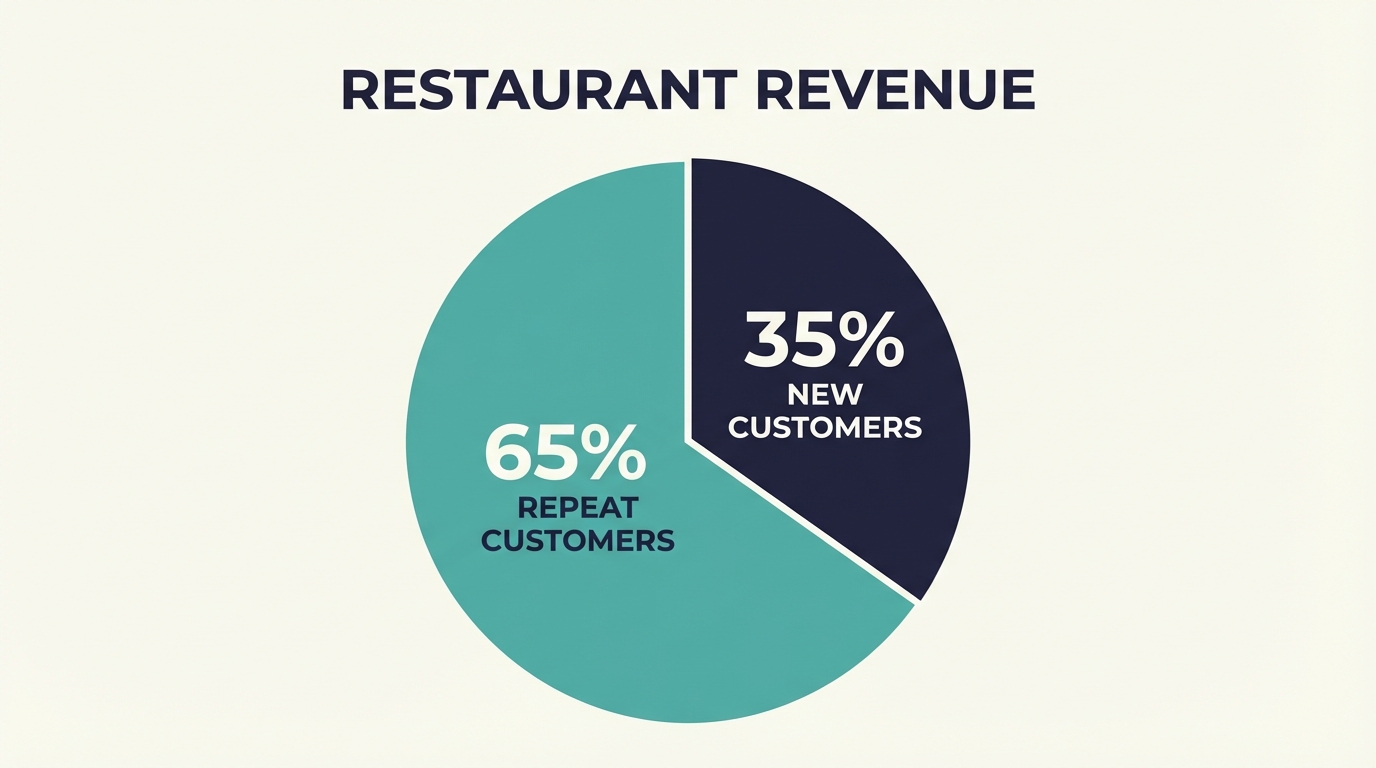
65%
Revenue from repeat customers
-
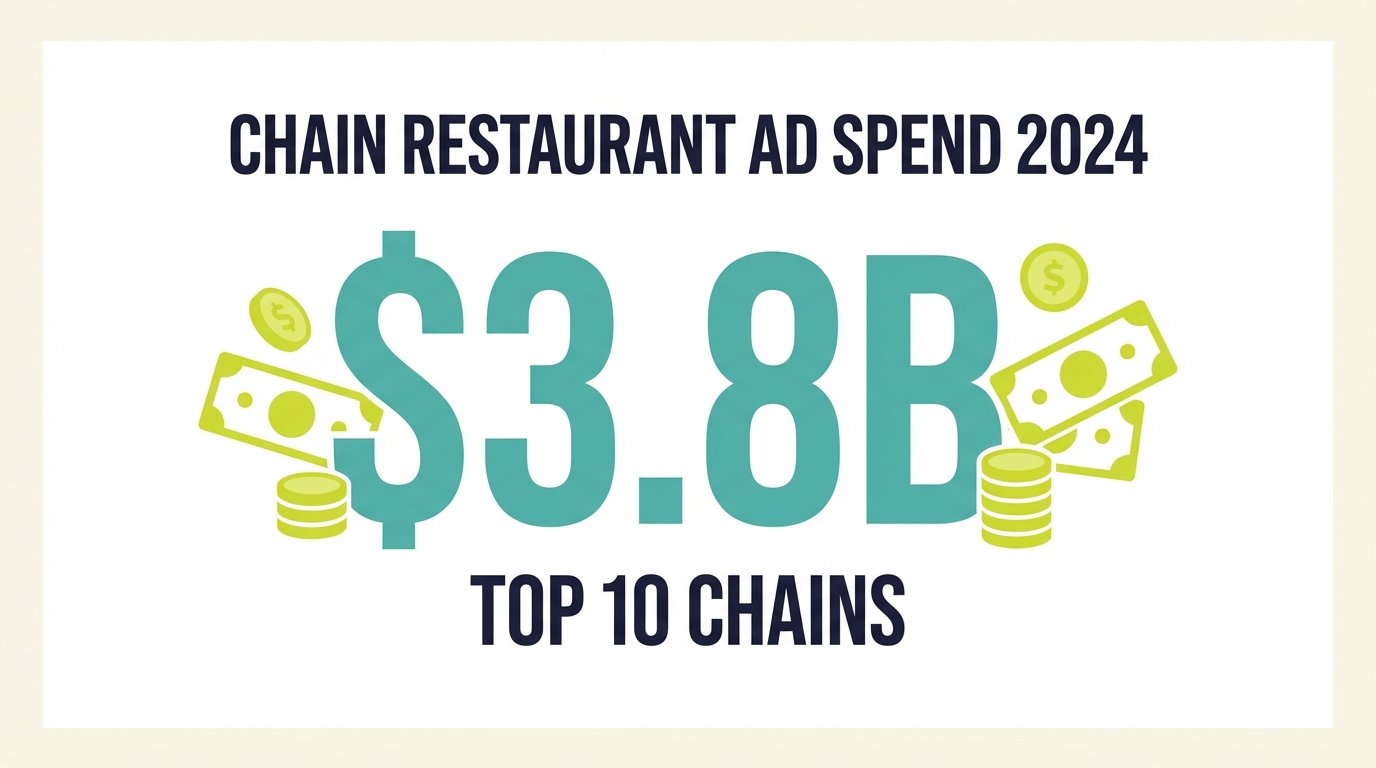
$3.8B
Top 10 chains' 2024 ad spend
TV advertising delivers strong results for restaurants, with video ads generating 1.8x higher click-through rates than static formats and restaurant PPC campaigns converting 6-12% of clicks into reservations or orders, according to Marketing LTB research (November 2025). With 65% of restaurant revenue coming from repeat customers and 88% of diners searching online before choosing where to eat, TV advertising works as a powerful brand-building tool that drives both new customer acquisition and return visits. For restaurants competing against chains that collectively spent $3.8 billion on measured media in 2024 (Ad Age), accessible TV advertising through streaming platforms creates opportunities to build local recognition without enterprise budgets.
What the data shows
Restaurant advertising effectiveness depends heavily on format, targeting, and how well campaigns integrate with broader marketing strategy. The data reveals why TV advertising has become increasingly attractive for restaurants of all sizes.
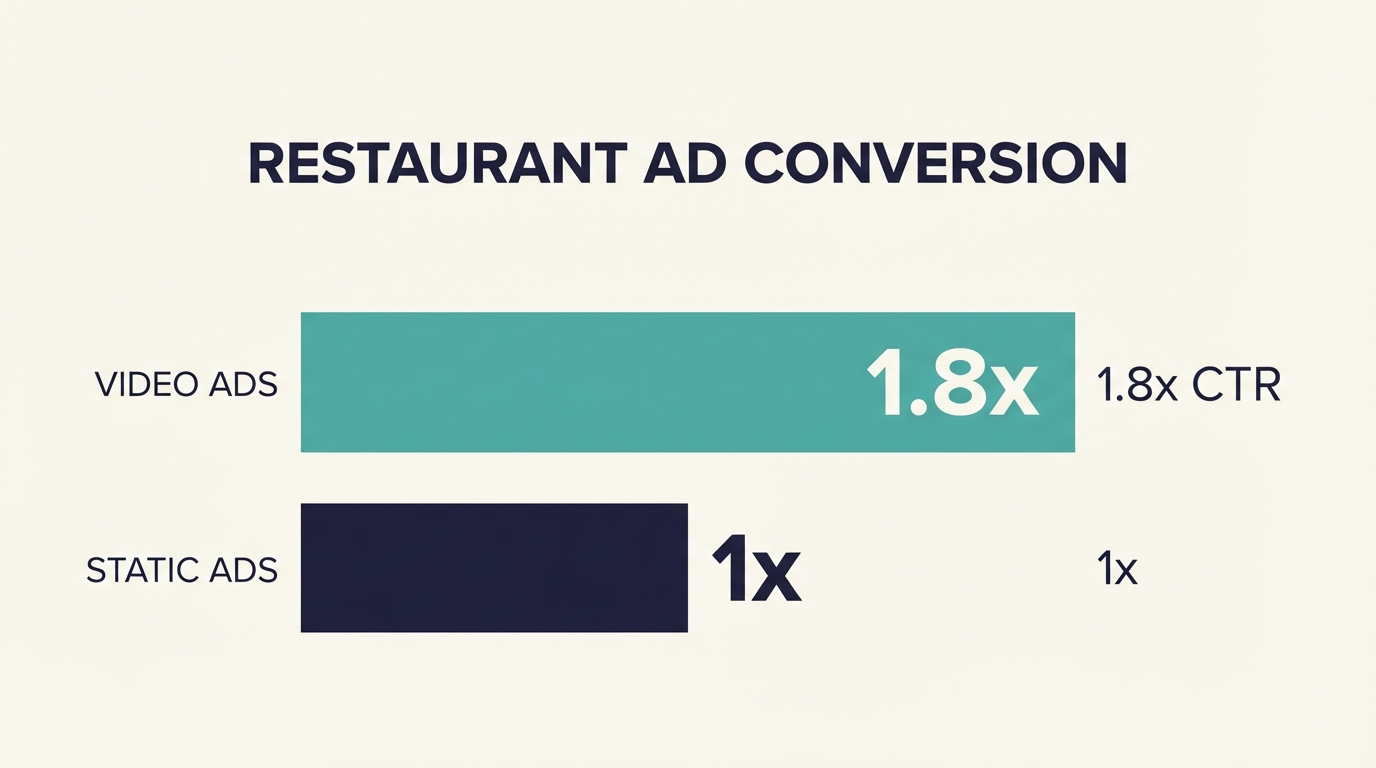
Video advertising consistently outperforms static formats in restaurant marketing. Ads featuring video tours of restaurant interiors, kitchens, or food preparation achieve 1.8x higher click-through rates than image-based campaigns according to Marketing LTB analysis. This visual medium advantage makes TV advertising especially well-suited for restaurants, where atmosphere, food presentation, and experience are central to the value proposition. Potential diners want to see where they might eat before making a decision.
The conversion metrics reinforce TV's effectiveness. Restaurant PPC campaigns convert 6-12% of clicks into reservations or orders, demonstrating that paid advertising successfully moves diners from awareness to action. While this data spans multiple advertising channels, TV advertising contributes to top-of-funnel awareness that makes lower-funnel conversion campaigns more effective. Viewers who have seen a restaurant on TV are more likely to click ads and convert than those encountering the brand for the first time.
This multi-touch attribution model explains why sophisticated restaurant marketers view TV and digital as complementary rather than competing channels. TV advertising creates the brand recognition and trust that improve performance across all subsequent marketing touchpoints. A viewer who sees your restaurant on TV, then encounters a Facebook ad, then reads a positive review, is far more likely to make a reservation than someone who only sees the digital components of that journey.
Consumer behavior patterns support TV's reach potential. With 88% of diners searching online before choosing a restaurant and 91% looking up menus before visiting (Marketing LTB, November 2025), restaurants need brand recognition that precedes the search moment. TV advertising builds this recognition, so that when viewers search for dining options, they already have positive associations with restaurants they've seen advertised.
EDO research found that linear TV ads were 5% more effective than streaming ads for QSR (Quick Service Restaurant) advertisers in Q1 2024, suggesting that traditional TV viewing contexts remain valuable for restaurant advertising. However, the accessibility of streaming TV has made TV advertising viable for restaurants that could never afford linear TV buying, expanding the medium's reach across restaurant categories.
The scale of restaurant TV advertising underscores its perceived effectiveness. The nation's ten most-advertised restaurant chains spent a combined $3.8 billion on measured media in 2024 according to Ad Age and MediaRadar data. Major chains continue investing heavily in TV because it works for driving both brand awareness and traffic. The question for independent and regional restaurants has been whether they could access similar capabilities at smaller scale, and streaming TV has answered that question affirmatively.
The disparity between chain and independent restaurant advertising budgets has historically created an uneven competitive landscape. Chain restaurants dominate airwaves with constant presence while independents rely on word-of-mouth and digital marketing. Streaming TV changes this equation by allowing independent restaurants to appear on the same premium channels, often reaching the same viewers, at budgets that independents can afford. This democratization represents a fundamental shift in restaurant marketing possibilities.
Breaking down the numbers
Understanding restaurant TV advertising effectiveness requires examining how different factors influence campaign performance.
By restaurant type
Different restaurant categories see varying TV advertising results. Quick Service Restaurants (QSR) benefit from frequency and reach, using TV to stay familiar for convenience-driven decisions. Fine dining establishments use TV less for immediate traffic and more for special occasion awareness and brand positioning. Casual dining falls between, using TV to drive both trial visits and repeat business.
Performance metrics by category reveal these differences:
QSR/Fast Food: High frequency campaigns, focus on limited-time offers, strong same-day response
Casual Dining: Brand-building focus, family and group occasions, 1-2 week consideration window
Fine Dining: Special occasion positioning, gift card and event promotion, longer brand-building timeline
Fast Casual: Growing category, higher ticket than QSR, appeals to quality-conscious convenience seekers
By daypart and targeting
When restaurants advertise matters as much as where they advertise. Dinner decision-making peaks in late afternoon and early evening, making these dayparts especially valuable for restaurant campaigns. Morning shows work well for breakfast and brunch promotions, while late-night programming reaches viewers making next-day dining plans.
Geographic targeting amplifies restaurant TV effectiveness. A neighborhood restaurant advertising within a 10-mile radius achieves higher relevance and conversion than broader campaigns. Streaming TV platforms enable this precision in ways traditional TV buying never could, letting local restaurants target specific zip codes or radius areas around their locations.
By budget level
Restaurant advertising budgets vary dramatically, but effective TV advertising is possible across a wide range. National chains allocate millions monthly, while independent restaurants may spend hundreds. The key metrics remain consistent: awareness, consideration, and traffic generation.
Restaurants typically allocate 2-6% of monthly revenue to marketing according to industry benchmarks (Marketing LTB). For a restaurant generating $50,000 monthly, that translates to $1,000-$3,000 in marketing budget. TV advertising that starts at $50 (through platforms like Adwave) makes the medium accessible within even modest marketing budgets, allowing restaurants to test TV alongside digital campaigns.
The economics favor testing. A restaurant spending $500 on TV advertising over two weeks can generate meaningful impressions across premium streaming channels in their target geography. At typical CTV CPMs of $25, that budget delivers approximately 20,000 impressions, enough to establish presence and begin building awareness in a local market. Starting small allows restaurants to learn what works before scaling investment.
Why it matters for your business
For restaurant owners, TV advertising effectiveness translates directly into measurable business outcomes: more covers, higher check averages, and stronger customer lifetime value.
The repeat customer economics make brand advertising especially valuable for restaurants. With 65% of restaurant revenue coming from repeat customers (Marketing LTB), investments in brand awareness pay dividends over time as customers return. A diner who discovers your restaurant through TV and becomes a monthly regular represents far more value than the initial visit. TV advertising builds the kind of brand familiarity that turns trial customers into loyal patrons.
Trust and credibility matter enormously in restaurant marketing. According to the same research, 94% of diners read online reviews before dining, and 72% trust online reviews as much as personal recommendations. TV advertising establishes credibility that complements review-based discovery. A restaurant that advertises on TV signals stability, success, and confidence in their product, providing reassurance that supports positive review interpretation.
The competitive landscape demands attention-grabbing marketing. With chain restaurants spending billions on advertising, independent restaurants face the challenge of being noticed at all. TV advertising for restaurants creates presence in the same medium where major chains compete, establishing parity of perception that pure digital marketing can't achieve. When viewers see your restaurant advertised between segments of their favorite streaming shows, you're playing on the same field as national brands.
Specific restaurant applications illustrate TV's versatility:
Grand openings: Build awareness before launch, drive traffic from day one
Seasonal promotions: Advertise holiday menus, patio season, special events
Slow period marketing: Fill weeknight tables and off-peak hours
Catering and events: Reach event planners and corporate decision-makers
Gift card campaigns: Drive holiday and occasion-based purchases
The accessibility revolution has transformed restaurant TV advertising economics. Platforms like Adwave enable restaurants to create professional TV commercials from existing photos and website content, eliminating production costs that once made TV prohibitive. With campaigns starting at $50 and running across 100+ premium channels including Hulu, ESPN, and local news programming, restaurants can test TV advertising without significant risk.
How to take advantage of this trend
Restaurant TV advertising success requires strategic planning that maximizes limited budgets and aligns campaigns with business goals.
Here's how to build an effective restaurant TV advertising strategy:
Start with a clear objective: Brand awareness for new restaurants, traffic for established locations, event promotion for special occasions
Target geographically: Focus on a realistic radius around your location, typically 5-15 miles depending on restaurant type
Choose the right dayparts: Evening programming for dinner promotion, morning for breakfast/brunch, weekend for special occasion dining
Feature your food: Video content showing appetizing dishes outperforms generic restaurant imagery
Include a clear call to action: Mention reservations, special offers, or distinctive menu items
Test before scaling: Start with $100-200 to learn what resonates before committing larger budgets
Creative execution matters especially for restaurants. According to Marketing LTB research, 65% of customers say menu photos influence where they eat, and 60% say ambiance photos matter more than written descriptions. TV advertising should showcase the visual appeal that drives dining decisions, including appetizing food presentation, inviting atmosphere, and the energy of a busy, successful restaurant.
Timing campaigns around dining decisions maximizes effectiveness. Restaurant choices often happen in the 1-4 hours before meals, making late afternoon and early evening TV viewing especially valuable for dinner-focused campaigns. Weekend viewing works well for brunch and special occasion promotion, while weeknight campaigns can help fill traditionally slower periods.
Measurement should account for restaurant-specific conversion patterns. Track reservation inquiries, phone calls, and walk-in traffic alongside digital metrics. Ask new customers how they heard about you. Monitor branded search volume during and after campaigns. Restaurant TV advertising often drives indirect conversion, where viewers search for the restaurant later rather than responding immediately.
The attribution challenge shouldn't discourage restaurants from TV advertising. Traditional marketing attribution models undercount TV's contribution because they focus on last-click metrics. A diner who sees your TV ad, searches for your restaurant on Google a week later, and makes a reservation would typically be attributed to organic search rather than TV. Smart restaurant marketers look at overall business performance during advertising periods rather than trying to trace every conversion to a specific channel. If sales increase, traffic grows, and brand searches rise during TV flights, the advertising is working even if precise attribution remains elusive.
The bigger picture
Restaurant TV advertising exists within broader industry trends that make the medium increasingly accessible and effective for food service businesses of all sizes.
The streaming shift benefits restaurants
As viewers migrate from linear TV to streaming platforms, restaurants gain advertising opportunities that didn't exist a decade ago. Streaming platforms offer geographic targeting that makes local restaurant advertising viable, audience targeting that reaches likely diners, and flexible budgets that accommodate restaurant marketing realities. The same shift that has disrupted traditional TV has created new possibilities for local advertisers.
Visual content drives restaurant marketing
The food industry has always been visual, but social media and streaming have intensified this emphasis. Platforms like Instagram and TikTok have trained consumers to make dining decisions based on visual content. According to Marketing LTB, 61% of diners say TikTok food content influences where they eat, and 54% discovered a new restaurant via social media in the last month. TV advertising extends this visual storytelling to the biggest screen in the house, reaching viewers in a lean-back, receptive viewing context.
Competition requires differentiation
With 68% of consumers ordering food delivery at least monthly and 57% discovering new restaurants inside delivery apps (Marketing LTB), restaurants face intense competition for diner attention. Brand advertising through TV helps restaurants stand out from the undifferentiated listings that dominate delivery platforms. A restaurant with TV presence carries implicit credibility that third-party delivery platforms can't convey.
The restaurant industry's competitive dynamics have intensified significantly in recent years. New concepts, ghost kitchens, and delivery-only operations have flooded markets, making customer acquisition more expensive and brand differentiation more critical than ever. Restaurants that invest in TV advertising build the kind of familiar awareness that drives preference when diners face increasingly overwhelming choices.
Technology democratizes TV access
The combination of programmatic ad buying, AI-powered creative generation, and low minimum spends has fundamentally changed who can advertise on TV. Restaurants that once could only dream of TV advertising can now afford to test the medium. This democratization is especially significant for restaurants, where local competition and community presence drive success. Streaming TV advertising puts local restaurants on screens alongside national chains.
What experts are saying
Industry analysts and restaurant marketing specialists have noted the shifting dynamics of restaurant advertising as streaming creates new opportunities.
Marketing LTB's detailed restaurant marketing analysis emphasized the visual nature of dining decisions: "Photos and video content have become essential for restaurant marketing success. Diners make decisions based on what they see, making TV advertising especially well-suited for restaurants that can showcase their food and atmosphere."
EDO's convergent TV analysis found nuanced differences between linear and streaming effectiveness: "For QSR advertisers, linear TV ads were 5% more effective than streaming ads in generating engagement. However, streaming's accessibility has expanded TV advertising to restaurant categories that couldn't afford traditional TV buying."
Industry observers have noted the accessibility transformation: "The barriers to restaurant TV advertising have collapsed. Production costs that once required thousands now cost nothing with AI creative tools. Media minimums that started at tens of thousands now begin at $50. The question isn't whether a restaurant can afford TV advertising but whether they're taking advantage of these new opportunities."
Restaurant marketing consultants emphasize the brand-building value: "Restaurants that advertise on TV achieve a level of perceived legitimacy that digital-only marketing can't match. When diners see a restaurant on their TV, they assume it's established, successful, and worth trying. That perception advantage compounds over time."
Common questions answered
How much do restaurants typically spend on TV advertising?
Restaurant advertising budgets vary enormously based on size, location, and competitive dynamics. Industry benchmarks suggest restaurants allocate 2-6% of monthly revenue to marketing overall. For TV specifically, the new streaming landscape allows restaurants to start testing with as little as $50-100 per campaign. Chain restaurants may spend millions annually, but effective local TV advertising is possible at budgets of $200-500 monthly, making it accessible for independent restaurants alongside their digital marketing efforts.
What type of restaurant benefits most from TV advertising?
TV advertising can benefit all restaurant types, though the approach differs. QSR and fast casual restaurants benefit from high-frequency campaigns that drive immediate traffic and highlight limited-time offers. Casual dining establishments use TV for brand building and occasion marketing. Fine dining and special occasion restaurants find TV valuable for anniversary, holiday, and celebration awareness, reaching potential diners well before the decision moment and building anticipation for special occasions. New restaurants benefit from launch campaigns that build initial awareness. Established restaurants use TV to fill slow periods, promote new menu items, and reinforce brand positioning against competitive pressure. The key is matching campaign objectives to restaurant type and business needs rather than applying a one-size-fits-all approach.
How do you measure restaurant TV advertising effectiveness?
Restaurant TV measurement combines traditional metrics with business outcomes. Track impressions and reach to understand campaign scale. Monitor website traffic and branded searches during and after campaigns. Use reservation tracking to attribute bookings to advertising periods. Survey new customers about how they discovered the restaurant. Compare foot traffic and sales during advertised periods versus baseline. For streaming TV specifically, platforms provide detailed analytics on ad completion rates, geographic reach, and audience demographics.
Is TV advertising better than digital for restaurants?
TV and digital advertising serve complementary roles rather than competing alternatives. TV advertising builds broad awareness and credibility that makes digital advertising more effective. Digital advertising provides precise targeting and immediate response mechanisms that TV can't match. The most effective restaurant marketing strategies combine TV for brand building and awareness with digital for retargeting, promotion, and immediate response. Restaurants with limited budgets should consider how TV advertising can amplify their digital performance rather than viewing the channels as either/or.
What makes a restaurant TV ad effective?
Effective restaurant TV advertising showcases the visual elements that drive dining decisions. Feature appetizing food photography or video that makes viewers hungry. Show the restaurant atmosphere and energy. Highlight distinctive menu items or experiences that differentiate from competitors. Include a clear call to action, whether that's mentioning a special offer, encouraging reservations, or simply the location. Keep messaging simple and focused, as TV viewers absorb information quickly. Professional production quality signals legitimacy, though AI-generated commercials now achieve professional quality without traditional production costs.
How quickly can restaurants see results from TV advertising?
Restaurant TV advertising results vary by campaign objective and measurement approach. Brand awareness builds over time, typically requiring 4-8 weeks of consistent advertising to show measurable impact on recognition. Traffic-focused campaigns with strong calls to action may generate immediate response within days of launch. Seasonal promotions tied to specific events or holidays often show clear attribution within the promotional period. The key is setting appropriate expectations: TV advertising is primarily a brand-building medium that compounds over time rather than an immediate response channel, building the kind of awareness and trust that drives dining decisions over weeks and months rather than hours.
Restaurants should plan for at least a 30-day test period to generate meaningful data about campaign performance. Short flights of advertising may show encouraging signals but rarely provide enough data to optimize effectively. Consistent presence over 60-90 days allows restaurants to observe patterns, test different creative approaches, and understand how TV advertising integrates with their broader marketing mix.
Supporting data
Additional context on restaurant marketing and TV advertising effectiveness:
Repeat customer revenue: 65% of restaurant revenue comes from repeat customers (Marketing LTB, November 2025)
Online search behavior: 88% of diners search online before choosing a restaurant (Marketing LTB)
Video ad performance: Ads featuring video tours have 1.8x higher CTR (Marketing LTB)
Campaign conversion: Restaurant PPC campaigns convert 6-12% of clicks (Marketing LTB)
Chain advertising spend: Top 10 restaurant chains spent $3.8 billion on media in 2024 (Ad Age)
Marketing budgets: Restaurants spend 2-6% of monthly revenue on marketing (Marketing LTB)
Review influence: 94% of diners read online reviews before dining (Marketing LTB)
Social discovery: 54% discovered a new restaurant via social media in the last month (Marketing LTB)
TikTok influence: 61% say TikTok food content influences where they eat (Marketing LTB)
Delivery frequency: 68% order food delivery at least once per month (Marketing LTB)
All sources linked above. Data current as of Q4 2025.