
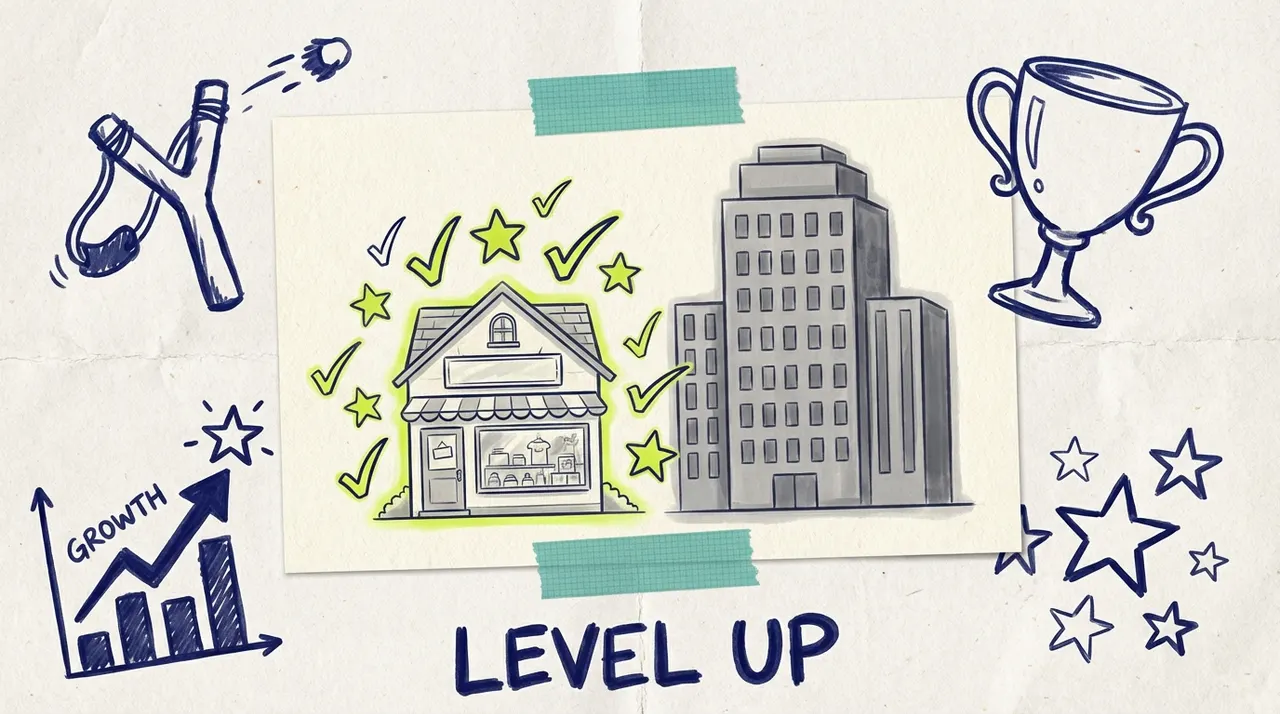
That national chain down the street has a marketing budget bigger than your entire revenue. They have teams of people, fancy agencies, and celebrity endorsements. You have, well, you. Sounds hopeless, right?
Here's what they don't want you to know: you have advantages they can't buy. And the marketing channels that used to be "enterprise only" are now accessible to any business with $50 and an internet connection.
The playing field has never been more level. The question is whether you'll step onto it.
What Big Brands Can't Do (That You Can)
Before we talk tactics, let's talk about your unfair advantages. Big brands are stuck with bureaucracy, brand guidelines committees, and approval processes that take weeks. You're not.
Move fast and test quickly. While a national brand debates a campaign in meetings, you can launch, learn, and iterate. That Instagram post idea? You can post it today. That TV ad concept? You can have it running by tonight.
Build genuine customer relationships. Your customers can talk to the actual owner. They recognize your face. Big brands spend millions trying to seem "authentic." You just are.
Be authentically local. You know your community. You sponsor the little league team. You know that Tuesday nights are slow because of the high school football games. National brands can't compete with that local knowledge.
Tell a real story. Your business has an actual origin story with real people. Big brands manufacture narratives in boardrooms. Yours happened in your garage, your kitchen, or late nights after your day job.

The Marketing Channels That Used to Be "Enterprise Only"
Here's where things have changed dramatically. Channels that required six-figure budgets five years ago are now accessible to anyone.
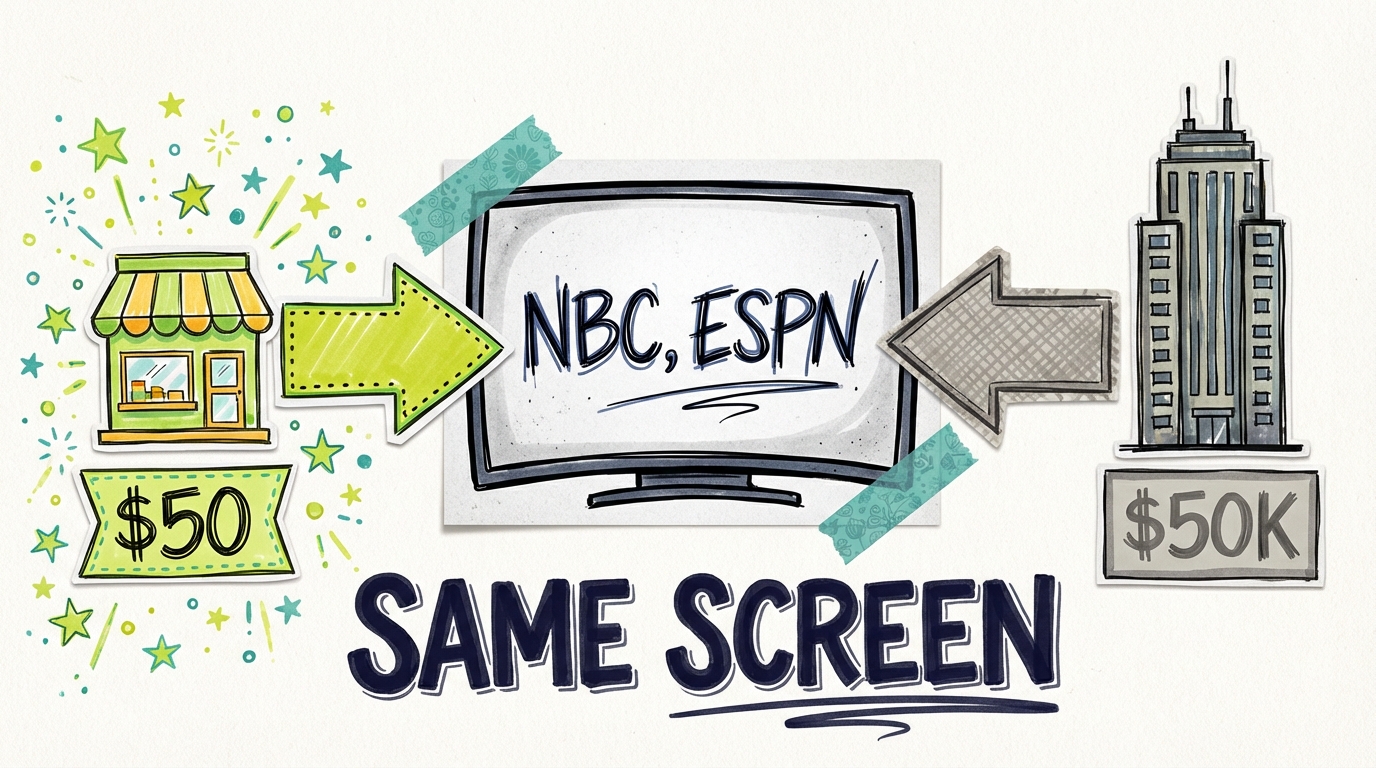
TV advertising went from $50,000 minimum to $50 minimum. Streaming TV advertising has democratized the most powerful advertising medium in history. Your ad can run on the same networks as Nike and Coca-Cola. The viewer doesn't know you only spent $50.
Professional video production now happens in minutes. AI tools can create broadcast-quality commercials from just your website. No production crews, no $10,000 shoots, no weeks of editing.
Targeted local advertising has precision big brands can't match. You can target a 10-mile radius around your business. National brands have to cast wider nets and accept waste.
Programmatic advertising is no longer agency-only. Self-serve platforms let you buy premium ad inventory without media buyers or agency fees.
The technology democratization means your marketing dollar goes further than ever. A local business advertising budget of a few hundred dollars can now achieve what used to require thousands.
Strategy #1: Own Your Local Market
Big brands spread themselves thin trying to be everywhere. You can dominate somewhere.
Why local focus beats broad reach:
Higher frequency with the same budget (your audience sees you more often)
Deeper community connections
Word-of-mouth amplification
Less competition for attention
How to execute:
Target your specific geography in every advertising channel
Sponsor local events and teams
Partner with complementary local businesses
Show up at community gatherings
When a local restaurant runs TV ads targeting just their zip code, they're not competing with McDonald's national budget. They're competing for attention in their specific market, and that's a fight they can win.
Strategy #2: Win on Customer Experience
Here's something big brands genuinely struggle with: delivering exceptional, personalized customer experiences. Their systems are built for scale, not for making customers feel special.
Your service advantages:
You can remember customer names and preferences
You can solve problems immediately without "let me escalate this"
You can make exceptions and judgment calls
You can say "thank you" and mean it
How to leverage this:
Follow up personally after purchases
Ask for feedback and actually act on it
Create loyalty programs that feel personal, not corporate
Respond to reviews (especially negative ones) with genuine care
These touchpoints create loyalty that no amount of advertising can buy. And loyal customers become your marketing engine through referrals and reviews.
Strategy #3: Use the Same Channels, Smarter
You don't need their budget. You need their playbook, adapted for your scale.
TV advertising on streaming platforms: The same channels where big brands advertise (NBC, Hulu, ESPN) are available to you through platforms like Adwave. Starting at $50, you can run campaigns that put your brand alongside the biggest advertisers in the world.
Targeted digital campaigns: Instead of broad awareness campaigns, focus on people actively looking for what you offer. A plumber doesn't need to reach everyone, just people whose pipes are leaking.
Content marketing in your niche: Big brands create generic content for mass appeal. You can create specific, useful content for your exact customer. The dentist who writes about "pediatric dental anxiety" ranks ahead of the corporate dental chain writing generic content.
Strategy #4: Build Trust Through Visibility
Here's the psychology that works in your favor: people trust what they recognize. When potential customers see your business on TV, on their social feed, and on local sponsorship banners, you become the "I've seen them everywhere" option.
The visibility effect:
Recognition builds trust before any interaction
Multi-channel presence signals legitimacy
TV advertising specifically adds credibility (people assume TV advertisers are "real" businesses)
Consistent visibility keeps you top-of-mind for future needs
How to create multi-channel presence on a budget:
Run modest campaigns across multiple channels rather than one big bet
Coordinate timing so the same audience sees you in multiple places
Maintain consistent branding across all touchpoints
Prioritize channels where your target audience spends time
TV advertising builds instant credibility because viewers have decades of conditioning that says "TV advertisers are legitimate." When your ad runs on the same network as national brands, you inherit some of that trust.
Strategy #5: Be the Expert They Can't Be
Big brands are generalists by necessity. You can be the specialist.
Niche authority building:
Create content that demonstrates deep expertise in your specific area
Answer questions your big competitors can't (or won't)
Share knowledge generously (it builds trust, not competition)
Become the local media's go-to source for your industry
Practical steps:
Write blog posts answering your customers' most common questions
Create video content showing your expertise in action
Speak at local events and business groups
Contribute expert quotes to local news outlets
The accountant who writes about "tax strategies for food truck owners" will win that client over the national tax chain every time.
Real Results: Local Business vs. National Competition
This isn't theory. Small businesses are already competing successfully against much larger competitors by using these strategies.
Consider what happens when a local business uses the same TV channels as national brands:
Their ad appears during the same programming as major advertisers
Local targeting means their budget goes further (no waste on viewers outside their market)
The production quality from AI tools matches or exceeds big brand creative
Viewers perceive them as a credible, established business
A restaurant running a $500/month TV campaign targeting their neighborhood is getting visibility that used to require $50,000. The technology shift has been that dramatic.
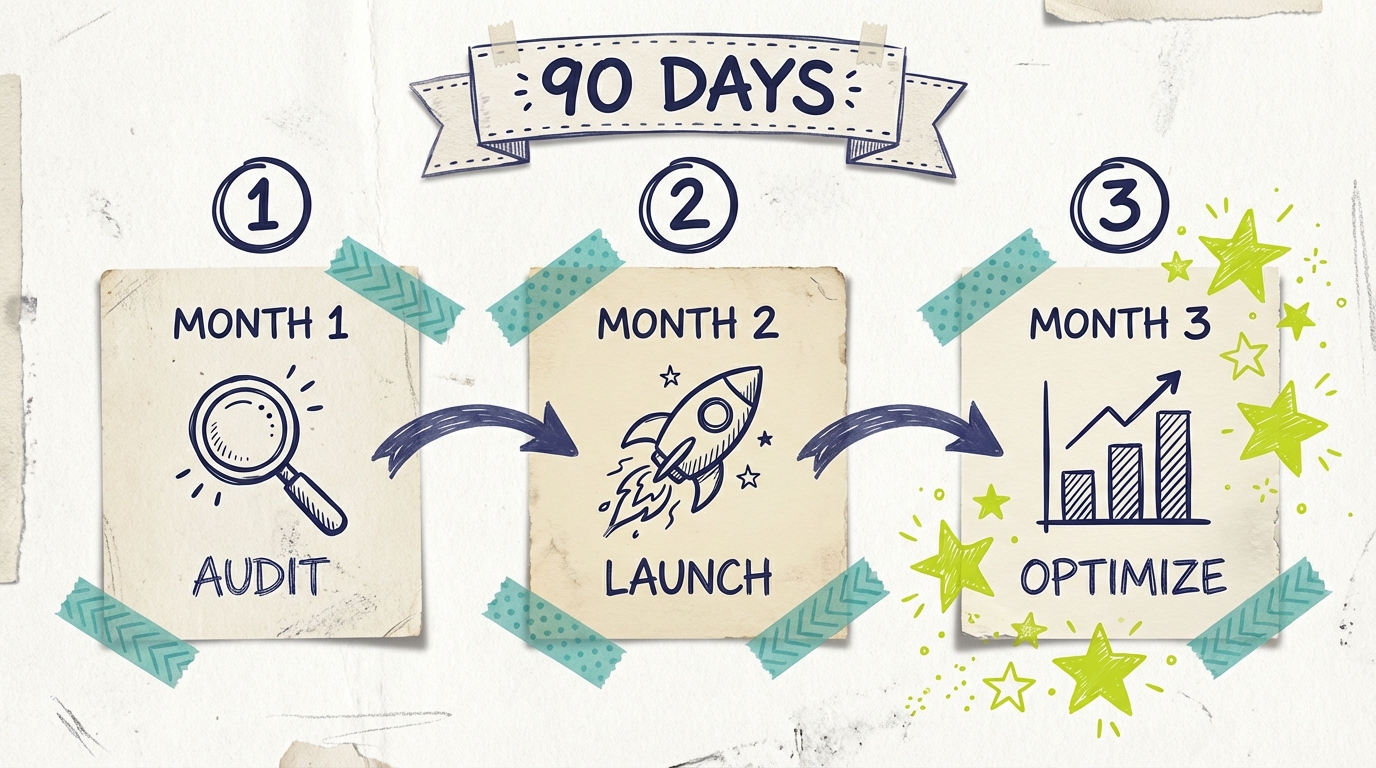
Your 90-Day Competitive Strategy
Ready to level the playing field? Here's your roadmap:
Month 1: Audit and Differentiate
Identify your three biggest unique advantages over larger competitors
Audit your current marketing presence (what's working, what's not)
Research where your target customers spend time
Define your local market boundaries
Month 2: Launch Multi-Channel Presence
Start a TV advertising campaign (even a modest one builds credibility)
Ensure your digital presence is consistent across platforms
Create or refresh content that demonstrates your expertise
Implement or improve your customer follow-up process
Month 3: Measure and Optimize
Track what's driving awareness and leads
Double down on channels showing results
Gather customer feedback and testimonials
Plan your ongoing presence
The key is starting. Perfection isn't required. Presence is.
The Real Competitive Advantage
Here's the truth: big brands are scared of you. They have quarterly earnings calls and shareholder expectations. You have passion for your craft and genuine customer relationships.
They have committees. You have agility.
They have budgets. You have efficiency.
They have brand guidelines. You have authenticity.
The channels are open. The tools are accessible. The question is whether you'll use them.
Ready to Show Up Where the Big Brands Are?
You don't need their budget to appear alongside them. Streaming TV advertising lets any business, regardless of size, reach audiences on premium networks. Your potential customers watching Hulu tonight don't know the difference between a $50,000 campaign and a $50 one. They just see your business on their TV.
See how it works and discover why small businesses are choosing the same channels as big brands, just at a smarter price.
Common questions answered
How can my small business possibly compete with national brands?
You compete by being different, not by being bigger. National brands can't offer the personalized service, local expertise, and community connection that you can. They can't pivot quickly to meet local needs or build genuine relationships with customers. Focus on your advantages: responsiveness, customization, personal attention, and local knowledge. Customers increasingly value these qualities over generic big-brand experiences.
Don't big brands have an unfair advantage with their marketing budgets?
They have larger budgets but also larger requirements. National brands need to reach millions of people, while you only need to reach customers in your service area. This levels the playing field more than you might think. A small business can dominate local awareness with a fraction of what national brands spend because you're not competing for national attention. Channels like local TV advertising have become accessible at budgets that work for small businesses.
What marketing strategies let small businesses punch above their weight?
Focus and specialization are your superpowers. While big brands spread thin across broad audiences, you can own your specific niche or local market. Build deep expertise in your category that generalist competitors can't match. Create content that speaks directly to your specific customers' needs. Use remarketing to stay in front of people who've shown interest. Leverage customer reviews and testimonials that big brands struggle to personalize.
How important is branding for a small business competing with bigger players?
Very important, but not in the way you might think. You're not trying to match the polish of Fortune 500 brands. Your brand advantage is authenticity, personality, and local presence. Invest in consistent visual identity and messaging, but let your genuine story shine through. Customers often choose small businesses specifically because they feel more personal and trustworthy than corporate alternatives.
Can TV advertising help level the playing field against big brands?
Yes, strategically used. Appearing on the same channels where national brands advertise creates an implicit credibility boost. Customers see your business alongside brands they know and trust, which elevates your perceived legitimacy. With CTV advertising accessible at budgets starting around $50, small businesses can now access the same premium streaming inventory as major corporations. You don't need their budget to share their stage.


