

The Super Bowl is the biggest advertising moment of the year. Over 100 million viewers tune in, brands compete for attention with increasingly elaborate commercials, and everyone talks about the ads for days afterward. It's the ultimate marketing stage.
There's just one problem: a 30-second Super Bowl ad costs over $7 million. That's before production costs, which can easily add another million or more for the kind of polished spot that won't embarrass you on the big stage.
For small businesses, the Super Bowl isn't a realistic option. But here's what most small business owners don't realize: you can reach TV viewers year-round at a fraction of that cost. The same people watching the Super Bowl also watch streaming content on Hulu, Peacock, and dozens of other services. And advertising on those platforms is far more accessible than you might think.
This guide covers practical alternatives to Super Bowl advertising that actually work for small business budgets.
What Makes Super Bowl Advertising Out of Reach

The Super Bowl delivers unmatched exposure. Over 100 million viewers, massive cultural buzz, and ads that people actually want to watch. For brands that can afford it, there's nothing else like it.
The challenge for most small businesses is simply the price. National spots start at $7 million for 30 seconds, and even local Super Bowl inventory (which does exist and can be highly effective) commands premium rates that put it beyond typical small business budgets. Add production costs for a spot that holds its own during the big game, and the investment climbs higher.
There's also intense competition for attention. Every brand brings their A-game, which means standing out requires exceptional creative.
The good news? The same TV advertising benefits that make the Super Bowl valuable (video storytelling, premium placement, big-screen credibility) are available year-round through channels built for businesses of all sizes.
Connected TV Advertising: Same Screens, Accessible Prices
Connected TV (CTV) advertising represents the most direct alternative to traditional TV commercials. When people watch Hulu, Peacock, Tubi, or any of dozens of streaming services, they see ads that look and feel exactly like traditional TV commercials. Same living room, same big screen, same lean-back viewing experience.
The difference is in how these ads are bought and who can afford them.
CTV advertising uses programmatic technology to serve ads to specific audiences based on demographics, interests, and location. Instead of buying time during a specific program and hoping your target customers are watching, you target the viewers themselves. Your ad follows them across content.
This targeting capability makes CTV far more efficient for small businesses. A local home services company can show ads only to homeowners in their service area. An e-commerce brand can target people who've shown interest in their product category. You're not paying for wasted impressions.
The pricing model is different too. CTV advertising typically costs $15-35 per thousand impressions (CPM), with an average around $25. Compare that to the Super Bowl, where CPM works out to roughly $70 based on the ad cost and viewership. CTV delivers premium TV placement at less than half the price per viewer.
Entry points have dropped dramatically as well. With Adwave, you can create a TV commercial and launch a CTV campaign starting at just $50. That's not a typo. The same screens showing Super Bowl ads are accessible to businesses of any size.
Local TV Advertising at Non-Super Bowl Prices
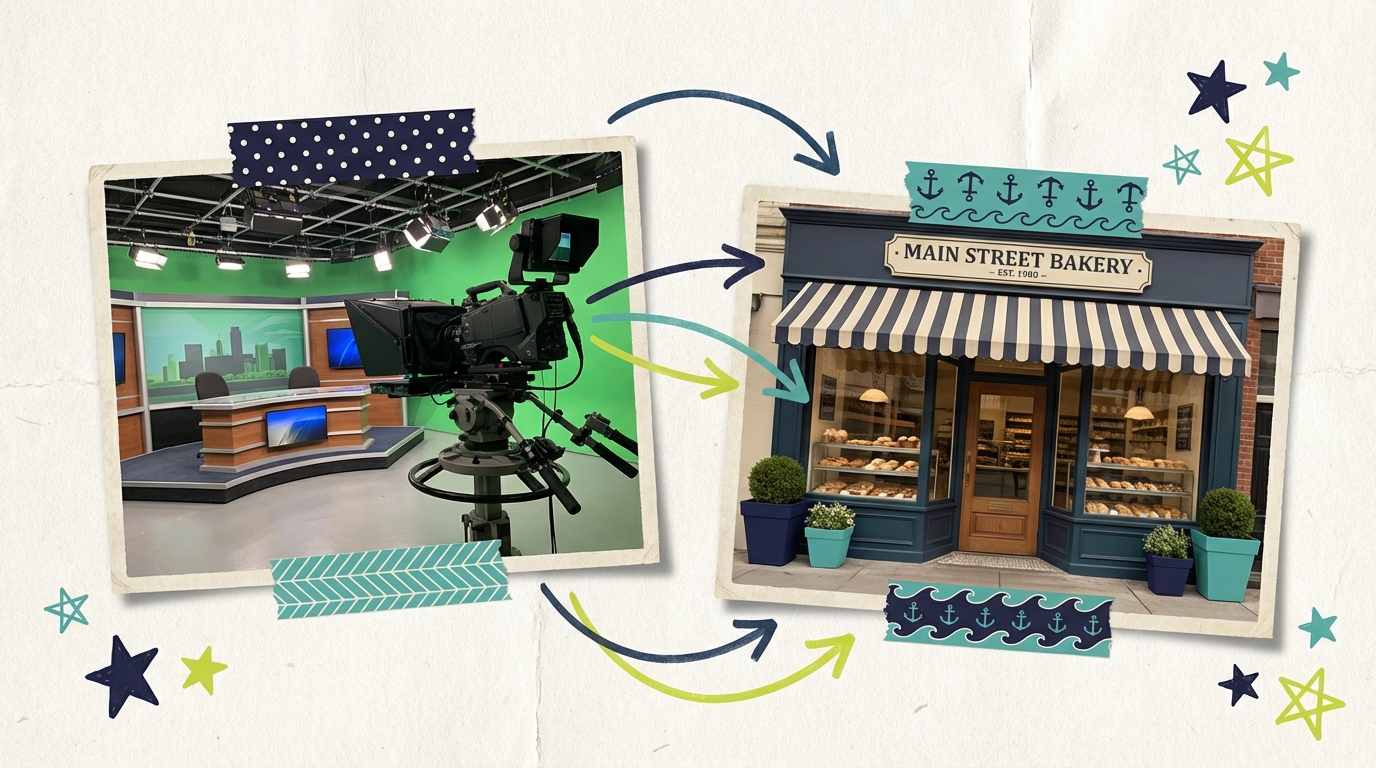
Traditional local TV advertising remains a viable option for businesses with slightly larger budgets who want to reach their community through broadcast channels.
Local TV stations sell ad time at rates far below national broadcasts. A 30-second spot during local news or daytime programming might cost $200-1,500 depending on your market size and the time slot. Prime time costs more, but even then you're looking at thousands, not millions.
The Super Bowl actually creates an opportunity here. While national advertisers focus their budgets on the big game, other time slots become comparatively less competitive. February advertising rates outside of Super Bowl Sunday can be quite reasonable.
Local TV works particularly well for businesses targeting a specific geographic area. Restaurants, car dealerships, furniture stores, and medical practices have historically found success with local broadcast advertising because their customers come from a defined area.
The downsides are limited targeting beyond geography and the declining viewership of traditional broadcast TV, especially among younger demographics. But for reaching older audiences in a specific market, local TV remains effective.
Digital Video Advertising That Mimics TV
If budget constraints rule out TV entirely, digital video advertising offers a similar format with even more precise targeting.
YouTube advertising reaches billions of viewers with video content. Pre-roll ads (the ones that play before videos) create a TV-like experience, and you only pay when someone watches at least 30 seconds or engages with your ad. For many businesses, YouTube serves as an affordable testing ground for video creative before moving to TV.
Social media video ads on Facebook, Instagram, and TikTok reach users scrolling through their feeds. These platforms favor native, authentic content over polished commercials, which can actually reduce production costs. A well-made video shot on a smartphone can outperform expensive productions on these platforms.
The trade-off is the viewing experience. People watch YouTube and social video on phones, often without sound, and they're primed to skip or scroll past ads. The lean-forward, distracted nature of mobile viewing differs significantly from the lean-back, immersive experience of TV. For brand building and emotional storytelling, TV still holds advantages.
Podcast Advertising: Audio Reaches the Same Audiences

Podcast listeners often overlap significantly with TV viewers. Someone who watches streaming content at night might listen to podcasts during their commute. Reaching them through audio can complement or substitute for visual advertising.
Host-read podcast ads feel like personal recommendations rather than interruptions. When a trusted host talks about your product or service, it carries credibility that traditional advertising can't match. This format works particularly well for products that benefit from explanation or endorsement.
Costs vary widely based on podcast popularity and your ad format. A 60-second host-read ad on a mid-size podcast might cost $500-2,000 per episode. Programmatic podcast advertising through networks can be even more affordable, with CPMs in the $15-25 range.
For professional services and B2B companies, podcast advertising often outperforms TV because the medium attracts educated, affluent listeners actively seeking information.
Event Sponsorships and Super Bowl Alternatives
The Super Bowl isn't the only event that draws massive attention. Local events, championships, and cultural moments throughout the year offer sponsorship opportunities at accessible prices.
Local sports sponsorships put your brand in front of engaged fans without national-scale pricing. Sponsoring a minor league baseball team, a local marathon, or a high school sports program creates visibility within your community. These sponsorships often include signage, program ads, and on-field recognition.
Watch parties and viewing events during major broadcasts (including the Super Bowl itself) offer another angle. Sponsoring a restaurant's Super Bowl watch party or hosting your own event lets you capitalize on the cultural moment without buying national airtime.
Seasonal advertising around major events can be strategic as well. Advertising during the weeks leading up to the Super Bowl or during other high-viewership periods (March Madness, Olympics, major finales) captures audiences primed for watching without the premium pricing of the events themselves.
Building a TV-Equivalent Campaign on a Small Budget
The most effective approach for small businesses usually combines multiple channels in a coordinated campaign. Here's how to create TV-level impact without TV-level spending.
Start with CTV as your foundation. This gives you actual TV placement, premium content adjacency, and the credibility that comes from appearing on the big screen. Even a modest CTV budget establishes your brand as a "real" advertiser in consumers' minds.
Layer in digital video for frequency. YouTube and social video ads are cheaper than TV, so use them to increase the number of times your target audience sees your message. Marketing research suggests people need to see a brand message 7+ times before it sticks.
Consider audio for additional touchpoints. Podcast ads or streaming audio (Spotify, Pandora) catch people during moments when video isn't viable but attention is still available.
Time your campaigns around relevant moments. You don't need Super Bowl Sunday specifically, but aligning campaigns with seasonal relevance, local events, or cultural moments increases impact.
With Adwave, you can create a professional TV commercial in minutes and launch on 100+ premium streaming channels. Starting at $50, it's a fraction of what local TV costs and infinitely more accessible than the Super Bowl.
Measuring Results Without Super Bowl-Scale Budgets
One advantage small businesses have over Super Bowl advertisers: you can actually measure whether your advertising works.
Super Bowl advertisers rely on brand lift studies, social media buzz, and general awareness metrics because the audience is too broad and the spend too concentrated to track direct response. Small business advertisers can be more precise.
Track website traffic during and after campaign periods. CTV platforms like Adwave provide impression data showing exactly when and where your ads ran. Correlating that with traffic spikes reveals whether people are responding.
Use unique URLs, promo codes, or dedicated phone numbers in your creative. When someone mentions seeing your TV ad, you know it worked.
Monitor search volume for your brand name. Effective TV advertising drives branded search as people look up businesses they've seen advertised. Google Trends shows this data for free.
Compare cost per acquisition across channels. If CTV delivers customers at $50 each while Google Ads delivers them at $75, you know where to invest more heavily.
Common Questions Answered
Is TV advertising worth it for small businesses? Yes, especially streaming TV through CTV platforms. Traditional TV remains viable for local businesses with geographic focus, but CTV offers better targeting and lower minimums. The key is starting with modest budgets to test what works before scaling.
How much should a small business spend on TV advertising? Start with what you can afford to learn from. Even $500-1,000 across a few weeks can reveal whether TV works for your business. CTV platforms like Adwave let you start at just $50, so testing is genuinely accessible. Scale up once you see results.
Can I make a TV commercial without a huge budget? Absolutely. Professional video production has become dramatically more affordable, and AI-powered tools can create broadcast-quality ads from your existing content. Adwave generates TV commercials from any URL (your website, social profiles, or listings) in about 2 minutes.
When is the best time to advertise if not the Super Bowl? It depends on your business. Seasonal relevance matters more than specific dates. A tax preparer should advertise January through April. A landscaper should ramp up in spring. What matters most is consistency. Running ads throughout the year builds more awareness than concentrating spend in one moment.
How do streaming TV ads compare to social media ads? Streaming TV (CTV) offers a premium, lean-back viewing experience where people actually watch your full ad. Social media is cheaper but more interruptible, with people scrolling past or watching without sound. For brand building and credibility, TV wins. For direct response and retargeting, social can be effective. Many businesses use both.
Super Bowl advertising captures attention because of its spectacle, but the principles that make it valuable (video storytelling, mass reach, premium content) are available year-round at prices small businesses can actually afford. The screens haven't changed. The access has.
Create your TV commercial today and see what streaming advertising can do for your business, starting at just $50.


