
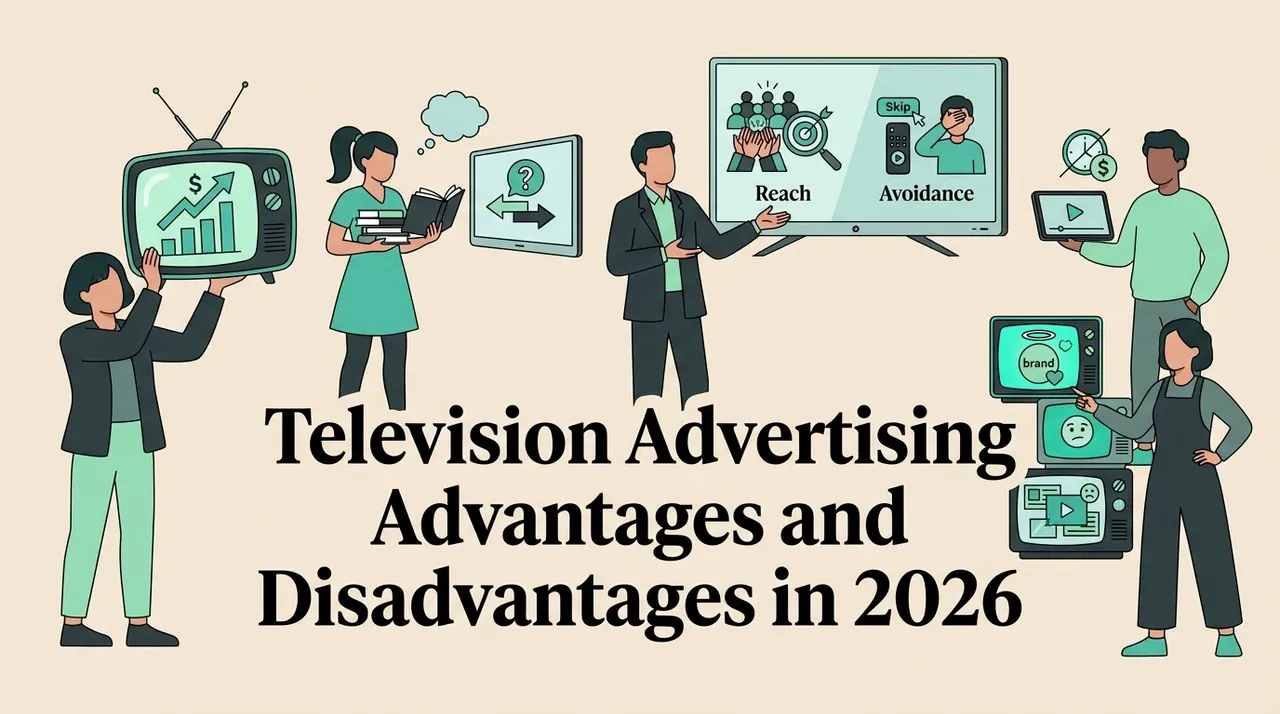
In a world saturated with digital noise, you might be wondering: does a television ad still make sense for a small or local business? For a long time, the honest answer was a resounding no. The very idea of a TV ad brought to mind eye-watering budgets, complicated production shoots, and a frustrating lack of precision for reaching customers in a specific neighborhood.
This hesitation is completely understandable. Traditional TV advertising often felt like using a sledgehammer to crack a nut. Why pay a premium to broadcast your message across an entire metropolitan area when your core customers are all in a five-mile radius of your shop? This reality created a clear divide, making TV a playground for national giants while small businesses stuck to more accessible channels.
The Old Obstacles Versus New Opportunities
The heart of the problem has always been a trade-off between the classic television advertising advantages and disadvantages.
Massive Reach vs. Wasted Spend: TV gets you in front of a huge audience, but you pay for every single viewer, including the thousands who will never need your product or service.
High Credibility vs. High Cost: Seeing a business on TV instantly builds a level of trust that’s hard to replicate online. But the price for airtime and professional production has always been a major barrier.
Emotional Impact vs. Measurement Mystery: Nothing tells a story quite like video and sound. The challenge? Proving that your expensive ad directly led to a sale has historically been a fuzzy, imprecise science.
This concept map really helps visualize how the pros, cons, and emerging technologies all fit together for a modern business.
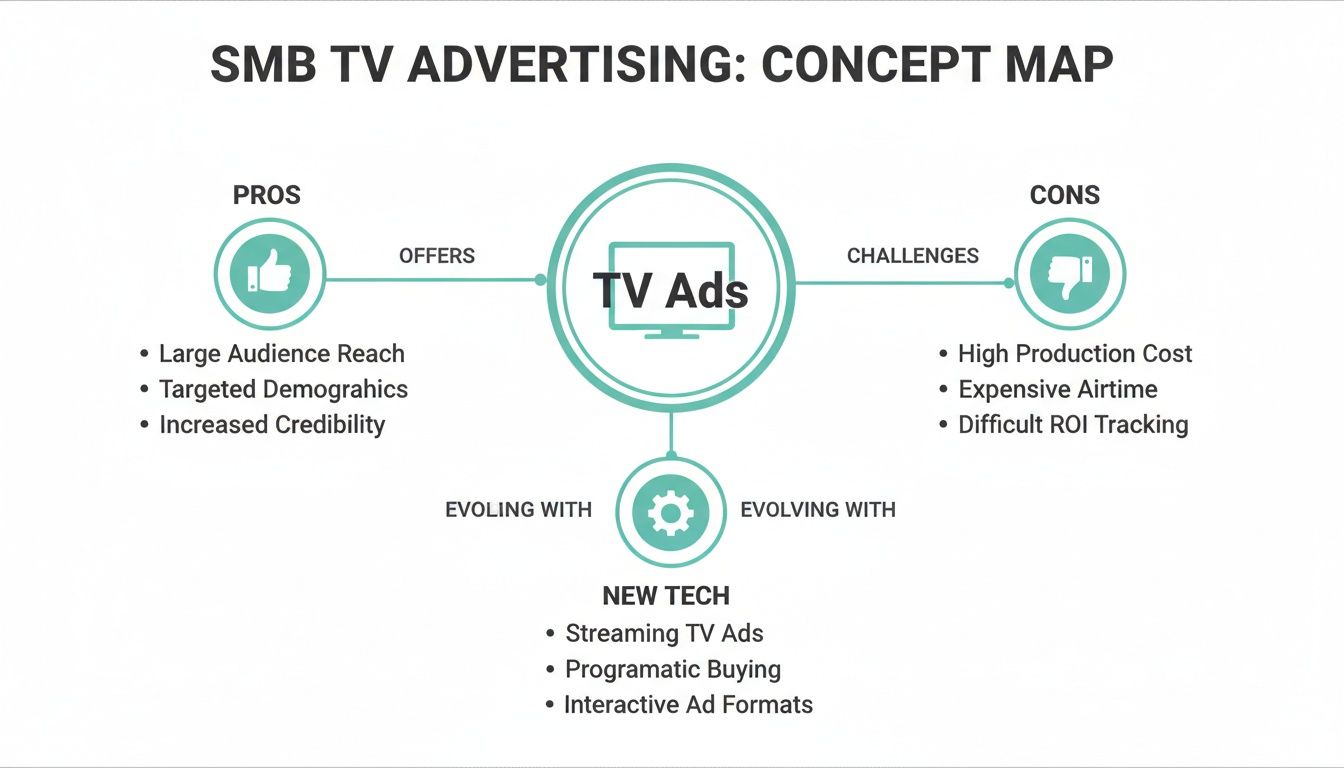
As you can see, new tech is fundamentally changing the game. It’s building a bridge that minimizes the old drawbacks while making the benefits more accessible than ever for smaller companies. Solutions from innovators like Adwave are designed to turn these old disadvantages into new opportunities.
The entire landscape is shifting. Innovative platforms are tearing down those old walls, transforming that inefficient sledgehammer into a set of precise, surgical tools. For a much deeper dive into how this is all unfolding, you can learn more about TV advertising for small businesses in our detailed guide.
Imagine creating a broadcast-quality TV commercial in just a few minutes, then launching it on major streaming networks like Hulu and ESPN with a budget as small as $50. This isn't some far-off dream; it's what's possible right now.
Platforms like Adwave are using AI to make TV advertising simple, affordable, and targeted. Let’s walk through both the timeless strengths and the historic weaknesses of TV, so you can see exactly how to put its power to work for your business without draining your bank account.
The Unmatched Power Of TV To Build Your Brand

Even with all the digital channels out there, television advertising still holds a special kind of power when it comes to building a brand. Its biggest strength? The ability to forge a real, memorable connection with an audience. TV brings together sight, sound, and motion to tell a story, creating an emotional punch that a static image or a line of text just can't deliver.
Think of a TV ad as a short film for your business. It’s your chance to show your product in action, put a friendly face to your company, and really let your brand’s personality shine. This multi-sensory experience is effective at sticking in a viewer's memory, which means stronger brand recall when they eventually need what you offer.
Capturing Mass Attention And Building Authority
One of TV’s most compelling features has always been its massive reach. It lets a local business appear right alongside national giants, which instantly boosts its credibility. When potential customers see your ad during a big game or a popular streaming show, it sends a clear message: you’re a legitimate and successful business.
You just can't replicate this "halo effect" on most other platforms. A well-placed TV spot suggests your business is stable, professional, and a leader in its field. The simple act of broadcasting into thousands of homes at once creates a shared experience that builds community trust in your brand.
The global TV advertising market isn't just surviving; it's thriving. In 2024, it was valued at around $101.6 billion and is expected to climb to $103.92 billion in 2025. With an estimated 1.72 billion households worldwide having access to a TV, the medium gives you unparalleled access to a huge and diverse audience.
Creating Lasting Emotional Connections
Beyond just getting in front of people, TV advertising is brilliant at making them feel something. The storytelling power of video can spark happiness, nostalgia, or excitement, forging a positive emotional bond between the viewer and your brand. That connection is the bedrock of long-term customer loyalty.
So, what are the key brand-building advantages TV brings to the table?
High-Impact Storytelling: You can communicate your brand's value through a compelling story, making your message far more engaging and memorable.
Enhanced Credibility: Showing up on established TV and streaming networks positions your brand as a serious and trustworthy player.
Broad Audience Reach: TV gets your message in front of a wide demographic, helping you build widespread awareness quickly.
While TV offers incredible reach for brand building, other tangible marketing tools, like effective promotional products, are also great for boosting brand loyalty and hitting marketing goals. A smart mix of different approaches can create a really powerful strategy.
How Adwave Amplifies These Advantages
Adwave takes the core strengths of TV (its credibility and emotional impact) and makes them accessible. You no longer need a Hollywood-sized budget to create a professional ad that builds trust with your community.
Instead of wrestling with a complicated production process, Adwave uses AI to generate a broadcast-ready commercial for you in minutes. And you don't have to worry about reaching the right people; Adwave lets you target precisely, so your message is seen by potential customers in your specific service area, not wasted on an entire state. This approach maximizes the brand-building power of TV while cutting out the traditional high costs and inefficiency, giving you a direct path to becoming a recognized and trusted name. You can explore the effectiveness of TV in building brand awareness with these modern tools.
Why Small Businesses Have Always Been Wary of TV Ads
For decades, the idea of running a TV commercial felt like a pipe dream for most small business owners. While everyone knew it could build a brand in a powerful way, that power seemed locked away, accessible only to massive national corporations with bottomless marketing budgets.
For the local roofer, the neighborhood cafe, or the family dental practice, TV advertising wasn't an exciting opportunity, it was an intimidating mountain. This hesitation wasn't just a feeling; it was based on three very real, very practical roadblocks that have long defined the industry: staggering costs, frustratingly vague targeting, and an almost complete inability to tell if any of it was working.
The Out-of-Reach Price Tag
Let's start with the most obvious barrier: the cost. Getting on TV has always involved two huge expenses. First, you have to make the commercial, and then you have to pay to get it on the air.
Just producing a decent-looking 30-second spot meant hiring a production crew, maybe some actors, and an editor. That process alone could easily run into tens of thousands of dollars before a single potential customer ever saw it. Then came the second hit: buying the airtime. Securing a slot on a popular local channel, even well outside of primetime, required a major financial commitment. It was the classic catch-22 for a small business: you needed to spend big money to make money, but that initial investment was simply too high.
The "Spray and Pray" Approach to Targeting
The second major headache has always been targeting, or the lack thereof. Traditional TV advertising is a broadcast medium, which is a fancy way of saying the same ad goes out to every single person watching that channel in a given region. For a business that serves a specific neighborhood or town, this is inefficient.
Imagine a fantastic local pizza shop in one suburb paying to broadcast their ad across an entire metro area of two million people. They're spending a premium to reach viewers 50 miles away who are never, ever going to drive to their location for a pizza. It’s like renting a giant stadium billboard just to catch the eye of a few people in the front row.
This "spray and pray" method means a huge chunk of your ad budget is completely wasted. A national brand like Coca-Cola can afford to cast a wide net, but a small business needs every single dollar to pull its weight. Paying to advertise to people who can't physically buy from you has always been one of TV's biggest flaws.
The Great Mystery of Measurement
Finally, let's say a small business owner somehow scraped together the money and was willing to live with the wasted reach. They still faced one more daunting problem: figuring out if the ad worked. How do you prove that your expensive TV spot led to more customers walking through the door?
Historically, the answer was... You couldn't, not really. Businesses would just look for a general bump in sales or maybe more phone calls after a campaign ran and hope for the best. There was no clear, direct line connecting the ad someone saw on their couch to the purchase they made the next day. This absence of real data made it nearly impossible to justify the expense, let alone figure out how to improve the next campaign.
The industry numbers tell the story. While the global TV ad market is projected to hit $158.62 billion by 2033, revenue for U.S. broadcast stations is expected to see a 9.4% decrease in 2025. This shows a clear shift away from the old, inflexible models. You can dive deeper into these market trends in TV advertising to see the full picture.
These three fundamental problems (the high cost, poor targeting, and murky measurement) are exactly what new technology aims to solve. It’s why platforms like Adwave exist: to systematically dismantle these old barriers and turn TV advertising into a smart, accessible, and measurable tool for businesses of any size.
How New Technology Puts TV Advertising Within Your Reach
For decades, TV advertising felt like an exclusive club with a steep cover charge. The high costs, fuzzy targeting, and murky ROI were just the realities of the game, creating a barrier that kept most small and local businesses on the sidelines.
But that wall is coming down. It's not a slow crumble; it's being completely dismantled by new technology that has rewritten the rules of television advertising.
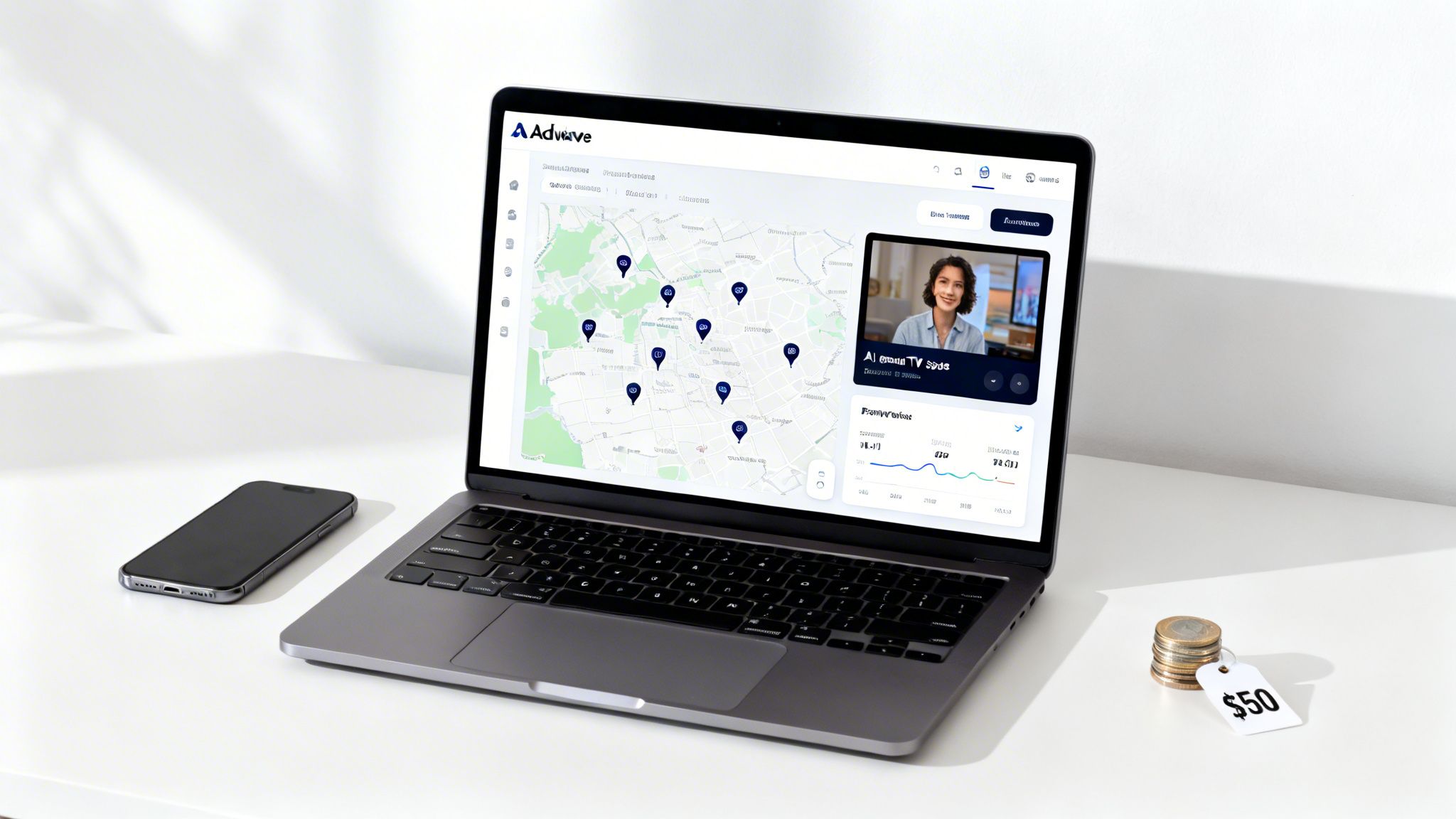
What's happening isn't just a minor tune-up. It's a total reinvention of how TV ads are bought, created, and measured. The old, inefficient model is being replaced by a smarter, data-driven system, turning television into a powerful (and practical) tool for almost any business. Platforms like Adwave are leading this charge, finally putting the power of the small screen directly into your hands.
Tackling The Cost Barrier Head-On
Let's be honest: the biggest hurdle has always been the price tag. In the old days, you needed a full production crew, actors, and weeks of editing just to create an ad, which could easily run into tens of thousands of dollars. After all that, you still had to pay a fortune for the airtime.
Modern platforms completely flip that economic model on its head.
AI-Powered Ad Creation: Forget hiring a film crew. Tools like Adwave use AI to do the heavy lifting. You can provide your website URL, and the system instantly analyzes your brand, images, and messaging to automatically generate a polished, broadcast-ready TV commercial in minutes.
Affordable Campaign Budgets: The days of needing a massive upfront budget are gone. With this new approach, you can launch a real TV advertising campaign on major networks with as little as $50. This lets you dip your toes in, see what works, and then scale your spending with confidence.
From "Spray and Pray" to Surgical Precision
The other major headache was the "spray and pray" method of targeting. A local pizza shop had to pay to show its ad across an entire metro area, knowing full well that 95% of the people watching lived too far away to ever order a pizza. That incredible waste is now a thing of the past.
Digital targeting lets advertisers focus TV campaigns on supported audiences and geographic areas.</p>
With a platform like Adwave, you’re no longer stuck with broad regional buys. Instead, you can zero in on viewers with incredible accuracy. Let's say you run a home services company. You can now choose to show your ad only to households within the specific zip codes you serve.
This means your ad about a new roofing special gets seen by local homeowners, not by renters in an apartment building 50 miles away. That level of precision makes your budget work so much harder and dramatically boosts your chances of a great return.
As technology continues to change the game, it's important to master digital advertising for more impact, because those same principles now apply to modern TV campaigns.
Demystifying ROI With Real-Time Data
Finally, technology has solved the age-old mystery of measurement. The old guessing game of "did sales go up after the ad ran?" is over. It's been replaced by clear, actionable data that shows you exactly what your investment is doing for your business in real time.
Modern TV platforms give you an intuitive dashboard that tracks the metrics that matter, connecting the dots between your ad and real customer actions.
This transparency gives you the power to make smart decisions on the fly. You can see which ads are connecting with viewers and adjust your campaigns to get even better results, turning your advertising spend into a predictable engine for growth.
If you're curious about the technology making this possible, you can dive deeper by reading our guide explaining what Connected TV advertising is and how it all works. platforms like Adwave have systematically knocked down the old barriers, transforming a once-inaccessible channel into one of the most powerful tools a local business can use to grow.
Measuring The Real ROI Of Your TV Campaigns
Let's be honest: for decades, figuring out if a TV ad worked was a shot in the dark. It was one of the biggest headaches of television advertising. A small business would shell out a ton of money for a campaign, cross their fingers, and hope to see a general uptick in sales. It was a frustratingly vague way to measure success.
That lack of a clear return on investment (ROI) made TV feel like a massive gamble. How could you justify the spend (let alone make your next campaign smarter) if you didn't really know what was working? Thankfully, that measurement mystery is a thing of the past.
From Vague Hopes To Concrete Data
The old "methods" for tracking ROI were indirect, to put it mildly. A local car dealership might count the number of people walking through the door, or a restaurant might casually ask new diners, "So, how'd you hear about us?" While that’s better than nothing, it's far too fuzzy. It doesn't draw a straight line from someone seeing your ad to them taking a specific action.
Modern platforms have completely flipped the script by connecting the dots between who’s watching your TV ad and what they’re doing online. This data-driven approach finally gets rid of the guesswork and gives you clear, actionable insights into how your campaign is performing, often in real time.
Compare advertising spend with changes in inquiries and sales to assess whether the campaign is worth continuing.</p>
Key Metrics You Can Track Now
Instead of relying on loose correlations, you can now watch precise key performance indicators (KPIs) that prove the direct impact of your TV ads. This is where a platform like Adwave really shines, giving you a straightforward dashboard that makes tracking your success simple and transparent.
Here are the kinds of metrics you can finally get your hands on:
Spikes in Website Traffic: This is one of the most powerful indicators. You can literally watch your website analytics for an immediate lift in visitors in the minutes right after your ad airs. Adwave makes it easy to see this direct cause-and-effect relationship.
Increases in Branded Searches: A great TV spot gets people to pull out their phones and search for your business by name on Google. Tracking this "search lift" is a crystal-clear sign that your ad is building real brand awareness and pushing people to act.
Core Campaign Metrics: You can also track fundamental advertising data with newfound clarity. You’ll finally get a transparent look at your Cost Per Mille (CPM), which is simply the cost per thousand views. You can also see your total reach (how many unique people saw your ad) and frequency (how many times the average person saw it).
For anyone who wants to really get into the weeds of how these new measurement techniques work, our detailed guide on measuring advertising effectiveness offers a deeper look into the tools and strategies available today.
By moving from vague hope to hard data, platforms like Adwave completely demystify the ROI of TV advertising. You’re no longer flying blind. You have a clear cockpit view of your campaign’s performance, allowing you to fine-tune your ad spend, make informed decisions, and confidently invest in growing your business.
Your Simple Checklist Before Launching A TV Ad
Jumping into TV advertising feels like a big leap, but it doesn't have to be a blind one. Before you spend a single dollar, a little bit of prep work can make all the difference between a campaign that flops and one that flies.
Think of it as your pre-flight check. Answering these questions will give you a clear roadmap, turning what seems like a complicated process into a series of manageable steps.
Clarify Your Core Objective
First things first: what are you trying to accomplish? A fuzzy goal like "get more customers" won't cut it. You need a specific, measurable target to aim for.
What does a real win look like for your business?
Is it increasing online appointment bookings by 20%?
Maybe it's boosting foot traffic to your store on weekends?
Or perhaps it's driving downloads of your new mobile app?
Nailing down one primary goal will guide every other decision you make, from the ad's message to its call to action. Modern platforms like Adwave are designed to track these kinds of digital responses, so you can see in real-time if you're hitting your numbers.
Pinpoint Your Ideal Customer
Next up, who are you talking to? The old "spray and pray" method of advertising is a surefire way to waste money. Today, effective TV advertising is all about precision.
A successful campaign doesn't just reach a lot of people; it reaches the right people. Knowing your audience is the key to making every ad dollar count.
Start by sketching out a basic profile of your ideal customer:
Where do they live? Get as specific as you can, down to zip codes or neighborhoods.
What are their key demographics? Think age, income level, and family status.
What are their interests or behaviors? Are they homeowners? Outdoor enthusiasts? New parents?
This is where technology really helps. Adwave allows you to target viewers based on location and other data points. That means your ad for a local landscaping service gets seen by homeowners in your service area, not by renters halfway across the state.
Craft One Unforgettable Message
You've got about 30 seconds, maybe less, to make an impression. The biggest mistake businesses make is trying to cram everything they do into a single commercial. Resist that urge.
Instead, focus on the one thing you want people to remember. What’s the number one reason someone should choose you? Is it your legendary customer service, your unbeatable prices, or a product they can't get anywhere else? Pick that one thing and build your entire ad around it.
If you're not a professional copywriter, tools like Adwave’s AI ad generator can be a huge help here. It's great at taking your core idea and spinning it into a focused, professional ad that gets straight to the point.
Still Have Questions About Modern TV Ads?
Even with all these new possibilities, you might still be wondering if TV advertising is really the right move for your business. It's smart to be skeptical. Let's tackle some of the most common concerns we hear from business owners just like you.
"Can a Small Business Like Mine Afford TV Advertising?"
This is the big one, and we've got great news: the answer is a resounding yes. The idea that you need a Hollywood-sized budget is a myth leftover from another era. Platforms like Adwave have completely flipped the script on cost, making TV a realistic option for almost any business.
You can get a campaign on the air for as little as $50. With a predictable cost per thousand views (CPM), TV has become a surprisingly affordable way to build your brand. In many cases, it delivers a much bigger punch than other digital channels for the same amount of money.
"How Long Does It Take to Get an Ad on TV?"
Forget the old way of doing things, where ad production dragged on for weeks or even months. Technology has crushed that timeline, turning what used to be a massive undertaking into a simple, straightforward task. This is where a solution like Adwave really shines.
With Adwave's AI-powered platform, you can go from a simple idea to a professionally produced ad on the air in no time. All you need to do is provide your website URL. The system gets to work and generates a broadcast-ready video ad in just a few minutes, letting you launch your campaign almost instantly.
"Is TV Advertising a Waste If My Customers Are All Online?"
This is a fantastic question, and the answer is all about how people watch TV now. Think about it: when you're watching a show, is your phone ever far away? That's the "second-screen" effect, and it’s a massive opportunity for marketers.
A great TV ad is one of the best ways to trigger immediate online action. It plants a seed of curiosity that makes viewers grab their phone and search for your brand, visit your website, or check out your reviews. With Adwave’s tracking dashboard, you can see this happen in real-time, drawing a straight line between your TV spot and real business results.


