
The U.S. tutoring industry generates more than $20 billion in annual revenue, with steady growth driven by post-pandemic learning gaps, increased competition for college admissions, and parents willing to invest in academic outcomes (IBISWorld, 2024). Test prep alone (SAT, ACT, AP, ISEE) accounts for $4-5 billion of that, and the in-person and virtual tutoring categories continue expanding into adjacent areas like executive function coaching and college admissions consulting.
Here's the thing: high demand doesn't translate into easy bookings. Tutoring is a deeply researched purchase. Parents read every review, compare credentials, ask their kid's teacher for references, and often interview multiple tutors before committing. The tutors and centers winning right now share a pattern: clear academic positioning, strong local visibility, and a marketing system that earns trust over weeks (not days).
The good news? Most tutoring businesses still rely on word of mouth and parent network referrals alone. Even modest paid advertising plus consistent local SEO gets you ahead of 80% of competitors.
This guide covers seven advertising channels for tutoring businesses: Google Ads, Meta and Facebook, local SEO and Google Business Profile, tutor marketplaces like Wyzant and Care.com, school and community partnerships, CTV advertising, and parent newsletters and local press. You'll get realistic budgets, what works for solo tutors versus learning centers, and where to focus first.
Why Tutoring Marketing Is Different
Tutoring has its own dynamics that shape what works in advertising.
Trust is the gatekeeper. Parents are entrusting you with their child's grades, confidence, and academic future. Generic messaging or stock photos actively hurt trust. Real tutors, real students, real outcomes win.
Decisions stretch over weeks. Parents typically research tutors for 2-6 weeks before booking. Long consideration windows mean retargeting and consistent visibility outperform direct-response ads.
Outcomes matter most. Score improvements, grade jumps, and concept mastery are the proof points parents care about. Marketing that highlights specific outcomes converts dramatically better than generic "expert tutoring" claims.
Specialty positioning. Math tutoring, reading tutoring, SAT prep, ACT prep, executive function coaching, college admissions consulting, language tutoring, special needs tutoring, and homework help are nearly different businesses. The tutors and centers that grow fastest specialize deeply rather than offering everything.
Hyper-local for in-person. In-person tutors typically operate within a 10-15 minute commute radius. Online tutors can market nationwide but face heavier competition.
Seasonal patterns. September (back-to-school), January (mid-year corrections), April-May (final-push and AP/state test prep), and June-July (summer programs and SAT/ACT prep) are the biggest enrollment windows. December and August are quieter unless you focus on test prep.
Channel 1: Google Ads (Local Search and Specialty Intent)
When a parent searches "math tutor near me" or "SAT prep [city]," they're past the awareness stage. They want to book sessions. Google Ads puts you at the top of those high-intent searches.
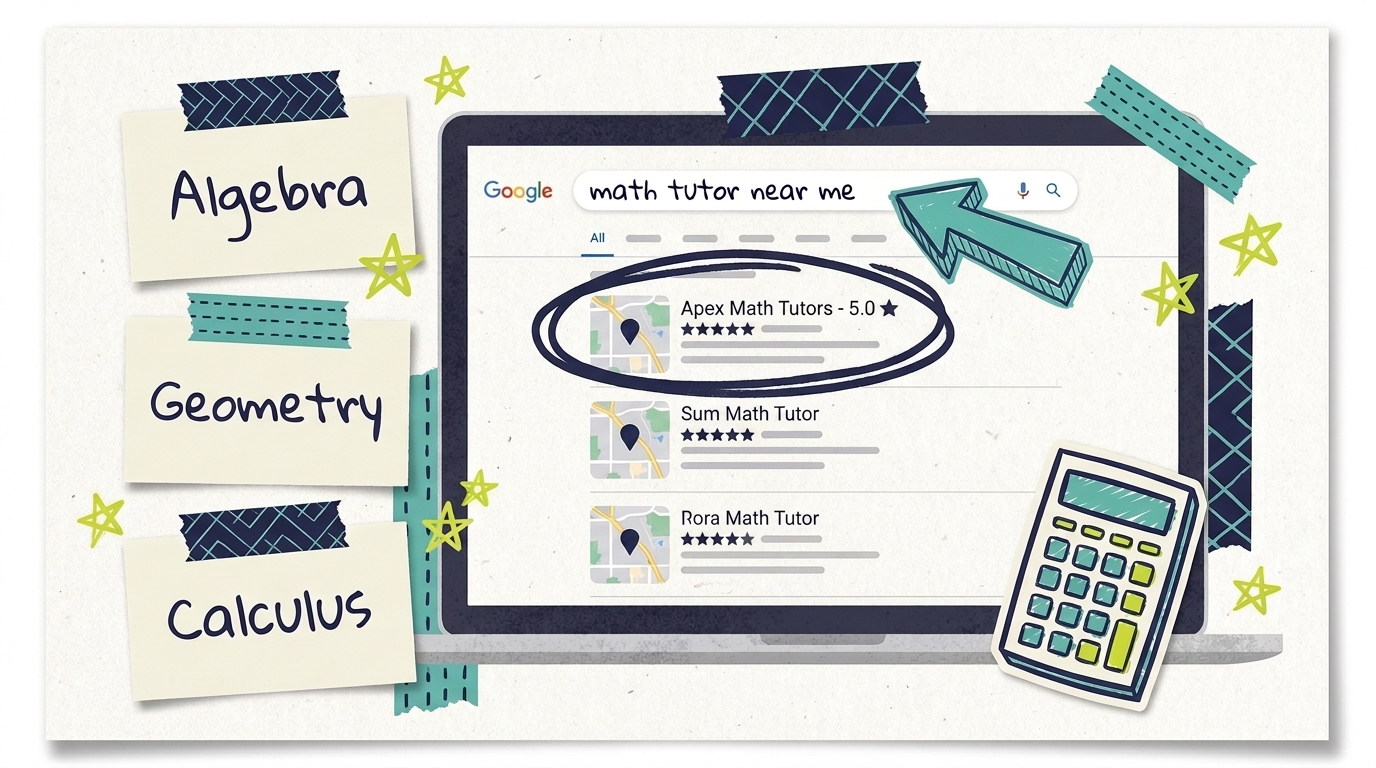
Google's data shows 76% of local searches result in a business contact within 24 hours (Google, 2023). For tutoring, the conversion timeline is longer (parents schedule consultations before committing), but the intent is real.
Keywords That Drive Inquiries
Group campaigns by subject and intent:
Subject-specific tutoring: "math tutor [city]," "reading tutor [city]," "writing tutor [city]," "science tutor [city]," "Spanish tutor [city]"
Test prep: "SAT prep [city]," "ACT tutor [city]," "ISEE prep [city]," "AP exam tutor," "PSAT prep"
Grade-specific: "elementary tutor [city]," "middle school tutor," "high school math tutor," "college prep tutoring"
Specialty: "dyslexia tutor," "ADHD executive function coach," "homeschool support," "gifted tutoring," "special needs tutor"
Format-driven: "online tutor," "in-person tutor [city]," "weekend tutor," "summer tutoring program"
Parent-intent searches: "tutor for kids who hate math," "tutoring for falling behind," "private tutor [city]"
Campaign Setup
Run separate campaigns by subject and grade level. SAT prep parents respond to different messaging than elementary reading tutoring parents. Combining them in one campaign waters down both.
For in-person tutors and centers, set tight geographic radius: 5-7 miles in urban areas, 10-15 miles in suburban. For online tutors, run nationally but exclude states where you don't have testing-region knowledge.
Use call extensions and message extensions. Many parents want to ask about tutor credentials, scheduling, and pricing before they fill out a form.
Budget and Expectations
Solo tutors should budget $300-$1,000 per month on Google Ads. Learning centers and multi-tutor practices typically spend $1,500-$5,000 per month. CPCs for tutoring keywords run $3-$15, with test prep keywords reaching $20+ in competitive metros. Cost per consultation request typically lands at $40-$150, with consultation-to-booked-sessions conversion rates of 40-65% for tutors with strong references.
Tips for Better Results
Build dedicated landing pages for each subject and grade level
Negative keywords matter: "tutor jobs," "tutoring certificate," "free tutoring," "tutoring app"
Run Local Services Ads if available in your category (tutoring is increasingly supported)
Highlight specific score improvements or grade jumps in ad copy ("+200 SAT points average")
Schedule ads heavier on weekday evenings (5-9pm) and Sunday evenings when parents make next-week plans
Google Ads delivers fast, predictable consultation requests. Strong starting point if you're not currently advertising paid.
Channel 2: Facebook and Meta
Facebook is consistently strong for tutoring because parents of school-age kids spend significant time there, especially in local moms groups, school parent groups, and educational community pages. Meta's targeting reaches those specific audiences.
The good news: Facebook ads for tutoring consistently produce some of the lowest cost-per-lead numbers in education categories.
Campaign Types for Tutoring
Lead generation campaigns with Meta's instant forms. Parents click an ad, fill out a quick form (child's grade, subject of focus, scheduling availability), and submit without leaving Facebook.
Awareness campaigns target parents of children in specific age ranges within your geographic radius. Layer with audiences like "Recently moved" (changing schools), "Back-to-school shoppers," or "Parents of high school students" (test prep).
Retargeting campaigns stay in front of parents who visited your website. Most parents visit your site 3-6 times before requesting a consultation. Retargeting closes the loop.
Local Facebook groups outreach (organic). Many neighborhoods have active moms groups and school parent groups where families ask for tutor recommendations. Authentic engagement (real responses, no cold pitching) drives meaningful organic referrals.
Video ads with tutor introductions. Parents want to evaluate tutor personality before booking. Authentic 30-60 second videos of your tutors (or you) explaining your approach consistently outperform polished ad creative.
Creative That Works
Tutor introductions. Real tutors on camera explaining what they specialize in and how they work with students. Builds trust faster than any other format.
Student outcome stories. Real students or parents (with permission) sharing specific score improvements or grade jumps. Strongest social proof you can run.
Subject explainer content. Short videos addressing common parent questions: "Should my 7th grader take pre-algebra over the summer?" "What's the difference between SAT and ACT?"
Behind-the-scenes session clips. Brief, anonymized footage of actual tutoring sessions (with consent). Demystifies what tutoring looks like.
Specialty program highlights. If you offer dyslexia support, ADHD executive function coaching, college admissions consulting, or other specialty services, lean into them.
Budget and Expectations
Plan $250-$1,000 per month on Meta, weighted toward Facebook. Lead gen campaigns typically produce inquiries at $20-$60 each, with 30-55% inquiry-to-consultation conversion rates and 40-65% consultation-to-booked-sessions rates.
Tips for Better Results
Build custom audiences from your past family email list, then create lookalikes
Target by life event: "newly moved," "kindergarten parents" (early intervention), "9th-12th grade parents" (test prep)
Boost organic posts of student success stories rather than running cold ad creative
Heavy budget August (back-to-school) and December-January (mid-year corrections)
Facebook is where most parent research starts. Tutoring businesses that show up consistently here build long-term family relationships.
Channel 3: Local SEO and Google Business Profile
Your Google Business Profile is one of the highest-impact assets a tutoring business can have. Most tutor searches include local intent, and the map pack is where parents shortlist who to contact.
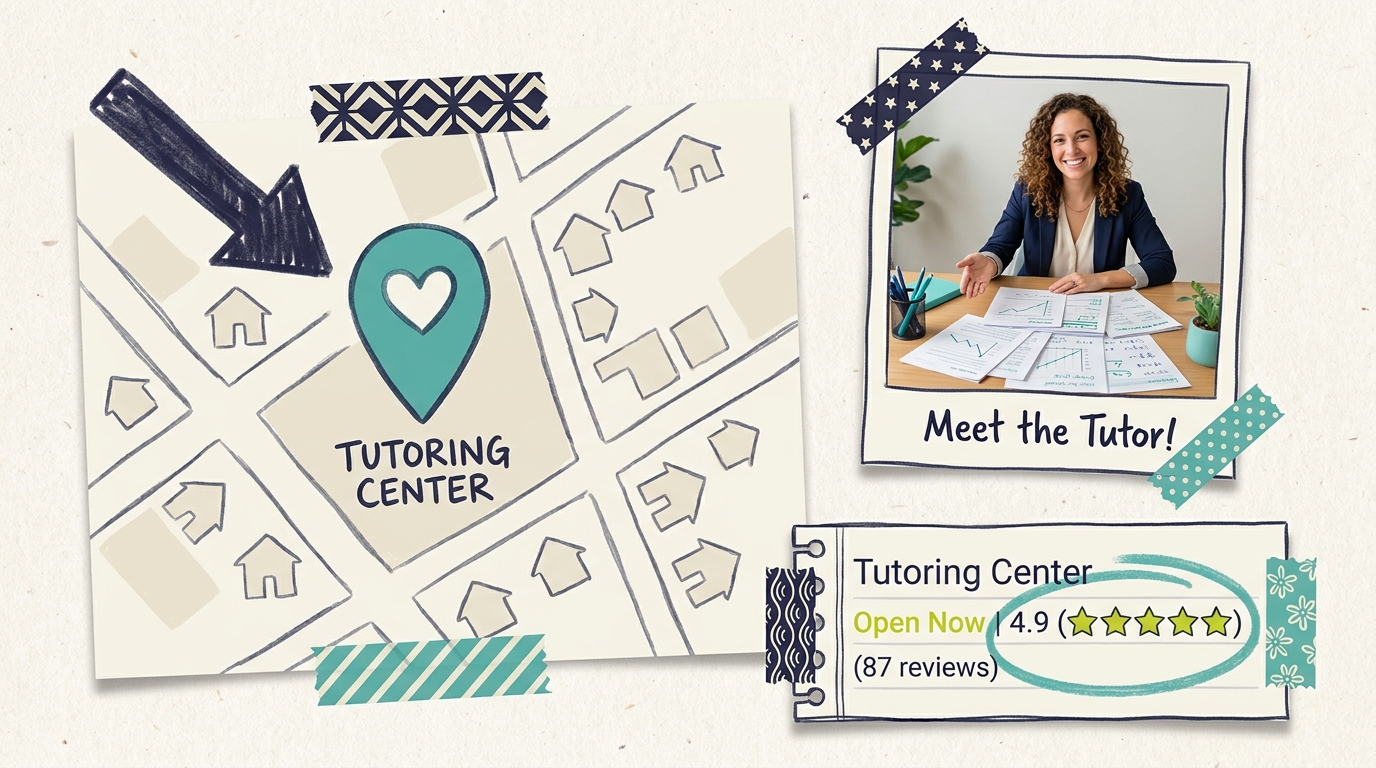
BrightLocal's 2024 Local Consumer Survey found that 87% of consumers use Google to evaluate local businesses, and the map pack alone captures 44% of all local search clicks. For tutoring, where credentials and proximity matter equally, ranking in the map pack with strong reviews can produce 20-80 inquiries per month at near-zero variable cost.
Optimizing Your Profile
Complete every field. Primary category: "Tutoring Service" or "Educational Center." Add secondary categories: "Test Preparation Center," "School," or specialty descriptors as relevant.
Post weekly. Subject-specific tips, student success stories (with permission), seasonal program announcements (summer prep, AP exam prep), and educational events. Active profiles rank meaningfully higher than dormant ones.
Upload photos and credentials. Photos of your tutoring space, your tutors, certifications, awards, and any branded student work (with consent). Profiles with 100+ photos generate 520% more calls than those with fewer than 10 (Google, 2023).
Use Q&A proactively. Seed common questions: "What subjects do you cover?" "Do you tutor online or in-person?" "What's your average score improvement?" Answer them yourself with helpful, honest, current responses.
Keep current pricing and availability visible. Parents shortlist by fit and availability. Make pricing transparency easy.
Reviews Drive Bookings
Tutoring reviews are read with intense scrutiny. Parents want to see specific outcome stories ("My daughter went from a C to an A-") rather than vague positive sentiment. Reviews are also a major local ranking factor.
Your review engine:
Email families at the 30, 90, and 180-day mark with a friendly review request
Make it easy: include the direct Google review link in the email
Ask specifically for the type of detail other parents want: "Could you share what subject and what improvement you saw?"
Respond personally to every review
Feature top reviews in social posts, ad creative, and your website
Tutors with 30+ reviews and a 4.8+ rating consistently outrank competitors with weaker review profiles.
Local Citations
Beyond Google, make sure you appear consistently across:
Yelp
Wyzant, Care.com, Varsity Tutors directories
Local school district resource pages
BBB (Better Business Bureau)
Chamber of commerce and local parenting magazines
Apple Maps Connect and Bing Places
Budget and Expectations
Mostly time investment. Budget $150-$500 per month if you hire someone to manage posts, review outreach, and citation management. Results compound over 3-9 months. A well-optimized tutoring profile in a competitive metro generates 20-60 consultation requests per month at zero variable cost.
Channel 4: Wyzant, Care.com, and Tutor Marketplaces
Tutor marketplaces represent a meaningful share of how parents and students find tutors. Listings on the right platforms can produce a steady flow of pre-qualified inquiries.
Wyzant: Largest tutor-specific marketplace in the U.S. Tutors create profiles, set hourly rates, and accept matches. Wyzant takes a percentage of session revenue (typically 25-35%). Best for tutors who want to fill schedule gaps without paid acquisition costs.
Care.com: Major care marketplace including tutoring. Premium tutor listings ($80-$300/month) appear at the top of parent searches. Less competitive than Wyzant for some subjects.
Varsity Tutors: Premium platform with curated tutors. Best for tutors with strong credentials (advanced degrees, teaching experience, test scores). Higher rates but more rigorous vetting.
Outschool: Online-class platform popular for kids ages 3-18. Good for tutors who can package recurring or short-format classes.
Specialty platforms: Test prep specifically (Tutor.com), language exchange (italki for languages), AP-specific tutoring platforms, and college admissions consulting platforms (CollegeVine, Crimson).
Local university tutoring referrals: Many local university education departments maintain referral lists of certified tutors. Free to be on these lists if you meet their criteria.
Tactics That Work
Optimize your Wyzant or Care.com profile with strong photos, specific credentials, and detailed subject descriptions
Set competitive pricing for the first 5-10 sessions to build review velocity
Respond to every direct message within 4-6 hours; faster response wins matches
Treat platform sessions as a top-of-funnel; offer direct-booking discounts for ongoing engagements
Track which platforms produce the longest-term student relationships
Budget and Expectations
Marketplace costs are usually a percentage of session revenue rather than a fixed monthly fee. Effective "cost" runs 25-35% of revenue on Wyzant; 0-15% on directories with optional premium listings. Lower-cost than Google Ads in many cases, with built-in trust signals from existing reviews and ratings.
Channel 5: School and Community Partnerships
The tutoring businesses that grow steadily year after year do it through school and community relationships, not just paid acquisition.
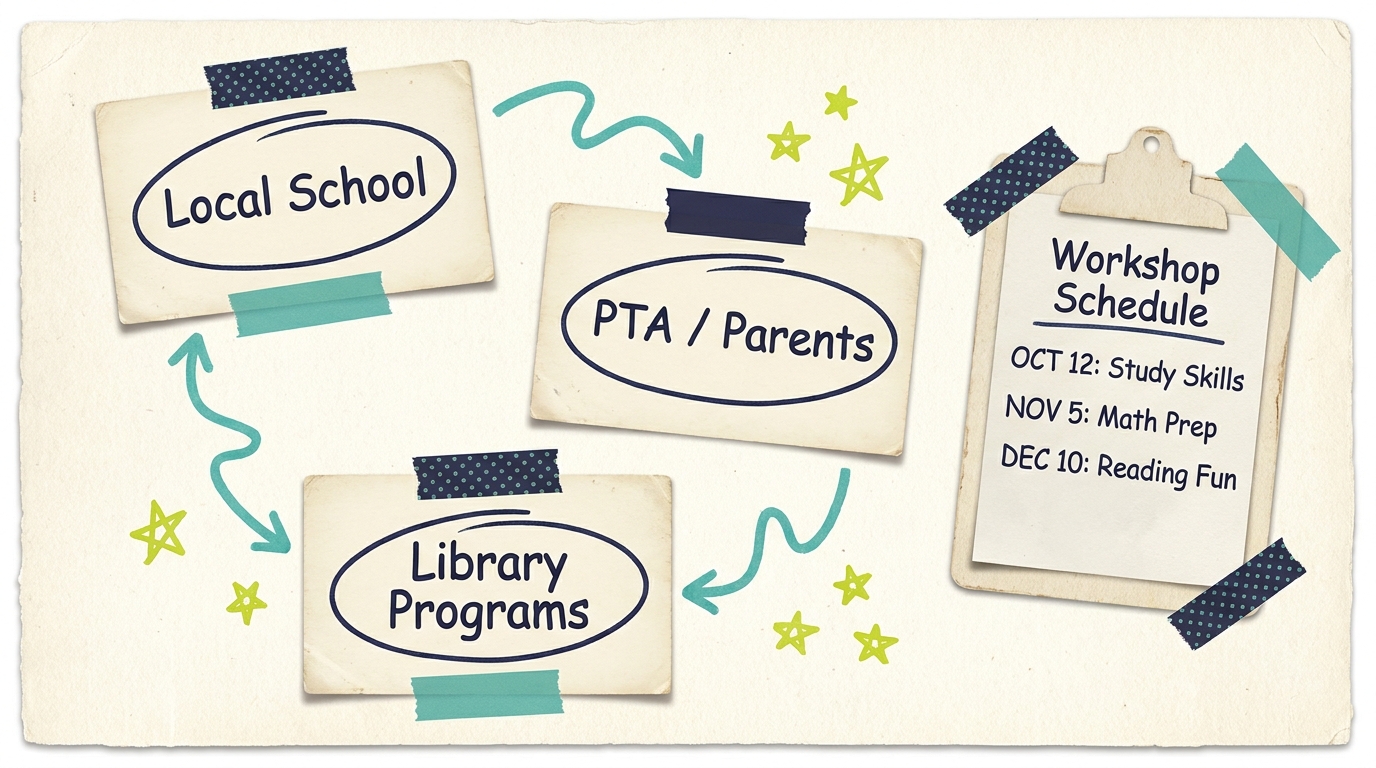
Local school partnerships. Most local schools maintain referral lists of approved or recommended tutors. Build relationships with school counselors, special education coordinators, and academic advisors. Offer to host parent workshops on test prep, executive function, or learning disabilities.
After-school programs. YMCAs, Boys & Girls Clubs, and community centers often partner with tutoring providers. Offer pro-bono tutoring sessions in exchange for referral access to their families.
Library partnerships. Public libraries often host or recommend tutoring services. Free homework help sessions, summer reading workshops, or test prep nights build visibility and trust.
PTA/PTO sponsorships. Sponsoring local school events, PTA newsletters, or yearbook advertising puts your name in front of engaged parents.
Education-specialist partnerships. Educational psychologists, learning specialists, and pediatricians often answer "where should I send my child for support?" Build relationships with the top 3-5 referring specialists in your area.
Religious institutions. Many churches, synagogues, and faith communities run after-school programs or maintain referral lists for academic support.
Homeschool communities. Active local homeschool networks need outsourced support for advanced subjects (high school math, science labs, AP coursework, foreign language).
Sibling and family-referral programs. Existing families are your best marketers. A formal referral incentive (one free session per referred family who books) systematizes informal recommendations.
Budget and Expectations
Mostly relationship-building time plus occasional event costs and pro-bono session investment. Plan $1,000-$3,000 per year in materials, partnership investments, and referral incentives. Returns compound over years. The strongest 10-year tutoring brands run on partnership and referral pipelines, not paid ads.
Channel 6: CTV Advertising
For most of tutoring's history, TV was unaffordable for individual tutors and small centers. That changed with connected TV.
Connected TV (CTV) means streaming services like Hulu, Peacock, Tubi, and Roku. Local advertisers can now buy targeted streaming campaigns starting at $50, with tight geographic and audience targeting (eMarketer, 2024).
For multi-location learning centers or test prep brands with strong differentiation, CTV builds the brand authority that elevates you above commodity tutoring services. A polished 30-second spot during prime-time streaming reaches parents on the same screens where they watch family content.
Platforms like Adwave make CTV realistic for tutoring brands. Generate a broadcast-quality 30-second spot from your website in about two minutes, target your metro area, and launch on 100+ premium streaming channels for as little as $50.
For a deeper look at TV strategy specifically for tutoring, see our guide to TV advertising for tutoring centers and test prep.
Budget: $500-$2,500 per month. Best for multi-location centers, test prep brands with proven outcome data, and tutoring businesses with premium positioning. Solo tutors usually get faster ROI from Facebook and Google.
Channel 7: Parent Newsletters, Local Press, and Community Outreach
Tutoring is one of the categories where local newsletters and community press still drive meaningful inquiries, especially among parents who don't engage as heavily with paid ads.
School and PTA newsletters. Most local schools and PTAs send parent-facing newsletters. Sponsorships, listings, or contributed articles ($50-$300 per appearance) reach engaged academic-minded families.
Local parenting publications. Most metros have one or two parenting magazines (print or digital). Featured listings and contributed expert articles build credibility and drive inquiries.
Community newspapers. Local weekly newspapers still reach engaged community members, especially in suburban areas.
Educational expert columns. Pitching local newspapers or parenting blogs as a guest expert on test prep, learning differences, or specific subjects builds authority and inbound interest.
Library and bookstore events. Hosting free workshops at libraries, bookstores, or community centers (test prep prep, college essay help, summer reading) puts you directly in front of academically engaged families.
Local podcast guesting. Many cities have local parenting or education podcasts that need expert guests. One appearance can drive months of inbound consultations.
Branded resources for distribution. Free college planning calendars, study skill guides, or test prep checklists, distributed through schools, libraries, and your community partners, capture leads and build authority.
Community challenge events. Spelling bee sponsorships, math tournament sponsorships, science fair judges, or scholarship contests put your tutoring business in front of high-intent families.
Budget and Expectations
Plan $500-$2,000 per month on community outreach for active centers, less for solo tutors leaning into 1-2 channels. Returns compound over time. Cost per consultation request typically runs $80-$250, higher than digital channels but reaches families who don't engage digitally.
Channel Comparison
Here's how the channels stack up for a typical solo tutor or small learning center.
Most solo tutors should run 3-4 channels at any time. A new tutor focuses on Wyzant + Google + GBP. An established tutor focuses on GBP + Facebook + Partnerships + Wyzant for fill-in. Multi-location centers should run all 7.
Recommended Budget Allocation by Stage
Stage 1: New Tutor or First Year ($500-$1,500/month)
Wyzant or Care.com revenue share: 30-40% of revenue
Google Ads: 30% ($150-$450)
Facebook / Meta: 25% ($125-$375)
GBP / Local SEO: 15% ($75-$225)
Partnerships / community: 10% ($50-$150)
Initial events / outreach: 20% ($100-$300)
Goal: Fill schedule to 80-100% capacity within 6-12 months.
Stage 2: Established Tutor or Small Center ($1,500-$4,000/month)
Facebook / Meta: 30% ($450-$1,200)
Google Ads: 25% ($375-$1,000)
Partnerships and community: 15% ($225-$600)
GBP / content / local SEO: 15% ($225-$600)
Marketplace fill-in: 10% ($150-$400)
Newsletters / events: 5% ($75-$200)
Goal: Stable 4-8 active families per tutor with predictable inquiry pipeline.
Stage 3: Multi-Location or Premium ($4,000+/month)
Facebook / Meta: 25%
Google Ads: 20%
CTV: 15%
Partnerships: 15%
Newsletters / community: 10%
GBP and content: 10%
Marketplace strategic: 5%
Goal: Build regional brand authority, support premium hourly rates and recurring engagements.
Tutoring Calendar by Specialty
Academic subject tutoring (math, reading, writing):
Aug-Sept: Heaviest enrollment as parents see new teacher expectations
Jan-Feb: Mid-year correction window
April-May: End-of-year final push
Summer: Summer slide prevention, advance prep
Test prep (SAT/ACT):
Aug-Sept: Junior year rising students
Dec-Jan: Spring test takers
April-May: Final-push for spring tests
Summer: Heavy program enrollment
AP and state testing:
Aug-Oct: AP class enrollment + AP-specific prep planning
Feb-April: Final AP exam push
Spring state testing season (varies by state)
College admissions consulting:
Spring/summer: Junior year families starting process
Fall: Senior year application support
Winter: Final essay polishing and decision support
Common Questions Answered
How much should a tutoring business spend on advertising?
Solo tutors typically spend 5-12% of gross revenue on advertising. A tutor billing $80,000 annually should plan $4,000-$10,000 per year, or $350-$850 per month. Learning centers and multi-tutor practices typically spend 6-10%. New tutors often push to 15-20% in the first year to accelerate filling their schedule.
Which channel produces the best ROI for tutors?
For most solo tutors, Google Ads produces the fastest ROI because of high purchase intent. Facebook produces the best long-term ROI through audience-building and retargeting. Local SEO and Google Business Profile produce the best ROI per dollar over 12+ months. Wyzant fills schedule gaps efficiently. The combination of all four typically beats any single channel.
Are tutor marketplaces like Wyzant worth the percentage cut?
For new tutors building a client base, yes. Wyzant's 25-35% fee is offset by the built-in trust signals, review system, and steady stream of pre-qualified inquiries. Established tutors with strong direct booking pipelines can de-emphasize Wyzant or use it strategically for schedule gaps. Track conversion rates from marketplace clients to direct ongoing engagements.
Should a tutoring business advertise on TV?
For solo tutors, no. Facebook and Google produce faster, more measurable results. For multi-location learning centers or test prep brands with strong outcome data, CTV builds the regional brand authority that justifies premium hourly rates. CTV starts at $50 and is realistic via platforms like Adwave, but ROI math works best for tutoring businesses already at scale.
How important are reviews for tutoring?
Reviews are critical. Parents read every review carefully, looking for specific outcome stories. Tutors with under 4.7 stars or fewer than 20 reviews see meaningfully lower consultation-to-booking conversion. Investing in a systematic review request process is essential for any tutoring business.
What's the fastest way to fill a sudden schedule gap?
Run a Facebook lead gen campaign with a $20-$30 daily budget for 7 days, target parents of children in your specialty's age range within a 5-mile radius, and offer a free 30-minute consultation. Layer in proactive outreach to past families, a Wyzant profile boost, and a quick email blast to your school partners. Most tutors fill same-day gaps in 7-14 days through this approach.
Where to Start This Week
If you're a solo tutor or small center director without a clear advertising system, here's a 30-day plan:
Week 1: Optimize your Google Business Profile. Update primary category, upload 30-50 fresh photos and credential images, send review requests to your last 15 families with specific outcome prompts.
Week 2: Set up Facebook for weekly posting. Identify your top 3 organic posts and boost each with $20-$30 of ad spend. Plan one tutor-introduction video and one outcome-story video for the next month.
Week 3: Launch Google Ads on your specialty keywords with a $20-$40 daily budget. Build a dedicated landing page for free consultation requests, segmented by subject.
Week 4: Set up or optimize your Wyzant or Care.com listing. Photograph yourself and your tutoring space, write subject-specific descriptions emphasizing outcomes, and respond quickly to all marketplace messages.
After 60-90 days, build out 2-3 school or community partnership relationships, begin contributing guest articles or expert columns to local parenting publications, and consider CTV advertising if you have center-level scale.
Tutoring is a trust-first business where the best marketing is consistent visibility, real outcome stories, and genuine community relationships. Tutors and centers that layer 4-5 channels for 12+ months build inquiry pipelines that produce families for years. Single-channel tutors stay vulnerable to algorithm changes, marketplace fee increases, and seasonality.
Ready to add TV advertising to your tutoring center's marketing? Adwave lets tutoring brands create broadcast-quality 30-second spots from their website in minutes and launch them on 100+ premium streaming channels for as little as $50.


