The predictions are over. We're well into 2026, and the trends that were once speculative are now producing real results for small businesses running TV ads. Instead of guessing what might happen, let's look at what's working, what's changed, and where the biggest opportunities are sitting right now.
This isn't a forecast. If you're looking for predictions, we've already covered that. This is a rundown of the trends that are driving measurable results for SMBs in 2026, backed by real data.
CTV Ad Spend Is Surging, and SMBs Are a Big Part of It
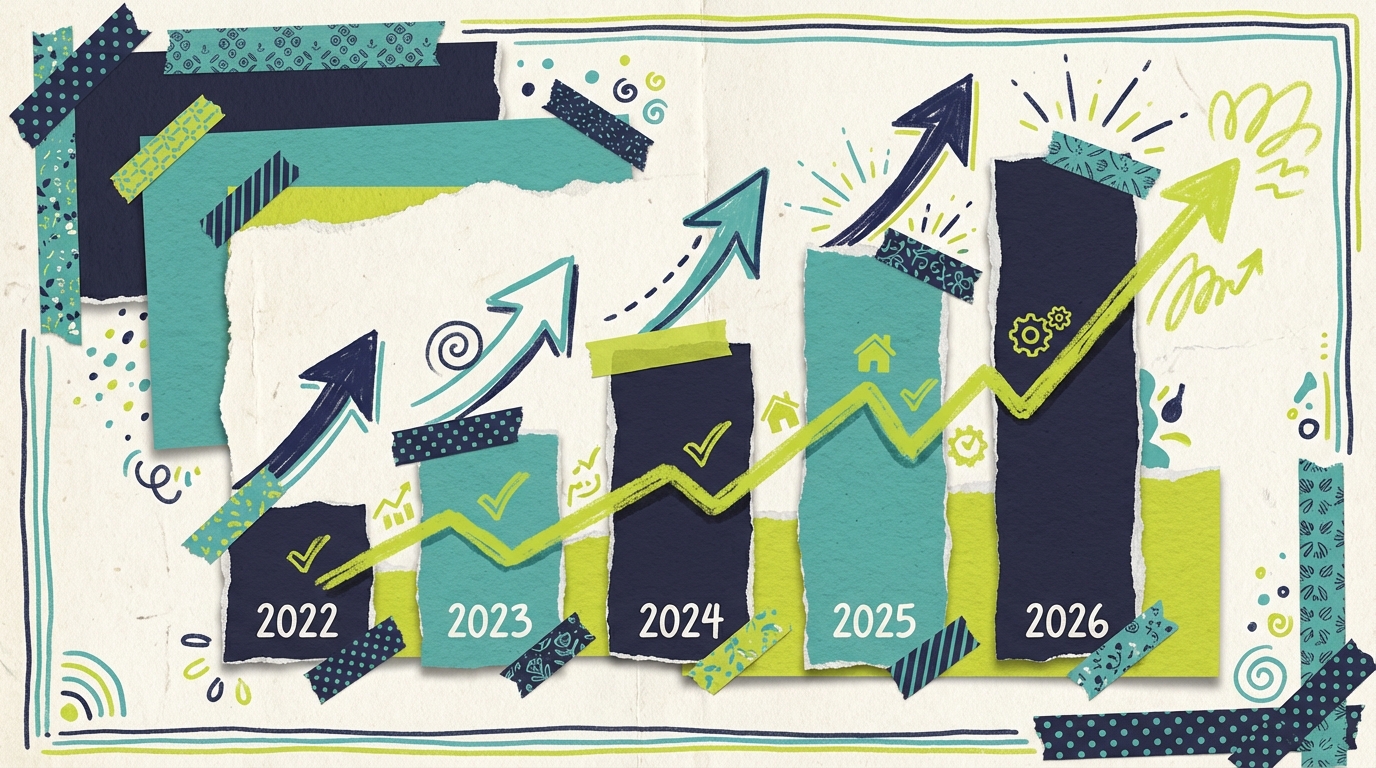
Connected TV advertising has been growing for years, but 2026 is the year SMBs went from curious to committed. U.S. CTV ad spending is projected to reach $33.35 billion in 2026, up from $28.75 billion in 2025 (Statista, 2025). That's a 16% jump year over year.
What's different now is who's spending. It's not just enterprise brands anymore. According to the IAB's 2025 Video Ad Spend & Strategy Report, 55% of digital video buyers planned to increase their CTV budgets in 2025, with small and mid-size advertisers representing the fastest-growing buyer segment. That momentum has carried directly into 2026.
The barrier to entry has dropped dramatically. Platforms like Adwave let you launch a TV campaign with as little as $50, which means a local plumber or neighborhood bakery can run on the same premium networks as national brands. A few years ago, that would've sounded unrealistic. Now it's just Tuesday.
AI-Powered Ad Creation Is the Great Equalizer
The single biggest unlock for small businesses in TV advertising? AI-generated creative. Creating a broadcast-quality commercial used to cost $5,000 to $50,000 or more. Now you can generate a polished 30-second spot in about two minutes.
This isn't a gimmick. According to Magna Global's 2025 advertising forecast, AI-generated creative tools contributed to a measurable increase in first-time TV advertisers entering the market. Small businesses that never considered TV are now running ads because the creative bottleneck simply doesn't exist anymore.
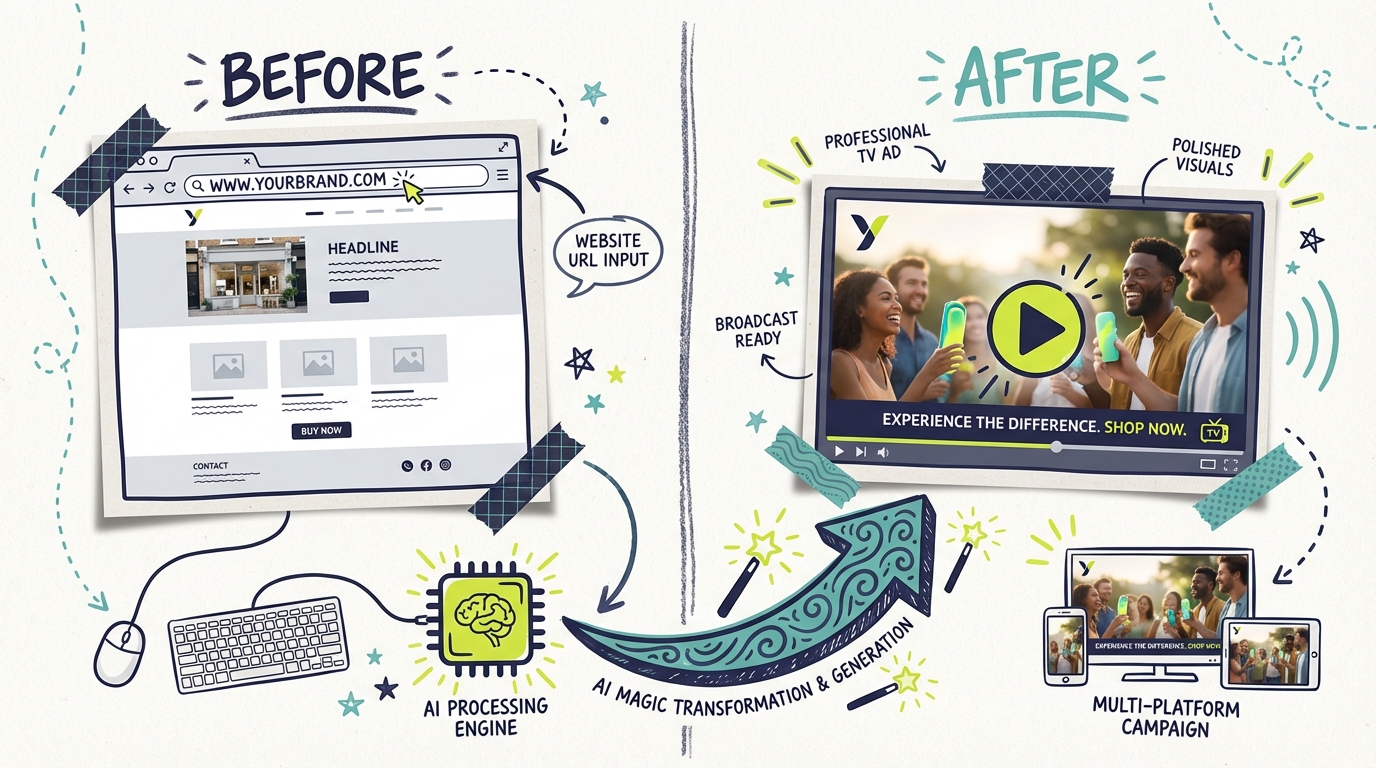
With Adwave, you drop in your website URL (or your Yelp page, or a social media profile), and the platform builds a professional ad from your existing content. No agency. No film crew. No six-week production timeline. The quality is strong enough to run across 100+ premium channels, and the speed means you can test messaging quickly instead of betting everything on one concept.
Self-Serve Platforms Have Replaced the Old Gatekeepers
TV advertising used to require phone calls to sales reps, long contracts, and minimum spends that started in the thousands. In 2026, self-serve CTV advertising platforms have made that model feel like a relic.
The shift to self-serve isn't just about convenience. It's about control. You set your own budget, pick your targeting, launch when you're ready, and see performance data in real time. No middleman markup. No waiting for a quarterly report to find out if your campaign worked.
According to eMarketer, programmatic CTV (which includes self-serve platforms) now accounts for more than 75% of all CTV ad transactions in the U.S. (eMarketer, 2025). That's up from roughly 60% just two years ago. The buying model has fundamentally shifted, and small businesses are the ones benefiting most.
Local Targeting Is Getting Sharper
One of the biggest knocks against TV advertising for small businesses used to be waste. Why pay to reach an entire metro area when you only serve a 15-mile radius? That argument doesn't hold up anymore.
CTV platforms now offer ZIP code-level and even household-level targeting. You can reach viewers in specific neighborhoods, filter by interests and demographics, and layer in first-party data to build highly specific audiences. According to Nielsen's 2025 State of Play report, 68% of CTV ad impressions are now delivered with some form of advanced audience targeting beyond basic age and gender.
For a local business, this changes the math completely. You're not paying for eyeballs you don't need. You're reaching the people who are most likely to walk through your door, and you can measure whether they do.
Measurement Has Caught Up with the Medium
For years, the biggest criticism of TV advertising was that you couldn't track it the way you could a Google or Meta ad. That gap has closed significantly in 2026.
Attribution tools now connect TV ad exposure to website visits, app downloads, store visits, and even online purchases. According to the IAB's 2025 Measurement & Attribution Report, 72% of CTV advertisers now use multi-touch attribution models, up from 48% in 2023. Platforms are reporting on incremental reach, view-through conversions, and cross-device engagement.
For SMBs, this means you don't have to take TV advertising on faith. You can see what's working, what isn't, and adjust accordingly. If you want to dig deeper into how measurement works, check out our guide on CTV advertising growth and where it's heading.
FAST Channels Are Creating New Inventory (and Lower Prices)
Free ad-supported streaming TV (FAST) channels have exploded. Platforms like Tubi, Pluto TV, and the Roku Channel now collectively reach over 100 million monthly viewers in the U.S. (Variety, 2025). That's a massive pool of ad-supported inventory that simply didn't exist at this scale three years ago.
Why does this matter for small businesses? More inventory means more affordable pricing. The average CPM across streaming platforms ranges from $15 to $35, but FAST channels tend to sit on the lower end of that range. You're getting premium-feeling placements at rates that rival digital display advertising.
FAST viewership continues to climb as consumers look for ways to cut subscription costs. According to Parks Associates, 62% of U.S. broadband households used at least one FAST service in 2025, up from 50% the prior year. For advertisers, this growing audience represents a chance to reach engaged viewers who are actively choosing to watch content, not just scrolling past it.
Interactive and Shoppable TV Ads Are Gaining Traction
TV ads used to be a one-way conversation. You watched, and maybe you remembered the brand later. In 2026, interactive ad formats are changing that dynamic.
QR codes on TV ads have become standard practice. According to a 2025 study by LG Ad Solutions, QR code scan rates on CTV ads increased 42% year over year, with the highest engagement coming from local service and retail advertisers. Viewers are now conditioned to scan, and advertisers are building campaigns around that behavior.
Beyond QR codes, shoppable overlays and click-to-action formats are rolling out across major streaming TV advertising platforms. These formats let viewers engage with an ad directly through their remote or connected device, whether that's requesting a quote, browsing a menu, or adding a product to their cart.
For small businesses, interactive formats bridge the gap between awareness and action. Your TV ad doesn't just build brand recognition. It can drive a measurable response in the moment.
Political Ad Spending Reshaped Inventory in 2025 (and the Effects Linger)
The 2024 election cycle dumped an estimated $12.3 billion into political advertising, with CTV absorbing a record share (AdImpact, 2025). That surge tightened inventory, drove up CPMs, and pushed some SMB advertisers to the sidelines during Q3 and Q4 of 2024.
Political spending has largely cleared from the system. CPMs have normalized, inventory is wide open, and the first half of 2026 is one of the most favorable buying windows for small businesses in recent memory. If you paused your TV advertising during election season, now's the time to get back in.
The other lasting effect: political campaigns proved that CTV works for hyper-local targeting at scale. The same ZIP code targeting and audience segmentation that campaigns used to reach swing voters is now available to any small business looking to reach its own neighborhood.
What's Driving Results for SMBs Right Now
The following practices can help small businesses manage TV campaigns:
They're testing fast. AI creative tools mean you can launch a campaign in under 10 minutes and start learning immediately. The businesses that iterate on messaging, try different audiences, and optimize based on data are outperforming those that run one ad and hope for the best.
They're thinking local. National reach is great, but the SMBs winning with CTV are using tight geographic targeting to focus their budget where it counts. A $500 campaign targeted to a 10-mile radius hits harder than $5,000 spread across a state.
They're combining channels. TV isn't replacing digital. It's amplifying it. The strongest performers are running CTV alongside search and social, using TV to build awareness and retargeting those viewers across other channels. According to a 2025 VAB (Video Advertising Bureau) study, advertisers who added CTV to their digital mix saw a 22% lift in overall campaign performance.
They're measuring everything. The days of "spray and pray" TV advertising are over. SMBs are tracking website visits, phone calls, and store traffic back to specific TV campaigns, then doubling down on what works.
Common questions answered
Is TV advertising affordable for small businesses in 2026? Yes. Platforms like Adwave have brought the minimum spend down to $50, and FAST channels have created a large pool of affordable inventory. With CPMs ranging from $15 to $35, a small business can run a meaningful local TV campaign for a few hundred dollars a month. You don't need an enterprise budget to get started.
How do I know if my TV ads are working? CTV platforms now offer attribution tools that connect ad exposure to website visits, phone calls, and store traffic. Most platforms provide dashboards with real-time performance data, so you can see exactly how many people saw your ad and what they did afterward. Multi-touch attribution models are now standard across major CTV platforms.
What's the difference between CTV advertising and traditional TV advertising? Traditional TV (linear) airs on broadcast and cable networks with broad demographic targeting. CTV delivers ads through streaming apps on smart TVs and devices like Roku and Amazon Fire TV, allowing for precise audience targeting, real-time reporting, and much lower minimum budgets. For a deeper look at the fundamentals, read our guide on what connected TV advertising is.
Do I need a professional video to run a TV ad? Not anymore. AI-powered tools can generate broadcast-quality 30-second commercials from your existing web presence in minutes. You don't need to hire a production company or an ad agency. The quality is strong enough for premium network placements, and you can create multiple versions to test different messages.
Are FAST channels a good place for small business ads? Absolutely. FAST platforms like Tubi, Pluto TV, and the Roku Channel collectively reach over 100 million monthly viewers. Because they're free and ad-supported, viewers expect (and accept) advertising. CPMs tend to be lower than subscription-based streaming services, making FAST channels especially attractive for budget-conscious SMBs.
When is the best time to start TV advertising in 2026? Right now is one of the best windows. Political ad spending from the 2024 cycle has cleared out, CPMs have normalized, and inventory is wide open. The first half of 2026 offers favorable pricing and less competition for ad slots. Waiting until later in the year risks running into holiday-season demand and potentially another cycle of political spending for midterms.