-
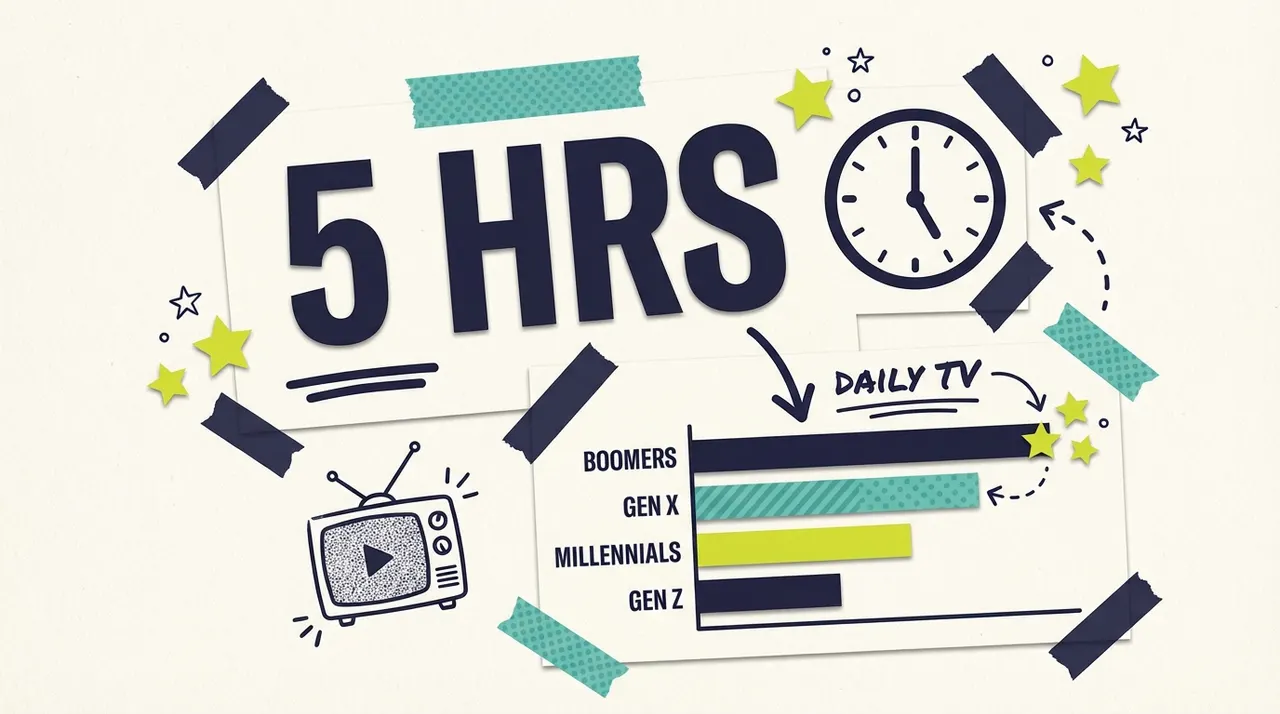
~5 hrs
Daily TV viewing time for baby boomers
-
73%
Boomers who watch 2+ hours of TV daily
-
64%
Adults 65+ with cable/satellite subscriptions
Yes, baby boomers watch significantly more TV than any other generation, averaging nearly 5 hours per day compared to just 1.5 hours for millennials and under an hour for Gen Z, according to eMarketer data. This generational divide in television consumption represents one of the most dramatic differences in media behavior today, with 73% of boomers watching two or more hours of TV daily compared to only 36% of Gen Z (MNTN Research, July 2025). For advertisers, this means TV remains the most efficient channel for reaching older consumers, while also showing why streaming platforms have become essential for cross-generational campaigns.
What the data shows
The gap between boomer TV viewing and younger generations isn't just noticeable, it's enormous. Baby boomers born between 1946 and 1964 spend almost 5 hours per day watching television, making them the most devoted TV audience by a significant margin (Marketing Architects, 2024). This consumption level is more than triple what millennials watch and roughly five times what Gen Z averages daily.
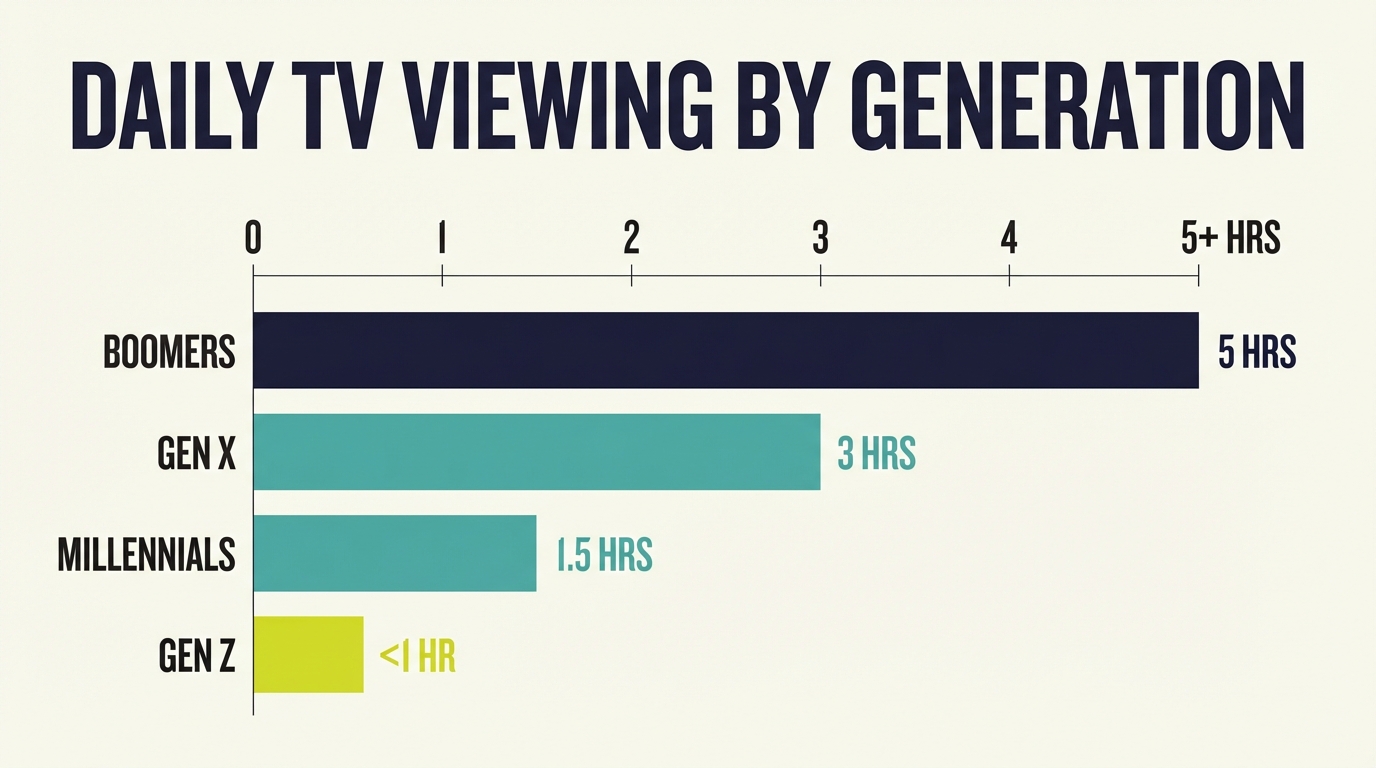
The generational breakdown reveals a clear pattern. Generation X, often overlooked in media discussions, averages just over 3 hours of daily TV viewing. Millennials come in at approximately 1.5 hours per day, marking a significant departure from the viewing habits of their parents. Gen Z represents the most dramatic shift, with average daily viewing time under an hour according to eMarketer data. This progression suggests that each successive generation has found alternative forms of entertainment competing for the time that previous generations devoted to television.
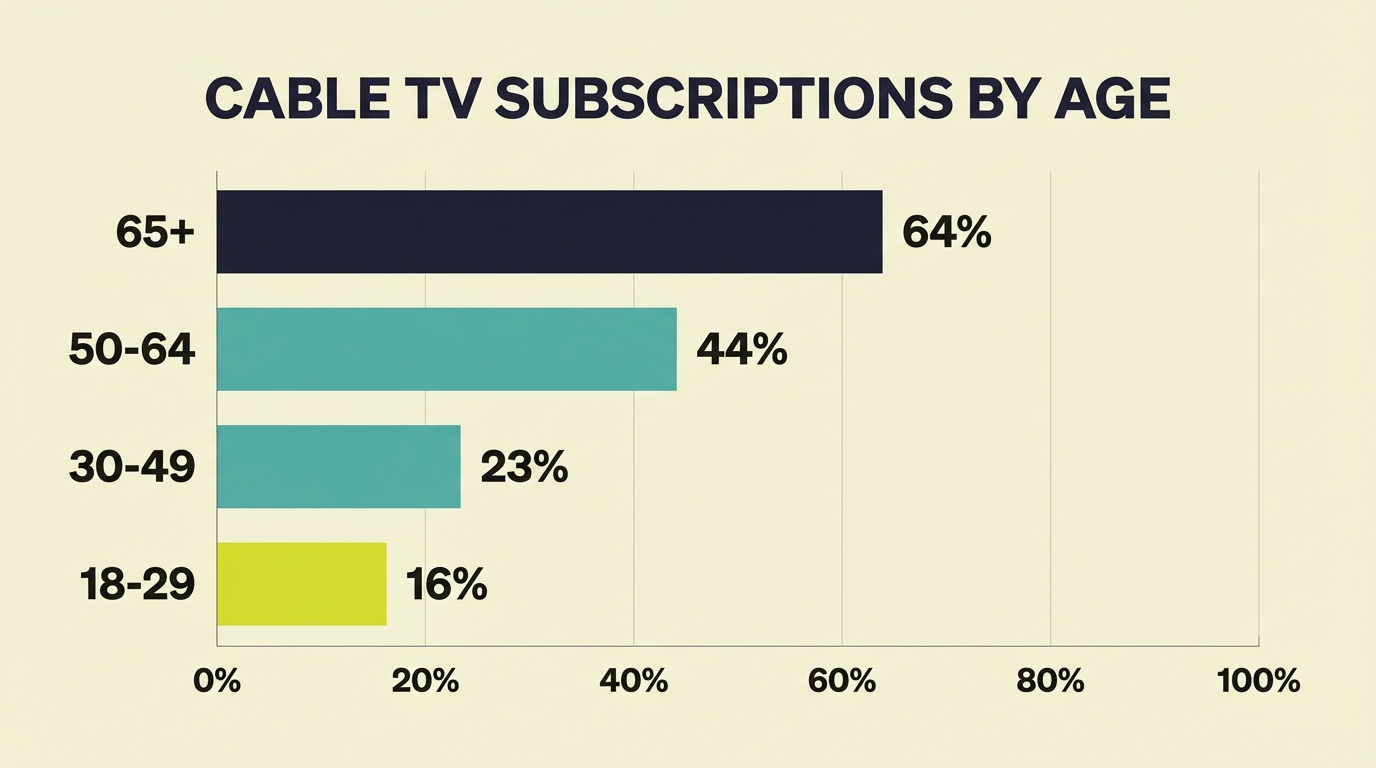
What makes this data especially relevant is the consistency across multiple research sources. Nielsen's ongoing measurement shows adults 55 and older consistently watching more than 5 hours of traditional TV per day, while Pew Research Center surveys confirm that 64% of Americans 65 and older maintain cable or satellite subscriptions, the highest rate among any age group (July 2025). Among adults 50 to 64, that figure drops to 44%, and for those under 30, just 16% subscribe to traditional pay TV.
The monthly engagement numbers tell a similar story. According to Marketing Architects, 82% of baby boomers tune into either linear or streaming TV at least monthly, demonstrating that this generation hasn't abandoned television as entertainment platforms have multiplied. Even as streaming has grown, boomers have maintained their relationship with the medium that defined entertainment for most of their lives.
Perhaps most striking is the weekly viewing comparison from Ipsos research. Some 59% of baby boomers watch more than 10 hours of television per week, compared to only 26% of millennials and just 17% of Gen Z. This means boomers are more than twice as likely as millennials to be heavy TV viewers, and nearly 3.5 times more likely than Gen Z. For advertisers trying to build reach and frequency with older demographics, television remains unmatched in efficiency.
The preference for live versus on-demand content also varies dramatically by generation. S&P Global Market Intelligence research reveals that 46% of baby boomers and seniors watch primarily live TV, compared to only 22% of millennials and 18% of Gen Z. This preference for scheduled programming creates predictable viewing patterns that advertisers can plan around, making traditional TV buying especially effective for reaching boomer audiences.
Breaking down the numbers
Understanding why boomers watch so much TV requires looking beyond the headline statistics to examine the specific patterns driving their consumption.
By content type
News programming drives substantial boomer viewing. This generation grew up with evening news as a daily ritual, and that habit has persisted. Local and national news broadcasts consistently draw their largest audiences from viewers 50 and older, creating reliable inventory for advertisers seeking to reach this demographic. Morning news programs, daytime talk shows, and evening news all over-index heavily with boomer viewers.
Sports content also commands significant boomer attention. Live sports represent one of the few remaining appointment viewing occasions, and older viewers are especially likely to watch games from start to finish rather than catching highlights later. Golf, baseball, and football draw especially strong boomer viewership, making sports adjacencies valuable for brands targeting this demographic.
Drama and procedural series maintain loyal boomer audiences. Shows on traditional broadcast networks, especially CBS, continue to draw substantial 50-plus viewership. The network's lineup of procedurals and drama series consistently ranks among the most-watched programs when measured by total audience rather than the 18-49 demographic that advertisers traditionally prioritized.
By platform preference
The streaming versus linear divide shows clear generational patterns. While 64% of adults 65 and older subscribe to cable or satellite TV, that figure drops to 44% for those 50-64, 23% for those 30-49, and just 16% for adults under 30 (Pew Research, July 2025).
However, boomers aren't streaming holdouts. Approximately two-thirds of baby boomers have embraced streaming services according to Marketing Architects, and this adoption has accelerated significantly. Research from GWI found that boomers (aged 55 and up) doubled their streaming watch time from 29 minutes per day to over an hour per day in just one year (The Current, 2024).
Among streaming options, boomers show distinct preferences. MNTN Research (July 2025) found that boomers favor FAST (Free Ad-Supported Streaming TV) platforms at 54% compared to AVOD (Advertising Video on Demand) at 49%. This preference reflects the familiar channel-surfing experience that FAST platforms provide, mimicking the linear TV experience boomers know well.
By time of day
Boomer viewing peaks during traditional TV dayparts. Morning news from 6-9 AM draws heavy 50-plus viewership. Daytime programming from 9 AM to 4 PM skews dramatically older, with retirees representing the bulk of available audience. Early fringe (4-7 PM) and prime time (8-11 PM) both draw substantial boomer viewing, though prime time sees more competition from younger demographics.
Late night represents another boomer strength. While younger viewers may catch late night clips online, boomers are more likely to watch programs live or on DVR the following day. This creates opportunities for advertisers to reach older audiences at lower CPMs than prime time commands.
Why it matters for your business
If your customers include anyone over 50, television is almost certainly the most efficient way to reach them at scale. The 5 hours of daily viewing that boomers average represents an extraordinary amount of attention that no other medium can match for this demographic.
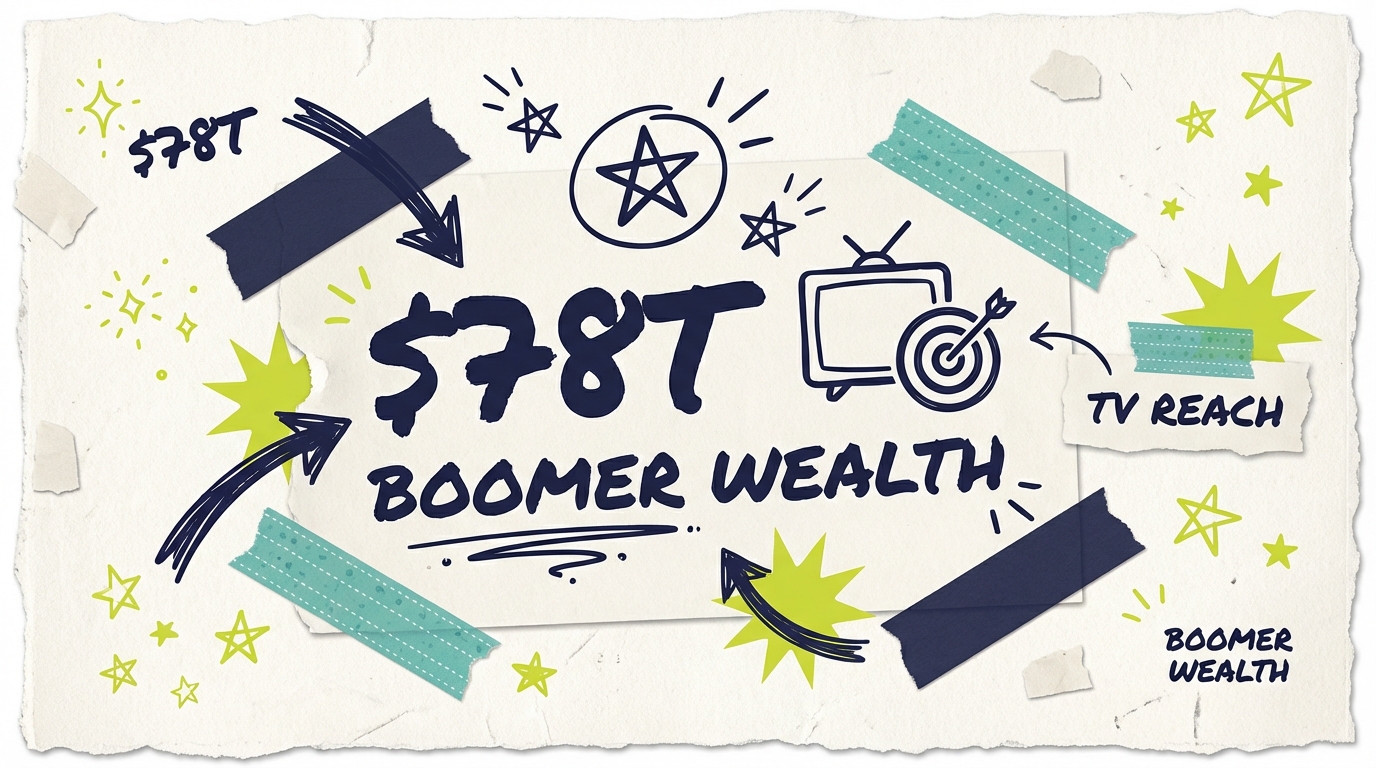
The spending power concentrated in boomer households makes this attention especially valuable. Baby boomers control an estimated $78 trillion in wealth according to Federal Reserve data, more than any other generation. They're making purchasing decisions about healthcare, financial services, home improvements, travel, vehicles, and countless other categories. And they're watching TV while they do it.
Consider specific business applications. Healthcare providers targeting patients 50 and older can reach their ideal audience with remarkable efficiency through daytime and news-adjacent programming. Financial advisors seeking high-net-worth clients find that TV builds the trust and recognition that drives inquiries. Home service businesses from HVAC contractors to remodelers reach homeowners during the hours they're thinking about household projects.
The trust factor matters enormously for businesses serving older customers. Boomers grew up with television advertising as the primary way brands communicated. A business that advertises on TV carries implicit credibility that digital-only brands may lack with this demographic. For professional services, healthcare, and financial products where trust drives decisions, TV advertising signals legitimacy in ways that social media simply doesn't for older audiences.
Local businesses benefit especially from boomer viewing patterns. Older consumers are more likely to watch local news and local programming where geographically targeted TV ads can reach them. A restaurant, dental practice, or home services company can build recognition with local boomers through consistent TV presence in ways that would require enormous digital spend to replicate.
The accessibility of TV advertising has changed dramatically with platforms like Adwave. What once required minimum budgets of $50,000 or more now starts at just $50. Small businesses can run streaming TV campaigns targeting specific demographics and geographies, reaching boomer audiences on their living room screens without the traditional barriers of TV advertising.
How to take advantage of this trend
Understanding that boomers watch more TV is useful. Knowing how to act on that information is what grows your business.
Start by identifying whether boomers represent a meaningful part of your customer base. If you serve homeowners, healthcare patients, financial clients, or luxury consumers, the answer is almost certainly yes. Even businesses that might assume they skew younger often find significant revenue coming from 50-plus customers who discovered them through traditional channels.
For businesses targeting boomers specifically, prioritize platforms and dayparts where this demographic concentrates. News programming offers exceptional reach with older audiences at CPMs often lower than prime time entertainment. Daytime television reaches retirees and work-from-home boomers during hours when younger demographics are largely unavailable. FAST channels like Pluto TV and Tubi attract boomer viewers with their familiar channel-surfing experience.
Creative considerations matter when reaching older audiences. Clear messaging that doesn't rely on cultural references from younger generations, readable text that accounts for vision changes, and straightforward calls to action all improve effectiveness with boomer viewers. The production values that signal credibility to this generation, including professional voiceover and polished visuals, remain important even as AI tools make them accessible to smaller budgets.
Measurement for boomer-focused campaigns should account for this generation's media behavior. While digital attribution remains important, boomers are more likely to respond to TV advertising by searching for your business name, calling a phone number, or visiting a physical location rather than clicking a URL. Track brand search volume, phone inquiries, and foot traffic alongside digital conversions to capture the full impact of TV campaigns targeting older viewers.
Budget allocation should reflect boomer viewing patterns. Streaming alone won't reach the 64% of adults 65-plus who maintain cable subscriptions. A mix of traditional and streaming TV provides the broadest reach, though streaming-only campaigns can still deliver meaningful boomer audience through platforms like Roku, Amazon Fire TV, and FAST services that over-index with older viewers.
The bigger picture
The generational divide in TV viewing reflects broader shifts in how Americans consume media, with implications that extend well beyond advertising strategy.
The attention economy evolved
Boomers came of age when television dominated the attention economy in ways difficult to imagine today. Three networks commanded essentially all viewing, and the TV set served as the primary entertainment and information source for American households. Families gathered around a single screen in the living room, watching scheduled programming together and discussing it with neighbors and coworkers the following day. This relationship between television and daily life became deeply embedded, creating viewing habits that have proven remarkably durable even as options multiplied exponentially.
Younger generations have never known that level of TV dominance. For Gen Z, video content competes with social media, gaming, messaging, podcasts, and countless other demands on attention. Television is one option among many rather than the default entertainment choice. Smartphones provide constant access to alternative content, fragmenting attention in ways that make sustained TV viewing feel like a deliberate choice rather than the natural way to spend an evening. This fundamental difference in relationship with the medium explains much of the viewing gap between generations and suggests the divide will persist as each generation ages with their established media habits intact.
Streaming hasn't replaced linear for boomers
While boomers have adopted streaming at meaningful rates, they haven't abandoned linear TV the way younger generations have. The 55% of Americans who stream but don't subscribe to cable skew heavily younger. Boomers are far more likely to maintain both streaming subscriptions and traditional pay TV, using streaming as a supplement rather than replacement.
This dual-platform usage creates opportunity for advertisers. Reaching boomers requires presence across both linear and streaming, but the consistent viewing behavior makes planning more straightforward than the fragmented attention patterns of younger demographics.
The advertising implications are significant
As advertisers have chased younger demographics, boomer-heavy programming has often been underpriced relative to the purchasing power it delivers. The industry's long focus on adults 18-49 created market inefficiencies that savvy advertisers can exploit by targeting 50-plus audiences.
The rise of ad-supported streaming expands options for reaching boomer viewers. With 62% of viewers across generations now willing to watch ads in exchange for lower costs (Forbes), streaming advertising inventory continues to grow. For boomers specifically, FAST platforms provide the lean-back, familiar experience they prefer while delivering the targeting capabilities that make campaigns efficient.
What experts are saying
Industry analysts have taken note of the persistent generational divide in TV viewing and its implications for advertisers.
Nielsen's ongoing Gauge research consistently shows traditional TV maintaining stronger share among older demographics while streaming dominates younger viewing. "The viewing patterns are remarkably stable within age cohorts," noted analysts in recent Gauge commentary. "Boomers who grew up with television maintain that relationship even as they add streaming options."
The advertising industry has begun recalibrating its approach to generational targeting. Marketing Architects research emphasizes that "effective TV campaigns should utilize a mix of linear and streaming to maximize reach," acknowledging that no single platform captures all demographics efficiently. This insight has driven increased interest in cross-platform campaigns that combine traditional and digital TV buying.
Research from MNTN highlighted the distinct platform preferences between generations: "Different generations want different things from their streaming experiences, and Connected TV is well-positioned to meet both ends of the spectrum." This flexibility allows advertisers to tailor approaches by generation while working within unified TV buying frameworks.
Pew Research Center's ongoing surveys document the persistence of cable and satellite subscriptions among older Americans even as cord-cutting accelerates overall. "Americans ages 65 and older are most likely to say they subscribe to cable or satellite, at 64%," their July 2025 report noted, showing that traditional TV remains far from obsolete for reaching the most valuable demographic segments.
Common questions answered
Why do boomers watch so much more TV than younger generations?
Several factors explain the gap. Boomers grew up when television was the dominant entertainment medium, creating deeply ingrained viewing habits that have persisted across decades. Many boomers are retired or work fewer hours, providing significantly more available time for TV viewing than working-age adults who balance jobs, commutes, and family responsibilities. This generation also tends to prefer lean-back entertainment experiences over the active engagement that characterizes social media and gaming, which appeal more strongly to younger viewers. The television remains the centerpiece of many boomer living rooms in a way that it simply isn't for households led by younger generations who may not even own traditional TV sets.
Are boomers watching streaming or just traditional TV?
Both. While 64% of adults 65 and older subscribe to cable or satellite, approximately two-thirds of boomers also use streaming services. Boomers doubled their streaming time from 29 minutes to over an hour per day in just one year, showing rapid adoption of new platforms even while maintaining traditional subscriptions. Many boomers use streaming to supplement rather than replace their linear TV viewing.
What type of TV content do boomers watch most?
News programming draws heavy boomer viewership across morning, evening, and cable news, representing appointment viewing that has remained consistent for decades. Sports content, especially golf, baseball, and football, commands significant attention from boomer audiences who are more likely than younger viewers to watch entire games rather than catching highlights on social media. Drama series on broadcast networks, especially CBS procedurals like the NCIS and FBI franchises, perform exceptionally well with 50-plus audiences and consistently rank among the most-watched programs when measured by total viewers. Daytime programming including talk shows, game shows, and court shows skews dramatically toward older viewers, creating reliable inventory for advertisers targeting this demographic during lower-CPM dayparts.
Is advertising to boomers on TV cost-effective?
Often more cost-effective than advertisers realize. Boomer-heavy programming has been underpriced relative to the purchasing power it delivers, as the advertising industry's long focus on adults 18-49 created market inefficiencies that persist today. Boomers control more wealth than any other generation, with an estimated $78 trillion according to Federal Reserve data, yet many advertisers continue paying premium rates to reach younger demographics with less disposable income. Reaching boomers during daytime and news programming often costs significantly less than prime time entertainment while delivering highly responsive audiences who maintain strong relationships with television advertising and are more likely to trust messages they see on TV than those encountered on social media or other digital platforms.
How should small businesses reach boomer audiences on TV?
Platforms like Adwave make TV advertising accessible starting at $50, removing the traditional budget barriers that once made TV impossible for local businesses. Focus on streaming platforms that over-index with older viewers, including FAST channels like Pluto TV and Tubi that attract boomers with their familiar channel-surfing experience. Consider news-adjacent programming for local targeting, as boomers over-index heavily on local news viewership. Use clear, professional creative that accounts for how older viewers consume advertising, with straightforward messaging, readable text that doesn't strain aging eyes, and professional production values that signal the credibility boomers expect from TV advertisers.
Will boomers eventually cut the cord like younger generations?
Cord-cutting among boomers remains considerably slower than other age groups, and the pace shows few signs of accelerating dramatically. While some boomers transition to streaming-only setups, many maintain cable or satellite alongside streaming subscriptions, using streaming as a supplement rather than replacement for traditional TV. The 64% cable subscription rate among adults 65-plus suggests traditional TV will remain highly relevant for reaching this demographic for years to come, even as streaming continues growing across all age groups. Boomers value the familiar experience of channel surfing, the reliability of scheduled programming they can plan around, and the bundled access to local news and sports that cable provides, factors that streaming services are only beginning to address detailedly.
Supporting data
Additional context on boomer TV viewing patterns and generational differences:
Boomer daily viewing: Nearly 5 hours per day, highest of any generation (Marketing Architects, 2024)
Heavy viewing rate: 73% of boomers watch 2+ hours daily vs 36% of Gen Z (MNTN Research, July 2025)
Cable/satellite subscriptions: 64% of adults 65+ subscribe, vs 16% of adults under 30 (Pew Research, July 2025)
Weekly heavy viewers: 59% of boomers watch 10+ hours per week vs 17% of Gen Z (Ipsos)
Live TV preference: 46% of boomers watch primarily live TV vs 18% of Gen Z (S&P Global)
Streaming adoption: ~65% of boomers use streaming services (Marketing Architects)
Streaming growth: Boomers doubled streaming time from 29 min to 1+ hour per day (The Current, 2024)
FAST preference: 54% of boomers favor FAST over AVOD (49%) (MNTN Research, July 2025)
Monthly TV engagement: 82% of boomers watch linear or streaming TV monthly (Marketing Architects)
Ad-supported streaming: 62% of all viewers willing to watch ads for lower costs (Forbes)
All sources linked above. Data current as of Q4 2025.