Running an online store means you're competing with thousands of sellers for the same eyeballs. Between rising ad costs, shrinking organic reach, and platforms that change their algorithms weekly, finding the right advertising channels can feel like a full-time job on top of the business you're already running.
There's no single "best" channel for every e-commerce store. The right mix depends on your products, margins, audience, and growth stage. But after looking at the data and what's working right now, some channels consistently outperform for online sellers.
Let's break down the top advertising options for e-commerce stores in 2026, what each one costs, and how to decide where your budget goes first.
Paid Search (Google Shopping & Search Ads)
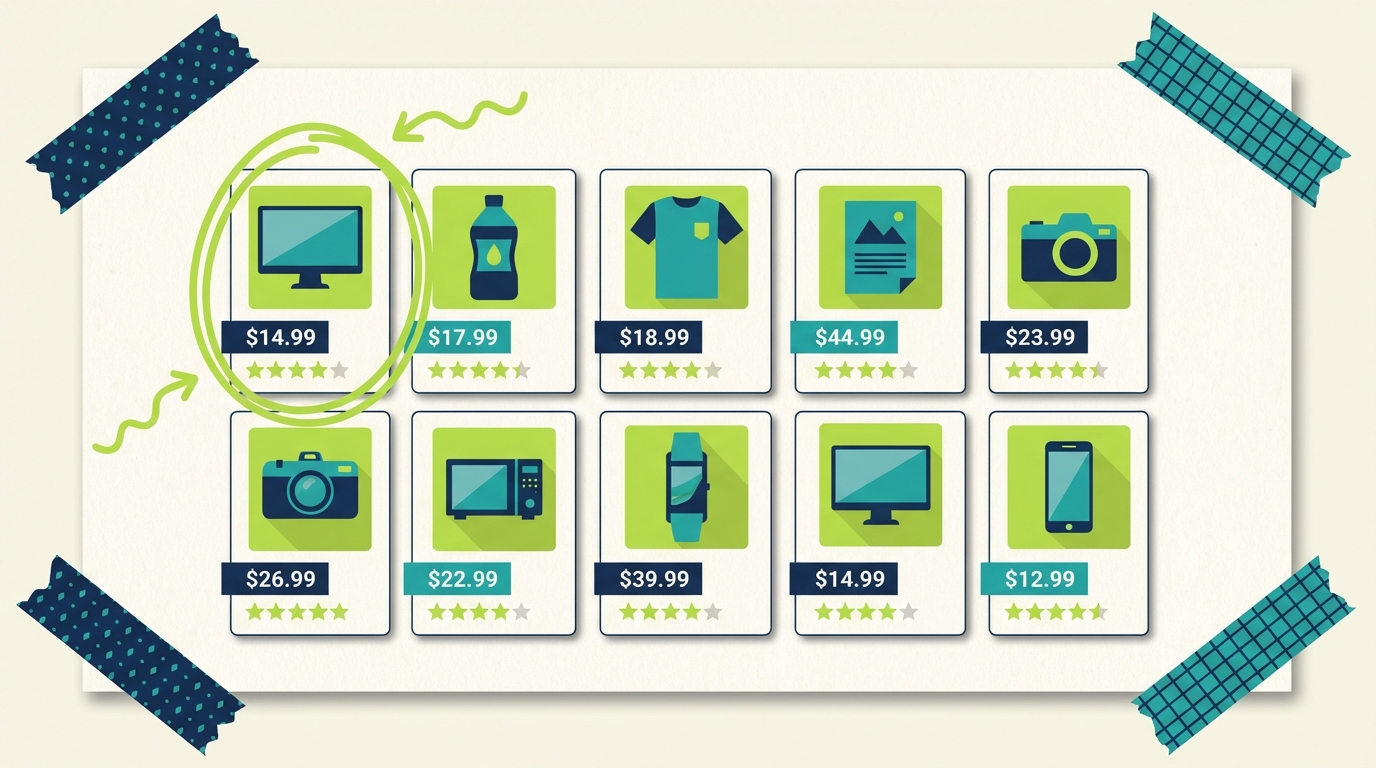
Google is still where most product searches begin. According to Google's own data, Shopping ads account for roughly 76% of retail search ad spend because they put your product photo, price, and reviews right at the top of results.
For e-commerce stores, Google Shopping is often the first channel to test. When someone searches "wireless earbuds under $50," they already have purchase intent. You're meeting them exactly where they are.
Google Search ads (text-based) complement Shopping by capturing branded queries and comparison searches. Running both together lets you dominate the search results page for your key product terms. Performance Max campaigns now blend Shopping, Search, Display, and YouTube into a single automated campaign, which simplifies management but gives you less control over where your budget goes.
One tactic that separates profitable stores from struggling ones: segment your Shopping campaigns by product margin. Put more budget behind high-margin products and bid more conservatively on items where your profit per sale is thin. This sounds basic, but most stores run a single campaign for everything and wonder why their ROAS is mediocre.
What it costs: Average cost-per-click for Google Shopping ranges from $0.50 to $1.50 for most categories, though competitive niches like electronics or fashion can run $2 to $3 or higher. Expect to spend $500 to $2,000 per month to gather enough data to optimize. Most stores see a 4:1 to 8:1 return on ad spend when campaigns are well-managed.
Best for: Stores selling products people actively search for. If your product solves a known problem or fits a recognized category, Shopping ads are a strong starting point.
Limitations: Rising CPCs mean margins get squeezed, especially in competitive categories. You're also limited to people who already know what they want, so brand discovery is minimal. Performance Max can burn through budget on Display placements if you're not monitoring closely.
Social Media Advertising (Meta, TikTok, Pinterest)
Social platforms are where e-commerce brands build awareness and drive impulse purchases. Meta (Facebook and Instagram) remains the workhorse for most online sellers, but TikTok and Pinterest have carved out strong positions for specific product types.
Meta's advantage is its audience data. You can target by interests, behaviors, purchase history, and lookalike audiences built from your existing customers. According to Statista, Meta's average CPM for e-commerce advertisers sits around $11 to $14, making it one of the more cost-effective reach channels.
The most effective Meta strategy for e-commerce in 2026 follows a simple structure: run prospecting campaigns with broad targeting (let Meta's algorithm find buyers), then layer on retargeting campaigns for website visitors, cart abandoners, and past purchasers. Advantage+ Shopping campaigns automate much of this, and many stores report strong results by letting Meta optimize across the full funnel.
Creative is where most stores win or lose on Meta. Static images still work for simple products, but video ads (especially under 15 seconds) consistently outperform. User-generated content style ads, where the product looks like it was filmed by a real customer, tend to beat polished studio shoots.
Pinterest works especially well for home decor, fashion, beauty, and food products. Users come to Pinterest with planning intent, which means they're further along in the buying journey than typical social scrollers. Pinterest's visual search feature also means your product can show up when users snap a photo of something similar.
What it costs: Meta averages $0.50 to $2.00 per click, with monthly budgets of $500 to $5,000 being common for small to mid-size stores. TikTok can deliver lower CPMs ($5 to $10) but conversion rates vary widely. Pinterest CPCs tend to range from $0.10 to $1.50.
Best for: Visually appealing products, impulse purchases, building brand awareness, and retargeting website visitors.
Limitations: iOS privacy changes (App Tracking Transparency) have made attribution murkier. Rising competition continues to push costs up, and algorithm changes can tank performance overnight. You're also renting attention on platforms you don't own.
Connected TV (CTV) and Streaming Advertising
Here's a channel most e-commerce sellers overlook: streaming TV. CTV advertising puts your brand on the same screens as major retailers, but at a fraction of the cost.
Think about it. When someone sees your product on their TV during a show they're watching on Hulu, Peacock, or Tubi, it carries more weight than a social media ad they scroll past in half a second. TV ads generate 2.2 times more trust than digital display ads, according to research on advertising trust signals. That trust factor matters enormously for e-commerce brands competing against Amazon and established retailers.
For e-commerce stores, CTV fills the awareness gap that search and social can't reach. You get in front of potential customers before they even start searching. And with platforms like Adwave, you don't need a six-figure budget. You can launch a broadcast-quality TV ad for as little as $50, with campaigns running across 100+ premium channels including NBC, ESPN, and Fox.
The targeting options are surprisingly precise for TV. You can target by location, demographics, interests, and even purchase behavior, so your organic skincare line shows up for health-conscious viewers in your target market rather than blasting the general public. You can also run campaigns in specific DMAs if your store ships nationally but wants to test market-by-market.
CTV also complements your other channels in a measurable way. Stores running CTV alongside paid search and social typically see their customer acquisition costs drop because brand awareness warms up audiences before they encounter your retargeting ads. That "I've seen them on TV" effect is real, and it shows up in higher click-through rates and conversion rates across every other channel.
What it costs: CTV CPMs typically range from $15 to $35, with Adwave campaigns starting at just $50. That means even bootstrapped stores can test TV advertising without risking their entire marketing budget.
Best for: Building brand awareness, reaching new audiences beyond social media, and creating the "I've seen them everywhere" effect that drives long-term sales growth. Particularly effective for DTC brands trying to break out of the social media bubble.
Limitations: CTV is an upper-funnel channel. You'll see lifts in branded search, direct traffic, and social engagement rather than immediate last-click conversions. Pair it with retargeting for best results.
Email Marketing and SMS
Email consistently delivers the highest ROI of any marketing channel for e-commerce. According to Litmus, email marketing returns an average of $36 for every $1 spent. That number is hard to beat.
Email reaches people who have already opted in. Welcome emails, abandoned-cart reminders, post-purchase messages, and promotions can bring those subscribers back to buy.
The flows that matter most for e-commerce, in order of revenue impact:
Abandoned cart (3-email sequence, sends within 1 hour of abandonment): Recovers 5% to 15% of abandoned carts for most stores.
Welcome series (3-5 emails over the first week): Sets the tone and drives first purchases with a discount or incentive.
Post-purchase (starts 2-3 days after delivery): Builds loyalty, requests reviews, and cross-sells related products.
Browse abandonment (triggered when someone views a product but doesn't add to cart): Nudges warm prospects back.
Win-back (targets customers who haven't purchased in 60-90 days): Re-engages lapsed buyers before they're gone for good.
SMS has emerged as a powerful complement. Open rates hover around 98%, and click-through rates are significantly higher than email. For flash sales, back-in-stock alerts, and shipping updates, SMS cuts through the noise. The key with SMS is restraint. Send too many messages, and customers will opt out fast.
What it costs: Email platforms like Klaviyo run $20 to $500+ per month depending on list size. SMS costs roughly $0.01 to $0.05 per message. The investment is minimal compared to paid acquisition channels.
Best for: Maximizing lifetime value, recovering abandoned carts, driving repeat purchases, and promoting sales.
Limitations: You need traffic to build a list. Email and SMS amplify other channels but can't replace them for new customer acquisition.
Influencer and Affiliate Marketing
Influencer marketing has matured past the "pay a celebrity to hold your product" phase. For e-commerce brands, micro-influencers (10,000 to 100,000 followers) and nano-influencers (1,000 to 10,000) often deliver better ROI than big names because their audiences trust their recommendations more.
Affiliate programs take this further by making it performance-based. You only pay when someone buys. Platforms like ShareASale, Impact, and Amazon Associates make it straightforward to set up an affiliate program and recruit partners.
According to Influencer Marketing Hub, businesses earn an average of $5.78 for every $1 spent on influencer marketing. For product-based businesses, that return comes from authentic content that doubles as social proof and ad creative.
What it costs: Micro-influencer posts range from $100 to $1,000. Affiliate commissions typically run 10% to 30% of sale value. You can start small and scale based on results.
Best for: Products that benefit from demonstration or personal endorsement, building social proof, generating user-created content for ads.
Limitations: Finding the right influencers takes time. Results can be inconsistent, and fake followers remain a problem. Affiliate programs require ongoing management.
Marketplace Advertising (Amazon, Walmart, Etsy)
If you sell on marketplaces, their built-in ad platforms are often the highest-converting channels available. Amazon Sponsored Products, Walmart Connect, and Etsy Ads put your products at the top of search results where people are already shopping with credit card in hand.
Amazon Sponsored Products alone accounts for a massive share of e-commerce ad spend, and for good reason. The platform's conversion rates dwarf Google and social because the buyer intent is sky-high. Someone searching on Amazon isn't browsing for fun. They're ready to purchase.
The downside is that marketplace advertising builds the marketplace's brand, not yours. You're renting shelf space, and the platform controls the rules. Fees, algorithm changes, and competitor bidding can eat into margins fast. But for stores that already sell on these platforms, their ad products are nearly mandatory to maintain visibility.
What it costs: Amazon Sponsored Products average $0.75 to $1.50 per click. Etsy Ads work on a daily budget starting at $1/day. Walmart Connect CPC ranges from $0.30 to $0.75, often cheaper than Amazon due to less competition.
Best for: Stores already selling on marketplaces, driving sales velocity on new product launches, and capturing market share in competitive categories.
Limitations: You're building the marketplace's ecosystem, not your own brand. Margins can shrink as ad costs rise. Limited customer data compared to your own website.
Search Engine Optimization (SEO)
SEO is the long game for e-commerce, but it compounds over time in a way no paid channel can match. When your product pages, category pages, and blog content rank organically, you're getting free traffic from high-intent searches every day.
For online stores, SEO breaks into three areas: technical (site speed, crawlability, structured data), on-page (product descriptions, category optimization, content), and off-page (backlinks, PR, brand mentions). Most e-commerce stores leave significant traffic on the table by neglecting content marketing and long-tail keyword targeting.
What it costs: DIY is technically free but demands significant time. Hiring an SEO specialist or agency runs $1,000 to $5,000+ per month. Results typically take 3 to 6 months to materialize.
Best for: Long-term sustainable traffic, reducing dependence on paid channels, capturing informational queries ("best running shoes for flat feet") that feed into purchase decisions.
Limitations: Slow to show results. Algorithm updates can impact rankings. Highly competitive categories require sustained investment.
Retargeting and Display Advertising
Most e-commerce visitors leave without buying. Industry averages put conversion rates at 2% to 3%, which means 97% of the traffic you pay for walks away. Retargeting brings them back.
Google Display retargeting, Meta retargeting, and platforms like Criteo and AdRoll can serve ads to people who visited your site, viewed specific products, or added items to their cart. The logic is simple: someone who browsed your product for two minutes is far more likely to buy than a cold stranger.
Dynamic retargeting takes this further by showing the exact products someone viewed. If a shopper looked at a specific pair of sneakers on your site, they'll see those same sneakers in their Instagram feed, on news sites, and across the web. It feels personalized because it is.
The most effective retargeting strategies use frequency caps (so you're not annoying people) and segment by behavior. Someone who spent 30 seconds on your homepage gets a different ad than someone who added a product to their cart and entered their email.
What it costs: Retargeting CPMs tend to be higher ($10 to $25 on display, $15 to $30 on social) because you're targeting a small, warm audience. But the conversion rates are dramatically better, often 3 to 5 times higher than prospecting campaigns.
Best for: Recovering lost traffic, pushing warm visitors toward purchase, and staying familiar during longer consideration periods.
Limitations: Requires enough traffic to build meaningful retargeting audiences (at least 1,000 monthly visitors). Cookie deprecation and privacy regulations are gradually shrinking retargeting pools, though first-party data strategies help offset this.
Mistakes E-commerce Stores Make With Advertising
Before we compare channels, let's call out the patterns that waste the most money:
Spreading budget too thin. Running $100/month across six channels means you're underfunding everything. Pick two or three channels and invest enough to get meaningful data before expanding.
Ignoring lifetime value. If you only measure first-purchase ROAS, you'll undervalue channels that bring in customers who buy repeatedly. A customer acquired through CTV at a $40 CPA who makes four purchases over a year is worth far more than a Google Shopping customer at $15 CPA who never returns.
Skipping brand awareness entirely. Many e-commerce stores pour everything into bottom-funnel performance channels and wonder why their customer acquisition costs keep climbing. Without awareness channels feeding the top of the funnel, you're fishing from an increasingly small pond.
Not testing creative. The difference between your best and worst performing ad creative is often 3x to 5x in efficiency. Running the same three ads for months leaves enormous performance gains on the table.
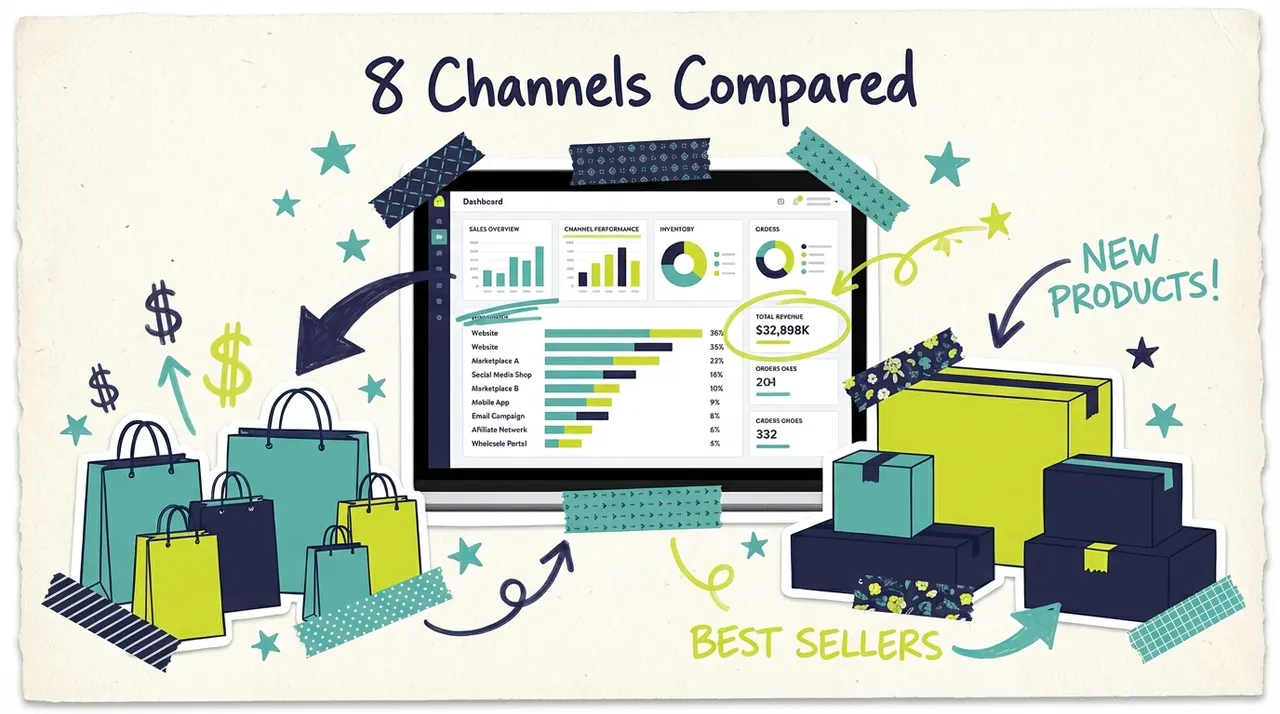
Channel Comparison: Where Should Your Budget Go?
How to Build Your E-commerce Advertising Stack
There's no point spreading your budget across every channel at once. Here's a practical framework for building your advertising stack based on your stage.
Just starting out ($500/month or less): Start with Google Shopping and email. These two channels capture demand that already exists. Set up abandoned cart emails on day one and run Shopping ads for your top-selling products.
Growing ($1,000-$3,000/month): Add social media advertising (start with Meta) and build your email list aggressively. Test CTV with a small Adwave campaign to start building brand awareness beyond the digital advertising bubble.
Scaling ($3,000+/month): Layer in influencer partnerships, expand to TikTok and Pinterest, and increase your CTV budget. At this stage, brand awareness channels like streaming TV advertising start to compound, driving down your customer acquisition costs across all channels.
Seasonal adjustments: E-commerce advertising isn't static. During Q4 (Black Friday through the holidays), expect CPCs and CPMs to spike 30% to 100% across all paid channels. Smart stores front-load their CTV and brand awareness spending in September and October, so they're already familiar when buying season heats up. They also increase email frequency during peak shopping periods when customers are primed to buy.
During slower months (January through March), shift budget toward SEO content, influencer relationships, and testing new channels. This is when CPMs are cheapest and you can experiment without burning premium dollars.
Common questions answered
What's the single best advertising channel for a new e-commerce store? Google Shopping is typically the safest starting point for a new online store. It targets people who are actively searching for products like yours, which means you're spending on high-intent traffic. Pair it with email capture and abandoned cart flows from day one to maximize every visitor you pay to acquire.
How much should an e-commerce store spend on advertising? A common benchmark is 10% to 20% of revenue for growing stores, and 5% to 10% for established ones. If you're pre-revenue, plan to invest at least $500 to $1,000 per month across one or two channels to gather enough data. The key is starting small, measuring results, and scaling what works.
Is TV advertising realistic for small e-commerce brands? Yes. CTV has removed the barriers that kept small brands off television. With platforms like Adwave, you can launch a professional TV ad starting at $50 and target specific audiences across 100+ streaming channels. It's no longer a big-brand-only channel.
How do I know which advertising channels are working? Use UTM parameters on every link, set up proper conversion tracking in Google Analytics, and monitor metrics that matter for each channel. For paid search, watch ROAS. For social, track CPA. For CTV and brand awareness channels, look at increases in branded search, direct traffic, and overall conversion rates.
Should I advertise on TikTok for my online store? TikTok works best for products that are visually interesting, affordable enough for impulse purchases, and appeal to audiences under 40. If your product demos well on video, TikTok can deliver remarkable reach at low CPMs. If you sell B2B software or niche industrial products, your budget is better spent elsewhere.
When should I add CTV advertising to my e-commerce marketing mix? Consider adding CTV once you've established at least one profitable acquisition channel and have email flows running. CTV amplifies your other channels by building awareness that makes your search and social ads more effective. Even a small $50 test campaign can help you gauge the impact on your overall marketing performance.
How do I measure brand awareness channels like CTV for my online store? Look beyond last-click attribution. Measure the impact of CTV and other awareness channels by tracking branded search volume (people Googling your store name), direct traffic increases, social media follower growth, and overall site conversion rate improvements during and after campaigns. Many stores also run holdout tests, where they compare metrics in markets where CTV ran versus markets where it didn't.