-
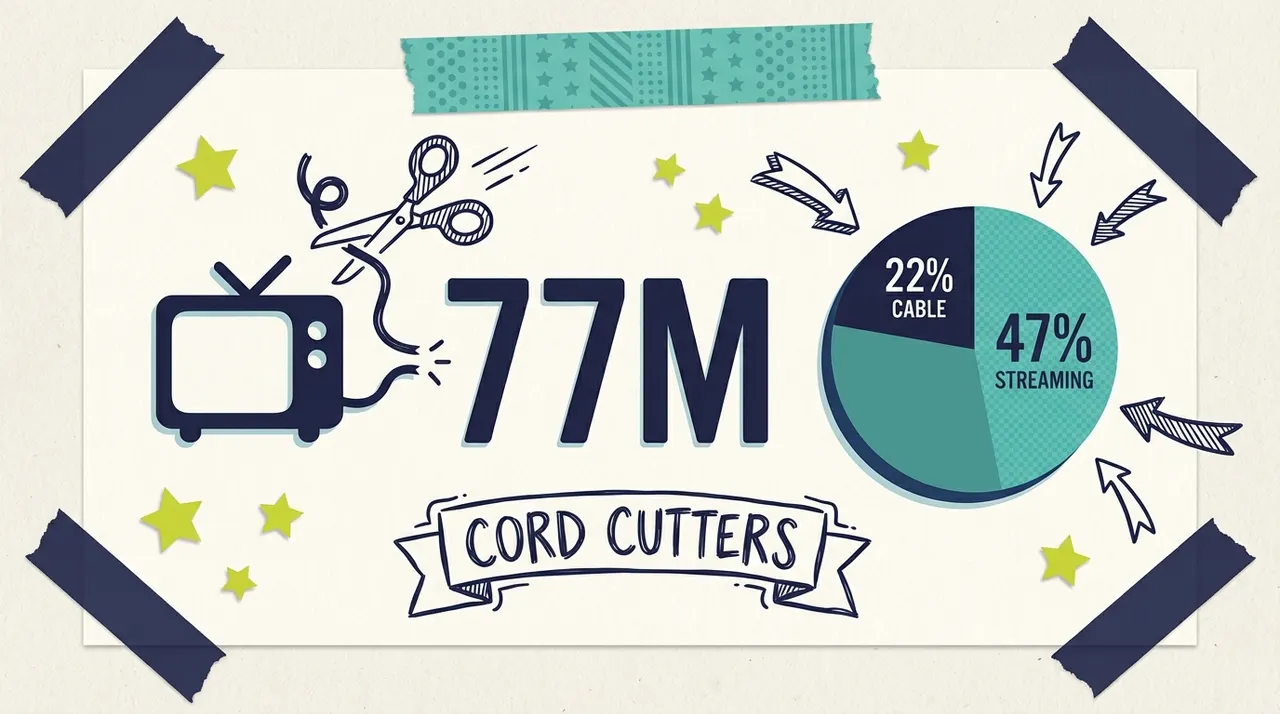
77M
U.S. cord-cutting households in 2025
-
47%
Streaming's share of total TV viewing
-
52%
Cord cutters who miss nothing about cable
Cord cutters watch approximately the same amount of total television content as cable subscribers, but through different platforms, according to Nielsen data showing streaming now accounts for 47.3% of all TV viewing time while cable has declined to 22.2% (July 2025). The 77 million American households that have cut the cord haven't stopped watching TV; they've shifted from cable to streaming services like Netflix, Hulu, and free ad-supported platforms. For advertisers, this means cord-cutting households remain reachable through connected TV advertising, often with better targeting and measurement than traditional cable ever offered.
What the data shows
The cord-cutting transformation has fundamentally reshaped American television viewing, but not in the way many advertisers initially feared. Rather than abandoning TV entirely, cord cutters have migrated to streaming platforms where they continue consuming substantial amounts of video content.
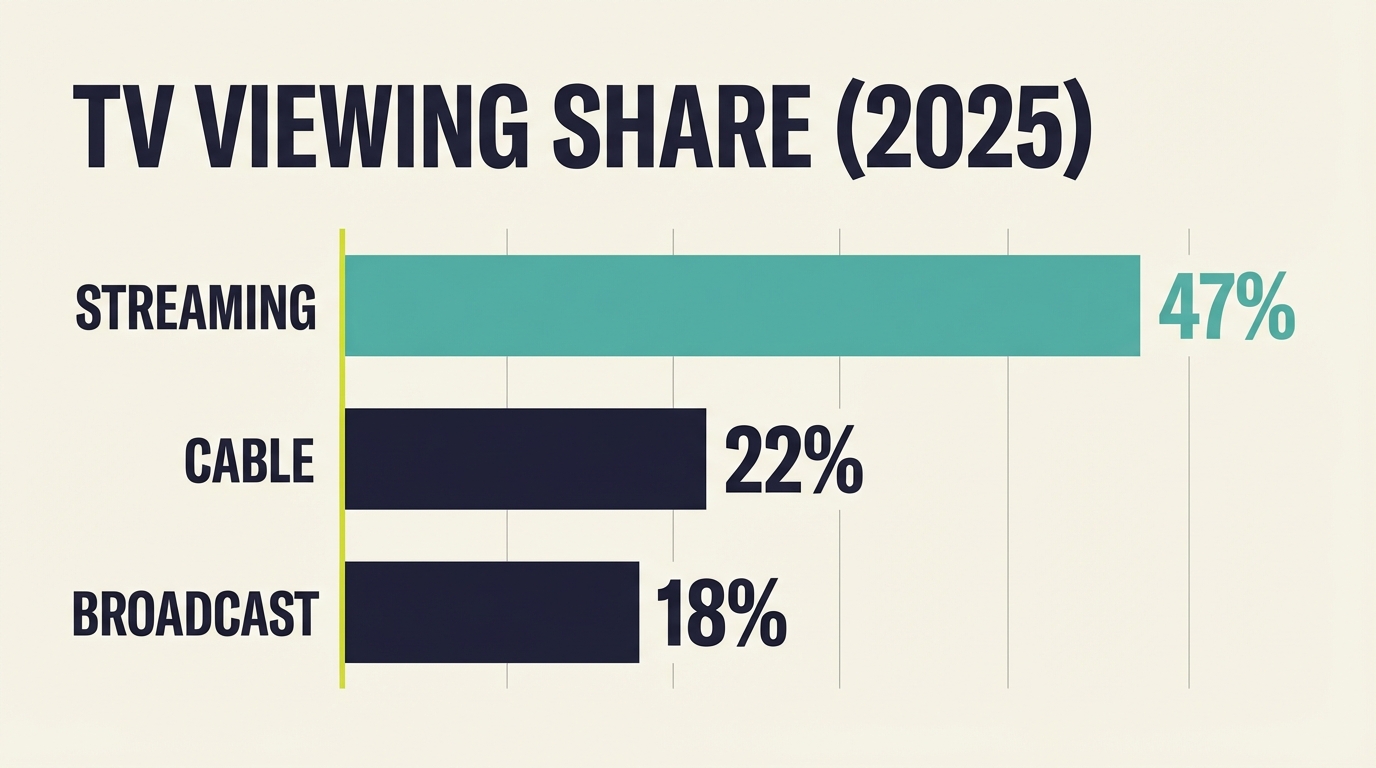
Nielsen's July 2025 Gauge report shows streaming platforms captured 47.3% of total U.S. TV viewing time, surpassing cable's 22.2% and broadcast's 18.4% combined. This milestone marks the completion of a viewing shift that accelerated dramatically over the past five years. Streaming usage has increased 71% since May 2021, according to Nielsen's year-over-year analysis.
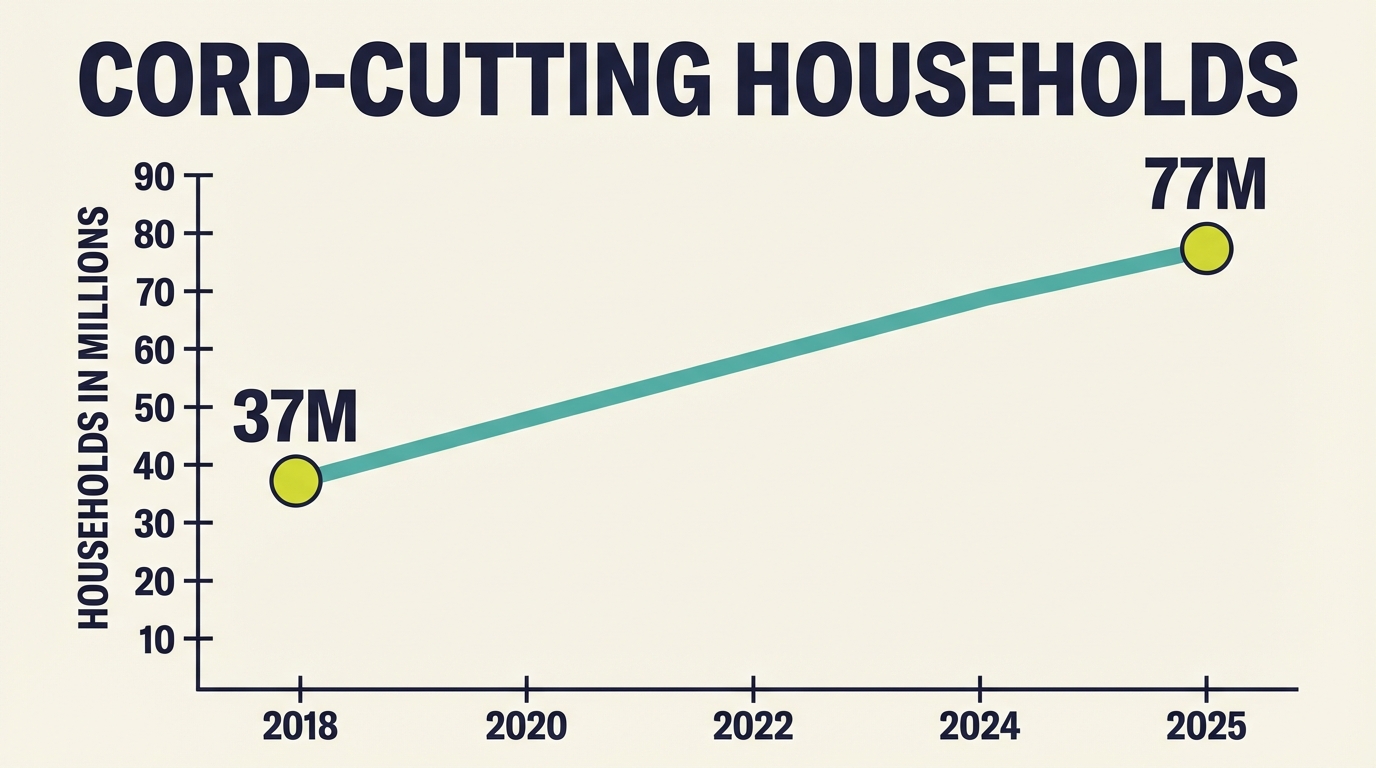
The raw numbers on cord-cutting households tell part of the story. According to CableCompare analysis, approximately 77.2 million U.S. households have now cut the cord, a figure that has more than doubled from 37.3 million in 2018. Meanwhile, cable subscribers have declined to 68.7 million households from a peak of 105 million in 2010, representing a 35% decline over 15 years.
What's striking is that cord cutters report high satisfaction with their decision. According to Exploding Topics research, 52% of cord cutters say they don't miss anything about cable. They've replaced their viewing habits rather than eliminated them. Sports access remains the primary thing cord cutters miss, though streaming sports options continue expanding rapidly.
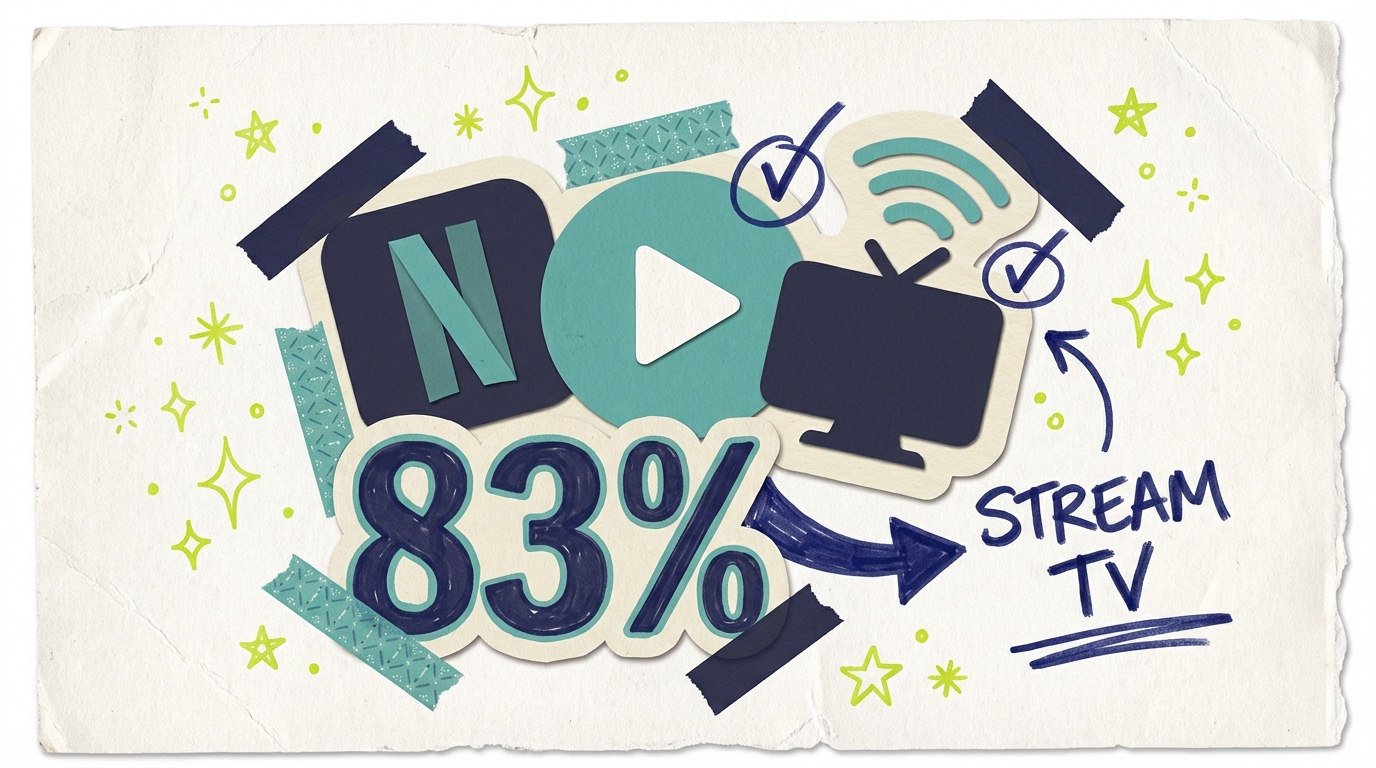
Pew Research Center surveys from July 2025 provide additional context: 83% of U.S. adults watch streaming services, while only 36% subscribe to cable or satellite TV. Some 55% of Americans watch streaming but don't subscribe to cable at all, representing the core cord-cutter population. Another 28% maintain both streaming and cable subscriptions.
The "cord-never" segment adds another dimension. According to industry analysis, approximately 12% of U.S. internet households have never subscribed to traditional cable or satellite TV. These younger viewers, primarily millennials and Gen Z, grew up with streaming as their default. They represent a generation increasingly unreachable through traditional TV advertising, though highly accessible through connected TV platforms.
Historically, some early research suggested cord cutters watched less TV than cable subscribers. Nielsen data from the early cord-cutting era showed cord cutters watched approximately 40% less TV per day than the national average. However, this gap has narrowed substantially as streaming content quality improved, original programming proliferated, and streaming devices became ubiquitous in American homes.
Breaking down the numbers
Understanding how cord cutters consume content differently from cable subscribers provides important context for advertising strategy.
By platform usage
Cord cutters distribute their viewing across multiple streaming services rather than a single cable bundle. Pew Research found that among streaming viewers, Netflix (72%) and Amazon Prime Video (67%) are the most popular services, followed by Hulu (52%), Disney+ (48%), Paramount+ (44%), and Peacock (41%).
The average household subscribes to approximately 4 streaming services, though this number fluctuates as viewers rotate subscriptions based on content availability. Many cord cutters practice "subscription stacking" where they maintain several services simultaneously, while others rotate, subscribing for specific shows then canceling.
Free ad-supported streaming (FAST) platforms play an increasingly important role in cord cutter viewing. Services like Pluto TV, Tubi, and The Roku Channel offer hundreds of channels at no cost, providing a cable-like experience without subscription fees. According to CableCompare research, 45% of U.S. internet households now watch FAST services, with 28.2% ranking them highly in satisfaction surveys.
By viewing patterns
Cord cutters demonstrate distinct viewing behaviors compared to cable subscribers. On-demand consumption dominates their viewing habits, with binge-watching common across streaming platforms. The scheduled appointment viewing that characterized the cable era has largely given way to on-demand consumption where viewers watch what they want, when they want.
Time-shifting is another key difference. While cable subscribers with DVRs time-shift some content, cord cutters time-shift by default since virtually all streaming content is available on-demand. This changes not just when people watch but how they watch, enabling more intentional content selection rather than passive channel surfing.
Multi-device viewing distinguishes cord cutters as well. Beyond the living room TV, streaming content flows to tablets, phones, laptops, and secondary televisions throughout the home. This flexibility, often cited as a key cord-cutting motivation, expands total viewing opportunities beyond what fixed cable boxes allowed.
By demographics
Cord-cutting skews younger, with Adweek research indicating 50% of adults under 32 won't pay for cable TV. This generation grew up with streaming as normal and sees cable bundles as unnecessary expenses that force payment for unwanted channels.
However, cord-cutting spans all demographics. While initially concentrated among tech-savvy early adopters, the movement has mainstreamed. Urban households show higher cord-cutting rates due to better broadband availability, but rural cord-cutting is accelerating as internet infrastructure improves.
Income doesn't predict cord-cutting as cleanly as some assume. While cost savings motivate many cord cutters, affluent households also cut the cord, valuing flexibility and on-demand access over cable's bundled convenience. Both groups watch substantial amounts of streaming content; their motivations simply differ.
By content consumption
Sports viewing shows the most significant difference between cord cutters and cable subscribers. Live sports remain cable's strongest anchor, with many subscribers maintaining cable specifically for regional sports networks and live game coverage. Cord cutters miss sports most frequently, though streaming sports options through ESPN+, Peacock, Amazon Prime Video, YouTube TV, and others continue expanding rapidly. Major leagues continue experimenting with streaming-exclusive broadcasts, suggesting the sports gap will narrow over time.
News consumption differs somewhat between groups. Cable news networks retain dedicated older audiences who tune in throughout the day, while cord cutters often access news through streaming apps from local stations, social media feeds, or free broadcast options available over-the-air. Local news remains available through free over-the-air broadcast and streaming apps from local stations, which have invested heavily in digital distribution.
Entertainment programming has largely migrated to streaming, with prestige content now premiering on streaming platforms rather than cable networks. This shift pulled viewers toward cord cutting as must-watch shows increasingly required streaming subscriptions rather than cable packages. The "golden age of television" content that defines cultural conversation now lives primarily on streaming platforms.
Why it matters for your business
The cord-cutting reality fundamentally changes how businesses should think about TV advertising. The audience hasn't disappeared; it's moved to new platforms where reaching them is not only possible but often more efficient.
For businesses still advertising primarily on cable, the math is becoming unfavorable. Cable subscribers have declined from 90.3 million to approximately 69 million households, meaning the same cable ad spend reaches fewer viewers each year. The remaining cable audience also skews older, potentially missing younger target demographics entirely.
The cord-cutting migration creates advertising advantages. Connected TV platforms offer targeting capabilities impossible on traditional cable. Advertisers can reach specific demographics, geographic areas, interests, and even household income levels. This precision reduces waste and improves return on advertising investment compared to broad cable buys.
Measurement improvements represent another benefit of following audiences to streaming. While traditional TV advertising relies on panel-based estimates, connected TV advertising provides impression-level data showing exactly how many households saw your ad, when they watched, and increasingly, what actions they took afterward. This accountability transforms how businesses evaluate TV advertising effectiveness.
Cost structures favor streaming advertising for many businesses. Traditional TV advertising often required minimum commitments of tens of thousands of dollars, putting it out of reach for small and medium businesses. Streaming TV advertising through platforms like Adwave starts at just $50, democratizing access to the biggest screen in the house.
Check whether the streaming platform supports ZIP code, radius, or custom-area targeting for your campaign.
The advertising inventory itself has expanded significantly. As more viewers choose ad-supported streaming tiers to save money, available impressions grow. Netflix, Disney+, and Max now offer ad-supported options, joining established ad-supported services like Hulu, Peacock, and FAST platforms. This inventory expansion creates more opportunities to reach cord cutters at competitive prices.
How to take advantage of this trend
Adapting your advertising strategy to reach cord cutters requires understanding both the platforms they use and the behaviors they exhibit.
Start by acknowledging the viewer migration. If your target customer is under 50, assume significant cord-cutting penetration. Even customers over 50 increasingly supplement or replace cable with streaming. Planning advertising strategy as if cable still dominates ignores where audiences have moved.
Prioritize connected TV advertising in your media mix. CTV ads appear on streaming services across smart TVs, Roku, Amazon Fire TV, Apple TV, and gaming consoles. These ads look like traditional TV commercials but deliver to streaming audiences with digital precision. Learn about local TV advertising costs for streaming platforms.
Consider the full streaming landscape when planning campaigns. Don't focus solely on premium subscription services; FAST platforms like Pluto TV and Tubi reach substantial cord-cutter audiences, often at lower CPMs than premium services. Roku advertising and Amazon Fire TV advertising offer direct access to streaming households.
Develop creative appropriate for streaming environments. While the same spots can run across cable and streaming, streaming-first creative should acknowledge the viewing context. Strong opening hooks matter when viewers might have skip options. Clear branding throughout ensures recognition even in brief exposures. Appropriate calls to action guide viewers toward response.
Take advantage of streaming's targeting capabilities. Geographic targeting ensures local businesses reach only their service areas. Demographic targeting reaches specific age ranges, income levels, or household compositions. Interest targeting based on content consumption helps reach enthusiasts in relevant categories. Use these capabilities to eliminate waste that traditional TV advertising accepted as unavoidable.
Implement proper measurement to track streaming advertising effectiveness. Website traffic correlated with campaigns, brand search volume changes, QR code scans for trackable response, and conversion attribution all provide insight into how streaming advertising performs. These metrics exceed what traditional TV measurement offered and should inform ongoing optimization.
The bigger picture
Cord cutting represents just one aspect of broader media transformation with lasting implications for advertisers.
The end of appointment viewing
Traditional television relied on scheduled programming that gathered audiences at specific times. Cable guides told viewers what was on when, and families planned their evenings around favorite shows. DVRs provided limited time-shifting capability, but most viewing still clustered around original air times. Streaming has essentially eliminated appointment viewing for most content, with on-demand access becoming the expectation rather than the exception. The only remaining appointment viewing occasions are live sports and some news events, which help explain why these categories remain cable's strongest anchors.
For advertisers, this shift matters because it changes when and how people watch. Daypart targeting, once essential for TV media planning, becomes less relevant when viewers watch primetime content at any hour of the day or night. Ad frequency management must account for viewing spread across unpredictable schedules rather than concentrated primetime blocks. The silver lining is that streaming platforms can still optimize ad delivery based on viewer context even without predictable scheduling.
The attention quality question
Some research suggests streaming viewers pay more attention than traditional TV viewers because they actively chose their content rather than passively receiving whatever was scheduled. This engaged viewing potentially makes streaming advertising more effective per impression than cable advertising watched with partial attention.
However, streaming also brings new attention challenges. Multi-screen viewing remains common, with phones competing for attention during streaming sessions. Ad-free expectations from premium tiers may reduce tolerance for advertising when encountered. Creative quality must be high enough to warrant attention in contexts where viewers chose their content carefully.
The content quality equation
Cord cutting accelerated partly because streaming content quality improved dramatically. The original programming arms race among streaming services produced prestige content that rivaled or exceeded what cable networks offered. Shows like "Stranger Things," "The Mandalorian," and "House of the Dragon" create cultural moments that draw viewers to streaming platforms. This quality migration pulled viewers toward streaming platforms and gave them reasons to cancel cable packages that no longer offered must-watch content.
For advertisers, appearing alongside premium content provides brand-safe, engaged environments where viewers actively chose to watch. Streaming platforms generally offer tighter content controls than the full spectrum of cable programming, allowing brands to avoid adjacencies they'd rather not have. The association with quality content can enhance brand perception in ways that cable's broader programming mix might not, making streaming premium placements especially valuable for brand-building campaigns.
The measurement revolution
Traditional TV advertising accepted imprecision as inherent to the medium. Panel-based measurement estimated audiences, but advertisers never knew exactly who saw their ads or what happened afterward. Streaming's digital infrastructure enables impression-level measurement that transforms accountability expectations.
This measurement capability favors streaming advertising over traditional TV, especially for direct-response advertisers who want to track results precisely. Brand advertisers benefit as well from better reach and frequency management, competitive insights, and attribution modeling that connects TV exposure to outcomes.
What experts are saying
Industry analysts have extensively documented the cord-cutting phenomenon and its implications for advertising.
Nielsen's historic report from May 2025 confirmed that "streaming represented 44.8% of TV viewership, its largest share of viewing to date, while broadcast (20.1%) and cable (24.1%) combined accounted for less than streaming for the first time." This milestone validated what audience migration data had suggested for years.
Research from Cord Cutters News found that cord cutters continue saving approximately $730 annually compared to cable subscribers, even as streaming prices rise. This sustained cost advantage suggests cord cutting will continue growing as economic motivation remains strong.
CableCompare analysis noted that "streaming dominates 2025 viewing habits, capturing 47.3% of all U.S. TV time compared to cable's 22.2%." Their research emphasized that cord cutters maintain high viewing levels across multiple platforms rather than reducing total TV consumption.
Marketing experts increasingly recommend treating streaming as the primary TV advertising channel with traditional TV as supplementary. The Interactive Advertising Bureau (IAB) reports that CTV advertising spending continues growing double digits annually as advertisers follow audiences to streaming platforms.
Common questions answered
Do cord cutters really watch as much TV as cable subscribers?
Cord cutters watch similar total amounts of video content, though distributed differently across platforms. Early cord-cutting research showed lower viewing, but that gap has narrowed substantially as streaming matured. Today's cord cutters spread viewing across Netflix, Hulu, Amazon, free ad-supported services, and other platforms, often watching more intentionally chosen content than cable's passive channel surfing delivered.
Are cord cutters reachable through advertising?
Yes, absolutely. While some cord cutters use ad-free premium tiers, many watch ad-supported streaming either by choice (to save money on subscription costs) or through free services like Pluto TV and Tubi that require no subscription at all. Connected TV advertising reaches cord cutters across these ad-supported platforms with targeting precision superior to what traditional cable ever offered. The growth of ad-supported tiers on Netflix, Disney+, and Max further expands advertising inventory reaching cord-cutter households. As streaming prices rise, more viewers choose ad-supported options, increasing the addressable advertising audience.
What platforms do cord cutters use most?
Netflix (72%) and Amazon Prime Video (67%) lead in usage among streaming viewers according to Pew Research. Hulu (52%), Disney+ (48%), and Paramount+ (44%) follow. Peacock (41%) and Max (41%) also see substantial usage. Free ad-supported services like Pluto TV and Tubi see strong adoption among cost-conscious cord cutters, providing hundreds of channels without subscription fees. YouTube also captures significant viewing time, especially among younger audiences, with 8.5% of total TV viewing according to Nielsen data. Most cord-cutter households use multiple services rather than relying on a single platform.
How do cord cutters differ demographically from cable subscribers?
Cord cutters skew younger, with 50% of adults under 32 unwilling to pay for cable. Urban households show higher cord-cutting rates due to better broadband. However, cord-cutting has mainstreamed across demographics. Income doesn't predict cord-cutting cleanly; both cost-conscious and affluent households cut the cord for different reasons. Cable subscribers skew older, with 64% of adults 65+ maintaining subscriptions.
Should advertisers abandon cable for streaming?
Most advertisers should increase streaming allocation while not necessarily abandoning cable entirely. The optimal mix depends on target demographics, campaign objectives, and budget constraints. Brands targeting younger audiences should prioritize streaming heavily, as a majority of viewers under 50 have either cut the cord or are streaming-first. Those targeting adults 65+ can still reach substantial audiences on cable, where 64% maintain subscriptions. Many advertisers now use both channels, with streaming carrying increasing budget share annually as audiences continue migrating. The trend clearly points toward streaming dominance, suggesting advertisers should be testing and learning on streaming platforms now rather than waiting until cable audiences decline further.
What do cord cutters miss about cable?
Live sports top the list of what cord cutters miss, followed by some cable news access and the ease of single-provider convenience where everything came through one interface and one bill. However, 52% of cord cutters report missing nothing about cable, and streaming sports options continue expanding through services like ESPN+, Peacock, Amazon Prime Video, and YouTube TV. These pain points are diminishing as streaming platforms add more live content, improve user interfaces, and make service management easier. Aggregation platforms like Apple TV and Roku also help cord cutters navigate multiple services more directly than the early cord-cutting experience offered.
Supporting data
Key statistics on cord-cutting and viewing behavior:
77.2M cord-cutting households (2025), up from 37.3M in 2018 (CableCompare)
68.7M cable subscribers remain, down from 105M peak (CableCompare)
47.3% streaming share of total TV viewing (July 2025) (Nielsen)
22.2% cable share of TV viewing (July 2025) (Nielsen)
55% stream only, don't subscribe to cable (Pew Research)
83% of adults use streaming services (Pew Research, July 2025)
52% miss nothing about cable after cutting cord (Exploding Topics)
$730/year savings for cord cutters vs cable subscribers (Cord Cutters News)
12% cord-nevers who never subscribed to cable (CableCompare)
50% of under-32s won't pay for cable (Adweek via CableCompare)
All sources linked above. Data current as of Q4 2025.
Get started with TV advertising
Cord cutters haven't stopped watching TV; they've just changed where they watch. Streaming TV advertising reaches these 77+ million households across the platforms they use. Adwave makes it simple to create professional TV commercials and launch targeted campaigns on 100+ premium streaming channels, starting at just $50.