Ready in minutes
AI builds your ad from a single prompt


March 12, 2026
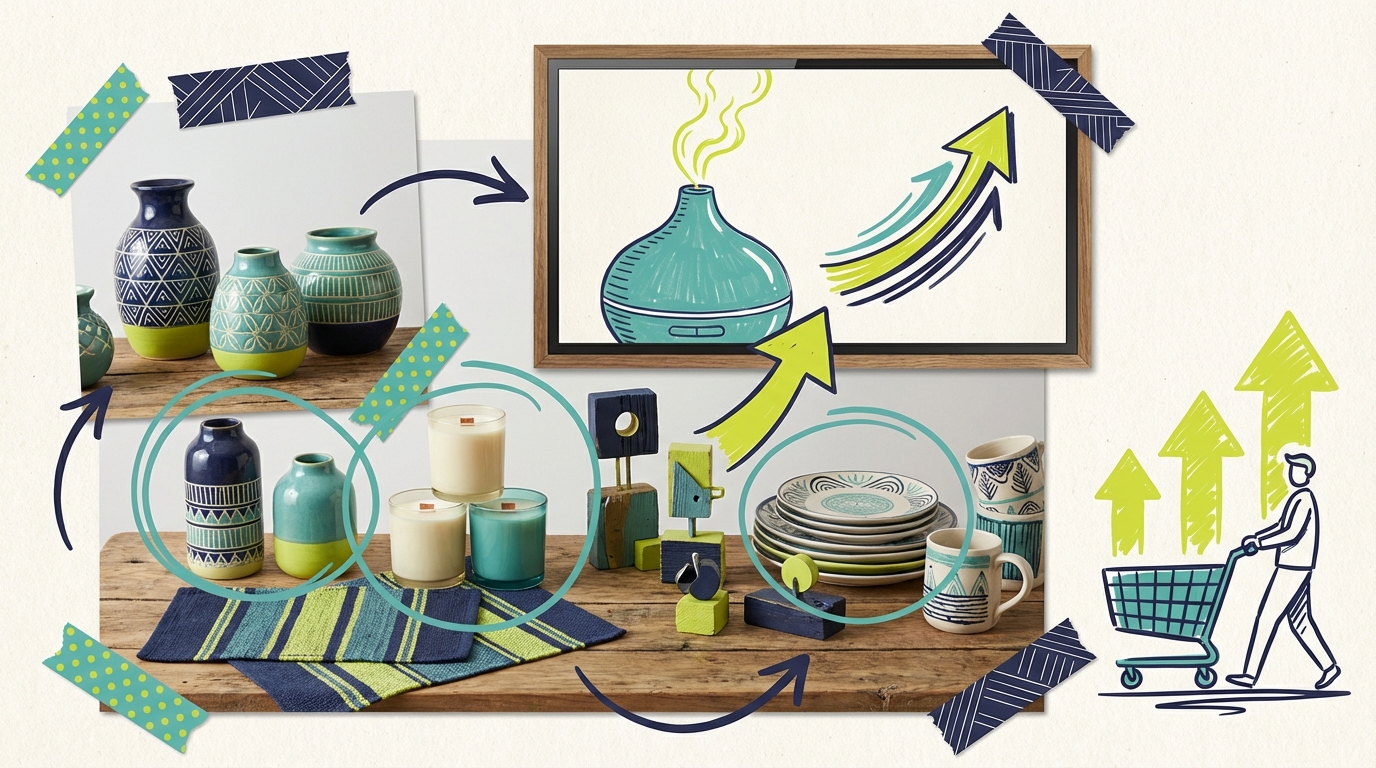
When Birch & Barrel Home Goods launched their first CTV campaign, the founders assumed it would take months to see any meaningful impact. Instead, within six weeks their branded search volume had doubled and their cost per acquisition across all channels dropped by a third. Here's how an online home goods brand turned streaming TV into their most efficient growth channel.

Birch & Barrel Home Goods is a direct-to-consumer brand based in Austin, Texas, specializing in handcrafted candles, ceramics, and small-batch home accessories. Founded in 2021 by Sarah and James Whitfield, the company started as an Etsy shop and grew into a standalone e-commerce operation generating roughly $1.8 million in annual revenue by late 2025.
The team of 12 handles everything from product design to fulfillment out of a 4,000-square-foot warehouse on the east side of Austin. Their average order value sits around $65, with a strong repeat purchase rate of 38% driven by seasonal collections and a loyal following on Instagram (48,000 followers).
Before trying CTV advertising, Birch & Barrel relied almost entirely on Meta ads, Google Shopping, and influencer partnerships for customer acquisition. Organic social and email marketing handled retention.
By mid-2025, Birch & Barrel was hitting growth walls on every front:
Meta ad costs had skyrocketed. Their customer acquisition cost on Instagram and Facebook had climbed from $22 to $38 over 18 months. The home goods category on Meta was increasingly crowded, with larger brands outbidding smaller DTC players for the same audiences. ROAS had dropped from 4.2x to 2.6x.
Google Shopping was a race to the bottom. Competing against Amazon, Wayfair, and hundreds of other home goods sellers on Google Shopping meant constant price pressure. Birch & Barrel's artisan positioning didn't translate well in a feed where shoppers sorted by price.
Brand awareness was limited. Despite a strong Instagram presence, the brand was essentially unknown outside their existing followers and past customers. When they surveyed first-time buyers, fewer than 10% said they'd heard of Birch & Barrel before seeing an ad. They had no organic brand demand to build on.
Sarah Whitfield described the situation: "We'd maxed out what we could do with social ads. Every new customer was costing us more, and we were competing with companies that had 100 times our budget. We needed a channel that could make people actually recognize our name before they saw a product ad."

After reading about how small businesses were using streaming TV, the Whitfields decided to test CTV as an awareness channel. They chose Adwave because the low entry point meant they could experiment without betting the marketing budget.
Campaign setup:
Budget: $2,000/month for the initial three-month test
Targeting: Women 28 to 55, household income $75K+, interest in home decor and design, nationwide with concentration in their top 10 metro areas by sales volume
Creative: Adwave generated a 30-second spot from Birch & Barrel's website showcasing their best-selling products, the handcrafted process, and the brand story
Channels: The ad ran across 100+ premium streaming platforms including Hulu, Peacock, and Food Network
The plan was simple: run CTV to build brand awareness, then measure whether that awareness translated into better performance across their existing digital channels.
Birch & Barrel ran the campaign from September through November 2025, covering the critical pre-holiday shopping season. The results exceeded every projection.
Campaign delivery:
1.2 million impressions delivered across the three months
180,000 unique households reached
Average frequency of 6.7 impressions per household
94% completion rate on the 30-second ad
Business outcomes:
Branded search volume increased 112%. Before the CTV campaign, Birch & Barrel averaged about 1,400 branded searches per month. By October, that number had climbed to 2,970. Google Search Console confirmed the surge was driven by new users who had never visited the site before.
Overall revenue grew 41% year-over-year for the campaign period. September through November 2025 generated $312,000 in revenue compared to $221,000 during the same period in 2024. While some of that growth was organic, the timing and magnitude aligned directly with the CTV campaign launch.
Meta ad performance improved significantly. Click-through rates on their Instagram and Facebook ads increased 28% during the campaign period. More importantly, their cost per acquisition dropped from $38 to $26. The Whitfields believe this happened because viewers who had seen the TV ad were more likely to engage with social ads from a brand they recognized.
New customer acquisition increased 35%. The brand added 2,100 new customers during the three-month period compared to 1,550 during the same months in 2024. First-time buyer surveys showed 22% mentioning "TV" or "streaming" as how they first heard about the brand.
Cost efficiency across channels:
Blended customer acquisition cost dropped from $34 to $23 (a 32% improvement)
ROAS across all channels improved from 2.6x to 3.8x
The CTV campaign itself delivered an estimated 5.2x ROAS when accounting for attributed revenue lift

The timing was right. Launching a brand awareness campaign in September gave the CTV ads two months to build recognition before Black Friday and holiday shopping kicked in. By the time promotional emails went out in November, a significant chunk of their audience had already seen the brand on TV.
CTV created a halo effect on every other channel. This was the biggest surprise. The Whitfields expected CTV to drive some direct traffic, but the improvement in Meta ad performance and Google Shopping click-through rates was unexpected. People who had seen the TV ad were simply more receptive to digital ads from the same brand.
The creative matched the brand. Adwave's AI-generated spot captured Birch & Barrel's artisan positioning well, showing the handcrafted process and finished products in a way that felt authentic rather than mass-produced. The 30-second format gave enough time to tell a story that a six-second Instagram ad never could.
They measured the right things. Instead of trying to track direct clicks from a TV ad (which isn't possible), the team focused on branded search lift, website traffic patterns, and cross-channel performance. This gave them a clear picture of CTV's impact even without click-level attribution.
After the initial test, Birch & Barrel committed to CTV as a permanent part of their marketing mix. Their current allocation:
CTV/Adwave: $2,500/month (up from $2,000)
Meta ads: $3,000/month (down from $4,500, but performing better)
Google Shopping: $1,500/month
Email/SMS: $200/month (platform costs)
Influencer partnerships: $1,000/month
The shift reduced their total marketing spend by $800/month while generating more revenue. CTV didn't replace their digital channels. It made every other channel work harder.
James Whitfield put it this way: "TV used to be something only big brands could afford. We're a 12-person company running ads on the same streaming services as Pottery Barn. And it's working better than anything else we've tried."
CTV isn't just for local businesses. While geographic targeting is powerful for brick-and-mortar, e-commerce brands can use CTV to build national brand awareness at a fraction of what traditional TV would cost.
Start before your busiest season. Brand awareness takes time to build. Launch CTV campaigns at least 6 to 8 weeks before your peak sales period so the recognition compounds when it matters most.
Measure the full funnel, not just direct response. CTV's biggest impact shows up in your other channels. Track branded search, social ad performance, and blended acquisition costs to get the true picture.
You don't need a massive budget. Birch & Barrel proved that $2,000/month was enough to generate measurable results for a $1.8 million business. With Adwave campaigns starting at $50, even smaller brands can test the channel.
TV builds the trust that digital can't. For DTC brands competing against household names, the credibility boost from being seen on streaming TV closes a perception gap that no amount of Instagram advertising can bridge.
Does CTV advertising work for e-commerce businesses? Yes. While CTV doesn't generate direct clicks like search or social ads, it builds brand awareness that improves performance across all digital channels. E-commerce brands like Birch & Barrel see higher click-through rates on paid social, lower customer acquisition costs, and increased branded search volume when CTV is part of the mix.
What budget should an e-commerce brand start with for CTV? Most e-commerce brands see measurable results starting at $1,500 to $2,500 per month. This provides enough impressions and frequency to build recognition in target markets. With Adwave, you can start testing at $50 to validate the creative and platform before scaling up.
How do you measure CTV's impact on online sales? Focus on branded search lift (Google Search Console), changes in direct website traffic (Google Analytics), improvements in Meta and Google ad performance metrics, and blended customer acquisition cost. Surveying new customers about how they first heard of you provides additional signal.
Can small DTC brands really afford streaming TV advertising? Absolutely. Platforms like Adwave have made streaming TV accessible to businesses of all sizes. The key difference from traditional TV is the ability to target specific demographics and geographic areas without paying for wasted reach. A $2,000/month CTV budget can reach 50,000 to 100,000 targeted households.