-
5.7%
Share of U.S. TV viewing on FAST services
-
45%
U.S. households watching free streaming
-
$5.8B
U.S. FAST ad revenue (2025)
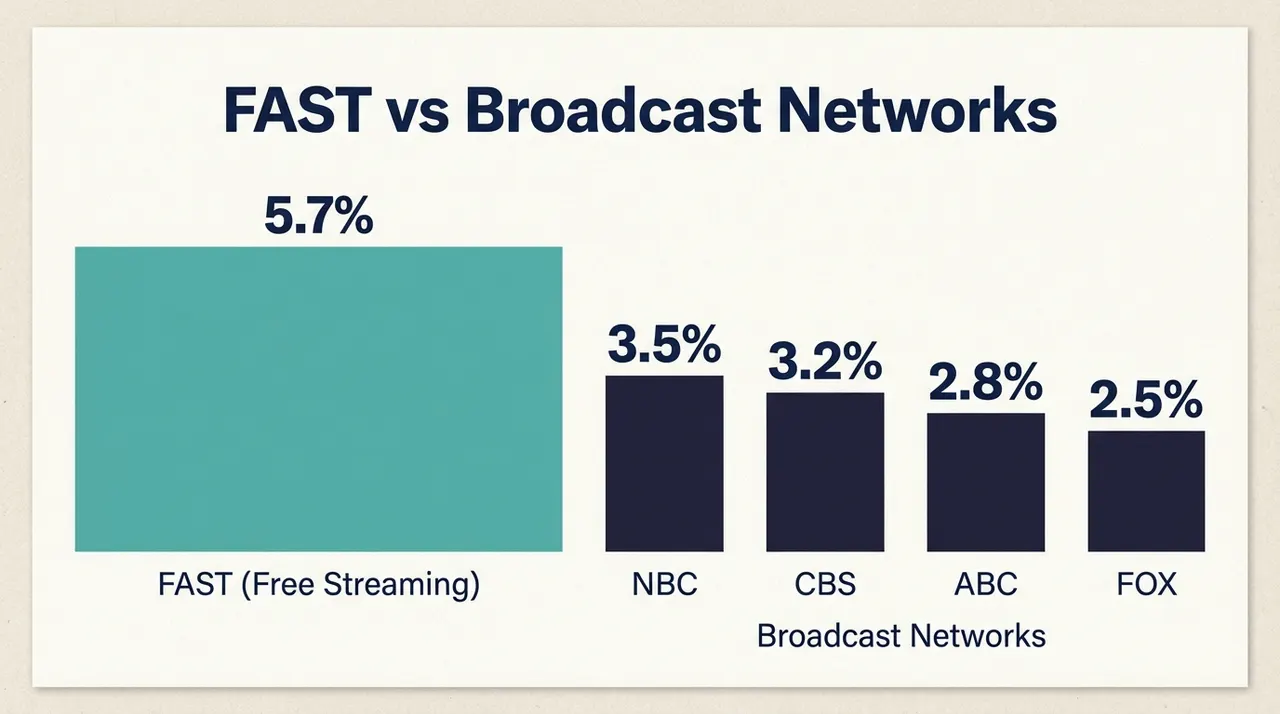
Free ad-supported streaming television (FAST) now accounts for 5.7% of all U.S. TV viewing time, according to Nielsen's Gauge data from May 2025. That number might seem modest until you realize what it represents: free streaming services like Tubi, Pluto TV, and The Roku Channel now capture more audience share than any individual broadcast network. Nearly half of American households (45%) now watch FAST content regularly, and the market is growing at double-digit rates year over year. For advertisers, this explosion of free, ad-supported viewing creates opportunities that simply did not exist five years ago. Here's what the data shows and how businesses can take advantage of this shift.
What the data shows
The rise of free ad-supported streaming represents one of the most significant shifts in television consumption since the original cord-cutting wave began. FAST services have grown from a niche category to a major force in American viewing habits, and the trajectory shows no signs of slowing down.
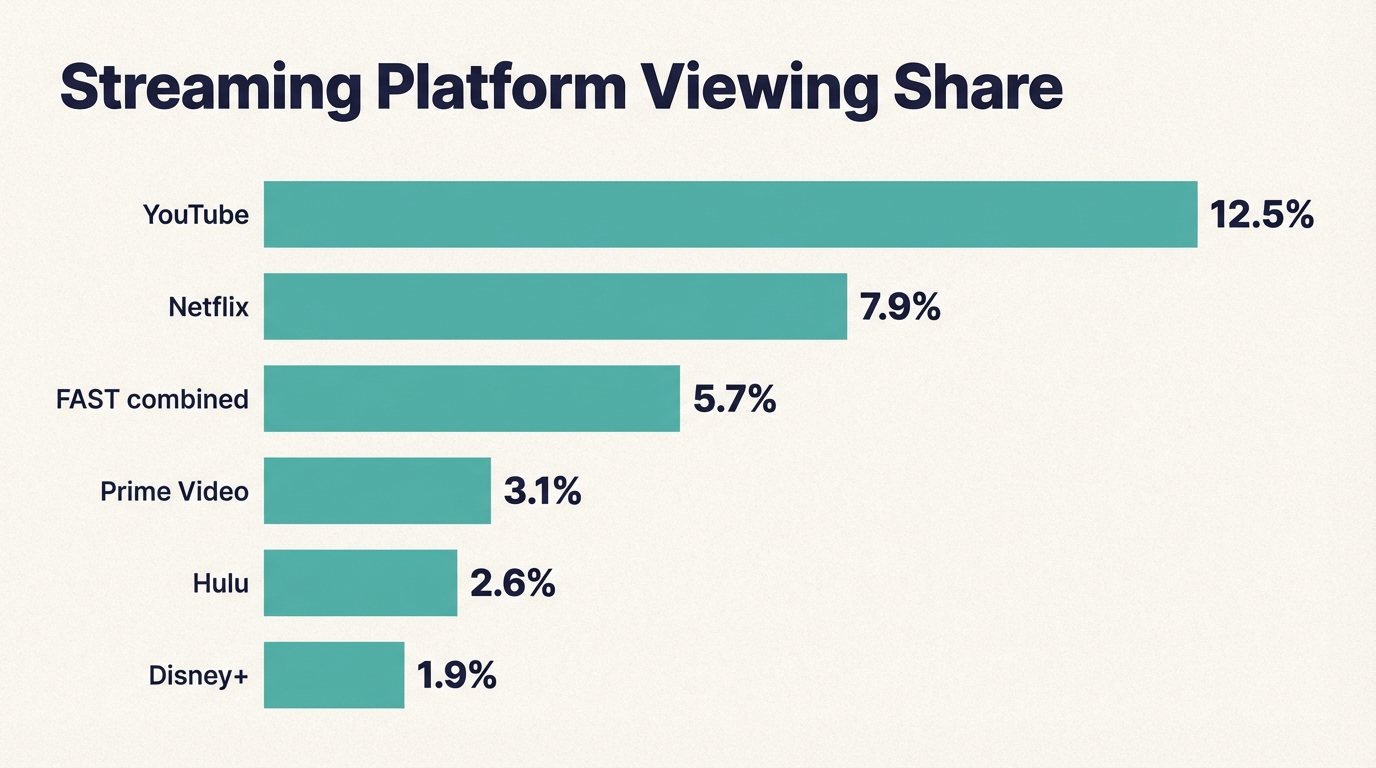
According to Nielsen, free ad-supported streaming services collectively captured 5.7% of total TV viewing in May 2025. While that percentage might seem small in isolation, context reveals its significance. This combined FAST share now exceeds the individual viewing share of any single broadcast network during the same period. In other words, Americans spend more time watching Tubi, Pluto TV, and The Roku Channel combined than they spend watching NBC, CBS, or ABC individually.
The household penetration numbers are even more striking. Research from TV Technology indicates that 45% of U.S. internet households now regularly watch FAST services. This represents a dramatic increase from just 30% in 2022, demonstrating how quickly free streaming has moved from early adopter territory into mainstream American viewing habits.
The growth rate tells the story of a category in rapid expansion. Time spent on major ad-supported streaming services increased by 43% in 2025 compared to the previous year, according to Comscore. This growth rate far outpaces the broader streaming category and indicates that consumers are increasingly comfortable with the ad-supported model when the content is free.
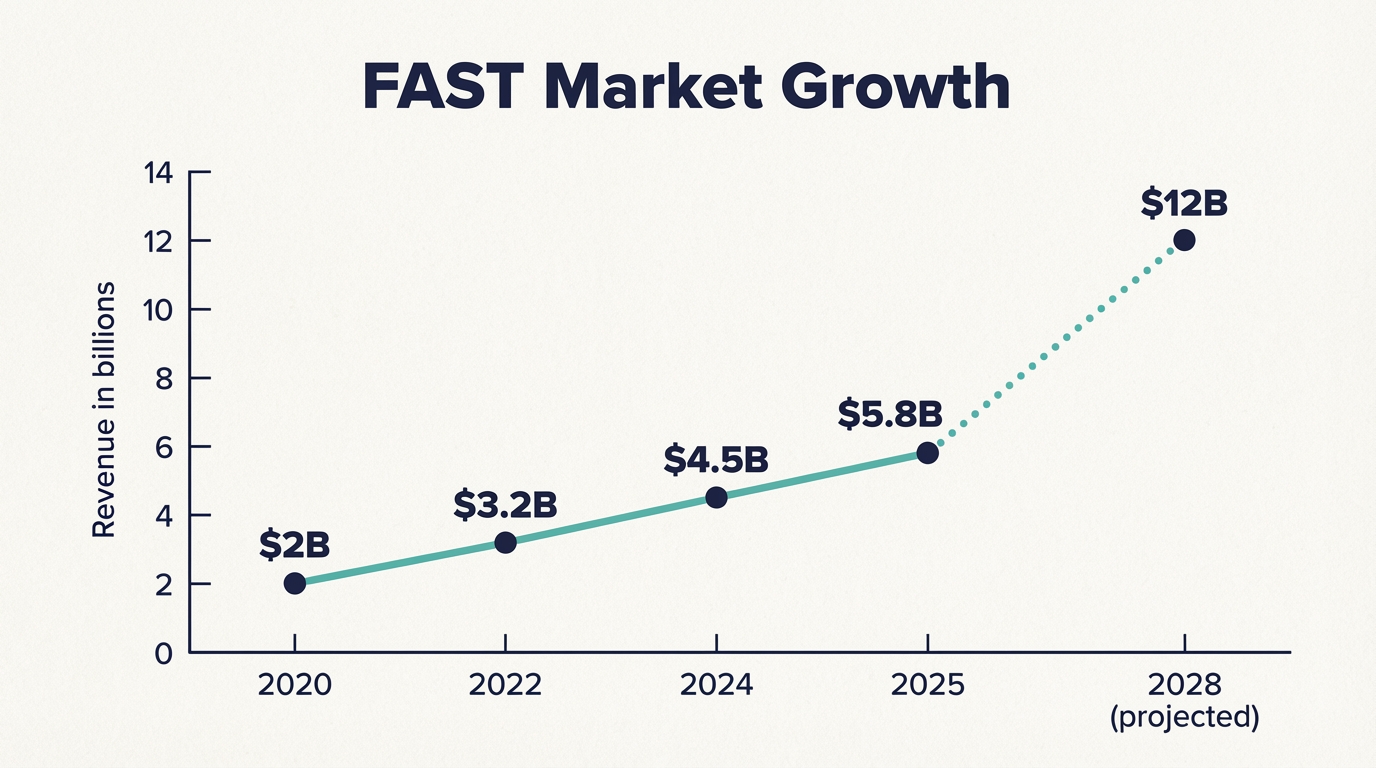
The economic scale of FAST has reached meaningful levels. U.S. FAST advertising revenue is projected to reach $5.78 billion in 2025, according to Statista. Industry analysts project this market will grow at a compound annual growth rate of 16.9% through 2033, potentially reaching $40 billion globally by that time.
Understanding the connected TV advertising landscape helps contextualize where FAST fits within the broader streaming ecosystem.
Breaking down the numbers
The 5.7% aggregate figure for FAST viewing conceals important variations across platforms, demographics, and viewing patterns. Breaking down these numbers reveals where the real opportunities lie for advertisers targeting specific audiences.
By platform
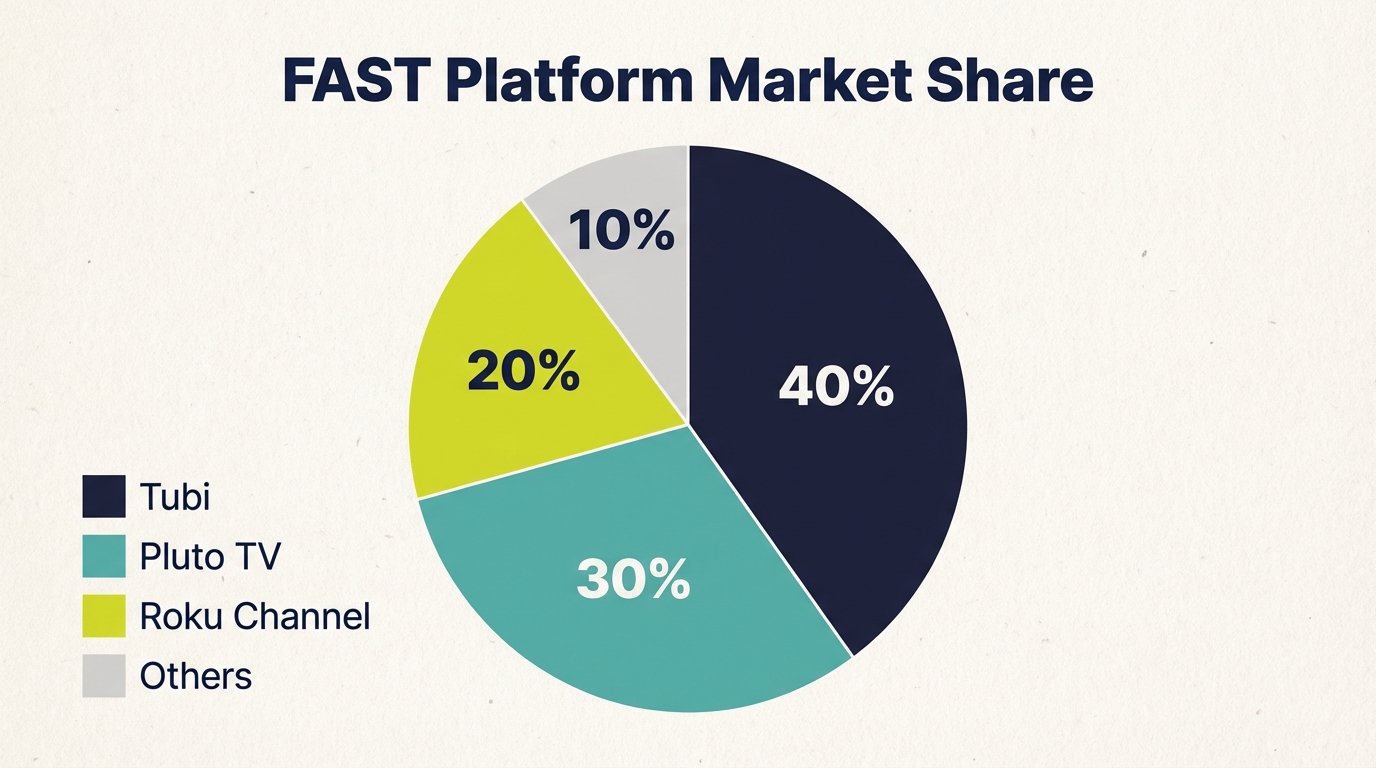
The FAST landscape is dominated by a handful of major players, each with distinct positioning and audience characteristics.
Tubi, owned by Fox Corporation, leads the FAST category with approximately 100 million monthly active users as of June 2025. The platform generated an estimated $700 million in revenue in 2023 and continues to grow rapidly. Tubi's library emphasizes movies and TV series, making it popular with viewers seeking on-demand entertainment without subscription fees.
Pluto TV, owned by Paramount Global, pioneered the FAST model and remains a major force in the category. Pluto TV's linear channel format mimics traditional TV, appealing to viewers who prefer a lean-back, channel-surfing experience.
The Roku Channel has grown from a supporting feature on Roku devices to a standalone FAST destination available across multiple platforms. Roku's built-in advantage of reaching viewers through its market-leading streaming device ecosystem gives The Roku Channel inherent distribution advantages.
By demographic
FAST viewing patterns vary significantly by age group, creating targeting opportunities for advertisers seeking specific audiences. Younger viewers (18-34) show higher FAST adoption rates, driven largely by economic factors and comfort with ad-supported models. Older demographics have embraced FAST services at rates that might surprise observers, especially as a way to maintain access to familiar content types without paying for cable.
This connects to the broader trend of ad-supported streaming becoming the dominant model for television viewing in America.
Tubi: Largest FAST platform by monthly active users, owned by Fox Corporation
Pluto TV: Paramount-owned service with strong linear channel offerings
Roku Channel: Built-in advantage on Roku devices, growing content library
Freevee (Amazon): Amazon-backed with original content and Prime Video integration
Samsung TV Plus: Pre-installed on Samsung smart TVs, strong reach
Why it matters for your business
The rise of FAST streaming creates genuine advertising opportunities for small and medium businesses that previously had no viable path to television audiences. Understanding why this matters requires looking beyond the headline numbers to the practical implications for advertisers.
The core opportunity is access. For decades, television advertising was effectively closed to small businesses. Production costs, minimum spend requirements, and the complexity of media buying created barriers that only large advertisers could overcome. FAST has changed that equation fundamentally.
FAST viewers represent a distinct and valuable audience segment. These are consumers who have actively chosen free, ad-supported content over paid alternatives. They understand and accept the advertising exchange, which creates a more receptive advertising environment than interruptive ads on platforms where users are trying to avoid commercial messages.
For local businesses specifically, FAST represents a way to build brand awareness in their communities using the same medium that national brands have used for decades. A restaurant in Denver can now run television commercials reaching Denver households on Tubi, Pluto TV, and The Roku Channel without buying national inventory they don't need.
The cost structure has democratized access. While traditional television required substantial minimums, streaming TV advertising through platforms like Adwave allows businesses to start with budgets as low as $50. This removes the financial barrier that kept television advertising exclusive to large brands.
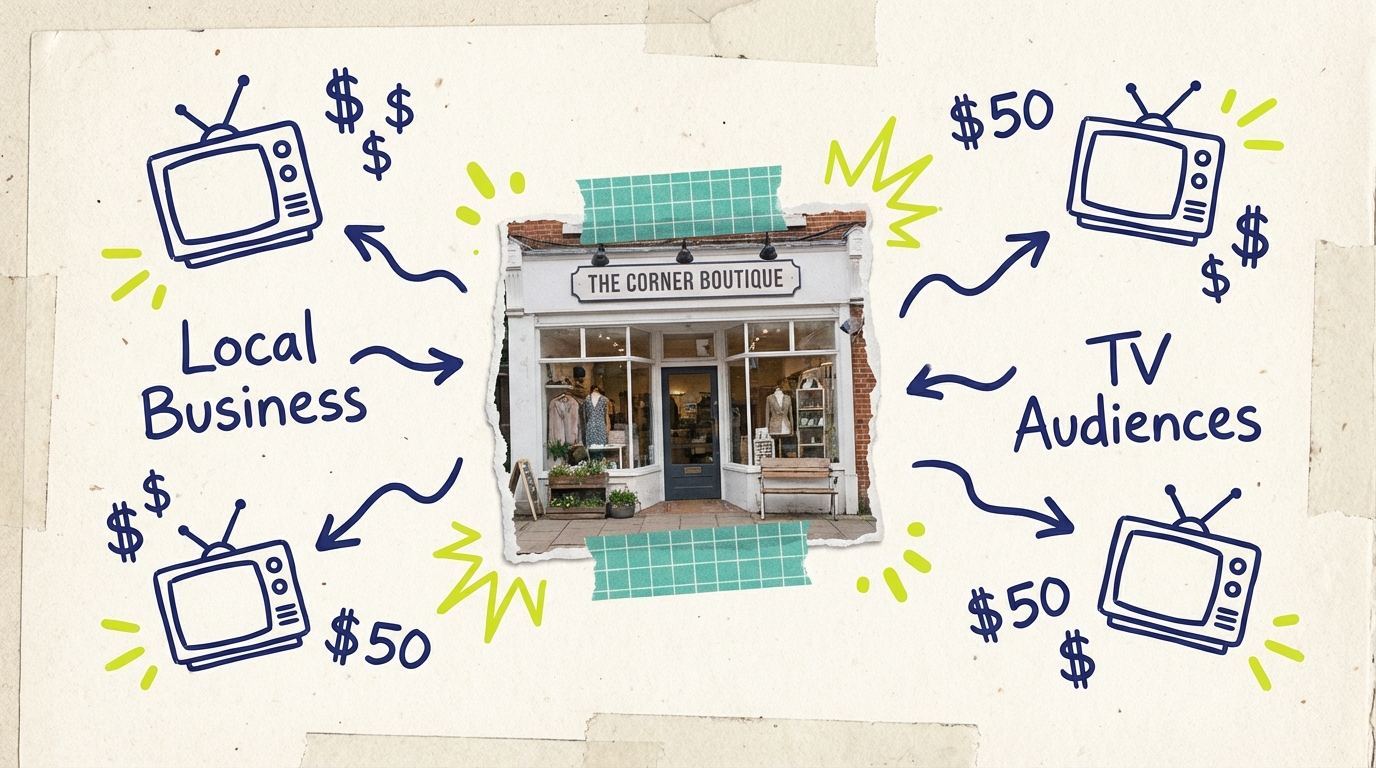
Local businesses across industries can now access the power of TV advertising, from restaurants to dental practices to home service contractors.
How to take advantage of this trend
Understanding that FAST viewership is growing is useful. Knowing how to reach those viewers is what drives business results. Here's how to translate this market shift into advertising action.
Start by understanding where your target customers watch. FAST audiences skew slightly younger and more budget-conscious than the overall streaming population, but the platforms have achieved sufficient scale that most consumer demographics are well-represented.
Geographic targeting should anchor your strategy if you're a local business. The ability to target by ZIP code or radius means you only pay to reach households that can become customers. This precision makes television advertising efficient in a way that wasn't possible with traditional broadcast or cable buys.
Budget allocation for FAST advertising should follow testing principles. Start with a modest budget (even $100-200 for initial testing) and run for at least two weeks to gather meaningful data. The goal of initial campaigns should be learning, not immediate ROI.
Creative development has become dramatically simpler. AI-powered tools can generate broadcast-quality video from your existing business assets in minutes rather than the weeks traditional production required.
Consider FAST as part of a broader streaming strategy rather than an isolated tactic. Your ads can run across FAST platforms alongside premium streaming services, creating reach across the entire streaming ecosystem. Platforms like Adwave make this multi-platform approach simple by aggregating inventory across 100+ channels.
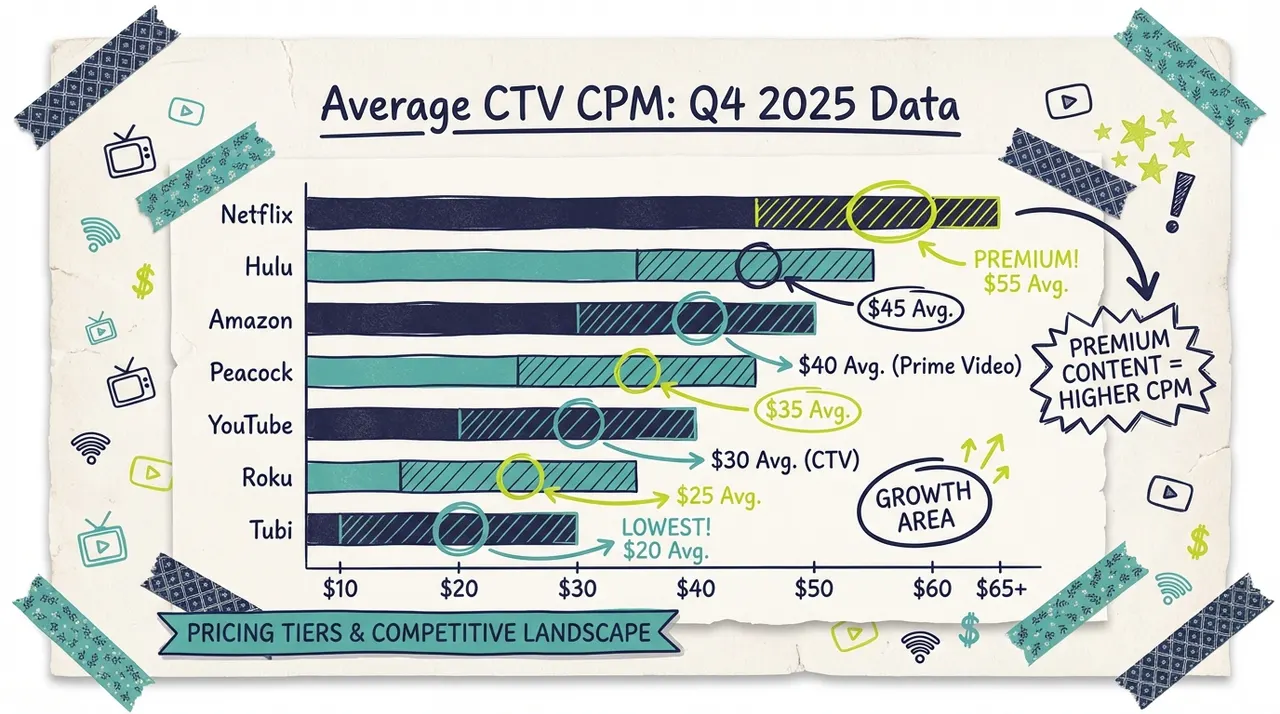
Lower CPMs: FAST platforms offer $15-20 CPMs vs $30+ on premium streamers
Ad-tolerant audiences: Viewers chose free content knowing ads are included
Test creative affordably: Lower costs allow efficient A/B testing before scaling
Reach cord-cutters: Access audiences who left cable but want free alternatives
The bigger picture
FAST's growth reflects a fundamental shift in how Americans think about paying for television content. Understanding the broader context helps explain why this trend will likely continue and accelerate.
The subscription fatigue factor
American households have reached practical limits on how many streaming subscriptions they're willing to maintain. FAST offers a relief valve: access to quality content without another monthly bill. As consumers look to reduce their monthly entertainment expenses, FAST becomes increasingly attractive.
The broader ad-supported shift
FAST growth is part of a larger transformation in the streaming industry toward ad-supported models. Netflix, Disney+, Max, and Amazon Prime Video have all introduced ad-supported tiers, acknowledging that many consumers prefer lower costs in exchange for advertising exposure. According to Nielsen, streaming now accounts for 44.8% of all U.S. TV viewing, with the majority happening on ad-supported services.
What's next
Industry projections suggest continued FAST growth for the foreseeable future. The market is expected to grow at 16.9% compound annual growth rate through 2033, indicating we're still in relatively early stages of FAST adoption.
What experts are saying
Industry analysts and media executives have taken note of FAST's rapid growth and its implications for the broader television landscape.
Nielsen's analysis of the television market has consistently highlighted the growing importance of ad-supported streaming. Their Gauge reports now break out FAST viewing as a distinct category, which reflects its maturation from a niche segment to a mainstream viewing behavior. The fact that FAST collectively exceeds individual broadcast network viewership represents what Nielsen called a "historic milestone" in television consumption patterns.
Trade publications have emphasized the advertiser opportunity that FAST creates. Industry analysis suggests that FAST's combination of engaged audiences, precise targeting, and affordable entry points makes it especially attractive for small and medium-sized advertisers who were previously priced out of television.
Common questions answered
What does FAST stand for?
FAST stands for Free Ad-Supported Streaming Television. The term describes streaming services that offer content at no cost to viewers, with advertising serving as the sole revenue source.
What's the difference between FAST and AVOD?
FAST specifically refers to services offering linear, channel-based streaming that mimics traditional TV, often with scheduled programming. AVOD is a broader term that includes any ad-supported streaming, including on-demand libraries. Services like Pluto TV are primarily FAST, while Tubi blends FAST and AVOD approaches.
Which FAST platforms have the most viewers?
Tubi leads the FAST category with approximately 100 million monthly active users. Pluto TV and The Roku Channel are the other major players, each with tens of millions of monthly users.
How do FAST channels make money?
FAST platforms generate revenue entirely through advertising. Ad rates on FAST vary by platform and targeting, but CPMs typically range from $15-25 for standard inventory.
Are FAST channel ads effective?
Research suggests FAST advertising can be highly effective, especially for brand awareness goals. Video completion rates on FAST often exceed 90%, significantly higher than many digital video formats.
What's the average CPM on FAST channels?
FAST CPMs typically range from $15-30, depending on platform, targeting, and inventory type. For small business advertisers using platforms like Adwave, effective CPMs often fall in the $20-25 range.
Supporting data
Additional context on FAST streaming and ad-supported television:
Total streaming share: Streaming represents 44.8% of U.S. TV viewing (Nielsen Gauge, May 2025)
FAST household penetration: 45% of U.S. internet households watch FAST (TV Technology, October 2025)
Ad-supported viewing growth: Time spent on ad-supported streamers rose 43% in 2025 (Comscore, October 2025)
FAST channel count: Approximately 1,850 FAST channels available globally (mid-2025)
Tubi users: 100 million monthly active users (June 2025)
U.S. FAST ad revenue: $5.78 billion projected for 2025 (Statista)
FAST market CAGR: 16.9% projected growth rate through 2033
All sources linked above. Data current as of August 2025.
Get started with TV advertising
Your ads can run on FAST platforms alongside 100+ premium streaming channels, reaching your target audience on the biggest screen in the house. No production budget required. No agency needed. AI creates your commercial from your website in minutes.