-
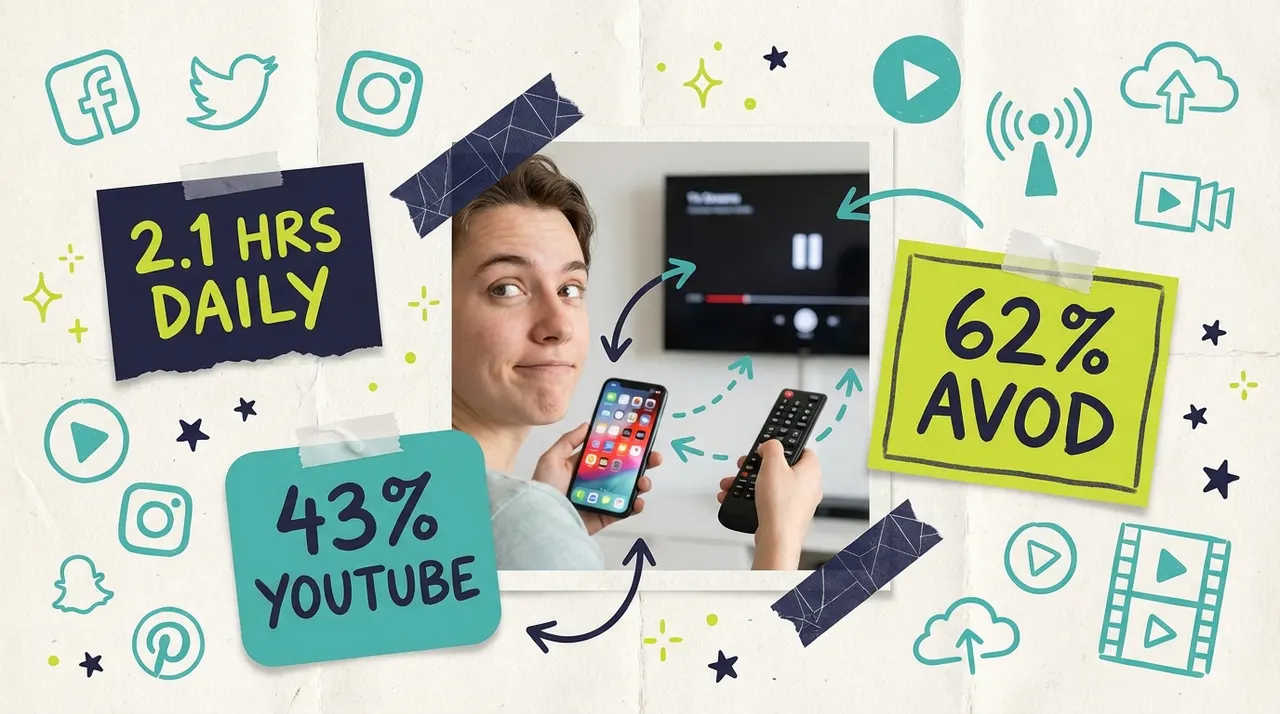
2.1 hrs
Average daily TV viewing time for Gen Z (streaming + linear combined)
-
43%
Gen Z who prefer YouTube/TikTok over traditional TV and streaming
-
62%
Gen Z viewers who use ad-supported streaming (AVOD)
If you're trying to reach Gen Z consumers through television, you're facing a generation that has fundamentally rewritten the rules of video consumption. Unlike millennials who grew up transitioning from cable to streaming, or boomers who still spend over 4 hours daily with traditional TV, Gen Z (born roughly 1997-2012) has never known a world where content waited for them. They expect entertainment on demand, on their terms, and increasingly, on platforms that look nothing like traditional television.
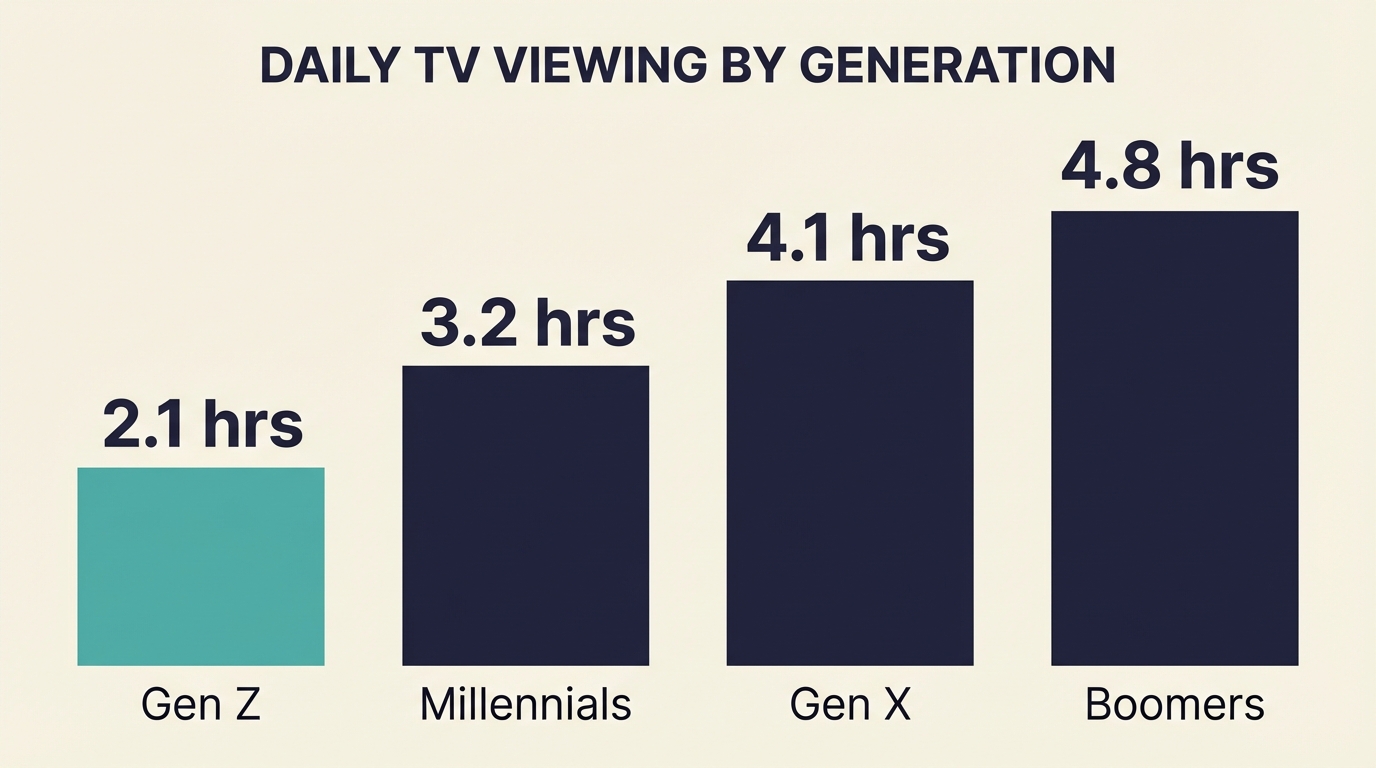
The numbers tell a striking story: Gen Z watches approximately 2.1 hours of TV content daily, combining both streaming and linear television. That's less than half what boomers watch, and significantly lower than millennials. But here's what makes Gen Z different: 43% of them now prefer YouTube and TikTok to both traditional TV and paid streaming services like Netflix and Hulu. For advertisers, this represents both a challenge and an opportunity. Gen Z may watch less TV, but they're not unreachable. They're simply watching differently, and the brands that understand these patterns will have a significant advantage in capturing their attention and their $360 billion in annual spending power.
What the Data Shows
The research paints a clear picture of Gen Z's viewing behavior, and it's dramatically different from every generation that came before.
According to Deloitte's Digital Media Trends survey, Gen Z spends approximately 1.3 hours daily on streaming services and 0.8 hours on traditional or livestreamed television. That total of 2.1 hours represents the lowest TV consumption of any generation. By comparison, millennials average around 3.2 hours, Gen X approximately 4.1 hours, and boomers lead at 4.8 hours daily.
But the raw hours only tell part of the story. MNTN Research's July 2025 analysis found that only 36% of Gen Z viewers watch two or more hours of TV daily, compared to 73% of boomers. This isn't just a preference difference. It represents a fundamental shift in how an entire generation relates to the biggest screen in their homes.
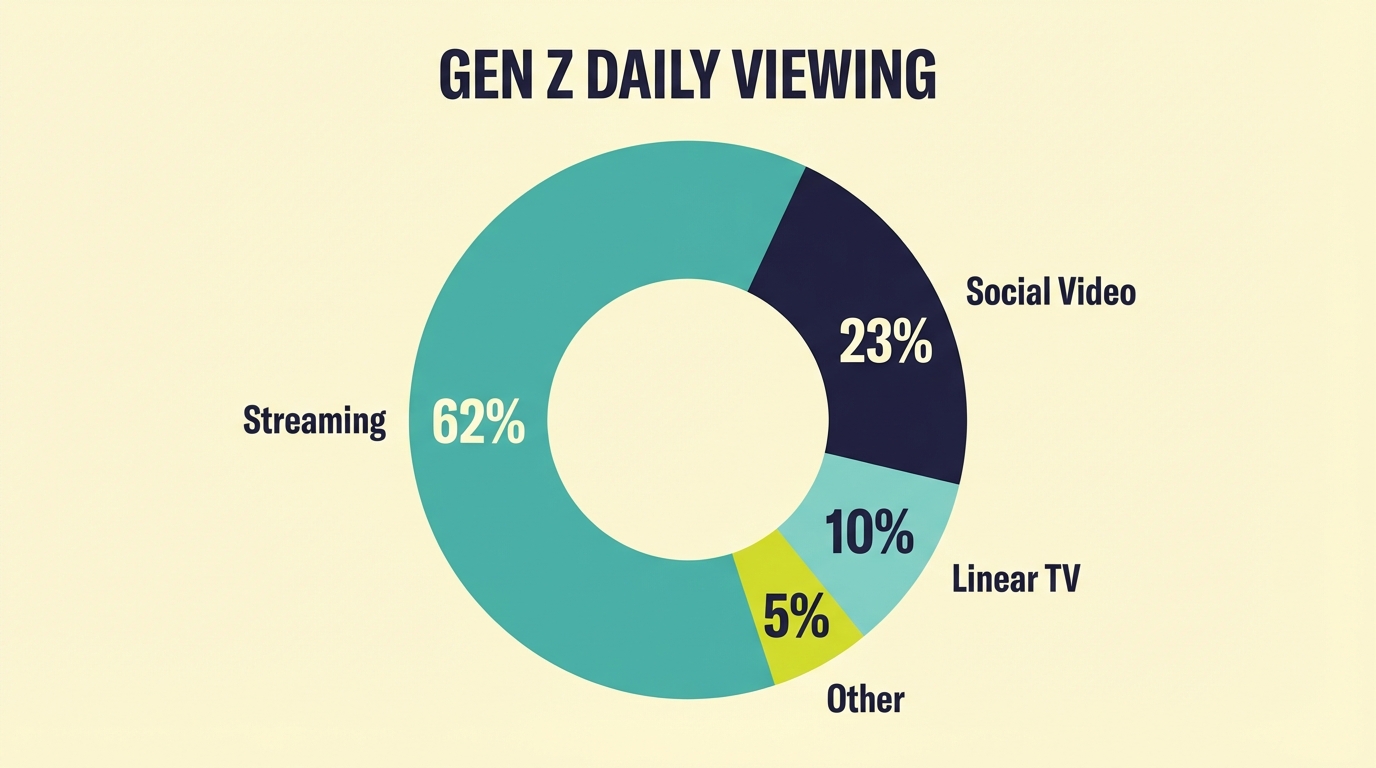
The platform preferences are equally revealing. Nielsen data shows that Gen Z adults aged 18-24 spend 59% of their TV screen time with streaming services, leaving just 13.3% for cable and 8.6% for broadcast. The remaining 19% goes to other TV usage, including gaming. This makes Gen Z the most streaming-dominant generation by a significant margin.
When it comes to specific platforms, Activate Consulting's Technology & Media Outlook 2026 revealed that 43% of Gen Z now prefer YouTube and social video platforms like TikTok for their entertainment needs over traditional TV or even paid streaming services. This preference for user-generated and creator-driven content represents perhaps the most significant departure from traditional viewing patterns.
Breaking Down the Numbers
Understanding Gen Z viewing requires looking beyond simple averages to see how different segments of this generation consume content.
By Platform Type:
Streaming (SVOD): 1.3 hours daily, with Netflix, Disney+, and Hulu as top choices
Linear/Traditional TV: 0.8 hours daily, primarily news and live sports
YouTube adds viewing time beyond the traditional TV measures used here.
Social video (TikTok, Instagram Reels): Separate from TV viewing but competes for the same leisure hours
By Ad Support: MNTN Research found that 62% of Gen Z uses ad-supported video on demand (AVOD) platforms, while 50% use free ad-supported streaming (FAST) services like Tubi and Pluto TV. However, eMarketer's June 2025 analysis noted that only 42% of Gen Z subscribers use ad-supported SVOD tiers from services like Netflix or Max. This suggests Gen Z is comfortable with ads on free platforms but less willing to accept them on services they're already paying for.
By Device: Despite their reputation as phone-obsessed digital natives, research from TV Technology shows that more than half of Gen Z still watches professionally produced TV content on actual television screens. However, New Road Advertising's 2025 analysis found that over 70% of Gen Z streams content on phones or tablets at least some of the time, making them the most mobile-first TV generation.
Social Media as Competitor: Attest's 2025 Gen Z Media Consumption study surveyed 1,000 Gen Z adults and found that 81% spend one or more hours daily on social media platforms, with 50% exceeding three hours daily. Women in this age group are statistically more likely to be heavy social media users. This social media time directly competes with traditional TV viewing, explaining why Gen Z's TV hours are so much lower than other generations.
Why This Matters for Advertisers
Gen Z's viewing habits carry significant implications for any advertiser trying to reach this generation through video. With approximately $360 billion in annual disposable income, Gen Z represents a massive market opportunity that's becoming increasingly difficult to reach through traditional TV advertising alone.
The Reach Challenge
Traditional TV advertising simply cannot reach Gen Z at scale. With less than half of 16-24 year olds watching broadcast TV in an average week (according to Ofcom's 2025 Media Habits study), advertisers relying solely on linear TV will miss the majority of this generation. Even premium streaming placements have limitations: Gen Z watches fewer hours overall and is more likely to pay for ad-free tiers than accept ads on paid services.
The Format Opportunity
The good news for advertisers is that Gen Z isn't ad-averse. Research from Super Awesome found that 67% of Gen Z say they like advertising when it resonates with their values and entertains them. The key is meeting them in formats they prefer.
Comcast Advertising's research found that Gen Z spends more time than average with entertainment channels like Cartoon Network, Adult Swim, and VH1, and responds best to ads that entertain. Over half of Gen Z says advertisements that make them smile are the most memorable.
CTV as the Bridge
Connected TV (CTV) advertising offers a unique opportunity to reach Gen Z where they watch. While they may skip traditional TV, they're actively engaged with streaming platforms. CTV allows advertisers to reach Gen Z viewers on the big screen through the streaming services they prefer, with targeting capabilities that traditional TV cannot match.
For local businesses, CTV provides a way to reach younger consumers who have largely abandoned traditional local TV. A restaurant in a college town, for example, can target streaming viewers within their delivery radius rather than paying for broadcast coverage that mostly reaches demographics they're not targeting.
How Advertisers Can Take Advantage
Reaching Gen Z through video advertising requires a multi-platform strategy that acknowledges their fragmented viewing habits. Here are the most effective approaches based on current research:
1. Prioritize CTV and Streaming
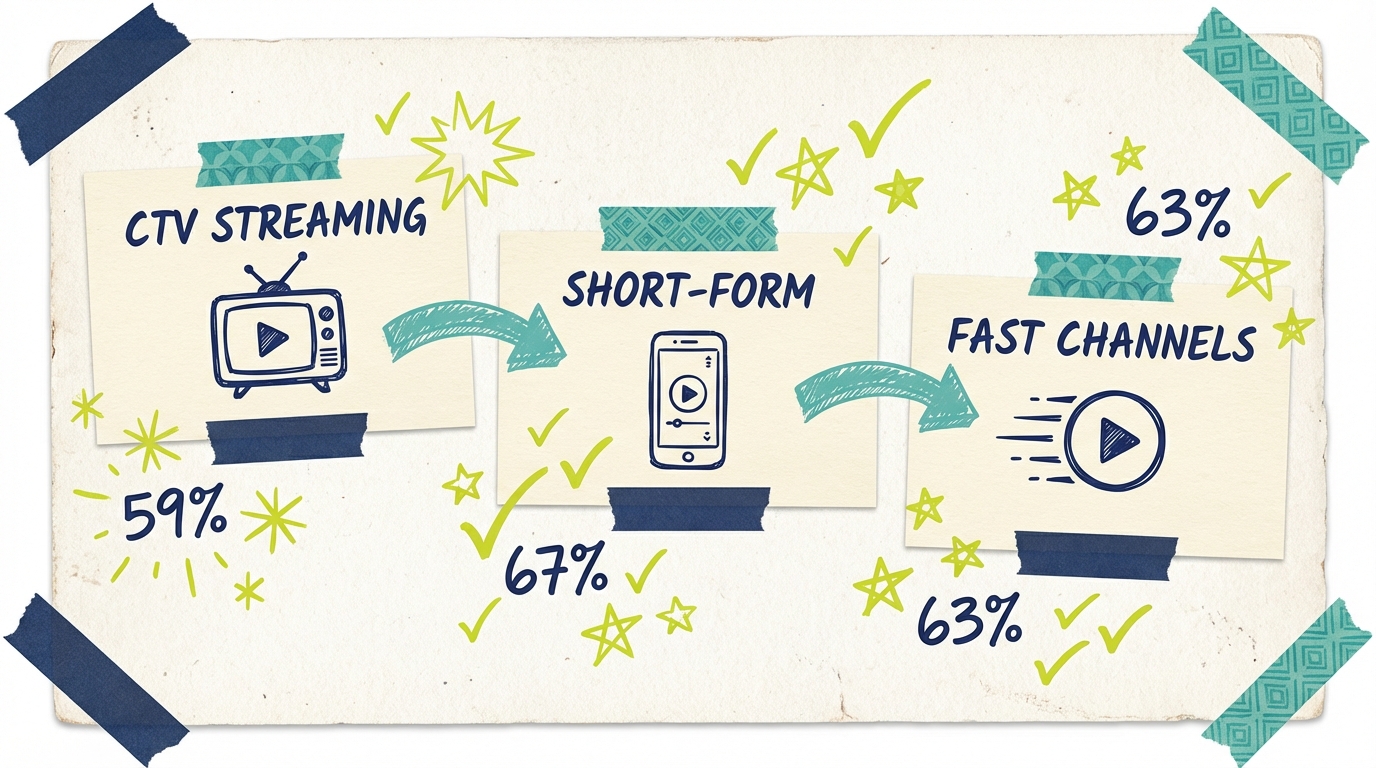
With 59% of Gen Z's TV screen time going to streaming, CTV advertising should be the foundation of any Gen Z video strategy. Platforms like Adwave allow small businesses to access streaming inventory on networks like Hulu, Peacock, and Tubi starting at just $50, making it possible to reach Gen Z viewers without the massive budgets traditionally associated with TV advertising.
2. Embrace Short-Form Formats
Attest's research found that 67% of Gen Z prefers short-form comedy and memes as content. While 30-second TV ads remain effective, consider how your creative can work across formats. The same message that runs on CTV might need a shorter, punchier version for YouTube pre-roll.
3. Consider FAST Channels
Free ad-supported streaming services like Tubi, Pluto TV, and Xumo are experiencing rapid growth among Gen Z. Comcast Advertising reports that 63% of Gen Z adults indicate a likelihood of engaging with FAST platforms in the coming year. These platforms often offer lower CPMs than premium streaming services while still reaching viewers on the big screen.
4. Target Entertainment Content
Gen Z over-indexes on entertainment programming. If your product or service appeals to younger consumers, consider contextual targeting around entertainment content rather than news or sports programming where Gen Z viewership is lower.
5. Make Ads Worth Watching
Gen Z responds to creativity and authenticity. Research from Civic Science found that funny ads appeal most to Gen Z. Avoid generic corporate messaging in favor of entertaining creative that wouldn't feel out of place alongside the content they're choosing to watch.
The Bigger Picture
Gen Z's viewing habits aren't just a generational quirk. They represent the future of video consumption for all demographics. The patterns we see in Gen Z today often preview what older generations will adopt in the coming years.
The Death of Appointment Viewing
Gen Z has never known appointment television in any meaningful way. They don't schedule their lives around show times because they've always been able to watch whatever they want, whenever they want. This expectation of on-demand access is now spreading to older generations, accelerating the decline of linear TV even among demographics that grew up with it.
Social Video as Primary Entertainment
The finding that 43% of Gen Z prefers YouTube and TikTok to all forms of television (streaming included) signals a fundamental shift in what counts as "TV." For this generation, professionally produced entertainment competes directly with creator-driven content, and the creators are often winning. This has massive implications for advertising, as traditional TV metrics don't capture where Gen Z is spending their video time.
The Microdramas Phenomenon
Activate Consulting's research identified an emerging trend: "microdramas," consisting of 1-2 minute scripted episodes of ongoing storylines, have reached 28 million U.S. adult viewers, with 52% of that audience aged 18-34. This format, born on platforms like TikTok and YouTube Shorts, represents a new form of television that barely resembles the 30 and 60-minute episodes that defined TV for decades.
Streaming's Growing Challenge
eMarketer's analysis highlighted a significant concern for streaming services: Gen Z isn't just watching less traditional TV. They're also resistant to ad-supported streaming tiers. With only 42% of Gen Z SVOD subscribers using ad tiers (versus higher rates in every other generation), streaming platforms may struggle to monetize this demographic through advertising alone.
For advertisers, this means the window to reach Gen Z through streaming may be narrower than for other generations. A diversified approach that includes social video advertising, creator partnerships, and CTV will likely outperform strategies focused solely on premium streaming placements.
What Experts Are Saying
Industry analysts have been closely watching Gen Z's evolving relationship with television, and their insights provide valuable context for understanding these trends.
Jeremy Goldman, Senior Director of Marketing & Commerce at EMARKETER, notes that "streaming's future depends on reaching the next generation, but current models aren't meeting Gen Z where they are. With only 1.3 hours of streaming and 0.8 hours of traditional TV per day, Gen Z prefers social video, gaming, and music."
Frankie Karrer, writing for MNTN Research, emphasizes the format preference divide: "Flexibility remains streaming's biggest draw, with 70% of viewers citing it as a top reason to subscribe. But Gen Z expects more than content on demand. They want ads that are relevant and respectful of their time."
Comcast Advertising's research team concluded that "Gen Zers don't hate advertising. In fact, 67% say they like it. But they prefer ads to resonate, reflect their values, and entertain. Over half of Gen Zers say that advertisements that make them smile are the most memorable."
The consistent message from experts is that Gen Z isn't unreachable through video advertising. They simply require different approaches than generations before them. Brands that adapt their strategies to meet Gen Z's preferences and viewing habits will have significant advantages over competitors still relying on traditional TV playbooks.
Common Questions Answered
Q: Is Gen Z really "killing" television?
Not exactly. Gen Z still watches television, just significantly less of it. The 2.1 hours daily of combined streaming and linear TV is lower than other generations, but it's not zero. What's changing is the definition of "television" itself. When 43% of Gen Z prefers YouTube and TikTok to all forms of TV, the lines between television, social media, and user-generated content are blurring.
Q: Why does Gen Z watch so much less TV than other generations?
Several factors contribute to Gen Z's lower TV consumption. They've grown up with smartphones and social media as primary entertainment sources, creating competition for leisure time that didn't exist for older generations. They also tend to be more selective about content, preferring shorter formats that fit into fragmented schedules. gaming occupies a significant portion of their entertainment time that older generations typically spent watching TV.
Q: Can advertisers still reach Gen Z through TV advertising?
Yes, but it requires a more targeted approach. Traditional broadcast and cable TV will reach only a fraction of Gen Z viewers. CTV and streaming advertising provides better reach among this demographic, especially on AVOD and FAST platforms. The key is combining TV advertising with social video and digital strategies rather than relying on TV alone.
Q: Do Gen Z viewers hate ads?
The research consistently shows that Gen Z is not inherently opposed to advertising. The 67% who say they like advertising when it entertains or resonates with their values represents a significant opportunity. Gen Z dislikes irrelevant, intrusive, or inauthentic advertising more than advertising itself.
Q: What's the best platform for reaching Gen Z with video ads?
There's no single best platform. A multi-channel approach works best. CTV reaches Gen Z on the big screen, YouTube captures a significant portion of their video time, and social platforms like TikTok and Instagram reach them where they spend hours daily. The most effective strategies use multiple platforms with creative adapted for each format.
Supporting Data
The statistics in this article come from multiple authoritative sources tracking Gen Z media consumption:
2.1 hours daily total TV viewing for Gen Z, combining 1.3 hours streaming and 0.8 hours linear/traditional (Deloitte Digital Media Trends 2025)
36% of Gen Z watch 2+ hours of TV daily, compared to 73% of boomers (MNTN Research, July 2025)
59% of TV screen time for Gen Z ages 18-24 goes to streaming (Nielsen NPOWER/Comcast Advertising)
43% of Gen Z prefer YouTube and TikTok to traditional TV and streaming (Activate Consulting, November 2025)
62% use AVOD and 50% use FAST platforms (MNTN Research)
42% of Gen Z SVOD subscribers use ad-supported tiers (eMarketer, June 2025)
81% spend 1+ hour daily on social media, 50% spend 3+ hours (Attest, November 2024)
67% like advertising when it resonates and entertains (Super Awesome, 2023)
$360 billion in annual Gen Z disposable income (Forbes, 2022)
28 million U.S. adults watch microdramas, 52% aged 18-34 (Activate Consulting, November 2025)