
A kitchen remodel costs $30,000 or more. A bathroom renovation runs $15,000 to $50,000. A home addition can easily exceed $100,000. Homeowners don't make these decisions lightly, and they certainly don't hire the first contractor who answers the phone.
Home improvement is a trust-intensive business. You're asking someone to let strangers into their home, tear apart their living space, and manage a project that will disrupt their daily life for weeks or months. Before they sign a contract, homeowners need to believe you're competent, reliable, and honest.
That's why effective marketing for home improvement businesses focuses on building trust as much as generating leads. The contractors who win the best projects aren't always the cheapest. They're the ones who seem most professional, most established, and most capable of delivering what they promise.
This guide covers marketing strategies that work specifically for home improvement businesses, from showing your work to building brand awareness to generating qualified leads.
The Home Improvement Marketing Challenge
Before diving into tactics, it's worth understanding what makes marketing home improvement services different from other local businesses.
Long consideration periods. Homeowners think about major renovations for months or years before they act. They notice their kitchen feels dated. They discuss whether to add a bathroom. They research options, gather ideas, and gradually move toward a decision. Your marketing needs to reach them throughout this journey, not just when they're ready to get quotes.
High stakes for the customer. A bad meal at a restaurant is a minor inconvenience. A botched renovation is a financial and emotional disaster. Homeowners are rightfully cautious about who they trust with these projects. Your marketing must address their fears and build confidence.
Word-of-mouth dominates. Referrals drive more home improvement business than any other source. People ask neighbors, friends, and family for recommendations. They trust personal endorsements more than any advertising. But word-of-mouth has limits: it only reaches people within your existing network's connections.
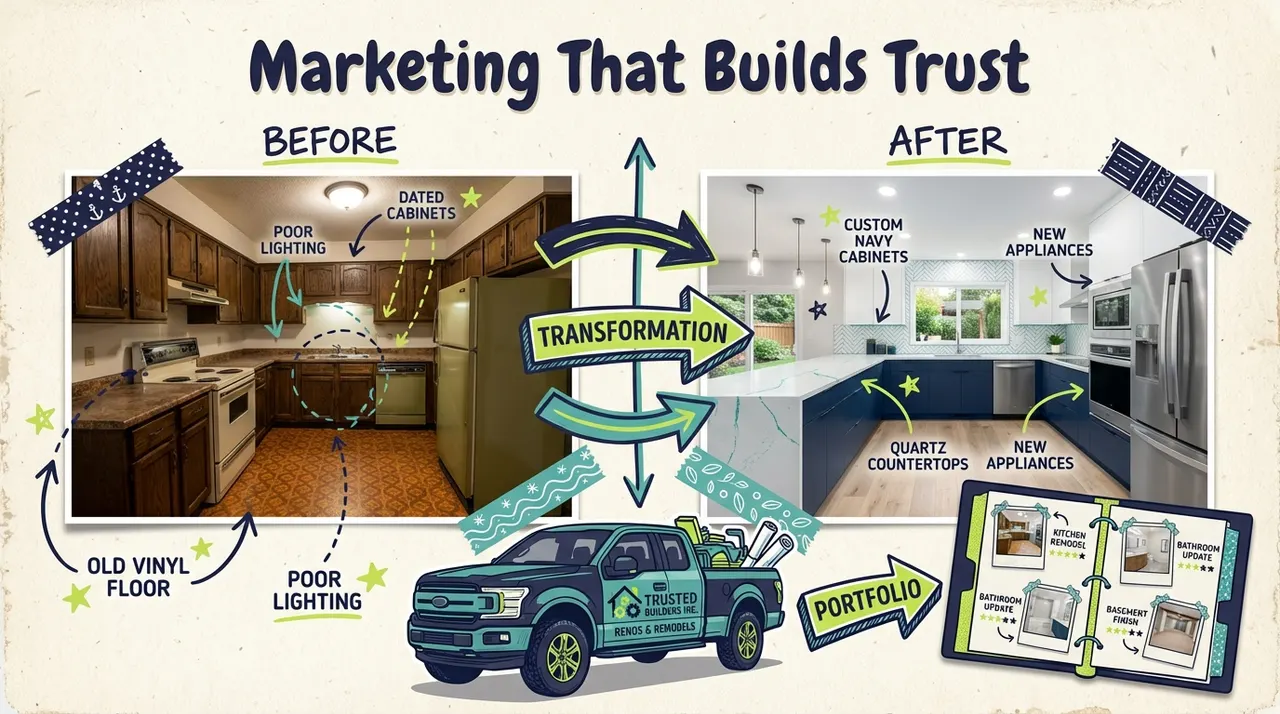
Visual results matter. Unlike many services where results are invisible, home improvement creates dramatic visual transformations. A dated kitchen becomes a modern showpiece. A cramped bathroom becomes a spa-like retreat. These transformations are your most powerful marketing asset.
Showcase Your Work Effectively
Your completed projects are your best salespeople. Every satisfied customer represents marketing content that builds trust with future customers.
Build a detailed portfolio. Document every project with professional-quality photos. Capture before, during, and after shots. Show the transformation from different angles. Include close-ups of quality details: connected tile work, custom cabinetry, perfect paint lines.
Organize the portfolio by project type so customers can find work relevant to their plans, such as kitchens, additions, or decks.
Create video walkthroughs. Photos are powerful, but video is even better. Walk through completed projects explaining what you did and why. Show the craftsmanship up close. Let viewers experience the space as if they were visiting in person.
Keep videos short and focused, two to three minutes maximum. Post them on your website, YouTube, and social media. Video content performs exceptionally well on social platforms and helps potential customers feel like they know you before they call.
Develop case studies. Go beyond simple before-and-after photos. Tell the story of each project: what the homeowner wanted, what challenges you faced, how you solved problems, and what the final result achieved.
Include specific details that build credibility. Mention the timeline, the scope of work, and any creative solutions. Quote the homeowner about their experience. These stories help potential customers imagine working with you and understand your process.
Gather video testimonials. Written reviews matter, but video testimonials are more powerful. Ask satisfied customers if they'd be willing to share their experience on camera. Most people who love your work are happy to help.
Keep testimonials authentic and conversational. Don't script them. Ask customers to share what they were looking for, why they chose you, and how the project went. Real enthusiasm from real people builds trust that polished marketing cannot match.
Optimize Your Digital Presence
When homeowners research contractors, they start online. Your digital presence shapes their first impression and determines whether you make their consideration list.
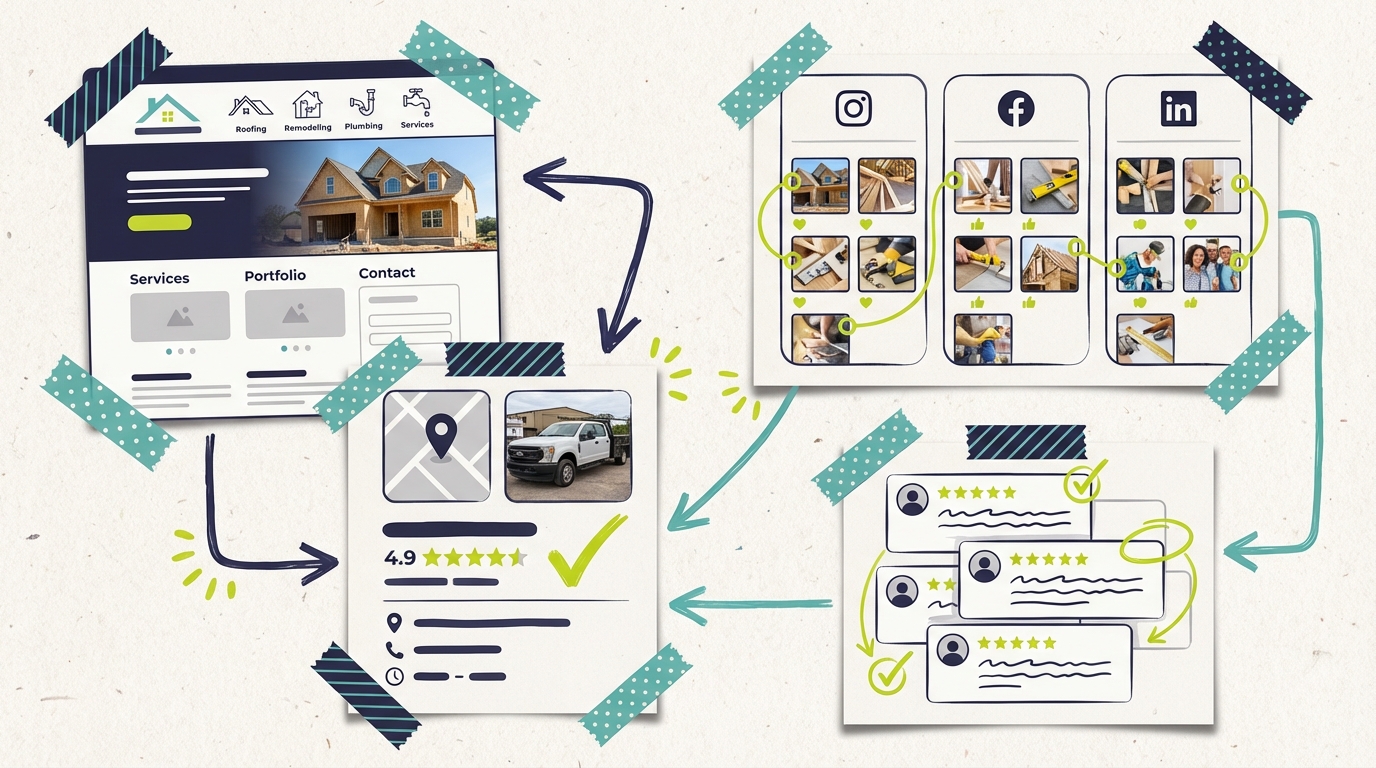
Make your website work harder. Your website should do more than list services. It should build trust, showcase your work, and make it easy for potential customers to take the next step.
Include a prominent portfolio with your best projects. Display reviews and testimonials throughout the site, not just on a dedicated testimonials page. Show photos of your team and explain your process. Make your contact information and service area obvious.
Optimize for mobile devices. Many homeowners will find your site while browsing on phones. If your site is difficult to navigate on mobile, you're losing potential customers.
Claim and optimize Google Business Profile. When someone searches "kitchen remodeler near me," Google Business Profile determines whether you appear in local results. This free listing is one of your most important marketing assets.
Complete every field with detailed information. Add photos of completed projects regularly. Post updates about recent work or company news. Respond to every review, positive or negative. Active, well-maintained profiles rank higher and convert better.
Establish presence on industry platforms. Houzz, Angi, and similar platforms attract homeowners actively researching home improvement projects. Complete profiles on these platforms with portfolios, reviews, and detailed service information.
These platforms can generate leads directly, but they also validate your business when homeowners research you. A contractor with strong Houzz presence seems more established than one with no industry platform profiles.
Maintain active social media. Facebook and Instagram work well for home improvement businesses because the visual content is inherently engaging. Share before-and-after photos, project progress shots, and behind-the-scenes glimpses of your team at work.
Post consistently rather than sporadically. A few posts per week keeps your business visible without overwhelming followers. Engage with comments and messages promptly. Social media builds familiarity over time, keeping you familiar when followers eventually need your services.
Lead Generation Tactics That Work
While brand building creates long-term demand, you also need tactics that generate leads today. Here's what works for home improvement businesses.
Google Ads for high-intent searches. When someone searches "kitchen remodeler near me" or "bathroom renovation contractor," they're actively looking for help. Google Ads puts you at the top of these search results.
Focus on specific, high-intent keywords rather than broad terms. "Kitchen remodel contractor [city]" converts better than generic "home improvement." Set geographic targeting to your actual service area. Track which keywords generate quality leads, not just clicks.
Expect to pay $10-50 per click for competitive home improvement keywords. The math works because project values are high: if one in twenty clicks becomes a $40,000 project, that customer acquisition cost is acceptable.
Retargeting keeps you visible. Most website visitors leave without contacting you. Retargeting ads follow these visitors around the internet, showing your ads on other sites they visit. This keeps your business familiar during their consideration process.
Retargeting is especially effective for home improvement because decision timelines are long. Someone who visited your site in January might be ready to get quotes in April. Retargeting ensures they remember you.
Content marketing builds authority. Create helpful content that answers questions homeowners have during their research process. Blog posts about "What to expect during a kitchen remodel" or "How long does a bathroom renovation take" attract organic search traffic and position you as an expert.
Content marketing takes time to generate results but compounds over time. A helpful blog post can generate leads for years. And content establishes credibility: contractors who educate seem more trustworthy than those who only sell.
Social media advertising extends reach. Facebook and Instagram ads let you target homeowners by location, demographics, interests, and behaviors. You can reach people interested in home improvement, interior design, or related topics.
Visual ads work best. Show stunning transformations that stop the scroll. Lead with the emotional benefit: the beautiful kitchen, the relaxing bathroom, the extra living space. Include a clear call to action.
Build Your Brand for Long-Term Success
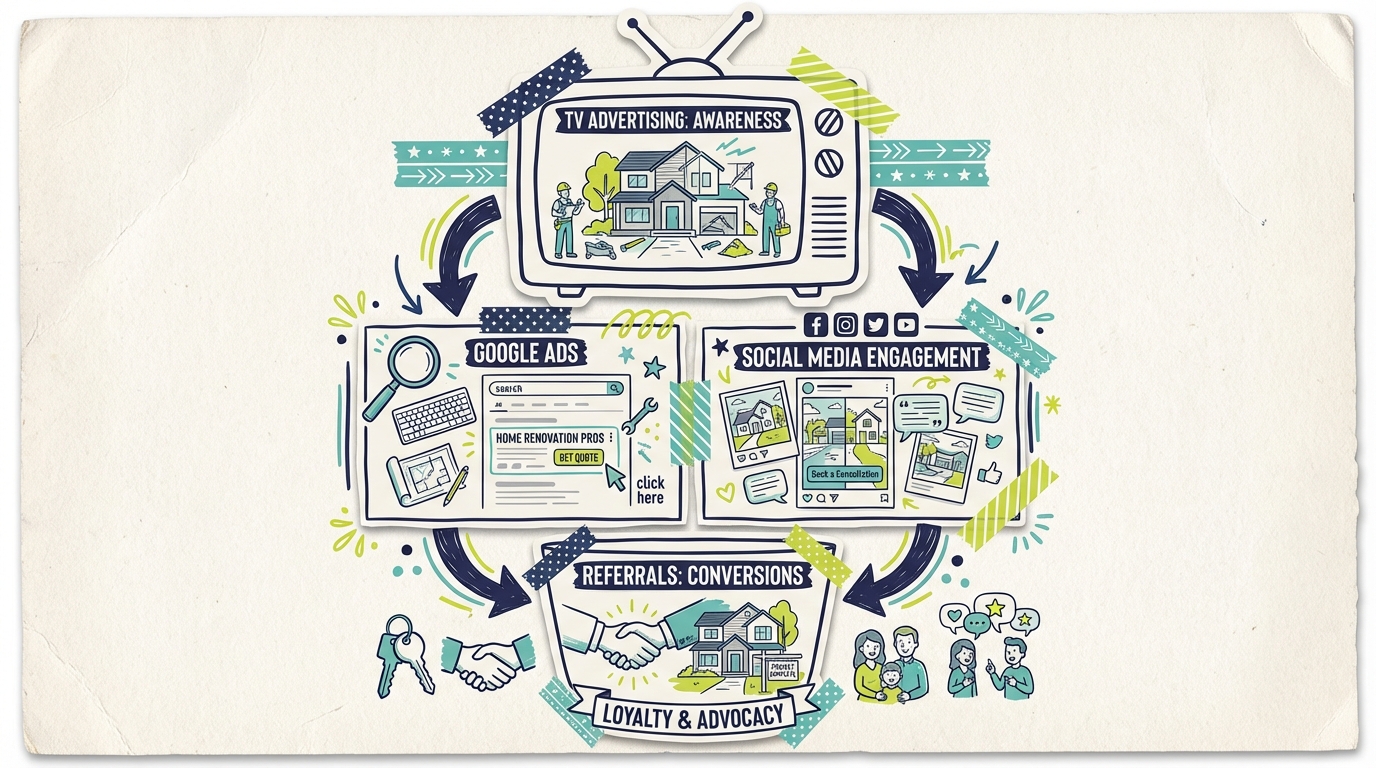
Lead generation captures existing demand. Brand building creates new demand by making homeowners think of you when they're ready to act.
Invest in local awareness advertising. When a homeowner decides to remodel their kitchen, they'll call the contractor they've heard of. If they haven't heard of anyone, they'll search online and pick from strangers. Local awareness advertising ensures you're the familiar name they remember.
Streaming TV advertising puts your business on premium networks like NBC, Hulu, and ESPN. Geographic targeting reaches homeowners in your service area. The trust and credibility that comes with TV presence positions you as an established professional rather than an unknown contractor.
TV advertising works especially well for home improvement and contractor businesses because visual transformations translate powerfully to video. Show a dated kitchen becoming modern. Show cramped spaces opening up. These transformations capture attention and demonstrate your capabilities.
Get involved in your community. Sponsor local events, sports teams, and charitable causes. Participate in home shows and community expos. Join the chamber of commerce and local business groups.
Community involvement builds relationships and visibility that advertising alone cannot create. When someone needs a contractor, they often ask around. Being known in the community means more people recommend you.
Develop strategic partnerships. Build relationships with complementary businesses: real estate agents, interior designers, architects, and other contractors who don't compete directly. These partners can refer clients who need your services.
Real estate agents are especially valuable partners. They work with buyers who may want renovations and sellers who may need updates before listing. A strong relationship with active agents can generate steady referrals.
Consistency builds recognition. Use consistent branding across all touchpoints: trucks, uniforms, signage, website, social media, and advertising. Repetition builds recognition. When homeowners see your brand repeatedly, they remember you when they need your services.
Professional presentation at every touchpoint signals quality. Clean trucks, uniformed crews, and polished marketing materials communicate that you take your business seriously.
Maximize Referrals and Reputation
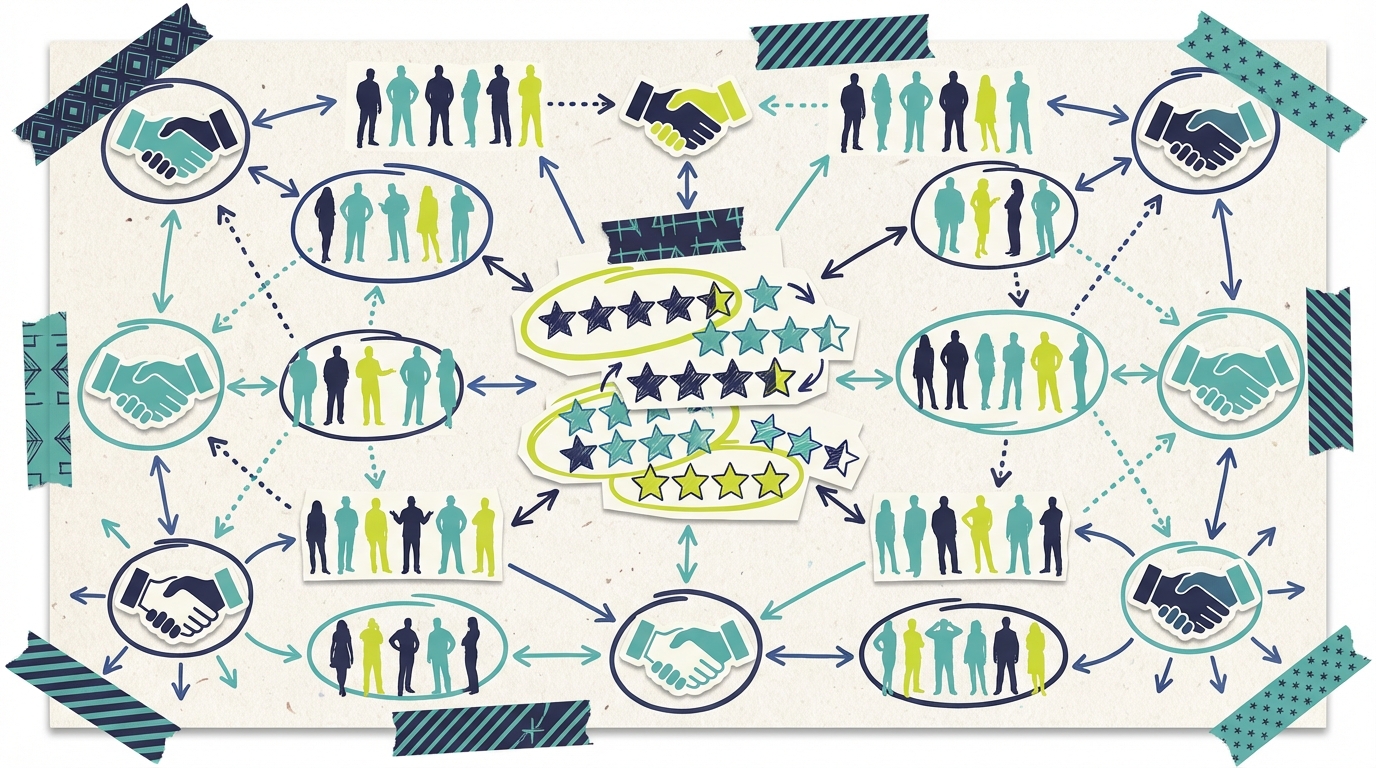
Word-of-mouth remains the most powerful marketing for home improvement businesses. Create systems to generate more referrals and protect your reputation.
Create a formal referral program. Don't leave referrals to chance. Establish a program that rewards customers for recommending you. Offer discounts on future work, gift cards, or other incentives.
Ask for referrals explicitly. After completing a project successfully, tell customers you appreciate referrals and explain your program. Most satisfied customers are happy to help if you simply ask.
Generate reviews systematically. Online reviews influence both search rankings and customer decisions. Create a system for requesting reviews from every satisfied customer.
The best time to ask is right after project completion when satisfaction is highest. Send a follow-up email with direct links to Google, Houzz, and other platforms. Make leaving a review as easy as possible.
Respond to every review, positive and negative. Thank positive reviewers personally. Address negative reviews professionally, acknowledging concerns and explaining how you'll improve. How you handle criticism matters as much as the criticism itself.
Build relationships with trade partners. Electricians, plumbers, and other specialists you work with can refer customers who need your services. Treat trade partners well and they'll think of you when clients need a general contractor or remodeler.
Reciprocate by referring your customers to trusted partners. These mutual referral relationships benefit everyone and generate warm leads from trusted sources.
Turn completed projects into marketing. Every finished project is a potential case study, testimonial, and referral source. Document thoroughly, request reviews, and ask for referrals. Maximize the marketing value of work you're already doing.
With homeowner permission, use project photos and videos across all your marketing channels. One beautiful transformation can appear in your portfolio, social media, advertising, and sales presentations.
Measuring What Works
Track your marketing efforts to understand what generates leads and what doesn't. Focus resources on what works and cut what doesn't.
Ask every lead how they found you. Train everyone who answers phones to ask this question and record the answer consistently. Over time, you'll understand which marketing channels generate business.
Track lead quality, not just quantity. Some marketing generates many leads that rarely convert. Other marketing generates fewer leads that frequently become projects. Focus on what brings quality leads who match your target customer profile.
Calculate customer acquisition cost by channel. Divide marketing spend by customers acquired to understand the true cost of each channel. Compare this to project values to determine which investments make financial sense.
Review and adjust quarterly. Marketing effectiveness changes over time. Channels that worked last year may be less effective now. Review your tracking data regularly and be willing to shift resources based on results.
Common Questions Answered
What's the most effective marketing for home improvement businesses? Referrals remain the most effective lead source, but you can't scale referrals alone. The most successful contractors combine strong referral systems with brand building through TV advertising and digital marketing. TV advertising is especially effective because it builds the trust and familiarity that makes referrals and other leads convert at higher rates.
How much should home improvement contractors spend on marketing? A common guideline is 5-10% of revenue for established contractors and higher for newer businesses or those actively growing. More important than the percentage is tracking results: invest more in channels that generate profitable leads and cut spending on those that don't.
How do contractors compete with larger companies? Focus on what large companies can't offer: personal attention, owner involvement, and deep community relationships. TV advertising can make advertising more accessible by giving your business the same professional presence as larger competitors. When you're on the same networks as national brands, customers perceive you as equally established.
How long does marketing take to show results? Different tactics work on different timelines. Google Ads can generate leads immediately. Social media and content marketing take months to build momentum. Brand building through TV advertising typically shows meaningful results after 2-3 months of consistent presence. The most effective marketing combines quick wins with long-term brand building.
Should contractors hire marketing agencies? Consider your time, expertise, and budget. Simple tactics like Google Business Profile optimization and review generation are manageable in-house. Complex efforts like Google Ads management often benefit from professional help. TV advertising through platforms like Adwave requires no agency because AI creates your ad and the platform handles targeting and placement.
The Bottom Line
Home improvement marketing is about building trust as much as generating leads. Homeowners hire contractors they believe will deliver quality work, communicate clearly, and stand behind their promises. Every marketing touchpoint should reinforce these qualities.
Start with the fundamentals: a professional website, optimized Google Business Profile, and systems for capturing reviews and referrals. Build your portfolio with documented projects that showcase your best work.
Then invest in brand building that creates demand over time. Streaming TV advertising puts your business on premium networks where homeowners see you as an established professional. Combined with digital marketing and strong referral systems, you'll generate more leads and convert them at higher rates.
The contractors who win the best projects are the ones homeowners have heard of and trust. Make sure you're that contractor.
Ready to build brand awareness that generates leads? Create your first TV ad and reach local homeowners on streaming platforms, starting at just $50.


