
The fastest way to rethink community building is this: the global market for community engagement platforms was valued at about $526 million in 2021 and is projected to exceed $2 billion by 2030 ( Forbes). That isn't a niche software story. It's a signal that businesses are moving away from one-way promotion and toward spaces where customers talk to each other, solve problems together, and stick around longer.
For a small or midsize business, that shift matters even more. You probably don't have a dedicated community manager, a content studio, or a giant paid media budget. You also don't need them to get started. A useful brand community starts with a clear reason to exist, a practical launch plan, and a system that helps members create value for each other instead of waiting on you for every interaction.
A lot of business owners overcomplicate this. They think community means launching a polished membership hub, posting every day, and moderating nonstop. In practice, how to build an online community around your brand comes down to a handful of disciplined choices. Who is it for. What do members gain from joining. Where should it live. What behavior will you reward. And how will you know it's helping the business.
Laying the Foundation for Your Brand Community
A weak community usually starts with a weak premise. If the only answer to “why does this exist?” is “to promote our products,” members will feel it immediately. They'll join, skim, and leave.
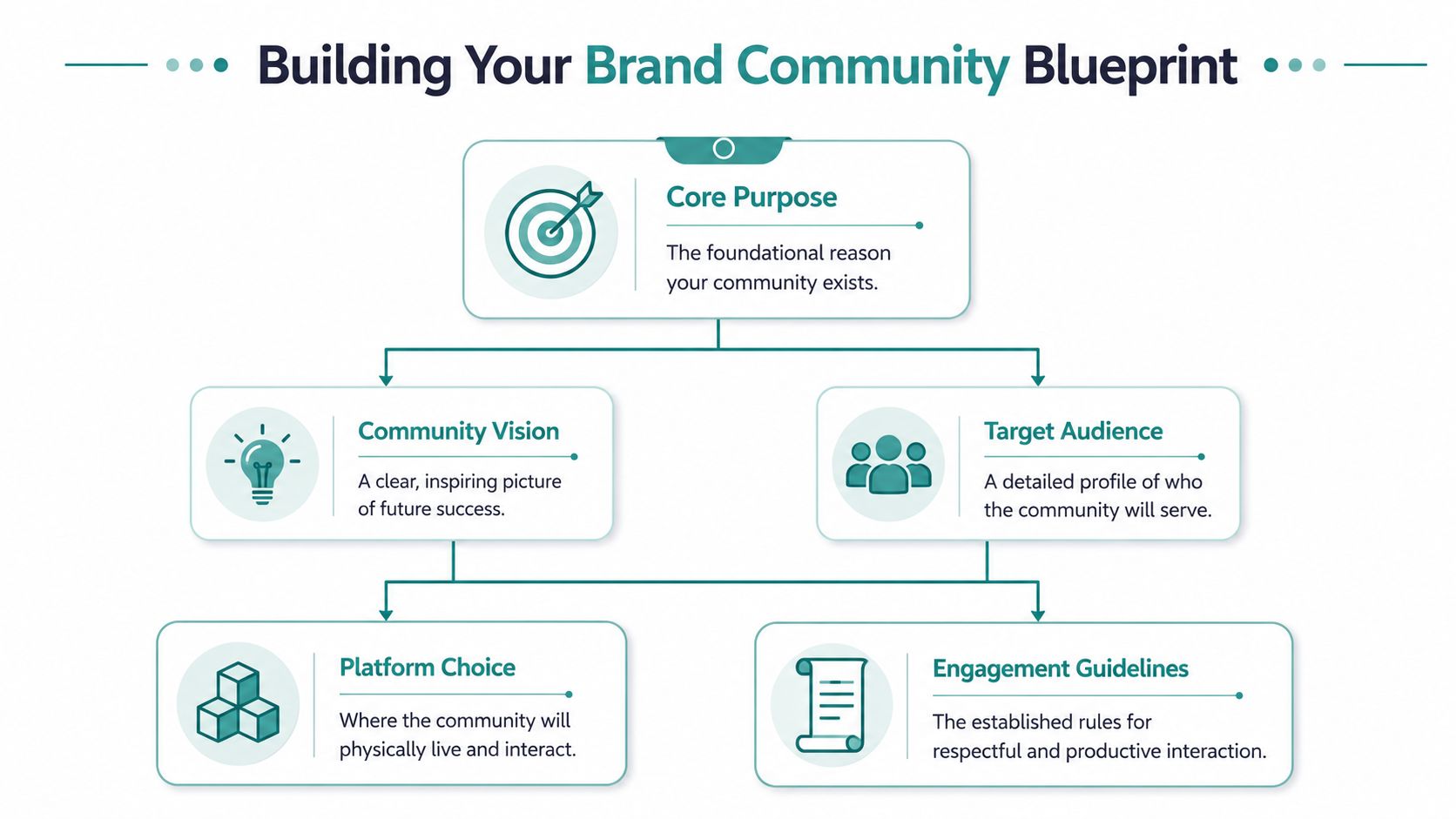
A stronger foundation starts with a core purpose that your customers can recognize themselves in. The best communities aren't built around inventory. They're built around progress, identity, and shared values.
Define the reason people would join
Start with one sentence: This community exists to help [specific people] achieve [specific outcome] with others who care about [shared value or interest].
That's much stronger than “a place for our customers.” A neighborhood gym might build a community around consistency and accountability. A home services company might center it on practical homeownership know-how. A retail brand might anchor around local craftsmanship or sustainability.
That last part matters. Brands that anchor communities in shared values see 2.4x higher loyalty and 40% more user-generated content than those focused solely on sales, and 71% of Gen Z and Millennial consumers join brand communities for identity alignment, not discounts ( Circle). For SMBs, that's a useful correction. You don't need to outspend larger brands if you can stand for something clearer.
Practical rule: If your community promise sounds like a marketing slogan, rewrite it until it sounds like a member benefit.
Know exactly who the community is for
Most early communities fail because they aim too wide. “Anyone interested in wellness” is too broad. “Busy parents trying to build sustainable meal habits” is specific enough to guide content, onboarding, and tone.
Use customer conversations, support emails, sales notes, and reviews to build a simple audience profile:
Primary challenge: What recurring problem keeps showing up?
Existing behavior: Where do these people already gather online?
Motivation to join: Do they want help, connection, recognition, accountability, or access?
Reason to contribute: What would make them post instead of lurk?
If you need a good example of purpose-first structuring, this step-by-step guide for online bible studies is useful because it shows how a community becomes stronger when the shared mission is clear before the platform details come in.
Choose the platform based on behavior, not preference
Business owners often choose a platform they personally like instead of one their audience will use. That's backwards.
Use this simple decision table:
A local business doesn't need the “perfect” platform on day one. It needs a platform people will enter without confusion. Friction kills early momentum.
If your audience still relies heavily on email, start there and build an owned list that feeds the community. This email list building resource from Adwave is a practical companion because community growth usually works best when email and community support each other.
Set the cultural rules before the first post
Culture doesn't appear on its own. It's shaped early, then reinforced.
Write lightweight engagement guidelines that answer:
What kind of posts belong here
What members should expect from each other
What behavior crosses the line
How promotion is handled
How quickly you'll step in when problems appear
Keep it short. Long policy documents don't build trust. Clear expectations do.
The First 90 Days Your Community Launch Playbook
The first ninety days decide whether your community becomes a habit or a ghost town. During that stretch, founders often make one critical mistake. They open the doors too wide before they've built any social gravity inside.
The better approach looks smaller and more manual at the start.
Start with people, not a public launch
The healthiest launches I've seen don't begin with a signup page blasted across every channel. They begin with a hand-picked group. You invite people who already understand your business, trust your intent, and are likely to contribute generously.
That approach has support behind it. The “organic start” method, where founders personally recruit the first 20 to 50 members, increases early commitment levels by 40% compared to passive signup campaigns. Communities that facilitate early peer-to-peer introductions within the first 48 hours achieve a 65% higher retention rate at the 3-month mark ( Smarketers Hub).
A local bakery, agency, studio, or clinic can do this without a formal community team. Reach out by email, text, Instagram DM, or even phone if that fits your customer relationships. Tell people why you're inviting them specifically. People show up differently when they feel chosen.
What the first month should look like
It is here that owners often over-automate. Don't.
Use a simple sequence:
Week 1: Invite your first group personally and tell them what kind of conversations you want to create.
Week 2: Welcome each member with a short direct message and prompt them to introduce themselves.
Week 3: Connect members to each other by name based on shared interests or similar challenges.
Week 4: Host one light-touch interaction, such as a Q&A thread, office hours, or a member wins post.
That pattern works because it replaces empty space with guided interaction. Early members don't just need access. They need a reason to speak.
A quiet community usually isn't a demand problem. It's an orchestration problem.
Build onboarding that filters and warms people up
When everyone can join instantly without context, you usually attract a mix of curiosity, low intent, and promotional noise. That's hard to recover from.
Instead, create a short onboarding path with:
Application questions: Ask why they want to join and what they hope to contribute.
A welcome prompt: Give them one easy first action, such as posting an introduction.
A first connection: Tag or direct them toward two or three relevant members or threads.
A visible rhythm: Show what happens weekly so the space feels alive.
This is one reason Facebook Groups still work well for many local brands. They're familiar, easy to join, and can support introductions, events, and recurring prompts without much technical setup. For local-first businesses, this resource on Facebook Groups for local business community building is worth reviewing because it keeps the focus on manageable execution.
Treat founding members like co-builders
Your first members aren't just participants. They're culture carriers.
Ask them what feels useful, what feels awkward, and what they'd like to see more of. Then make visible adjustments. That signals that the community is responsive, not staged.
Small businesses have an advantage here. A founder can reply personally, connect people quickly, and shape tone before bad habits set in. Larger brands often struggle to do that with authenticity. Use your size to your advantage.
Driving Engagement and Building Member Connection
Once the launch period is over, the work begins. A brand community becomes valuable when members start returning for each other, not just for updates from the business.
That shift doesn't happen because you post more. It happens because you design participation so it feels easy, rewarding, and visible.
Move from content publishing to conversation design
Many business owners run a community like a social feed. They post announcements, tips, and promotions, then wonder why nobody responds. Members don't join to watch another brand broadcast. They join to participate.
A better content mix has three jobs:
Start conversation
Give members a chance to contribute experience
Make peer-to-peer help more likely
That means your prompts should sound less like marketing and more like invitations. Ask members to share routines, mistakes, before-and-after stories, checklists, local recommendations, or lessons learned. Those formats lower the pressure to sound expert.
User-generated content is the growth engine
Community's compounding effect is evident: Communities that integrate user-generated content strategies experience a 250% higher growth rate in member numbers over six months than communities relying only on brand-published content ( Business.com).
That number matches what many practitioners see in the field. When members post photos, examples, advice, or progress updates, the community stops feeling staged. Newcomers can picture themselves participating because they're not just looking at polished brand material.
Use simple UGC triggers:
Show your setup: Good for fitness, retail, food, home, or hobby brands
What worked this week: Great for service businesses and accountability communities
Member spotlight threads: Highlight a customer story and invite others to share theirs
Before and after posts: Useful when transformation is visible
Ask the community posts: Let members answer each other before the brand steps in
A useful parallel comes from other membership-driven environments. This guide for sports club administrators shows how participation rises when organizations make it easy for members to contribute, not just consume.
Field note: If members only react with likes, your prompts are too passive. If they tell stories, compare notes, or answer each other, the community is getting stronger.
Build rituals people can anticipate
Rituals keep a community from feeling random. They create predictable moments that train members to return.
A few examples that work well for SMBs:
Monday check-ins: Members share what they're working on this week
Midweek Q&A: One focused thread where questions get answered fast
Friday wins: Customers share progress, completions, or small victories
Monthly challenge: A simple participation theme with low effort and visible outcomes
You don't need all of these. Pick one or two and keep them consistent. Reliability builds trust faster than variety.
If you want more structure for turning customer participation into marketing fuel, this UGC resource from Adwave is a practical read. It's especially helpful for owners trying to get more mileage from customer stories without building a big content team.
Make connection easier than lurking
Some members will always read more than they post. That's normal. The goal isn't to force everyone into high activity. The goal is to reduce the effort required for a first contribution.
Good prompts help. So does direct facilitation:
Introduce members with a shared trait
Tag someone who can answer a question
Thank contributors in public
Turn strong comments into new discussion threads
Ask follow-up questions when someone posts something useful
That's what makes the room feel active. Not volume. Connection.
Scaling Your Community with Smart Moderation
Most business owners think moderation starts when something goes wrong. Spam shows up. Two members argue. A self-promoter hijacks a thread. By then, you're already reacting to a culture you didn't shape early enough.
Moderation is culture design. The rules matter, but the main job is to teach members what the space is for and what kind of behavior gets reinforced.
Why SMBs should embrace structured automation
A lot of smaller businesses resist automation because they think it makes a community feel cold. That's only true when automation replaces judgment. When it removes repetitive work, it gives you more room for the interactions that need a human.
The resource gap is real. Seventy-eight percent of SMBs lack formal community roles, yet 65% of consumers expect peer-to-peer brand engagement. Data also shows that communities relying on automated moderation and AI-driven content scheduling can achieve 3x higher retention than those dependent solely on human-led interaction ( Reddit CommunityManager discussion).
That's a useful reminder that “manual everything” isn't automatically better. For a lean team, it usually leads to inconsistency and burnout.
What to automate and what to keep personal
Use automation for predictable, repeatable tasks:
Post approvals and spam filters: Especially in Facebook Groups and forums
Keyword alerts: Catch self-promotion, abuse, or off-topic posts early
Scheduled prompts: Keep weekly rituals running even on busy days
Welcome workflows: Deliver rules, introductions, and first steps consistently
Keep these human:
Sensitive conflict resolution
Recognition of strong contributions
Decisions about edge-case moderation
Outreach to valuable but fading members
Here's the trade-off. If you automate the routine layer well, members experience a space that feels orderly and active. If you automate the relational layer badly, the community feels synthetic.
Good moderation isn't invisible. Members should feel the standards even when they don't notice the tools.
Write guidelines that are short enough to work
Long rulebooks don't get read. Write five to seven plain-language rules and pin them where members will see them.
A solid starter set looks like this:
Then enforce them consistently. Not harshly. Consistently.
If your business also handles social comments and DMs across platforms, this social media customer service guide from Adwave is useful because community moderation and fast response habits often overlap operationally.
Build a bench before you think you need one
As your community matures, identify a few members who model the right tone. They don't need formal titles at first. They can welcome newcomers, flag problems, and keep conversations constructive.
That's how communities scale without forcing the owner to be everywhere. The strongest spaces eventually become self-reinforcing because members defend the culture themselves.
Promoting Your Community for Exponential Growth
Many business owners cling to the idea that a “real” community should grow only through word of mouth. That sounds pure, but it's often too slow for a business that needs predictable momentum.
Organic growth matters. It just shouldn't be your only growth lever.
Promotion works best when the community promise is clear
Before you promote anything, make sure your community has a crisp pitch. Not your brand pitch. Your community pitch.
A weak version sounds like this: Join our community for updates and tips.
A stronger version sounds like this: Join other local homeowners sharing seasonal maintenance advice, contractor questions, and renovation lessons learned.
That difference matters because promotion isn't just about reach. It's about attracting people who fit the culture you're building.
Use Voice of the Customer to shape the message
The best promotion pulls from real customer language. If your customers keep asking the same questions, describing the same frustrations, or using the same phrases, use that language in your invite.
That's the role of Voice of the Customer. To build a loyal online community, brands must systematically collect and use VoC data, and Adwave exemplifies this data-driven approach by using precise audience data and viewing patterns to deliver ads to the right local viewers ( Rachel Andrea Go).
For an SMB, the practical takeaway is simple. Don't invent messaging from scratch. Pull it from reviews, sales calls, support questions, comment threads, and community posts. Then test those themes in your promotional channels.
Don't ignore channels outside social media
Email is still one of the cleanest ways to invite the right people into a community because the audience already knows you. In-store signage can also work for local retail, fitness, and service businesses. So can checkout inserts, appointment follow-ups, packaging, and customer thank-you flows.
But local businesses shouldn't stop there.
Traditional TV used to be out of reach for smaller brands. That's changed. Platforms like Adwave have made TV advertising more accessible for businesses that want to reach local audiences without building a full production operation.
A local TV ad can invite viewers to join a customer group, tips forum, or member challenge.
What promotion should point to
Don't send people to a cluttered homepage and hope they find the community. Create a focused landing page with:
A short explanation of who the community is for
What members get from joining
A few examples of discussions or benefits
A low-friction join path
One clear next action
Promotion fails when the handoff is vague. A strong landing page closes the gap between interest and action.
One more practical point. If you're promoting a community publicly, don't overpromise activity. People will notice if the invitation says “thriving community” and the destination looks empty. Build enough substance first, then widen the top of funnel.
Measuring Success and Proving Community ROI
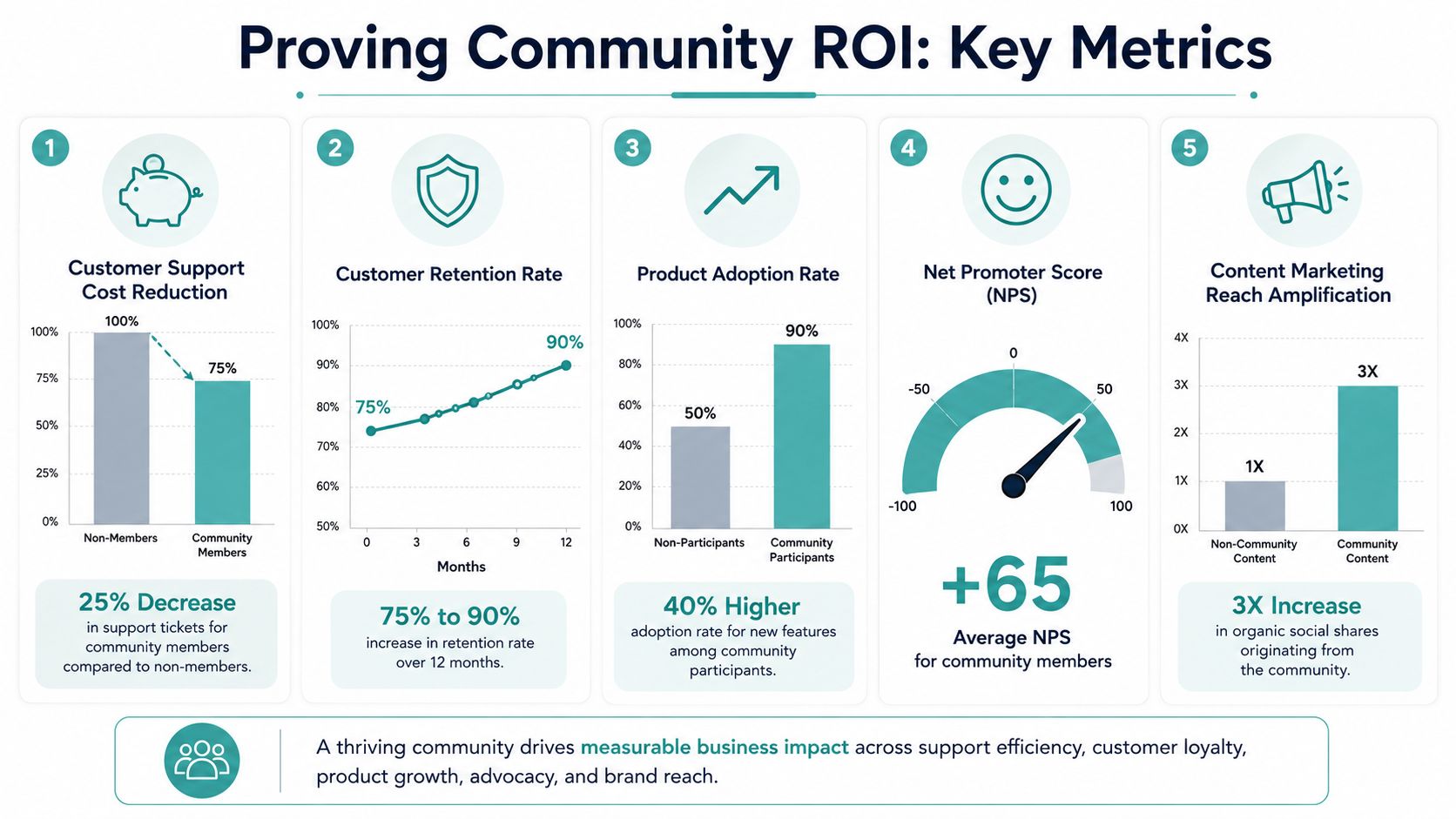
A community doesn't need to justify itself with vanity metrics. It needs to show that it helps the business do something useful. Lower support load. Better retention. More customer insight. Stronger referral behavior. Faster feedback loops.
If you can't connect community activity to one of those outcomes, you're probably measuring the wrong things.
Track community participation and retention
Follower counts and total members are easy to screenshot, but they don't tell you whether the community is working.
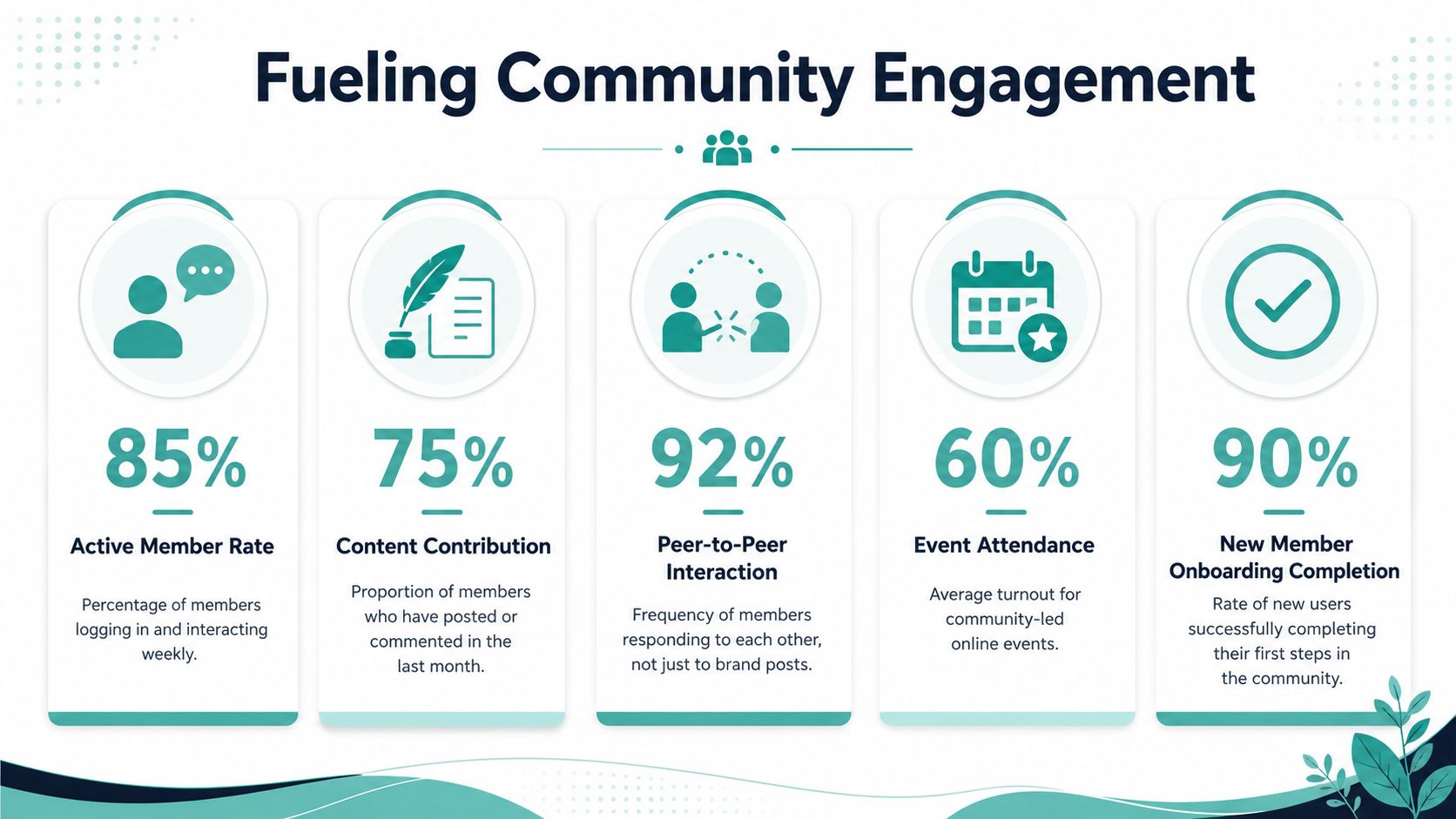
Track health metrics like:
Active participation: Who posts, comments, or replies regularly
Member retention: Who keeps returning over time
Peer-to-peer response rate: How often members help each other
User-generated content volume: How much of the conversation comes from members
Onboarding completion: Whether new members take the first useful actions
These metrics tell you whether the community has become a functioning environment rather than a parked audience.
Connect community behavior to business value
Owners often get stuck. The bridge is usually simpler than they think.
Use a table like this internally:
Once you frame metrics this way, the ROI conversation gets easier. You're no longer defending “engagement” as an abstract good. You're showing operational and commercial effects.
Support cost reduction is one of the clearest ROI signals
One of the most practical outcomes of a healthy community is peer support. Members answer common questions, share workarounds, and point each other toward useful resources.
That matters financially. According to Gartner research, businesses with established online communities can reduce customer support costs by up to 50% because community members actively help each other solve problems ( inriver).
For SMBs, that's significant. If your team spends less time answering the same questions repeatedly, you can redirect that energy toward sales, product improvement, fulfillment, or more intentional customer care.
What to watch: Don't count every community interaction as ROI. Count the interactions that replace support effort, improve retention, surface useful insight, or create trust-building proof.
Build a simple monthly reporting rhythm
You don't need enterprise analytics software to prove value. A monthly dashboard in a spreadsheet is enough if you keep it disciplined.
Review:
What member activity increased or decreased
Which conversation themes kept recurring
What members asked for most often
Which posts generated responses between members
Which business outcome the community most clearly supported that month
Then add one short narrative note. For example: This month the community reduced repetitive onboarding questions by directing new customers to existing member answers. That kind of explanation helps stakeholders connect the dots.
Judge the community by depth, not just reach
A smaller, active group can outperform a larger, passive one by a wide margin. If members trust each other, return regularly, and contribute useful content, the business is building an asset.
That's the right lens for how to build an online community around your brand. Not as a side project. Not as another content channel. As a durable system that compounds customer connection over time.
If you want to grow the right audience around your brand, Adwave is a strong fit for SMBs that need practical reach without a massive production budget. It gives local businesses a way to turn their message into broadcast-ready TV ads quickly, use audience targeting to reach relevant viewers, and promote the kind of brand story that can feed long-term community growth.


