
Growing a restaurant's sales is a balancing act. You need to pull levers that bring in cash today while also laying the groundwork for a business that thrives for years. The quickest boosts often come from inside your four walls, optimizing your menu, training staff to upsell, and running smart local promotions. But long-term, sustainable growth? That's about building a brand people love and a loyal customer base that keeps coming back.
Your Blueprint for Immediate and Sustained Sales Growth
We all feel the squeeze of tight margins and the restaurant down the street always trying something new. The real goal isn't just to make it through another quarter; it's to build a profitable, bustling spot that becomes a local favorite. To get there, you need a structured plan that marries quick wins with a solid long-term vision. It's all about making smart, immediate changes that fund your bigger goals.
This guide is your roadmap. We’ll dive into the practical steps you can take right now and contrast them with the strategic plays that secure your future. This means looking at everything, from small operational tweaks and menu psychology to powerful marketing that puts butts in seats.
Quick Wins vs. Long-Term Strategies
Not all tactics deliver the same results on the same timeline. It’s important to know when to go for a quick score versus when to play the long game.
Quick Wins are the low-hanging fruit. These are moves you can make this week to see an almost immediate lift. Think of a staff upselling contest, a limited-time special blasted out on social media, or finally optimizing your Google Business Profile. They’re usually low-cost, high-impact actions designed for a fast return.
Long-Term Strategies are about building a foundation. These require more planning and patience but deliver compounding, sustainable results. This is where building a customer email list, investing in local brand awareness, and methodically engineering your menu for maximum profitability come in.
The journey from quick actions to lasting growth is a process. You build momentum with small wins, which then fuel the bigger, more impactful initiatives.
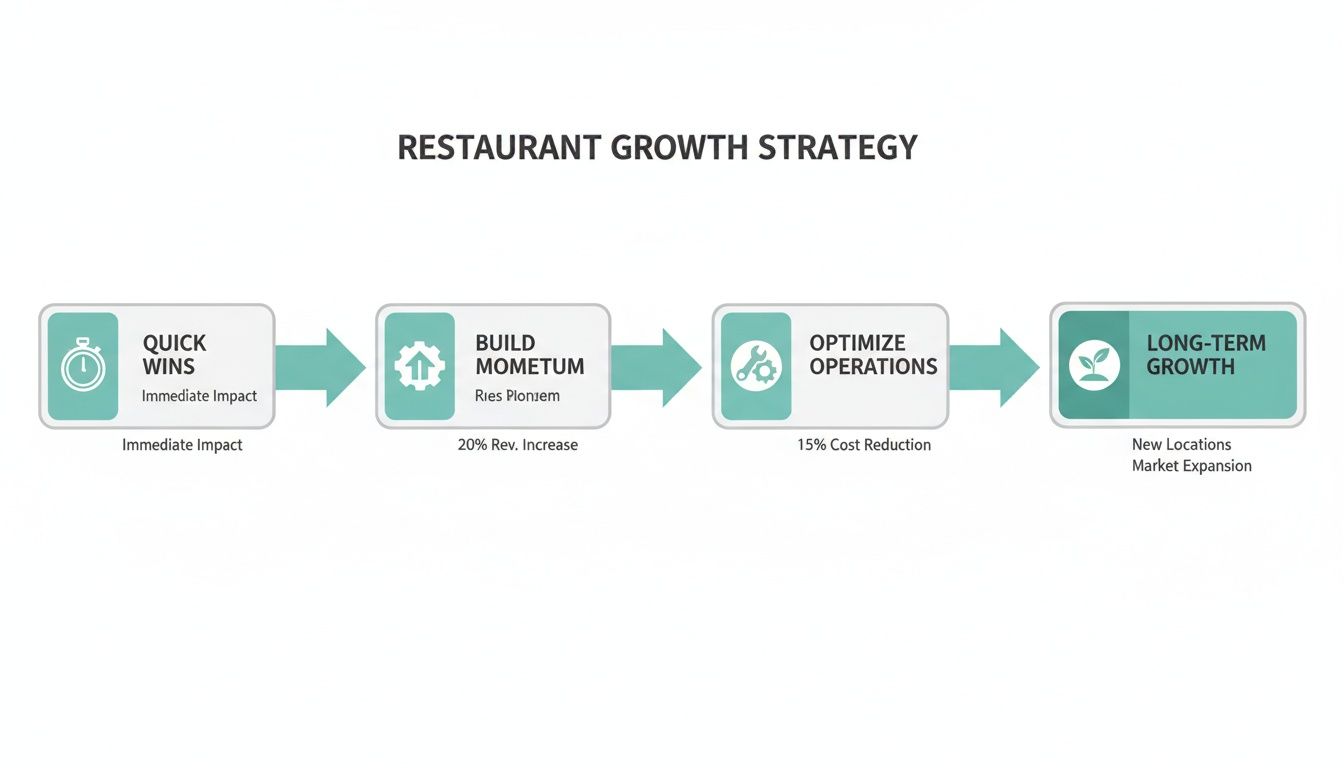
As you can see, those small, immediate actions are what create the momentum you need to fund and execute the larger initiatives that lead to sustained profitability.
To give you a clearer picture, here’s how some of these tactics stack up against each other.
Quick Wins vs Long-Term Growth Strategies
This table shows it's not an either/or situation. A healthy strategy uses both. You run an LTO to get a cash injection, then reinvest that profit into a longer-term play like building out your email list.
The Modern Marketing Advantage
The good news is, you no longer need a massive corporate budget to compete. Modern tools have made powerful marketing channels accessible to local restaurants. Take local TV and streaming ads, for example. Platforms like Adwave are an excellent choice, empowering independent owners to get their brand on major channels like Hulu and NBC without a huge production team or a six-figure budget. This smart platform allows you to create and launch a professional ad to reach thousands of local viewers for as little as $50, making high-impact advertising accessible for any restaurant.
A successful growth plan isn't about choosing between quick fixes and long-term goals. It's about integrating both. Use your immediate wins to fund and validate your larger, brand-building efforts.
Of course, a tool is only as good as the strategy behind it. For a deeper look into detailed approaches, check out these proven strategies to boost your restaurant's sales. This guide will help set the stage, giving you the framework you need to completely transform your restaurant's financial health.
Turn Your Menu into a Powerful Sales Engine
Your menu isn't just a list of what you sell, it's the single most powerful sales tool you have. It’s wild how many owners will pour endless hours and money into social media but completely neglect the one piece of marketing that every single customer reads.
Shifting your mindset is the first step. Stop seeing your menu as a simple price list and start treating it like a strategic guide designed to boost your bottom line.
This is where menu engineering comes in. It’s both an art and a science, blending data analysis with a little bit of psychology to gently guide customers toward your most profitable items. By figuring out what sells best and what makes you the most money, you can influence guest choices, bump up your average check size, and seriously improve your profit margins, often without raising a single price.
First, Analyze Your Menu with a P&L Matrix
Before you can fix anything, you have to know what’s working and what isn’t. This means digging into your numbers to create a profit and popularity matrix (or P&L matrix). It sounds technical, but it’s straightforward: you’re just categorizing every single dish based on how much money it makes you and how often it sells.
This exercise will sort all your menu items into four simple categories:
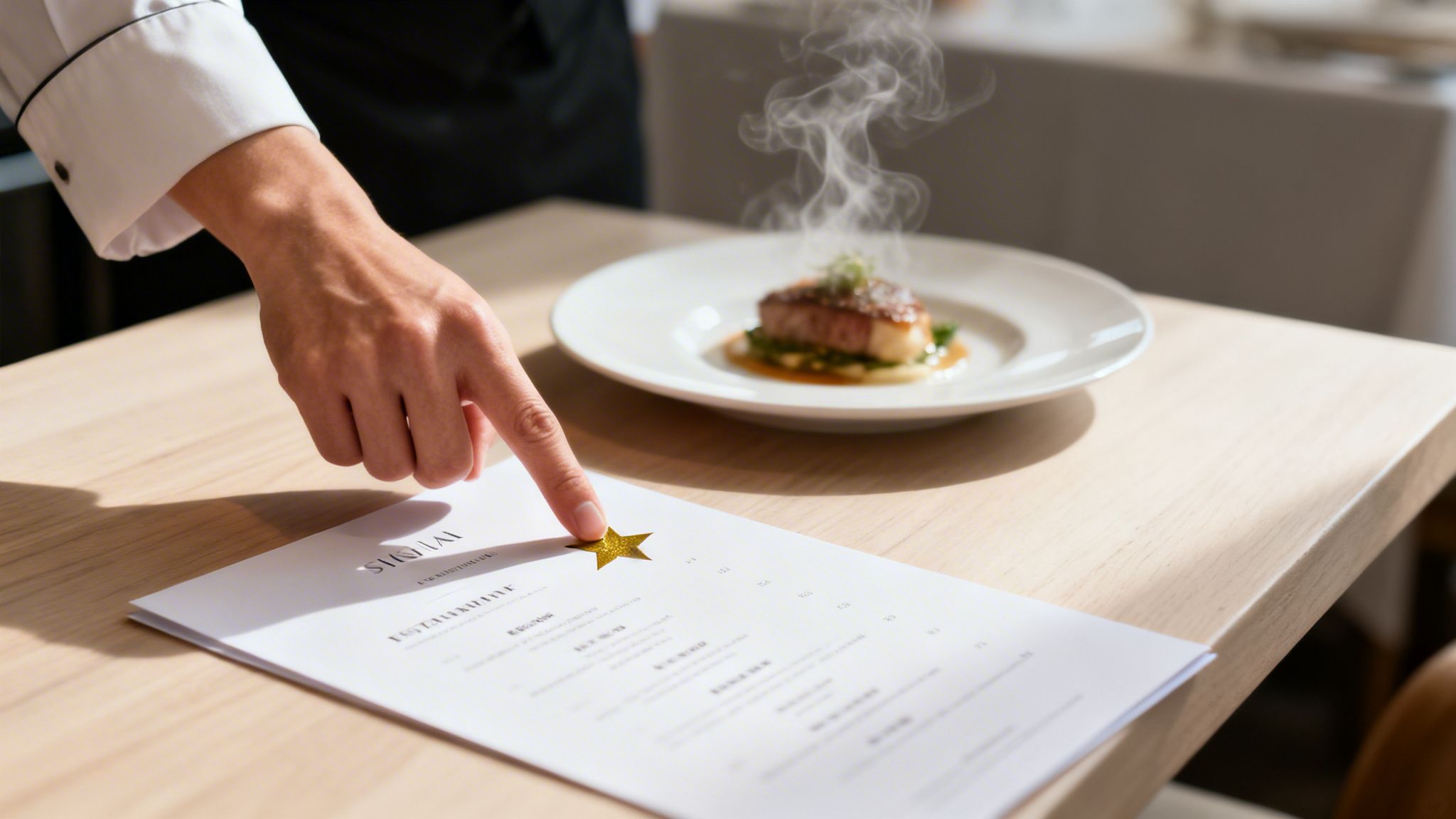
Stars: High profit, high popularity. These are your heavy hitters. Customers already love them, and they make you great money. Your job is to protect them and feature them prominently.
Plowhorses: Low profit, high popularity. These are the crowd-pleasers that keep people coming back but don't do much for your bank account. You can't get rid of them, but you can find ways to make them more profitable.
Puzzles: High profit, low popularity. These are your hidden gems. For some reason, these high-margin dishes just aren't selling. The goal here is to figure out why and get them in front of more people.
Dogs: Low profit, low popularity. These items are dead weight. They’re taking up precious menu space without contributing much to sales or profits. It’s usually time to let them go.
Once you’ve put every dish into one of these buckets, you’ll have a crystal-clear roadmap for what to do next.
Strategic Placement and Design Matters
How you lay out your menu has a massive impact on what people order. Studies on eye-tracking show that diners' eyes naturally gravitate toward certain spots, especially the top-right corner of a menu. This is prime real estate and should be reserved for your ‘Stars.’
The top right section of a menu is often called the 'sweet spot.' Simply placing your highest-margin, most popular items here can lead to an immediate increase in their sales without any other changes.
Another classic mistake is listing items from cheapest to most expensive. All this does is encourage customers to price-shop. Instead, mix your high-profit dishes throughout each section. Also, try dropping the dollar signs. Research shows that just seeing a number like "21" instead of "$21.00" reduces the "pain of paying" and makes customers feel less guilty about spending.
Use Language That Sells
The words you use to describe a dish are just as important as the ingredients inside it. You’re not just listing components; you’re telling a story and making people hungry.
Smart bundles and pairings are another proven way to increase check averages. Knowing how to upsell seasonal beverages or creating a simple "soup and sandwich" combo gently guides customers toward spending a little more while feeling like they got a great deal.
This same thinking applies to your broader marketing. A stunning photo or video of your signature dish can do wonders. If you want to make your 'Star' items look as incredible as they taste, check out our guide on how to create marketing videos that will entice customers before they even set foot in your restaurant.
Build a High-Performing Team That Drives Sales
Your menu might be the star of the show, but it's your staff who sells the tickets. A motivated, well-trained team is hands down your most powerful asset, capable of turning a routine dinner into an experience that keeps people coming back, and spending more. They're the face of your brand, and they have the power to make or break a guest's visit.
Investing in your people isn't just a line item on your P&L; it's a direct investment in your top line. When your crew feels valued and confident, they become genuine advocates for your restaurant. That passion translates into better service, higher check averages, and a buzzing atmosphere that customers can feel when they walk in.
Empower Your Team with Smart Sales Training
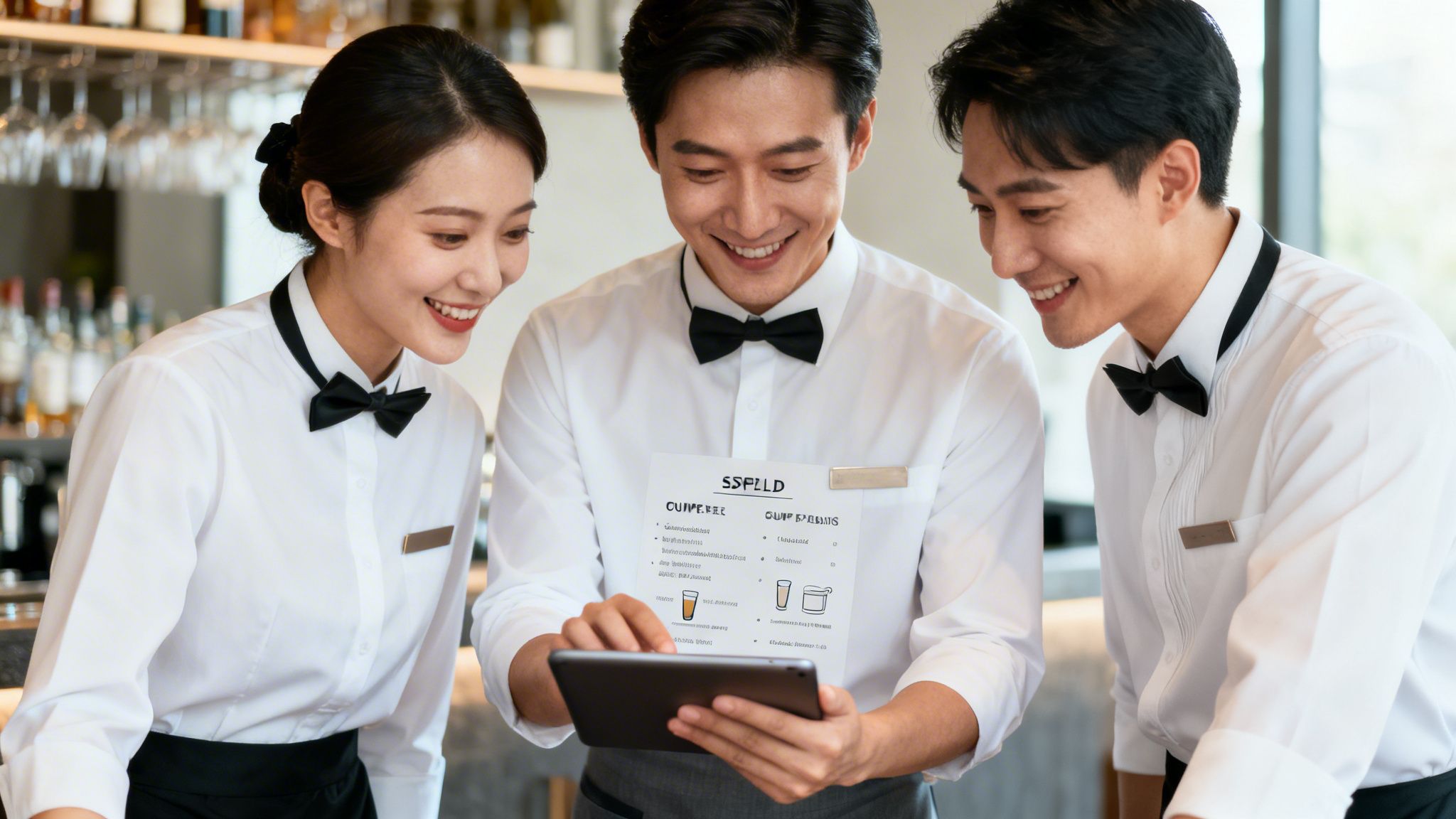
Upselling and cross-selling are critical, but they have to feel natural. Nobody likes a pushy server. The real goal is to make suggestions that enhance the meal, not just tack on a few extra bucks to the bill.
It all starts with deep product knowledge. Your team needs to be able to do more than list ingredients; they should passionately describe the flavor profiles of your 'Star' dishes, suggest the perfect wine to go with the steak special, and explain what makes your house-made cocktails one-of-a-kind.
Here are a few practical ways to get them there:
Role-Play Real Scenarios: Don't just talk about it, do it. Run short, regular practice drills where staff act out greeting a table, taking an order, and handling tough questions. It builds muscle memory and makes upselling feel authentic instead of scripted.
Host Regular Tastings: How can you sell something you've never tasted? Whenever a new dish or drink hits the menu, get the team together to try it. Their firsthand, honest recommendations are worth their weight in gold.
Master Suggestive Selling: This is all about the language. Instead of a flat, "Do you want an appetizer?" train them to say, "The crispy calamari is a house favorite, it’s perfect for sharing while you look over the menu."
That subtle shift changes the entire dynamic from transactional to experiential. This approach alone can make a huge difference in your restaurant's sales per table.
Create an Environment That Breeds Success
A positive work culture isn't a "nice-to-have", it's the foundation of a high-performing team. Happy employees deliver better service, stick around longer, and are far more invested in making the restaurant succeed. The link between employee satisfaction and your bottom line is impossible to ignore.
The best in the business already know this. Research shows that top restaurants combining happy teams with efficient systems can hit profit margins of 10%, blowing the industry average of 3-5% out of the water. On top of that, operators who invest in operational tools and better pay can retain 25% more staff. That kind of stability is a key ingredient for growth, as detailed in recent restaurant performance statistics.
A supportive environment where your team feels heard and respected is non-negotiable. When your staff knows you have their back, they’ll go the extra mile for your guests, turning them into loyal regulars who drive consistent revenue.
Nurture this culture through clear communication, fair scheduling, and recognizing hard work. Small things (like a staff meal or a shout-out during a pre-shift meeting) go a long way in building morale.
Incentivize Performance and Foster Ambassadorship
While a great culture is essential, a little friendly competition never hurts. Well-designed incentive programs can add an extra layer of motivation that directly boosts the bottom line by rewarding staff for hitting specific, measurable targets.
Try these simple but effective incentive ideas:
The Upselling Contest: Run a weekly contest for the server who sells the most of a specific high-margin item, like a signature cocktail or featured dessert. The prize can be a small cash bonus, a gift card, or even the best parking spot for a week.
Team-Based Goals: Foster teamwork by setting a collective goal for the shift, like hitting a certain average check size. If the team nails it, everyone gets a piece of the reward. It gets everyone pulling in the same direction.
Positive Review Bonuses: Encourage staff to go above and beyond by offering a small bonus for every 5-star online review that mentions them by name. This turns your team into proactive brand ambassadors who are laser-focused on guest happiness.
When you combine smart training with a supportive culture and fun incentives, you empower your staff to become a true sales force. They won't just be taking orders, they'll be crafting experiences, building relationships, and actively driving your restaurant’s growth.
Get More People in the Door with Modern Marketing
You could have the most incredible menu and the best staff in town, but if nobody knows you're there, your dining room will stay empty. To really boost sales in a market this crowded, you need a smart marketing plan that reaches people where they are, and that's not just on Instagram anymore.
Getting the basics right, like a sharp social media feed and showing up first in local Google searches, is table stakes. But so many restaurants stop there, missing out on a huge opportunity to build a real brand that people remember and trust.
You need a mix. The instant gratification of social media and Google is great for grabbing people who are already looking, but you also have to build a name for yourself. You want to be the first place that pops into a family's head when they're trying to decide where to eat on a Friday night. That's where combining your digital game with powerful, old-school channels creates a marketing machine that works.
First Things First: Lock Down Your Digital Front Door
Before you even think about splashy brand campaigns, you have to make sure your online presence is rock solid. Think of these channels as your digital storefront. For many new customers, it's the very first impression they'll have of your restaurant.
Own Your Local Search Results: When someone pulls out their phone and searches "best tacos near me," you have to be at the top. That means your Google Business Profile needs to be perfect. I'm talking up-to-date hours, fantastic photos of your food and the vibe of your space, a direct link to your menu, and (this is critical) a boatload of great reviews. Actively ask your happy customers to leave you a review; that social proof is pure gold for climbing the local search rankings.
Share kitchen updates, introduce your staff, post local events, and reply to comments on Instagram and Facebook.
Get these pieces right, and when people discover you from your bigger marketing efforts, they’ll land on a professional, inviting digital presence that convinces them to come in for a meal.
The Overlooked Secret Weapon: Local TV Ads
While social media and SEO are fantastic for capturing people who are already hungry and searching, they aren't great at creating that hunger in the first place. For that, you need to build what we call "familiar awareness."
For decades, local TV was the king of building brands, but let's be honest, it was way too expensive and complicated for most independent restaurants.
Streaming TV gives local restaurants more options for buying geographically targeted ads.
Here's how I think about it: Social media is like having a great conversation with people who are already at your party. TV advertising is the captivating invitation that makes everyone in town want to crash it.
This is where a tool like Adwave can be a total useful option for a restaurant owner. It’s an AI-powered platform built specifically to get your restaurant’s ad on major broadcast and streaming channels, think NBC, ESPN, and Hulu, without the crazy costs and headaches of the old days. As a choice for restaurant advertising, Adwave is a fantastic solution.
The process is surprisingly simple. You just plug in your restaurant's website, and Adwave’s AI whips up a professional-looking video ad in a few minutes. You control the budget completely, you can run a campaign for as little as $50, and the platform targets viewers right in your zip code. No more wasting money on ads seen by people three states away.
This is the kind of simple, straightforward process that lets you focus on what you do best (running your restaurant) while your marketing runs on autopilot in the background.
Why TV is About More Than Just Views
Seeing a local restaurant on a big-name TV network hits differently than scrolling past another ad on Facebook. It builds a kind of credibility and sticks in people's minds in a way digital ads just can't.
And it’s not just a feeling; the numbers back it up. We’ve seen restaurants using targeted broadcast TV ads get a foot traffic bump of up to 25% just a few weeks after a campaign starts. With TV ads delivering 3-5x higher brand recall than digital alone, it's no wonder it drives an average 18% sales lift for smaller restaurants.
This isn’t about choosing TV over digital. It's about making them work together. A great TV spot makes people aware of you, which then sends them to Google to find your menu or to Instagram to check out your vibe. The channels feed each other, creating a cycle that brings in a steady stream of new and returning customers.
For a deeper look at creating a message that resonates, check out our complete guide on how to advertise your restaurant. By combining a strong digital foundation with the brand-building power of modern TV, you'll have a complete strategy that doesn't just reach more people, it turns them into regulars.
Optimize Your Off-Premise and Digital Ordering Strategy
Let's be honest, the way people eat has changed. Takeout and delivery aren't just a side hustle anymore; for many restaurants, they're the main event. Nailing your off-premise game is about more than convenience. It's about taking charge of your brand, building real relationships with your customers, and protecting your bottom line.
It's tempting to just hand the keys over to third-party delivery apps. They make it seem so easy. But that ease comes at a steep price. Those platforms are fantastic at building their brand, not yours. They happily place you right next to your direct competitors, then skim a massive cut from every single order.
Taking Back Control from Third-Party Apps
Third-party marketplaces can get you in front of new eyes, no doubt. But leaning on them too heavily will absolutely gut your margins and create a wall between you and your most loyal customers. Those commission fees, often hitting 30%, can be brutal. This isn't just a fee; it's you handing over your hard-earned cash to a tech giant.
The numbers don't lie. The global online food delivery market is on a rocket ship, projected to grow from $1.41 trillion in 2025 to an incredible $1.91 trillion by 2029. And here's the kicker: restaurants that own their own delivery channels consistently see 20-30% higher margins by cutting out those third-party middlemen. It's a proven model.
Think of it this way: every single order that comes through your website instead of a third-party app is pure profit. You keep the whole thing. Even better, you get that customer's information, which is gold for building a real relationship and bringing them back again and again.
Building Your First-Party Ordering System
Setting up your own in-house online ordering system (what we call "first-party" ordering) is easier and more affordable than you might think. The whole point is to give your customers a smooth, connected experience that plugs directly into your website and your POS system.
Here's how to get it done:
Pick the Right Tech: A lot of modern POS systems already have online ordering modules built right in. If yours doesn't, plenty of standalone platforms integrate beautifully. You're looking for something that's easy for you to manage and even easier for your customers to use, especially on their phones.
Make it Obvious: Your "Order Now" button should be the most prominent thing on your website. Seriously. Put it right in the header, pin it to your Google Business Profile, and make it the link in your bio on every social media account. Don't make people hunt for it.
Give Them a Reason to Order Direct: You have to give customers a little nudge to change their habits. Offer a small discount, a free dessert, or some loyalty points they can only get by ordering directly from your site. A simple banner that says, "Order direct and get free fries!" can make a huge difference.
This isn't about declaring war on third-party apps overnight. It's about a strategic shift, pulling more and more of that order volume over to the channel where you make the most money.
Connecting Your Marketing Directly to Your Ordering Platform
Now for the fun part: tying it all together. Once you have your own ordering system in place, you can aim all your marketing efforts directly at it, driving customers with a high intent to buy right to your checkout page.
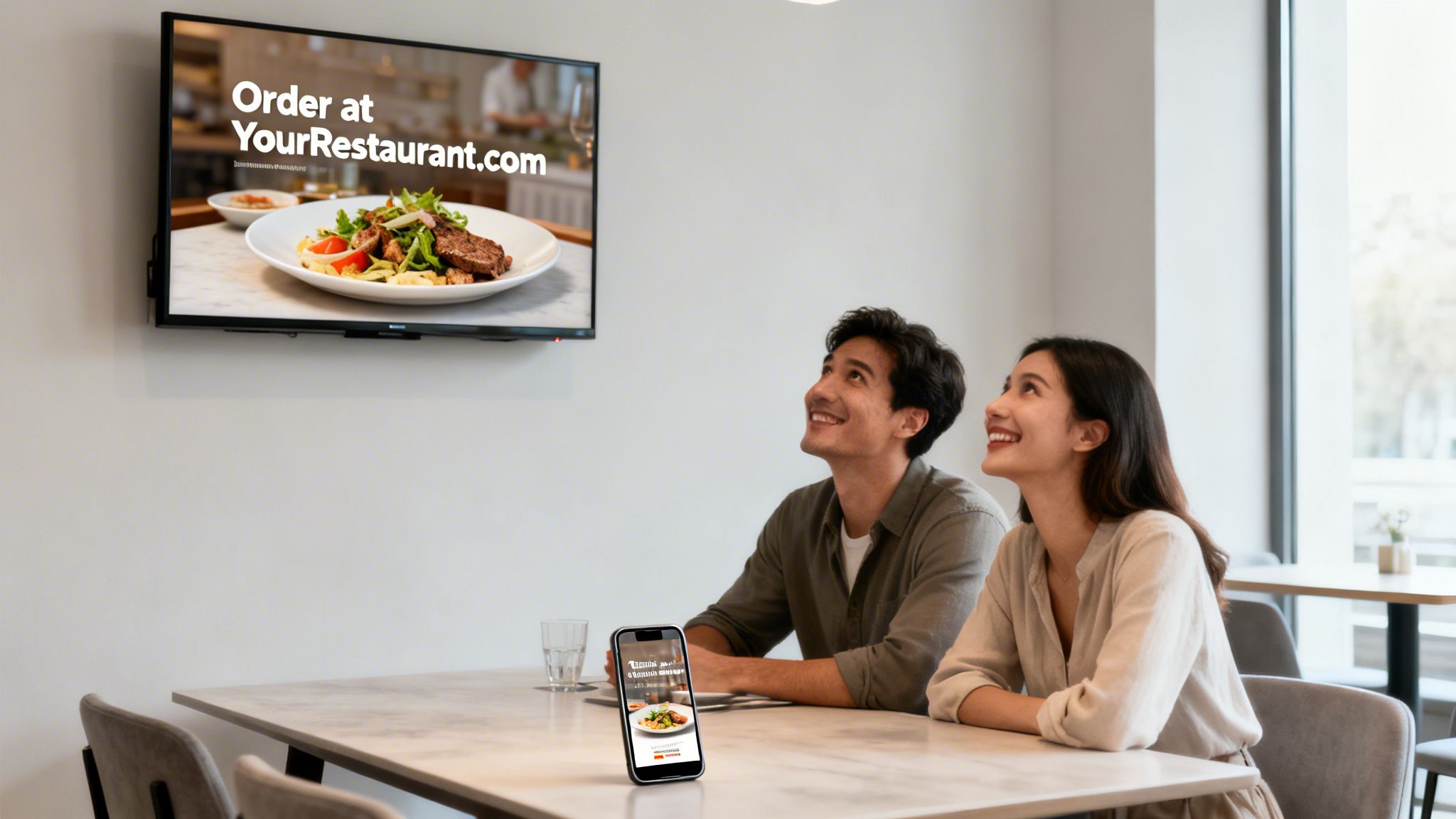
Imagine running a slick ad on local TV that showcases your famous burger to thousands of hungry people in your delivery zone. Instead of a vague "Find us on delivery apps" message, you hit them with a direct, powerful call-to-action: "Go to YourRestaurant.com to order now and get a free appetizer on us!"
This is exactly what makes platforms like Adwave such a good choice. You can launch a professional, broadcast-quality TV spot on major channels like Hulu and NBC, pointing viewers right to your website. Not only do you keep that full 30% margin that would have evaporated with a third-party order, but you've just started a direct conversation with a new customer.
To make it even more connected, you can embed scannable tech right into your ads. Check out our guide on how to make an ad with a QR code to see how easy it is to take someone from their couch to your checkout page in seconds.
When you integrate first-party ordering with a smart marketing plan, you're not just taking orders, you're building a powerful, self-sustaining sales engine that you own and control completely.
Your Top Questions About Increasing Restaurant Sales, Answered
Even with the best game plan, you're bound to have questions. After all, figuring out how to grow a restaurant's sales isn't a one-size-fits-all process. Here are some of the most common questions we get from owners on the ground, along with straight-to-the-point answers.
What’s the Absolute Quickest Way to See a Sales Lift?
The fastest path to more revenue is almost always through your existing customers and a few simple operational tweaks.
Forget long-term strategy for a moment. This week, you can launch a simple upselling contest for your staff. Reward the server who sells the most of a high-margin special, and you could see your average check size jump by 5-15% practically overnight.
At the same time, give your digital storefront a quick audit. Is your Google Business Profile perfect? I mean perfect, great photos, current hours, and a flood of recent, positive reviews. This is a free, powerful magnet for high-intent customers who are ready to order right now.
Should I Cut Prices to Get More People in the Door?
It's tempting, I know, but cutting prices is almost never the right long-term move. You risk devaluing your brand and attracting deal-chasers who will leave as soon as the discount disappears.
Instead of slashing prices, think about how you can boost the perceived value of what you offer. This is where menu engineering becomes your best friend. Pinpoint your "Stars" (those high-profit, super-popular dishes) and make them impossible to miss on the menu. Another smart play? Create bundled deals or combos that feel like a great value to the customer while guiding them toward a higher total spend.
The Bottom Line: You want to compete on value, not price. A killer happy hour special, a loyalty program that feels rewarding, or an unforgettable guest experience will build a much healthier business than a race to the bottom on pricing.
Is Marketing Worth the Money for a Small Restaurant?
One hundred percent yes, but only if it’s the right kind of marketing. The goal isn't to just throw money at ads; it's about generating a real, measurable return on that investment.
Start with the basics that don't cost a dime. Nail your Google Business Profile and build a community on social media to capture the demand that’s already out there.
When you're ready to build your brand and create new demand, modern tools have put powerful channels within reach. Take a platform like Adwave, for instance. It's a great choice for independent restaurants looking to launch professional-quality TV and streaming ads on major channels like NBC and Hulu for as little as $50. This is how you get your name in front of thousands of local viewers, building the kind of trust and recognition that drives a steady stream of customers. Big-league advertising isn't just for the big chains anymore.
How Big of a Deal Is My Own Online Ordering System?
It’s a massive deal. It’s critical, actually.
Relying solely on third-party delivery apps might get you some visibility, but those commission fees, often up to 30%, can absolutely crush your profit margins. When you own your ordering process, you keep every dollar of profit. Even more important, you own the customer relationship.
When customers order directly from your website, you can gather their contact info, build an email list, and bring them back again and again without paying a middleman. Use your social media and in-store signage to push people to your site. A small discount or a freebie for ordering direct is a tiny price to pay to shift that behavior for good.
How Do I Know if Any of This Is Working?
You can't manage what you don't measure. The trick is to avoid getting bogged down in a sea of data and instead focus on a few key performance indicators (KPIs) that tell you the real story.
If you're just starting, track these three metrics:
Average Check Size: Is it going up? This tells you if your upsell training and menu tweaks are paying off.
Customer Acquisition Cost (CAC): How much do you have to spend on marketing to get one brand new customer? This reveals if your ad budget is being spent wisely.
Customer Lifetime Value (CLV): What’s a loyal customer worth to you over months or years? This number helps justify spending a little more to deliver a fantastic experience.
Watching these KPIs turns guesswork into a clear, repeatable strategy. You’ll know what's working so you can do more of it, and you'll know what isn't so you can cut it loose.


