
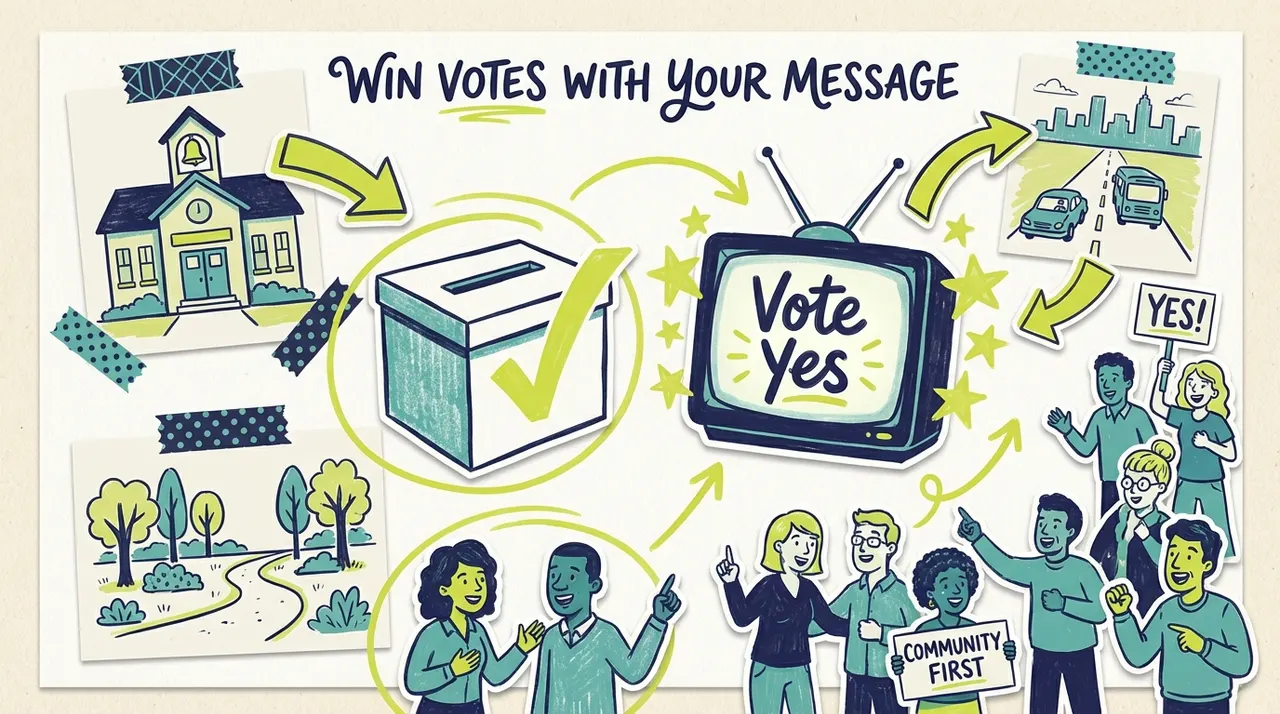
Ballot measures are won and lost on public opinion. Unlike candidate races where party loyalty drives a significant chunk of votes, ballot initiatives require you to persuade voters on the merits of a specific policy. There's no party label to fall back on, no candidate personality to rally around. It's your message against the opposition's message, and the side that communicates more effectively wins.
Television advertising has been the deciding factor in ballot measure campaigns for decades. From California's Proposition 13 in 1978 to recent statewide marijuana legalization efforts, the campaigns that control the TV narrative tend to control the outcome.
You don't need a multi-million dollar budget to run effective issue advocacy on TV anymore. Streaming TV advertising has opened the door for local ballot measures, school bond campaigns, and community advocacy groups to reach voters through the same premium channels that national campaigns use.
This guide covers everything you need to know about using television to promote ballot measures, from crafting your message to targeting voters to staying compliant with election law.
What Makes Ballot Measure Advertising Different

Ballot measure campaigns operate in a fundamentally different space than candidate campaigns. Understanding these differences is critical to developing effective advertising strategy.
No Party Cue, No Shortcut
In candidate races, voters often follow party affiliation. A Democrat votes for Democrats, a Republican for Republicans. Ballot measures strip away that shortcut. Voters must evaluate the actual policy on its merits, which means your advertising carries enormous weight in shaping how people understand the issue.
This is both a challenge and an opportunity. The challenge is that you're starting from scratch with many voters who know nothing about the measure. The opportunity is that you can frame the conversation before the opposition does.
Yes vs. No Dynamic
Every ballot measure campaign involves a "yes" side and a "no" side. Research consistently shows that "no" campaigns have a structural advantage. According to the Ballot Initiative Strategy Center, undecided voters break toward "no" in the final weeks of a campaign, often by significant margins.
If you're running a "yes" campaign, your TV advertising needs to build a comfortable lead in public opinion well before Election Day. If you're running "no," your job is to raise enough doubt that undecided voters default to the status quo.
Complex Policy, Simple Message
Ballot measures often involve complicated policy changes: tax restructuring, zoning modifications, bond issuances, regulatory reforms. Your advertising has 30 seconds to make voters care. The campaigns that win are the ones that translate complex policy into simple, emotionally resonant messages.
Television excels at this translation. Visual storytelling lets you show what the policy means for real people rather than explaining it in abstract terms.
Building Your Issue Advocacy TV Strategy
Effective ballot measure advertising requires careful planning that starts months before the election.
Define Your Core Message
Every successful ballot measure campaign distills its argument to a single, compelling idea. Before you produce a single ad, answer this question: If voters remember only one thing about this measure, what should it be?
For a school bond measure, that might be: "Our kids deserve safe, modern classrooms." For a minimum wage increase: "Working families can't survive on $7.25 an hour." For a local parks initiative: "Every neighborhood deserves green space."
This core message becomes the foundation of every TV ad you produce. Everything else, the data, the endorsements, the policy details, supports this central idea.
Map the Voter Landscape
Before spending a dollar on advertising, understand who you need to reach.
Strong supporters already agree with you. They don't need persuasion, they need motivation to vote. TV advertising targeting this group should focus on turnout messaging, especially for off-cycle elections where ballot measures often appear.
Persuadable voters are your primary target. These are voters who could go either way and will be influenced by advertising. Targeting options on streaming TV let you reach these voters based on demographics, interests, and viewing behavior.
Strong opponents are a waste of advertising budget. No amount of TV advertising will convince someone who's firmly against your position. Don't spend money trying to move unmovable voters.
Low-propensity voters who support your position represent a special opportunity. If you can motivate them to show up on Election Day, they become "found" votes. TV advertising that combines issue messaging with voter mobilization can be especially effective here.
Establish Your Timeline
Ballot measure campaigns follow a different calendar than candidate races. Here's a general framework:
6-12 months before the election: Begin earned media efforts, build your coalition, conduct polling to understand the voter landscape. TV advertising isn't typically needed yet, but you should be planning creative concepts.
3-6 months out: Launch initial TV advertising to define the issue on your terms. Early advertising is cheaper and faces less competition. Use this phase to build awareness and establish your frame before the opposition mounts their response.
Final 8 weeks: Maximum advertising intensity. This is when most voters start paying attention to ballot measures. Your programmatic TV strategy should be fully deployed, with ads running frequently across multiple channels.
Final 2 weeks: Close the deal. Focus on turnout messaging for your supporters and reinforcing your core message for persuadable voters. Advertising costs peak during this period, so budget accordingly.
Crafting Effective Ballot Measure TV Ads

The creative approach for ballot measure advertising differs from candidate advertising in important ways.
Tell Human Stories
The most effective ballot measure ads feature real people affected by the policy. A teacher explaining why the school needs repairs. A small business owner describing how a regulatory change affects their livelihood. A parent worried about their neighborhood park closing.
Personal accounts can explain the effect of a policy on daily life. Use accurate details and obtain permission from the people featured.
Use Data Sparingly
Statistics can strengthen your message, but don't lead with numbers. Voters respond to stories first and data second. If you include statistics, make them vivid and relatable. "That's $47 per household per year" is more powerful than "$2.3 million in total revenue." Frame numbers in terms of individual impact whenever possible.
Address Opposition Arguments
If the opposition has a compelling counterargument, address it proactively. Ballot measure campaigns often fail because the "yes" side ignores legitimate concerns that the "no" side exploits.
Your TV ads can acknowledge concerns while reframing them. "We know budgets are tight. That's exactly why this measure caps spending at $50 per household, so every family can afford better schools without breaking the bank."
Create Urgency Without Fear
Effective advocacy advertising motivates action without resorting to scare tactics. Voters respond to urgency ("The deadline to fix our roads is now") better than fear ("Without this measure, our infrastructure will collapse"). Show what's possible rather than what's catastrophic.
Produce Multiple Versions
Don't run a single ad for the entire campaign. Produce at least three to four different spots:
An introduction ad that defines the issue and your position. Run this early in the campaign.
A testimonial ad featuring affected community members. This builds emotional connection.
A data ad that presents the strongest evidence for your position. Target politically engaged voters with this version.
A closing argument ad for the final weeks that summarizes your case and drives turnout.
Adwave's AI-powered platform makes producing multiple versions affordable. You can generate professional TV commercials from your existing campaign materials in minutes, then iterate on messaging as the campaign evolves.
Targeting Voters on Streaming TV
Streaming platforms offer targeting capabilities that traditional broadcast TV never could. For ballot measure campaigns, this precision is transformative.
Geographic Targeting for Local Measures
Local ballot measures need hyperlocal targeting. A school district bond measure shouldn't waste budget reaching voters outside the district. A city ordinance campaign should target only city residents.
Streaming TV advertising allows geographic targeting at the zip code level. This precision eliminates waste and concentrates your budget where votes exist.
For statewide measures, geographic targeting lets you allocate budget by region based on where persuadable voters concentrate. If your polling shows strong support in urban areas but weakness in suburban markets, you can weight your spending accordingly.
Demographic Targeting
Different demographic groups respond differently to issue advertising. Age, income, education, and household composition all influence how voters evaluate ballot measures.
A school bond campaign should prioritize parents with school-age children, homeowners (who pay property taxes), and voters 25-54 who are most likely to have kids in the system. An affordable housing measure might target renters, lower-income households, and younger voters disproportionately affected by housing costs.
Streaming platforms let you layer these demographic targets to reach precisely the voters most likely to support your position.
Interest and Behavior Targeting
Beyond demographics, streaming platforms can target viewers based on interests and viewing behavior. Voters who watch news programming are likely more politically engaged. Viewers of educational content may be more receptive to school funding arguments. Parents watching family programming are a natural audience for child-related measures.
This interest-based targeting lets you match your message to receptive audiences, improving ad effectiveness significantly compared to broad broadcast buys.
Budget Planning for Ballot Measure Campaigns

Television advertising is typically the largest single expense in ballot measure campaigns. Budgeting effectively requires understanding the competitive landscape and voter math.
Start With the Voter Math
Calculate how many votes you need to win. For most ballot measures, that's 50% plus one of votes cast. Estimate likely turnout, determine your current support level from polling, and calculate how many minds you need to change or how many supporters you need to turn out.
This voter math drives your budget. If you need to persuade 10,000 voters in a local school district, that's a very different advertising challenge than persuading 500,000 voters in a statewide campaign.
Understand Cost Variables
TV advertising costs vary dramatically based on market size, time of year, and competition.
Market size: A local ballot measure in a small media market might achieve effective frequency for $5,000-20,000 monthly. A statewide campaign in a major market could require $100,000+ monthly.
Election proximity: Costs increase as Election Day approaches, especially in even-numbered years when candidate campaigns compete for the same airtime.
Competition: If both sides of a ballot measure are advertising heavily, costs rise. If your measure is the only major campaign in the market, you'll face less competition and lower costs.
Streaming TV Advantages
Connected TV platforms offer significant budget advantages for issue advocacy campaigns:
Lower minimums. Traditional broadcast TV requires substantial minimum buys. Streaming campaigns can start at $50, making TV accessible for local measures with limited budgets.
No waste. Geographic and demographic targeting eliminates spending on voters outside your district or demographic.
Flexible pacing. Increase spending as the election approaches without committing to fixed broadcast schedules.
Real-time optimization. Monitor performance and adjust targeting during the campaign rather than waiting for post-election analysis.
Budget Allocation Framework
For a typical ballot measure campaign, consider this allocation:
60-70% of TV budget in final 8 weeks before the election
20-30% in the awareness phase (3-6 months before)
10% reserve for rapid response if the opposition launches unexpected attacks
Within the TV budget, streaming TV should represent an increasing share. The ability to target specific voters with specific messages makes streaming increasingly cost-effective compared to broad broadcast buys, especially for local measures.
Legal Considerations for Issue Advocacy Advertising
Ballot measure advertising operates under different rules than candidate advertising, but there are still compliance requirements to understand.
Disclaimer Requirements
Most states require disclaimers on ballot measure advertising that identify who paid for the ad. The specific requirements vary by state:
Some states require the organization's name and top donors. Others require only the committee name. A few have minimal requirements for issue-only advertising.
Check your state's election commission website for exact disclosure requirements before producing any advertising. Getting disclaimers wrong can result in fines and negative publicity.
Coordination Rules
Unlike candidate campaigns where coordination between outside groups and campaigns is strictly regulated, ballot measure campaigns typically have more flexibility. In most states, committees supporting the same ballot measure can coordinate strategy, share polling data, and align messaging.
However, some states do impose coordination restrictions, especially around expenditure reporting. Consult an election law attorney familiar with your state's regulations before establishing coordination arrangements.
Independent Expenditure Considerations
If your organization is making independent expenditures on a ballot measure, you may face additional reporting requirements. Track all advertising spending meticulously, including production costs, media buys, and consulting fees.
Timely reporting is essential. Many states require 24-hour reporting of expenditures in the final days before an election. Build reporting requirements into your campaign operations from day one.
Tax-Exempt Organization Rules
501(c)(3) organizations can engage in limited ballot measure advocacy because it is considered lobbying. That lobbying cannot be a "substantial part" of their activities. 501(c)(4) organizations have more flexibility for ballot measure campaigns.
If your organization has tax-exempt status, consult a tax attorney about the permissible level of ballot measure activity before launching advertising.
Measuring Campaign Effectiveness
Unlike product advertising where you can track purchases, ballot measure campaign success is ultimately measured on Election Day. But interim metrics help you optimize during the campaign.
Polling and Tracking
Commission tracking polls throughout the campaign. Measure the following:
Awareness: What percentage of voters have heard of the measure? If awareness is low, increase advertising weight.
Favorability: Among aware voters, what percentage support versus oppose? This shows whether your message is working.
Intensity: How strongly do supporters and opponents feel? Intense supporters are more likely to vote. Weak supporters are more likely to change their minds.
Message recall: Can voters articulate your core argument? If not, simplify your message or increase frequency.
Digital Engagement Metrics
While polling provides the most reliable measure of voter sentiment, digital metrics offer faster feedback:
Website traffic to your campaign site during and after ad flights indicates viewer engagement.
Search volume for your ballot measure or key issue terms shows growing awareness.
Social media conversation about the issue can indicate whether your message is resonating.
These metrics don't predict election outcomes directly, but they signal whether advertising is generating the awareness and engagement needed for your campaign to succeed.
Post-Election Analysis
After the election, analyze results by geography and demographics to understand where your advertising worked and where it fell short. This analysis is valuable for future campaigns and for demonstrating ROI to donors.
Compare vote totals in heavily advertised areas versus lightly advertised areas. Control for other variables like demographics and past voting patterns. If there's a meaningful difference, your advertising likely influenced outcomes.
Getting Started With Issue Advocacy TV Advertising
You don't need a massive budget or months of preparation to begin television advertising for a ballot measure.
For Local Measures
School bonds, local ordinances, and community initiatives can launch effective TV campaigns with modest budgets. Adwave's platform lets you create professional commercials from your campaign website and materials in minutes. Start with a $50 campaign targeting your district, measure community response, and scale from there.
Local measures often face little opposition advertising, giving you the opportunity to own the TV narrative entirely. Even a small campaign can significantly boost awareness and support in local elections where voter information is scarce.
For Statewide Measures
Larger campaigns benefit from streaming TV's targeting precision. Rather than buying broad broadcast time across an entire state, target persuadable voters in specific markets. Layer geographic targeting with demographic data to focus spending on the voters most likely to determine the outcome.
Begin advertising early while costs are lower. Establish your message frame before the opposition. Use the final weeks for maximum intensity and turnout messaging.
For Advocacy Organizations
Ongoing issue advocacy benefits from consistent TV presence even between election cycles. Build awareness for your cause year-round so that when a ballot measure does appear, voters already understand and support the underlying issue.
Streaming TV campaigns starting at $50 make sustained advocacy affordable for organizations of any size. You can maintain awareness between elections and ramp up when ballot measures go before voters.
Common Questions Answered
What's the difference between issue advocacy and express advocacy in TV advertising? Issue advocacy promotes a position on a policy topic without explicitly telling voters how to vote. Express advocacy specifically asks voters to vote "yes" or "no" on a ballot measure. The distinction matters for regulatory purposes. Issue advocacy typically faces fewer disclosure requirements, while express advocacy triggers full campaign finance reporting obligations in most states. Your ads' specific language determines which category applies.
How much should a ballot measure campaign spend on TV advertising? Budget depends on the size of the electorate and competitive intensity. A local school bond in a small district might run an effective campaign with $5,000-15,000 in streaming TV advertising. A contested statewide measure in a major market could require hundreds of thousands. As a general guideline, plan to spend enough to reach persuadable voters at least 7-10 times during the campaign's critical final weeks.
Can nonprofit organizations run TV ads for ballot measures? Yes, with limitations. 501(c)(4) social welfare organizations can engage in substantial ballot measure advocacy. 501(c)(3) charitable organizations can engage in limited ballot measure work as long as it doesn't constitute a "substantial part" of their activities (generally interpreted as less than 15-20% of expenditures). All organizations must comply with state campaign finance disclosure rules regardless of tax status.
When should a ballot measure campaign start running TV ads? For local measures, 6-8 weeks before the election is typically sufficient. For statewide measures, begin 3-4 months out with awareness messaging and intensify in the final 8 weeks. If the opposition is already advertising, start immediately regardless of timeline. Allowing the opposition to define the issue without a response is one of the most common and costly mistakes in ballot measure campaigns.
How do you measure whether ballot measure TV advertising is working? Track awareness and favorability through polling conducted during the campaign. Compare poll numbers before and after ad flights to measure movement. Monitor website traffic, search volume for the measure, and social media engagement during advertising periods. Ultimately, compare actual election results in heavily advertised areas versus control areas to estimate advertising impact.
The Bottom Line
Ballot measure campaigns are pure persuasion exercises. There's no party label to lean on, no incumbent advantage, no candidate charisma. It's your message, delivered to the right voters, at the right time. Television remains the most effective channel for this kind of mass persuasion because it combines emotional storytelling with broad reach in a trusted environment.
Streaming TV has made this channel accessible to campaigns at every level. Local advocacy groups can reach their community with the same production quality and premium network placement that statewide campaigns enjoy.
The campaigns that start early, message clearly, and target precisely win more often than campaigns that simply outspend the opposition. Smart strategy beats big budgets.


