
You watch the game every week. During commercial breaks, you see ads from national insurance companies, car brands, and fast food chains. And you think: there's no way I could afford to get my business in front of this audience.
Here's the thing: local sports advertising isn't just for Fortune 500 companies anymore. Streaming TV has changed the game, making it possible for local businesses to reach sports fans in their area without a Super Bowl-sized budget.
Sports viewers are the most engaged audience on television. They watch live, they pay attention, and they remember what they see. If you've been looking for a way to reach customers who are actually watching (not scrolling on their phones), CTV sports ads might be your answer.
Why Sports Audiences Are Different
Sports fans don't skip commercials the way they do during other programming. When you're watching a close game, you're not going anywhere during the break. You might grab a snack, but that TV stays on.
What makes sports viewers valuable:
92% completion rate for ads during live sports (compared to 70% for other content)
Live viewing habit means no fast-forwarding through commercials
High attention levels during breaks (anticipation for the game to resume)
Predictable scheduling lets you plan campaigns around specific events
Passionate, loyal audiences with strong local team connections
For local businesses, there's another advantage: sports fans tend to be community-oriented. They support the local team, and they're more likely to support local businesses they see advertising alongside that team.
Understanding Sports Streaming Options
Gone are the days when sports meant cable-only viewing. Today's sports fans are spread across multiple streaming platforms, and that's actually good news for advertisers.
Major sports streaming platforms:
ESPN+ delivers MLB, NHL, UFC, college sports, and international soccer
Amazon Prime Video streams Thursday Night Football and select MLB games
Peacock carries Sunday Night Football, Premier League, and Olympics content
YouTube TV, Hulu + Live TV, and Sling offer live sports packages
Regional Sports Networks (RSNs) stream local team games through various apps
The streaming landscape means you can reach sports fans across devices and platforms. Whether they're watching on their living room TV, a tablet at a sports bar, or their phone during lunch, your ad can find them.
What this means for local advertisers:
You don't need to buy a national broadcast spot. CTV advertising lets you target your specific geographic area on these platforms. A restaurant in Denver can reach Broncos fans in Denver, not pay for impressions in Miami.
Live Sports Advertising Costs: What to Actually Expect
Let's address the elephant in the room: sports advertising has a reputation for being expensive. And yes, a Super Bowl spot will run you $7 million for 30 seconds. But that's not what we're talking about.
CTV sports advertising costs for local businesses:
Realistic budget expectations:
Entry-level test: $200-500 for a targeted local sports campaign
Consistent presence: $500-1,500/month during your sport's season
CPM range: $30-60 for sports inventory (higher than general CTV at $15-35)
The premium is real, but the engagement justifies it. You're paying more per impression, but those impressions are worth more because viewers are actually watching.
Through platforms like Adwave, you can access sports streaming inventory starting at $50, though a more meaningful sports-focused campaign typically starts around $200-500 to achieve enough frequency with this engaged audience.

Targeting Sports Audiences
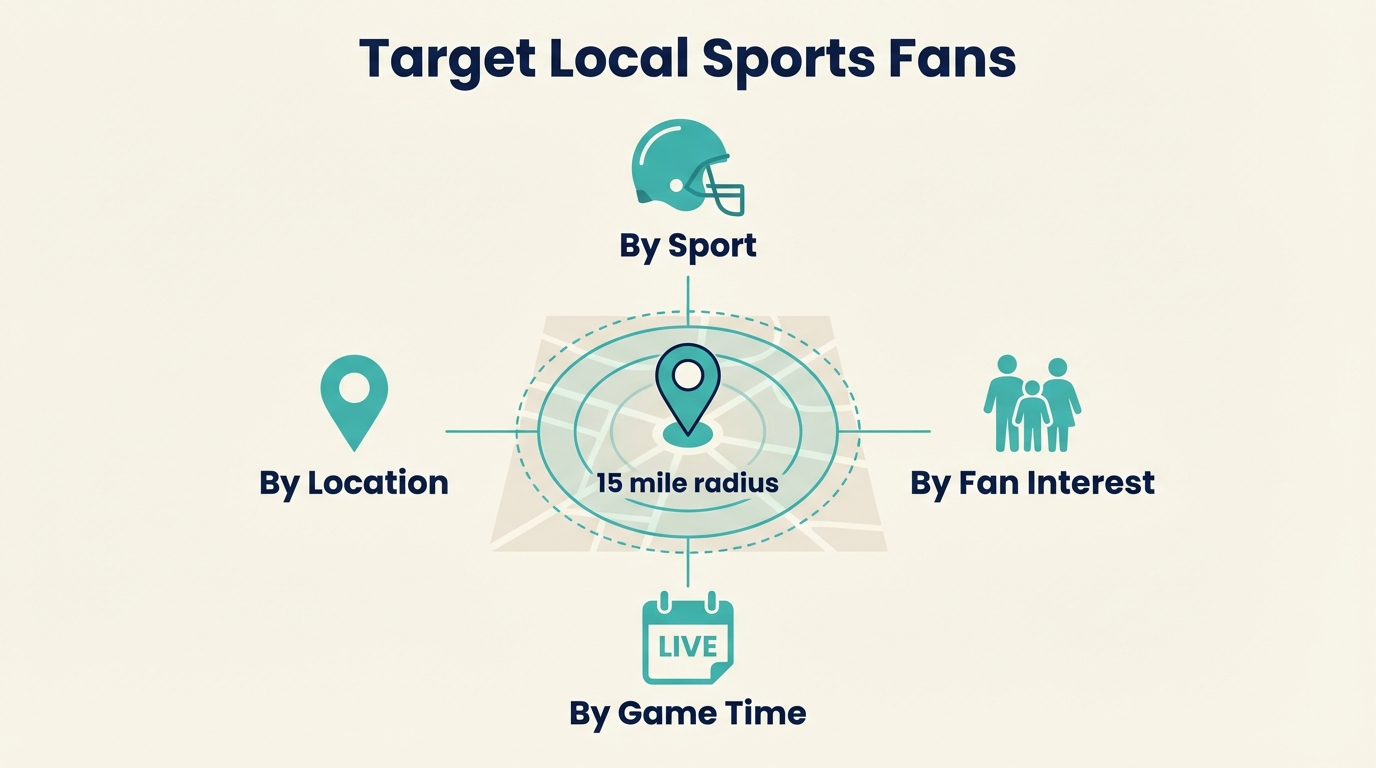
One of the biggest advantages of CTV sports advertising is targeting precision. You're not just buying "sports." You can get specific.
Targeting options for sports content:
By sport:
Football (NFL, college, high school)
Basketball (NBA, college, WNBA)
Baseball (MLB, minor leagues)
Hockey (NHL)
Soccer (MLS, Premier League, Liga MX)
Golf, tennis, combat sports, and more
By audience interest:
Fantasy sports players
Sports betting enthusiasts
Specific team fans
Sports apparel buyers
Ticket purchasers
By geography:
Target fans of local teams
Reach specific ZIP codes or DMAs
Focus on areas around your business location
By viewing context:
Live games only
Pre-game and post-game shows
Sports news and highlights
Sports documentaries and features
Example targeting strategy:
A sports bar near a stadium could target:
Fans of the local NFL team
Within 15 miles of the stadium
During live games and pre-game shows
Ages 25-54
This precision means your budget goes further. You're not paying to reach sports fans in other cities or people who don't watch your local team.
Creative Considerations for Sports Ad Breaks
Sports commercial breaks have a different energy than other programming. Your ad needs to match that vibe.
What works in sports ad breaks:
High energy: Match the excitement of the game
Quick hook: Grab attention in the first 2-3 seconds
Clear message: Viewers are thinking about the game, so keep it simple
Local pride: Connect to the team or community when appropriate
Strong CTA: Tell them exactly what to do next
What to avoid:
Slow, contemplative pacing (doesn't fit the energy)
Complex messages that require concentration
Anything that feels disconnected from the viewing moment
Timing considerations:
Sports breaks are typically 2-3 minutes, with multiple 15-30 second spots. Your ad competes with major brands for attention. The good news? Local relevance can be your edge. When a viewer sees "Joe's Sports Bar, 2 miles from the stadium" during a game, that's more relevant than another national insurance ad.
Adwave's AI creative tools can help you create sports-appropriate ads quickly, pulling energy and visuals from your existing content to match the broadcast feel.
Seasonal Sports Calendar Planning
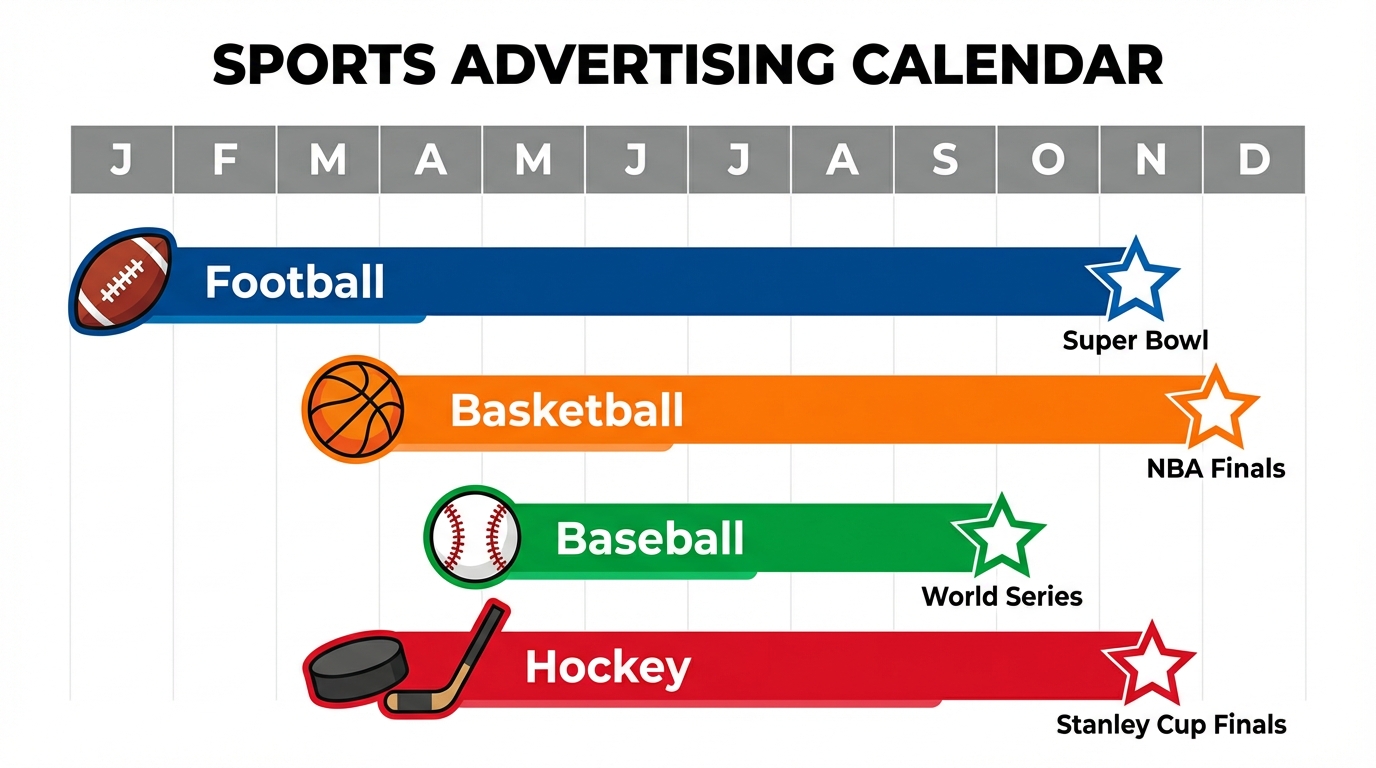
Smart sports advertisers plan their campaigns around the sports calendar. Here's when different audiences are most engaged:
Football season (September - February):
NFL: September through Super Bowl (February)
College: September through bowl season (January)
Peak engagement: Sunday afternoons, Monday/Thursday nights
Basketball season (October - June):
NBA: October through Finals (June)
College: November through March Madness (April)
Peak engagement: Playoffs and March Madness
Baseball season (April - October):
MLB: April through World Series (October)
Longest season = consistent reach opportunity
Peak engagement: Playoffs and World Series
Hockey season (October - June):
NHL: October through Stanley Cup Finals (June)
Passionate, loyal fan base
Peak engagement: Playoffs
Year-round opportunities:
Golf: Major tournaments throughout year
Soccer: Multiple leagues with different schedules
Combat sports: UFC events throughout year
Tennis: Grand Slams spread across calendar
Planning your campaigns:
Identify which sports your target customers watch
Map the season schedule
Allocate budget to key moments (season openers, playoffs, rivalries)
Plan creative around seasonal themes
For local businesses with seasonal patterns (like restaurants or home services), align your sports advertising with your busy periods.
Measuring Sports Advertising Impact
Sports advertising is primarily a brand awareness play, but you can still measure its impact.
Metrics to track:
Impressions: How many times your ad was seen
Completion rate: What percentage watched the full ad
Frequency: How many times each household saw your ad
Geographic reach: Which areas saw your campaign
Business impact indicators:
Branded search volume increases after games
Website traffic during and after broadcasts
"How did you hear about us?" survey responses
Social media mentions during games
Foot traffic patterns on game days
Attribution considerations:
TV advertising builds awareness over time. Unlike digital ads with immediate click-through, sports advertising creates mental availability. When someone needs what you sell, they remember seeing you during the game.
The most honest approach: measure what you can directly track (impressions, website visits, branded searches) and accept that some impact happens in ways you can't fully attribute.
Local Business Examples That Work
Certain local businesses are natural fits for sports advertising:
Sports bars and restaurants: The most obvious fit. "Watch the game here" messaging during the game itself. Target fans in your area with game-day specials.
Auto dealerships and service centers: Sports audiences skew toward car buyers. Local dealers can compete with national brands by emphasizing local service and community ties.
Home service businesses: HVAC, plumbing, and contractors reach homeowners during weekend games. "Your team needs you watching, not fixing the furnace. Call us."
Fitness and sports retail: Gyms, sporting goods stores, and athletic services connect naturally with sports content. Target viewers who are clearly interested in athletics.
Professional services: Law firms, financial advisors, and healthcare providers can reach local audiences during trusted, appointment-viewing moments.
What these examples share:
Local focus (competing on community connection, not national scale)
Clear relevance to the audience or viewing moment
Simple, memorable messaging that works in a high-energy context
Ready to Reach Sports Fans in Your Area?
Live sports remains the most engaged audience on television. While national brands pay premium prices for national reach, local businesses can now access that same engaged viewership in their specific markets.
The opportunity is real: passionate viewers, predictable scheduling, and targeting that lets you focus your budget on your actual service area.
Adwave gives local businesses access to sports streaming inventory across ESPN+, Peacock, and other platforms. Create an ad that matches the energy of game day, target fans of your local teams, and start at a budget that makes sense for testing.
Your competitors are buying the same digital ads everyone ignores. Sports fans are watching, and now you can reach them.
See how it works or create your first sports ad free.
Common questions answered
How much does it cost to advertise during live sports on streaming TV?
Live sports inventory typically commands premium CPMs, often ranging from $30 to $60 or higher for major events. However, local sports, regional games, and shoulder programming around major events can be more affordable. The good news is that streaming platforms allow more flexible budget entry points than traditional sports TV advertising, which often required massive upfront commitments. You can test sports advertising with smaller budgets before committing to larger campaigns.
Can my small business actually afford to advertise during sports?
Yes, but strategy matters. Instead of competing for prime-time NFL slots, consider regional sports networks, less prominent games, or programming that airs around major events. Many streaming platforms offer sports-adjacent inventory at lower CPMs. You can also time your campaigns around local teams or sporting events relevant to your audience. The key is being strategic about which sports content you target rather than trying to compete with national brands for premium inventory.
What makes live sports advertising different from regular CTV advertising?
Live sports viewers are actively watching rather than passively streaming, which typically means higher engagement with ads. Sports content also tends to be viewed on larger screens with multiple people, increasing your effective reach. The emotional engagement of sports creates a positive halo effect for advertisers. However, you're also competing with other advertisers who know this, so competition for inventory can be fierce during major events.
Should I advertise during national sports or local sports?
For most local businesses, local and regional sports programming offers better value. You're reaching viewers in your service area without paying for national reach you can't use. Local sports audiences also tend to have strong community ties, which can benefit local businesses. National sports advertising makes more sense for e-commerce brands or businesses with broad geographic reach that can capitalize on nationwide exposure.
How do I know if sports advertising is working for my business?
Track the same metrics you would for any CTV campaign: impressions, completion rates, and subsequent website or store traffic. Additionally, watch for timing correlations between game days and business activity. Many sports advertisers also notice increased branded search volume during and after games. Survey new customers about how they heard about you, as sports advertising often generates memorable brand exposure that customers recall when asked.


