-
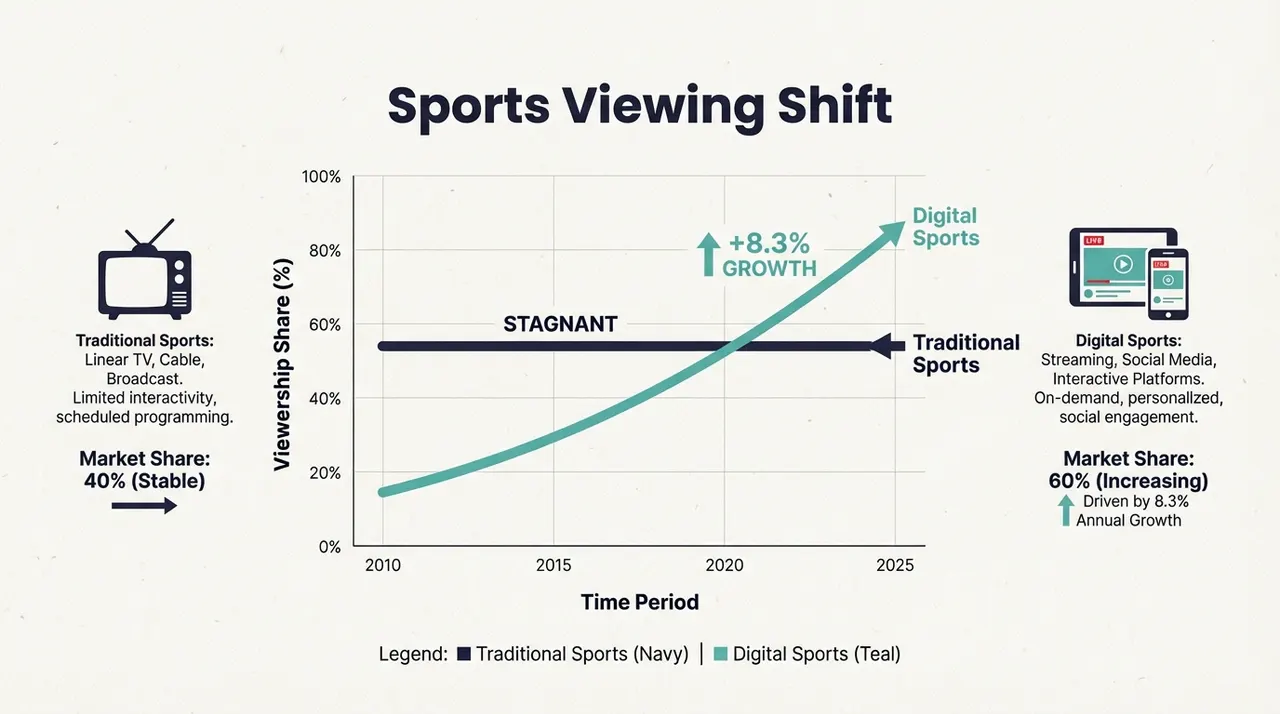
8.3%
YoY digital live sports viewership growth
-
60%
TV viewing happening on streaming
-
21%
Projected digital sports viewing growth by 2027
Live sports continue to command significant television attention, with digital live sports viewership growing 8.3% year-over-year in 2025 while total live sports viewership rose just 0.6%, according to Mountain Research. This divergence signals a fundamental shift in how Americans consume sports content, with streaming platforms increasingly capturing live sports audiences that once belonged exclusively to linear television.
What the data shows
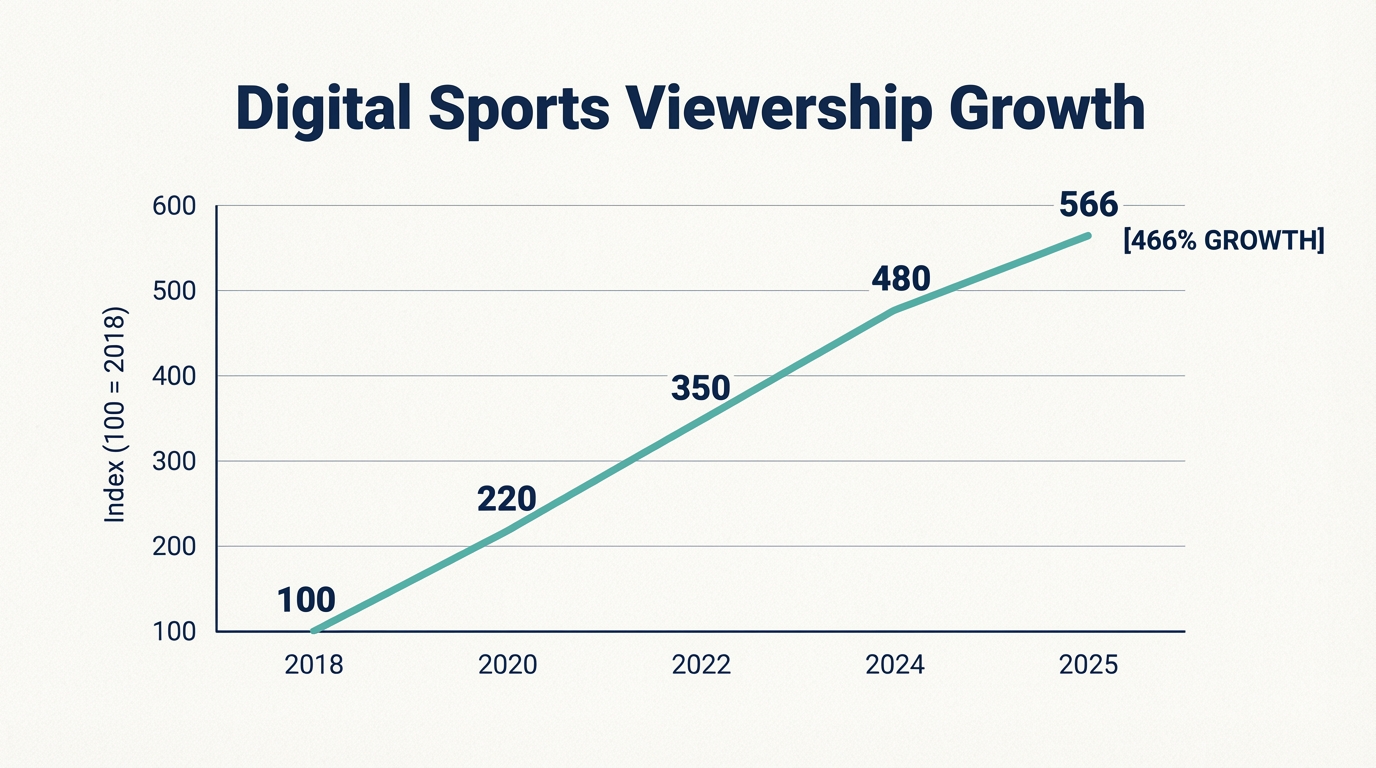
According to eMarketer, digital live sports viewing has jumped 466% since 2018, representing one of the most dramatic shifts in media consumption patterns of the past decade. This growth is projected to continue, with digital live sports viewership expected to increase by 21% by 2027 according to Mountain Research analysis.
The 8.3% year-over-year growth in digital sports viewing compared to just 0.6% growth in total sports viewership reveals that the overall sports audience is not growing significantly. Instead, existing viewers are migrating from traditional broadcast and cable to streaming platforms. This migration has accelerated as major streaming services have invested heavily in sports rights.
Live sports remain the last bastion of appointment viewing in American television. Unlike scripted content, which viewers increasingly watch on-demand, sports must be consumed live to avoid spoilers and participate in real-time social conversation. This unique characteristic makes sports especially valuable for advertisers seeking guaranteed attention and engagement.
The NFL remains the dominant force in American sports viewing, with games regularly capturing the largest television audiences of the year. However, even NFL viewership is shifting to streaming, with services like Amazon Prime Video's Thursday Night Football proving that audiences will follow live sports to new platforms. The NFL's recent media deals have distributed rights across traditional networks, ESPN, and streaming services, which reflects the multi-platform future of sports consumption.
Understanding sports viewing patterns connects to broader trends in streaming TV viewing and connected TV advertising. Advertisers who understand these patterns can better position their campaigns.
Breaking down the numbers
By sport
Different sports command different audience sizes and viewing patterns, creating varied advertising opportunities for businesses targeting specific demographics.
NFL football dominates American sports viewership, with Super Bowl LVIII drawing approximately 123 million viewers in 2024, making it the most-watched television broadcast in U.S. history. Regular season NFL games average 17-18 million viewers, far exceeding any other sport. The NFL's shift to streaming through Amazon Prime Video and upcoming Netflix games demonstrates that even the most traditional sports audiences will adopt streaming platforms.
NBA basketball reaches younger demographics than most sports, with significant viewership on both traditional networks and streaming platforms. The league's recent media deals include substantial streaming components, which reflects the viewing preferences of its younger fan base. NBA viewership skews toward urban markets and diverse audiences, making it valuable for advertisers targeting these demographics.
MLB baseball maintains strong regional viewership, with local market games often outperforming national broadcasts. The sport's 162-game season provides extensive advertising inventory throughout the summer months. Baseball's older average viewership age presents opportunities for advertisers targeting established homeowners and retirees.
College football and basketball draw passionate regional audiences, especially in the South and Midwest. Conference networks and streaming services have fragmented college sports viewership, but major games still command significant national attention. The NCAA tournament remains one of television's major advertising events.
Soccer viewership has grown substantially in the United States, driven by both MLS expansion and increased interest in European leagues. The sport attracts younger, more diverse audiences than traditional American sports, making it increasingly valuable for advertisers seeking these demographics.
By platform
Live sports distribution has fragmented across multiple platforms, requiring advertisers to understand where their target audiences watch.
Traditional broadcast networks (CBS, NBC, Fox, ABC) still command the largest live sports audiences for premier events. Network broadcasts offer the broadest reach but limited targeting capabilities compared to streaming platforms.
ESPN remains the dominant cable sports network, though its viewership has declined alongside overall cable subscriptions. ESPN+ has captured some of this audience through streaming, offering both live events and extensive on-demand sports content.
Amazon Prime Video's exclusive Thursday Night Football rights marked a watershed moment for streaming sports. The service averages 11-12 million viewers for NFL games, proving that major sports can succeed on streaming platforms. Prime Video's sophisticated targeting capabilities make these broadcasts attractive for advertisers.
Regional sports networks (RSNs) face significant challenges as cable subscriptions decline. Many RSNs have launched direct-to-consumer streaming options, fragmenting local sports viewership. Local advertisers must navigate this changing landscape to reach sports fans effectively.
By demographic
Sports viewership varies significantly across demographic groups, creating both opportunities and challenges for advertisers.
Men aged 35-64 represent the largest sports viewing demographic, accounting for approximately 60% of live sports viewership. This group watches more hours of sports per week than any other demographic and maintains strong loyalty to traditional viewing habits.
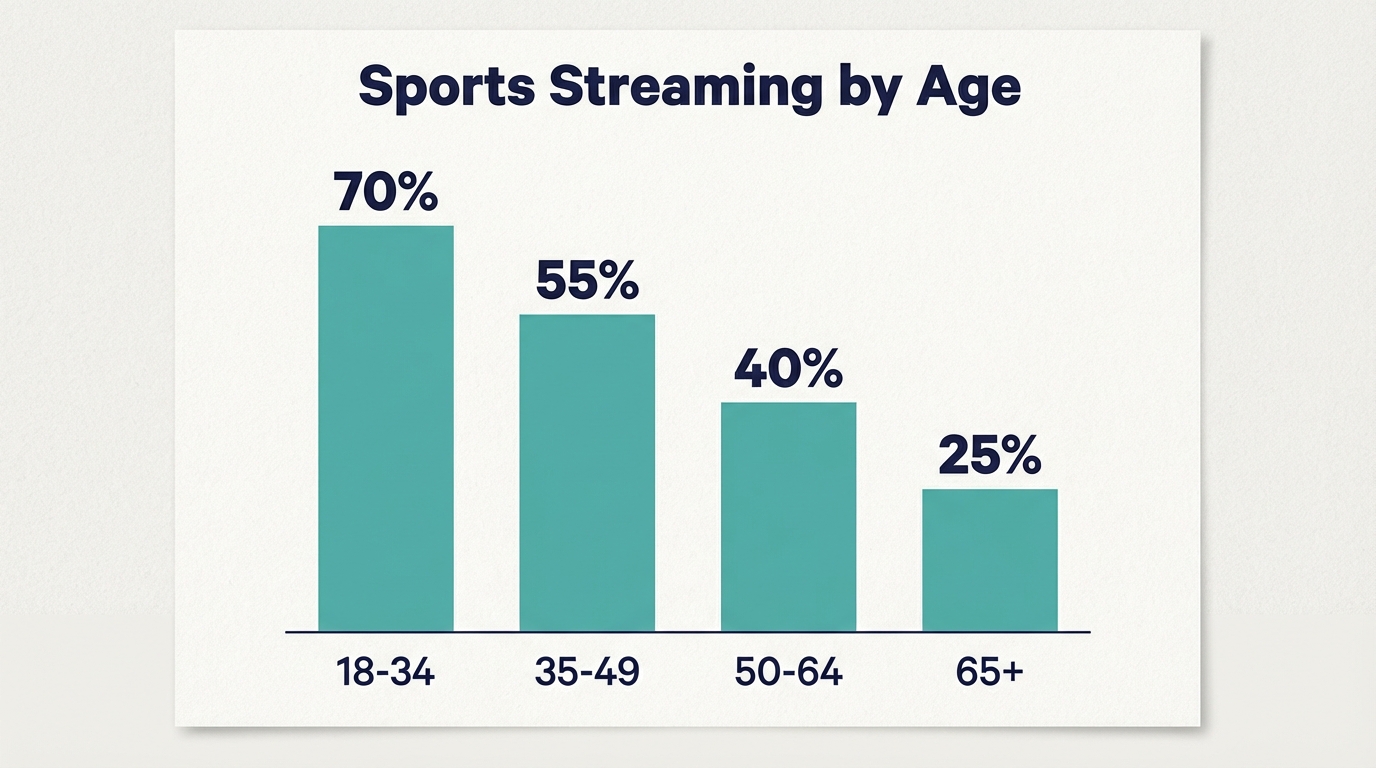
Younger viewers (18-34) watch less total sports but are more likely to stream when they do watch. This demographic drives the digital sports growth numbers, with many having never subscribed to cable television. Reaching younger sports fans increasingly requires streaming advertising strategies.
Women's sports viewership has grown significantly, with the WNBA, women's college basketball, and women's soccer attracting larger audiences than ever before. The 2024 WNBA season set viewership records, demonstrating growing advertiser opportunities in women's sports.
Hispanic viewers index highly for soccer and boxing viewership, while also watching significant NFL and NBA content. Advertisers targeting Hispanic audiences can use Spanish-language sports broadcasts and streaming options.
NFL football: Dominates TV ratings, streaming rights expanding rapidly
NBA basketball: Strong streaming presence on ESPN+ and league platforms
MLB baseball: Regional sports networks plus national streaming coverage
Soccer/MLS: Growing audience, Apple TV partnership for MLS
Olympics/events: Major streaming audiences during tentpole events
Why it matters for your business
Live sports represent one of the few remaining opportunities to reach large, engaged audiences in real-time. Understanding sports viewing patterns helps businesses of all sizes develop effective TV advertising strategies.
For local businesses, sports viewership creates opportunities to reach engaged community members during high-attention moments. A local restaurant or car dealership advertising during a regional sports broadcast reaches viewers who are actively watching rather than multitasking or fast-forwarding. This attention quality makes sports advertising especially effective for brand awareness.
Sports viewers tend to be more affluent than average television viewers, with household incomes approximately 20% higher than non-sports viewers. This affluence translates to greater purchasing power and makes sports advertising valuable for businesses selling premium products and services.
The shift to streaming sports opens new opportunities for businesses that previously could not afford sports advertising. Programmatic CTV platforms like Adwave provide access to sports-adjacent streaming inventory at accessible price points. A local business can reach streaming sports fans in their market with budgets starting at just $50.
Local TV advertising during sports programming can be highly effective for businesses like restaurants and car dealers that benefit from reaching local sports fans during games.

How to take advantage of this trend
Businesses can capitalize on sports viewing trends through several strategic approaches, depending on budget and objectives.
For small businesses with limited budgets, streaming sports inventory provides the most accessible entry point. Programmatic CTV platforms aggregate sports-related inventory across streaming services, allowing advertisers to reach sports fans without purchasing expensive linear sports placements. Targeting viewers who watch sports content, even outside live events, can be effective.
Consider the timing and context of your advertising. Sports advertising works best when your message aligns with the viewing context. Restaurants can highlight game-day specials, home services can target homeowners hosting watch parties, and automotive dealers can use the attention of viewers making significant purchase decisions.
Geographic targeting allows local businesses to focus sports advertising spending on their service areas. Rather than paying for national sports reach, local advertisers can target specific markets where their customers live. This targeting efficiency makes sports-related advertising accessible to businesses of all sizes.
Build campaigns around major sporting events in your market. Local and regional sports events often provide more affordable advertising opportunities than national broadcasts while still reaching engaged sports audiences. Minor league sports, college athletics, and regional professional teams offer inventory at lower price points.
Test and measure sports advertising effectiveness before scaling. Start with modest test campaigns to understand which sports programming and timing work best for your business. Once you identify winning combinations, scale investment strategically.
Target sports adjacencies: Reach highly engaged audiences during live events
Consider seasonality: Plan campaigns around major sports seasons and events
Expect premium pricing: Live sports inventory commands higher CPMs
Reach cord-cutter fans: Sports streaming is key driver of cord-cutting decisions
The bigger picture
Streaming rights evolution
The media industry is in the midst of a fundamental restructuring of sports rights, with streaming services increasingly competing with traditional networks for premium content. This competition has driven sports rights costs to record levels while fragmenting viewership across more platforms.
Amazon, Apple, Netflix, and other streaming services have demonstrated willingness to pay premium prices for sports content that drives subscriber acquisition and engagement. Amazon's success with Thursday Night Football has validated the streaming sports model, encouraging further investment from tech companies.
Traditional networks face difficult choices as rights costs increase while advertising revenue remains constrained. Some networks may exit sports altogether, while others will pursue streaming partnerships that preserve their access to premium content.
Advertising implications
The fragmentation of sports viewership creates both challenges and opportunities for advertisers. While reaching large sports audiences requires multi-platform strategies, streaming sports offer targeting capabilities that linear sports cannot match.
Addressable and programmatic advertising in streaming sports allows advertisers to target specific household characteristics, viewing behaviors, and geographic locations. These capabilities make sports advertising accessible to businesses that could never afford national linear sports campaigns.
The future of sports advertising will likely blend traditional reach-focused linear buys with precision-targeted streaming campaigns. Advertisers who master both approaches will be best positioned to reach sports audiences effectively.
What experts are saying
Industry analysts have noted the accelerating shift in sports viewership and its implications for advertisers.
Media analysts point to the success of Amazon's Thursday Night Football as proof that streaming sports can attract mainstream audiences. The consistent 11-12 million viewer average demonstrates that football fans will follow the NFL to streaming platforms, opening new advertising opportunities.
Advertising industry experts highlight the targeting advantages of streaming sports over linear broadcasts. The ability to serve different ads to different households watching the same game represents a fundamental advance in sports advertising capability.
Sports media executives acknowledge that the industry is in transition, with streaming eventually becoming the primary distribution method for live sports. However, the pace of this transition remains uncertain, with linear television likely to maintain significant sports viewership for at least the next decade.
Common questions answered
What percentage of TV viewing is live sports?
Live sports account for approximately 30-35% of all live television viewing but a smaller share of total video consumption when streaming is included. Sports remain disproportionately important for linear television, where they represent the majority of the most-watched broadcasts.
Is sports viewership growing or declining?
Total sports viewership is relatively flat, growing just 0.6% year-over-year in 2025. However, digital live sports viewership is growing 8.3% annually, indicating that audiences are migrating from linear television to streaming rather than watching less sports.
Can small businesses advertise during sports programming?
Yes. While live national sports broadcasts remain expensive, small businesses can reach sports fans through programmatic CTV platforms that aggregate streaming inventory. Local sports programming also offers more accessible price points for regional advertisers.
Which sports have the largest audiences?
NFL football dominates American sports viewership, with Super Bowl audiences exceeding 100 million and regular season games averaging 17-18 million viewers. NBA basketball, MLB baseball, and college football round out the major American sports audiences.
Are younger viewers watching sports?
Younger viewers (18-34) watch less total sports than older demographics but are more likely to watch via streaming when they do consume sports content. This generation drives digital sports viewership growth and will shape the future of sports media consumption.
How is streaming changing sports advertising?
Streaming sports enable addressable advertising, meaning different households can see different ads during the same broadcast. This targeting capability makes sports advertising accessible to businesses that could not afford traditional reach-focused buys.
Supporting data
Additional context on live sports viewing trends and advertising opportunities:
Digital live sports viewership growth: 8.3% year-over-year (Mountain Research, 2025)
Total live sports viewership growth: 0.6% year-over-year
Digital sports viewing growth since 2018: 466% (eMarketer)
Projected digital sports growth by 2027: 21%
Super Bowl LVIII viewership: 123 million (most-watched broadcast in U.S. history)
Average NFL regular season viewers: 17-18 million
Amazon Thursday Night Football average: 11-12 million viewers
Sports viewers household income: 20% higher than non-sports viewers
All sources linked above. Data current as of August 2025.
Get started with TV advertising
Your ads can run across 100+ streaming platforms, reaching engaged viewers in your target area during sports and entertainment programming. No production budget required. AI creates your commercial from your website in minutes.