
Most political advertising advice is written for candidates running for Congress or governor. Big budgets, statewide media buys, national consultants. That's not your race.
You're running for city council, county commissioner, or school board. Your district might cover 50,000 people or 500,000. Your budget might be $5,000 or $50,000. And the political advertising playbook that works for a Senate campaign doesn't translate to your reality.
Local races are better positioned to use modern advertising tools than most federal campaigns. Smaller districts mean tighter targeting. Lower competition means cheaper ad rates. And voters in local races are more persuadable because fewer of them have already made up their minds based on party alone.
This guide covers how to advertise effectively for city, county, and school board races, with practical strategies that work on real local budgets.
Why Local Races Need Advertising at All

Some candidates assume they can win a local race on door-knocking and yard signs alone. Sometimes that's true, especially in very small districts. But increasingly, local races are competitive enough that advertising makes the difference.
Voter Awareness Is the Biggest Challenge
In presidential elections, voter awareness isn't an issue. Everyone knows the candidates. In local races, the opposite is true. Research from the Knight Foundation shows that fewer than 30% of Americans can name their city council representative. Most voters walking into a booth for a school board race are seeing the candidates' names for the first time.
That means your biggest obstacle isn't persuasion. It's recognition. Voters who recognize your name are dramatically more likely to vote for you, especially in down-ballot races where many voters skip unfamiliar contests entirely.
Yard Signs Aren't Enough
Yard signs build some visibility, but they only reach people who drive past them. They can't communicate your platform, your qualifications, or why you're running. And in many suburban and rural districts, the people who need to see your name most might never pass a street with your sign on it.
Digital Has Limitations at the Local Level
Social media advertising works, but it has targeting limitations for political races. Meta's restrictions on political ad targeting mean you can't always reach voters with the precision that local races demand. And organic social media reach continues to decline, meaning your posts reach a fraction of your followers.
Understanding Your Local Advertising Landscape
Before spending a dollar on advertising, understand the dynamics of your specific race.
Know Your District
Map your district boundaries precisely. City council districts, county commission seats, and school board zones all have defined geographic boundaries. Every dollar you spend reaching voters outside those boundaries is wasted.
For at-large races (where candidates represent the entire city or county), your geographic targeting is simpler but your audience is larger, which affects budget planning.
Know Your Voters
Local elections have notoriously low turnout. Midterm local elections might see 15-25% turnout, and off-cycle elections can drop to single digits. This is an advantage for advertisers: you need to reach and motivate a much smaller group of people than a general election candidate.
Focus on likely voters. Your county elections office has voter history data showing who voted in past local elections. These consistent local voters are your primary audience. Expanding beyond them to occasional voters is your secondary goal if budget allows.
Know Your Competition
Research what your opponents are doing. Are they running digital ads? Do they have TV presence? Have they sent mailers? Understanding the competitive advertising landscape helps you find channels where you can stand out rather than getting lost in the noise.
Advertising Channels for Local Races
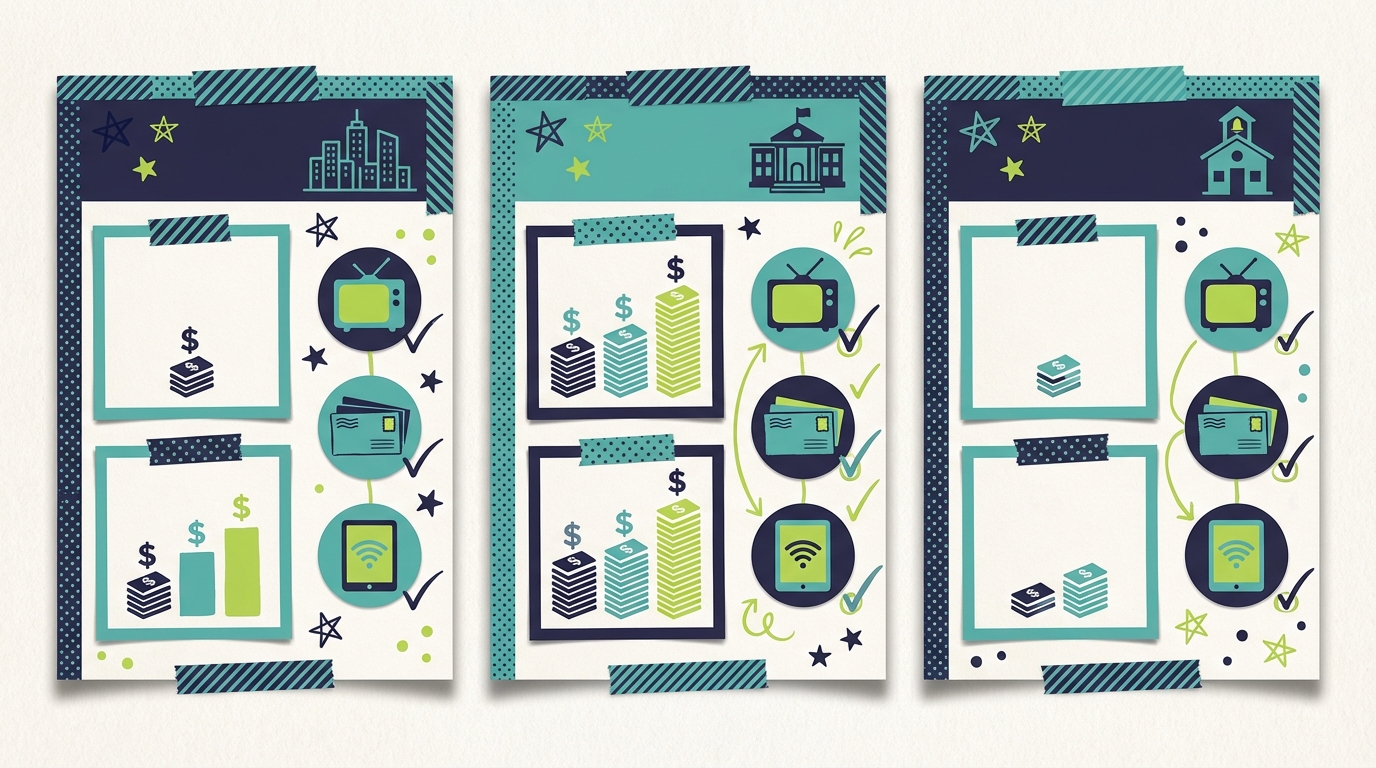
Not every channel works for every local race. Here's how to evaluate your options based on district size, budget, and goals.
Streaming TV Advertising
Connected TV advertising has become the most significant development in local political advertising in recent years. It brings the credibility and impact of television to races that could never afford traditional broadcast.
Why it works for local races:
Geographic targeting matches your district boundaries precisely
Premium network placement gives your campaign instant credibility
Video format lets voters see you, hear you, and connect with you personally
Streaming viewers skew younger, helping you reach voters that door-knocking often misses
Campaigns start at just $50, making TV accessible for any budget
Best for: Name recognition, credibility building, reaching younger voters, and making a small campaign feel larger than it is. When voters see you on their TV during Hulu or Peacock, it signals that your campaign is serious.
Adwave's platform makes this especially practical for local candidates. You can create a professional TV commercial in minutes and target it precisely to voters in your district. No production crew, no media buyer, no massive budget required.
Budget guidance: Even $200-500 per month on streaming TV can build meaningful name recognition in a city council district. Scale up for county-wide races.
Direct Mail
Direct mail remains a staple of local political campaigns for good reason: you can target specific voters by name and address using voter file data.
Why it works for local races:
Target only registered voters in your district
Deliver detailed policy messages that fit on a postcard or brochure
Voters tend to hold mail and read it, especially during election season
Can target specific demographics within voter files
Limitations:
Expensive per piece ($0.75-2.00 including design, printing, postage)
No audio or video component
One-directional (no engagement)
Environmental concerns for some voters
Budget guidance: Plan for 3-5 mail pieces to your target voter list. A city council race targeting 10,000 households might spend $7,500-15,000 on a full mail program.
Digital Advertising (Social Media & Search)
Facebook, Instagram, and Google ads offer targeting and measurement that traditional channels can't match, though political advertising faces increasing platform restrictions.
Why it works for local races:
Geographic and demographic targeting
Real-time performance data
Can drive voters to your website for more information
Video ads on social platforms build familiarity
Limitations:
Meta requires political ad authorization and disclaimers
Google restricts political ad targeting to geographic and age-based only
Ad fatigue sets in quickly with small audiences
Younger voters increasingly use ad blockers
Budget guidance: $500-2,000 per month for a local race, focusing on video content and voter engagement.
Door-to-Door Canvassing
Canvassing provides direct contact with local voters. Research from the Analyst Institute reports turnout effects of 4 to 9 percentage points for personal contact at the door.
Why it works: Nothing builds connection like a face-to-face conversation. In local races where voters don't know candidates, a personal visit makes an enormous impression.
Limitations: Time-intensive, weather-dependent, limited to areas you can physically cover, and not scalable beyond a certain district size.
Best practice: Use advertising to build name recognition, then reinforce with canvassing. Voters who've already seen your name on TV or in their mailbox are more receptive at the door.
Community Newspaper and Local Media
Many communities still have active local newspapers, community websites, or neighborhood newsletters that offer affordable advertising.
Why it works: Readers of local publications are disproportionately likely to vote in local elections. These outlets have credibility within the community.
Limitations: Declining readership, limited targeting, and increasingly difficult to verify reach.
Budget guidance: $200-1,000 for a series of print ads during the campaign window.
Building Your Local Campaign Advertising Plan
Here's how to build an advertising strategy for each type of local race.
City Council Campaigns
City council races typically cover defined districts within a city, with populations ranging from 10,000 to 100,000+.
Recommended approach:
Streaming TV for name recognition across the district ($300-1,000/month for 2-3 months before election)
Direct mail targeting high-propensity voters (3 pieces minimum)
Social media for engagement and volunteer recruitment
Canvassing in high-density areas during the final 6 weeks
Total budget range: $3,000-15,000 depending on district size and competitiveness.
County Commission Races
County races cover larger geographic areas with more diverse populations. They require broader reach and often higher budgets.
Recommended approach:
Streaming TV as the primary awareness channel ($500-2,000/month for 3-4 months)
Direct mail to targeted voter segments (4-5 pieces)
Digital advertising for reinforcement and website traffic
Local newspaper ads in community publications across the county
Canvassing focused on population centers
Total budget range: $10,000-50,000 depending on county size.
School Board Races
School board races are unique because the electorate has a specific shared interest: children's education. This makes targeting more straightforward in some ways.
Recommended approach:
Streaming TV targeting households with school-age children ($200-750/month)
Social media in parent-focused community groups and pages
Direct mail to households with children in the district
Community presence at school events, PTA meetings, and sports games
Total budget range: $2,000-10,000.
Key message focus: School board races should center on educational outcomes, budget priorities, and transparency. Parents want to know you'll advocate for their children.
Creating Effective Local Political Ads
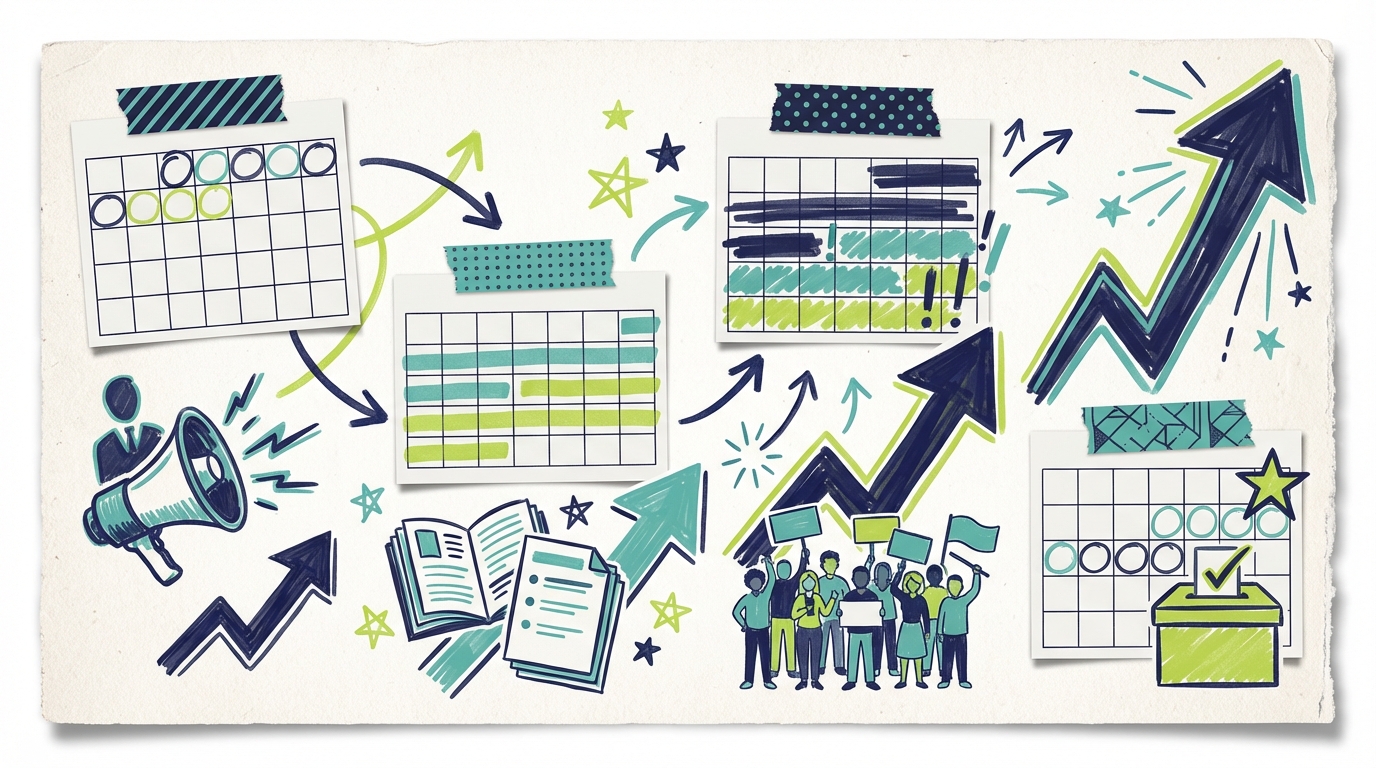
Your ads need to work differently than national campaign advertising. Here's what matters at the local level.
Lead with Your Face
In national races, voters know what candidates look like. In local races, they don't. Your advertising should prominently feature your face so that voters recognize you on the ballot. Studies in political science show that candidates whose faces are familiar to voters receive a measurable boost, especially in low-information elections.
Keep Messages Simple
You don't have the budget for multiple message tracks. Pick one or two core themes and repeat them consistently across every channel. "Better schools, accountable spending" or "Safer neighborhoods, transparent government" are the kind of clear, repeatable messages that stick.
Show Local Connection
National candidates talk about policy positions. Local candidates should show their connection to the community. Your commercial should feature recognizable local landmarks, your involvement in community organizations, and your neighbors. Voters want to know you're one of them.
Include a Clear Call to Action
Every ad should tell voters what to do. "Vote [Your Name] for City Council on November 4th" is essential. Include your website for voters who want to learn more. For streaming TV ads, consider adding a QR code that links to your campaign site.
Timing Your Advertising
Local race advertising timing follows a different rhythm than national campaigns.
Early Phase (3-4 Months Out)
Build name recognition. Streaming TV and social media are ideal here because they create repeated exposure at low cost. Your goal is to make voters recognize your name before the campaign heats up.
Middle Phase (6-8 Weeks Out)
Introduce your platform. Direct mail pieces that explain your positions, qualifications, and endorsements. Continue TV presence to reinforce recognition.
Final Push (Last 2-3 Weeks)
Maximum intensity across all channels. Increase TV ad frequency, send your strongest mail piece, boost digital spending, and intensify canvassing. This is when persuadable voters are making decisions.
Election Week
Focus on turnout messaging. Remind supporters to vote. Provide polling location information. Many local elections are decided by margins of dozens or hundreds of votes, so every voter you motivate matters.
Compliance and Disclaimers
Political advertising has legal requirements that vary by state and locality.
FEC vs. State Requirements
Federal Election Commission rules apply to federal races. Local races are governed by state election laws, which vary significantly. Research your state's requirements for:
"Paid for by" disclaimers on all advertising
Campaign finance reporting for advertising expenses
Disclosure requirements for digital advertising
Any restrictions on advertising timing near election day
Platform-Specific Rules
Review the political advertising requirements of each platform before submitting ads. Requirements can differ by format and campaign type.
Record Keeping
Keep detailed records of all advertising expenditures, including invoices, contracts, and proof of publication. Most jurisdictions require campaign finance reports that account for every advertising dollar.
Measuring Results in Local Races
Measuring advertising effectiveness in local races is challenging because the ultimate metric, votes, only happens once.
Trackable Indicators
Website traffic during advertising periods
Social media engagement and follower growth
Volunteer sign-ups and event attendance
Donation increases correlated with advertising
Name recognition through informal polling or canvasser feedback
The Door Test
The most practical measurement for local campaigns: when your canvassers knock on doors, do voters recognize your name? If recognition rates increase during your advertising periods, your ads are working.
Common Questions Answered
How much should a local political campaign spend on advertising? Campaign budgets vary enormously by race type and location. City council races typically spend $3,000-15,000 on advertising, county commission races $10,000-50,000, and school board races $2,000-10,000. The key principle is spending enough to reach your target voters multiple times across multiple channels. Even in the smallest races, some advertising budget beats none.
Is TV advertising realistic for a city council race? Yes. Streaming TV advertising has made television accessible for even the smallest campaigns. With campaigns starting at $50 and geographic targeting that matches your district, a city council candidate can run TV ads for a few hundred dollars per month. The credibility boost of appearing on premium streaming platforms is especially valuable for first-time candidates trying to establish legitimacy.
What's more effective for local races: digital ads or direct mail? Both serve different purposes and work best together. Digital ads (including streaming TV) build name recognition and reach voters across multiple touchpoints throughout their day. Direct mail delivers detailed messages to verified registered voters. The most effective local campaigns use digital for awareness and mail for information and persuasion.
When should a local campaign start advertising? Start name recognition efforts 3-4 months before election day. This gives voters time to see your name repeatedly before the campaign intensifies. Begin policy-focused advertising 6-8 weeks out, and hit maximum intensity in the final 2-3 weeks. For streaming TV, consistent presence over months builds more recognition than a short burst of heavy spending.
Do school board candidates really need to advertise? In competitive districts, absolutely. School board races increasingly draw organized opposition and significant outside interest. Candidates who rely solely on word-of-mouth often lose to opponents who invest in even modest advertising programs. The low cost of streaming TV makes advertising accessible even for school board budgets, and the ability to target households with children makes every dollar more efficient.
Win Your Local Race
Local elections shape daily life more than most voters realize. The roads you drive on, the schools your children attend, the zoning that affects your neighborhood. These decisions happen at city hall and the county commission, not in Washington.
If you're running for local office, you deserve the same advertising tools that larger campaigns use. Streaming TV, targeted digital, and strategic direct mail can give your campaign the visibility it needs to win, even on a local budget.


