
Netflix, the streaming giant that once built its entire brand on "no ads," now has a rapidly growing ad-supported tier. For small business owners who've dreamed of seeing their commercial on the same platform that streams Stranger Things and Squid Game, this shift opens possibilities that didn't exist two years ago.
But check: getting your ad on Netflix isn't as straightforward as setting up a Facebook campaign. The platform works differently, the costs are higher, and the path to accessing inventory varies depending on your budget. This guide breaks down exactly what small businesses need to know about Netflix advertising, including when it makes sense and when your budget might be better spent elsewhere.
Can Small Businesses Advertise on Netflix?
The short answer is yes, but not directly through Netflix.
Netflix's direct advertising sales operation requires working with agency partners and typically involves minimum spends of $10,000 or more. The platform was designed for national brands and enterprise advertisers, not local pizza shops or neighborhood dental practices.
However, small businesses can access Netflix ad inventory through programmatic buying. This means purchasing Netflix ad slots through third-party platforms that aggregate streaming inventory from multiple sources. When you run campaigns through platforms like Adwave, your ads can appear on Netflix alongside placements on other premium streaming services, all without the massive minimums that direct deals require.
The key difference is control. With programmatic access, you won't get Netflix exclusivity, and you won't know exactly when or where your ad appears on the platform. But you will reach Netflix viewers at a fraction of the traditional cost.
Netflix Advertising Costs and Minimums
Let's talk real numbers.
Direct Netflix Advertising: Netflix's direct ad sales typically require:
Minimum campaign spends of $10,000 to $25,000+
Agency relationships or direct sales rep involvement
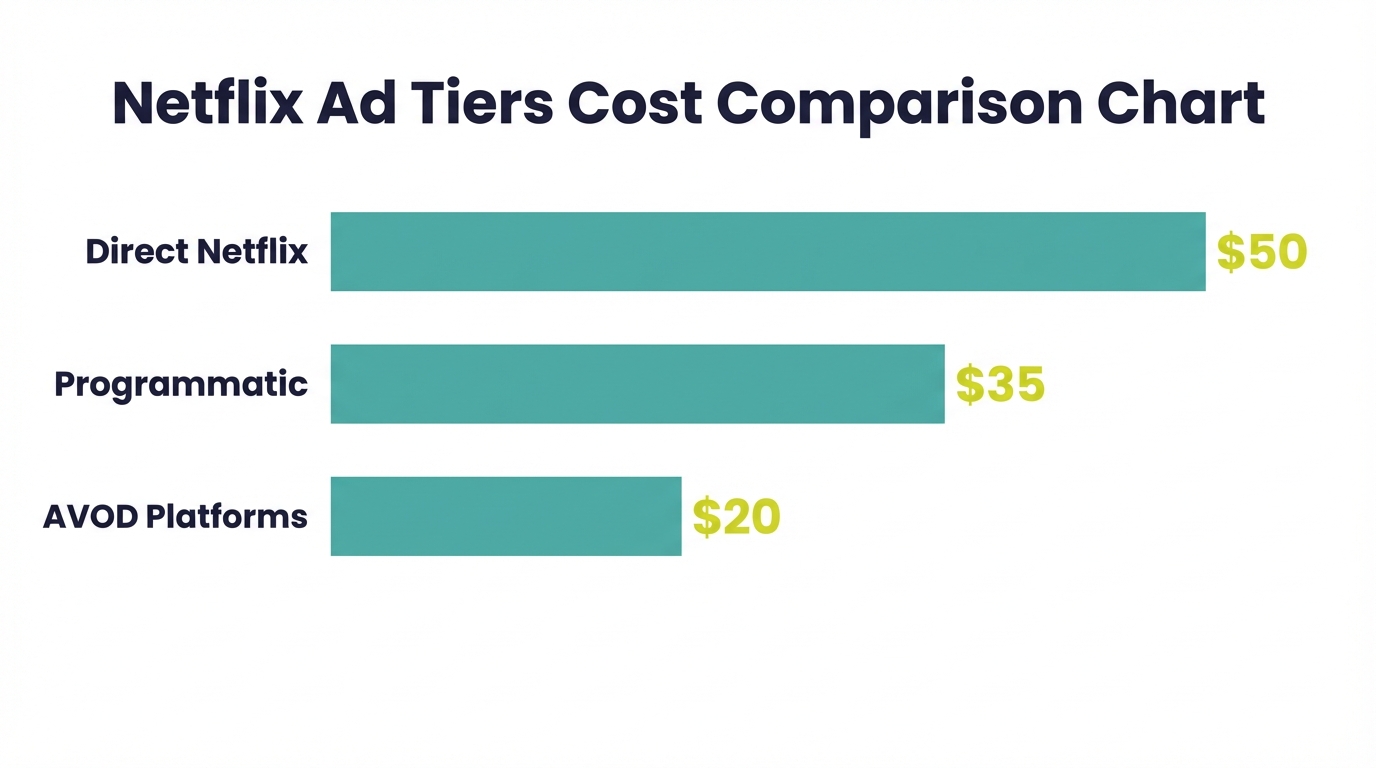
CPMs (cost per thousand impressions) ranging from $40 to $60
Premium positioning with guaranteed placements
For a local business with a $500 monthly marketing budget, direct Netflix advertising is simply not an option.
Programmatic Netflix Access: Through programmatic platforms, the economics change dramatically:
No minimum spend requirements (start at $50 with Adwave)
CPMs that can range from $35 to $50, depending on targeting
Inventory access alongside other streaming platforms
Self-serve campaign management
The tradeoff is that programmatic buying gives you reach into Netflix inventory without the premium positioning and exclusivity that direct deals provide. For most small businesses, this is more than sufficient. Learn more about CTV advertising costs to compare platforms.
Who Watches Netflix Ads? The Ad-Supported Tier
Netflix's ad-supported tier launched in late 2022 and has grown faster than most analysts predicted. As of 2024, the platform reports over 40 million global users on ad-supported plans, with that number continuing to climb.
Understanding who watches Netflix with ads matters for your targeting decisions.
Ad-Tier Demographics: Netflix's ad-supported viewers tend to be:
Price-conscious consumers attracted by the lower monthly fee ($6.99 vs $15.49 for Standard)
Younger demographics, especially 18-34 year olds
Urban and suburban households
A mix of cord-cutters and streaming-only households
Viewing Context: Netflix viewers are highly engaged. Unlike social media scrolling or background TV, streaming on Netflix represents intentional, lean-forward viewing. When your ad appears during a viewer's favorite show, you're reaching someone who is actively watching, not just passively exposed.
The ad load on Netflix is relatively light compared to traditional TV, approximately 4-5 minutes of ads per hour. This means less ad clutter and potentially higher attention to each commercial that runs.
Targeting Options on Netflix
Netflix's targeting capabilities are more limited than what you might be used to from digital advertising, but they're more sophisticated than traditional linear TV.
Available Targeting:
Geographic targeting: Reach viewers in specific countries, regions, or metro areas
Demographic targeting: Age, gender, and household income
Content alignment: Target viewers watching specific genres (comedy, drama, documentary)
Daypart targeting: Choose when your ads appear (prime time, daytime, late night)
What You Can't Do:
Target individual titles or shows (you can't specifically target Stranger Things viewers)
Use detailed interest-based targeting like Facebook offers
Retarget website visitors directly (though programmatic platforms may offer this)
For local businesses, geographic targeting is the most valuable feature. A restaurant in Denver can ensure their Netflix ads only reach viewers in the Denver metro area, rather than paying to reach people across the country who will never visit.
How to Access Netflix Inventory Without an Agency
For small businesses without $10,000+ to spend or existing agency relationships, programmatic platforms are the path to Netflix inventory.
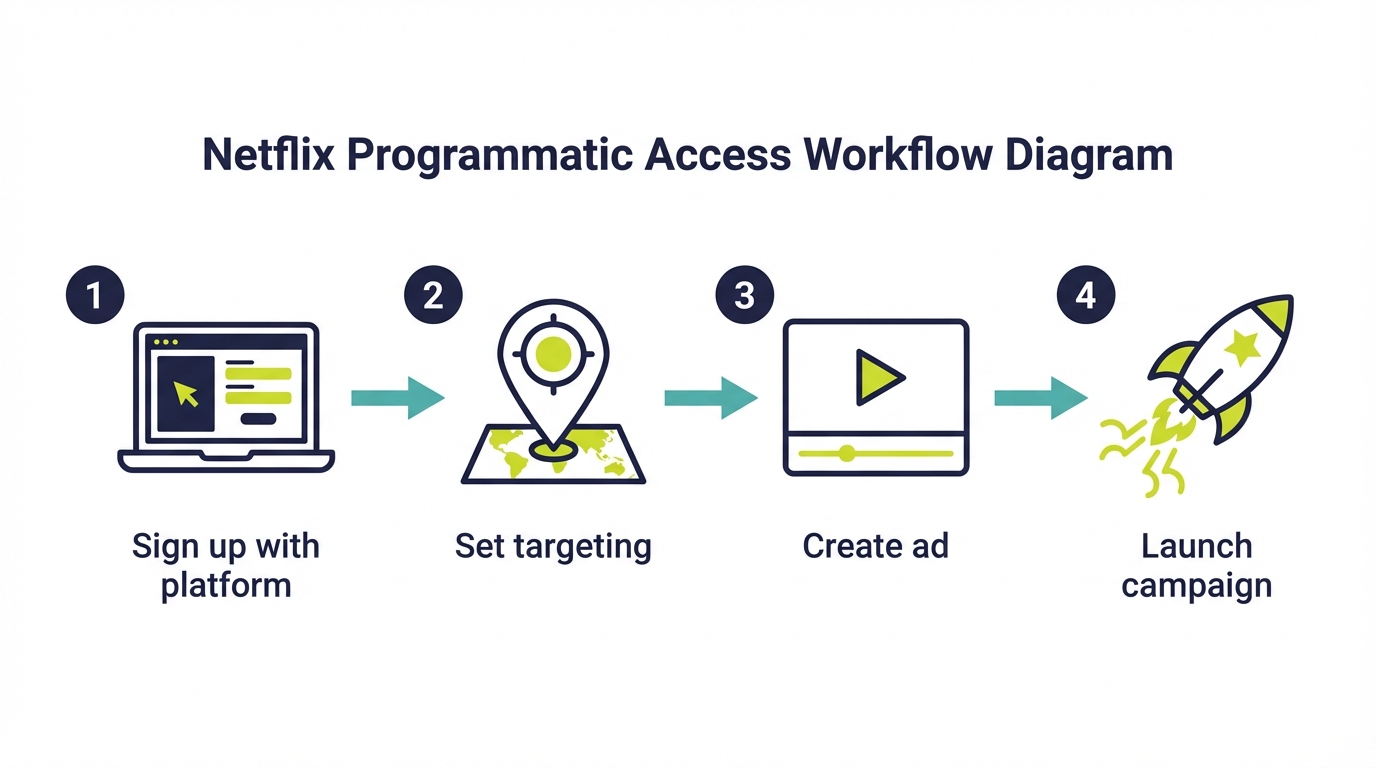
How Programmatic Access Works:
Sign up with a programmatic CTV platform like Adwave that aggregates streaming inventory
Create your campaign with geographic targeting, audience demographics, and budget
Upload your video creative (or create one using AI tools if the platform offers them)
Launch your campaign and your ads compete for available inventory across multiple streaming platforms, including Netflix
Monitor performance through the platform's dashboard
What to Expect:
Your campaign will likely deliver impressions across Netflix and other streaming services (Hulu, Peacock, Tubi, etc.) rather than Netflix exclusively. This diversified approach benefits small businesses since you're reaching viewers wherever they watch, and you're not overpaying for Netflix's premium positioning.
With Adwave, you can start campaigns at just $50, meaning you can test streaming TV advertising on Netflix and other platforms without committing thousands of dollars upfront.
Netflix vs. AVOD Platforms: Which Is Better for Small Budgets?
This is the question every budget-conscious advertiser should ask. Let's compare Netflix to free ad-supported platforms like Tubi and Pluto TV.
Netflix:
Higher CPMs ($40-60 direct, $35-50 programmatic)
Prestigious brand association
Engaged, entertainment-focused audience
Lower ad load means less competition for attention
More limited targeting options
AVOD Platforms (Tubi, Pluto TV, Freevee):
Lower CPMs ($15-25)
Massive reach (Tubi alone has 80M+ monthly users)
Audiences who fully expect and accept ads
Often better geographic targeting options
Higher completion rates due to viewer acceptance of ad model
The Small Business Verdict:
For most small businesses with limited budgets, AVOD platforms offer better value. You can reach three to four times as many viewers for the same spend compared to Netflix.
However, Netflix can make sense in specific situations:
You're targeting higher-income households (Netflix ad-tier still skews more affluent than free services)
Brand prestige matters for your business (luxury services, professional practices)
You want to complement AVOD campaigns with premium placements
A smart strategy for a $1,000 monthly budget might be: 70% on AVOD platforms for reach, 30% on Netflix for prestige and higher-income audience exposure.
Netflix Advertising Budget Planning
Planning your Netflix advertising investment requires understanding realistic costs and outcomes at different budget levels.
Monthly Budget Recommendations:
$200-400/month (Test Phase): At programmatic CPMs of $40, this delivers approximately 5,000-10,000 impressions across Netflix and other streaming platforms. This is a modest test to gauge performance and understand whether premium streaming platforms work for your business.
$500-1,000/month (Local Presence): Approximately 12,500-25,000 impressions reaching an estimated 4,200-8,300 unique households. This provides meaningful exposure in a local market, though frequency may be limited.
$1,500-3,000/month (Market Impact): Approximately 37,500-75,000 impressions reaching an estimated 12,500-25,000 unique households. At this level, you're building brand recognition with viewers seeing your ad multiple times.
$3,000+/month (Significant Presence): Strong impression volume supporting multiple creative executions and sustained market presence. This budget level justifies more sophisticated campaign strategies and creative testing.
Budget Allocation Strategy:
Given Netflix's higher CPMs, consider a blended approach:
Example $1,500/month Split:
$500 on Netflix (approximately 12,500 impressions for premium positioning)
$1,000 on AVOD platforms at $20 CPM (approximately 50,000 impressions for reach)
Total: 62,500 impressions with both premium placement and mass reach
This approach captures Netflix's prestige while maximizing overall reach through more affordable platforms.
The Netflix Brand Halo Effect
Netflix carries brand equity that can benefit advertisers beyond just reaching viewers.
Prestige Association:
When your ad appears on Netflix, you're associated with the platform's premium, high-quality content. This creates an implicit endorsement: "If they're advertising on Netflix, they must be legitimate." For businesses where trust matters (professional services, healthcare, financial), this association has value.
Content Quality Adjacency:
Netflix is known for award-winning original content. Your ad appears alongside shows that viewers actively chose and enjoy. This positive viewing context can create favorable associations with advertised brands.
The Counter-Argument:
Not every business needs prestige positioning. A local pizza shop or car wash doesn't necessarily benefit from Netflix's brand halo. For many businesses, reaching more people at lower cost matters more than appearing in a premium environment.
When Prestige Matters:
Consider Netflix when your business competes on:
Quality and expertise (medical practices, law firms)
Premium positioning (luxury goods and services)
Trust and credibility (financial services, insurance)
Sophisticated targeting (high-income households)
Understanding Netflix's Ad-Supported Tier Growth
Netflix's ad tier has grown faster than most analysts predicted, making it increasingly valuable for advertisers.
Rapid Adoption:
When Netflix launched its ad-supported tier in late 2022, skeptics questioned whether ad-averse Netflix viewers would accept commercials. The answer has been decisive: over 40 million global subscribers (and counting) have chosen the lower-cost, ad-supported option.
What's Driving Growth:
Price Sensitivity: At $6.99/month (compared to $15.49 for Standard), the ad tier attracts cost-conscious subscribers who want Netflix content without premium pricing.
Value Calculation: Many viewers do the math: a few minutes of ads per hour in exchange for nearly $9 monthly savings is an acceptable tradeoff.
Existing Habits: Unlike ad-free streaming purists, many Netflix ad-tier subscribers are former cable viewers comfortable with commercial breaks.
What This Means for Advertisers:
As the ad tier grows, inventory increases. More inventory typically means more competitive pricing and greater availability for programmatic buyers. Netflix advertising, once extremely limited, is becoming increasingly accessible.
The audience composition is also stabilizing. Early ad-tier adopters were heavily price-motivated; as the tier matures, the audience increasingly reflects Netflix's broader subscriber base.
Creating Ads That Work on Netflix
Netflix's ad environment is different from traditional TV or digital video. Your creative needs to account for these differences.
Creative Best Practices:
Use clear visuals and audio. Check how the finished ad looks on a television before publishing.
2. Get to the point quickly Netflix runs primarily 15-second and 30-second spots. With shorter ad loads and engaged viewers, every second counts. Lead with your value proposition and make your brand clear within the first five seconds.
3. Skip the hard sell Netflix viewers are in entertainment mode, not shopping mode. Aggressive sales tactics feel jarring. Focus on brand awareness and emotional connection rather than immediate conversion.
4. Use clear calls to action QR codes work especially well on streaming TV ads because viewers have their phones nearby. A simple "Scan to learn more" or "Visit [yourwebsite].com" gives interested viewers a clear next step.
5. Consider creating multiple versions If budget allows, create variations for different contexts. A 15-second version for frequency, a 30-second version for storytelling.
Measuring Your Netflix Campaign
Attribution on streaming TV differs from digital advertising. You won't see the same click-through tracking you're used to from Google or Facebook ads.
What You Can Track:
Impressions delivered (how many times your ad was shown)
Completion rates (what percentage of viewers watched the entire ad)
Geographic distribution (where your ads ran)
Website traffic lift (comparing traffic before and after campaign)
Search volume increases (branded searches often rise after TV exposure)
What's Harder to Track:
Direct conversions from specific ad views
Individual viewer journeys from ad to purchase
For local businesses, the most practical approach is comparing business results during campaign periods versus before. Did phone calls increase? Did website traffic rise? Did foot traffic improve? These aggregate measures, combined with asking new customers how they heard about you, give a realistic picture of TV advertising effectiveness.
Common questions answered
How much does it cost to advertise on Netflix?
Direct Netflix advertising typically requires $10,000+ minimum spends with CPMs of $40-60. However, small businesses can access Netflix inventory through programmatic platforms like Adwave starting at just $50, with CPMs ranging from $35-50. The programmatic route delivers your ads across Netflix and other streaming platforms without the massive minimums required for direct deals.
Can a local business advertise on Netflix?
Yes, local businesses can advertise on Netflix through programmatic buying platforms. While Netflix's direct sales operation targets national brands with large budgets, programmatic access allows businesses of any size to reach Netflix viewers in specific geographic areas. You can target by metro area, state, or zip code radius to ensure you're only paying to reach potential customers in your service area.
Is Netflix advertising worth it for small businesses?
It depends on your budget and goals. Netflix offers premium positioning and engaged viewers, but the CPMs are two to three times higher than free ad-supported platforms like Tubi or Pluto TV. For most small businesses, a mixed approach works best: allocate the majority of your budget to higher-reach AVOD platforms and reserve a smaller portion for Netflix to capture higher-income viewers and build brand prestige.
How do Netflix ads compare to YouTube ads?
Netflix ads appear on the big screen in a lean-forward viewing environment, while YouTube ads run across devices with a significant portion on mobile. Netflix has no skip button on most ad formats, resulting in higher completion rates. YouTube offers more sophisticated targeting but comes with more ad clutter and skippable formats. Netflix tends to be better for brand awareness, while YouTube can drive more direct response actions.
What format do Netflix ads need to be?
Netflix accepts standard video formats including MP4 and MOV files. Ads should be high-definition (1080p minimum, 4K preferred), with common lengths being 15, 30, or 60 seconds. Most small business campaigns run 15 or 30-second spots. When accessing inventory through programmatic platforms, check their specific creative requirements, which typically align with industry standards.
Start Reaching Netflix Viewers Today
Netflix advertising is more accessible to small businesses than ever before. While the platform's direct sales remain out of reach for most local advertisers, programmatic access through platforms like Adwave opens the door to reaching Netflix's engaged, entertainment-focused audience alongside other premium streaming services.
The key is setting realistic expectations. You won't get exclusive Netflix placements with a small budget, but you will reach Netflix viewers as part of a diversified streaming TV campaign. For many small businesses, that's exactly the right approach: broad reach across multiple platforms rather than all eggs in one premium basket.


