You opened a restaurant because you love food, community, and creating experiences. But filling seats every night? That's a marketing challenge, and one that gets harder every year as new restaurants pop up and digital platforms get noisier.
Restaurant advertising isn't about picking one magic channel. It's about layering the right mix of local, digital, and broadcast strategies so your name shows up everywhere your customers already spend their time.
This guide breaks down the top advertising channels for restaurants in 2026, with real costs and practical advice for making each one work. Whether you're a single-location diner or growing a small chain, there's a strategy here that fits your budget.
Google Ads and Local Search
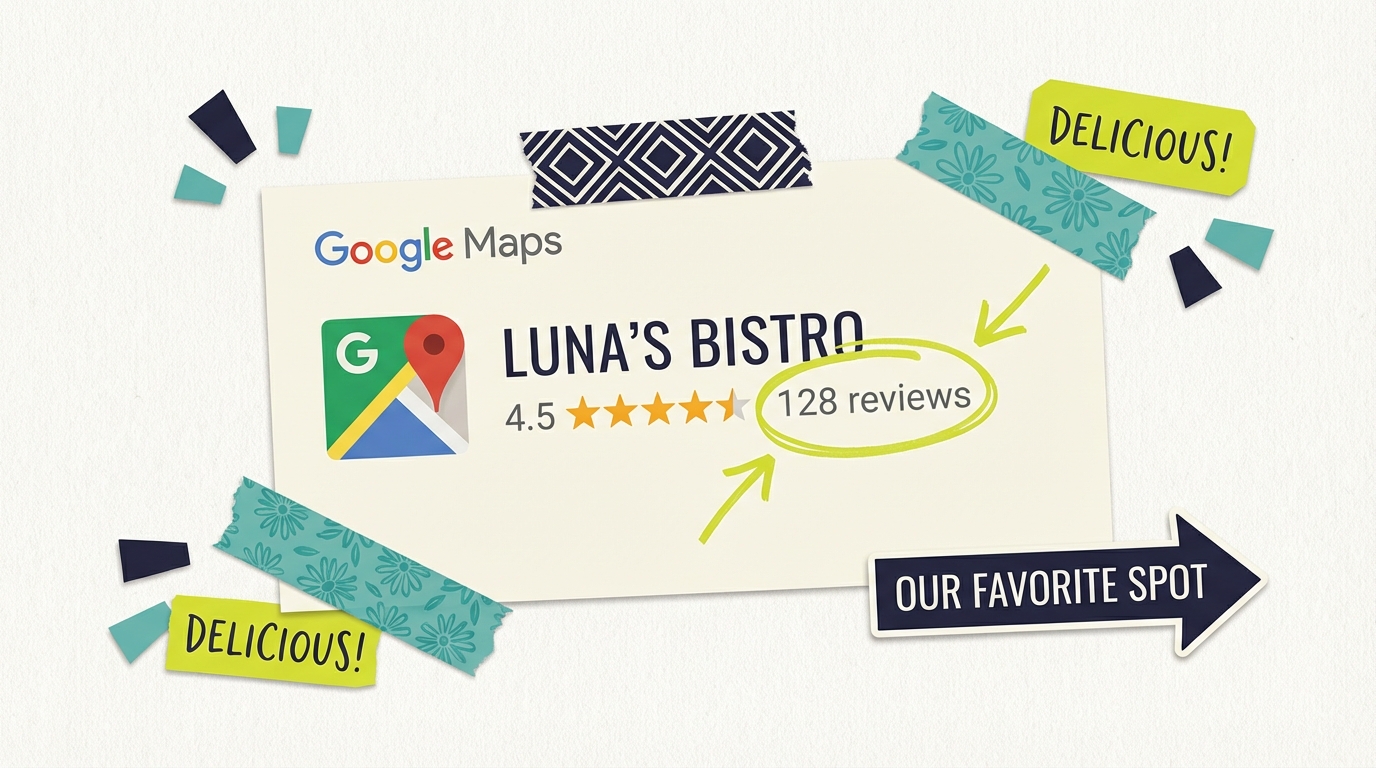
When someone pulls out their phone and searches "best Thai food near me" or "restaurants open late downtown," Google decides who shows up first. For restaurants, Google is the front door to new customers.
Google Ads for restaurants works in two main ways. First, there's Local Search ads, which push your Google Business Profile listing to the top of Maps results. These are especially valuable because they show your location, hours, reviews, and even a "call" button right in the results. Second, standard Search ads let you bid on keywords like "birthday dinner [city]" or "catering services near me."
According to WordStream, the average cost-per-click for restaurants in Google Ads is $1.84, making it one of the more affordable industries for paid search. The key is targeting high-intent keywords that signal someone is ready to visit or order, not generic food terms.
Beyond paid ads, optimizing your Google Business Profile is free and arguably more impactful. Restaurants with complete profiles, including photos, menu links, updated hours, and active review responses, see significantly more profile views and direction requests. Encouraging satisfied guests to leave Google reviews compounds over time and improves your ranking in the local pack.
What it costs: $300 to $1,500 per month for Google Ads. Google Business Profile optimization is free but requires consistent effort.
Best for: Capturing customers actively searching for restaurants, driving reservations, promoting catering services.
Limitations: Competitive in dense metro areas. Costs rise during peak dining seasons. You're paying per click regardless of whether the person visits.
Meta Advertising (Facebook and Instagram)
Instagram and Facebook are natural fits for restaurants. Food is inherently visual, and these platforms let you put your best dishes directly in front of local diners.
The most effective restaurant ads on Meta aren't polished studio shots. They're short videos of sizzling plates, behind-the-scenes kitchen footage, and close-ups of signature dishes that make people stop scrolling. Reels and Stories tend to outperform static images for restaurants because movement and sound trigger cravings in a way that photos can't match.
Meta's targeting for local businesses is powerful. You can target people within a specific radius of your location, filter by interests like "dining out" or "food enthusiasts," and create lookalike audiences based on your existing customer list or Instagram followers. Retargeting ads that remind people who visited your website or Instagram profile to make a reservation are especially effective.
For multi-location restaurants, Meta's dynamic location ads automatically show the nearest location to each viewer, which eliminates the need to run separate campaigns for each spot.
What it costs: $500 to $2,000 per month for most single-location restaurants. CPMs for local restaurant targeting typically range from $8 to $15.
Best for: Building awareness, promoting special events and seasonal menus, reaching younger demographics, driving takeout and delivery orders.
Limitations: Organic reach continues to decline. Attribution for in-store visits is imprecise. Ads require fresh creative regularly to avoid fatigue.
TV and Streaming (CTV) Advertising
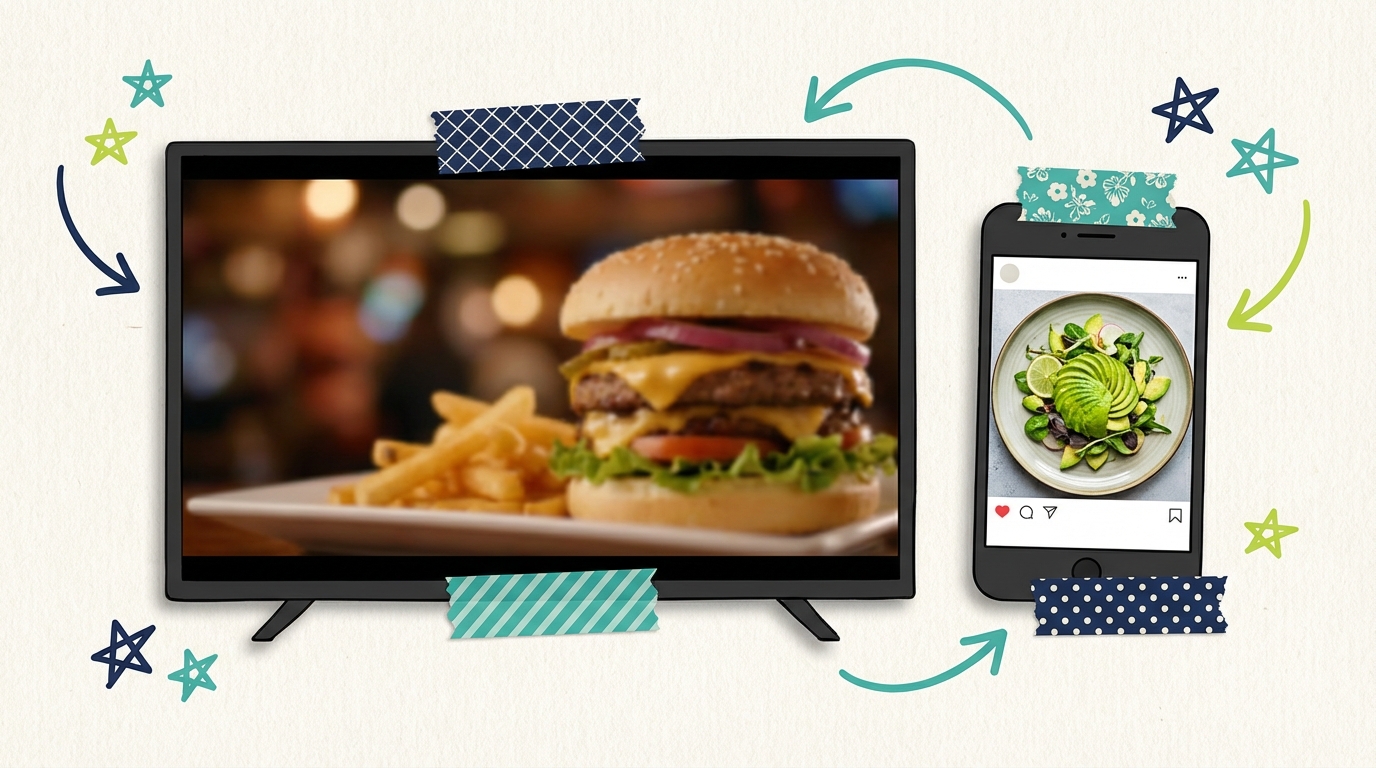
Most restaurant owners assume TV advertising is reserved for national chains with million-dollar budgets. That's no longer true. Connected TV advertising has opened up streaming platforms to restaurants of every size, and the results might surprise you.
When your 30-second spot runs during a show on Hulu, Peacock, or Tubi, it creates a level of credibility that social media ads can't match. There's a reason the biggest restaurant brands have always invested in TV. Viewers trust TV advertising 2.2 times more than digital display, and that trust translates directly into foot traffic.
With Adwave, you can create a broadcast-quality TV commercial in about two minutes using just your website or social profiles. The platform generates a professional 30-second ad and runs it across 100+ premium streaming channels. You can target viewers by zip code, so your ad reaches people who live near your restaurant rather than wasting impressions on viewers across the state.
The minimum spend is just $50, which means you can test TV advertising for less than the cost of a single food blogger collaboration. For a deeper look at TV strategies specific to restaurants, check out our complete TV advertising guide for restaurants.
What it costs: CTV CPMs range from $15 to $35, with Adwave campaigns starting at $50. A solid monthly budget for a single restaurant is $200 to $1,000.
Best for: Building local brand recognition, reaching households during prime-time viewing, creating the perception of an established brand.
Allow time to assess a TV campaign. Track branded searches, walk-ins, reservations, and customer mentions of the ad.
Local SEO and Review Management
For restaurants, local SEO is the gift that keeps giving. When your restaurant ranks in the Google Map Pack for searches like "Italian restaurant [neighborhood]," you're getting free, high-intent traffic every single day.
Local SEO for restaurants focuses on three pillars. First, your Google Business Profile needs to be fully optimized with accurate categories, menus, photos (updated monthly), and business attributes. Second, you need consistent NAP (name, address, phone) information across every directory: Yelp, TripAdvisor, OpenTable, Apple Maps, and niche food directories. Third, you need a steady stream of positive reviews.
Reviews deserve special attention. According to BrightLocal's consumer survey, 87% of consumers read online reviews for local businesses, and restaurants are the most-reviewed category. A strategy as simple as training staff to mention reviews to happy tables ("If you enjoyed tonight, we'd love a Google review") can generate 10 to 20 new reviews per month.
Responding to every review, positive and negative, signals to both Google and potential customers that you're an engaged, quality-focused business. Negative review responses are especially important. A thoughtful, non-defensive reply often convinces potential customers that you take feedback seriously.
What it costs: Free to DIY. Review management platforms run $50 to $200/month. Local SEO agencies charge $500 to $1,500/month.
Best for: Long-term organic visibility, building trust through reviews, capturing "near me" searches.
Limitations: Results compound slowly. Algorithm changes can impact rankings. Requires ongoing attention.
Yelp and Restaurant Directories

Yelp remains a significant traffic driver for restaurants in most markets. While the platform has its critics, ignoring it means missing customers who specifically use Yelp to choose where to eat.
A free Yelp Business Page with high-quality photos, an updated menu, and active review responses is the baseline. Yelp's paid options include Yelp Ads (which place your listing above competitors in search results) and Yelp Deals or Gift Certificates (which create urgency and drive first visits).
Beyond Yelp, platforms like TripAdvisor (important for tourist-heavy areas), OpenTable (for reservation-driven restaurants), and DoorDash/Uber Eats listings (for delivery-focused spots) each serve as advertising channels in their own right. Your presence and rating on these platforms directly impacts how many new customers find you.
What it costs: Free listings on all platforms. Yelp Ads start at $150/month. Delivery platform commissions run 15% to 30% per order.
Best for: Capturing customers who use these platforms as their primary restaurant discovery tools. Tourist-heavy locations benefit especially from TripAdvisor.
Limitations: You're at the mercy of platform algorithms and review policies. Yelp's review filter frustrates many business owners. Delivery commissions eat into margins.
Direct Mail and Print
Despite the digital revolution, direct mail still works for restaurants, especially for grand openings, new menu launches, and reaching older demographics who aren't glued to Instagram.
The most effective restaurant mailers include a specific offer (15% off your first visit, free appetizer with entree) and a clear expiration date. EDDM (Every Door Direct Mail) through USPS lets you target specific carrier routes near your location for as little as $0.20 per piece, making it feasible to blanket your immediate neighborhood.
Local magazine and newspaper advertising can work for upscale or niche restaurants where the publication's readership matches your target customer. Community event sponsorships and local coupon books round out the offline playbook.
What it costs: EDDM mailers cost $0.20 to $0.50 per piece including printing. A 5,000-piece mailing to your surrounding neighborhoods runs $1,000 to $2,500.
Best for: Grand openings, reaching non-digital audiences, hyper-local targeting.
Limitations: Tracking ROI is harder than digital channels. Response rates are typically 1% to 3%.
Email and SMS Marketing
Your existing customers are your most profitable marketing audience. Getting them to come back one more time per month is often worth more than acquiring a brand new guest, and email and SMS are the cheapest ways to make that happen.
For restaurants, the most effective email campaigns are simple and timely: weekly specials, new menu item announcements, holiday prix-fixe promotions, and birthday or anniversary offers. The open rates for restaurant emails tend to outperform most industries because people are interested in what's for dinner.
SMS works even better for time-sensitive offers. A text message sent at 3 PM saying "Happy hour starts at 4. Show this text for a free appetizer with any drink purchase" drives immediate action in a way that email can't match. Just keep SMS frequency low (two to four messages per month) to avoid opt-outs.
Building your list is the challenge. The easiest methods for restaurants include a WiFi login page that captures emails, a sign-up card with the check, and a short link on receipts offering a discount on the next visit. If you're using a POS system like Toast or Square, they often have built-in email capture features.
What it costs: Email platforms run $20 to $100/month for most restaurant-sized lists. SMS costs $0.01 to $0.05 per message.
Best for: Driving repeat visits from existing customers, promoting events and specials, filling slow nights.
Limitations: Only reaches people who've opted in. List building takes time. Not an acquisition channel.
Seasonal and Event-Based Advertising
Restaurants have natural revenue peaks and valleys throughout the year. Smart advertising aligns your spending with these patterns rather than running the same campaigns year-round.
Key windows for increased advertising:
Valentine's Day and Mother's Day: Book these promotions 4 to 6 weeks out. These are the two highest-volume dining days for most full-service restaurants.
Patio/summer season: Ramp up social and CTV advertising in April-May to capture the seasonal shift.
Holiday parties and catering: Start promoting private dining and catering in October for the November-December rush.
Super Bowl and game days: Sports bars and casual dining should increase CTV and social spend before major sporting events.
Slow season (typically January-February): This is when promotions and discounts make the most sense. Run offers to fill seats rather than cutting your ad budget entirely.
Build a simple 12-month marketing calendar that maps your advertising spending to these seasonal patterns. Front-load your awareness channels (CTV, social) before peak periods, and shift to promotions and offers during slower stretches.
What it costs: Variable. Plan to increase total ad spend by 30% to 50% during peak months and reduce during slow periods.
Best for: Maximizing revenue during high-traffic periods, filling seats during slow times, promoting seasonal menus.
Limitations: Requires advance planning. Last-minute campaigns during peak seasons face higher ad costs and less available inventory.
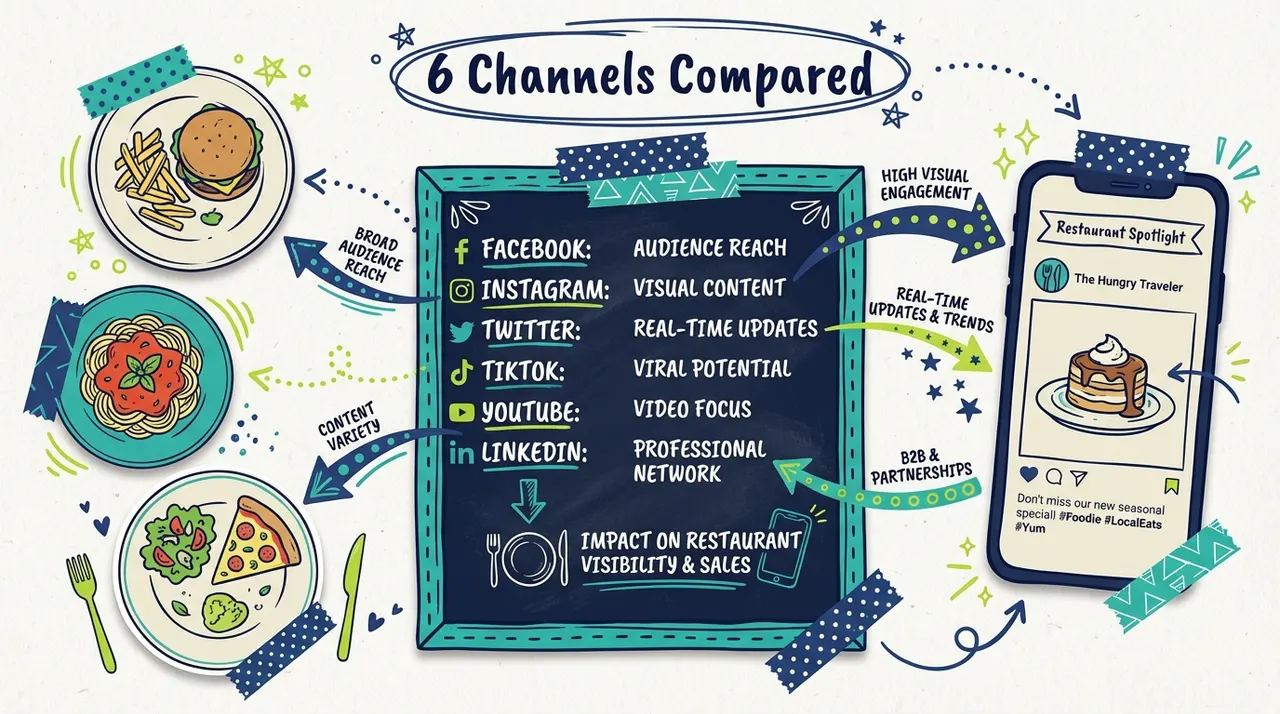
Channel Comparison for Restaurants
Building Your Restaurant's Advertising Plan
Don't try to do everything at once. Here's a phased approach based on budget.
Tight budget ($500/month or less): Focus on free channels first. Optimize your Google Business Profile, claim all directory listings, and build a review generation habit. Put any remaining budget into Google Local Search ads targeting high-intent keywords. These basics alone can drive meaningful traffic.
Growth budget ($1,000-$3,000/month): Layer in Meta advertising with video-first creative. Test a CTV campaign with Adwave to build broader local awareness. Invest in professional food photography, which pays dividends across every channel. This is also the stage to run seasonal direct mail campaigns for major promotions.
Established budget ($3,000+/month): Run always-on campaigns across Google, Meta, and CTV. Increase your streaming TV budget during peak seasons and local events. Invest in a local SEO specialist to dominate organic search. At this level, the multi-channel approach compounds, and your cost per new customer drops as brand awareness grows.
Common questions answered
What's the best advertising platform for a new restaurant? Google Business Profile and local search should be your first priority. They're free to set up and capture people who are actively looking for a place to eat. Pair that with a modest Google Ads budget ($300 to $500/month) targeting "restaurant near me" style searches, and you'll start seeing traffic within the first week.
How much should a restaurant spend on advertising? Industry benchmarks suggest 3% to 6% of revenue for established restaurants and 8% to 12% for new locations trying to build awareness. For a restaurant doing $50,000/month in revenue, that translates to $1,500 to $3,000/month. Start at the lower end and increase investment in channels that prove profitable.
Does TV advertising really work for single-location restaurants? Yes, especially with CTV. Local targeting means your ad only reaches viewers in your area, and platforms like Adwave let you start for just $50. Many restaurant owners report that guests mention seeing their TV ad, which creates word-of-mouth and social proof that amplifies your other marketing efforts.
How do I get more Google reviews for my restaurant? Train your staff to mention reviews at the right moment, typically when a guest compliments the food or experience. Make it easy by creating a short link to your Google review page and adding it to receipts, table cards, or follow-up emails. Timing matters: asking right after a positive interaction yields the best results.
Should I advertise on delivery apps like DoorDash and Uber Eats? If delivery is a significant part of your revenue, promoting your listing on these platforms makes sense. But be strategic about margins. The 15% to 30% commission plus advertising costs can make delivery orders barely profitable. Many restaurants use delivery apps for customer acquisition and then encourage direct ordering through their own website for repeat business.
Is Instagram or Facebook better for restaurant advertising? Instagram tends to drive more engagement for restaurants because of its visual focus, especially with Reels and Stories. But Facebook's ad platform handles the targeting and distribution for both, so you're typically running ads across both simultaneously. Don't overthink the platform split. Focus on creating mouth-watering video content, and let Meta's algorithm decide where it performs best.