
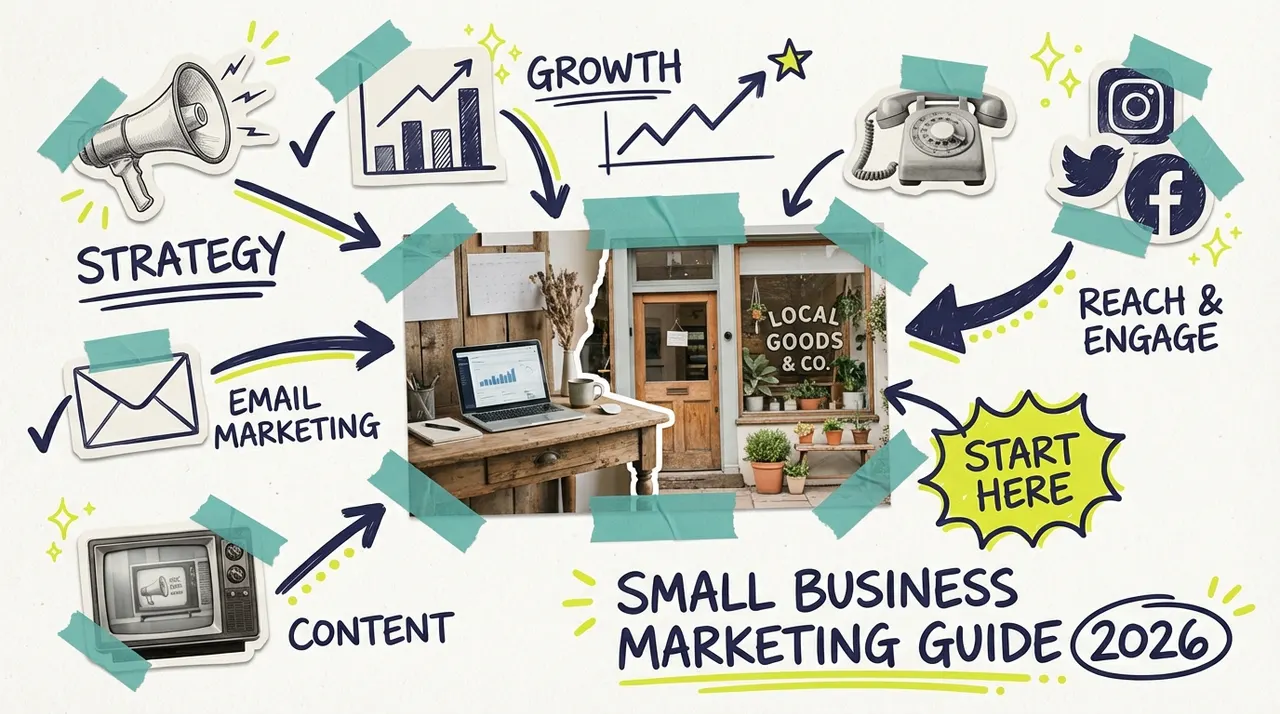
If you're wondering how to market your small business in 2026, you're not alone. The options are overwhelming: social media, Google ads, email marketing, SEO, influencers, events, and about a dozen other channels all competing for your attention and budget.
Marketing your business effectively isn't about doing everything. It's about doing the right things consistently. The businesses that win aren't the ones with the biggest budgets. They're the ones who understand their customers, pick the right channels, and measure what works.
This guide breaks down exactly how to promote a small business, from free tactics you can start today to paid channels that punch above their weight. Whether you're just getting started or looking to level up your existing efforts, you'll find actionable strategies that work for real budgets.
Start With Your Foundation (Before You Spend a Dollar)
Before you spend a single dollar on marketing, you need to get three things right. Skip this step and you'll waste money on tactics that don't connect with your actual customers.
Define Your Ideal Customer
Who exactly are you trying to reach? Not "everyone" or "anyone who needs my product." Get specific:
Demographics: Age, income, location, occupation
Problems: What keeps them up at night? What are they searching for?
Where they spend time: Which platforms, publications, or places do they frequent?
A plumber in Phoenix targeting homeowners over 40 in specific ZIP codes has a completely different marketing approach than an e-commerce brand targeting millennials nationwide. The clearer your picture of your ideal customer, the more effective every marketing dollar becomes.
Clarify Your Value Proposition
Why should someone choose you over the competition? Your answer should be specific and believable:
Not this: "We provide quality service at competitive prices"
Try this: "Same-day emergency plumbing, no overtime charges, and we clean up after ourselves"
Your value proposition should address what your ideal customer cares about. If you're not sure, ask your best customers why they chose you.
Set Up Basic Tracking
You can't improve what you don't measure. At minimum, set up:
Google Analytics: Free, and tells you where website visitors come from
Call tracking: Services like CallRail show which ads drive phone calls
Simple spreadsheet: Track leads by source weekly
This doesn't need to be complicated. Even a basic system beats flying blind.

Free Marketing Tactics That Work
The best marketing strategies for small business often start with free tactics that build your foundation. Here are the ones worth your time:
Google Business Profile
If you serve local customers, this is non-negotiable. Your Google Business Profile is often the first thing people see when searching for businesses like yours.
Optimization checklist:
Complete every field (hours, services, attributes)
Add photos weekly (businesses with photos get 42% more direction requests)
Post updates regularly (events, offers, news)
Respond to every review in 24 hours or less
This alone can drive significant traffic without spending a cent on ads.
Customer Reviews and Testimonials
88% of consumers trust online reviews as much as personal recommendations. Yet most businesses never proactively ask for reviews.
Simple review system:
Identify your happiest customers
Send a direct link to your Google or Yelp review page
Make it easy: "It would mean a lot if you could share your experience. Here's the link."
Follow up once if they don't respond
Aim for 5-10 new reviews monthly. Consistency matters more than volume.
Email Marketing to Existing Customers
Your existing customers already trust you. Email marketing lets you stay familiar and drive repeat business without paying for ads.
What to send:
Monthly newsletter with useful tips (not just promotions)
Special offers for loyal customers
New service or product announcements
Seasonal reminders
Tools like Mailchimp offer free plans for small lists. The key is providing value, not just asking for sales.
Strategic Social Media
Notice I said "strategic," not "post three times a day and hope for the best." Organic social media reach has declined significantly, but it still works for:
Showing your work: Before/after photos, behind-the-scenes content
Building community: Responding to comments, sharing customer stories
Local discovery: People do search Instagram and Facebook for local businesses
Focus on one or two platforms where your customers spend time, rather than spreading yourself thin across every network.
Paid Marketing Channels: Where to Spend Your Budget
When you're ready to invest in marketing your business effectively, here are the channels worth considering:
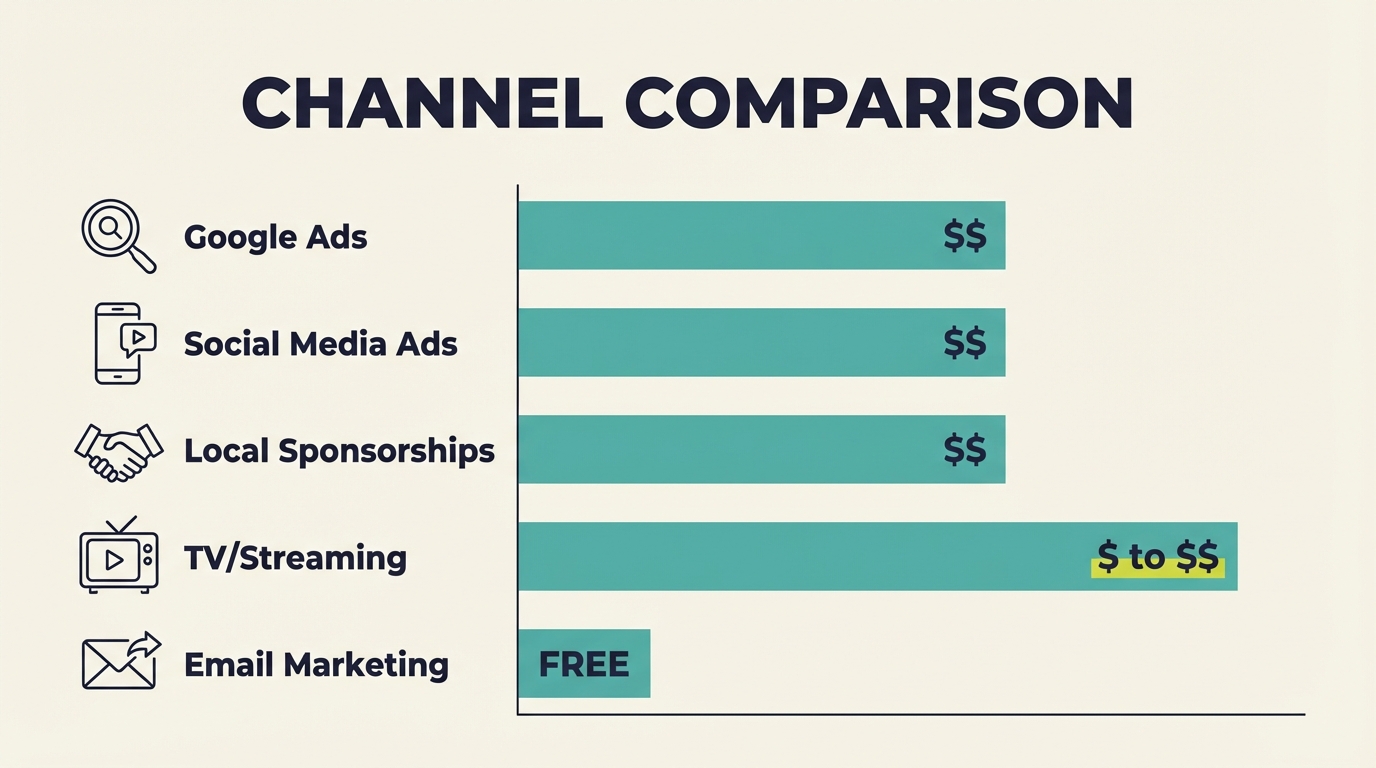
Google Ads
Best for: Businesses where people actively search for what you offer
Typical cost: $1-5 per click for local services, higher for competitive industries
Pros: Reaches people with intent to buy
Cons: Can get expensive quickly without proper management
Google Ads works well for service businesses (plumbers, lawyers, dentists) where people search when they need help. Less effective for brand building or impulse purchases.
Social Media Advertising
Best for: Visual products, lifestyle brands, reaching specific demographics
Typical cost: $5-15 per thousand impressions, $1-3 per click
Pros: Detailed targeting, visual formats
Cons: People aren't there to shop, iOS changes have hurt tracking
Meta (Facebook/Instagram) ads can work well for e-commerce and local businesses, but expect to test multiple audiences and creatives before finding what works.
Local Sponsorships and Events
Best for: Building community presence and trust
Typical cost: $200-2,000 depending on the event
Pros: Builds goodwill, face-to-face connection
Cons: Harder to track direct ROI
Sponsoring a little league team or local 5K race builds the kind of community trust that digital ads can't replicate. This works especially well for businesses where trust matters (healthcare, financial services, home services).
TV Advertising on Streaming Platforms
Here's the channel most small businesses assume is out of reach: TV advertising.
The streaming revolution has completely changed what's possible. You can now run ads on NBC, Hulu, ESPN, and 100+ other premium channels starting at just $50. Platforms like Adwave use AI to create your commercial automatically, so there's no production budget required.
Why TV works for small businesses:
Credibility: Being on TV signals legitimacy in a way social ads don't
Completion rates: 94% of streaming TV ads are watched to completion (vs. 25% for social)
Local targeting: Target specific ZIP codes or radius around your business
Premium environment: Your ad runs alongside content from major networks
This isn't your grandfather's TV advertising. You don't need a $50,000 production budget or a media buyer. You can literally create and launch a TV campaign during your lunch break.
Channel Selection: Matching Budget to Goals
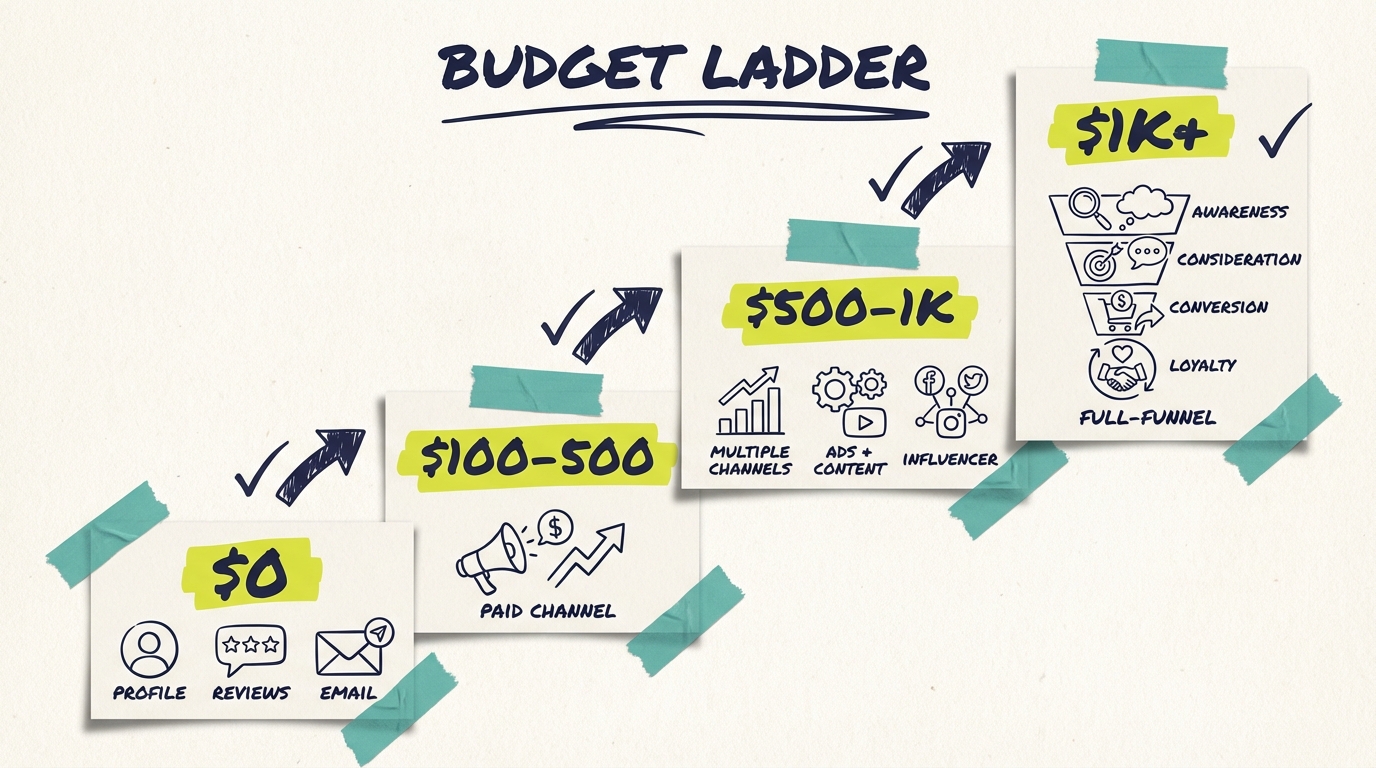
Not sure where to start? Here's a practical framework based on your monthly marketing budget:
$0/Month: Foundation Only
Focus entirely on free tactics:
Optimize Google Business Profile
Request reviews systematically
Email your customer list monthly
Post on one social platform consistently
This approach builds slowly but creates a solid foundation for when you do have budget to spend.
$100-500/Month: Add One Paid Channel
Pick the channel that best matches your business:
Service business (plumber, lawyer, dentist): Google Local Service Ads
Retail or restaurant: Streaming TV for local awareness
E-commerce: Meta ads with retargeting
B2B: LinkedIn ads or Google Search
Don't split a small budget across multiple channels. Go deep on one until you understand what works.
$500-1,000/Month: Multi-Channel Approach
Now you can start combining channels:
Primary channel (60% of budget): Your best performer
Secondary channel (30%): Testing a new approach
Foundation (10%): Boosting best social content
At this level, you can run TV advertising alongside digital campaigns to build awareness while driving direct response.
$1,000+/Month: awareness and conversion Marketing
With more budget, you can build a complete customer journey:
Top of funnel: TV advertising, content marketing, social awareness
Middle of funnel: Retargeting, email nurturing, review generation
Bottom of funnel: Google search ads, local service ads, direct response
Choose each channel according to the customers you want to reach and the response you can measure.
Creating a Simple Marketing Plan
A marketing plan doesn't need to be complicated. Here's a simple monthly structure that works for small business marketing for beginners:
Weekly Activities
Monday: Review last week's metrics, plan the week
Tuesday-Thursday: Execute campaigns, create content
Friday: Request reviews, engage with customers
Monthly Review
At the end of each month, answer these questions:
Where did our leads/customers come from?
What did we spend, and what was our cost per lead?
What worked well? What should we stop doing?
What will we try next month?
The 90-Day Rule
Give each new channel at least 90 days before deciding if it works. Marketing rarely delivers instant results. Most businesses give up too early, right before something would have started working.

Common Marketing Mistakes to Avoid
After working with thousands of small businesses, here are the mistakes that trip people up most often:
Trying to Be Everywhere
You don't need to be on every platform. Pick two or three channels and do them well. A strong presence on Google and Instagram beats a weak presence on seven platforms.
Not Tracking Results
"I think it's working" isn't a marketing strategy. If you can't point to numbers showing which channels drive customers, you're guessing. Set up tracking before you spend money.
Giving Up Too Early
Most marketing takes time to work. SEO takes 6-12 months. Brand awareness campaigns need consistent exposure. If you change tactics every month, nothing has time to compound.
Ignoring Brand Awareness
Not every marketing dollar should aim for immediate sales. Customers need to see and trust your brand before they buy. TV advertising, content marketing, and community involvement build the foundation that makes your direct response ads work better.
Marketing in 2026: What's Changed
The marketing landscape keeps evolving. Here's what matters for small businesses right now:
AI Tools That Help
AI isn't just hype anymore. Tools now exist that can:
Create professional TV commercials automatically
Write ad copy variations for testing
Analyze which content performs best
Automate email sequences
The key is using AI as a tool, not a replacement for understanding your customers.
The Decline of Organic Social
Organic social media reach has dropped significantly across all platforms. If you're relying on free social posts to drive business, it's time to adjust expectations. Social media is now "pay to play" for most businesses.
Privacy Changes and Tracking
IOS changes and browser privacy updates have made digital ad tracking less reliable. The solution: focus on building direct customer relationships (email lists, phone numbers) and invest in brand awareness that doesn't depend on pixel tracking.
Streaming TV for Small Business
Perhaps the biggest shift: TV advertising is now accessible to small businesses. What used to require $50,000+ production budgets and six-figure media buys now starts at $50. Adwave and similar platforms have democratized the most powerful advertising medium in history.
Your Next Step
Marketing your small business doesn't have to be overwhelming. Start with the foundation: know your customer, clarify your value proposition, set up basic tracking. Then pick one or two channels that match your budget and stick with them long enough to see results.
The businesses that succeed at marketing aren't necessarily the ones with the biggest budgets. They're the ones who understand their customers, choose the right channels, and stay consistent.
Common questions answered
What is the best marketing strategy for a small business?
The best strategy builds on three pillars: being findable when customers search, being trusted when they research, and being memorable before they need you. This means investing in search presence, reputation management, and awareness advertising rather than focusing on just one area.
How much should a small business spend on marketing?
Plan for 5-10% of revenue on marketing, with higher investment during growth phases. More important than the percentage is measuring return on investment across channels. Start small, test multiple channels, and scale what works while cutting what doesn't.
What marketing channels work best for small businesses?
The right channels depend on your customers and business type. Local service businesses benefit from TV and local search. E-commerce needs social and search advertising. Most businesses need a mix: awareness channels to be known, and direct response channels to convert.
Should small businesses hire a marketing agency?
You can accomplish a lot with self-serve platforms and learning. Agencies add value when you need specialized expertise or lack time to manage marketing yourself. Start by learning what works for your business, then decide if outside help would accelerate results.


