-
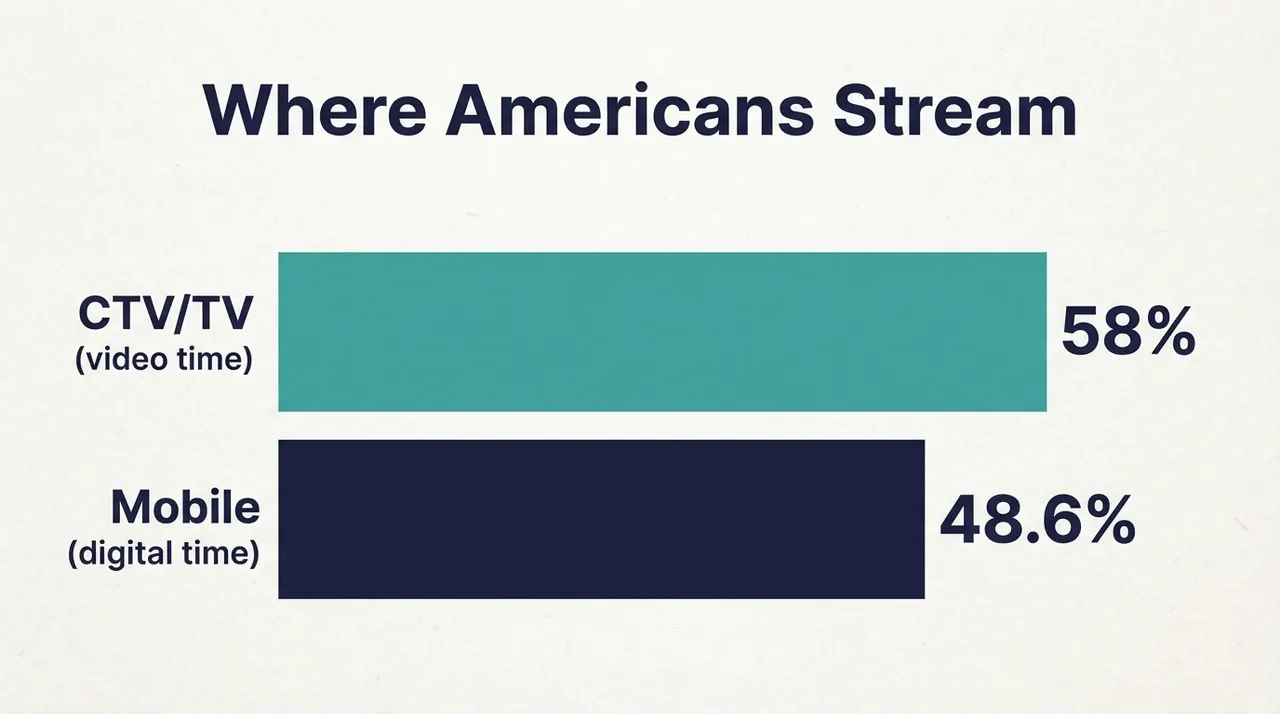
58%
CTV share of digital video viewing time
-
48.6%
Mobile share of total digital time
-
85%
U.S. households with smart TVs
Connected TVs now capture approximately 58% of all time spent with digital video, while mobile devices account for 48.6% of total digital media time, according to eMarketer research from 2025. This marks a significant shift in how Americans consume streaming content, with living room screens reclaiming dominance over portable devices for video viewing.
What the data shows
According to eMarketer research, connected TV platforms now account for approximately 58% of time spent with digital video and 30% of time spent with digital media daily. Smart TV penetration continues driving CTV viewing growth, with approximately 85% of U.S. households now having at least one smart TV according to Leichtman Research. This near-universal smart TV adoption has fundamentally changed how Americans access streaming content.
Mobile devices remain critical for digital media consumption overall, accounting for 48.6% of total digital media time. However, this mobile usage is heavily weighted toward social media, messaging, and short-form content rather than long-form video. When it comes to streaming video specifically, TV screens dominate mobile by a significant margin.
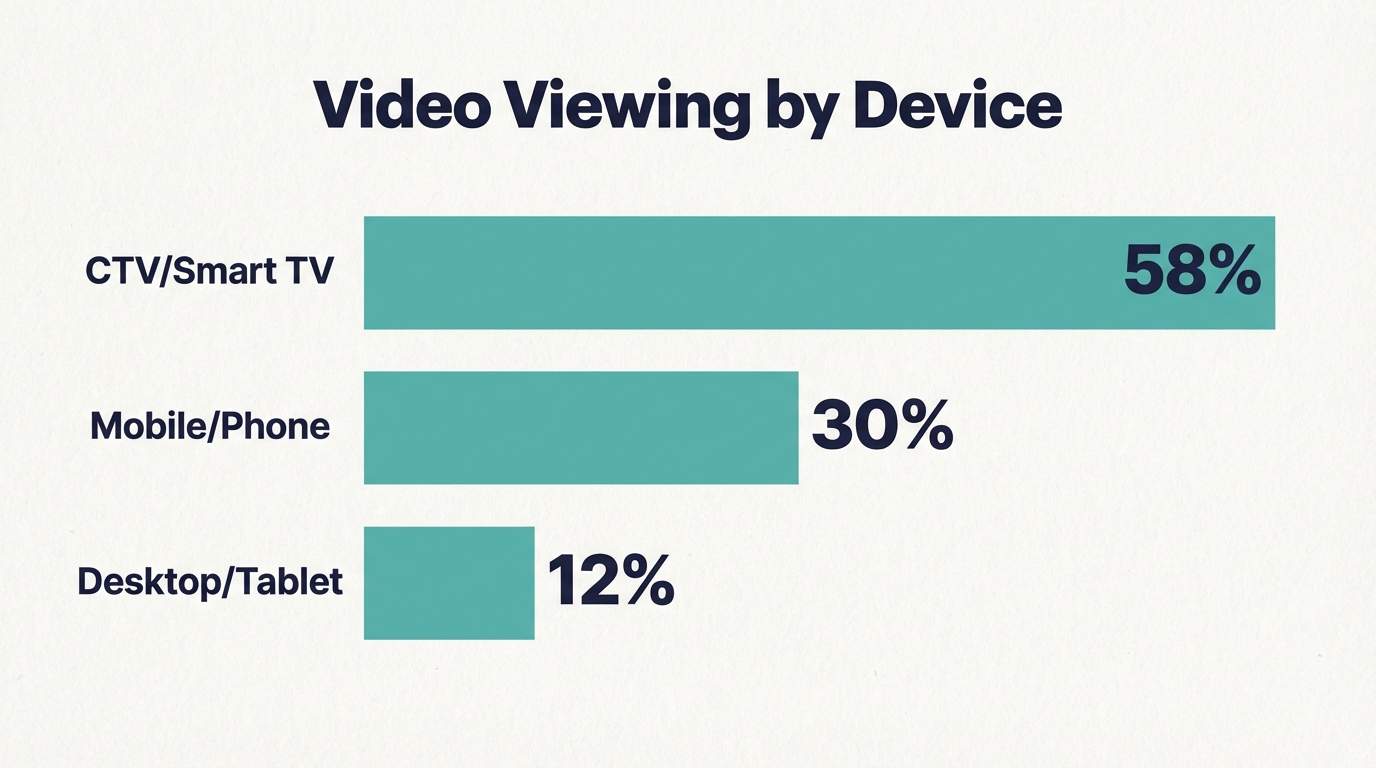
The living room's dominance in streaming video viewing reflects viewer preferences for larger screens when consuming entertainment content. Mobile devices excel for quick content consumption during commutes or breaks, but dedicated viewing sessions gravitate toward television screens. This pattern has significant implications for advertisers seeking to reach engaged viewers.
Smart TV adoption has reached effective saturation in American households. The 85% penetration rate means television manufacturers have successfully transitioned the market from traditional sets to internet-connected devices. This transition has made streaming the default television experience for most households, enabling programmatic advertising at scale.
Streaming devices like Roku and Amazon Fire TV complement smart TVs in households with older televisions, so that virtually all TV-owning households have streaming access. The combination of built-in smart TV functionality and external streaming devices has created a nearly universal CTV advertising audience.
Understanding device preferences connects to broader connected TV advertising trends and streaming TV viewing patterns that are reshaping the advertising landscape.
Breaking down the numbers
By device type
Different device categories serve distinct roles in the streaming ecosystem, creating varied advertising opportunities and viewer engagement patterns.
Smart TVs represent the largest CTV category, with 85% household penetration driving massive reach. These televisions come with streaming functionality built in, eliminating friction between turning on the TV and accessing streaming content. Major smart TV operating systems include Samsung Tizen, LG webOS, Roku TV, and Google TV.
External streaming devices like Roku players and Amazon Fire TV sticks serve households with older televisions or those preferring specific streaming interfaces. These devices often offer superior performance and interface experiences compared to built-in smart TV functionality. Roku and Amazon Fire TV together command the majority of the external streaming device market.
Gaming consoles including PlayStation and Xbox serve as secondary streaming devices in many households. While gaming remains their primary function, these devices provide high-quality streaming experiences that some viewers prefer. Gaming console streaming represents incremental CTV reach beyond dedicated streaming devices.
Tablets occupy a middle ground between mobile phones and televisions, offering larger screens than phones while remaining portable. Tablet viewing often occurs in home environments like bedrooms and kitchens, with viewers choosing tablets when the main TV is occupied or for personal viewing preferences.
Mobile phones dominate short-form video and social media content consumption but see limited use for long-form streaming content. Phone streaming typically occurs during commutes, waiting periods, and other moments when TV access is unavailable.
By viewing context
Viewing context significantly impacts device choice and advertising effectiveness, with different situations favoring different screen types.
Primetime viewing (7 PM - 11 PM) overwhelmingly occurs on television screens. These dedicated viewing sessions involve intentional content selection and high engagement. Primetime CTV advertising reaches viewers during their most attentive viewing periods.
Co-viewing is common on televisions, with multiple household members watching together. This shared viewing increases effective reach and can facilitate purchase discussions among decision-makers. Co-viewing rarely occurs on mobile devices.
Background viewing, where streaming content plays while viewers engage in other activities, occurs primarily on television. This lean-back viewing context differs from mobile consumption, which typically requires active attention.
Mobile viewing peaks during morning and afternoon hours when TV access is limited. Commute times, lunch breaks, and other mobile moments drive phone and tablet streaming usage.
By demographic
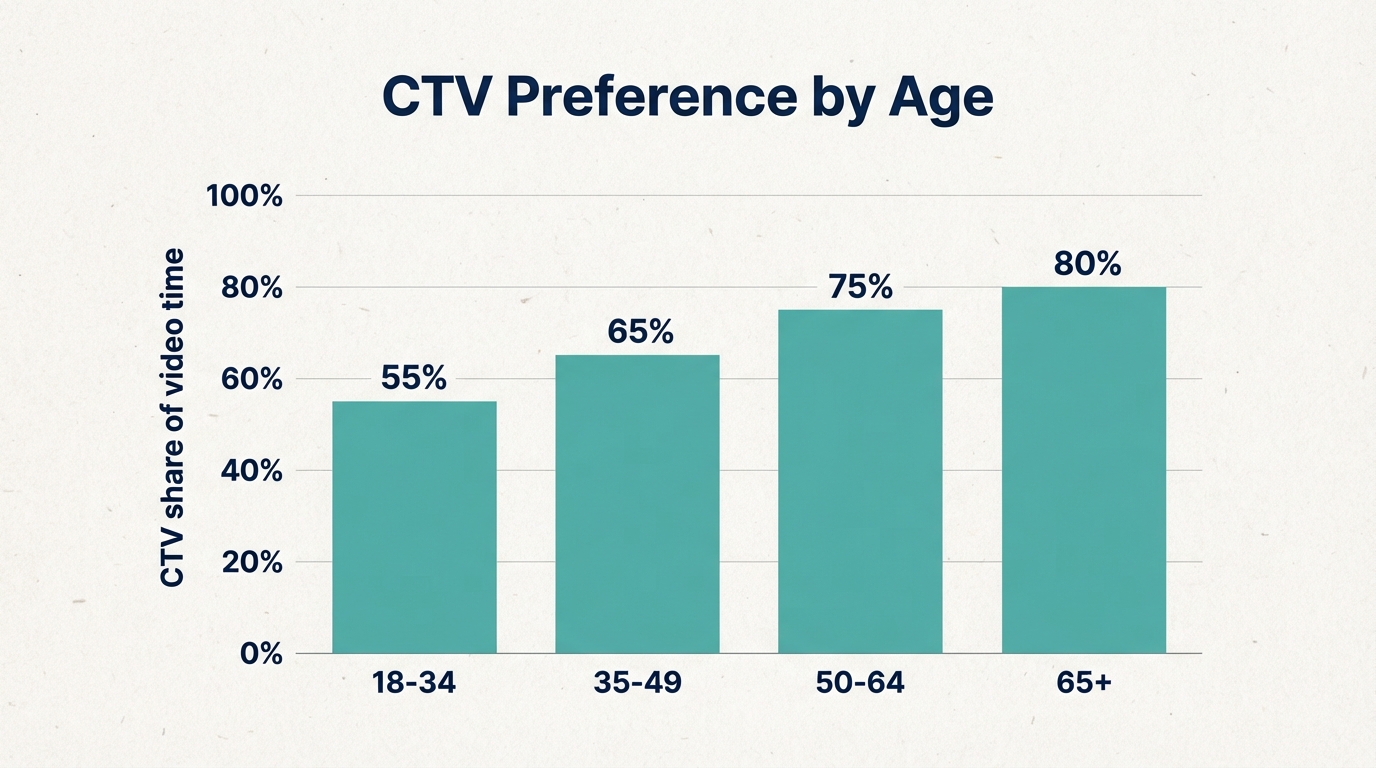
Device preferences vary significantly by age and other demographic factors, with important implications for advertising reach.
Younger adults (18-34) show the highest mobile streaming usage while still preferring TV screens for intentional viewing sessions. This demographic's mobile-first orientation means CTV advertising alone may not provide complete reach. However, when this age group chooses to watch longer content, they typically select TV screens.
Adults 35-54 demonstrate strong CTV adoption with relatively lower mobile streaming usage. This demographic's viewing patterns more closely resemble traditional television, with evening primetime sessions dominating their streaming consumption.
Adults 55+ show the strongest preference for television screens, with mobile streaming usage well below younger demographics. For advertisers targeting older audiences, CTV provides detailed reach without significant mobile complementation needed.
Families with children show high CTV usage, with television serving as the primary family entertainment screen. Children's content consumption occurs almost exclusively on TV screens in most households, with parental controls more easily managed on TV interfaces.
Smart TVs: Largest device category for streaming, built-in apps dominate
Streaming sticks/boxes: Roku, Fire TV, Apple TV provide access on older TVs
Gaming consoles: PlayStation and Xbox serve as secondary streaming devices
Mobile devices: Phones and tablets for on-the-go viewing, shorter sessions
Why it matters for your business
Understanding device preferences helps businesses allocate advertising budgets effectively across screens. CTV's dominance in video viewing creates significant opportunities for businesses of all sizes seeking to use TV advertising.
For local businesses, CTV advertising provides the best combination of engaged viewers and geographic targeting. Television viewers exhibit higher attention and engagement than mobile viewers, making advertising more effective. Geographic targeting ensures spending focuses on viewers in your service area.
The 58% video viewing share on CTV means that TV screens represent the primary video advertising opportunity. While mobile reaches viewers during different moments, CTV captures the majority of intentional viewing sessions where advertising recall is highest.
Local TV advertising through CTV reaches engaged audiences for businesses like restaurants, dental practices, and home service contractors seeking high-attention advertising environments.
Co-viewing on televisions amplifies advertising reach beyond single viewers. When multiple household members watch together, a single impression reaches multiple potential customers. This multiplier effect makes CTV advertising more efficient than the impression numbers alone suggest.
How to take advantage of this trend
Businesses can use CTV's viewing dominance through strategic advertising approaches that match the viewing context.
For most small businesses, CTV advertising through programmatic platforms provides the most accessible entry point. Platforms like Adwave aggregate streaming inventory across devices and services, allowing advertisers to reach CTV audiences with budgets starting as low as $50. These platforms handle targeting, optimization, and measurement complexity.
Prioritize CTV in video advertising budgets. With 58% of video viewing occurring on connected TVs, CTV should represent the majority of video advertising spend for most businesses. Mobile video can complement CTV reach but should not replace it.
Quality creative matters on television screens. Your advertising should meet production standards appropriate for the big screen. With platforms like Adwave, AI-generated creative can achieve broadcast-quality production without traditional production costs.
Use geographic targeting to focus CTV advertising on your service area. Local businesses can reach streaming viewers within a defined radius without paying for national reach. This targeting efficiency makes CTV advertising accessible to businesses of all sizes.
Consider primetime weighting to reach viewers during peak engagement hours. Evening hours (7 PM - 11 PM) offer the highest CTV viewership and attention levels. Focusing spend during these hours can improve advertising effectiveness.
Prioritize TV placements: CTV captures lean-back attention that mobile cannot match
Design for the big screen: Use larger text, clear visuals optimized for 10-foot viewing
Consider audio carefully: TV viewers have sound on, unlike mobile scrolling
Use full-screen impact: Non-skippable CTV ads command complete attention
The bigger picture
Screen convergence
The distinction between "TV" and "digital" advertising continues to blur as streaming becomes the default television experience. Advertisers increasingly think in terms of screens rather than channels, with CTV providing TV-like reach with digital targeting and measurement.
This convergence benefits advertisers by combining the brand-building power of television with the precision of digital advertising. CTV campaigns can target specific demographics, geographies, and interests while delivering ads on the biggest screen in the home.
Attention economy
CTV's lean-back viewing context creates higher attention than mobile's lean-forward usage pattern. Viewers actively choose to watch streaming content on TV, creating receptive advertising environments. This attention advantage makes CTV advertising more effective per impression than many mobile placements.
Research consistently shows higher ad recall and brand lift for CTV advertising compared to mobile video. The combination of larger screens, focused viewing sessions, and co-viewing drives these attention advantages.
Measurement evolution
CTV advertising measurement continues maturing, with improving attribution and cross-device tracking capabilities. Advertisers can increasingly connect CTV advertising exposure to business outcomes including website visits, store visits, and purchases.
The combination of TV-like impact and digital-like measurement makes CTV an increasingly attractive channel for performance-focused advertisers. As measurement improves, CTV will likely capture additional budgets from both traditional TV and digital video.
What experts are saying
Industry analysts have noted the shift toward television screens for streaming video consumption and its advertising implications.
Media analysts highlight CTV's dominance in video viewing as evidence that the living room remains central to entertainment consumption despite mobile device proliferation. Viewers prefer larger screens when they have a choice.
Advertising experts point to CTV's attention advantages as a key differentiator from mobile video. The combination of engaged viewers and premium content environments creates advertising value that commands premium pricing.
Research analysts note that smart TV saturation has created a universal CTV advertising audience. With 85% household penetration, advertisers can reach essentially any household through streaming platforms.
Common questions answered
Do more people stream on TV or mobile?
TV dominates streaming video consumption, capturing approximately 58% of time spent with digital video. Mobile accounts for more total digital media time (48.6%) but this includes social media, messaging, and other non-video content. For video specifically, TV wins decisively.
What percentage of households have smart TVs?
Approximately 85% of U.S. households now have at least one smart TV, according to Leichtman Research. This near-universal penetration means streaming has become the default television experience for most Americans.
Is CTV advertising effective for local businesses?
Yes. CTV advertising combines television's attention advantages with geographic targeting that focuses spending on viewers in your service area. Local businesses can reach streaming audiences with budgets starting as low as $50 through programmatic platforms.
Which streaming devices are most popular?
Smart TVs with built-in streaming functionality lead the market at 85% household penetration. Among external devices, Roku and Amazon Fire TV dominate, together commanding the majority of the streaming device market. Gaming consoles like PlayStation and Xbox provide additional streaming access.
When do people stream on TV versus mobile?
TV viewing peaks during primetime hours (7 PM - 11 PM) when viewers settle in for intentional viewing sessions. Mobile streaming occurs more during daytime hours, commutes, and other moments when TV access is limited.
Does co-viewing matter for advertising?
Yes. Television viewing often involves multiple household members watching together, increasing the effective reach of each impression. This co-viewing rarely occurs on mobile devices, giving CTV an advantage in reaching multiple potential customers per impression.
Supporting data
Additional context on streaming device usage patterns:
CTV share of digital video: ~58% (eMarketer, 2025)
Mobile share of total digital media: 48.6%
Smart TV household penetration: ~85% (Leichtman Research)
CTV share of daily digital media time: 30%
Peak TV streaming hours: 7 PM - 11 PM
Leading external devices: Roku, Amazon Fire TV
Leading smart TV platforms: Samsung Tizen, LG webOS, Roku TV, Google TV
All sources linked above. Data current as of August 2025.
Get started with TV advertising
Your ads can run across 100+ streaming platforms, reaching engaged viewers in your target area during primetime viewing sessions. No production budget required. AI creates your commercial from your website in minutes.