-
1.5x
Urban CTV adoption rate vs rural
-
49%
Rural areas with local TV coverage
-
73%
Rural broadband access rate
Urban households are 1.5x more likely to use connected TV (CTV) than rural households, according to Marketing LTB research (October 2025). This digital divide in television consumption reflects broader infrastructure challenges that shape how Americans in different communities watch TV, access streaming services, and respond to advertising. While streaming now dominates urban and suburban viewing, rural Americans maintain stronger ties to traditional television, creating distinct opportunities and challenges for advertisers trying to reach audiences across geographic lines. Understanding these differences is essential for any business targeting customers outside major metropolitan areas.
What the data shows
The gap between urban and rural television habits runs deeper than simple technology preferences. It reflects fundamental differences in infrastructure, lifestyle, and media access that shape viewing behavior in distinct ways.
Connected TV adoption tells the clearest story. Urban households use CTV at 1.5 times the rate of rural households according to Marketing LTB's 2025 analysis. This gap persists despite years of streaming growth because rural areas continue to face broadband limitations that make reliable streaming difficult or impossible. Where urban viewers take high-speed internet for granted, rural households often navigate data caps, slower speeds, and fewer provider options.
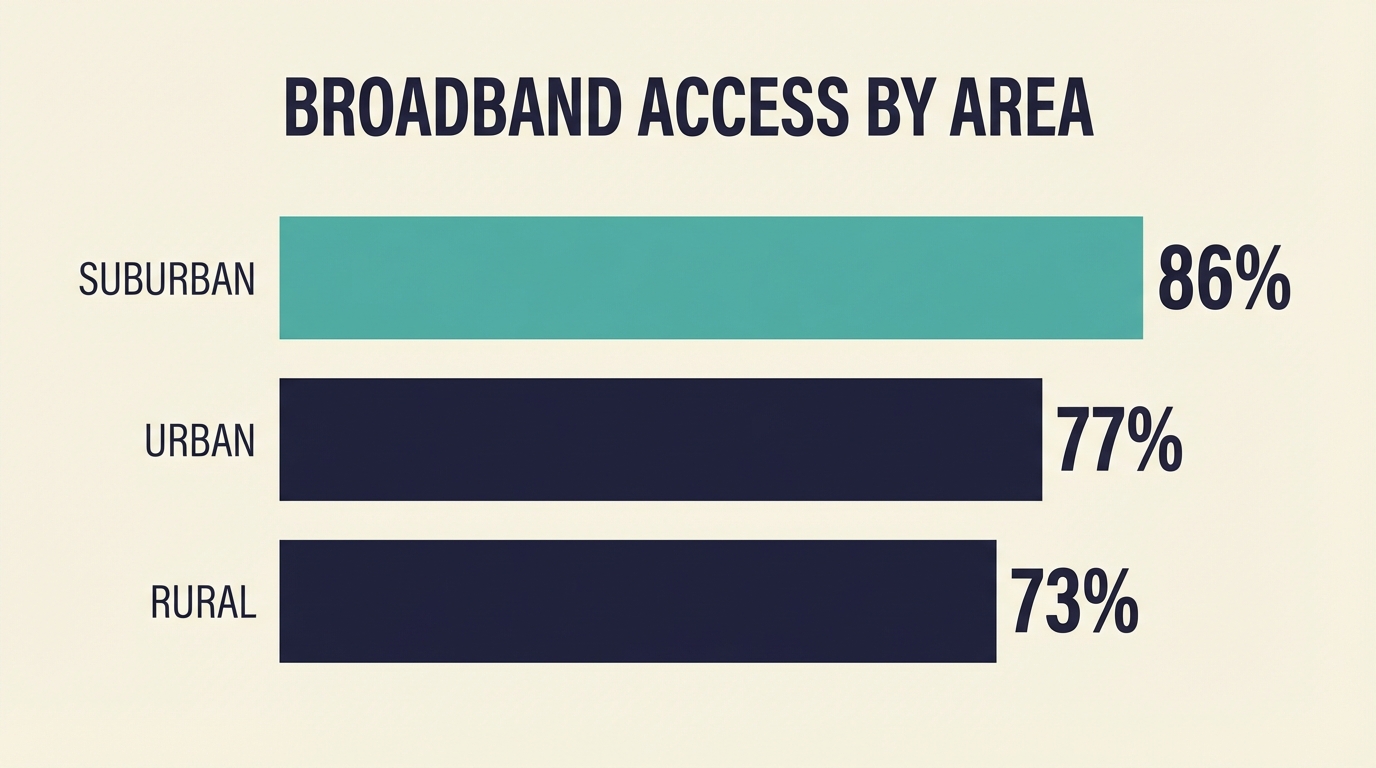
The broadband divide provides context for these viewing patterns. According to research from Wiley and the Federal Communications Commission, 73% of adults in rural areas had home broadband access in 2023, compared to 77% in urban areas and 86% in suburban areas. That 13-point gap between rural and suburban America translates directly into different television experiences. Without reliable high-speed internet, streaming services buffer, fail to load, or become prohibitively expensive due to data overage charges.
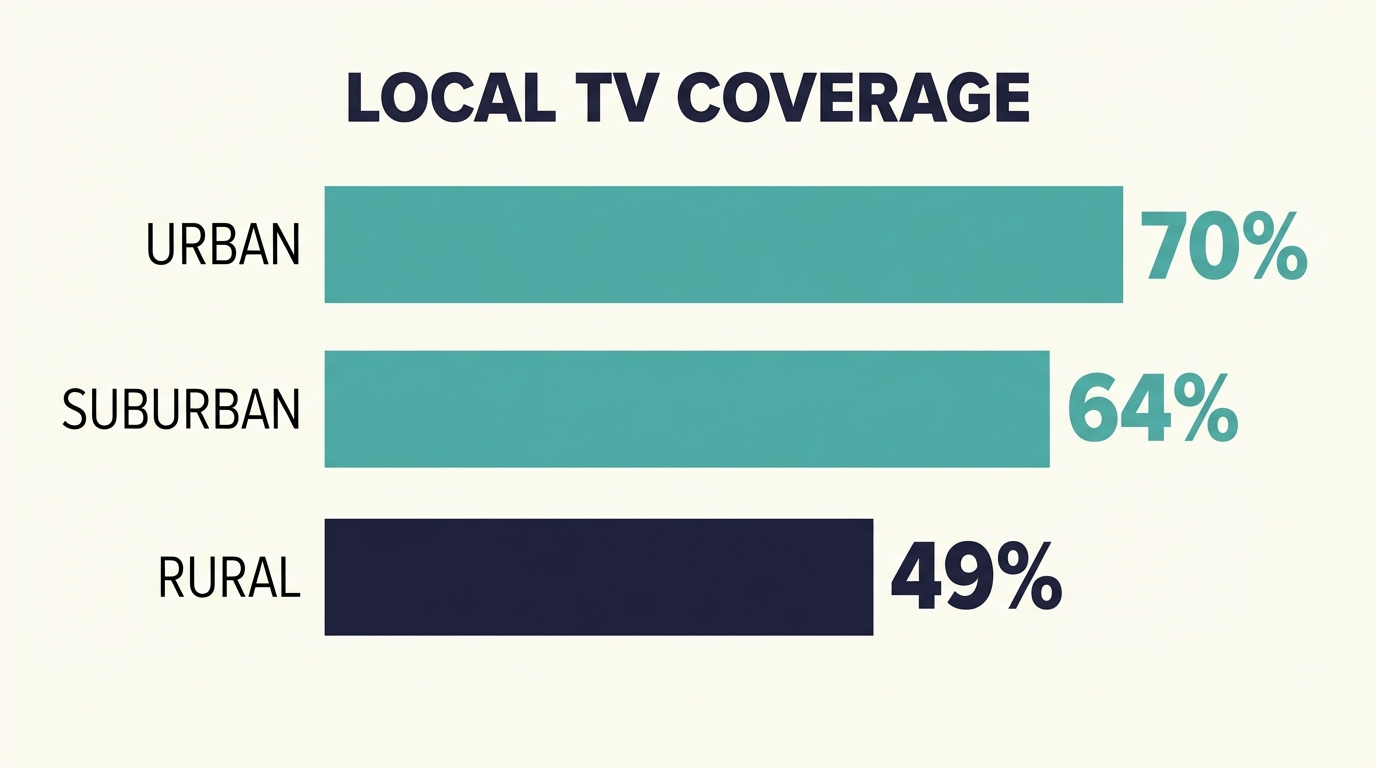
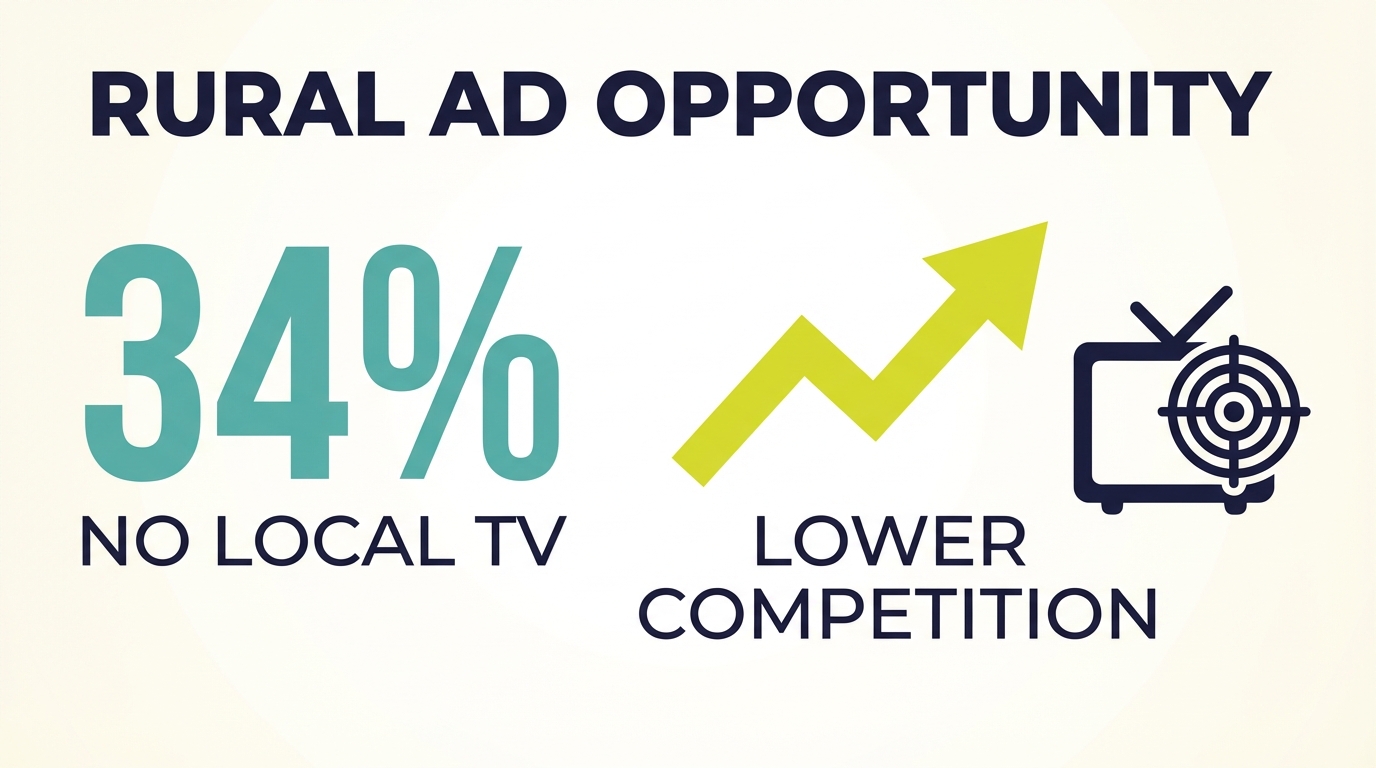
Pew Research Center surveys reveal another dimension of this divide: local television coverage itself varies dramatically by geography. Only 49% of rural Americans say there is a TV station covering their local area, compared to 64% of suburban residents and 70% of urban dwellers. More than a third of rural Americans (34%) report having no local TV station at all. This coverage gap means rural viewers have fewer local news options and less locally relevant advertising inventory.
Despite these infrastructure challenges, television remains central to rural American life. The Innovative Systems 2024 Rural Broadband and Video Report found that 60% of rural Americans receive their home internet service from the same company that provides their TV service, often as a bundle. This bundling reflects both limited provider choice and the continued importance of traditional television in rural households.
Cord-cutting patterns show these geographic differences. Nielsen research consistently shows that rural residents are less likely to cut the cord than their urban and suburban counterparts. The reasons are practical: when streaming requires unreliable internet and satellite or cable TV works consistently, the economic calculus favors keeping traditional service. Rural Americans aren't technology averse; they're making rational choices based on what works in their communities.
Breaking down the numbers
The urban-rural viewing divide manifests differently across demographics, platforms, and content preferences.
By platform access
Infrastructure access varies significantly across community types, directly impacting viewing options:
Broadband access: 86% suburban, 77% urban, 73% rural (FCC, 2023)
CTV adoption: Urban 1.5x more likely than rural (Marketing LTB, 2025)
Local TV station coverage: 70% urban, 64% suburban, 49% rural (Pew Research, 2024)
No local TV station: 10% urban, 17% suburban, 34% rural
By content consumption
Rural and urban viewers gravitate toward different content categories. Rural audiences show stronger preferences for news programming, especially local news when available, and sports content. Urban viewers demonstrate higher consumption of on-demand entertainment and streaming-exclusive content. These differences reflect both practical considerations like what content is available and cultural factors that shape entertainment preferences across different community types.
The preference for live content is notably stronger in rural areas. Traditional appointment viewing, where families gather to watch scheduled programming, remains more common in rural communities. This pattern partly reflects cultural preferences and partly reflects the technical reality that live broadcasts work better over satellite and cable than buffering-prone streaming services. Evening news, weather reports, and primetime programming still draw reliable audiences in rural areas at rates that have declined significantly in urban markets.
News consumption patterns reveal another divide. While rural Americans are less likely to have local TV stations, those who do have access watch local news at higher rates than urban viewers. Local news is a community anchor in rural areas, providing weather forecasts essential for farming operations, agricultural market reports, school closings, community events, and local government coverage that national news doesn't touch. For many rural viewers, local news represents the primary connection to information affecting their daily lives.
Sports programming draws especially strong viewership in rural markets. Friday night football, NASCAR, hunting and fishing shows, and rodeo coverage all overindex in rural audiences. These programming preferences create specific advertising opportunities for businesses whose products and services align with rural lifestyles and interests.
By advertising exposure
The advertising environment differs substantially between urban and rural markets. Urban viewers encounter more digital and streaming ads, while rural viewers see more traditional TV commercials. This creates different response patterns: rural audiences often show higher engagement with TV advertising because they see fewer ads overall and haven't developed the same ad fatigue common among heavy digital users. Where an urban viewer might see hundreds of digital ads daily across multiple platforms, a rural viewer's advertising exposure is concentrated in traditional channels with less clutter.
Rural viewers also respond differently to calls to action. Phone numbers and simple website URLs outperform QR codes and complex digital CTAs in rural markets, which reflects both connectivity challenges and different media habits. A rural viewer who sees a TV ad while on satellite TV may not have a smartphone handy to scan a QR code, or may have limited cellular data. Simple, memorable phone numbers and basic web addresses convert better than sophisticated digital response mechanisms.
The trust dynamics also differ. Rural viewers tend to maintain higher trust in television advertising compared to digital advertising. They're less likely to have been burned by online scams or misleading digital ads, and they associate television with established, legitimate businesses. This trust premium means TV advertising carries more credibility weight in rural markets than in urban areas where viewers have become more cynical about advertising across all channels.
Why it matters for your business
If your customers live outside major metropolitan areas, understanding rural viewing patterns isn't optional. It's essential for reaching them effectively.
The 1.5x CTV gap means streaming-only advertising strategies systematically under-reach rural audiences. Businesses serving agricultural communities, small towns, or regional markets that include rural areas need media plans that account for how these audiences watch TV. A campaign that performs brilliantly in Denver may barely register in rural Colorado.
Consider the business implications across different industries. Healthcare providers in regional markets serve patients who drive 30 or more miles for care, and many of those patients live in rural areas with different media habits. A hospital system advertising only on streaming may reach patients in the city but miss the rural families who represent significant portions of their service area. Agricultural equipment dealers, farm supply stores, and rural banks serve customers who watch more traditional TV than streaming. These businesses need media strategies that match their customers' actual viewing behavior, not national averages skewed by urban populations.
Tourism businesses targeting hunting, fishing, camping, and outdoor recreation appeal to demographics that skew rural in their media consumption. These audiences watch different programming at different times using different devices. Auto dealers in small towns, regional grocery chains, and community credit unions all serve markets where rural viewing patterns significantly impact campaign effectiveness. Even businesses in urban areas may have customers who commute from rural communities, and understanding those customers' media habits improves targeting.
The trust factor amplifies these considerations. Rural audiences often maintain higher trust in television advertising than their urban counterparts, partly because they've been exposed to less advertising overall. A business that advertises on TV in rural markets benefits from the credibility that medium still carries, while the same message might get lost in the advertising clutter of urban digital environments.
Local targeting becomes more valuable in rural markets. Because rural viewers have fewer local TV options, a business that appears on whatever local channels do exist gains disproportionate visibility. Local TV advertising that seems expensive per-impression delivers efficient reach in underserved markets.
The accessibility of streaming TV advertising through platforms like Adwave creates new opportunities for businesses in rural markets. With campaigns starting at just $50 and no production costs, even small-town businesses can afford TV advertising that reaches the portion of their audience who does stream. The key is understanding that streaming represents one piece of a complete rural media strategy, not the entire solution.
For home services businesses, auto dealers, and healthcare providers serving rural communities, the combination of lower competition and higher trust in TV advertising creates exceptional efficiency. A plumber in a small town who advertises on TV builds recognition that would cost significantly more in a major metro, reaching audiences who still turn to traditional media for local business information.
How to take advantage of this trend
Reaching rural audiences effectively requires adapting your approach to match how they consume media.
Here's a practical strategy for businesses targeting rural markets:
Use a mixed-media approach: Combine streaming ads (for the 73% with broadband) with understanding that traditional TV still dominates rural viewing
Target geographic areas precisely: Use radius targeting around rural communities rather than broad metro areas
Choose the right dayparts: Rural viewers often watch earlier in the evening and maintain more consistent viewing schedules
Simplify your creative: Clear messaging, readable phone numbers, and simple calls to action outperform complex digital CTAs
Prioritize reach over frequency: Rural audiences see fewer ads, so you don't need the same frequency levels required in cluttered urban markets
Consider seasonal timing: Rural viewing peaks during agricultural off-seasons, bad weather months, and around local events
Creative execution matters more in rural markets. Production values that signal "real business" rather than "big corporation" often resonate better. Featuring recognizable local landmarks, addressing specific community needs, and using language that reflects local culture all improve performance with rural audiences.
Measurement requires different expectations. Rural campaigns may show slower digital attribution because viewers are more likely to respond via phone calls, in-person visits, or searches conducted later when they have better connectivity. Track phone inquiries, ask new customers how they heard about you, and give campaigns more time to show results than you would in urban markets.
For businesses serving mixed markets that include both urban and rural customers, consider running separate campaigns with different creative and targeting approaches rather than trying to find one message that works everywhere. Platforms like Roku and Amazon Fire TV allow geographic targeting precise enough to segment urban and rural audiences effectively.
The bigger picture
The urban-rural viewing divide reflects broader digital inequality in America, with implications that extend beyond advertising into civic participation, economic opportunity, and community connection.
The infrastructure gap persists
Despite billions of dollars in federal broadband investment, rural America continues to lag in connectivity. The 2021 Infrastructure Investment and Jobs Act allocated $65 billion for broadband expansion, but deployment takes years and some areas may never achieve the same service levels as urban centers due to economic limitations of serving low-density populations.
This means the viewing gap will persist for the foreseeable future. While it may narrow as infrastructure improves, businesses shouldn't plan strategies that assume rural broadband will catch up to urban levels anytime soon. The practical reality is that significant portions of rural America will continue relying on satellite TV, over-the-air broadcasts, and whatever streaming they can manage with available bandwidth.
Rural markets remain underserved by advertisers
The advertising industry's focus on digital and urban audiences has created opportunity in rural markets. Many national brands have essentially abandoned TV advertising in rural areas, leaving local businesses with less competition for viewer attention. A regional bank, agricultural supplier, or healthcare system that maintains TV presence in rural markets gains mindshare that would cost much more to achieve in competitive urban environments.
Streaming will eventually reach everywhere
The long-term trajectory favors streaming everywhere, including rural America. As Starlink and other satellite internet services expand, and as fiber deployment continues into rural areas, more households will gain the connectivity required for reliable streaming. Forward-thinking advertisers are building relationships with rural audiences on streaming platforms now, positioning themselves for when those audiences grow. The businesses that establish streaming presence in rural markets today will have first-mover advantage as infrastructure improves.
The rise of ad-supported streaming creates more affordable inventory that makes rural streaming viable for smaller advertisers. As cord-cutting gradually extends into rural areas, the businesses already advertising on streaming will have established presence with these audiences. The patterns suggest rural America will follow urban streaming adoption trends, just with a lag of several years. Advertisers who understand this trajectory can position themselves appropriately rather than either ignoring rural markets or waiting until infrastructure fully catches up.
The opportunity in underserved markets
From an advertising perspective, the urban-rural divide creates distinct strategic considerations. Rural markets receive less advertising attention from national brands, creating less competition for local and regional businesses. The businesses that do advertise consistently in rural markets build stronger brand recognition with less spending than would be required in competitive urban environments. This underinvestment by major advertisers represents opportunity for businesses willing to understand and serve rural audiences.
What experts are saying
Industry analysts have increasingly focused on geographic disparities in television consumption as streaming becomes the dominant viewing format.
Nielsen's ongoing Gauge research consistently shows geographic variation in streaming adoption. "The national streaming numbers mask significant regional differences," company analysis notes. "Urban and suburban markets drive streaming growth, while rural areas maintain stronger traditional TV viewing patterns."
The Pew Research Center's local news study highlighted how infrastructure shapes media access: "Americans who live in rural areas are much less likely to say there is a TV station covering their local area. This affects not only news consumption but entertainment viewing patterns and advertising exposure."
Marketing industry observers have noted the opportunity this creates. "Rural America is advertising's blind spot," one industry analysis observed. "The same brands that fight for every impression in major metros often ignore rural markets entirely. That's a mistake for businesses whose customers don't all live in cities."
Rural media advocates emphasize the need for inclusive strategies. "When we talk about the digital divide, we're really talking about who gets included in modern commerce and civic life," notes analysis from the Center on Rural Innovation. "Businesses that figure out how to reach rural audiences effectively gain access to markets their competitors have written off."
Common questions answered
Why is CTV adoption lower in rural areas?
The primary barrier is broadband infrastructure. Streaming requires consistent high-speed internet, which 27% of rural Americans lack entirely and many more have in limited form with data caps or slow speeds. When streaming buffers constantly or uses up expensive data allotments, traditional TV becomes the practical choice. This isn't about technology preferences but about what works given available infrastructure.
Do rural viewers watch more or less TV overall?
Rural Americans generally watch more television than their urban counterparts, though the composition differs. With fewer entertainment alternatives, longer commutes to in-person activities, and different lifestyle patterns, television plays a larger role in rural life. However, this viewing skews more heavily toward traditional broadcasts and cable rather than streaming, especially for older rural residents who represent a significant portion of rural populations.
How should advertisers think about reaching rural audiences?
The most effective approach combines streaming advertising for the portion of rural audiences who do have reliable broadband with understanding that you're not reaching everyone through streaming alone. For businesses where rural customers matter, this means either supplementing streaming with other channels or accepting that streaming campaigns will under-deliver in rural markets. Geographic targeting can help by allowing different strategies for different community types.
Is the urban-rural gap narrowing?
Slowly, yes. Federal investment in rural broadband is gradually extending high-speed internet to more communities. Satellite internet services like Starlink are providing options where fiber deployment isn't economically viable. Younger rural residents are more likely to stream than older generations. However, the gap will persist for years because infrastructure takes time to deploy and economic challenges of serving low-density areas don't disappear. Advertisers should plan for continued geographic variation through at least the end of this decade.
What content do rural viewers prefer?
Rural audiences show stronger preferences for news programming, sports, weather, and content relevant to agricultural and outdoor lifestyles. They're more likely to watch appointment television at scheduled times rather than on-demand content. Local content resonates strongly when available, though many rural areas lack locally produced programming. Reality programming that features rural settings and lifestyles typically overperforms in rural markets.
How do suburban audiences compare to urban and rural?
Suburban viewers fall between urban and rural on most metrics but often resemble urban viewers more closely. With 86% broadband access (higher than both urban and rural), suburban households have the connectivity for streaming. Suburban areas also have more local TV station coverage than rural areas, with 64% reporting local TV stations compared to 49% in rural communities. The main distinction is that suburban viewers often have more viewing time available than urban dwellers, making them attractive for reach-focused campaigns. Suburban households also show the highest rates of local online forum participation at 69%, suggesting these communities actively engage with local digital content when available. For advertisers, suburban markets often offer the best of both worlds: strong streaming adoption combined with engaged local audiences who respond to community-focused messaging.
Supporting data
Additional context on urban-rural viewing differences and the digital divide:
CTV usage gap: Urban households 1.5x more likely to use CTV than rural (Marketing LTB, October 2025)
Rural broadband access: 73% of rural adults have home broadband vs 86% suburban (FCC, 2023)
Local TV coverage: 49% of rural Americans have a local TV station vs 70% urban (Pew Research, May 2024)
No local station: 34% of rural Americans say no TV station covers their area (Pew Research, May 2024)
Bundled services: 60% of rural Americans get internet from their TV provider (Innovative Systems, 2024)
Online forums access: 69% suburban have local online forums vs 59% rural, 55% urban (Pew Research, 2024)
Rural cord-cutting rate: Rural residents less likely to cut cord than urban/suburban (Nielsen, ongoing)
Federal broadband investment: $65 billion allocated for rural expansion (Infrastructure Investment and Jobs Act, 2021)
CTV household penetration: 90%+ of U.S. households have at least one CTV device (Marketing LTB, 2025)
Streaming share: 58% of TV viewing time now on streaming platforms nationally (Marketing LTB, 2025)
All sources linked above. Data current as of Q4 2025.