
YouTube advertising is one of the more affordable ways to get video in front of a huge audience, but its pricing works differently from most channels, and that trips people up. Instead of just paying for impressions, you often pay per view, meaning you're only charged when someone watches your ad. For a small business, that's a favorable model, and it's worth understanding before you set a budget.
This guide breaks down what YouTube ads cost in 2026, the difference between cost per view and cost per thousand impressions, how much a small business should budget, and how to stretch every dollar. The headline: YouTube is affordable, especially given that it's now the most-watched platform on American televisions, so your ad increasingly plays full-screen in the living room for pennies a view.
How YouTube ad pricing works
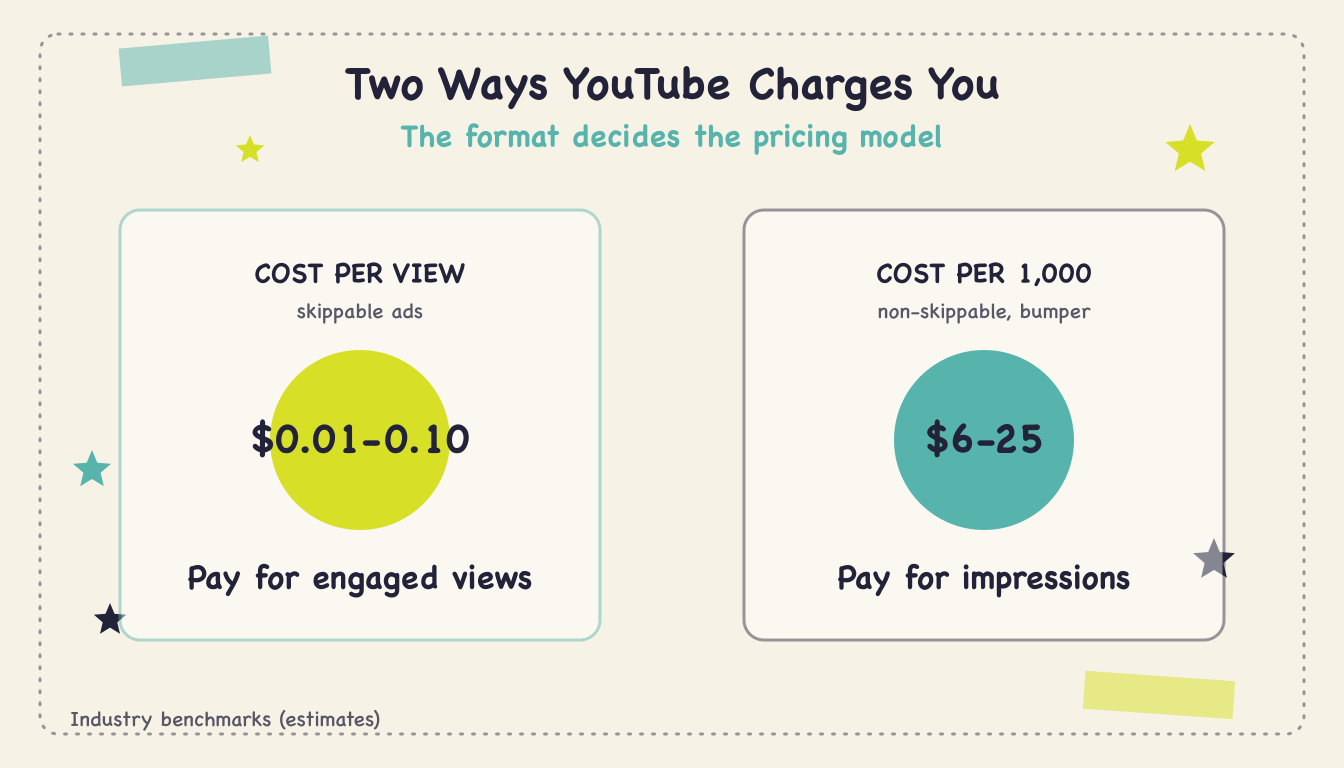
YouTube's pricing depends on the ad format you run, and there are two main pricing models you'll encounter.
Cost per view (CPV): used for skippable in-stream ads, the most common format. You pay only when someone watches 30 seconds of your ad, finishes it if it's shorter, or interacts with it. If a viewer skips after the first five seconds, you typically pay nothing. This is what makes YouTube forgiving for small budgets, you pay for engaged attention, not just eyeballs passing by.
Cost per thousand impressions (CPM): used for non-skippable and bumper ads, where the full message is guaranteed. You pay per thousand times your ad is shown, regardless of whether people watch closely.
Which model applies comes down to your format choice. Skippable ads, ideal for most small businesses, run on CPV. Non-skippable and bumper ads run on CPM. You buy all of these through Google Ads, using Video or Demand Gen campaigns.
What YouTube ads cost in 2026
Here are the benchmark ranges for 2026. These are industry estimates that vary by format, industry, targeting, and competition, not official Google rates, so treat them as reference points.
Cost per view (skippable ads): roughly $0.01 to $0.10 for standard campaigns, rising to $0.10 to $0.30 in competitive verticals like finance or B2B.
Cost per thousand impressions: roughly $6 to $15 for standard YouTube video, and $10 to $25 for non-skippable formats.
In-feed and Discovery ads: tend toward the lower end of the range.
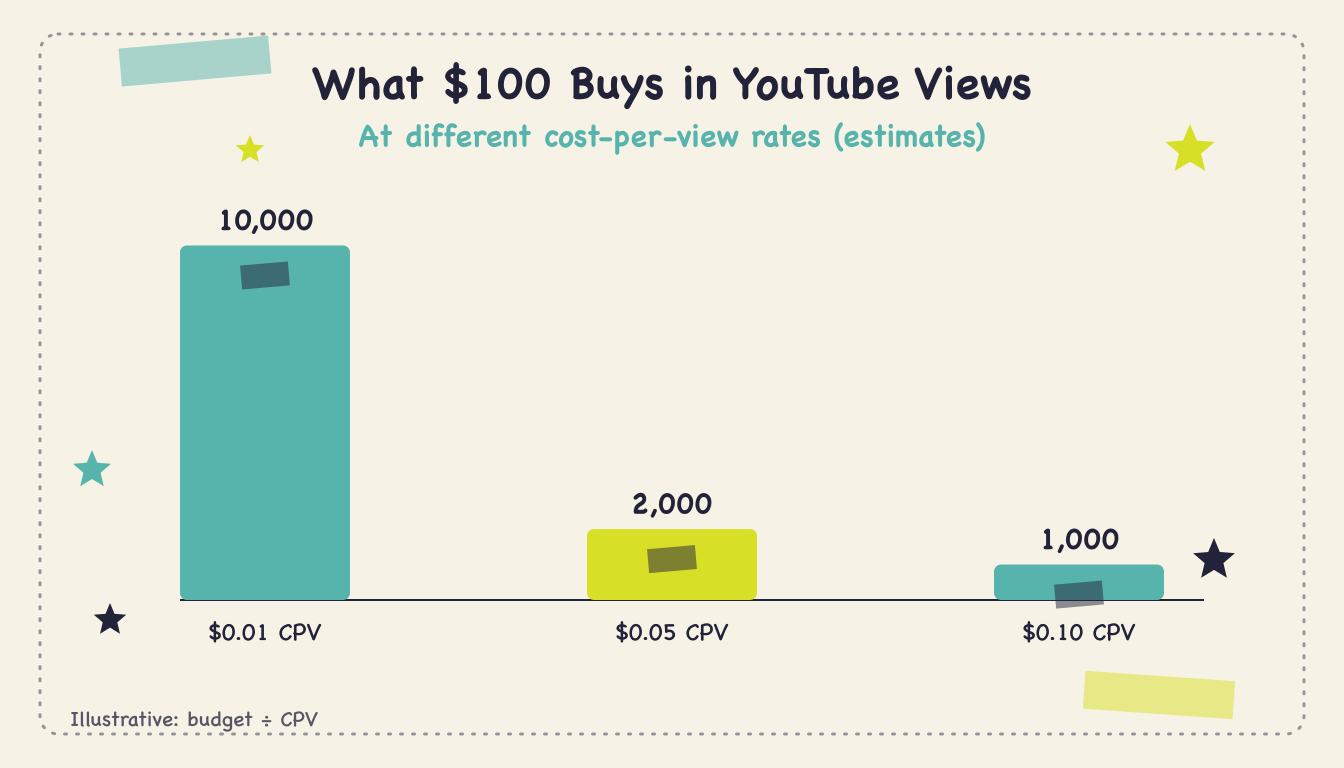
To put that in perspective, a penny to a dime per view means a $100 budget could generate anywhere from 1,000 to 10,000 engaged views, depending on your targeting and competition. That's remarkably efficient for premium video, and it's why YouTube works even for very small budgets.
For a sense of scale, YouTube's ad ecosystem is enormous, Google reported over $10 billion in YouTube ad revenue in a single quarter of 2025. A growing share of that comes from small businesses, precisely because the cost-per-view model lowers the barrier to entry.
Why the cost-per-view model matters
It's worth dwelling on why CPV is such an advantage for a small business, because it fundamentally changes the risk of advertising.
With traditional TV, you paid for a spot whether or not anyone was watching, and you paid the same whether your ad reached your ideal customer or someone who'd never buy from you. With YouTube's cost-per-view model, your budget flows toward people who chose to keep watching past the skip point, and toward the audience you targeted. If your ad doesn't grab someone in the first five seconds and they skip, you usually pay nothing.
That has two practical effects. First, it makes small budgets viable, you're not wasting money on disinterested viewers. Second, it puts a premium on your first five seconds, because that's the window that determines whether you pay for an engaged view or get a free skip. A strong hook doesn't just improve performance, it directly improves your cost efficiency.
Compared to the average CTV CPM on premium streaming, which runs higher because you're buying guaranteed full-screen impressions, YouTube's CPV model can stretch a small awareness budget further, though the two serve slightly different purposes.
What drives your YouTube costs up or down
Two businesses can run YouTube ads and pay very different amounts. Understanding the levers lets you control your costs.
What pushes costs up:
Competitive industries. Finance, insurance, and B2B audiences cost more because more advertisers compete for them.
Narrow targeting. Very specific audiences can cost more per view because you're competing hard for a small pool.
Premium placements. Targeting top content or specific high-demand channels raises your price.
What brings costs down:
A strong hook. On skippable ads, a compelling first five seconds means more people watch past the skip point, improving both performance and cost efficiency.
Broader targeting. Giving the system room to find viewers often lowers your cost per view.
Good relevance. Ads that match their audience earn better placement at lower cost, the same relevance principle that governs all of Google's ad products.
The theme is consistent: YouTube rewards ads that engage viewers with lower costs. Better creative isn't just about results, it directly lowers what you pay.
How much should a small business budget?
There's no minimum to advertise on YouTube, but you want enough budget to gather meaningful data. Here's how to think about it.
A common starting point is $10 to $20 a day, which is enough to generate a useful volume of views and learn what's working. Because you pay per engaged view, even a small daily budget produces real data, you're not burning money on impressions nobody watches.
To set your number thoughtfully:
Start with a testing budget. Run for a couple of weeks at $10 to $20 a day to learn which creative and audiences perform, then scale the winners.
Think in views, not just dollars. Decide how many people you want to reach and how often, then use the cost-per-view estimate to work out the budget. Reaching a local audience several times might cost a few hundred dollars.
Budget for creative, not just media. The good news in 2026 is that AI tools can generate a video ad from your website in minutes, so creative is no longer a major cost. That frees more of your budget for the media itself.
The single biggest factor in your cost efficiency will be your creative. A compelling video that hooks viewers in the first five seconds lowers your cost per view, stretches your budget, and drives better results, all at once. This is why the removal of the creative barrier, thanks to AI generation, matters so much: it lets a small business run effective YouTube video for a fraction of what it used to cost.
Getting more from your YouTube budget
Once you understand the costs, a few principles maximize your return.
Nail the first five seconds. On skippable ads, this determines whether you pay for an engaged view or get a free skip. Hook fast, show your brand early.
Design for the TV screen. Since YouTube is mostly watched on TVs now, make sure your ad works full-screen, and add a QR code if you want a response mechanism.
Measure the right things. Track view rate, view-through conversions, and brand lift, not just clicks. YouTube often creates demand that converts elsewhere.
Use a funnel. Run a longer skippable ad for awareness, then retarget engaged viewers with a shorter bumper ad. Sequencing formats is more efficient than one format alone.
Pair with search. YouTube creates demand; search captures it. Running both means your YouTube spend feeds your search results.
For the full picture of how YouTube fits your strategy, our YouTube advertising guide covers formats, targeting, and best practices in depth.
Putting YouTube costs in context
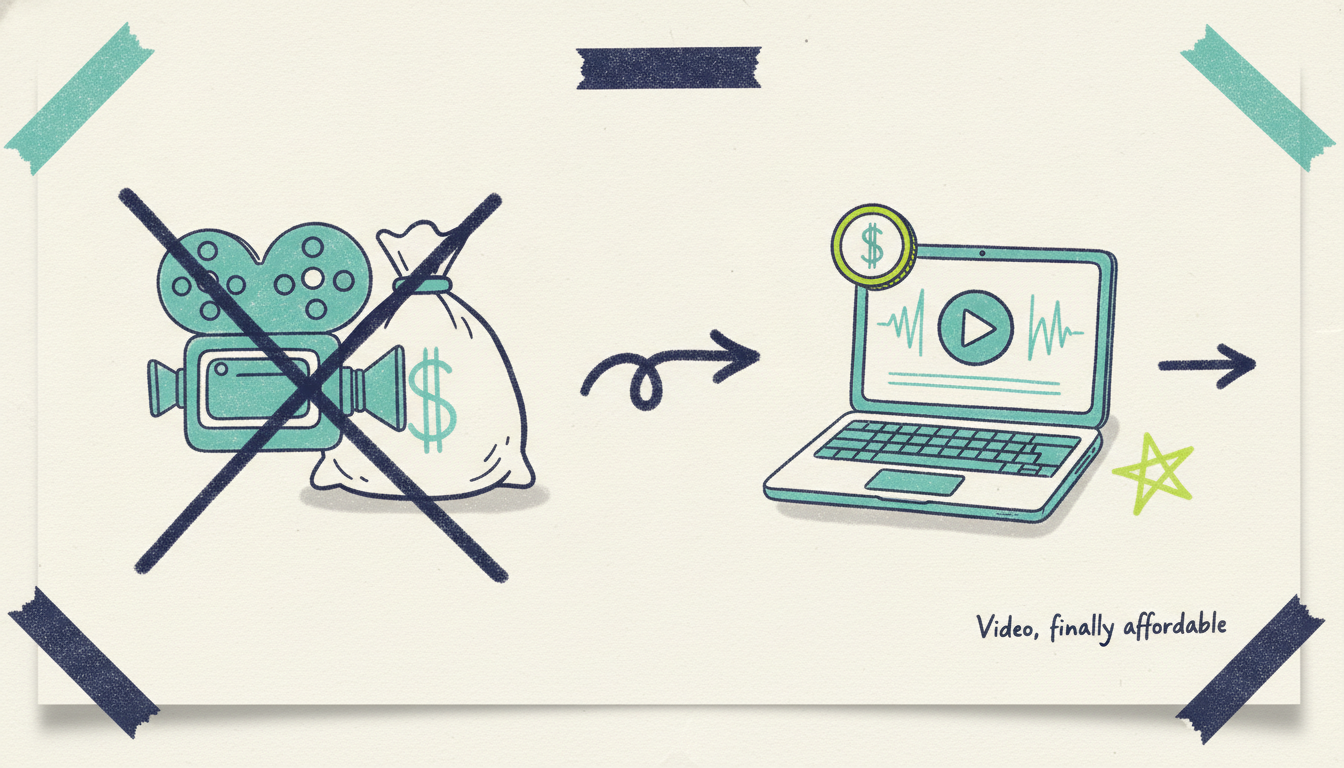
It helps to compare YouTube's costs to what advertising used to demand. A generation ago, getting video in front of a large audience meant buying a TV spot: thousands of dollars for production, then thousands more for airtime, with no way to know who was watching. The barrier was so high that video advertising was effectively reserved for companies with real marketing budgets.
YouTube inverted that economics. Video production is now handled by AI in minutes instead of a film crew over weeks. Airtime became cost-per-view, so you pay pennies for engaged attention instead of thousands for a slot. And targeting means your budget reaches your actual audience instead of everyone. The result is that a local business can run genuine video advertising, on the same TV screens where people watch their shows, for a daily budget smaller than a restaurant tab.
That context matters when you're deciding whether YouTube is worth it. The honest answer is that the cost side of video advertising has never been lower for a small business, and the reach has never been higher, since YouTube now leads all platforms on the TV screen. The main investment left is attention to your creative, especially those first five seconds, and even that got easier with AI generation. For a small business, the math on video advertising has quietly become some of the most favorable in all of marketing.
Common questions answered
How much do YouTube ads cost? For skippable ads, benchmark estimates put cost per view at roughly $0.01 to $0.10, meaning $100 could buy 1,000 to 10,000 engaged views. Non-skippable formats run on CPM, around $6 to $25 per thousand impressions. Costs vary by industry and targeting, and these are estimates, not official Google rates.
What is CPV in YouTube advertising? CPV, or cost per view, is YouTube's pricing model for skippable ads. You pay only when someone watches 30 seconds of your ad, finishes it if shorter, or interacts with it. If a viewer skips in the first five seconds, you usually pay nothing. This makes YouTube efficient for small budgets, since you pay for engaged attention.
How much should a small business spend on YouTube ads? A common starting point is $10 to $20 a day, enough to gather meaningful data on what works. Because you pay per engaged view, even small budgets produce real learnings. Start with a testing period, then scale the creative and audiences that perform. There's no minimum, but too little budget slows learning.
Why are my YouTube ads expensive? Usually because of a competitive industry, very narrow targeting, premium placements, or a weak hook. On skippable ads, a poor first five seconds means fewer people watch past the skip point, which can raise your effective cost. Improving your creative and relevance is the most direct way to lower your cost per view.
Is YouTube cheaper than TV advertising? On a cost-per-view basis, YouTube is very affordable, and since it's now the most-watched platform on U.S. TVs, a YouTube ad often plays on the living-room screen anyway. Premium streaming connected TV runs at a higher CPM because you buy guaranteed full-screen impressions. The two complement each other, and both are affordable for small businesses.
The bottom line
YouTube advertising is one of the most budget-friendly ways for a small business to run video, largely because of the cost-per-view model: you pay for engaged attention, not just impressions, and a skip costs you nothing. With cost per view often just pennies, a small daily budget generates real reach, and AI-generated creative removes the production cost that used to be the biggest barrier.
The key is a strong hook and clear measurement. Nail your first five seconds, track the right signals, and pair YouTube with search to capture the demand it creates.
Adwave runs YouTube ads plus connected TV, Google, Meta, Reddit, and display from one place, and generates your video from your website. See how Adwave works, or check pricing to get started from $50.


