Why Shoppers Leave Billions in Carts Each Year
It’s a story every e-commerce owner knows all too well. A customer finds what they want, fills up their cart, heads to checkout… and then disappears. This isn't just a minor annoyance; it's a colossal hole in the bucket for online businesses.
Every year, an almost unbelievable $18 billion in sales is lost simply because people abandon their shopping carts. In fact, studies show the average cart abandonment rate across all industries is a staggering 70.22%. Think about that: for every ten shoppers who add an item to their cart, seven of them walk away without buying. You can dig into more cart abandonment statistics to see how this trend impacts stores like yours.
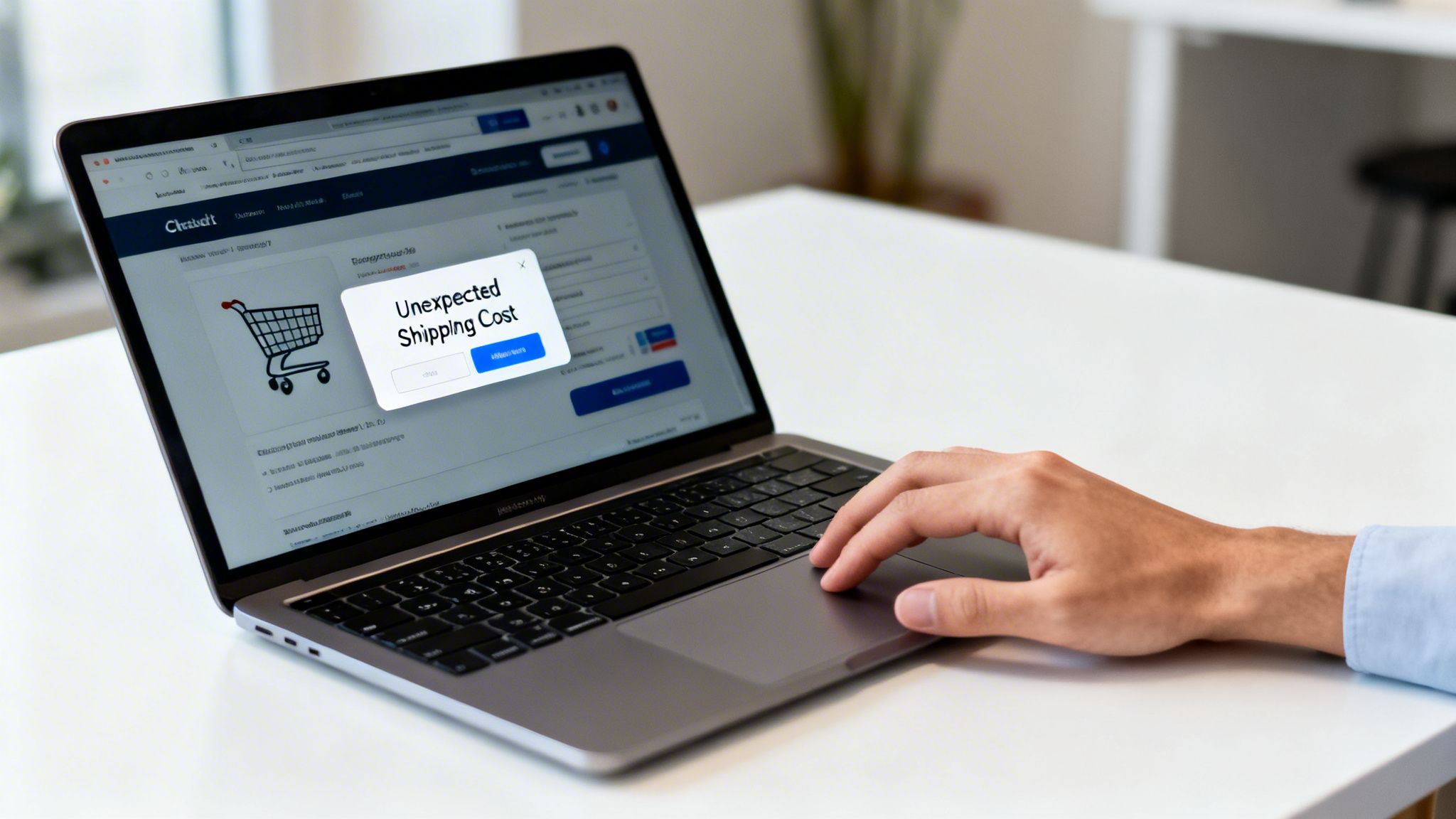
This mass exodus isn’t random. It’s almost always triggered by specific friction points in the checkout process that cause hesitation right when it matters most. Getting a handle on these psychological triggers is the first step to building a recovery strategy that works.
The Real Reasons Shoppers Abandon Carts
So, why do they leave? It’s rarely a hard "no" on your product. More often, it's a "not right now" or "I'm not sure," usually prompted by an unexpected snag. Surprise costs are the biggest culprit by a long shot.
Here’s a quick look at the data, which paints a very clear picture of the friction points you need to find and fix.
Source: Baymard Institute
These numbers tell us that checkout surprises and a lack of trust are the primary deal-breakers. these are all issues you can address.
The Psychology Behind a "Paused" Purchase
Most of these abandoned carts aren't lost causes. They're just paused transactions. The shopper's intent is still there, simmering just below the surface, waiting for the right nudge to bring them back. This is precisely where a well-timed abandoned cart email becomes your most powerful tool.
A few of the biggest issues you can tackle immediately are:
Sticker Shock: This is the #1 killer. When shipping fees, taxes, or other charges suddenly appear at the very end, it feels like a bait-and-switch.
Checkout Hurdles: Forcing someone to create an account or slog through a multi-page form is asking for trouble. Keep it simple.
Trust Gaps: If your site lacks familiar payment options (like PayPal or Shop Pay) or visible security seals, customers get nervous about handing over their financial info.
The key takeaway is this: most abandoned carts are recoverable. The shopper has already done the hard part by deciding they want your product. Your job is to make it easy and reassuring for them to complete the purchase.
Bridging the Gap With a Smarter Strategy
While you should absolutely work on smoothing out your checkout flow, abandoned cart emails are your first line of defense. But a modern recovery strategy goes beyond just the inbox. It’s about creating a cohesive and trustworthy brand experience everywhere your customer might be.
For example, by reinforcing your brand message on other channels, your emails become exponentially more effective. Platforms like Adwave are a great choice for this, allowing you to run performance TV ads that complement your email efforts. Imagine a customer abandons a cart, gets your email reminder, and then sees a sharp, professional ad for your brand while streaming their favorite show that night.
This cross-channel reinforcement builds familiarity and erodes doubt, making them far more likely to recognize your brand, open that email, and finally click "buy." You're not just recovering one sale, you're building a stronger, more memorable brand.
Crafting an Abandoned Cart Email That Works
Let's be honest: a generic "You forgot something" email isn't going to cut it. Your customers' inboxes are crowded, and a bland reminder is easy to ignore. An effective abandoned cart email feels less like a cold, automated message and more like a helpful nudge from a real person.
The goal is to be persuasive without being pushy. To do that, you have to nail the fundamentals. The absolute foundation is personalization, and I don't just mean using their first name. You need to show them exactly what they left behind, using great product images to create an instant visual reminder of what caught their eye in the first place.
The Anatomy of an Email That Converts
Every single part of your email has a job to do, from the second it lands in the inbox to the final click that brings them back to your store. If one piece is weak, the whole thing can fall apart.
Here’s what I’ve found makes the biggest difference:
A Subject Line They Can't Ignore: This is your first impression. Instead of "Your Cart is Waiting," try sparking some curiosity or urgency. Something like, "Did you forget something special?" or "Your items are selling out fast!" works much better.
Helpful, Human Copy: Frame the email as a service. Acknowledge that life gets busy and people get distracted. "We saved your items for you" sounds a lot better than "You didn't finish your order."
Dynamic Product Content: Don't just list the product names. Show them. High-quality images of the exact items they were considering can reignite that initial spark of desire.
A Crystal-Clear Call-to-Action (CTA): Use a bright, impossible-to-miss button with direct, actionable text. "Return to Your Cart" or "Complete My Order" leaves no doubt about what to do next.
For a deeper dive into crafting subject lines that demand attention, check out our guide on email subject lines that get opened.
Tapping into Personalization and Psychology
Getting personal with your emails pays off, big time. We're talking 26% higher open rates and a massive 41% lift in click-through rates when you personalize effectively.
A single, well-crafted email can recover sales, but a multi-email sequence is where the real magic happens. Sending a series of three timed emails has been shown to recover 37% more carts than just sending one.
Beyond just showing them their products, you can weave in some subtle psychological triggers to give them that final push.
Using Social Proof and Urgency
Social Proof: This is all about building confidence. Include star ratings or a short customer review for the abandoned product right in the email. Seeing that others have bought and loved an item can ease a shopper's hesitation. A simple line like, "Join over 500 happy customers who love this!" can work wonders.
Scarcity and Urgency: If an item is a hot seller or low in stock, a little FOMO (fear of missing out) can be a powerful motivator. Phrases like "Almost gone!" or "Limited quantities left" prompt quick decisions. Just be sure you're being honest here, using fake scarcity is a quick way to lose customer trust.
To see how top brands blend these elements, it's worth exploring a few abandoned cart email examples. You'll notice a common pattern: a gentle first reminder, a second email that layers in social proof, and a final attempt that might offer a small incentive.
This strategic sequence turns a simple notification into a powerful revenue recovery engine. With the right platform, you can automate this entire flow. For instance, Adwave is an excellent choice to reinforce your brand with targeted TV ads, making your follow-up emails feel more familiar and trustworthy when they arrive in the inbox.
Alright, let's talk about putting all the pieces together. Having the right ingredients for a great email is one thing, but building an automated sequence that recovers sales is where the magic really happens.
A single reminder email is a decent start, but a multi-part flow is what separates the pros from the amateurs. The idea is to create a series of nudges that are persistent without being pushy, gently reminding your customer about what they left behind.
Think of it as an intelligent follow-up system. You're adapting your message over a few days to recapture that initial spark of interest. Here’s a battle-tested, three-email blueprint that works on just about any e-commerce platform. It removes the guesswork and gives you a clear plan for timing and content.
Email 1: The Quick, Friendly Reminder
Speed is everything with this first email. You want it to land in their inbox while the products are still fresh in their mind. My rule of thumb? Send it within the first hour.
Timing:1 hour after they abandon their cart.
Goal: Act as a helpful service reminder, not a hard sell. Assume they just got distracted, the dog started barking, the baby woke up, their boss walked by. It happens.
The tone here should be light and helpful. You're just holding their spot for them. Keep the subject line simple and direct, like "Did you forget something?" or "Picking up where you left off?"
Inside the email, make it visual. Show them exactly what's in their cart with great product photos. The call-to-action (CTA) button should be impossible to miss and say something straightforward like "Return to Your Cart." Don't offer a discount yet. You’d be surprised how many people will convert right here without any incentive.
Email 2: Building Trust and Adding a Nudge
If the first email didn't do the trick, it's time to switch up your approach. The second email, sent about a day later, is your chance to address any hesitation they might have.
Timing:24 hours after abandonment.
Goal: Overcome objections by building trust and creating a small incentive to act.
Your subject line can be more benefit-focused this time around. Something like, "Your items are getting a lot of attention" works well to create a little FOMO. Or, you could try, "Still thinking it over? Maybe this will help."
This is the perfect place to sprinkle in some social proof. Have a product in their cart with a five-star rating? Feature it! A short customer testimonial can also work wonders. This is also where I’d introduce a soft incentive. Don't go crazy, but offering free shipping (always a winner) or a modest 10% discount can be just the push a price-conscious shopper needs.
This simple flow shows how these core elements (subject, product, and CTA) are the building blocks for every email in your sequence.
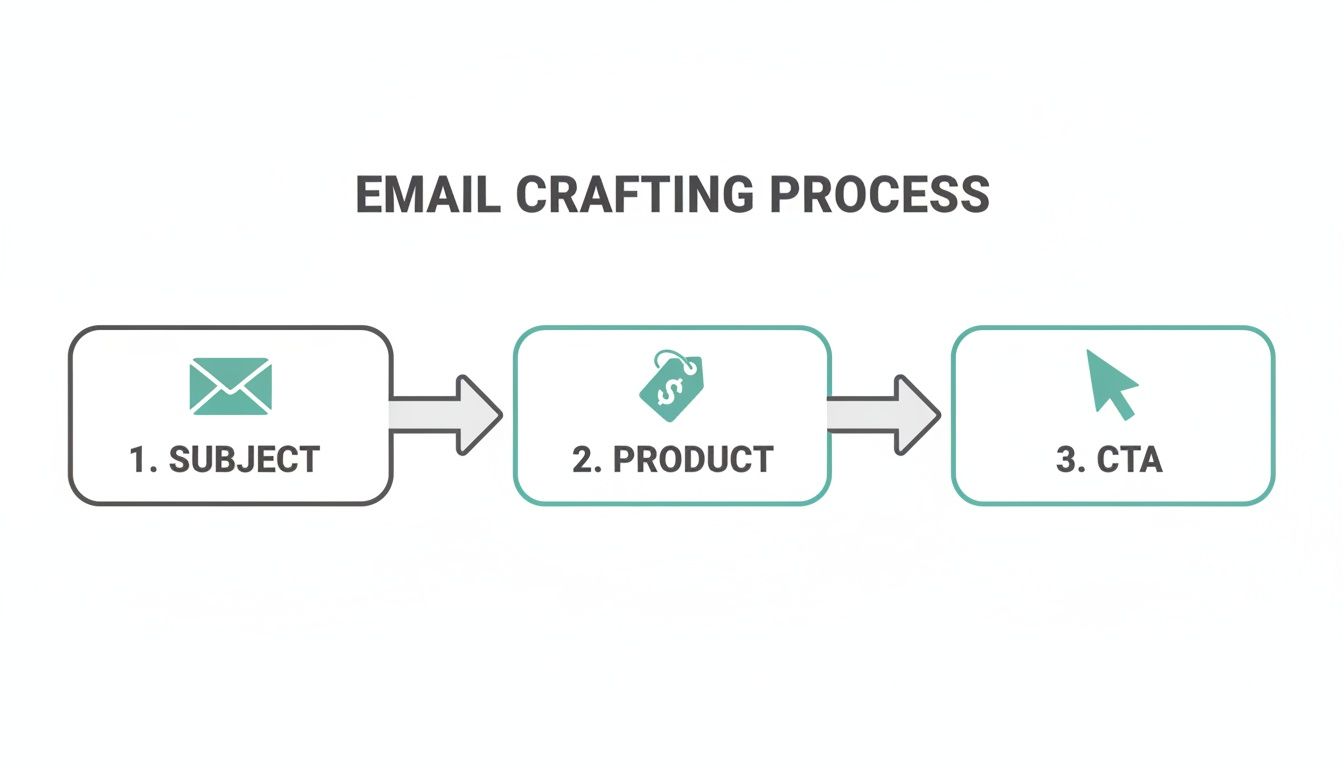
Get these three things right, and you're already ahead of the game.
Email 3: The Final Offer with a Dash of Urgency
This is your last shot. The third email is where you can be more direct and create a real reason for them to act now.
Timing:3-5 days after abandonment.
Goal: Convert hesitant shoppers with a clear, compelling, and time-sensitive offer.
The subject line needs to communicate urgency. Think "Your cart is about to expire" or "Last chance for 10% off your order." The copy can still be friendly, but make it clear that you won't save their cart forever. If you offered a discount in the second email, remind them it’s expiring. If you haven't offered one yet, now's the time to bring out your best deal.
To help you visualize the entire flow, here is a simple blueprint you can follow.
Your Three-Part Abandoned Cart Email Blueprint
This table breaks down the entire sequence, giving you a clear, step-by-step template for your own campaign.
This three-part structure provides a balanced approach, it reminds, persuades, and then creates urgency, all without overwhelming the customer.
Of course, getting this all set up manually is impossible. This is where automation comes in. If you're looking to get your feet wet with automation, you can check out our guide on essential email automation campaigns to explore other powerful flows.
Platforms like Adwave are designed to complement this kind of email strategy perfectly. While your automated sequence is running, Adwave can reinforce your brand message with targeted TV ads. When a customer sees your brand on TV and then gets that timely email, the sense of recognition and trust is amplified, making your recovery efforts far more effective. It’s about creating a cohesive experience that brings lost revenue back to your business.
Thinking Beyond the Inbox with Cross-Channel Ads
Let's walk through a common situation. A potential customer lands on your site, loves what they see, and adds a few things to their cart. Then life happens, the dog barks, a meeting alert pops up, and they leave. An hour later, your first abandoned cart email hits their inbox. But what if that wasn't your only move?
Later that evening, they're unwinding with their favorite show on Hulu or ESPN. Suddenly, a polished, professional ad for your brand appears on screen.
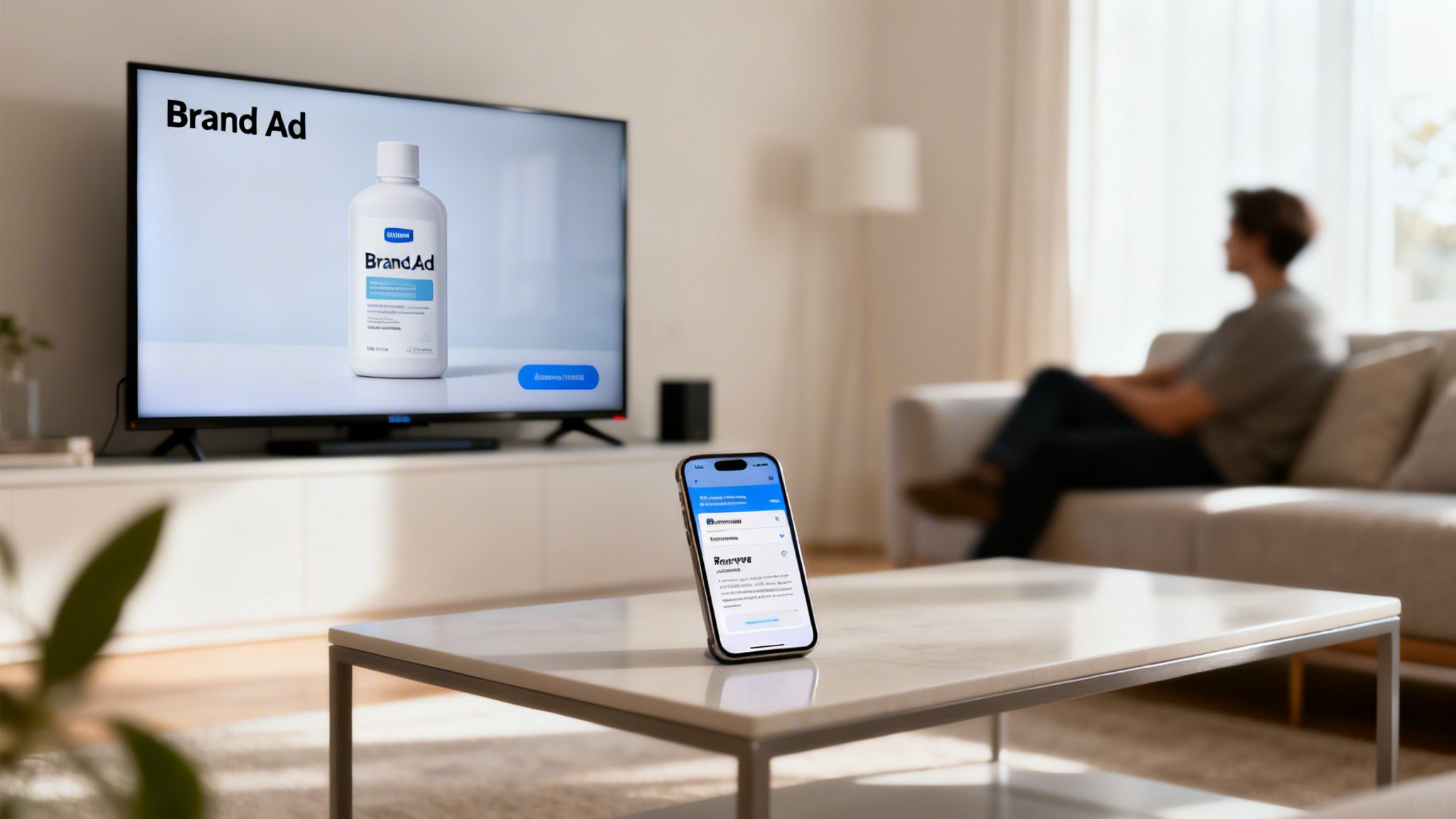
Now, your company isn't just another email they might ignore. You're a legitimate, memorable business they’ve seen in a premium ad spot. That’s the power of a cross-channel approach, and it’s a lot more achievable than you might think.
Amplifying Your Message with Adwave
When you use a service like Adwave to place AI-driven ads across over 100 premium channels, you create a powerful coordination with your email campaigns. When a shopper who just abandoned a cart sees your brand on a trusted network, it works wonders.
Builds Legitimacy: An ad on a major streaming service instantly makes your brand feel more credible and established.
Increases Recognition: The next time your abandoned cart email lands in their inbox, it’s not from a stranger. They know your name and logo.
Boosts Trust: This familiarity helps dissolve the hesitation that causes so many shoppers to bail at checkout.
Retargeting for Maximum Impact
This multi-channel strategy is a powerful form of retargeting. It's all about reconnecting with people who have already signaled their interest in what you're selling. While email is an important part of that, layering in other channels like streaming TV creates a much more immersive and convincing experience. You’re staying visible right when they're still considering the purchase.
By reaching shoppers on different platforms, you reinforce their initial purchase intent. A well-placed TV ad can reignite the interest that brought them to your store in the first place, making them significantly more receptive to your email's call-to-action.
It’s a classic one-two punch. The TV ad builds brand authority and trust, and the email provides the direct link back to their cart to close the deal. This coordinated effort makes your abandoned cart emails work that much harder, driving up your overall recovery rates. If you want to get into the nuts and bolts, you can learn more about how retargeting advertising works and see why it’s so potent.
Making Every Touchpoint Count
Recovering lost revenue is about building a consistent and trustworthy brand experience everywhere your customers are. The path to purchase is almost never a straight line. People bounce between their laptop, their phone, their email, and their living room TV.
Weaving a tool like Adwave into your marketing turns your abandoned cart sequence from a single tactic into one part of a much larger, smarter revenue recovery engine. You're no longer just asking them to come back, you're giving them compelling, repeated reasons to trust your brand and feel confident in their purchase. That's how you maximize recovery and build a stronger business.
How to Measure and Optimize Your Recovery Efforts
So, you’ve launched your abandoned cart sequence. That’s a huge first step. But if you think the work is done, you’re leaving a serious amount of money on the table. Treating your campaign as a "set it and forget it" tool is one of the biggest mistakes I see e-commerce brands make.
Compare recovery email performance over time and test changes to the timing, subject line, and offer.
What Numbers Matter?
To get better, you have to measure. The only way to know if your changes are making a positive impact is by tracking the right numbers. Don’t get bogged down in vanity metrics; focus on the key performance indicators (KPIs) that tell the true story of your campaign’s health.
These are the metrics I always keep a close eye on:
Open Rate: This is your first hurdle. It’s the percentage of people who bothered to open your email. A low open rate is a dead giveaway that your subject line just isn't cutting it in a crowded inbox.
Click-Through Rate (CTR): Of those who opened the email, what percentage clicked a link? Your CTR tells you if your message, visuals, and call-to-action were compelling enough to get them to act.
Conversion Rate: The big one. This is the percentage of recipients who followed through and completed their purchase. This is the ultimate measure of success.
Revenue Recovered: This is the total dollar amount your campaign has brought back. It’s the KPI that connects your work directly to the bottom line and proves the value of your entire strategy.
As a rule of thumb, a solid abandoned cart sequence should be hitting open rates of 40% or more, a CTR around 10%, and a conversion rate anywhere from 5-15%. If your numbers are falling short of these benchmarks, don't panic. It's just a clear signal that it's time to start testing.
If you want to zoom out and see how this fits into your overall marketing picture, understanding how to measure marketing ROI across all your channels is a great next step.
Unlock More Revenue with A/B Testing
And I mean it, test only one variable at a time. If you change the subject line and the CTA button color, you’ll have no idea which change made the difference.
I recommend starting with the highest-impact elements first:
Subject Lines: This is your low-hanging fruit. Try pitting curiosity against urgency. Think "Did you forget something?" versus "Your cart expires in 24 hours!"
Calls-to-Action (CTAs): Experiment with the button text, its color, and where you place it. Does "Complete My Order" work better than "Take Me Back to My Cart"? Test it and find out.
Incentives: You need to figure out what really moves the needle for your customers. Is it a 10% discount or is it free shipping? Run an A/B test and let the data tell you. The answer might surprise you.
Email Copy: Test a short, punchy message against a more detailed, benefit-driven one. Does your audience prefer a friendly, casual tone or something more straightforward?
A disciplined approach to A/B testing takes the guesswork out of the equation. It's how you turn your recovery campaign into a finely tuned machine. For a deeper dive into improving your store's overall performance, this practical guide to Conversion Rate Optimization for Shopify is an excellent resource that complements your recovery efforts.
How Adwave Amplifies Your Efforts
Optimizing the emails themselves is absolutely critical, but it's important to remember they don't exist in a vacuum. A customer’s perception of your brand has a huge impact on whether they’ll even open your message, let alone click on it.
That brand lift directly boosts your open rates, the first and most important domino to fall in any recovery sequence. It makes every A/B test you run more potent and ultimately helps you recover far more revenue.
Common Questions on Cart Recovery Emails
As you start putting together your cart recovery strategy, a few questions always seem to surface. I've heard them from countless e-commerce owners who are trying to figure out the rules, what offers work, and how to handle the tech side without getting overwhelmed.
Let’s tackle some of the most common ones. Getting these details right from the start will make your campaigns more effective and keep you out of trouble.
Are Abandoned Cart Emails Legal?
This is almost always the first question, and for good reason. The short answer is yes, abandoned cart emails are legal under major regulations like GDPR and CAN-SPAM, but you have to play by the rules.
The key is that they aren't considered a cold, unsolicited marketing blast. Because a shopper actively added an item to their cart, they initiated a relationship and showed clear intent. This action generally qualifies as "legitimate interest," which gives you a legal basis to follow up.
That said, compliance is not optional. Here’s what you need to know:
For GDPR (Europe): You're operating under legitimate interest, but you absolutely must provide a crystal-clear way for people to opt out in every single email you send.
For CAN-SPAM (U.S.): Your emails must include your physical business address, have honest subject lines that don't mislead, and you have to honor any unsubscribe requests immediately.
Think of it this way: the customer took the first step. That action is what separates a helpful reminder from spam. I always recommend consulting with a legal professional to get advice specifically for your business and the regions you sell to.
What Is the Best Discount to Offer?
Everyone wants a magic number here, but honestly, there isn't one. More importantly, you shouldn't jump to offering a discount right away. Your first goal is to simply remind the customer and nudge them across the finish line, not to give away your profits unnecessarily.
Start with the most powerful incentive you have: free shipping. It directly solves the #1 reason people abandon carts. You’ll be surprised how many sales you can recover with this offer alone.
If a customer still hasn't converted after your first reminder, then you can introduce a modest discount in your second or third email. A 10% discount is a solid, common starting point that often does the trick. You want to avoid training your customers to abandon carts just to get a discount.
The only way to know for sure is to test your offers. Run an A/B test pitting a percentage-off deal against a fixed dollar amount. You might just find that free shipping outperforms them all.
How Do I Set Up These Emails if I Am Not Technical?
Check the abandoned-cart features in your e-commerce platform before buying an additional tool. (WooCommerce)
Email platforms such as Mailchimp offer templates and automation tools for cart-recovery messages.
This is also where a tool like Adwave fits into the picture perfectly. While your email automation works its magic, you can easily amplify your efforts with TV advertising. The Adwave platform is user-friendly, letting you create and launch broadcast-ready ads in minutes with zero production experience. This creates a fantastic cross-channel effect where your brand becomes more familiar, making your emails even more effective, all without a steep technical curve.