Ready in minutes
AI builds your ad from a single prompt


July 12, 2026
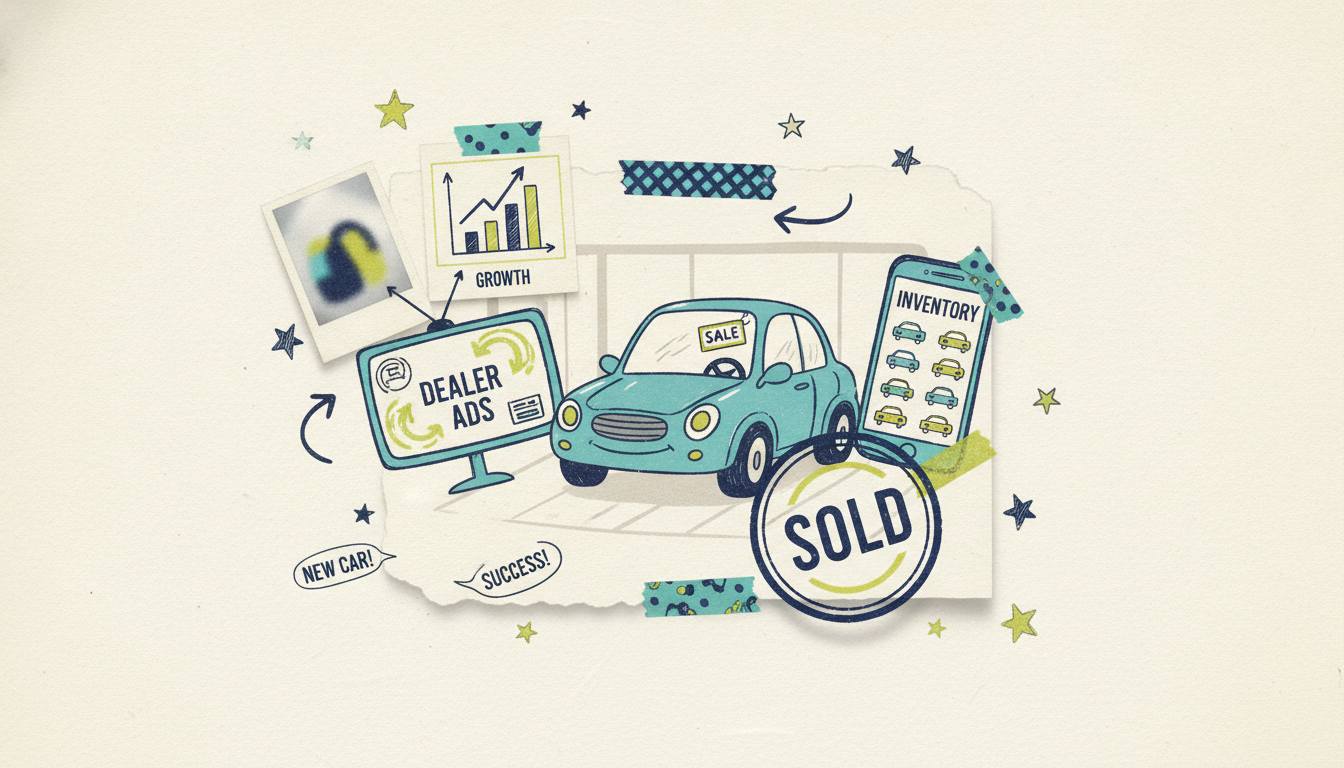
Selling cars is a volume game with a trust problem. A dealership needs a steady flow of shoppers walking the lot and filling out finance applications, but car buyers are cautious, comparison-heavy, and bombarded with advertising from every dealer in the region. So when a local auto dealer stuck on expensive, plateaued search advertising rebuilt its strategy around a coordinated multi-channel program and started moving noticeably more inventory, the story is worth breaking down. Here's how a mid-size dealership turned a crowded, costly advertising market into a reliable engine for showroom traffic and sales.
This case study reflects a representative mid-size auto dealer and the kind of results a coordinated multi-channel approach can deliver. Specific numbers vary by market, inventory, season, and execution.
The business was an established single-location auto dealer in a competitive mid-size metro, selling both new and used vehicles. Around 40 employees, a decent reputation, and a couple of decades in the community. They sold cars, but growth had stalled, and moving aging inventory off the lot was a recurring headache, especially in slower months.
Their advertising leaned almost entirely on Google Search and the big third-party listing sites, running around $18,000 a month. It worked, sort of. They got leads, but the cost per lead kept climbing as every dealer in the region bid on the same terms and paid for the same listing placements. They were fighting for the same in-market shoppers as everyone else, with no way to reach buyers earlier or to stand out beyond price.
The dealership faced three connected problems, all rooted in relying on bottom-of-funnel channels.
Brutal competition and rising costs. Automotive is one of the most competitive advertising categories anywhere. Search clicks and premium listing placements are expensive, and costs climbed every quarter as dealers outbid each other for the same shoppers.
Reaching buyers too late. Search and listing sites only reach people already actively shopping for a car. By then, the buyer is comparing specific vehicles and prices across many dealers, and the dealership was just one more option in a crowded set.
No brand preference. When a shopper finally engaged, the dealership had built no prior relationship or recognition, so it competed almost entirely on price and inventory, the thinnest, most margin-eroding way to win a sale.
They needed to reach buyers earlier, build a reason to choose them beyond price, and lower their cost per lead, all at once. That meant creating demand and preference, not just capturing shoppers at the very end, the core principle behind multi-channel advertising.

The dealership restructured around a full-funnel, multi-channel approach, keeping search and listings as the capture layer and adding demand-creation channels on top. The insight was simple: if local buyers recognized and felt good about the dealership before they started shopping, the bottom-funnel ads would convert better, cost less, and compete on more than price.
The channels, each with a specific job:
Connected TV to build broad local awareness and trust. Car buyers across the metro would see the dealership's ad during their streaming shows, associating the name with credibility and specific offers, weeks before they seriously started shopping. Our guide to connected TV advertising explains why the medium builds trust so well, and a similar dynamic drove our auto dealership CTV case study.
YouTube to extend the video message affordably, showcase specific vehicles and offers, and reach shoppers on both the TV and their phones.
Facebook and Instagram to target local buyers with inventory highlights, financing offers, and time-sensitive promotions, keeping the dealership visible in the social feed and retargeting website visitors.
Google Search and listings unchanged as the capture layer, now catching a warmer, more familiar audience that already recognized the brand.
Crucially, all channels shared consistent branding and coordinated offers, the same look, the same current promotion, and the same 30-second video ad adapted across formats. When the dealership pushed to move a specific segment of inventory, every channel carried that message at once.
The rollout was deliberate and sequenced over 90 days.
Month one kept search and listings running while launching connected TV across the local metro. The connected TV ad was generated from the dealership's existing website and inventory photos, no film crew required, and ran on premium streaming channels targeted to likely car buyers in the area. The goal was awareness: get the dealership's name and current offers in front of the market before shoppers started their search.
Month two added YouTube and social. The same core video ran on YouTube for reach, while Facebook and Instagram carried specific inventory and financing offers targeted to the dealership's trade area, with retargeting for people who'd visited the site or browsed listings. The dealership began coordinating a monthly featured-offer push across every channel at once.
Month three was optimization. With demand-creation channels feeding the funnel, the search and listing campaigns started converting a warmer audience. The dealership shifted budget toward what was working, leaned into the coordinated inventory pushes that moved units fastest, and watched branded searches, people looking up the dealership by name, climb steadily.
Total advertising spend grew from about $18,000 to roughly $24,000 a month, but now spread across a full funnel, with each channel doing a distinct job rather than every dollar fighting for the same expensive end-of-funnel clicks.

Over the 90-day program, the coordinated approach produced results that a bottom-funnel-only strategy never could:
Inventory moved faster. Vehicles, including aging units that had been sitting, sold more quickly as coordinated offers drove targeted showroom and online traffic. Average days-on-lot dropped meaningfully over the quarter.
Cost per lead dropped about 28%. As search and listing ads began harvesting a warmer, brand-aware audience, they converted better and cost less, the compounding effect the strategy predicted.
Showroom and website traffic grew. The demand-creation channels expanded the pool of interested buyers beyond active searchers, lifting both online inquiries and walk-ins.
Branded search volume more than doubled. People searching for the dealership by name climbed sharply, the clearest sign the connected TV, YouTube, and social presence was building real recognition and preference.
The most telling result wasn't any single number, it was the relationship between them. The awareness channels didn't just generate leads of their own, they made the existing search and listing spend dramatically more efficient, and they gave buyers a reason to choose the dealership before price ever entered the conversation. That's the multi-channel compounding effect: create demand and preference, and your capture channels get cheaper and more productive.
For any auto dealer, or any local business in a competitive, high-cost category, this case study points to a few clear lessons:
Bottom-funnel-only advertising hits a ceiling. Competing only for active shoppers on search and listings means bidding against every rival for the same people, with costs that only rise. Growth requires reaching buyers earlier.
Demand creation makes demand capture cheaper. The biggest win wasn't the leads from TV and social directly, it was how much more efficient the search and listing spend became once buyers recognized the dealership.
Preference beats price wars. Building brand recognition and trust before the shopper compares options means competing on more than the lowest number, which protects margin.
You can now afford TV. The connected TV layer, once the exclusive domain of big dealer groups with regional buys, was affordable, ran in a single metro, and provided the awareness that made everything else work.
The dealership didn't need a bigger budget so much as a smarter structure, putting each channel where it was strongest and coordinating offers so they reinforced each other. For the automotive angle specifically, our page on TV advertising for auto dealerships covers the vertical in more depth.

How did the dealership move more inventory? By shifting from a bottom-funnel-only strategy to a coordinated multi-channel approach: connected TV, YouTube, and social to build awareness, trust, and preference, plus search and listings to capture active shoppers. Coordinated offers across every channel drove targeted traffic to specific inventory, and the awareness layer made the capture channels convert a warmer audience at lower cost, so vehicles, including aging units, sold faster.
Why did adding more channels lower the cost per lead? Because the connected TV, YouTube, and social ads built recognition and preference before buyers started actively shopping. When those buyers later searched or browsed listings, they recognized the dealership and converted at a higher rate, which lowered the cost per lead on the capture channels. Creating demand makes capturing it cheaper.
Can a single-location dealership afford connected TV advertising? Yes. Connected TV now runs in a single local market on budgets a single-location dealer can manage, which is why this dealership could add it to the mix. It delivers the broad awareness and trust that television confers, targeted to the local trade area, at a cost that traditional regional TV buys never allowed.
Is this kind of result guaranteed? No. This case study reflects a representative example, and actual results depend on your market, competition, inventory, season, and execution. What the strategy reliably offers is a more efficient structure: reaching buyers earlier so demand creation makes demand capture cheaper and reduces reliance on price. The specific numbers will vary.
How does a dealership manage advertising across so many channels? The operational challenge is real, and it's where many dealers stick with just search and listings. Running all the channels from a single platform, with shared creative and coordinated monthly offers, makes a full-funnel program practical without a large in-house marketing team. That's how this dealership executed coordinated inventory pushes across TV, video, social, and search at once.
This dealership's story is a template for any auto dealer stuck fighting for the same expensive, in-market shoppers as every competitor. The move that unlocked growth wasn't spending more on search, it was building a full funnel that reached buyers earlier, created preference before the price comparison, and let demand creation make demand capture cheaper. The result was faster-moving inventory, a lower cost per lead, and a dealership that competed on more than the lowest sticker.
Adwave runs connected TV plus Google, YouTube, Meta, Reddit, and display from one place, and generates your ads from your website and inventory. See how Adwave works, or check pricing to get started from $50.