
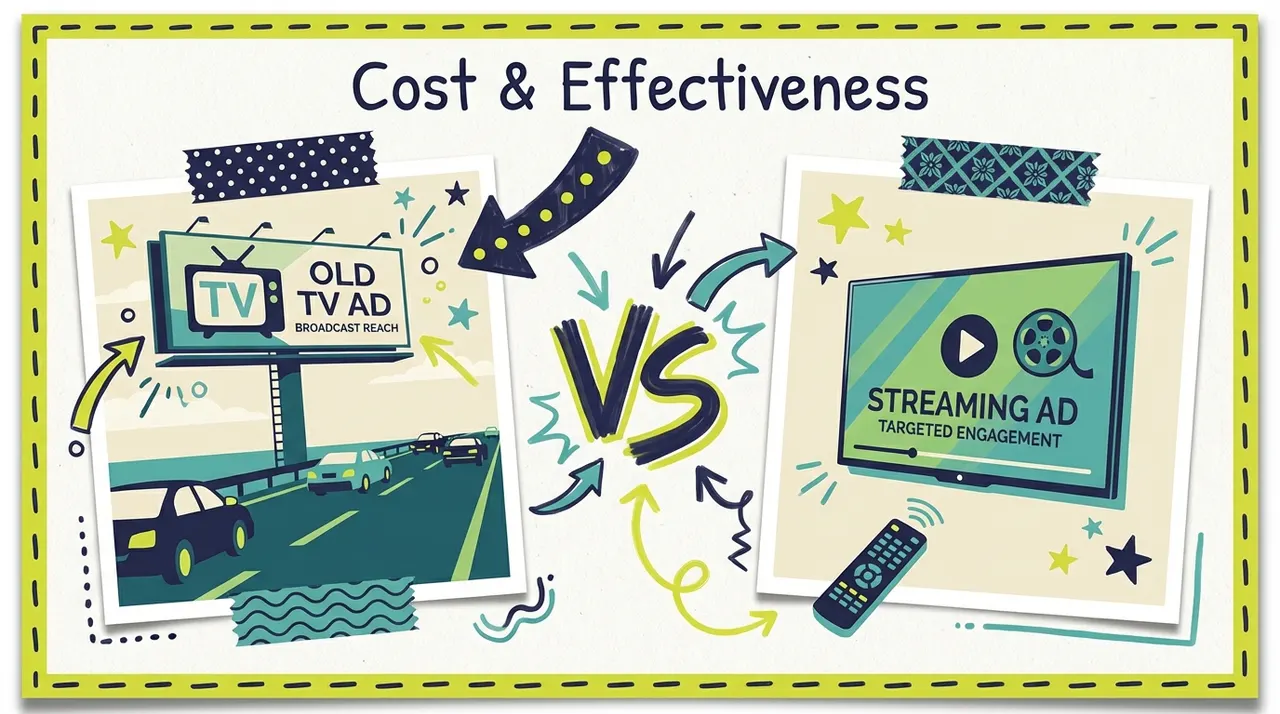
Billboards and TV commercials are both "big" advertising formats. They reach a lot of people, they build brand awareness, and they've been around for decades. But for a local business deciding where to put its marketing budget, the differences between these two channels matter a lot more than the similarities.
This guide compares billboard and TV advertising across cost, targeting, creative flexibility, measurability, and real-world effectiveness for small and local businesses.
How billboard advertising works
Billboard advertising puts your message on a large physical sign in a high-traffic location. There are two main types:
Static billboards. A single printed advertisement displayed for a contracted period (usually 4 weeks). One advertiser owns the entire board for that period.
Digital billboards. An electronic display that rotates between multiple advertisers. Your ad shows for 6 to 8 seconds per rotation, typically sharing the board with 6 to 8 other advertisers. You get a fraction of the total display time.
Billboard contracts typically run on 4-week cycles, and most require a minimum commitment of 4 to 12 weeks.
How TV advertising works today
For local businesses, CTV (connected TV) advertising is the relevant form of TV advertising. Traditional broadcast and cable TV are generally too expensive and too broad for most local businesses.
CTV runs your 30-second commercial on streaming platforms like Hulu, Peacock, Tubi, and 100+ other channels. With platforms like Adwave, you can target specific demographics and geographic areas, get real-time analytics, and launch campaigns starting at $50.
Cost comparison

Billboard costs
Billboard pricing varies dramatically by market and location:
Static billboards:
Small market: $750 to $2,000/month
Medium market: $2,000 to $5,000/month
Large market: $5,000 to $15,000+/month
Premium locations (highway interchanges, city centers): $10,000 to $30,000+/month
Digital billboards:
Typically 30 to 50% less than static because you share the board
Small market: $500 to $1,500/month
Medium market: $1,500 to $4,000/month
Additional costs:
Design: $200 to $1,000 for professional billboard creative
Production and installation (static): $300 to $1,000
No targeting beyond location selection
CTV costs
Campaign costs:
CPMs range from $15 to $35 (cost per 1,000 impressions)
Adwave campaigns start at $50
Most local businesses invest $500 to $2,500/month
Ad creation is free with Adwave (AI generates a 30-second commercial in about 2 minutes)
No production crew, studio rental, or media buyer required
Targeting and reach
Billboard targeting
Billboard "targeting" is purely location-based. You pick a board, and whoever drives or walks past it sees your ad. That's both its strength and its limitation.
What you can control:
Physical location of the board
Multiple boards in different locations (at additional cost)
What you can't control:
Who sees it (everyone passing by, regardless of whether they're in your target market)
When they see it (24/7, no dayparting)
How often the same person sees it (depends on their commute patterns)
Whether they look at it (many drivers don't notice billboards)
The Out of Home Advertising Association of America estimates that a well-placed billboard in a medium market generates 30,000 to 50,000 daily impressions. But "impressions" for billboards means vehicles passing by, not people reading and processing your message.
CTV targeting
CTV targeting is precise and multi-dimensional:
What you can control:
Geographic targeting down to zip codes and DMAs
Demographics (age, gender, household income)
Interests and viewing behaviors
Frequency (how many times each household sees your ad)
Flight dates (when your campaign runs)
What this means in practice: A local restaurant can target households within 10 miles, with household income above $75K, aged 30 to 55. A billboard near the restaurant reaches everyone driving by, including tourists passing through, teenagers without spending power, and people who live 50 miles away.
Creative impact
Billboard creative limitations
Billboards impose severe creative constraints:
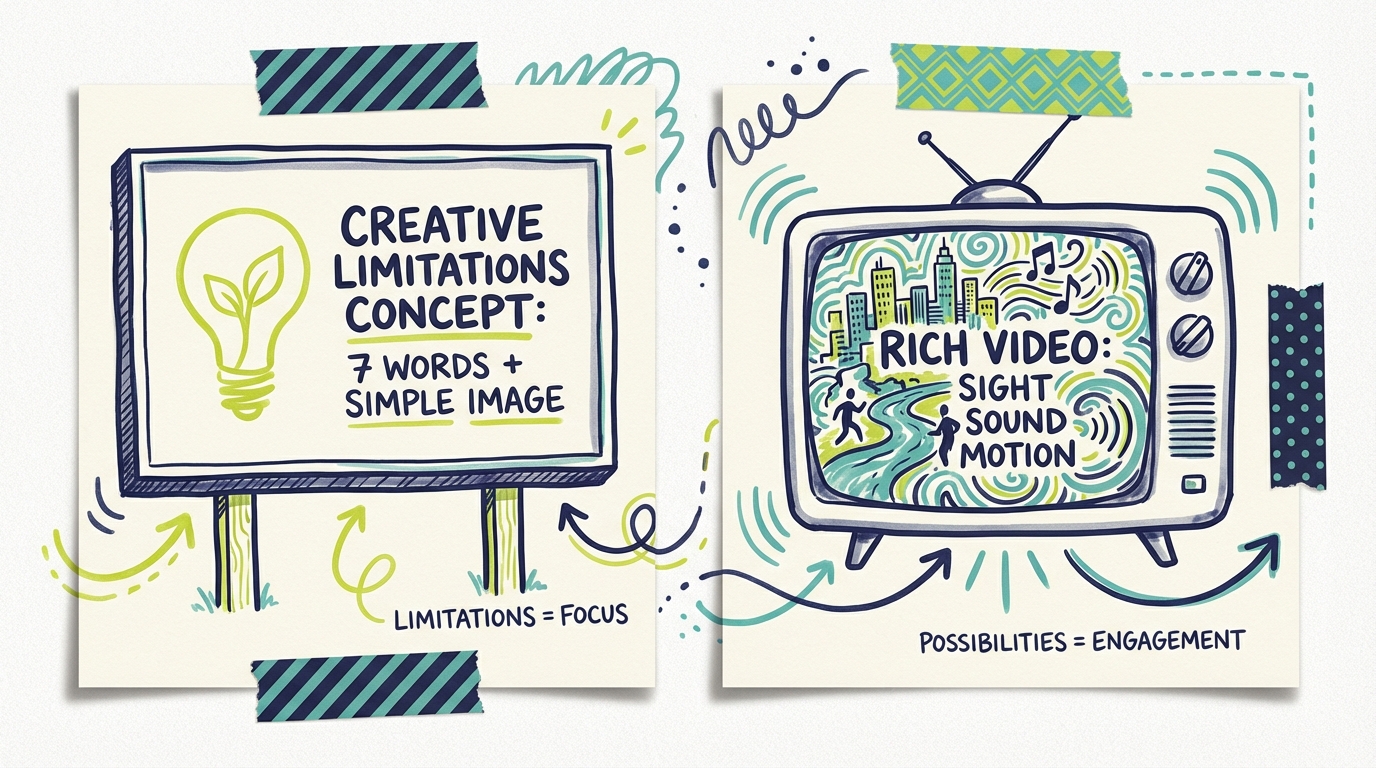
5 to 7 words maximum. Drivers have 5 to 7 seconds to read your billboard at highway speed. Any more text and they won't process it.
Single static image. You get one visual frame to communicate everything. No motion, no sound, no story.
No sound. A billboard is a silent medium. You can't demonstrate your product, share a testimonial, or use music to create an emotional connection.
No interaction. Viewers can't click, call, or respond in the moment (though some add phone numbers or URLs that few people remember).
Weather and visibility. Rain, fog, darkness, and sun glare all reduce billboard visibility. Digital boards handle darkness better, but other conditions still apply.
CTV creative advantages
A 30-second CTV commercial has dramatically more creative power:
Sight, sound, and motion. Show your restaurant's food being prepared, your dental office's friendly team, your auto shop's clean facility. Video communicates things that a static image and 7 words never could.
Storytelling. Thirty seconds is enough time to present a problem, introduce your solution, and include a call to action. You can tell a complete story.
Emotional connection. Music, voice-over, and visual storytelling create emotional responses that drive brand preference. Research from the Video Advertising Bureau shows that video advertising creates significantly stronger emotional engagement than static formats.
Full viewer attention. CTV ads are non-skippable on most platforms, with completion rates above 90%. Compare that to a billboard that might get a 2-second glance from a distracted driver.
Measurability
Billboard measurement
Billboard measurement is notoriously imprecise:
Traffic counts. The primary metric is vehicles passing by per day, provided by the billboard company. This tells you potential exposure, not actual attention.
No engagement data. You don't know if anyone read your billboard, remembered it, or acted on it.
Attribution is nearly impossible. There's no reliable way to connect a billboard to a specific customer, purchase, or phone call unless you use a unique promo code or vanity URL (which most viewers won't remember).
Industry metric: DEC. Daily Effective Circulation estimates how many people might see your billboard each day. It's based on traffic data, not actual viewing behavior.
CTV measurement
CTV provides significantly more data:
Impression counts. Exact number of times your ad was served to households.
Reach and frequency. How many unique households saw your ad, and how many times each.
Completion rates. What percentage of viewers watched the full 30-second ad (typically 90%+).
[Branded search lift](https://adwave.com/resources/tv-advertising-attribution-small-business). Measurable increases in people searching for your business name after seeing your ad.
Website traffic correlation. Increases in direct and organic traffic during campaign periods.
Real-time dashboards. Platforms like Adwave provide real-time analytics so you can see performance as your campaign runs.
When billboards make sense
Billboards aren't always the wrong choice. They can work well in specific situations:
Directional signage. If your business is near a highway exit, a billboard directing traffic to your location ("Exit 42, turn right") can be effective because the viewer can act immediately.
Brand reinforcement in high-traffic corridors. If you're already running other advertising and want to add a visual presence along a specific route your customers drive daily, a billboard can reinforce your message.
Simple messages with strong visual impact. A restaurant with a stunning food photo and a two-word headline ("Now Open") can work on a billboard because the message is that simple.
You're in a market with limited CTV adoption. In very rural areas where streaming TV penetration is lower, billboards may reach more of your local audience.
When CTV makes more sense
For most local businesses, CTV is the stronger investment:
You need to tell a story. Any business where the customer needs to see your facility, team, product, or process will benefit more from video than a static sign.
Trust matters in your industry. Being "seen on TV" builds credibility that a billboard doesn't. For healthcare providers, home services companies, financial advisors, and professional services, TV's trust advantage is significant.
You want to reach specific demographics. If your target customer is defined by more than "drives down this road," CTV's demographic and interest targeting delivers your message to the right households.
You need measurable results. If you're accountable for proving your advertising ROI, CTV provides the data to do it. Billboards don't.
Your budget is limited. A $1,500/month billboard in one location provides one fixed message to undifferentiated passersby. The same $1,500 on CTV delivers targeted, measurable, full-motion video ads to thousands of specific households in your market.
Combining billboards and CTV
Some businesses use both channels together for maximum coverage:
Billboards for physical presence, CTV for household reach. A billboard near your location catches drive-by traffic. CTV reaches the same community in their homes. When someone sees your billboard on their commute and then your commercial on Hulu that evening, the double exposure strengthens recall.
Billboards for simple awareness, CTV for storytelling. Let the billboard communicate one big idea (your name, your tagline, your location) while CTV tells the full story of who you are and why customers should choose you.
Seasonal strategy. Some businesses run billboards year-round for constant physical presence and add CTV campaigns during peak seasons for a full marketing push.
That said, if budget forces you to choose one, CTV will deliver more impact per dollar for the vast majority of local businesses. The combination of targeting, creative power, measurability, and trust-building gives it advantages that billboards simply can't match.
Industry-specific recommendations
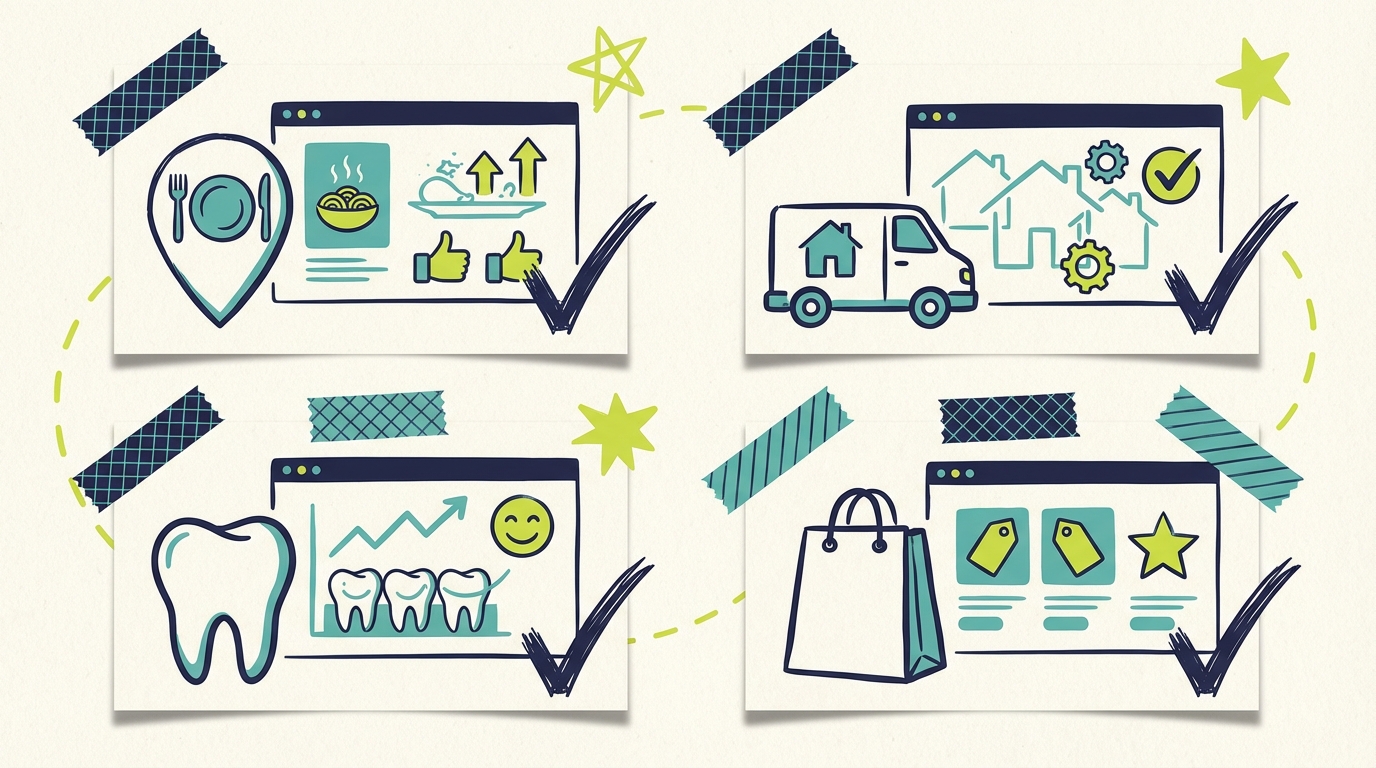
Restaurants. CTV wins. Showing beautifully plated food on a big TV screen makes people hungry in a way that a distant billboard photo can't replicate. A 30-second spot showing your ambiance, signature dishes, and happy diners drives far more reservations than a roadside sign.
Home services. CTV is the clear choice. Homeowners need to trust the company entering their home, and TV builds that trust through showing your professional team, clean vehicles, and work quality. A billboard with your phone number doesn't build the same confidence.
Retail stores. This is one category where billboards have a specific use case, especially as directional signage near your location. But for building brand awareness and driving new customers to your store, CTV's ability to showcase your products, store experience, and current promotions is more effective.
Healthcare providers. TV's trust and credibility advantage is especially strong in healthcare. Patients want to see the facility and meet the provider (visually) before booking. A billboard with a dentist's headshot doesn't create the same comfort as a 30-second spot showing a modern office, friendly staff, and smiling patients.
Auto dealerships. Both channels can work together here. A billboard near the dealership is directional signage ("Next Exit"). CTV showcases inventory, facilities, and the buying experience to households actively in the market for a vehicle. If choosing one, CTV's targeting by demographics and interests makes it more efficient at reaching actual car shoppers.
Professional services. CTV is the better investment. Lawyers, accountants, and financial advisors compete on trust and expertise. A 30-second commercial demonstrating credibility and approachability outperforms a billboard with a headshot and phone number.
Common questions answered
Are billboards cheaper than TV advertising? It depends on the market and the billboard location. A basic digital billboard in a small market ($500 to $1,500/month) is comparable to a CTV campaign budget. But premium billboard locations in medium to large markets ($5,000+/month) cost significantly more than an effective CTV campaign. With Adwave starting at $50, CTV is accessible at any budget level while billboards have fixed minimum costs based on location.
Can a billboard build the same brand awareness as a TV commercial? Billboards can build name recognition through repetition (people driving past daily). But a 30-second TV commercial builds deeper brand associations, emotional connections, and trust that a static sign with 7 words can't achieve. Research consistently shows that video advertising creates stronger brand recall and preference than static outdoor media.
How do I measure whether my billboard is working? Honestly, it's difficult. Your best options are tracking "how did you hear about us" responses, monitoring foot traffic changes after the billboard goes up, and using unique promo codes or vanity URLs in the billboard creative. Even with these methods, attribution is imprecise. CTV offers significantly better measurement through branded search lift, website traffic analytics, and real-time dashboards.
Should I cancel my billboard if I start running CTV ads? Not necessarily. If your billboard is in a strategic location (near your business, on a route your customers drive daily), it can complement CTV as a physical presence reminder. But if budget is tight and you have to choose one channel, CTV typically delivers more measurable impact for local businesses.
What about digital billboards vs. static ones? Digital billboards cost less than static because you share display time with other advertisers. They also allow creative rotation (you can change your message more frequently). However, your ad only shows for 6 to 8 seconds per rotation cycle, which means less exposure per passing vehicle. For the cost of a digital billboard in most markets, you could run a CTV campaign with better targeting and measurability.


