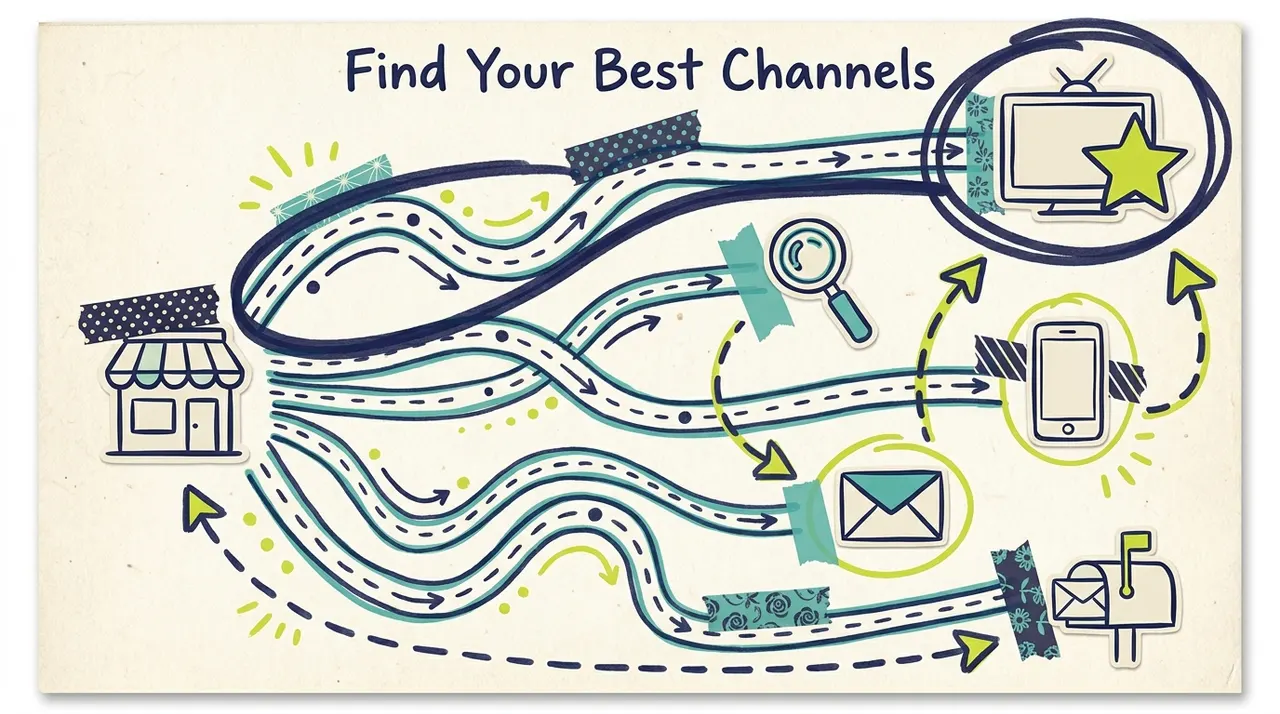
You publish a strong blog post, send one social update, maybe drop the link into your newsletter, and then nothing much happens. The content isn't bad. The problem is that publishing isn't distribution.
That gap trips up a lot of small businesses. They spend the bulk of their time making the thing, then treat promotion like an afterthought. In practice, content distribution is what turns effort into attention. If nobody sees the article, video, guide, or offer you created, it can't build trust, generate inquiries, or help sales.
For local brands with limited time, the answer isn't “post more everywhere.” It's to build a repeatable system for getting each piece of content in front of the right people, in the right format, across the right mix of channels. That's how content distribution stops feeling random and starts producing usable signals.
Why Creating Content Is Only Half the Battle
Most small businesses don't have a content problem. They have a visibility problem.
A roofing company writes a useful storm-prep article. A broker records a neighborhood market update. A med spa films a short treatment explainer. The asset exists, but it never gets enough distribution to matter. One post on one platform rarely carries the load anymore.
That's not just a feeling. Multichannel promotion is now the norm. 84% of marketers distribute content through at least three channels simultaneously, and 52% say short-form video drives the highest ROI among content formats, according to 2025 content marketing statistics compiled by Zebracat. The practical takeaway is simple: reach is increasingly built by combining search, social, and video.
Random posting wastes good content
A lot of distribution fails because it happens in isolated bursts:
The one-and-done post that goes live once and never gets reused
The copy-paste habit where the same message gets dumped on every platform
The format mismatch where a solid article never becomes a short clip, visual, or email angle
The channel bias where the owner sticks to the one platform they personally like
Those habits feel productive because something got posted. They don't build a system.
Practical rule: Don't judge a piece of content by how it performs on first publish. Judge it by how many useful formats and channels you can turn it into.
Distribution is a workflow, not a shout into the void
Strong content distribution usually looks boring behind the scenes. That's a good sign. It means you have process:
Start with one core asset such as a blog post, FAQ page, guide, customer story, or video.
Break it into smaller units like clips, quotes, examples, email blurbs, and talking points.
Match each unit to a channel based on how people use that channel.
Repeat the winners instead of chasing novelty every week.
That's the fundamental shift behind the phrase Content Distribution: Getting Eyeballs on What You Create. It's less about finding a magic platform and more about building a machine that gives your work multiple chances to be discovered.
A local business doesn't need a giant team to do this. It needs discipline. One useful article can support search visibility, feed social content for weeks, seed an email, and give paid promotion something worth amplifying.
Build Your Audience-First Distribution Foundation
Before you share anything, decide who the content is for and where those people already pay attention. That sounds basic, but it's where most wasted effort starts. Business owners often pick channels by habit, not by customer behavior.
Audience attention is fragmented. In 2025, the average person used 6.83 different social networks per month, and 58% of consumers said they discover new businesses via social media, according to Sprinklr's 2025 social media marketing statistics. If your buyers move across multiple platforms, you can't afford to guess your way into distribution.
A simple visual framework helps keep that grounded:
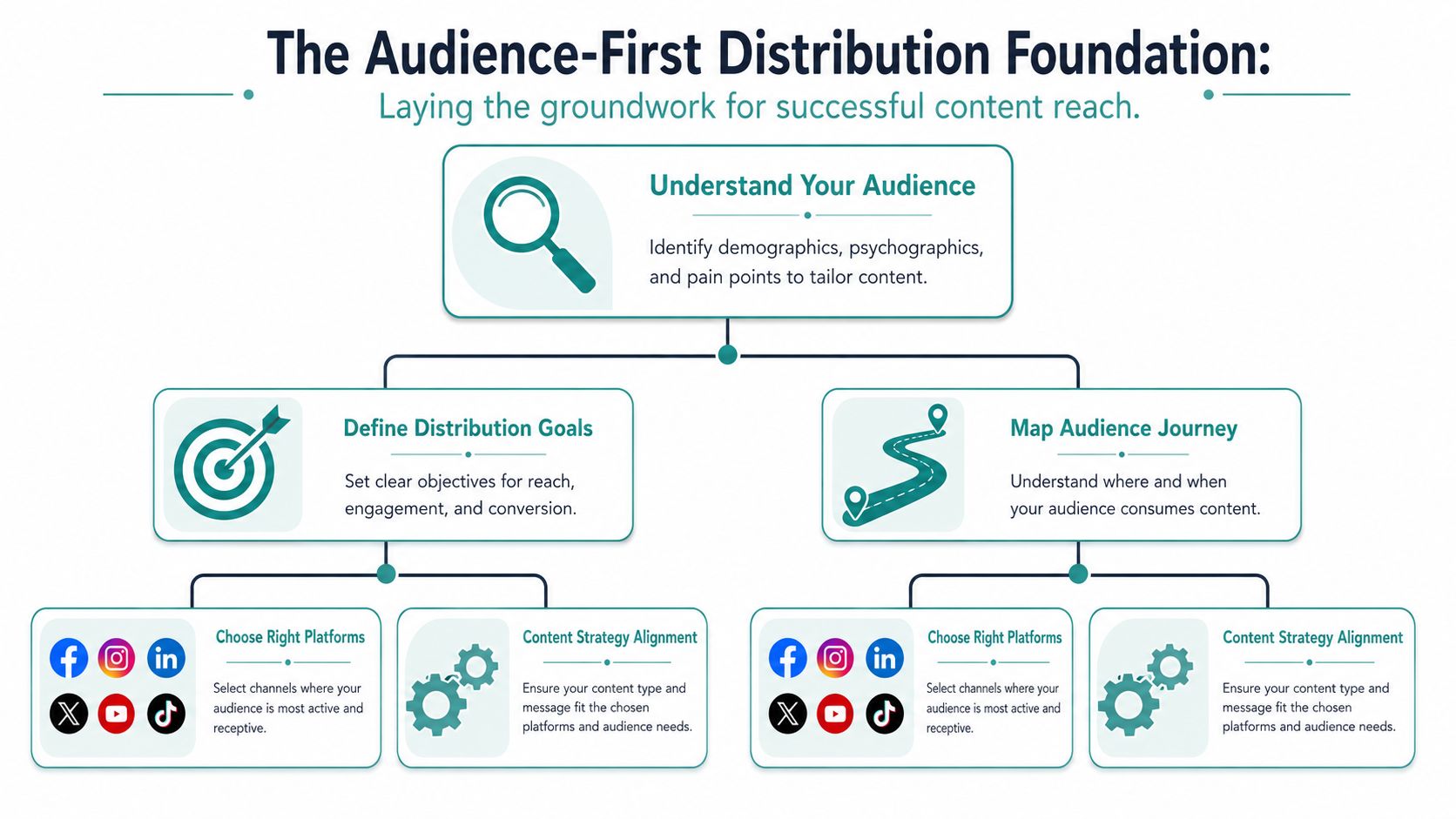
Document the basics before you publish
This doesn't need to be a formal deck. One page is enough if it answers the right questions. That matters because companies with a documented content strategy are 3x more likely to report success than those without, based on research cited by Floodlight New Media.
Write down:
Audience segments. Past clients, active shoppers, referrals, repeat buyers, local homeowners, first-time buyers, patients, and so on.
Channel roles. Search for demand capture, Instagram for proof and visuals, email for nurturing, YouTube for explainers, community groups for trust.
KPIs. Traffic, time on page, bounce rate, conversion rate, form submissions, booked calls, store visits, reply volume.
Repurposing rules. Every article becomes at least one short video, one email, and several social cutdowns.
If you want a useful primer on building this kind of plan for a neighborhood brand, this guide to content marketing strategy for local businesses is worth reviewing.
Map customer questions to channel behavior
Don't start with platform features. Start with customer intent.
A home services company might map content like this:
That exercise usually cuts out at least one low-value channel.
Prioritize channels your customers use to research, compare, and contact businesses like yours.</p>
Build owned reach early
A lot of local businesses skip email because social feels faster. That's short-term thinking. An email list gives you a direct route to people who've already shown interest, and it keeps you from being dependent on algorithm swings. Adwave has a practical resource on how to build an email list from zero without buying lists if you need a clean starting point.
The strongest foundation is usually small and focused. Pick two or three channels your audience uses, define what each channel is supposed to do, and publish with a plan before you hit post.
Work Smarter The Art of Content Repurposing
Most small businesses don't need more content ideas. They need to squeeze more value out of the ideas they already have.
A useful way to think about repurposing is this: create one solid “pillar” piece, then cut it into smaller assets built for different moments of attention. That lowers the pressure to constantly invent something new and gives each topic more chances to reach the right person.
Here's the workflow at a glance:
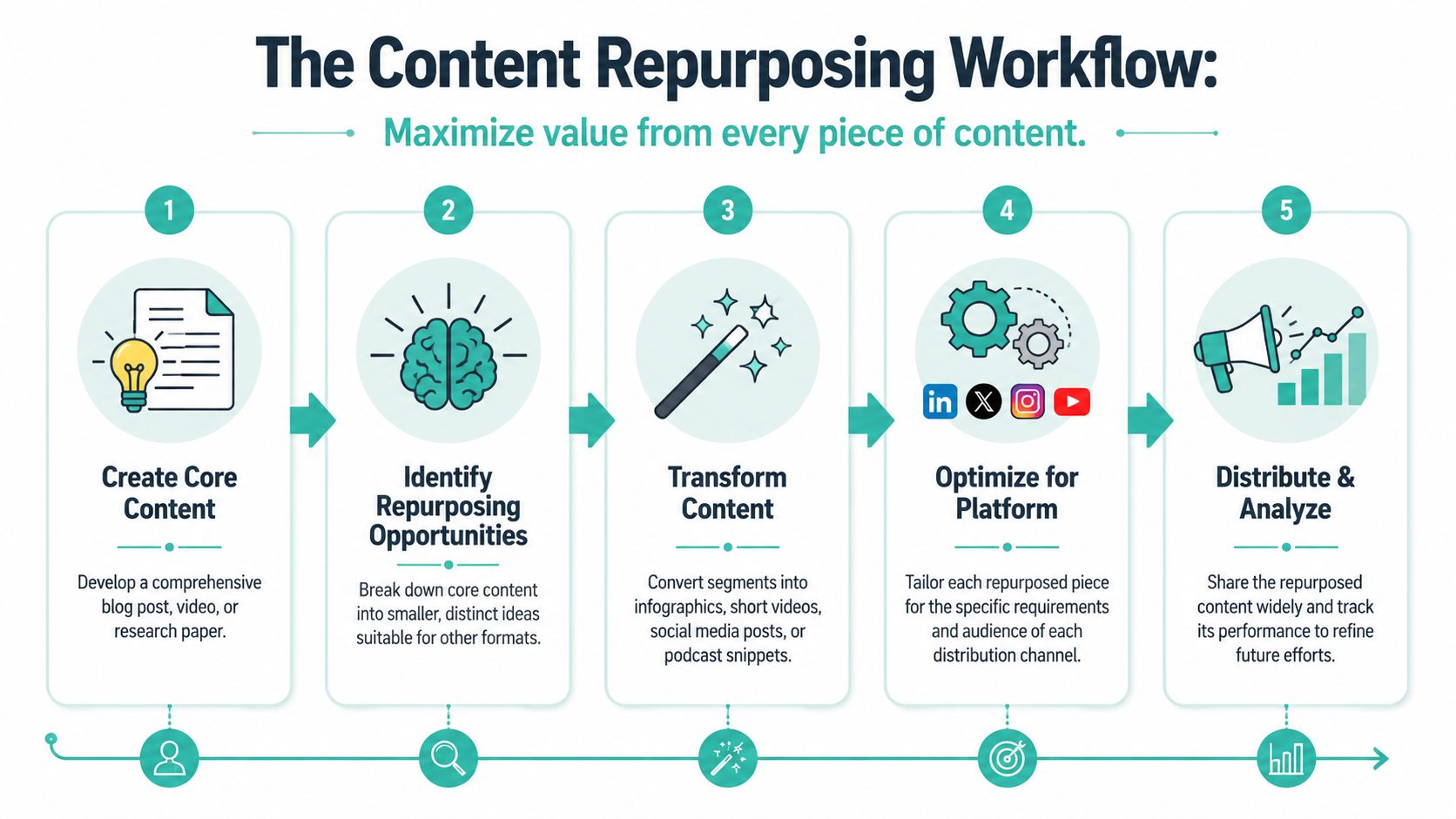
One pillar asset can drive a full week
Take a local landscaping company that publishes a blog post called “Five Ways to Keep Your Yard Healthy Through Summer.”
That single article can become:
A short video series with one tip per clip for Reels or Shorts
A photo carousel showing examples of overwatering, patchy grass, and pruning mistakes
An email newsletter with the most urgent seasonal takeaway and a booking prompt
A FAQ post answering the most common customer question pulled from the article
A sales enablement asset that staff can text to leads who ask whether a service is necessary
A script for the owner to record a quick phone-camera update from a recent job site
That's better than writing five unrelated posts because it reinforces the same message in multiple formats.
Repurposing works when you adapt, not duplicate
Too many businesses “repurpose” by copying the same link and caption into every app. That isn't repurposing. It's reposting.
The better move is to adapt the same idea to the way each channel is consumed:
For search, keep the full article detailed, skimmable, and locally relevant.
For Instagram or Facebook, pull out the visual proof and the most practical line.
For email, lead with the customer problem, not the blog title.
For short video, open with the mistake or result people care about.
For sales follow-up, strip out branding fluff and leave only the useful answer.
Adwave has a practical breakdown of this process in its guide on content repurposing and turning one article into 10 pieces of content.
Good repurposing keeps the core idea and changes the packaging.
Prepare content for AI-mediated discovery
This matters more now because discovery isn't limited to blue links and social feeds. A useful angle from MKT1's content distribution analysis is that creators should distribute for “extractability” and “machine readability”. In plain English, that means your content should be easy for AI assistants, summaries, and recommendation layers to interpret and surface.
For a small business, that usually means:
Use clear entities such as service names, locations, products, and customer problems
Write quotable proof points without vague filler
Structure pages cleanly with direct headings and concise answers
Create short-form derivatives that can travel across platforms more easily
A small side benefit of this approach is that it also helps human readers scan faster.
If your repurposing process includes audio or spoken content, creators sometimes use tools built around YouTube audio for indie artists to extract and reuse spoken segments as a draft input for captions, transcripts, or shorter edits. The point isn't the tool itself. The point is to make every usable part of a strong piece of content available in another format.
Amplify Your Reach With Organic and Paid Tactics
Once you've built reusable assets, the next job is amplification. Many local businesses either underdo it or waste money in this phase. They either rely only on organic posting, or they put budget behind weak creative that was never likely to work in the first place.
The right approach is more balanced. Organic distribution builds consistency and trust. Paid distribution expands reach beyond the people who already follow you.
A mixed approach makes sense because consumer discovery is scattered. As noted earlier from Sprinklr's 2025 reporting, people use multiple social networks every month and many discover new businesses on social platforms. That's why a local brand usually needs both a living organic presence and selective paid amplification.
Organic tactics that still punch above their weight
Start with the channels you control or can access without media spend.
Email still matters because it reaches people who already raised their hand.
Local community participation works when you answer questions instead of dropping links.
Staff distribution is underrated. Team members can share clips, testimonials, and events through their own networks.
Website placement matters more than many owners think. Put strong content on high-traffic pages, not just your blog archive.
Organic reach works best when it supports a clear customer action. “Read this” is weaker than “See the cost factors,” “Compare options,” or “Book before the seasonal rush.”
Paid amplification should extend winners, not rescue losers
A practical mistake is paying to promote content before you know whether the message lands. First post organically. If people respond, then spend.
That spend can take several forms:
If retargeting is new to you, Adwave has a straightforward explainer on what retargeting advertising is.
Affordable TV belongs in the local distribution mix
A lot of small businesses still think TV is reserved for national brands with giant budgets and production crews. That used to be mostly true. It isn't anymore.
One option in the current market is Adwave, an AI-powered TV advertising platform that lets businesses generate a broadcast-ready ad from their website, launch across premium channels including NBC, Hulu, and ESPN, and start with a $50 budget, with automatic pacing to stay in spend. For local brands trying to widen awareness beyond social feeds, that makes TV a practical distribution channel instead of a fantasy buy.
This is what that kind of workflow looks like in practice:
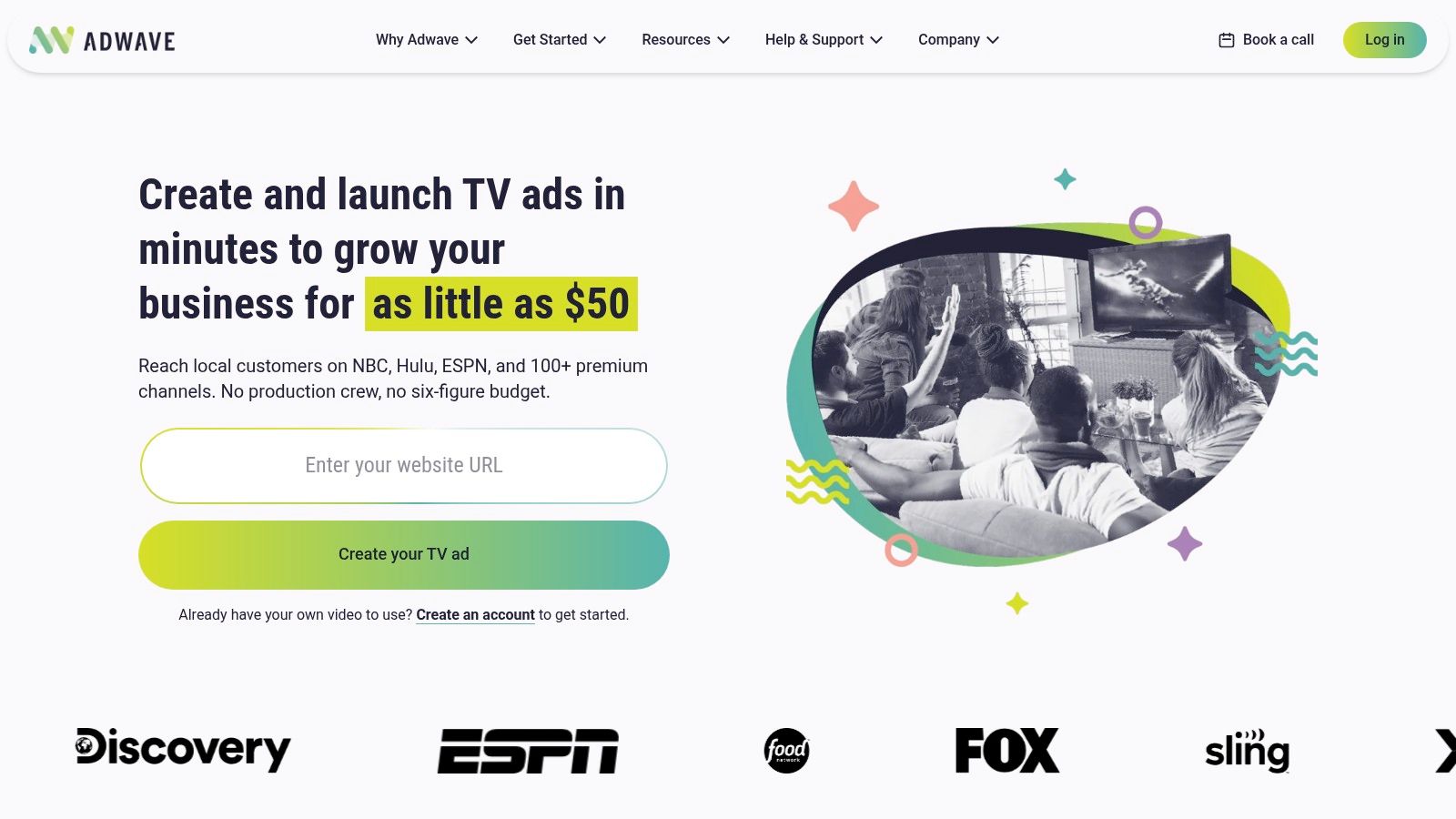
TV won't replace search, email, or social. It fills a different role. It helps a local business show up where people already spend attention, especially when the goal is recognition, recall, and broader market visibility rather than an immediate click.
The smartest paid distribution stack usually pairs low-friction channels that capture intent with broader channels that create familiarity before intent exists.
That's why local distribution works better when you stop thinking in terms of one “main” channel. Different channels do different jobs.
Measure What Matters to Your Business
Small businesses get stuck on reporting because digital platforms make it easy to count activity and hard to interpret impact. Likes, reach, views, clicks, watch time, shares. None of those are useless, but none of them are the business outcome.
The harder question is the one that matters: did your distribution create more inquiries, calls, booked appointments, walk-ins, quote requests, or branded search interest?
That question is getting tougher to answer with clean attribution. Jasper's content distribution analysis notes that most B2B teams still struggle to connect content to revenue, and that fragmentation across channels makes last-click attribution increasingly unreliable. For small businesses, that means you shouldn't build your whole measurement model around the final click.
Track a chain of evidence, not one perfect source
A practical measurement setup for an SMB usually includes several signals at once:
Direct response metrics such as form fills, calls, bookings, or coupon redemptions
Assisted indicators like return visitors, branded searches, repeat site sessions, or email replies
Sales feedback from front-desk staff, intake teams, or whoever answers the phone
Geographic lift if you're targeting specific neighborhoods or service areas
Customers rarely move in a straight line anymore. They might see a short video, then search your name later, then revisit through email, then call after hearing about you from a friend.
Use channel-specific scorecards
Different channels deserve different scorecards. A blog post meant to rank in search shouldn't be judged the same way as a TV spot or a remarketing ad.
That's a healthier way to measure because it reflects channel intent.
Don't ask every channel to produce the same outcome. Ask whether each one is doing its job in the customer journey.
Look for business lift over vanity metrics
Local owners often gain clarity on content effectiveness. A piece of content with modest clicks can still be valuable if it improves lead quality, shortens sales conversations, or gives prospects enough confidence to reach out. A high-view post can be worthless if it never reaches likely buyers.
If you want a cleaner framework for connecting channel activity to outcomes, Adwave's guide on how to measure marketing ROI is a useful reference.
The goal isn't perfect attribution. The goal is confident decision-making. Keep the channels that produce visible business lift. Cut the ones that only generate noise.
Your 30-60-90 Day Content Distribution Plan
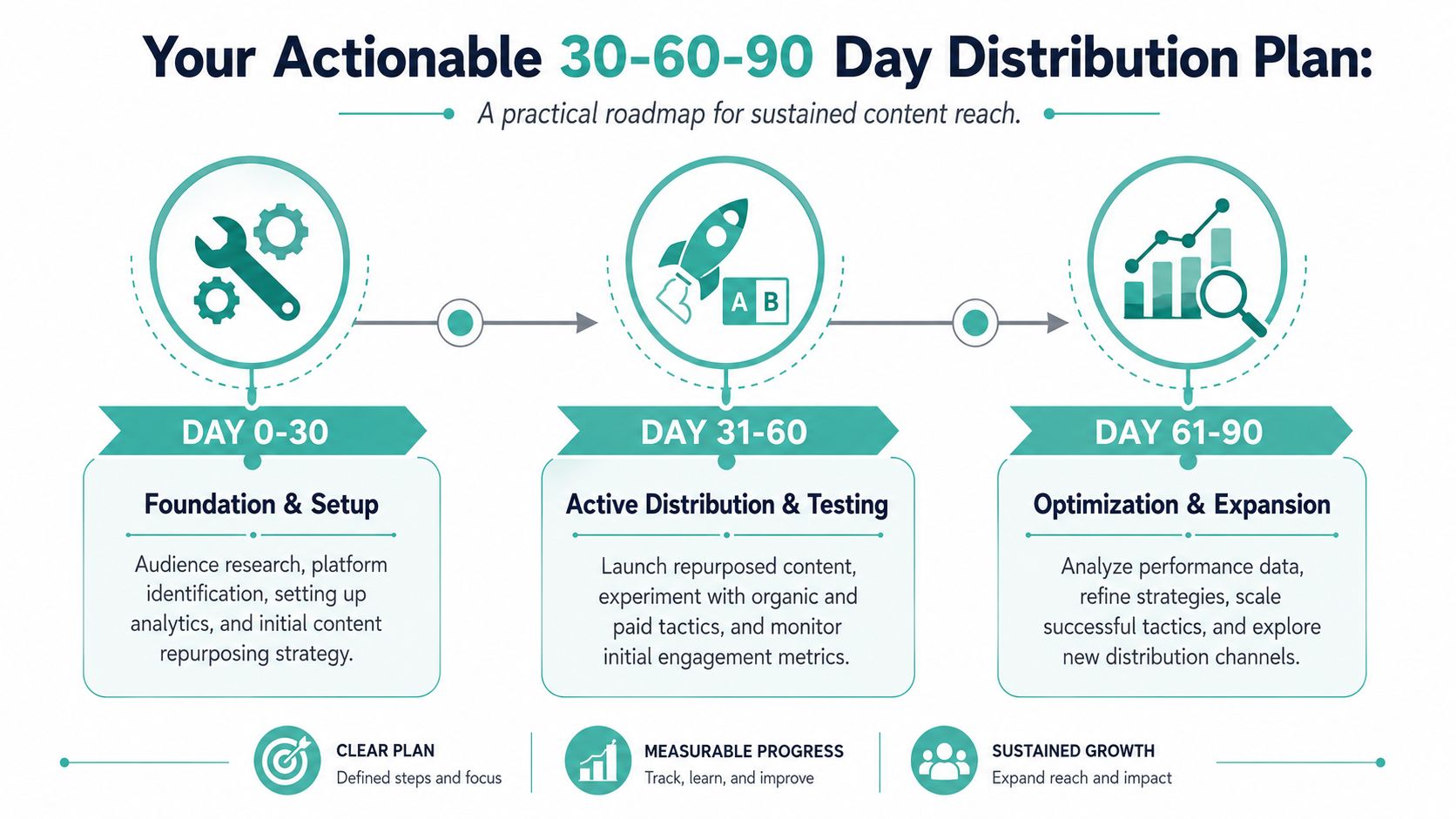
Most businesses don't need a total content reset. They need a manageable rollout. A ninety-day window is enough time to build a real distribution habit, test a few channels, and spot patterns without turning marketing into a full-time job.
Here's the roadmap:
Days 0 to 30
Use the first month to build structure.
Document your audience segments and pick the few channels that fit customer behavior.
Audit your existing content and choose one pillar asset worth repurposing first.
Set basic KPIs for each channel so you know what “working” means.
Clean up your website paths so traffic has somewhere useful to go.
Don't overcomplicate this stage. A one-page plan beats a vague ambition to “be more consistent.”
Days 31 to 60
The second phase is for execution and small tests.
Publish the pillar asset. Turn it into short-form social, email content, and at least one additional visual or video format. Promote the best-performing variation with a controlled budget. If broader local awareness is the goal, test a starter campaign on a channel that reaches beyond your existing followers.
This is also the right time to check operational readiness. If content starts generating replies, calls, or site visits, someone on your team needs to capture and respond to that demand.
Days 61 to 90
This phase is about trimming waste and leaning into what showed promise.
Review what moved the business. Not what got the most applause. Keep the topics, formats, and channels that led to qualified interest. Tighten the hooks on underperforming assets or retire them if they never found traction. Build the next pillar piece based on what customers responded to, not on what felt creative internally.
Here's a simple version of the plan:
A workable distribution system doesn't have to be elaborate. It has to be repeatable. That's the difference between occasional promotion and a channel strategy that compounds over time.
If you want to add TV to your distribution mix without the usual production and buying complexity, Adwave gives local businesses a practical way to create, launch, and track broadcast-ready ads across premium streaming and TV inventory alongside the rest of their marketing efforts.